
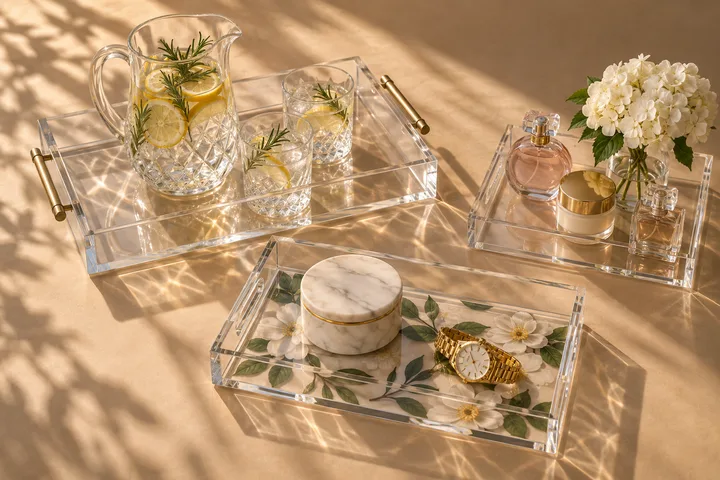
Fluorescent Acrylic for Awards, Frames and Signs
Fluorescent acrylic glows at every cut edge without a light source. That effect depends on the sheet, the edge finish and the joints, so spec all three.
An acrylic knowledge base written by our production, QC and account teams: materials, specifications, cost, sampling, inspection and shipping. Each guide answers one buyer question.
Send your drawing for a quoteReply within 24 hours
Cost guides price the same brief at 100, 500 and 1,000 pieces. Each guide links to the product page for its question; everything we make is custom, from 100 pieces per design.
Start with the decision blocking your quote—material, thickness, finish, cost, supplier proof, or sample approval—then follow the linked specification guide.
What acrylic (PMMA) is, how sheet becomes a finished product, which thickness and finish to specify, and how acrylic compares with glass and other plastics. Start here if the material decision is still open.
Need this made? Custom acrylic fabrication →
How laser cutting, CNC routing, bending, polishing, printing and color matching work on acrylic, what tolerance belongs on the drawing, and which files a fabricator needs before quoting.
Need this made? CNC acrylic machining →
What moves the unit price at 100, 500 and 1,000 pieces, why production starts at 100 pieces per design, and when a one-time charge applies. Each cost guide names the specification behind its published reference.
Need this made? Product lines with published reference prices →
How to write an RFQ, approve a paid sample, inspect production and keep repeat orders consistent. The tolerances, inspection stages and sample gate we work to are published as one reference.
Read the Wetop acrylic standard for working tolerances, edge finishes, inspection stages and the sample approval gate.
Need this made? Start a custom acrylic project →
Trade terms, packing, lead times, damage claims and holiday scheduling for orders shipped from China. FOB Shenzhen is our default term; EXW, CIF and DDP are also available.
Need this made? Browse custom acrylic products →
Sizes, comparisons and specification guides for each product line we make, with the product page for each line.
Custom mahjong sets run as a separate program with their own minimums, pricing and policies. These guides live with it; see the custom mahjong program or the mahjong guide index.
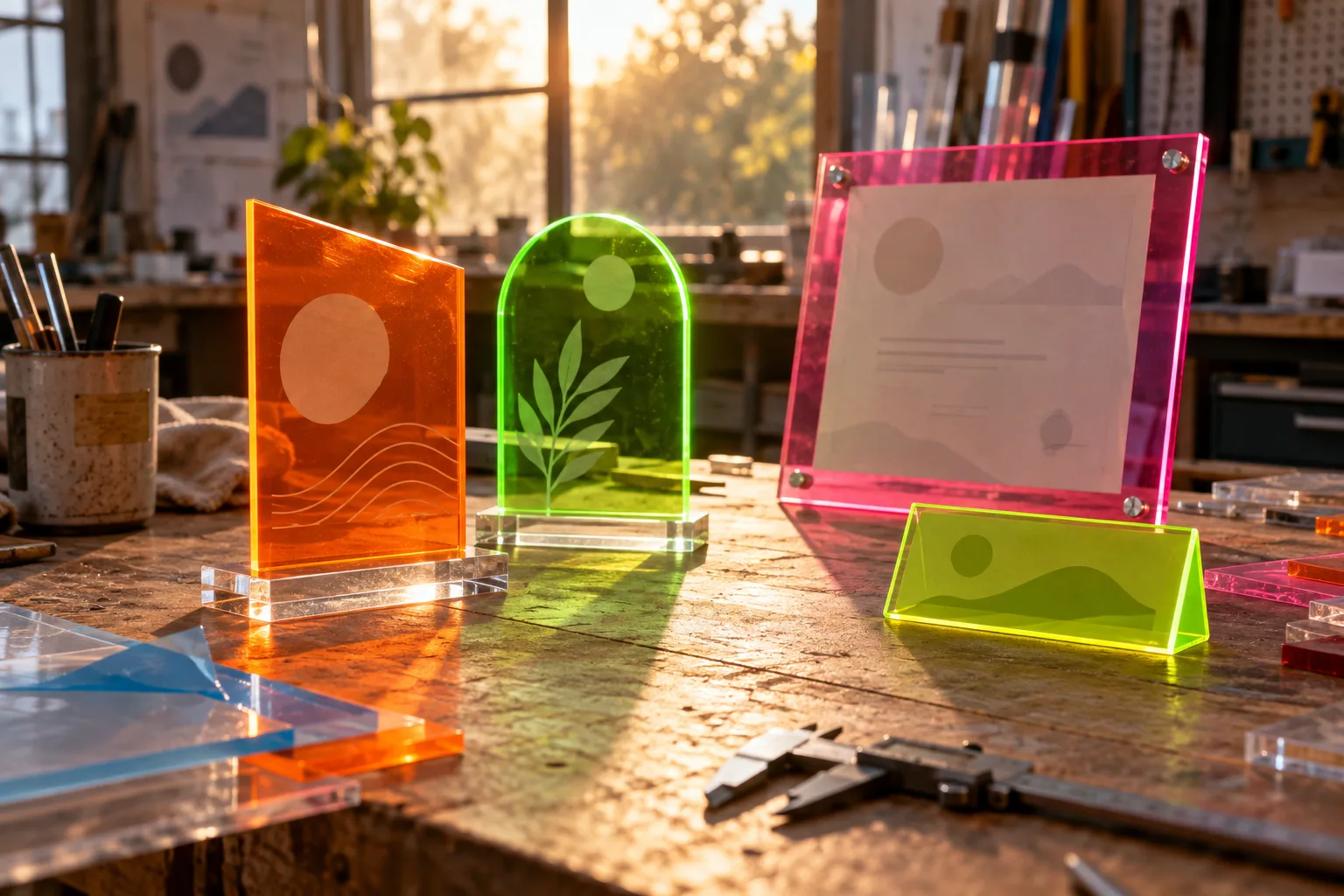
Fluorescent acrylic glows at every cut edge without a light source. That effect depends on the sheet, the edge finish and the joints, so spec all three.

Build the acrylic once and change only the graphic. The swap method decides who can change it, how often and what each campaign costs.
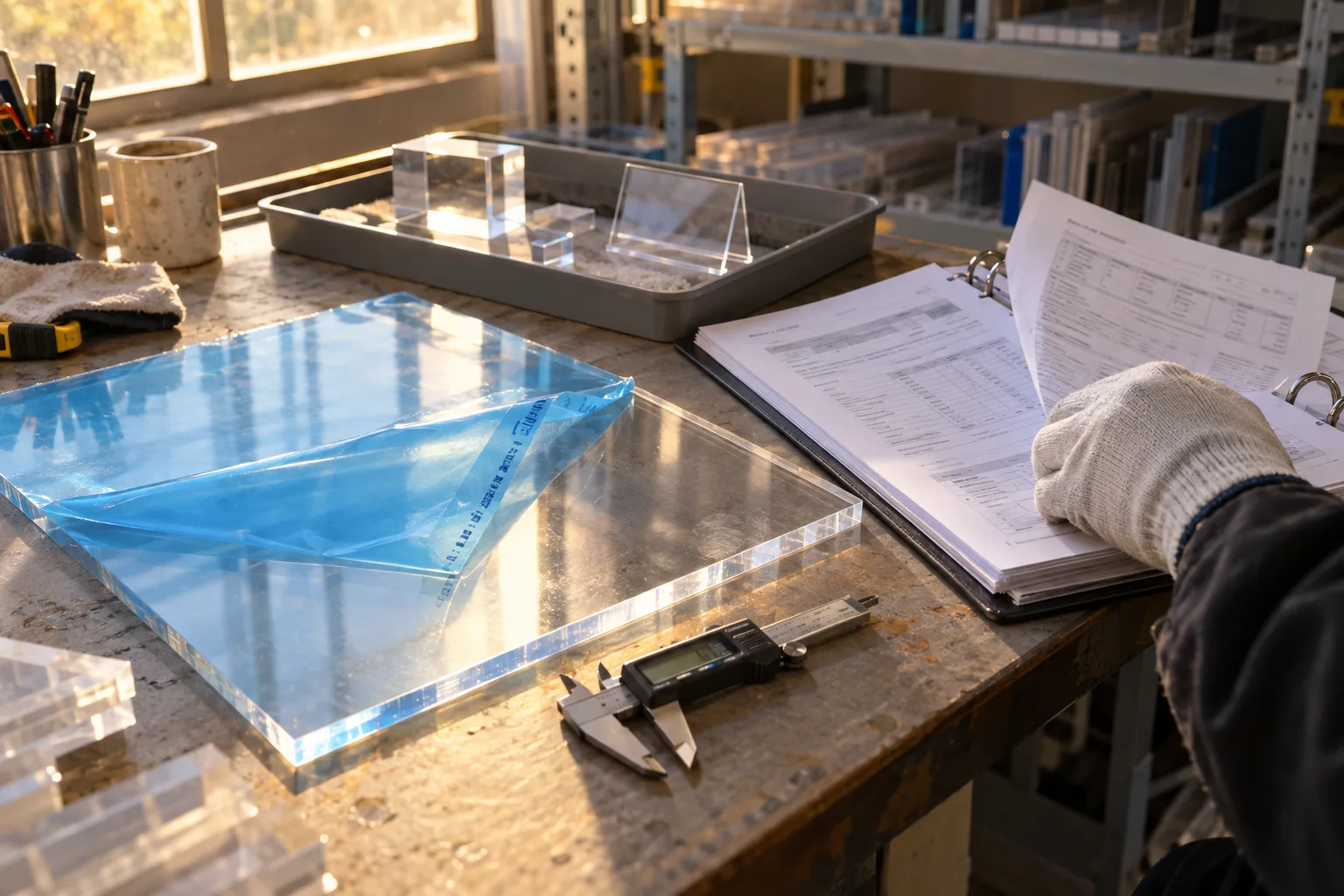
Most compliance documents for custom acrylic belong to a named sheet grade, not to a factory. Name the market and the document before the sample, not after shipment.

Amazon stopped prepping and labeling FBA units in the US on January 1, 2026. Your custom acrylic now has to leave the supply chain ready to sell.
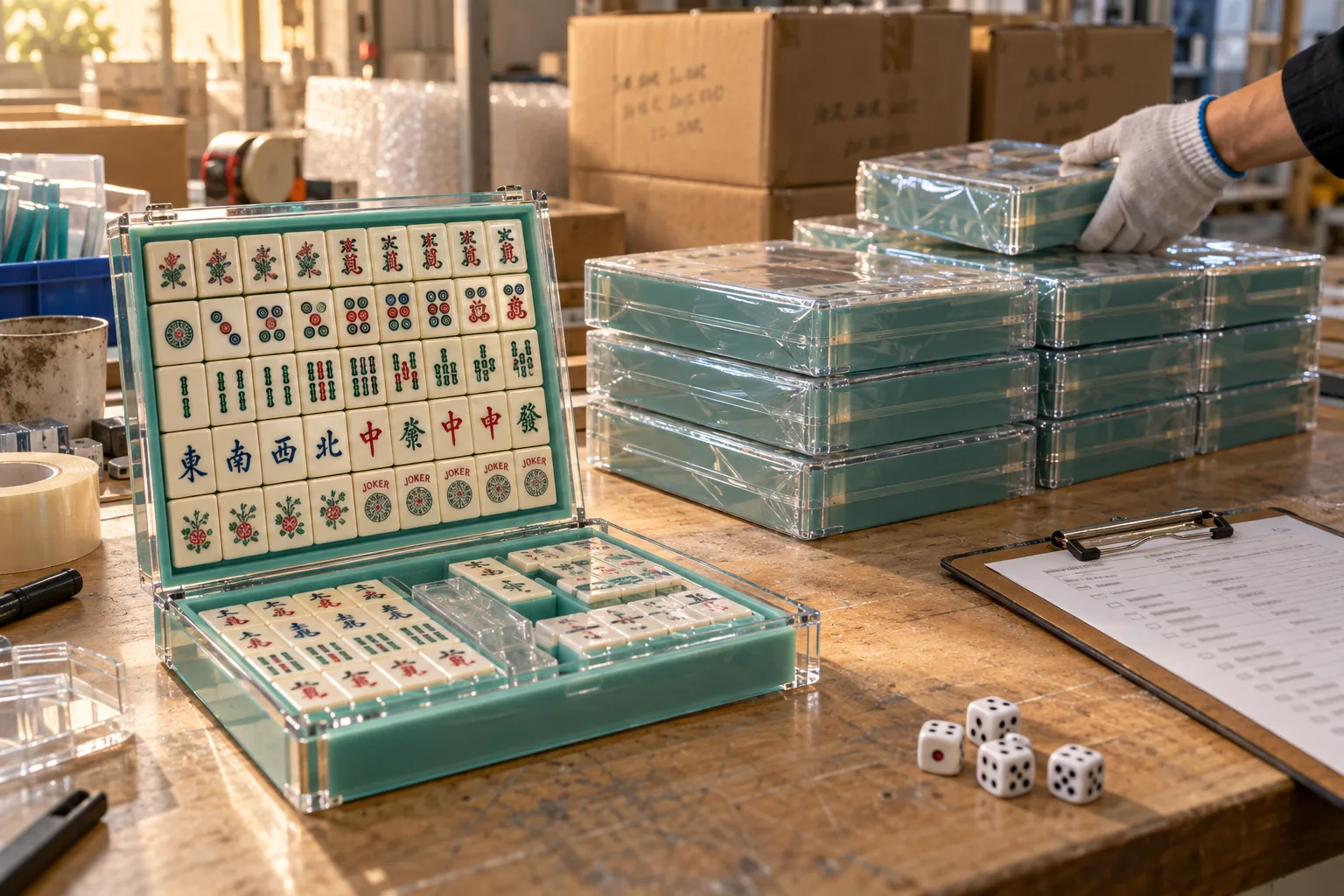
The first order sets your unit cost, your cash tied up in stock and how soon you reorder. Size it against sales you expect, not against the lowest price.
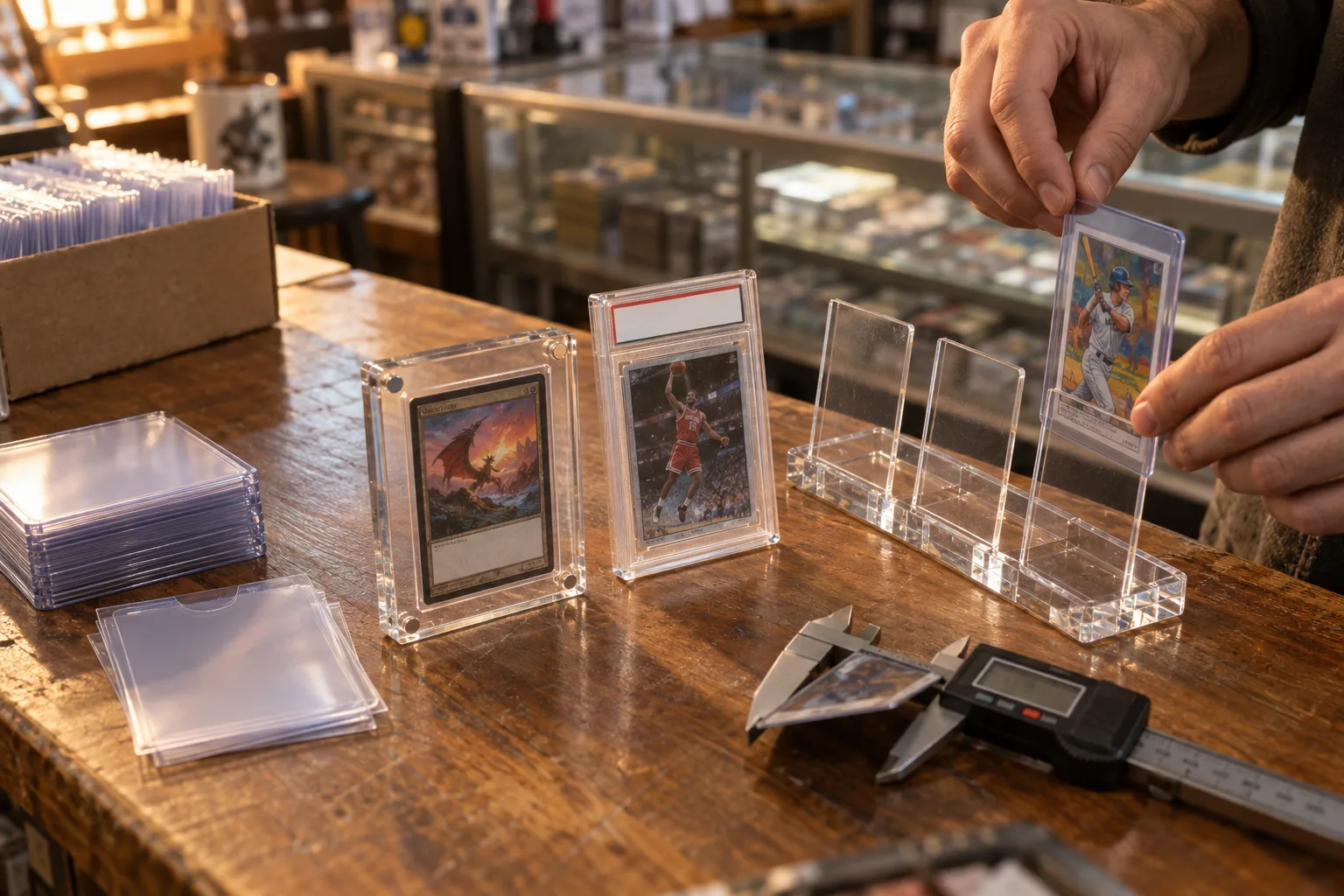
The pt number on a top loader or magnetic holder is the thickest card it takes. Measure the card, pick the holder, then size any display around the holder.
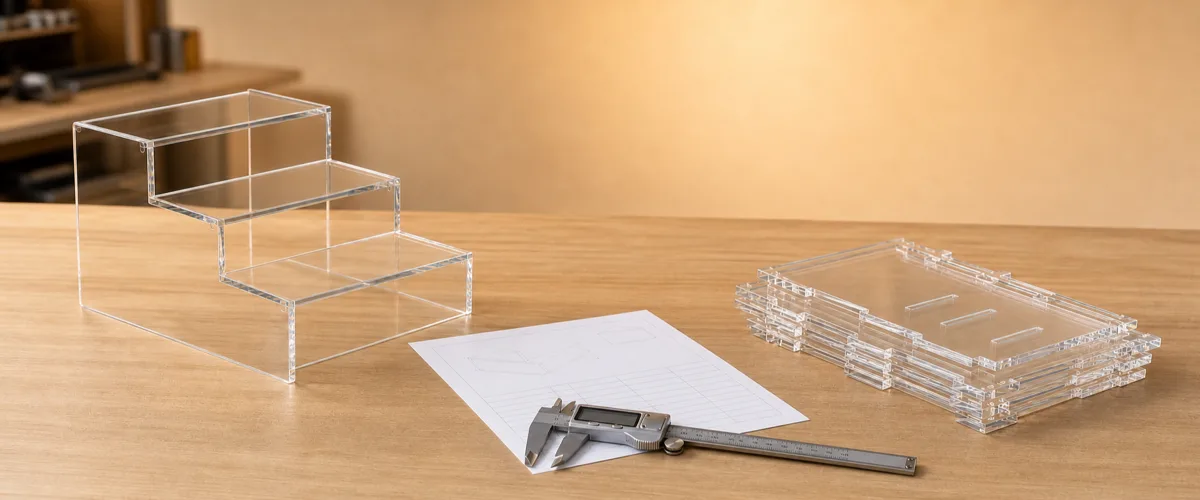
Two quotes for the same display can differ by half and both be honest. Put them on the same drawing, quantity, packing and trade term before you compare the totals.

The store owns the end cap fixture. What your brand sends is the set of parts that sits on it, and acrylic is the material for the parts that have to last more than one promotion.

Winners are only known on the day, but the awards can be made months before. Plan the season's prizes as one order and leave the winner's details for the end.
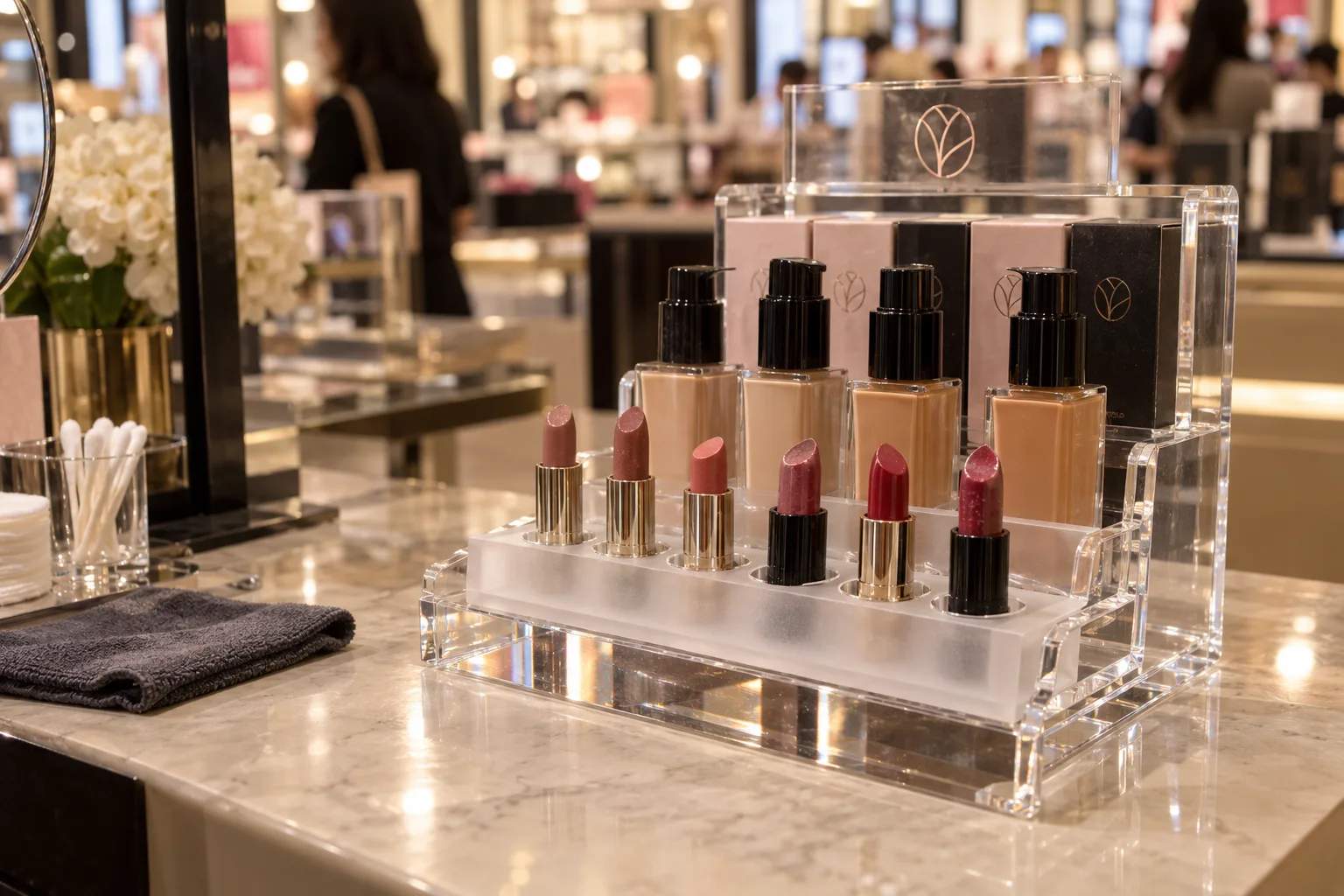
A tester stand gets handled, smudged and wiped all day. Spec it for that wear, not just for how it looks on launch day.
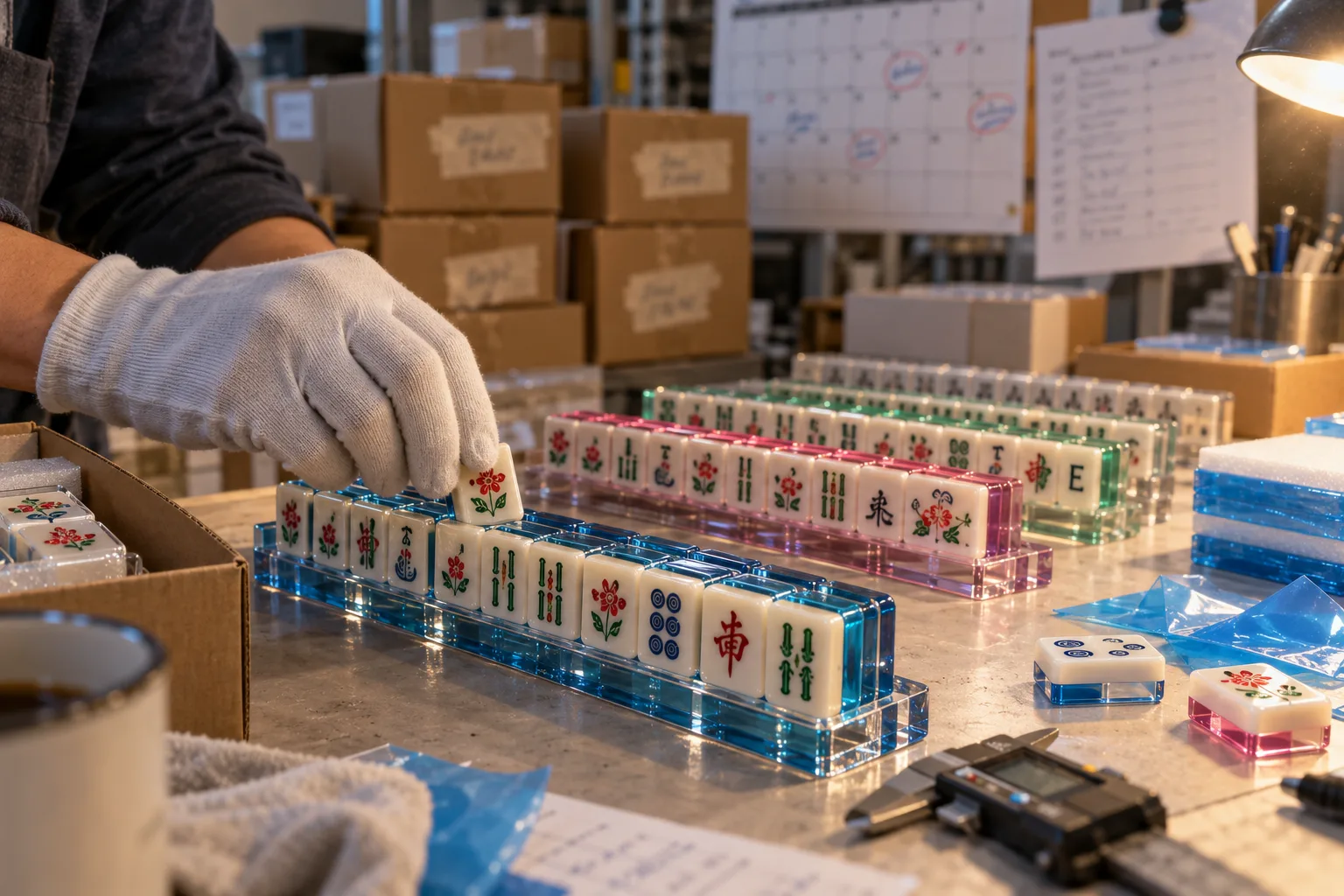
Your launch date is fixed. Work back from it through transit, production and the sample to find the latest day to send the brief.

Bulk custom ornaments take five to nine weeks from order to delivery, depending on freight. Work back from the day you need them in hand, not from the holiday.
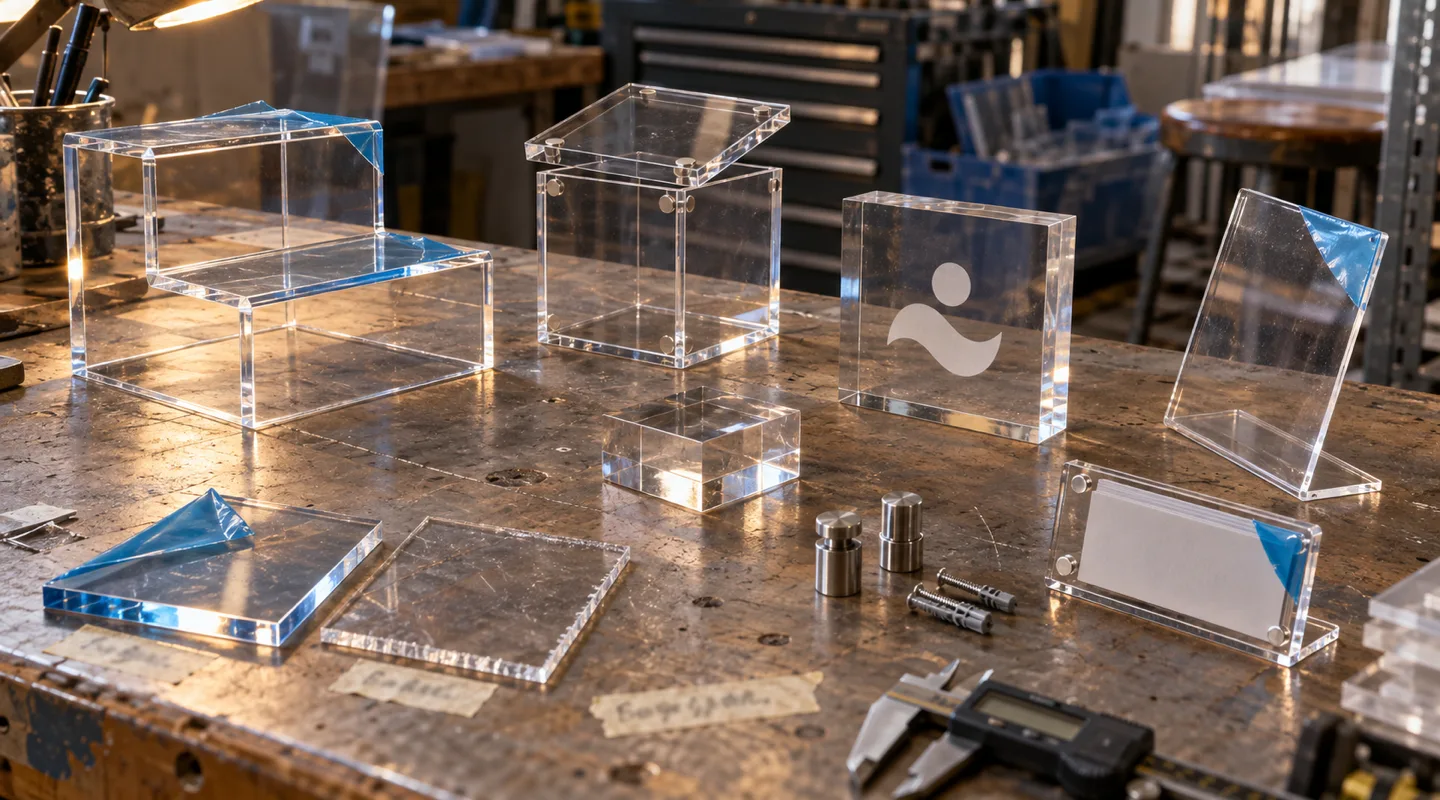
Sixty-eight terms buyers, designers and factories use for custom acrylic displays and packaging, each defined in one plain sentence.
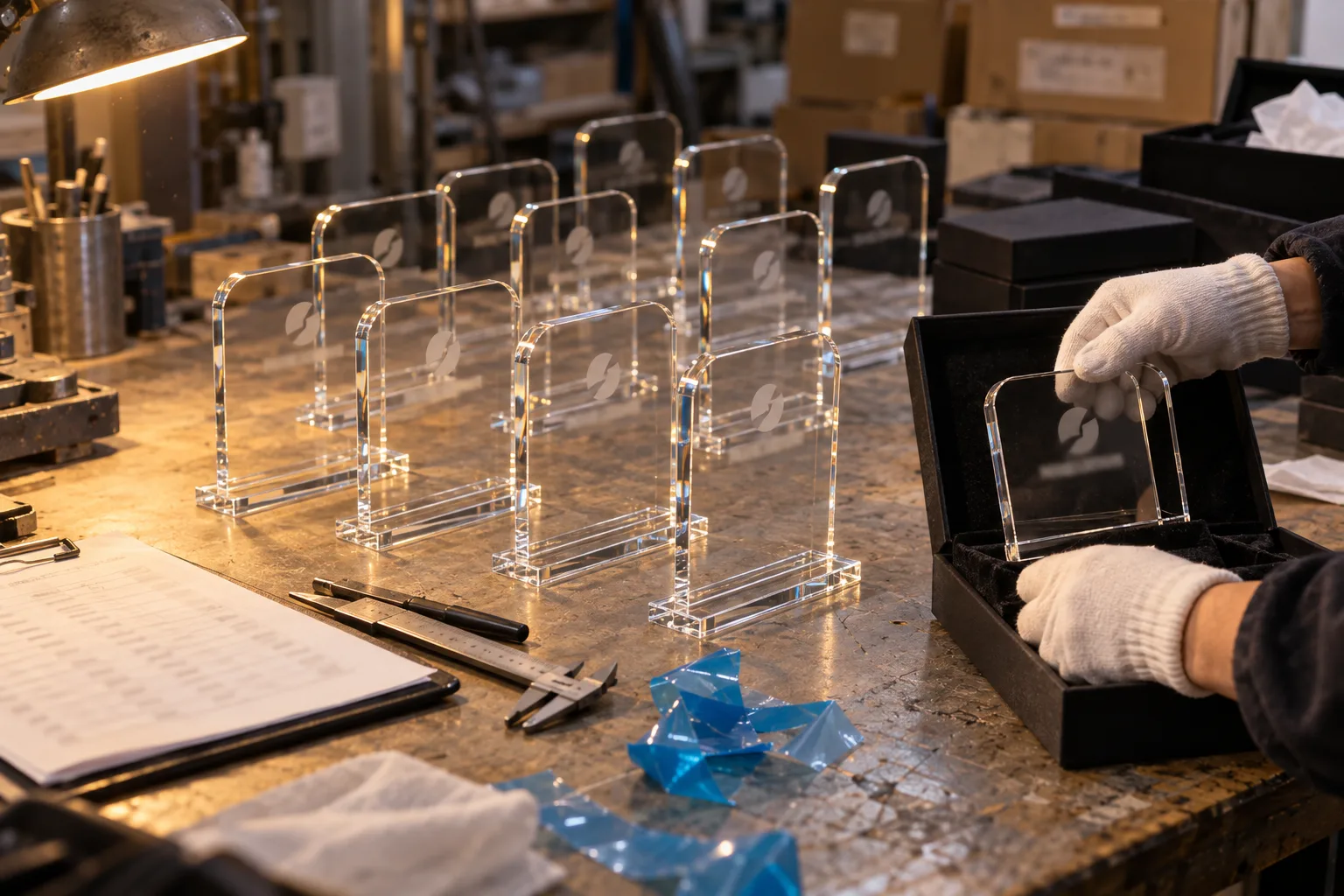
Every anniversary in next year's program is already in your HR system. Order the whole year from that list instead of chasing awards one ceremony at a time.

A perfume tray program lives or dies on one number the brief usually leaves out: the bottle envelope.

Retailers sell tubing by the length.
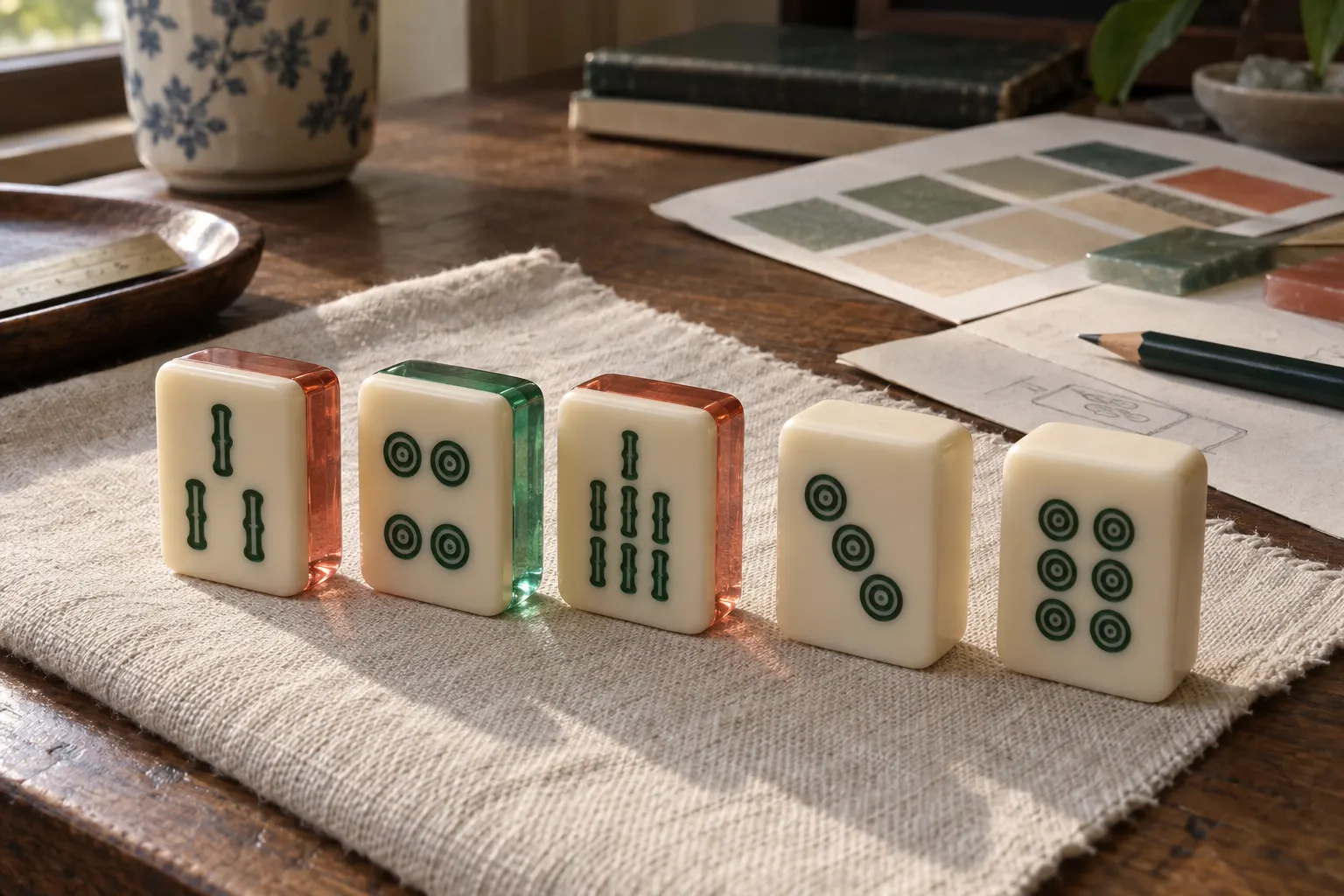
Choose the material around the American mahjong set you want to sell, then check the complete physical sample.

A stand that 'holds a 100 ml bottle' has not told the factory anything it can cut. Five numbers, three photos, and one fit statement do.

The panel pair and magnet count set the base price; setup, insert printing and packaging are the lines that move when the quantity does.
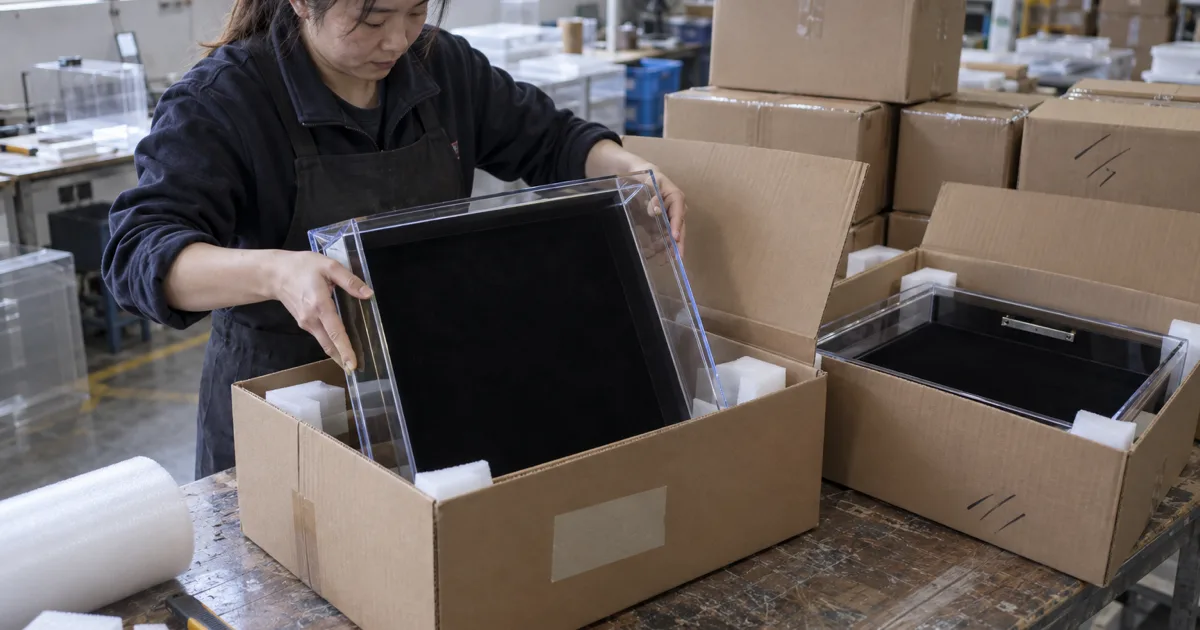
A program quote is four decisions, not one number: the depth you chose, the backer behind the object, the wall hardware and the carton.
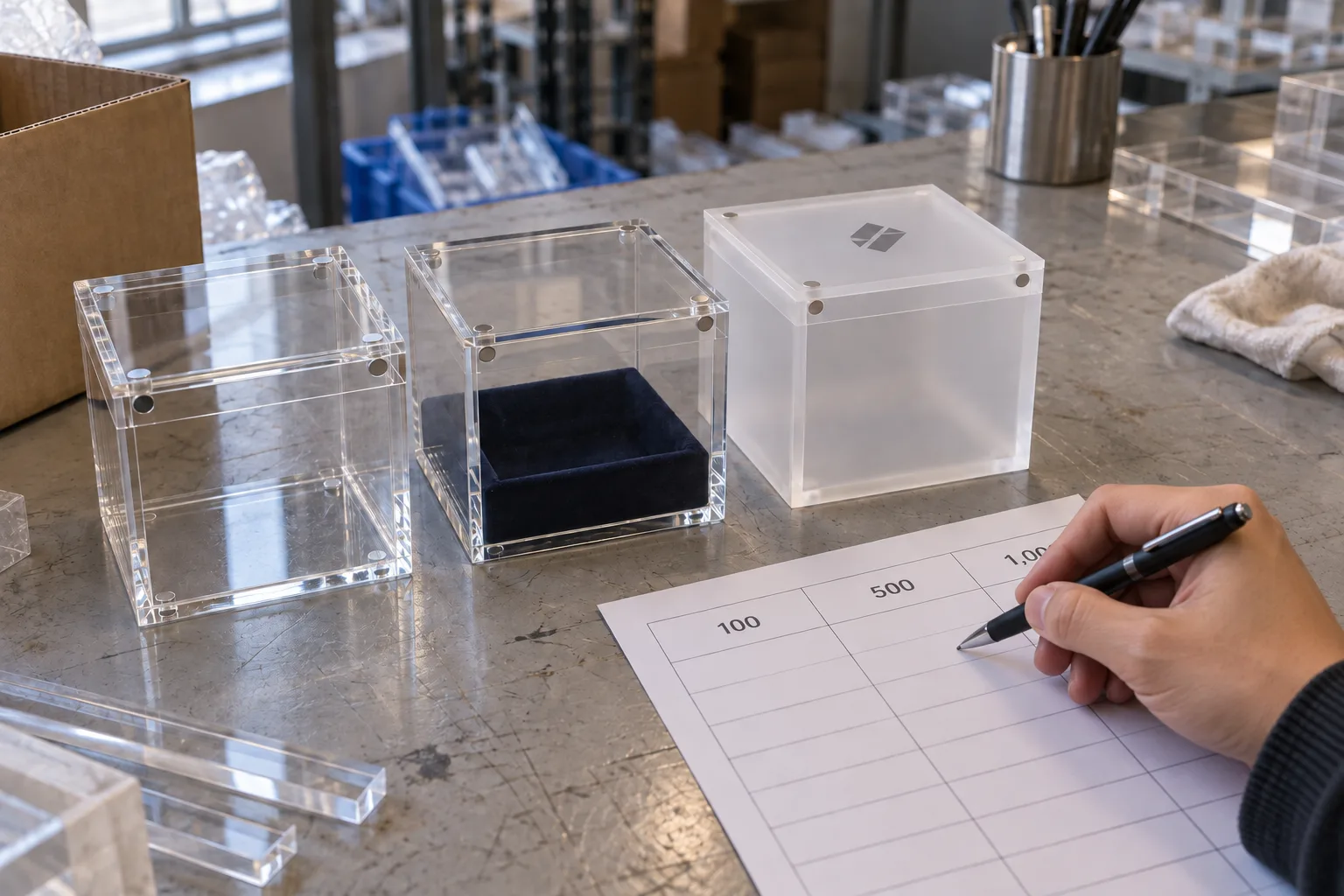
Quantity spreads the cutting layout, screens, and sample work; wall thickness, lid hardware, print method, and the insert still decide most of the unit price.
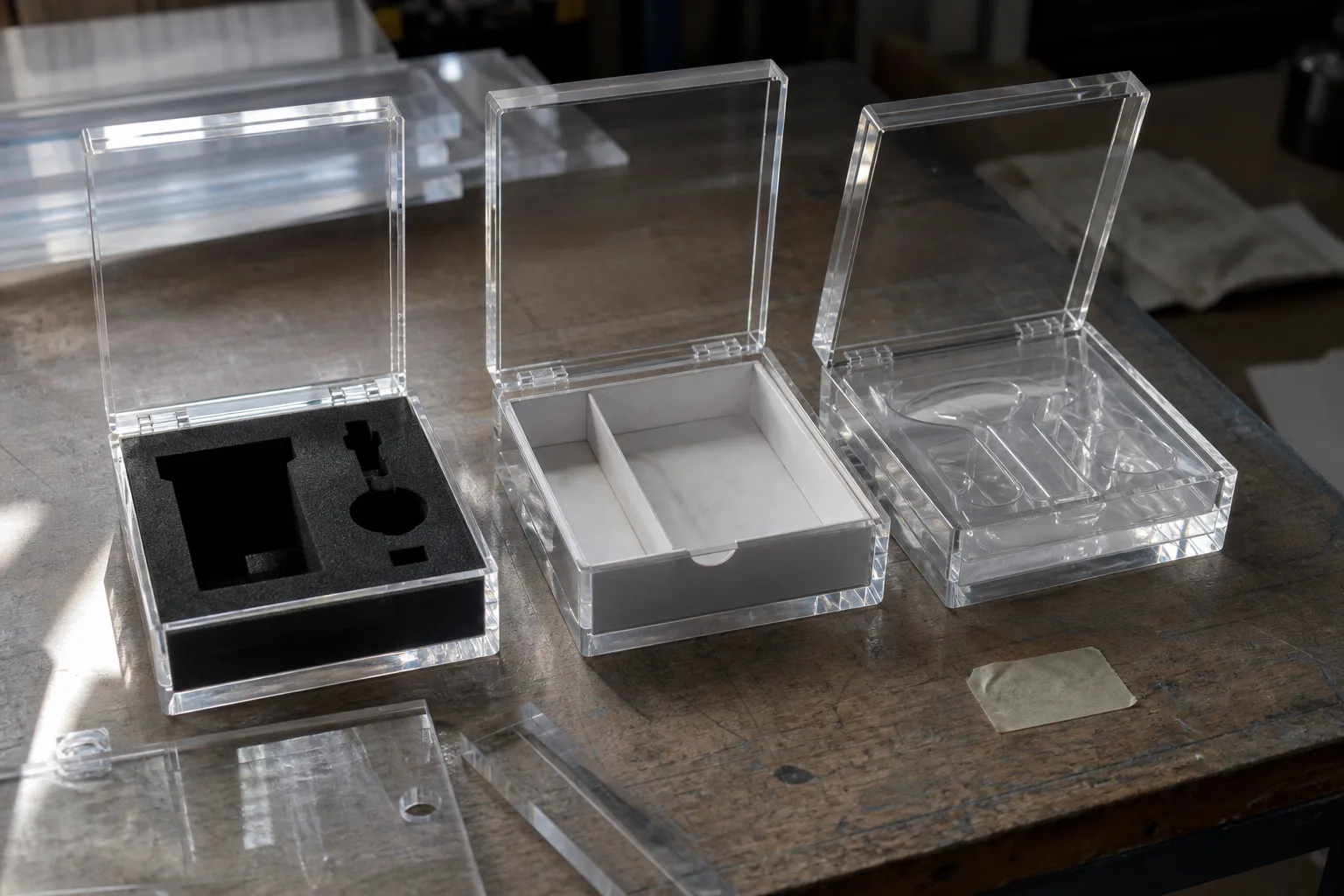
The insert must hold the real product through presentation and transport without scratching it or making removal difficult.
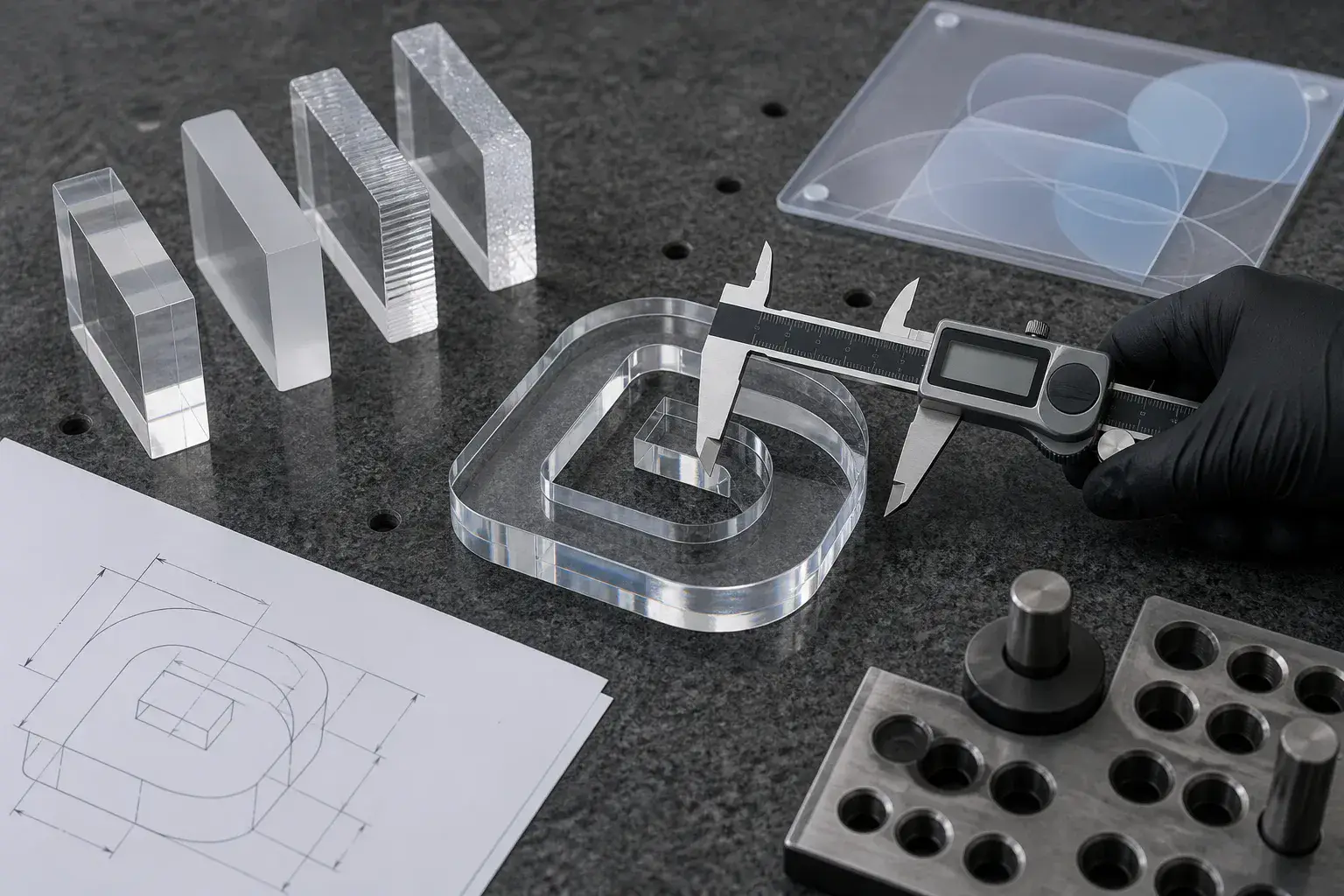
Finished dimensions, artwork position, edge finish, and feature clearances must share one drawing before a thick acrylic block is sampled.
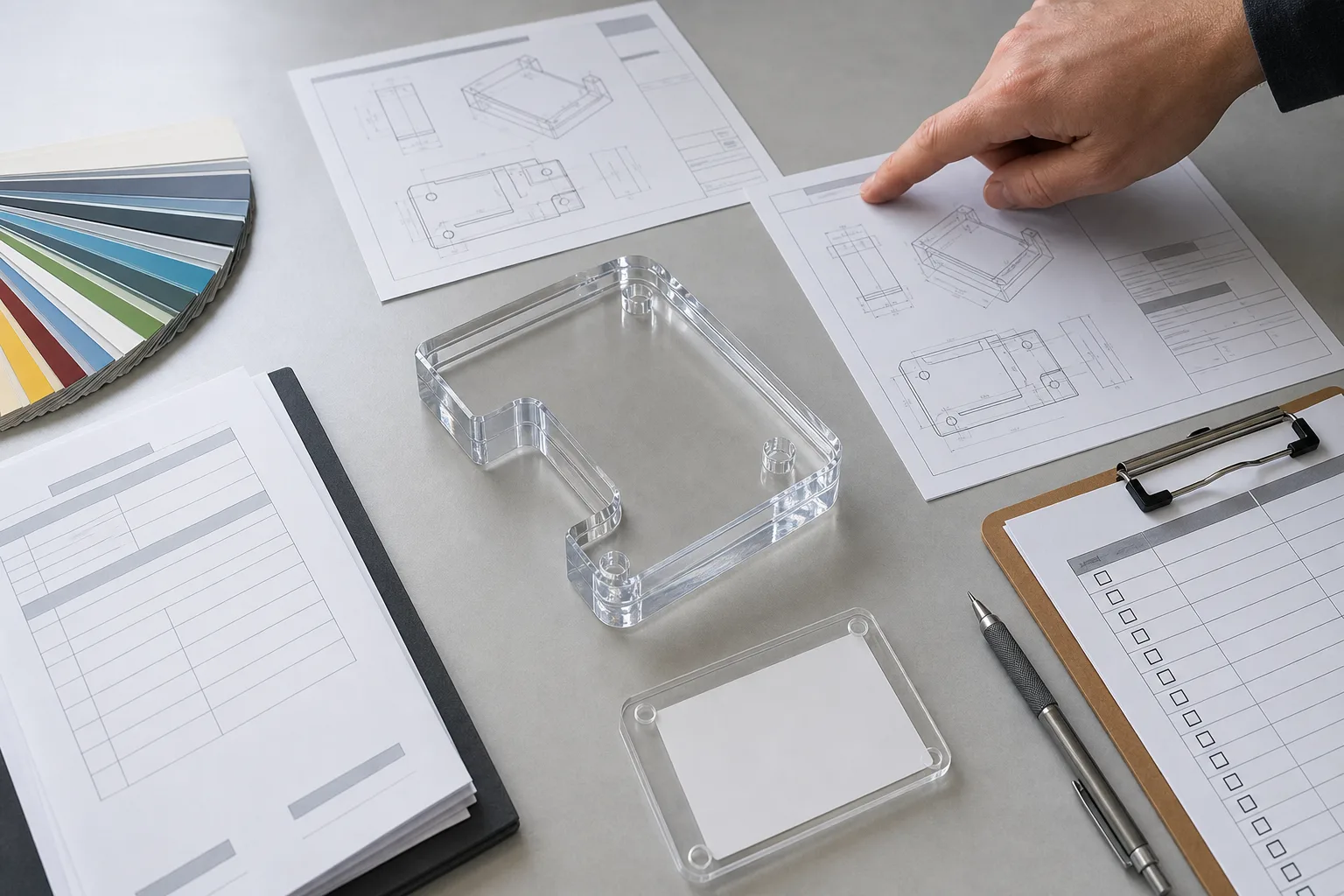
A repeat order stays repeatable only when the active revision, approved sample, permitted changes, and first-off release are explicit.
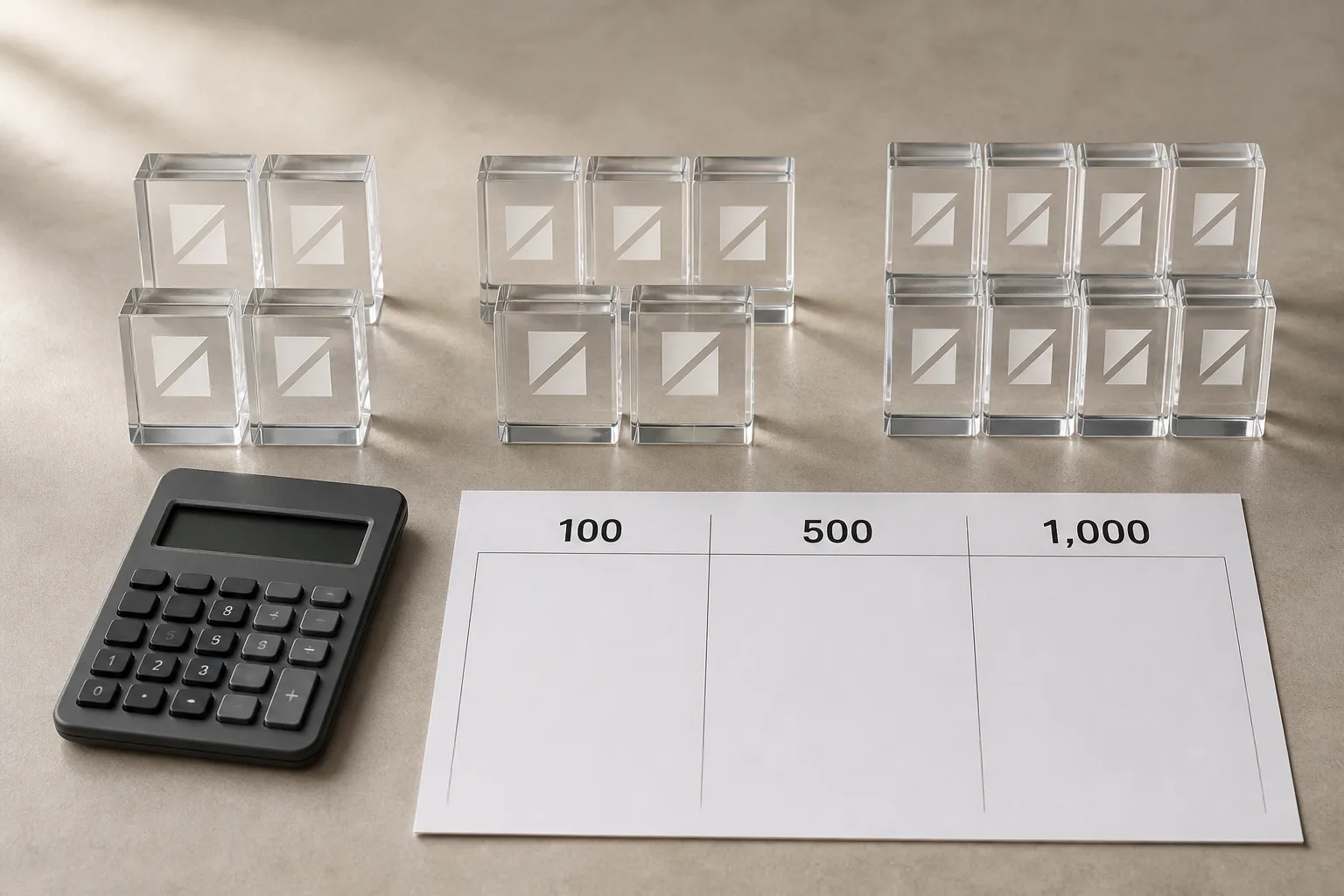
Quantity spreads setup, but block volume, edge finishing, branding, protection, and freight keep controlling the landed price.
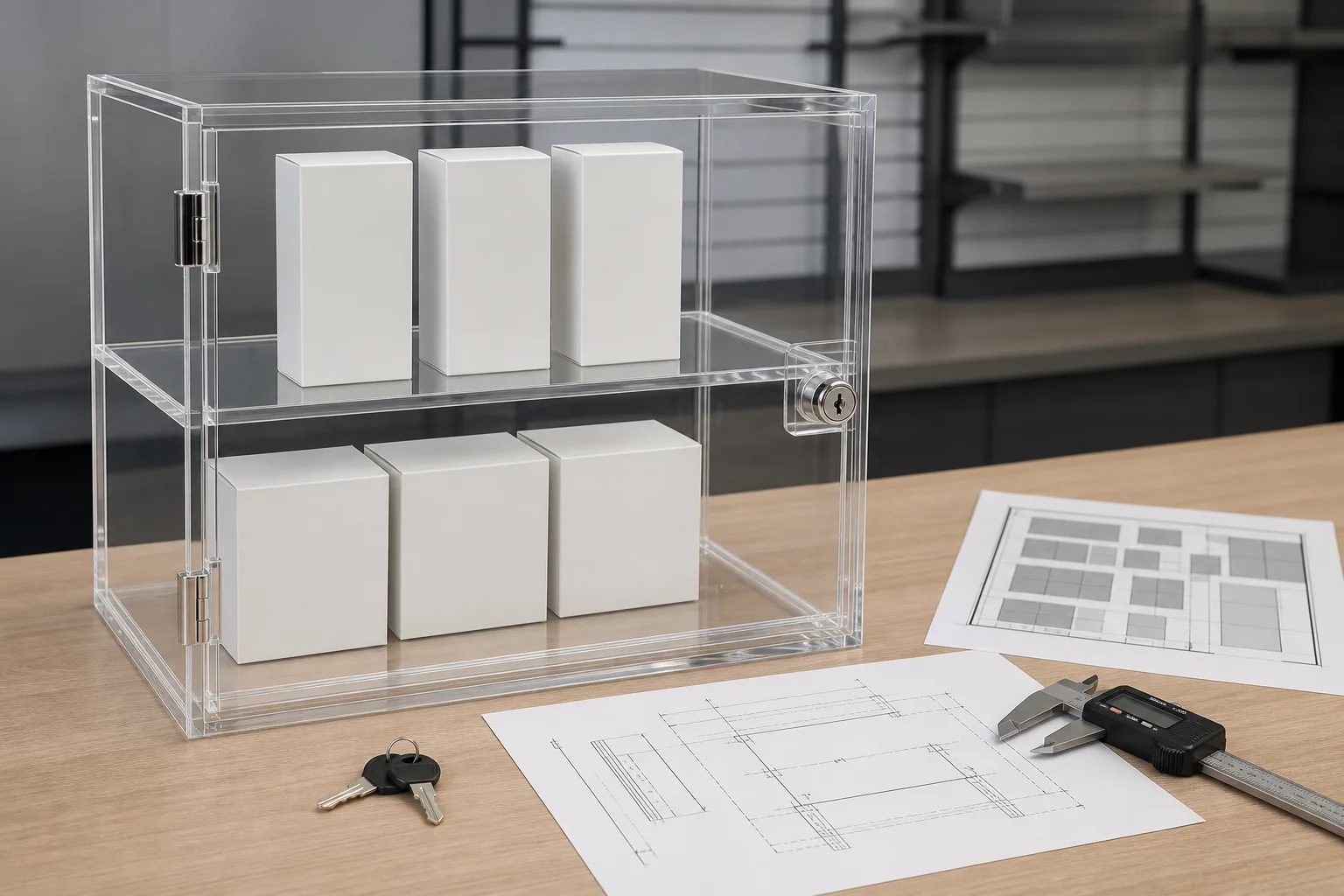
The buyer and local authority define access and regulatory requirements; the acrylic supplier turns approved inputs into a mechanical enclosure.
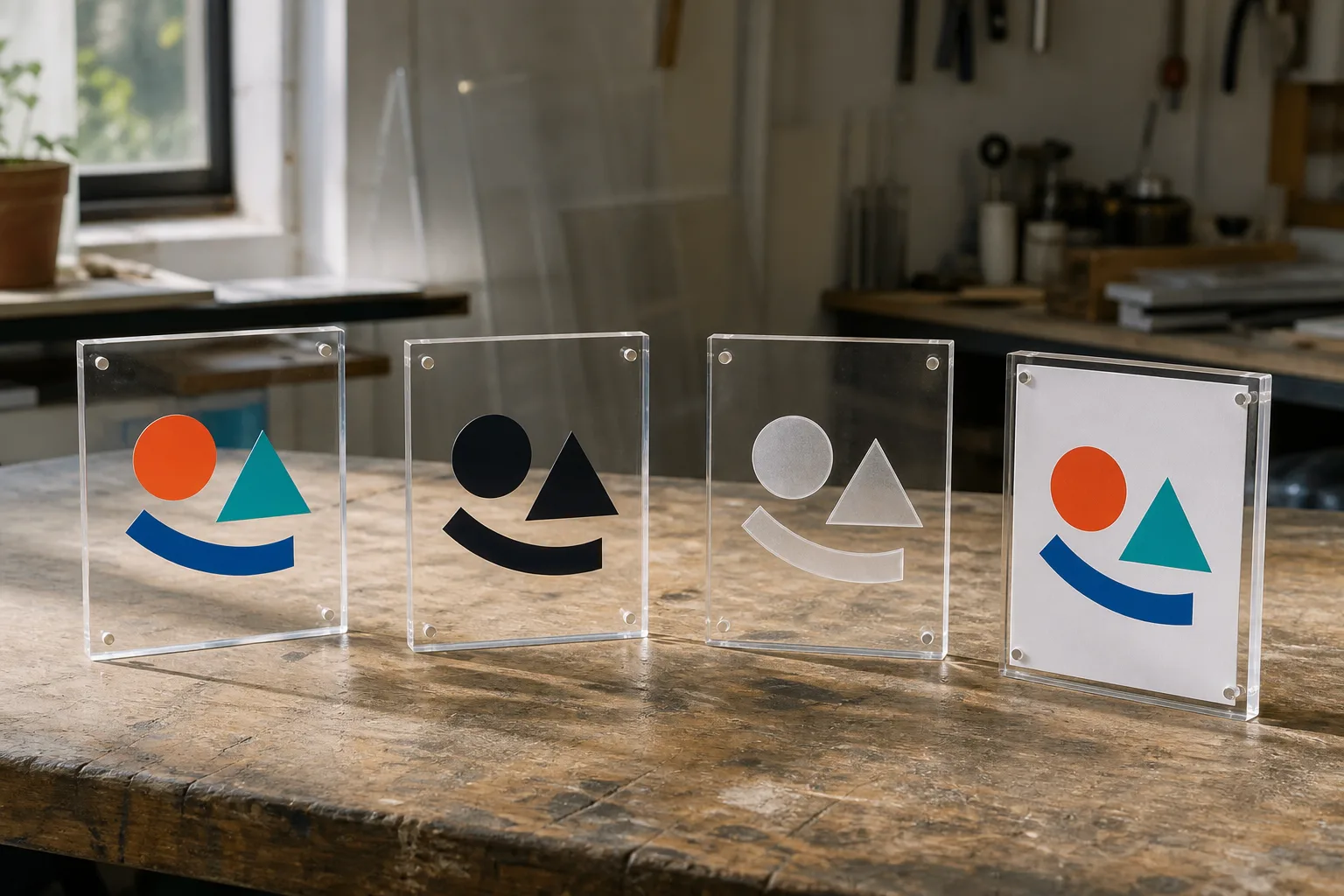
Choose the branding process after you define viewing distance, artwork life, color standard, surface, and replacement plan.
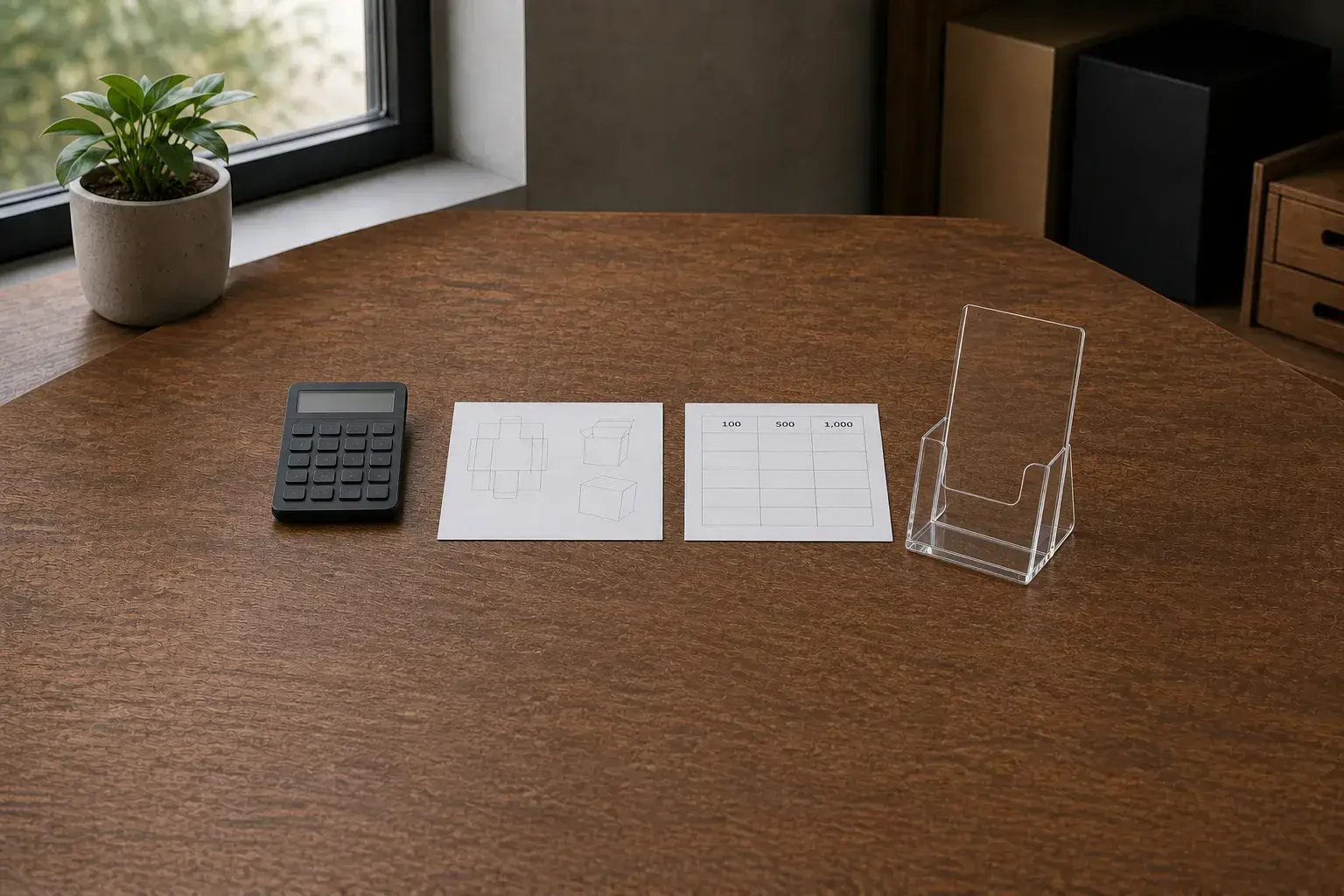
The quantity tier spreads setup, but the drawing still controls material yield, forming, assembly, branding, inspection, and carton volume.
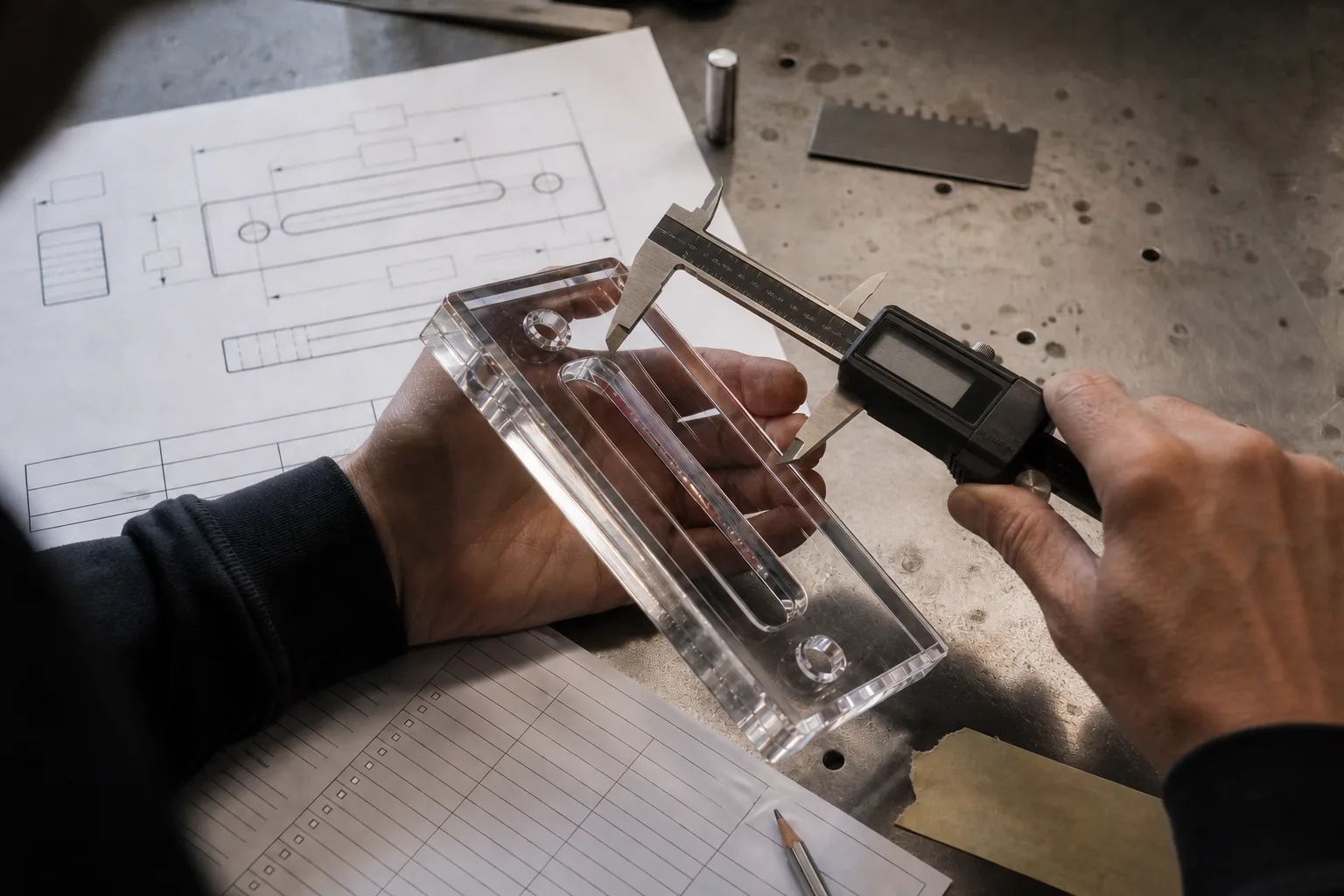
A first article should prove the production file and inspection method before the factory repeats the part 100, 500, or 5,000 times.
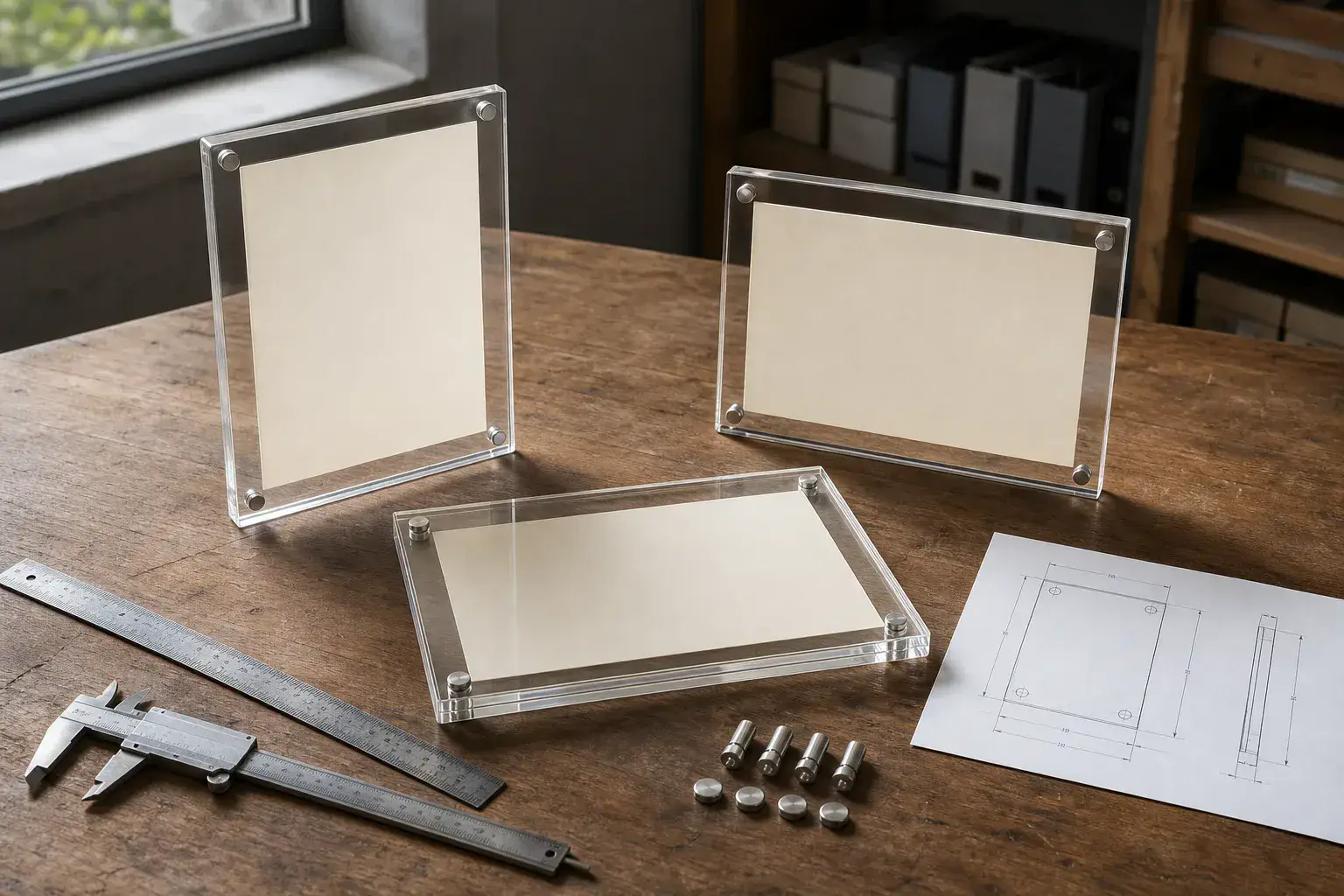
The certificate names the insert size; the frame drawing must also define the visible window, border, fasteners, orientation, and loading method.
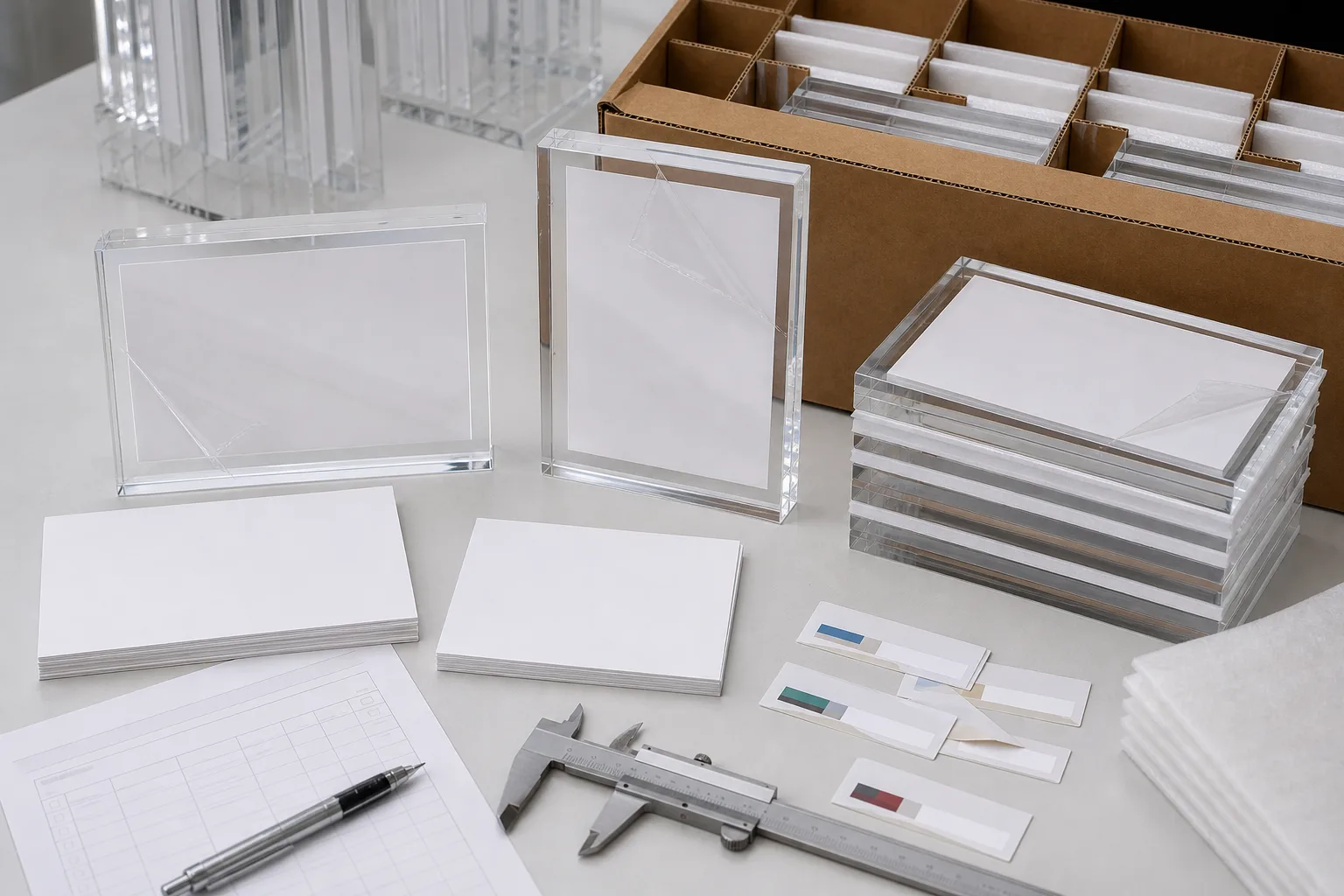
A stable frame program starts with the actual print, visible window, loading method, packout, and one controlled file per SKU.
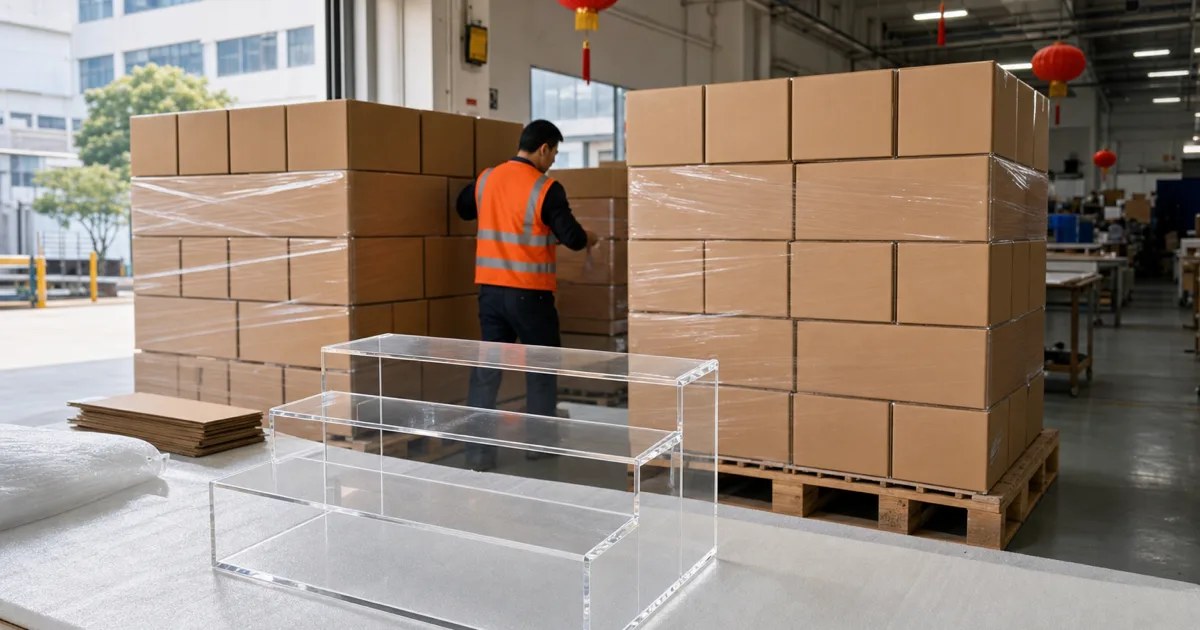
Every acrylic ordering deadline between October 2026 and March 2027 works backward from one date. Here is the calendar to pin up before the rush starts.
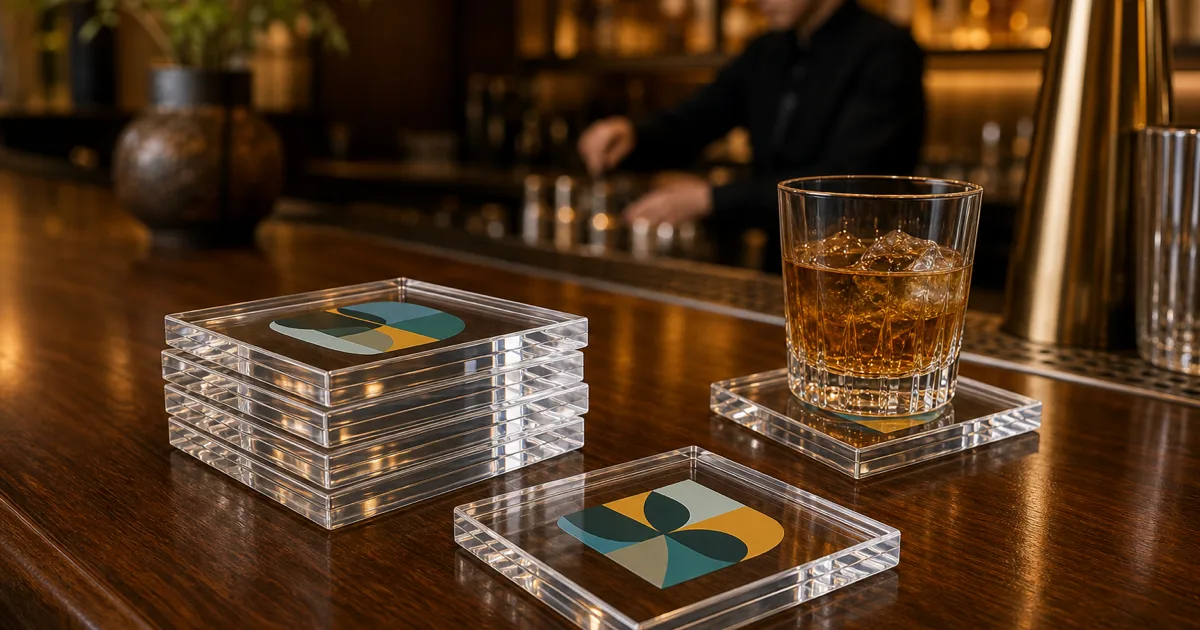
Thickness you can feel, a print method matched to your artwork, and the sample gate that keeps 1,000 branded coasters from arriving the wrong color.
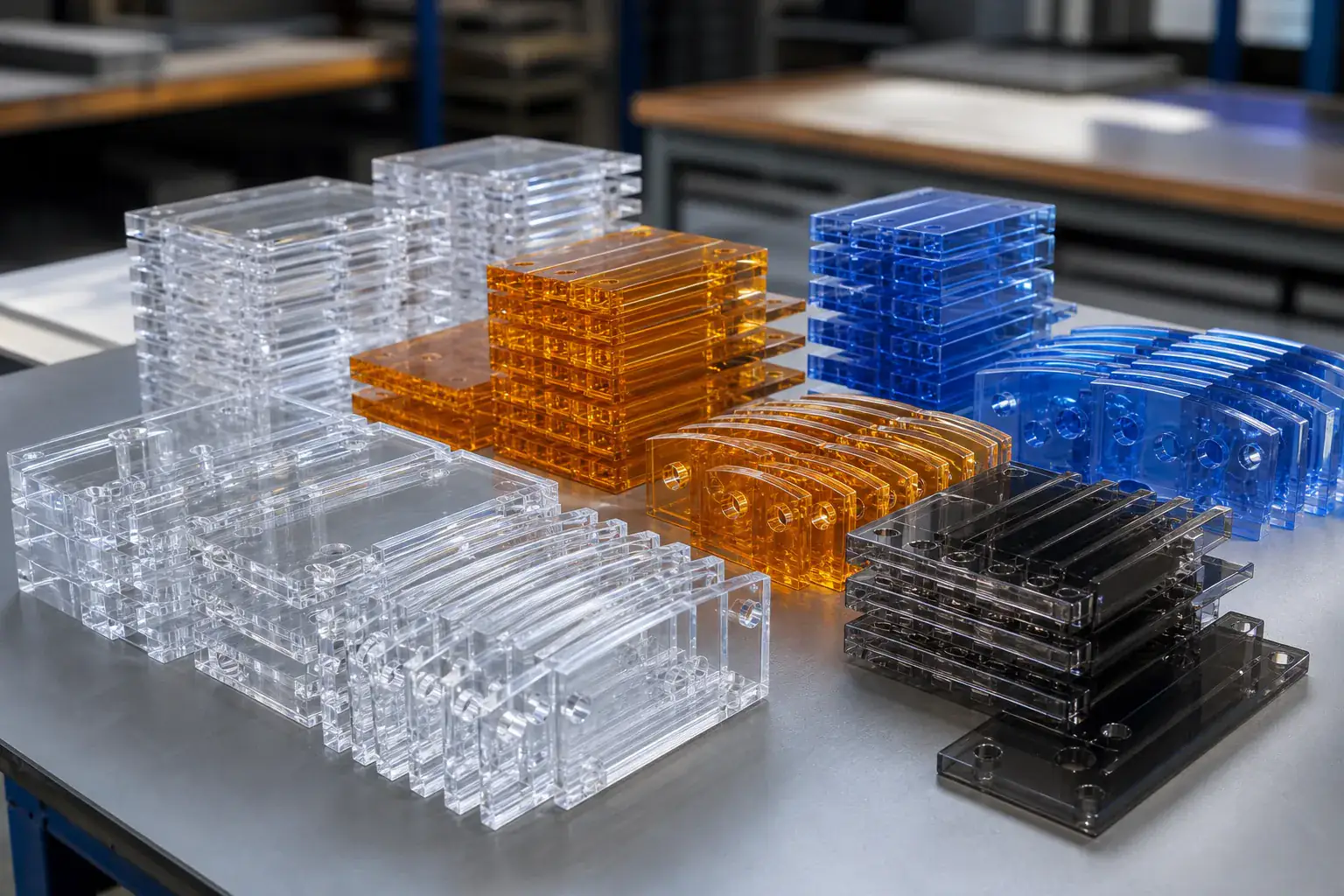
Buying sheet and cutting it yourself is often the right answer — until quantity, tolerance or the color list crosses a line you can locate in numbers.
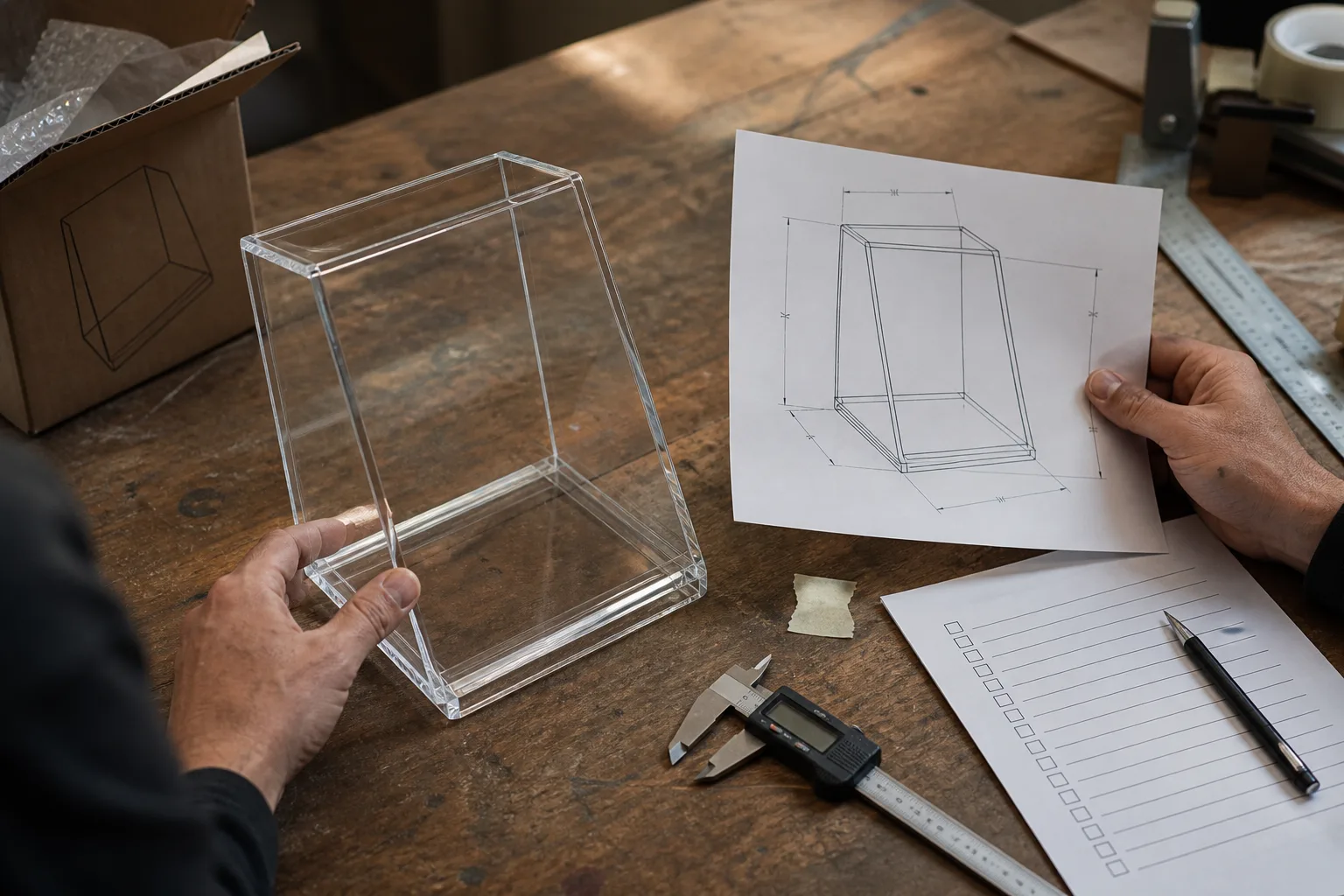
A supplier comparison is useful only when every factory quotes the same drawing, sample gate, inspection record, and packing scope.
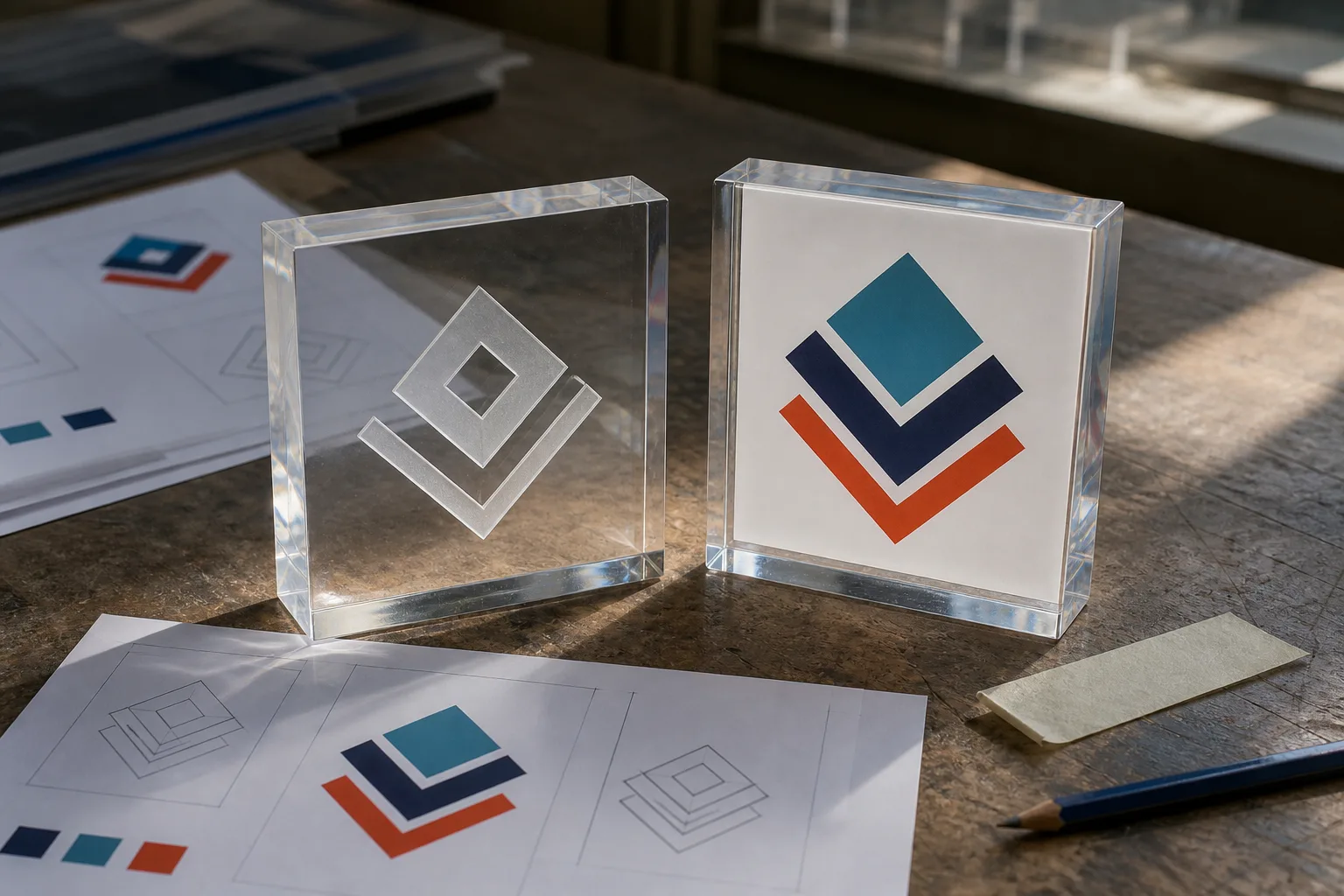
Engraving changes the acrylic surface; UV printing adds controlled color. The right method follows the artwork and the approval evidence you need.
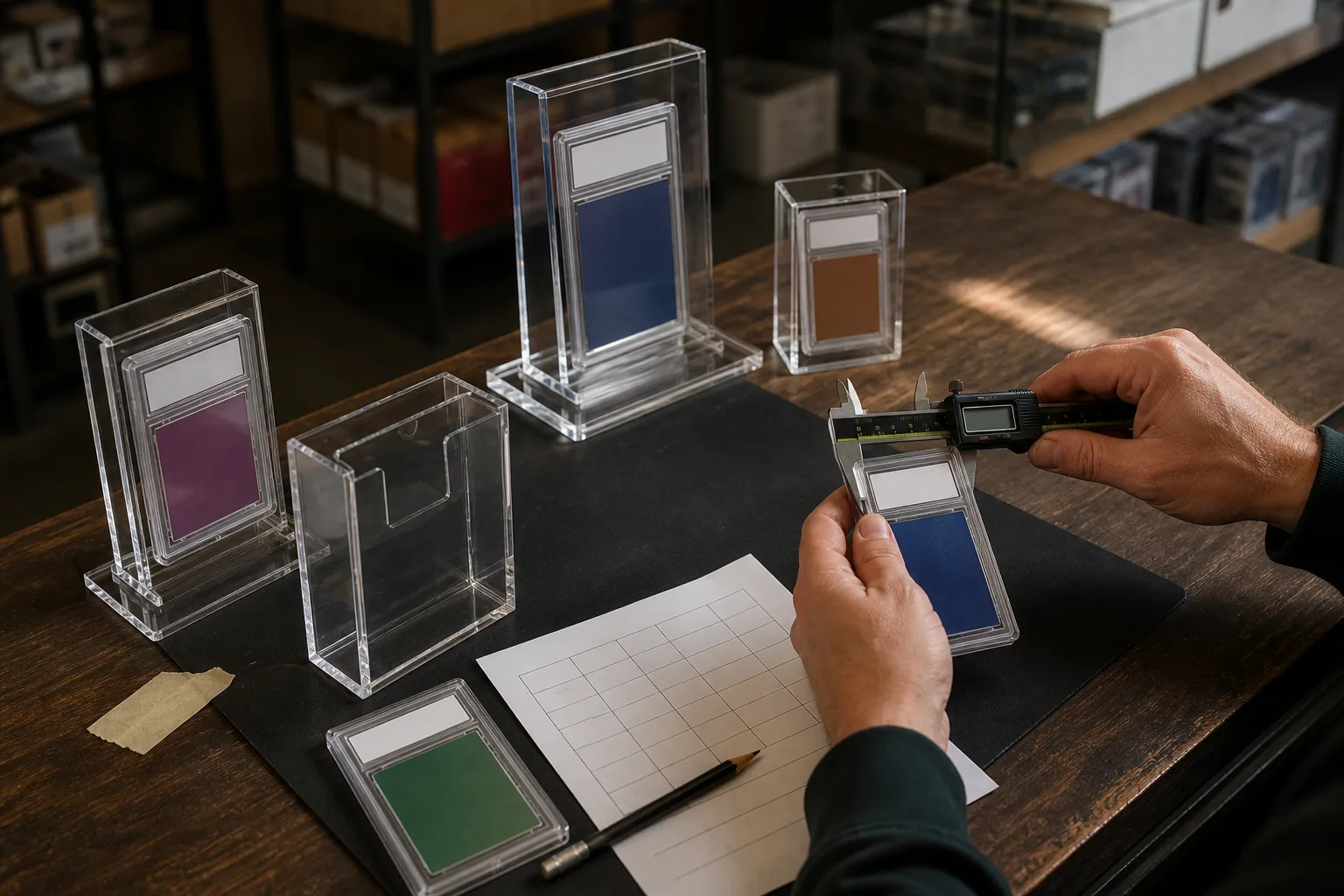
Card-shop cases fail at the interface between the slab, stand, access, shelf, and carton; one measured sample closes those gaps before the PO.
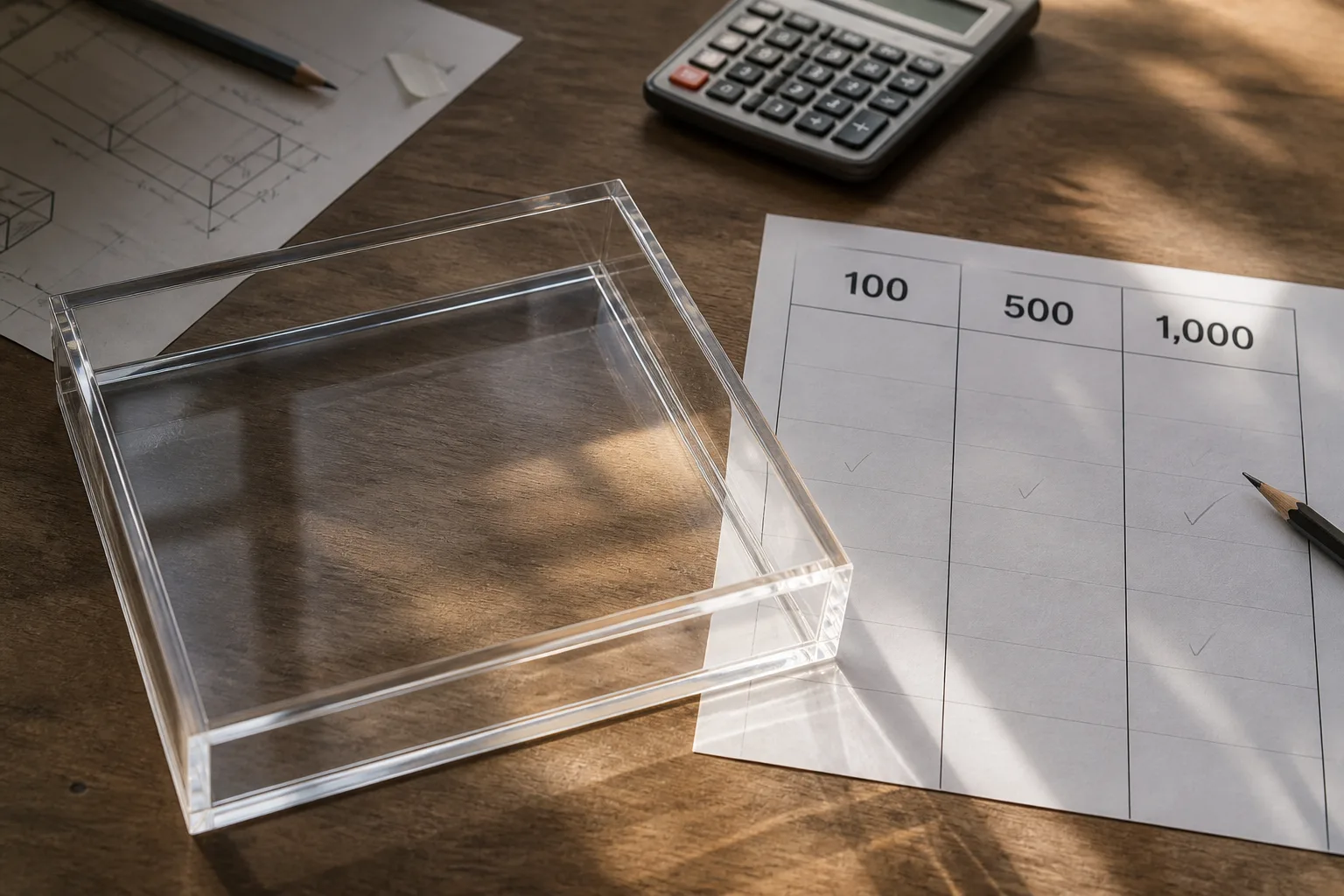
Quantity lowers the setup cost per tray, but size, sheet yield, walls, handles, print, and export packing still control the final quote.
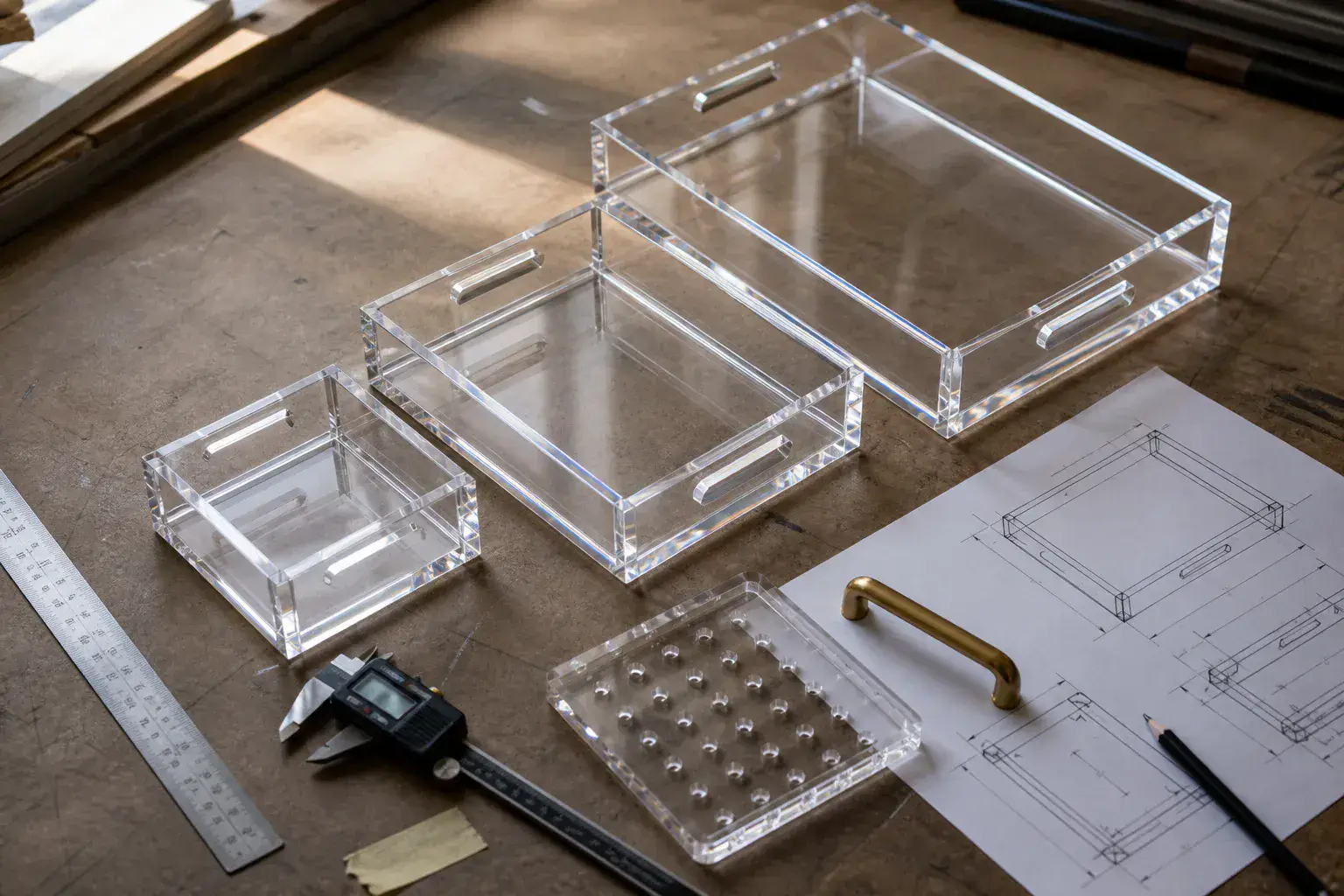
A tray drawing works when it separates usable space from outside size and ties thickness to span, load, handles, and the approved sample.
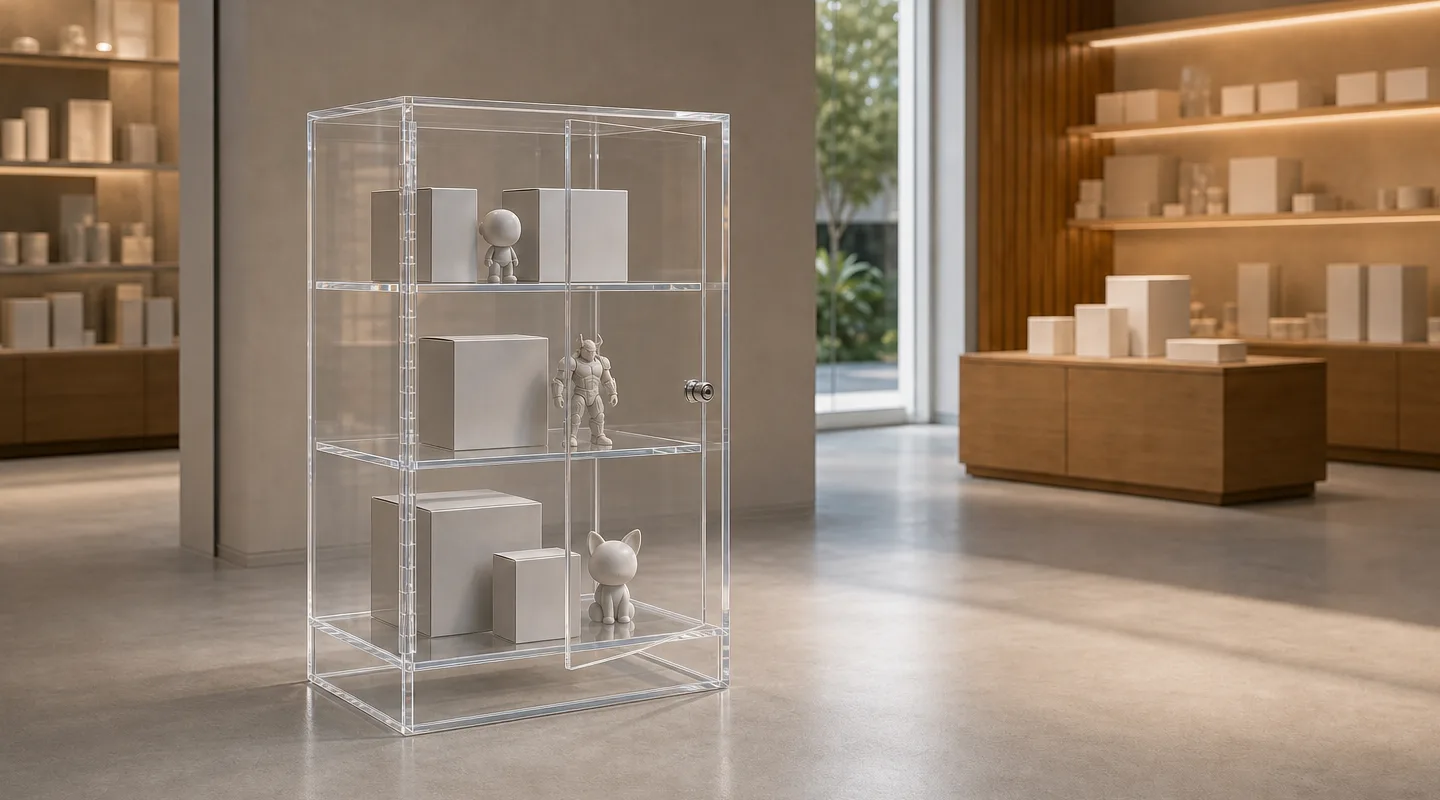
Door type, lock hardware and shelf span decide whether a cabinet works on the floor; a single trial unit is how careful buyers commit to a size range.
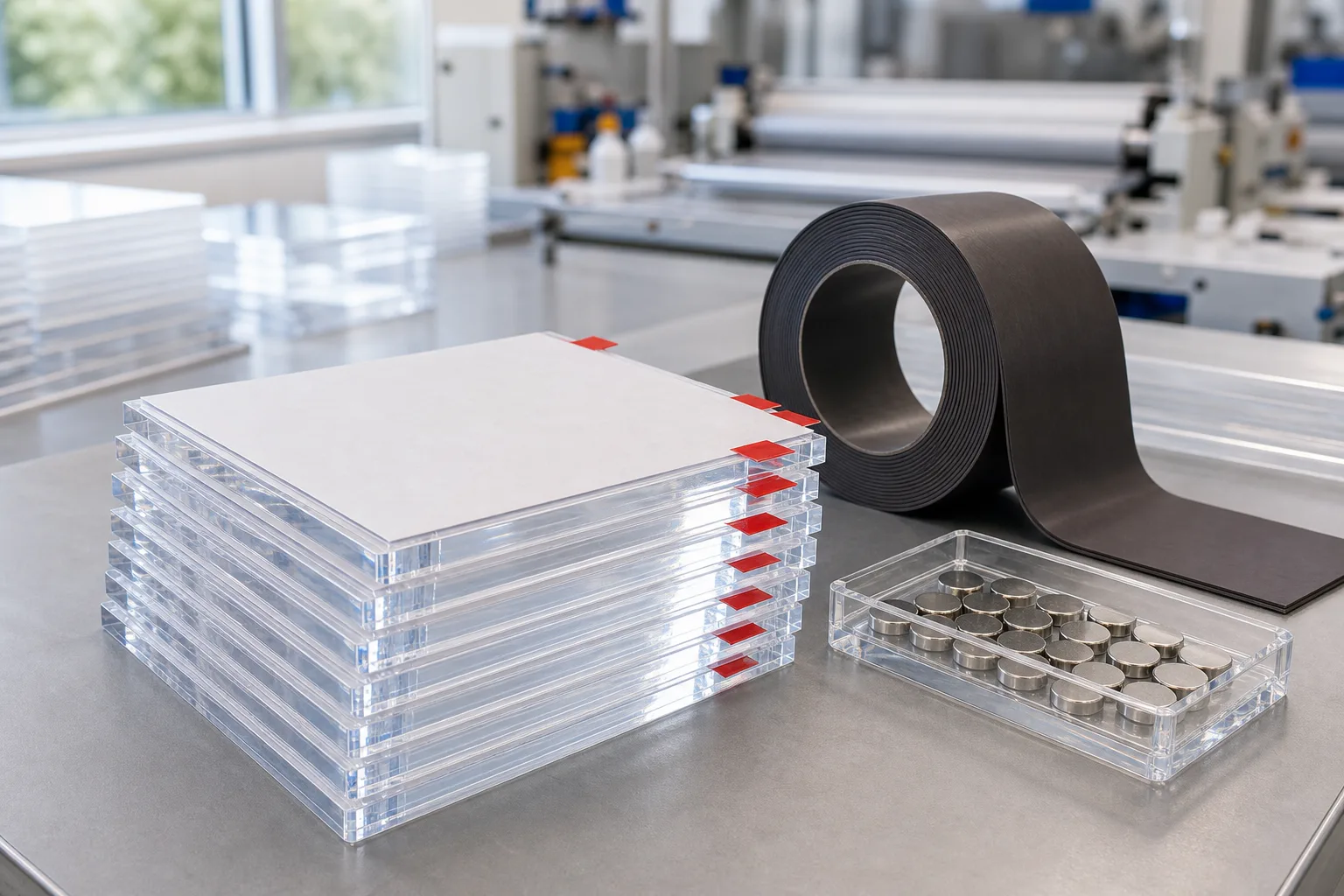
Photo labs and fixture builders don't buy displays — they buy parts with the mounting hardware already on the back.
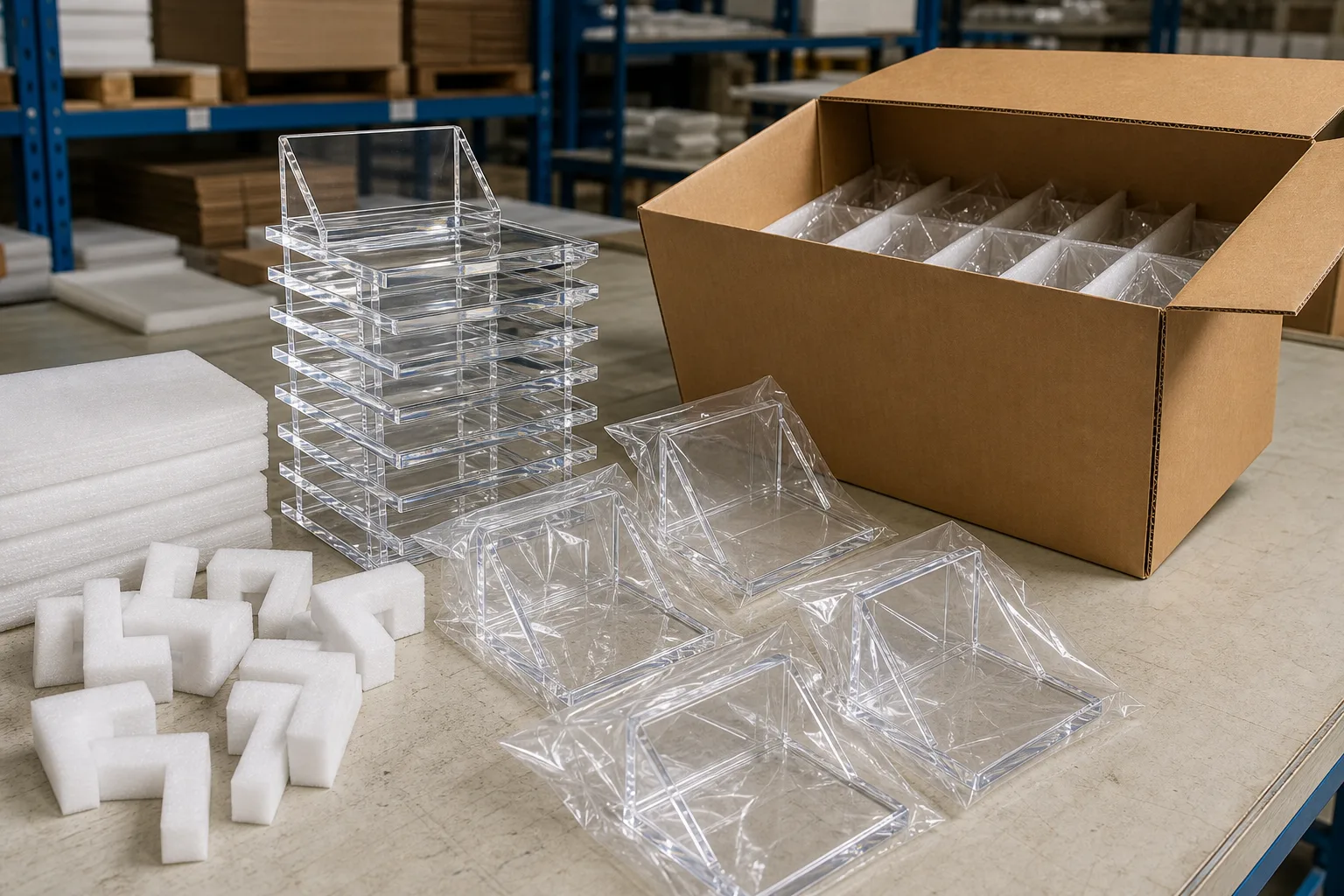
The packing tier you spec decides freight cube, damage risk and whether your warehouse repacks a single unit, so spec it like a dimension, not a default.
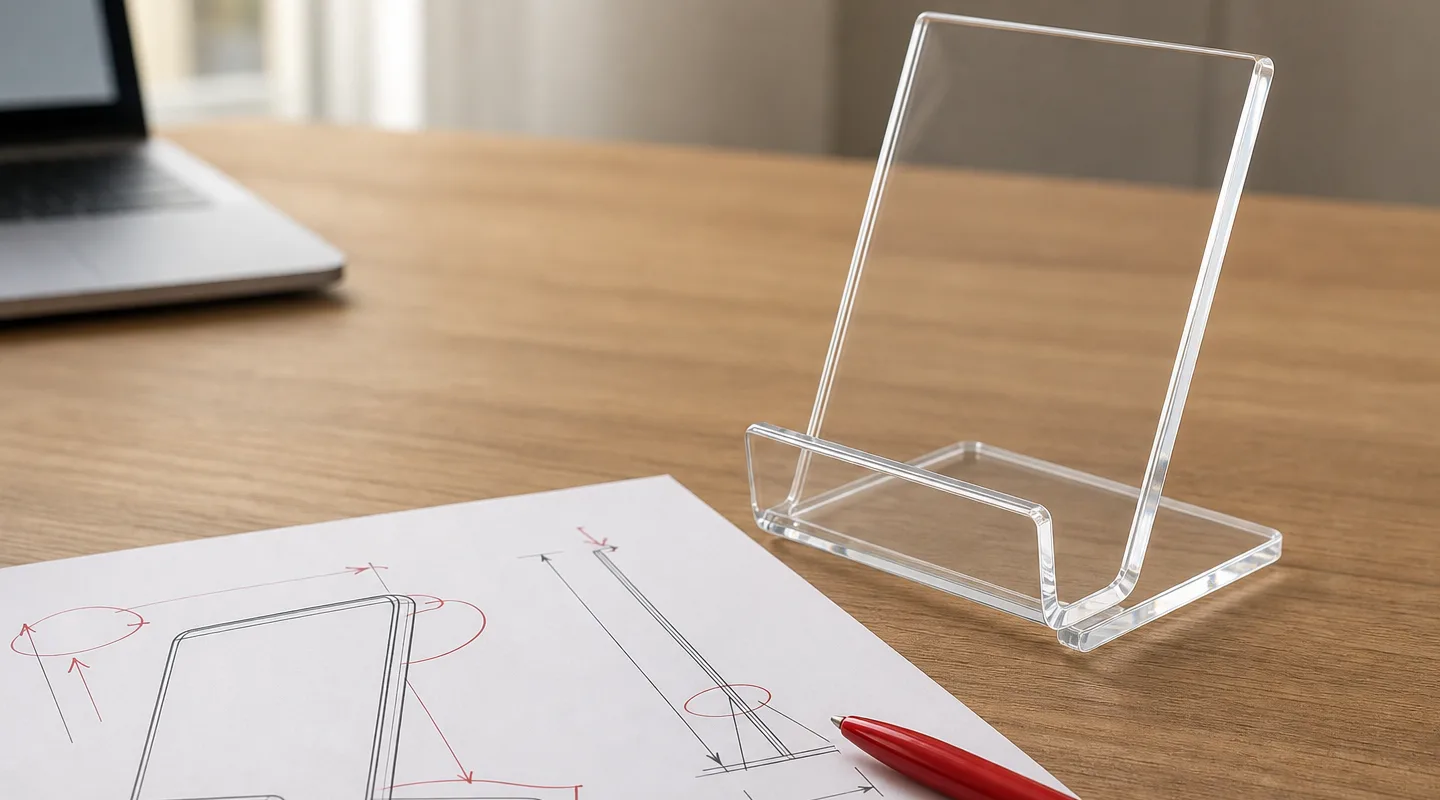
Your end client judges the artwork, you own the purchase order, and our machines follow the file. One versioned proof keeps all three pointing at the same document.
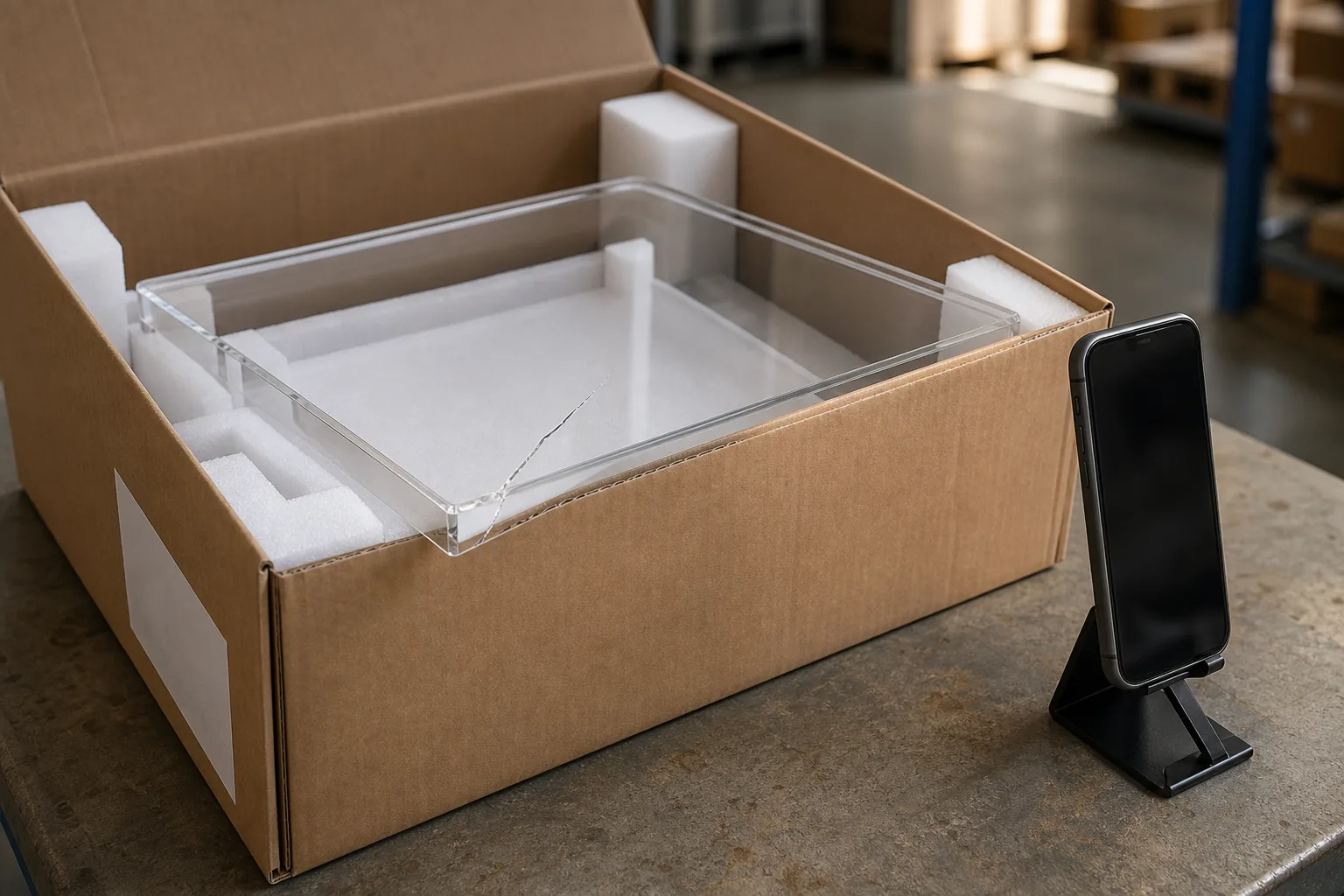
The claim is won or lost in the first two days, and the deciding moves should be agreed before you wire a deposit, not over a broken carton.
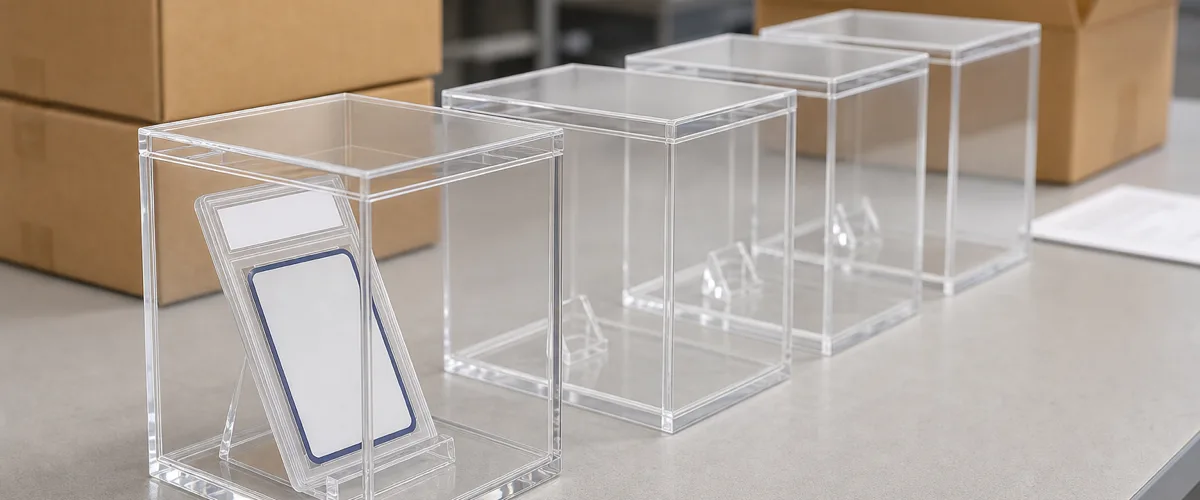
You have a product worth protecting and no sales history to size the order.
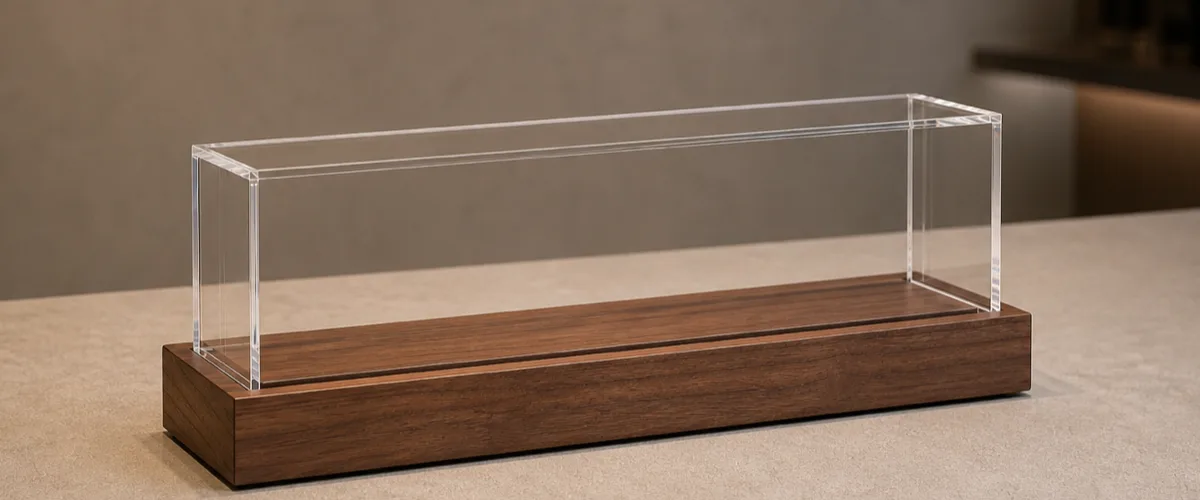
Half of every mixed-material brief sits outside our own machines. Here is which half, how we handle it, and why we would rather tell you now than mid-production.

Crowdfunding turned small studios into publishers. Here is how a factory turns a 150-piece parts list into a production run you can approve piece by piece.
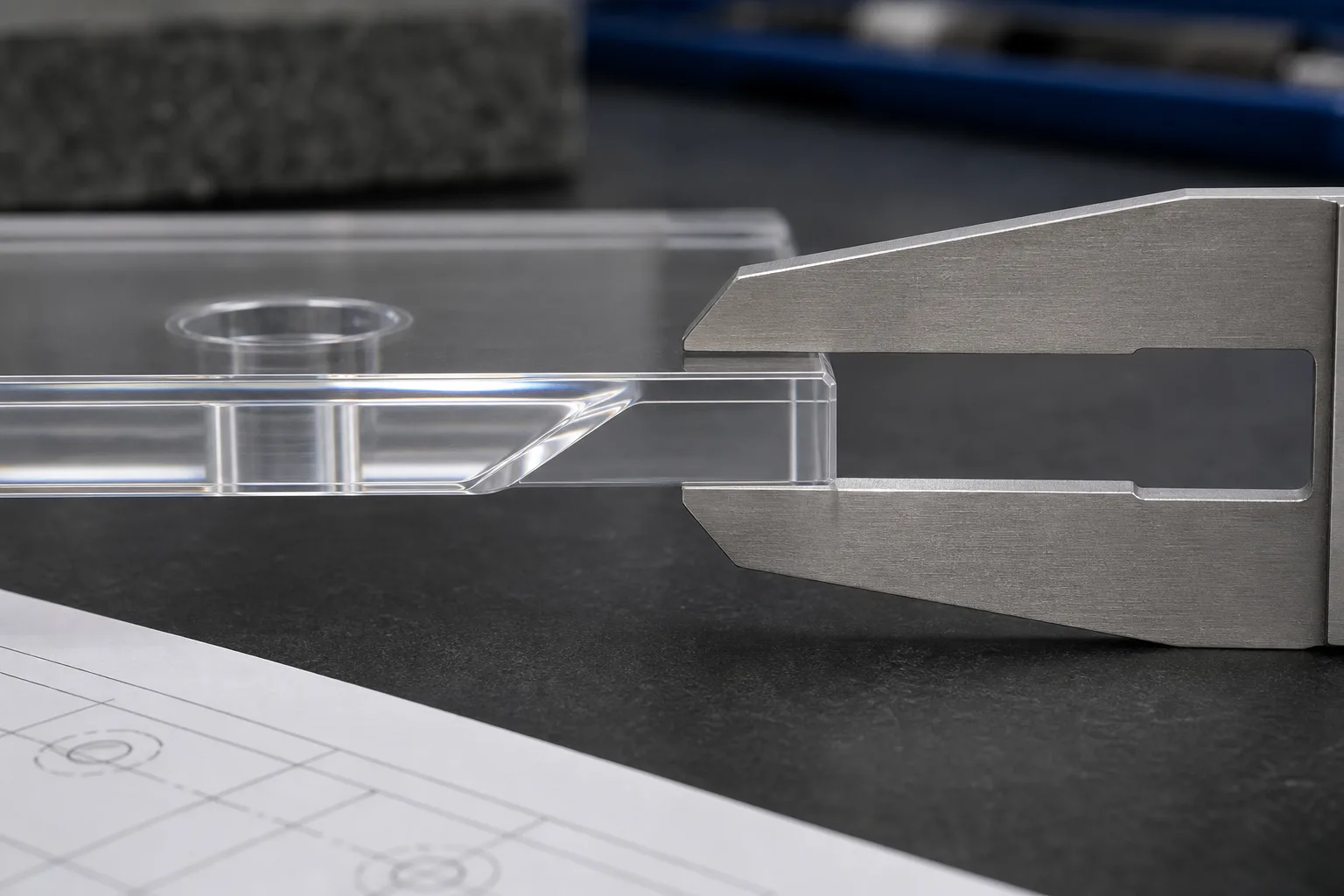
Every acrylic part carries three different tolerances at once — the sheet's, the machine's, and the temperature's. Fit problems start when a drawing only budgets for one of them.
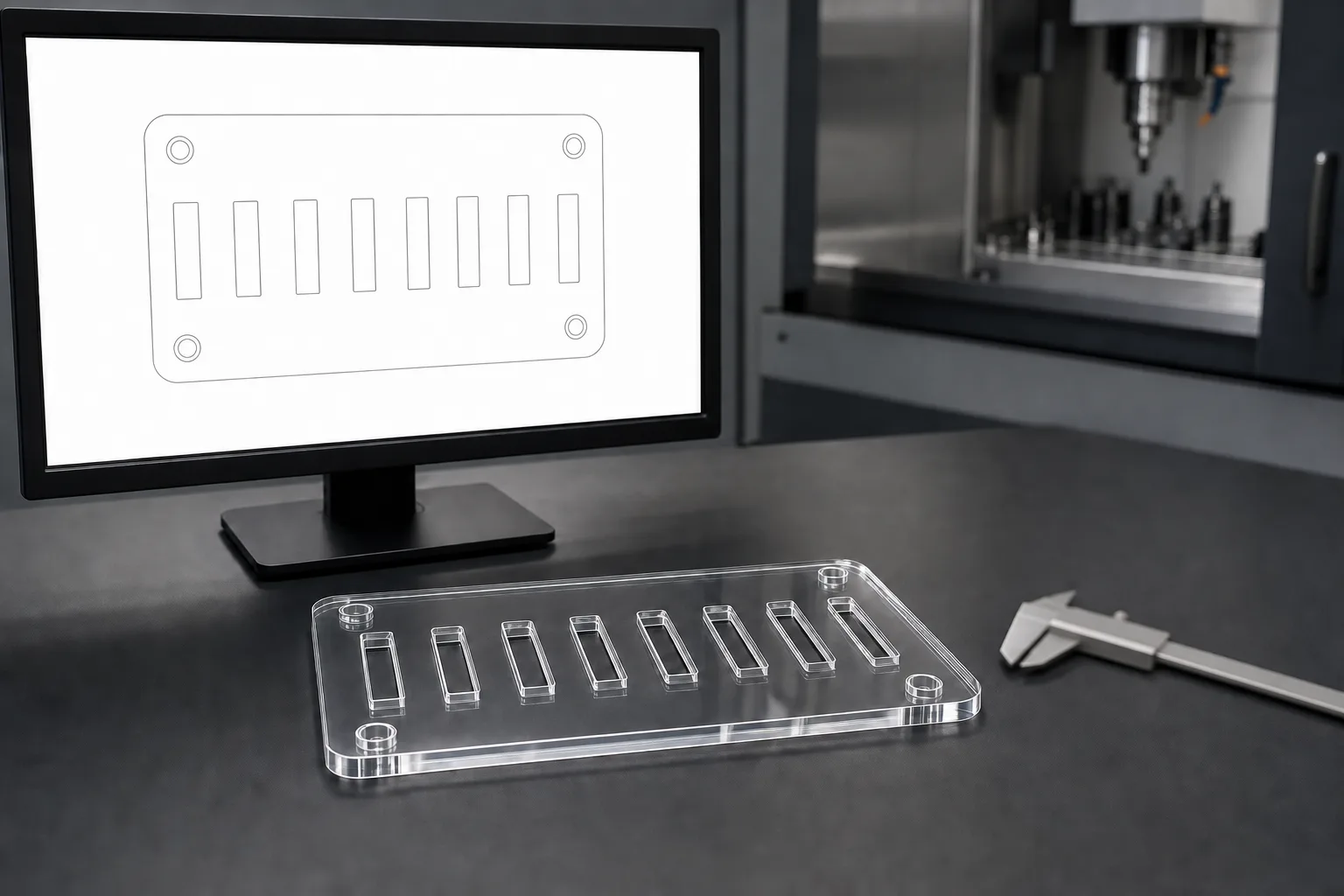
A clean part can still arrive as a bad file.
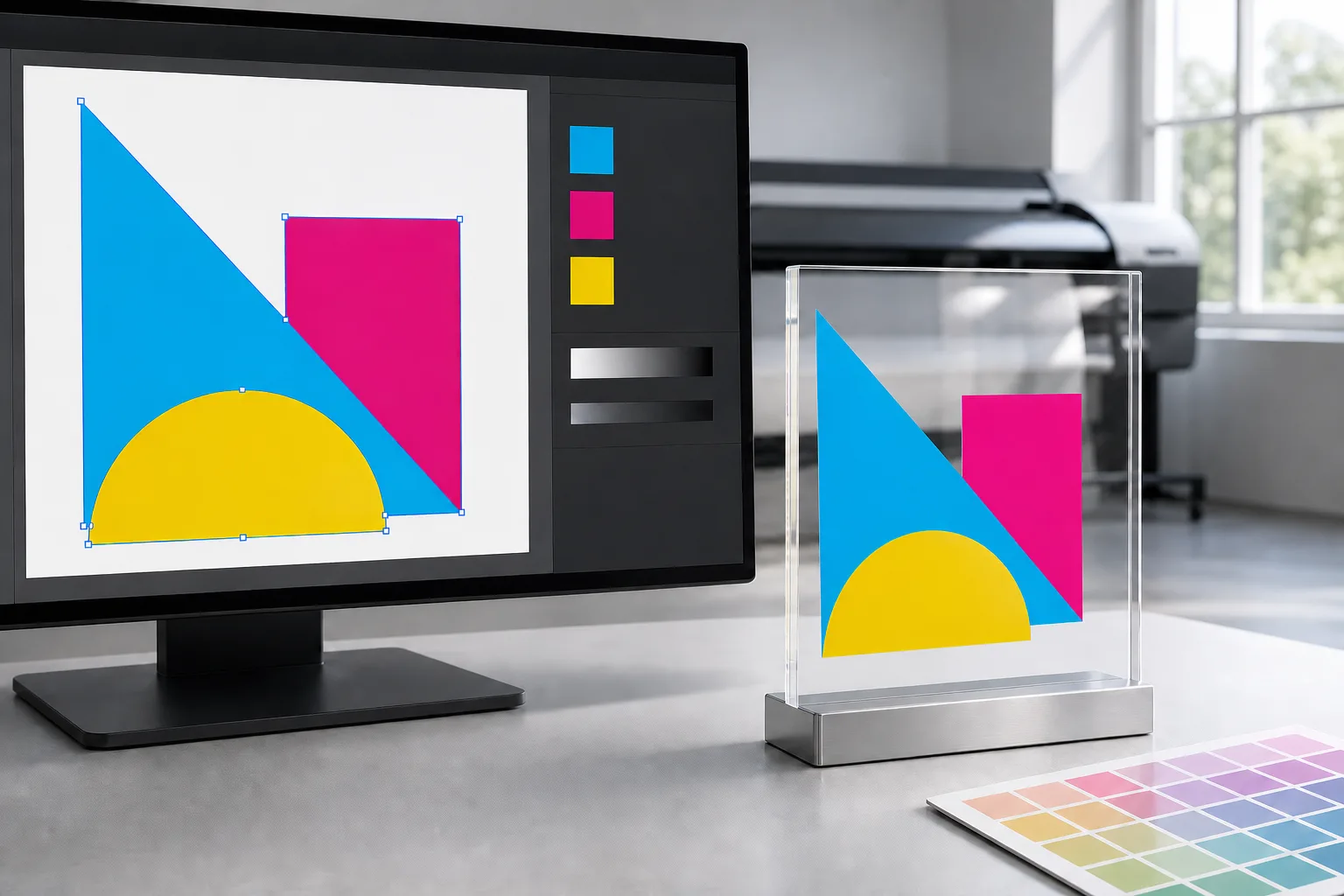
The format is right, the logo is clean, and production still cannot start. Six checks separate a correct vector file from a press-ready one.
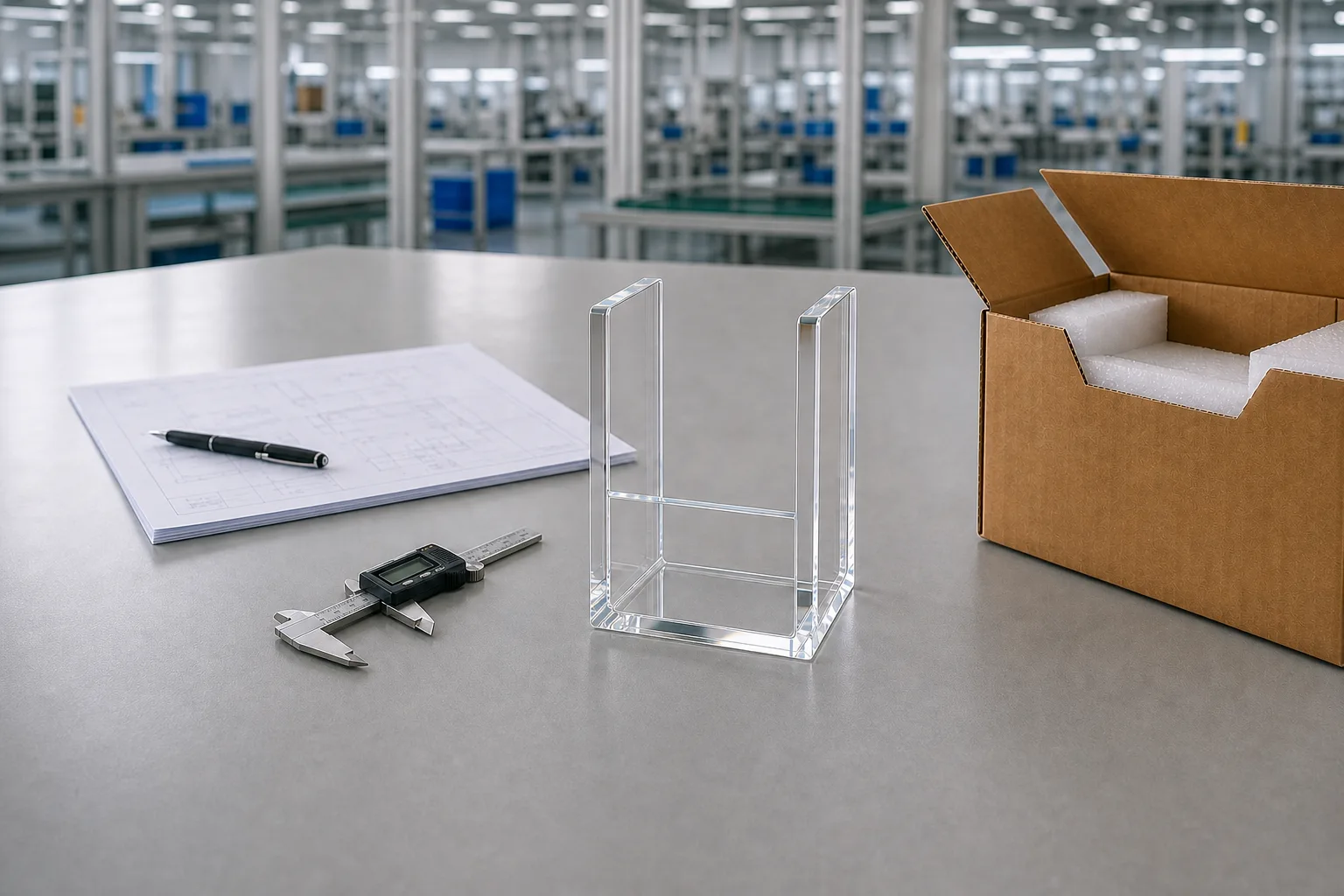
The sample looks perfect. That is not the question.

An 800-piece table number run is not 800 of an Etsy listing — it is one production file, one color batch, and one date that cannot move.
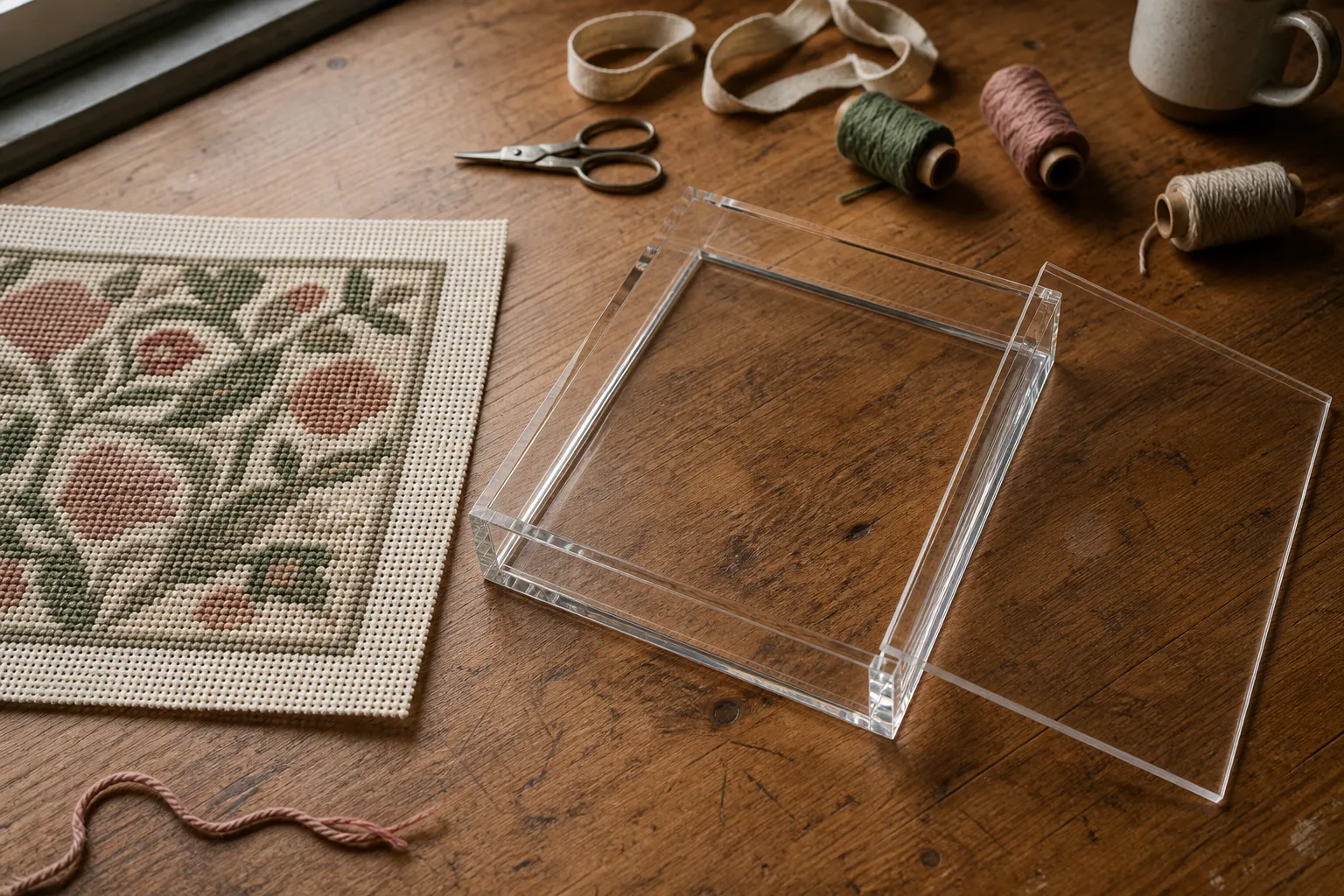
Finishers buy blanks, not trays.
The design is approved, the quantity is locked, and the quote is still above the number finance will sign.
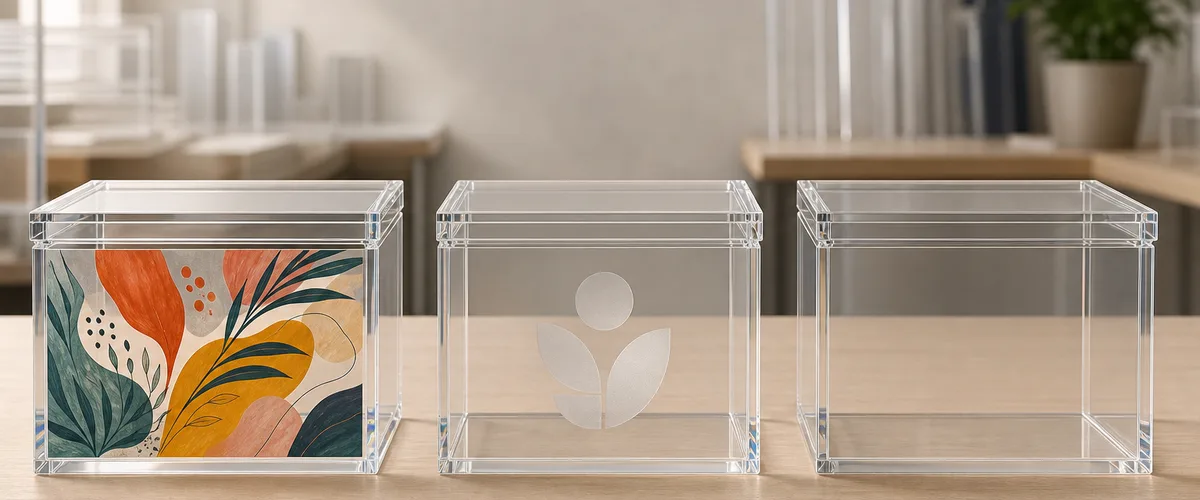
Your artwork file already made most of this decision.
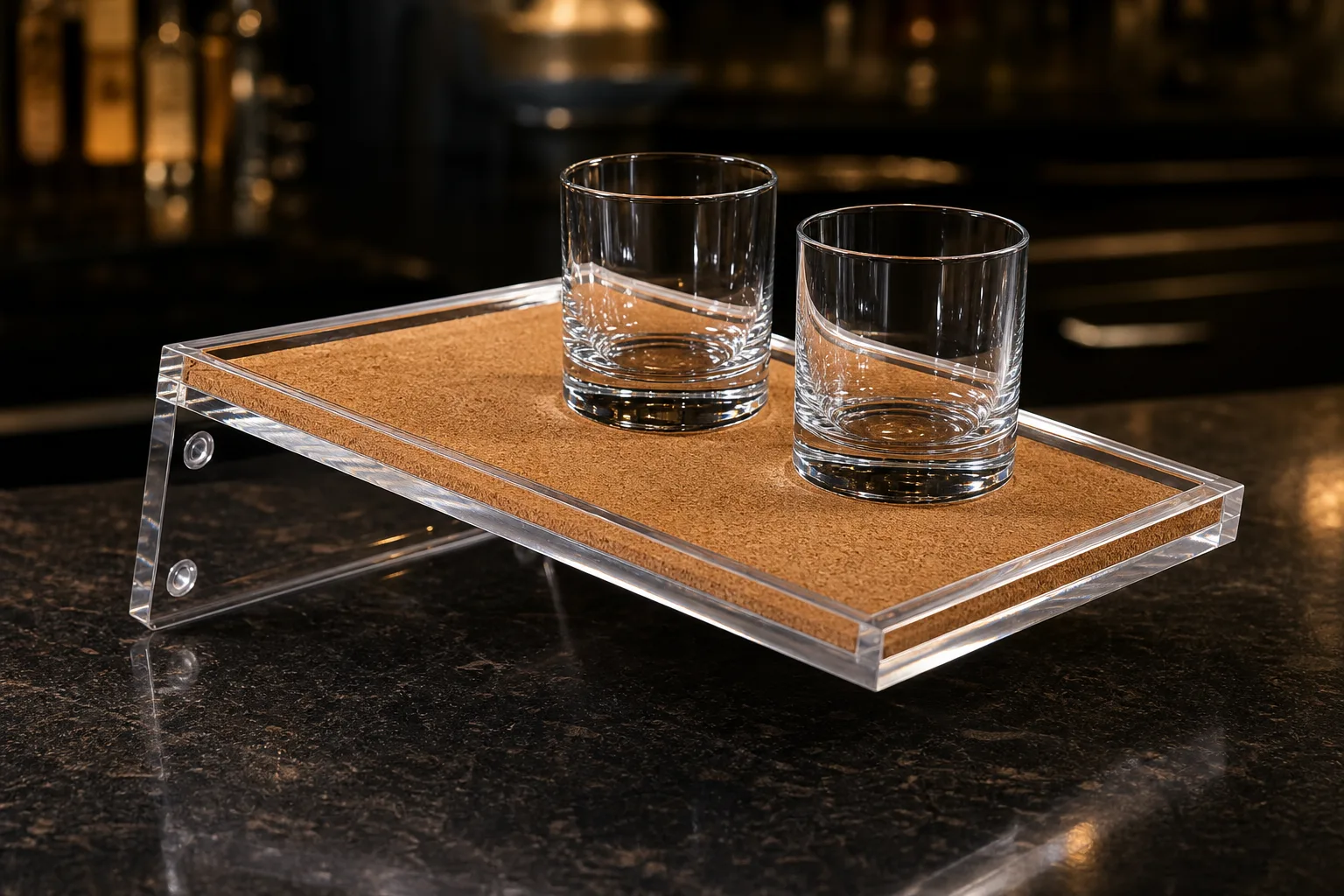
Four ways to put grip on an acrylic tray — and only two of them still work after a year of commercial washing. Here is the honest ranking.
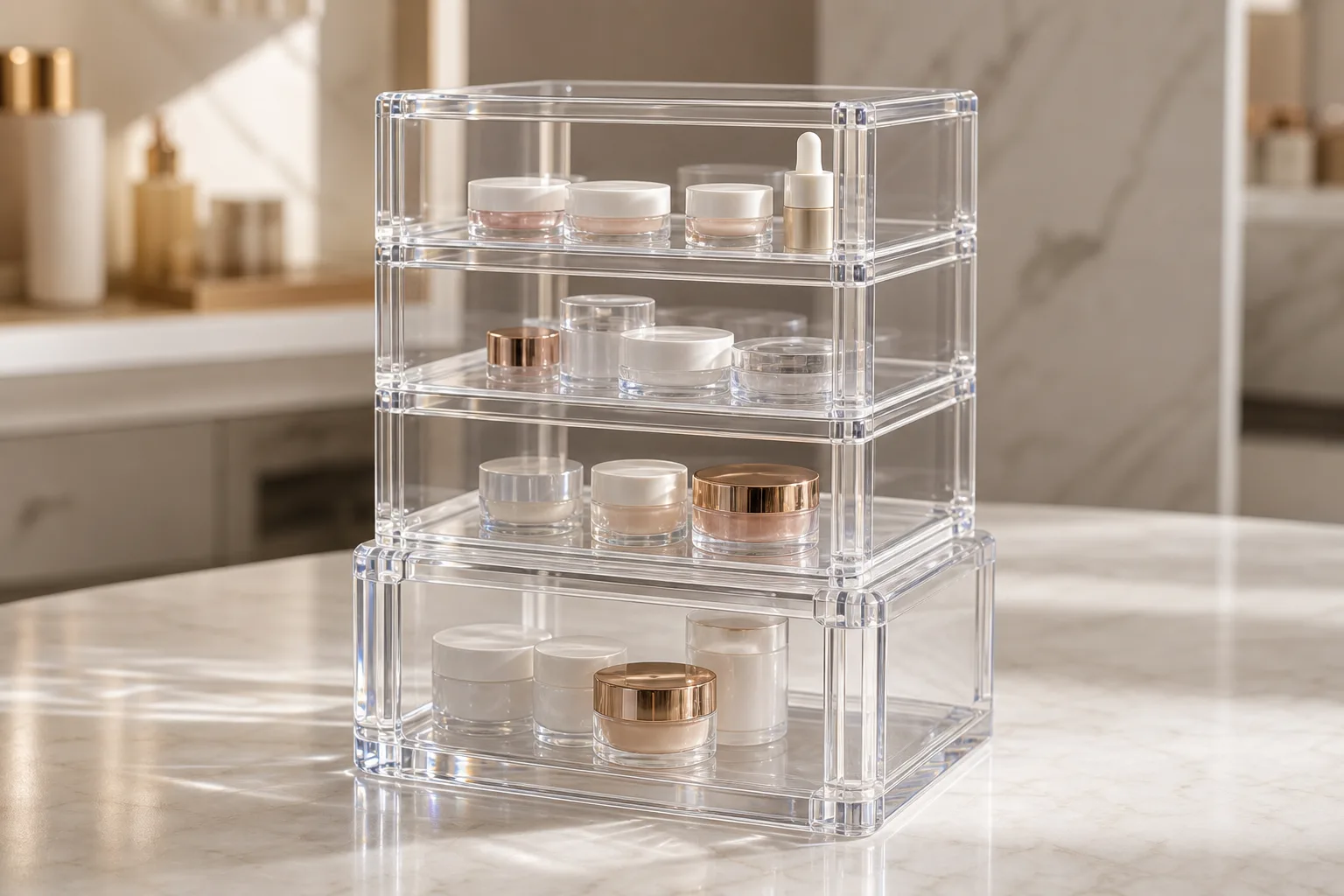
Three interlock systems, one conservative weight rule, and the wall-height math that keeps a four-tier stack from becoming a slow-motion failure.
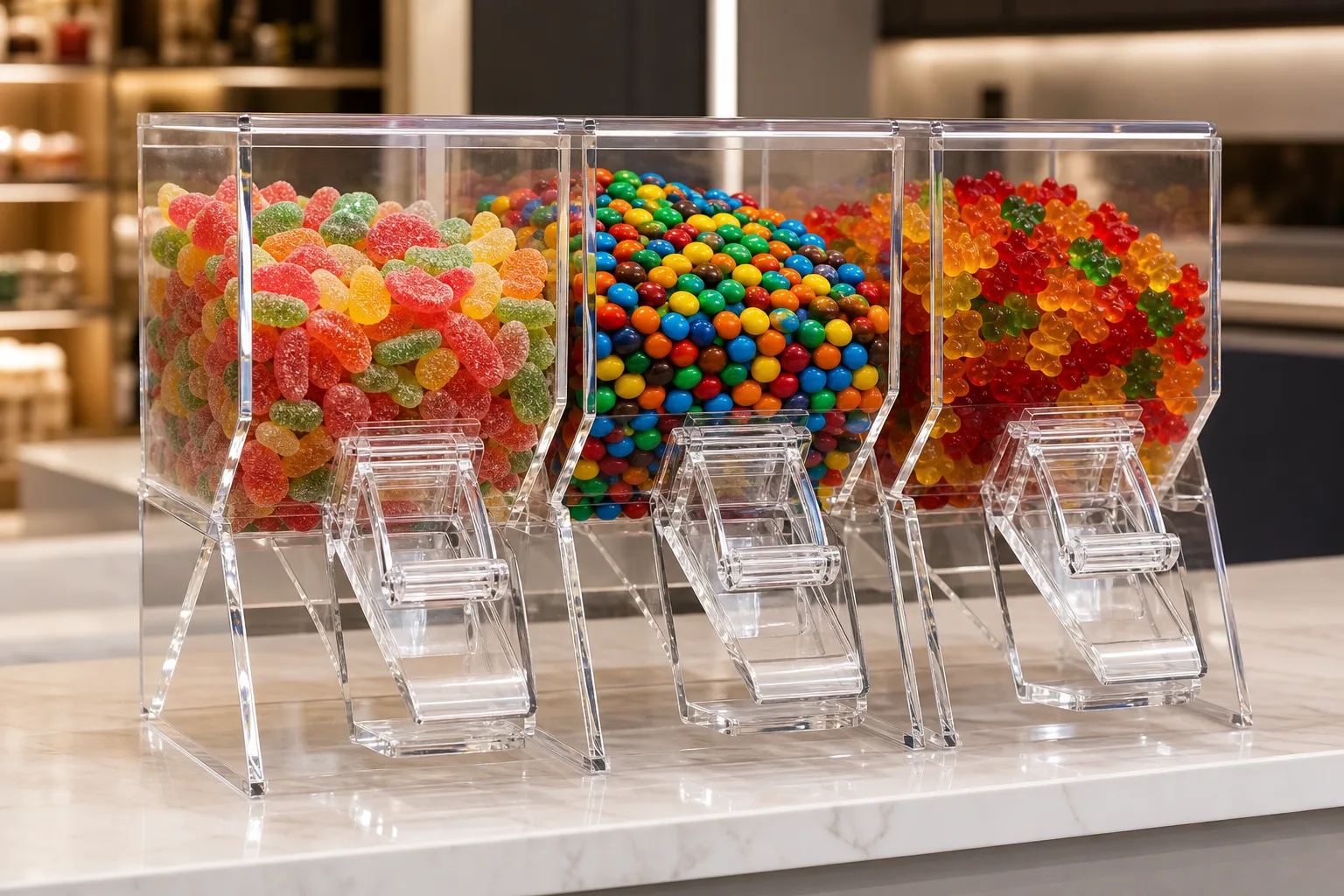
The clear hopper is the easy part. Whether candy flows, bridges, or avalanches is decided by chute geometry — and that's what this guide specs.
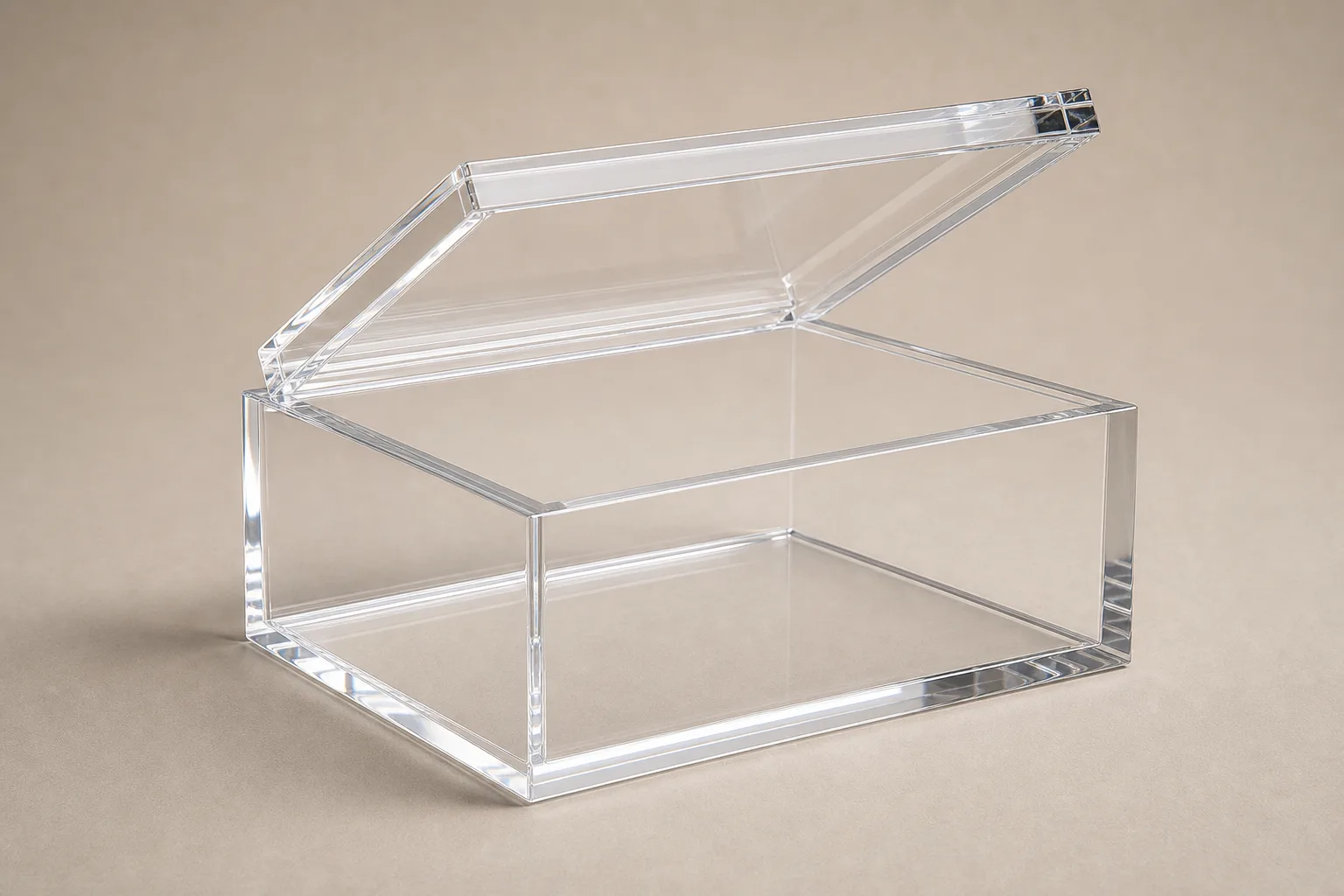
Most boxes sold as airtight are not. Here is what a well-fitted acrylic lid actually blocks, what a gasket adds, and when a collector needs more.
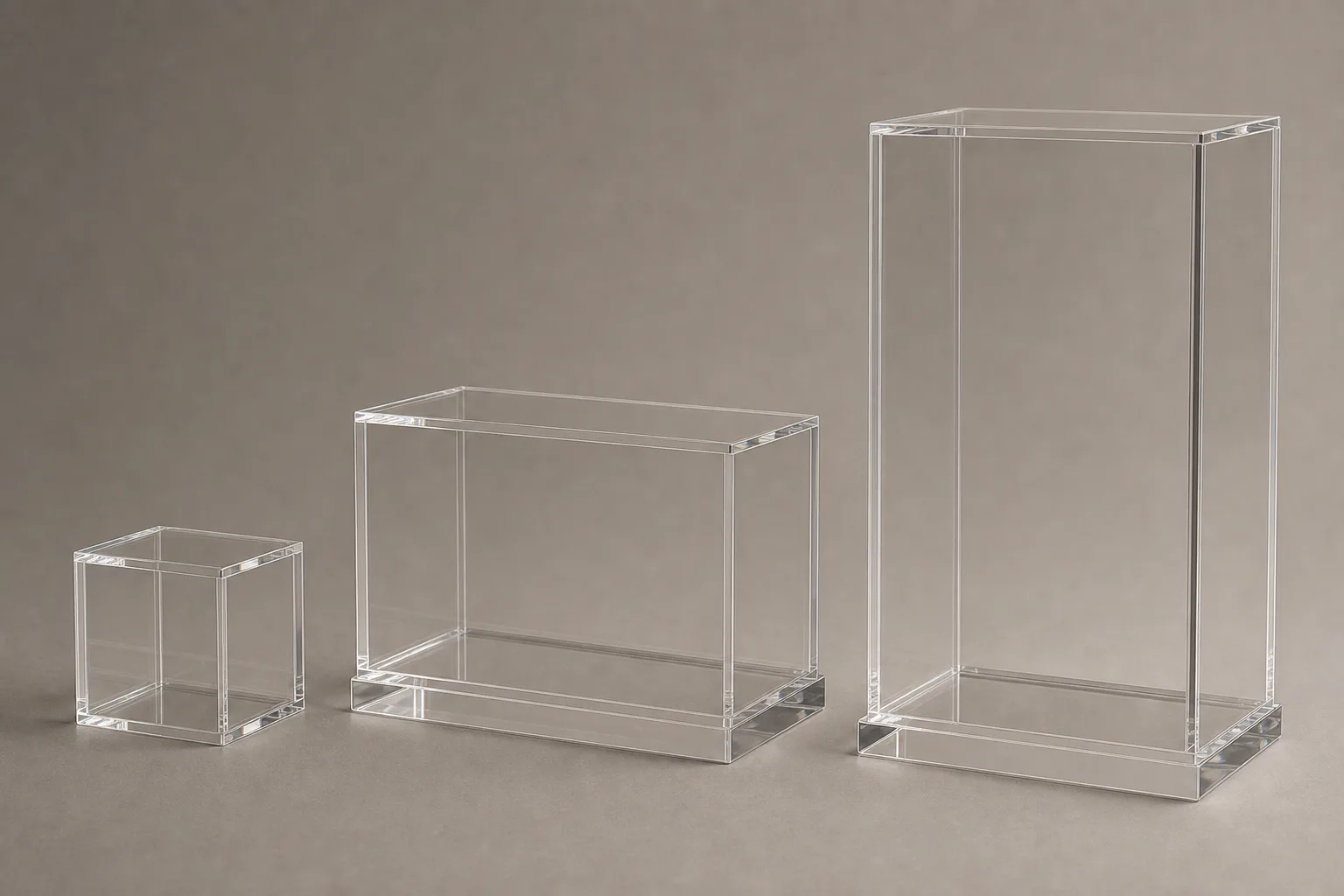
There is no standard display case size — there is a method. Measure the object, apply the clearance rules, and the case dimensions write themselves.
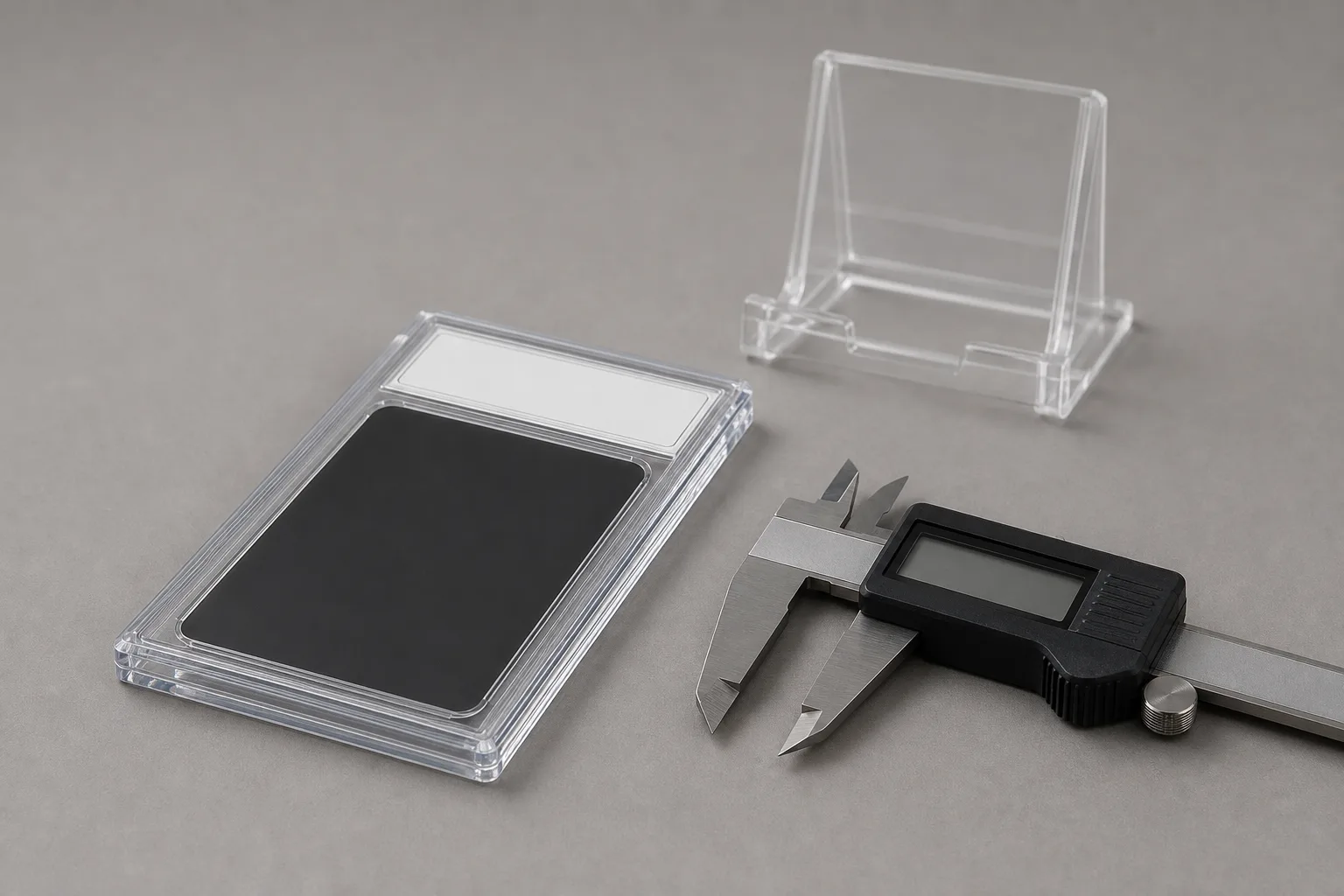
The slab's outer envelope decides every display, storage, and framing number downstream — and the four major graders don't share one.

FOB and DDP allocate different transport, risk and import responsibilities. Compare the named place, mode, exclusions and landed-cost lines before comparing totals.
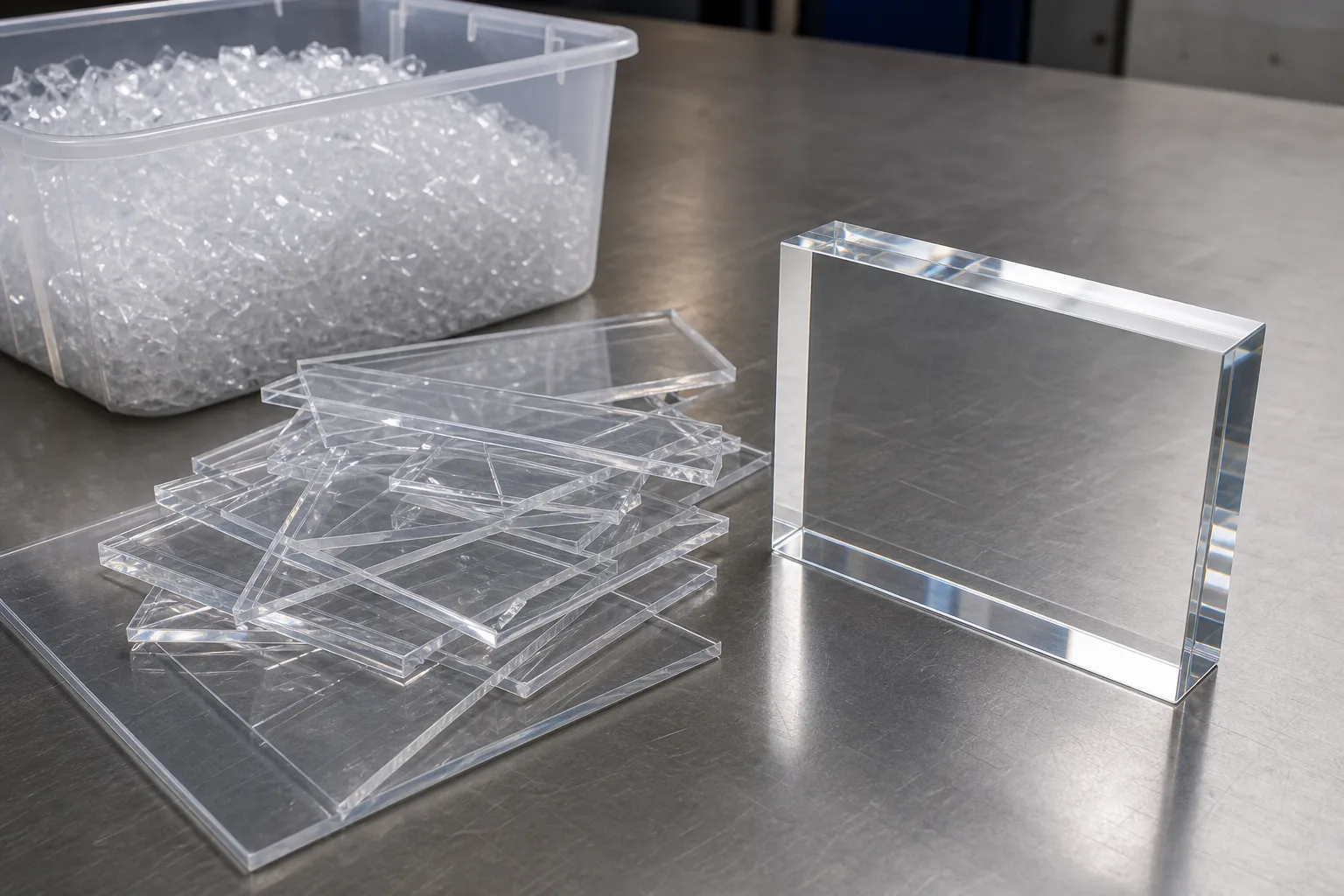
The recycling triangle on acrylic is technically true and practically misleading.
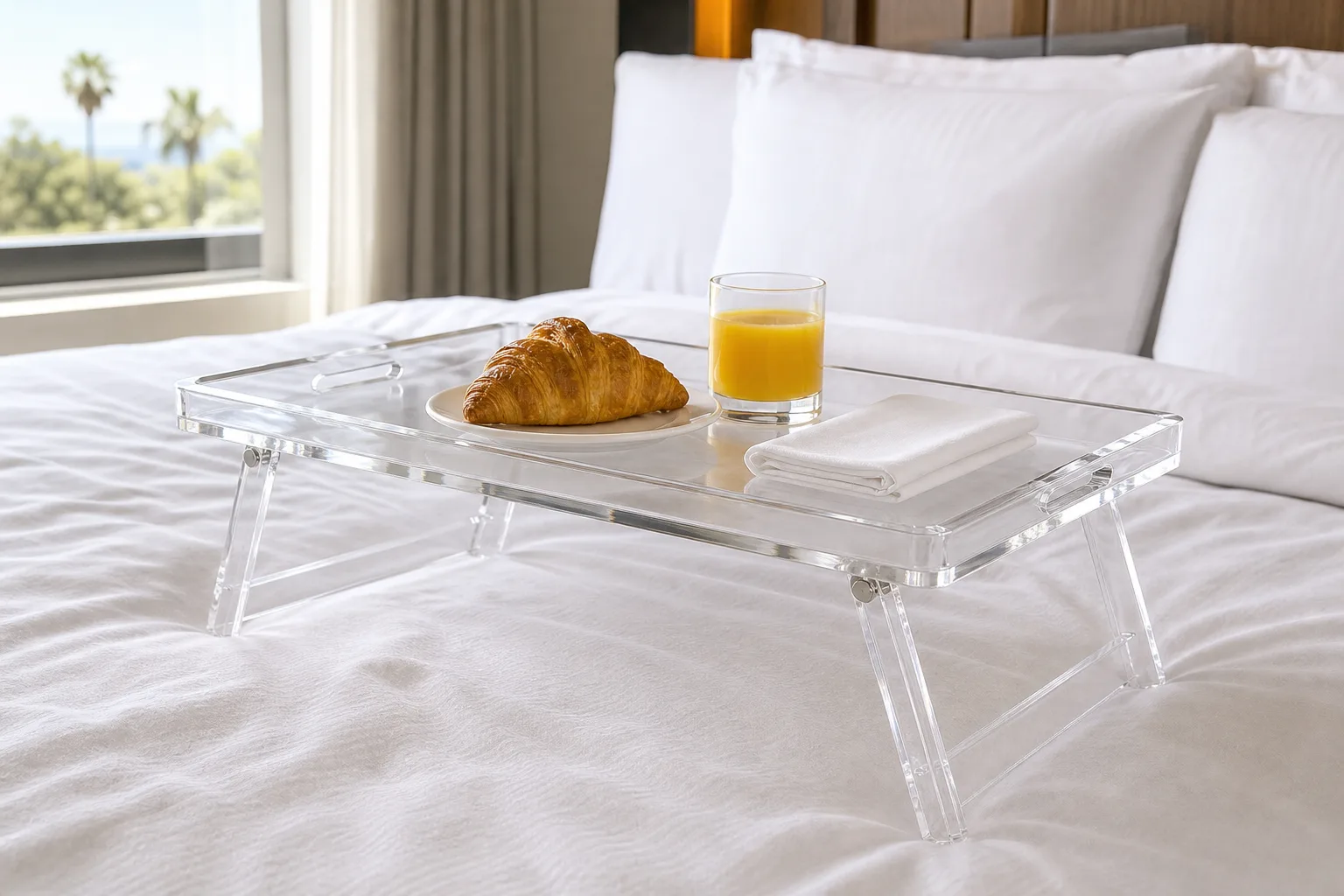
Most people searching for a bed tray want one.
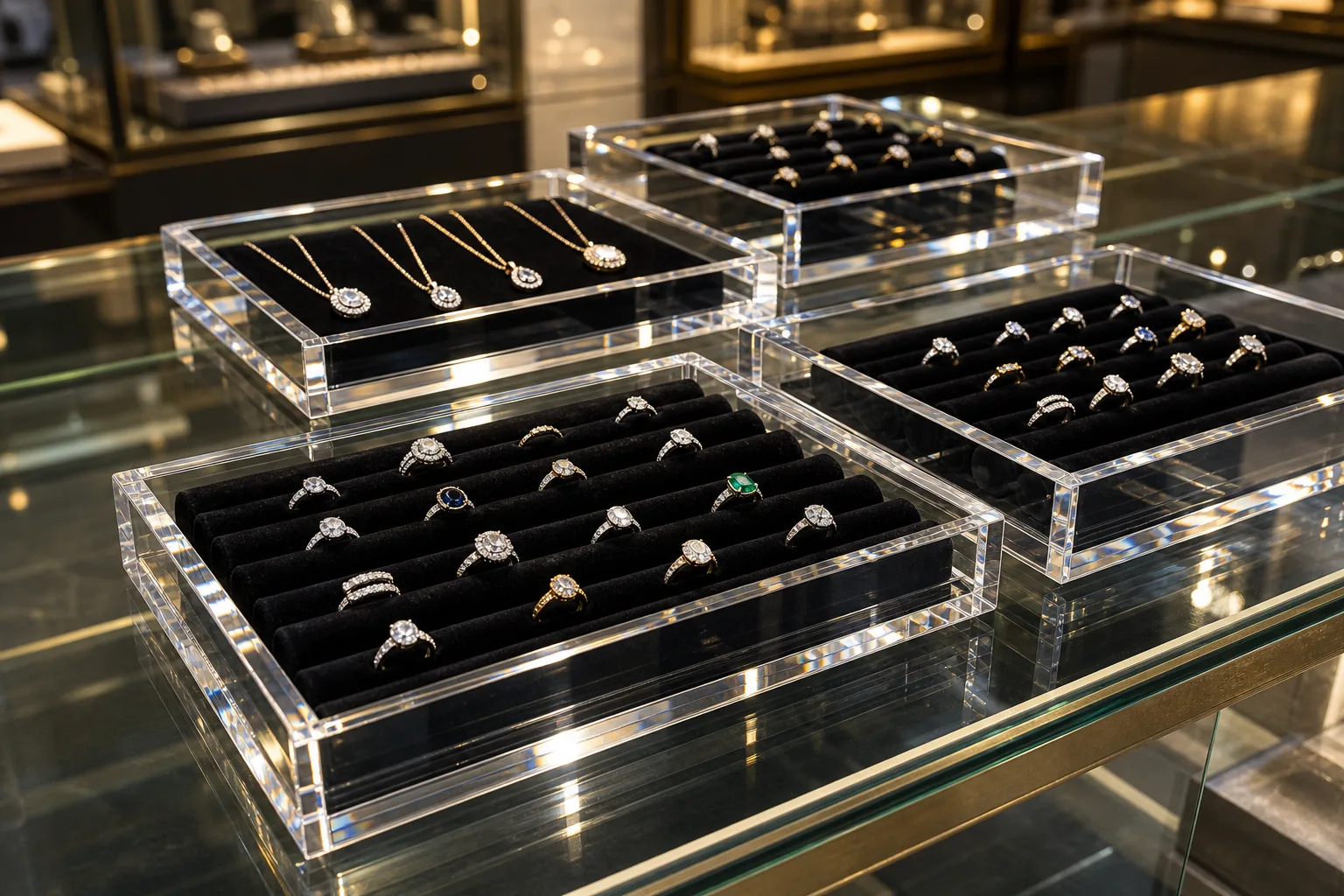
Tray shells last years; inserts wear out in months. Buy them as a two-part system and the reorder math changes completely.
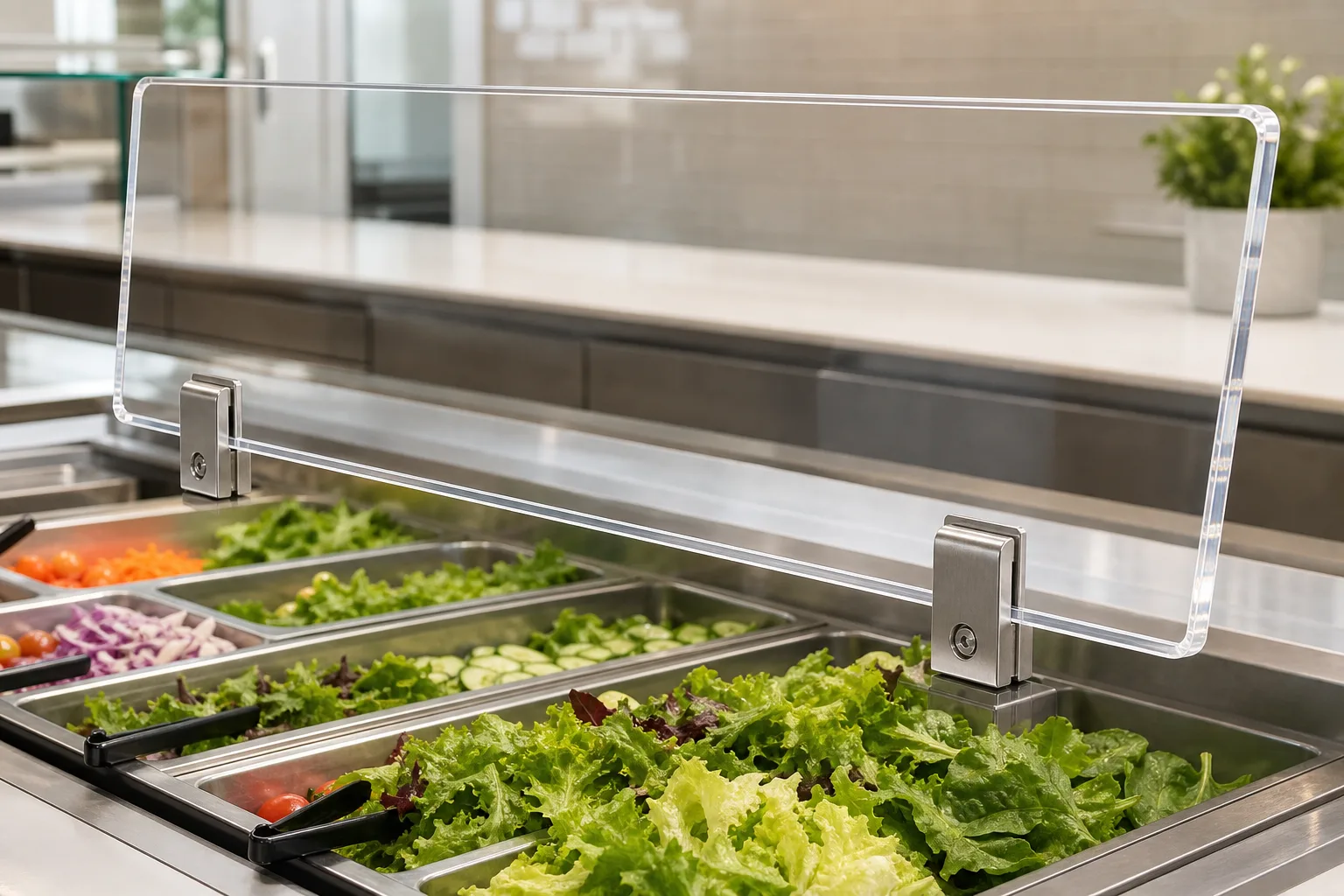
One material shatters and one chips. In a food environment, that single difference reorganizes the whole comparison — hardware, insurance, and the closing checklist included.
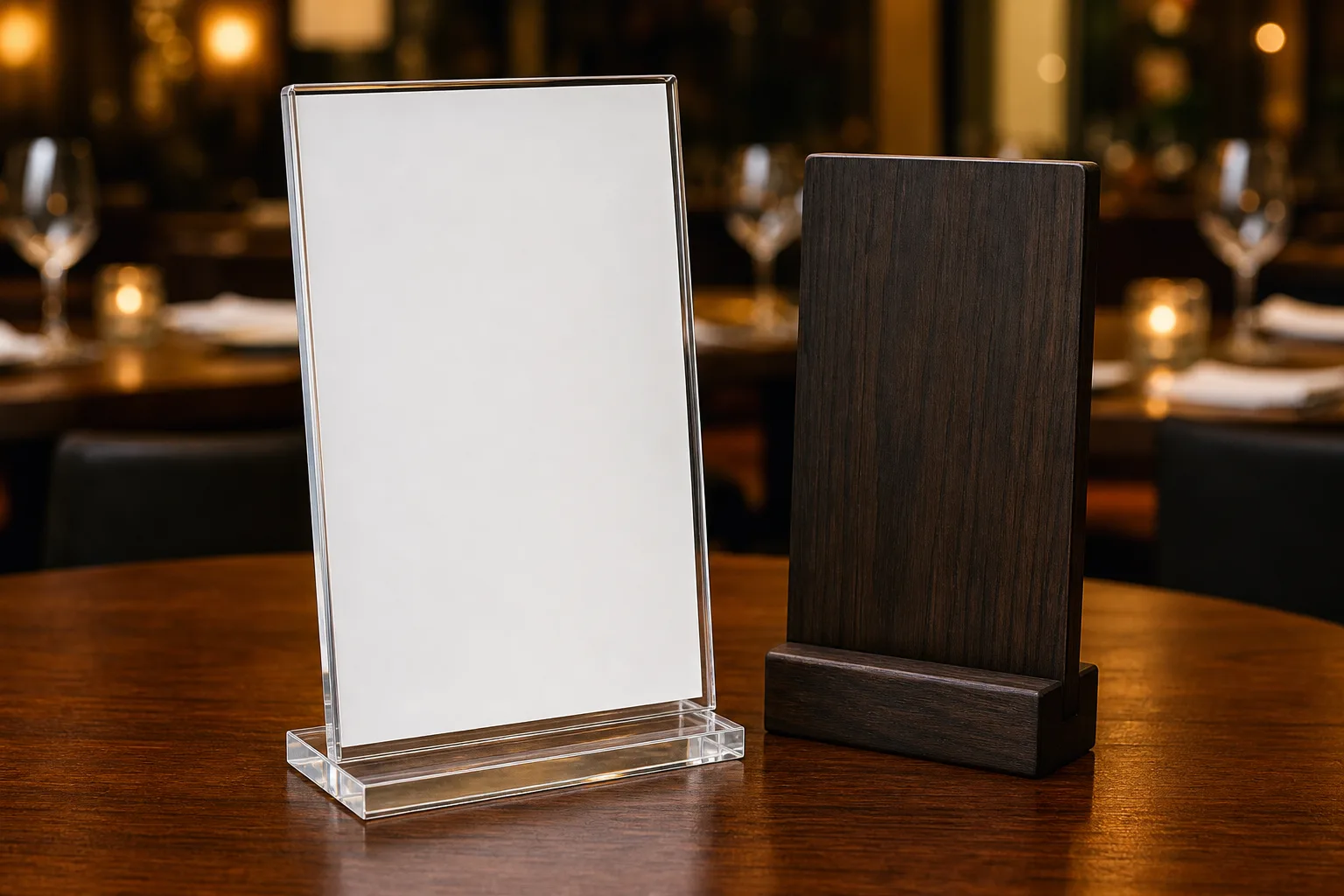
The menu holder is the most-handled object on the table that isn't cutlery. Sauce, sanitizer, and nightly menu swaps decide this material choice — not the showroom photo.
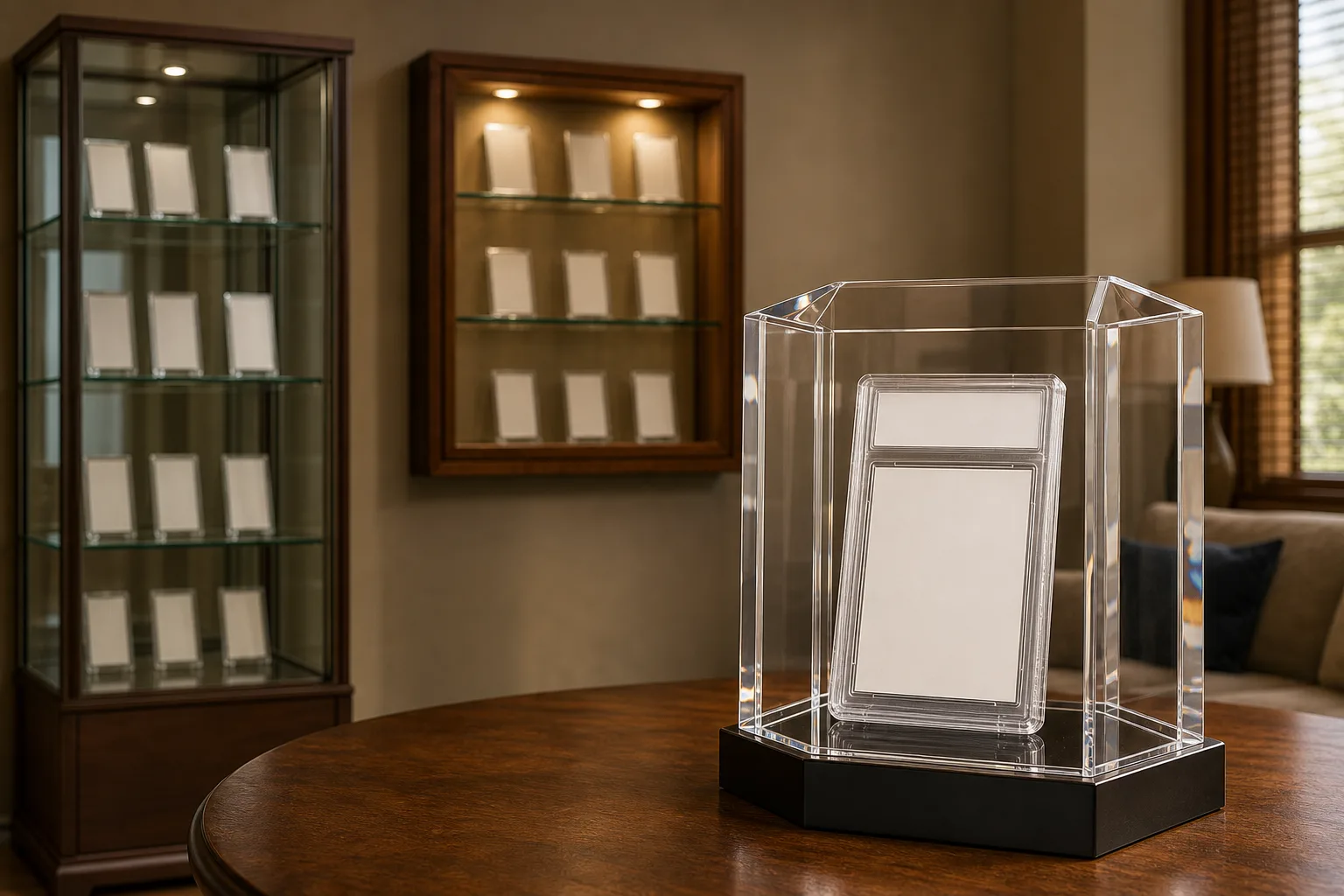
Compare the glass cabinet, wood-frame glass case, and fitted acrylic cover against the collection, access plan, room, and order quantity.

Campaign length decides this comparison before design ever does. An eight-week promotion belongs on corrugated; a fixture holding shelf position for years belongs in acrylic.
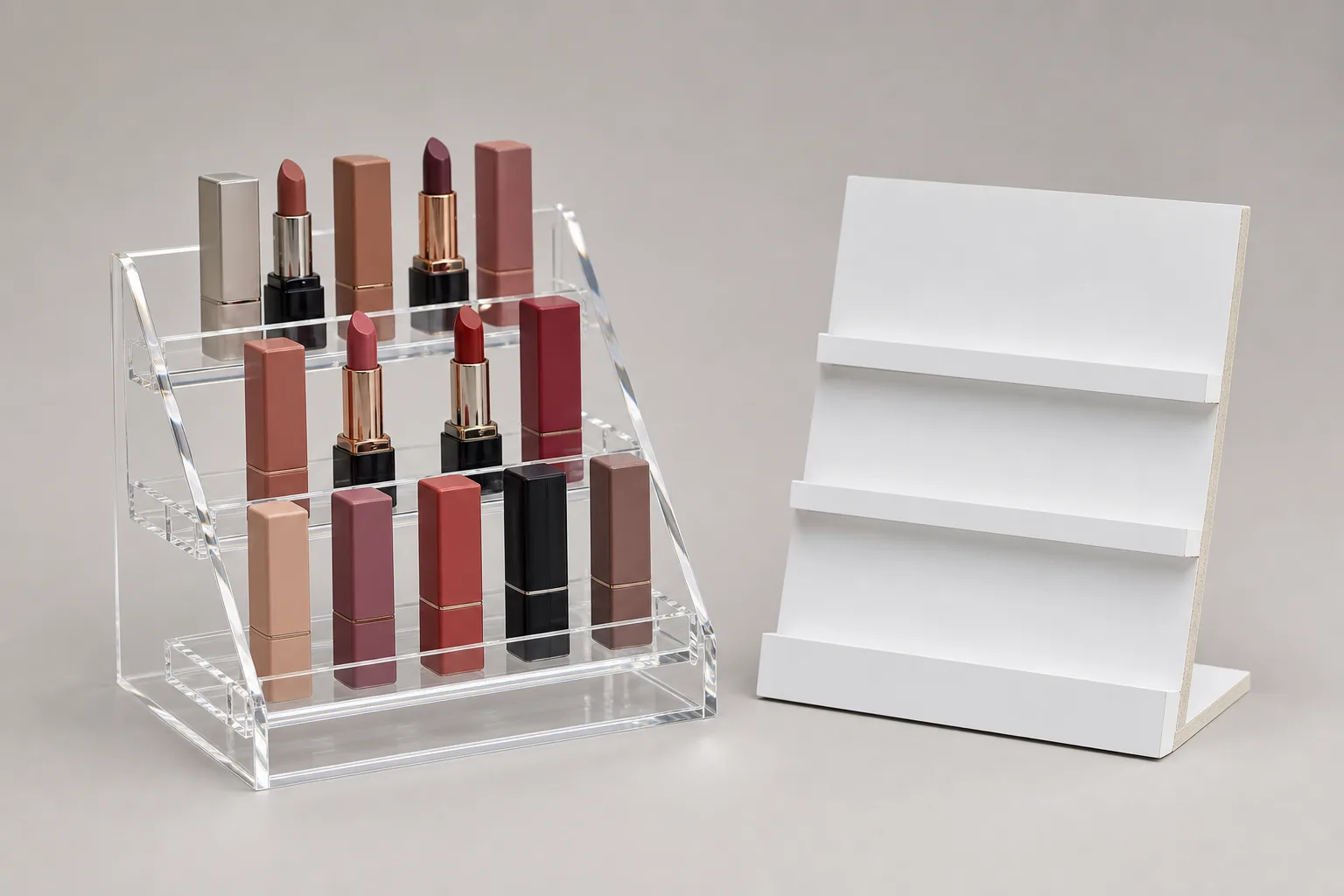
Melamine board builds the wall behind the counter. Acrylic sells what sits on it. Most cosmetics fixture briefs need both — in the right places.
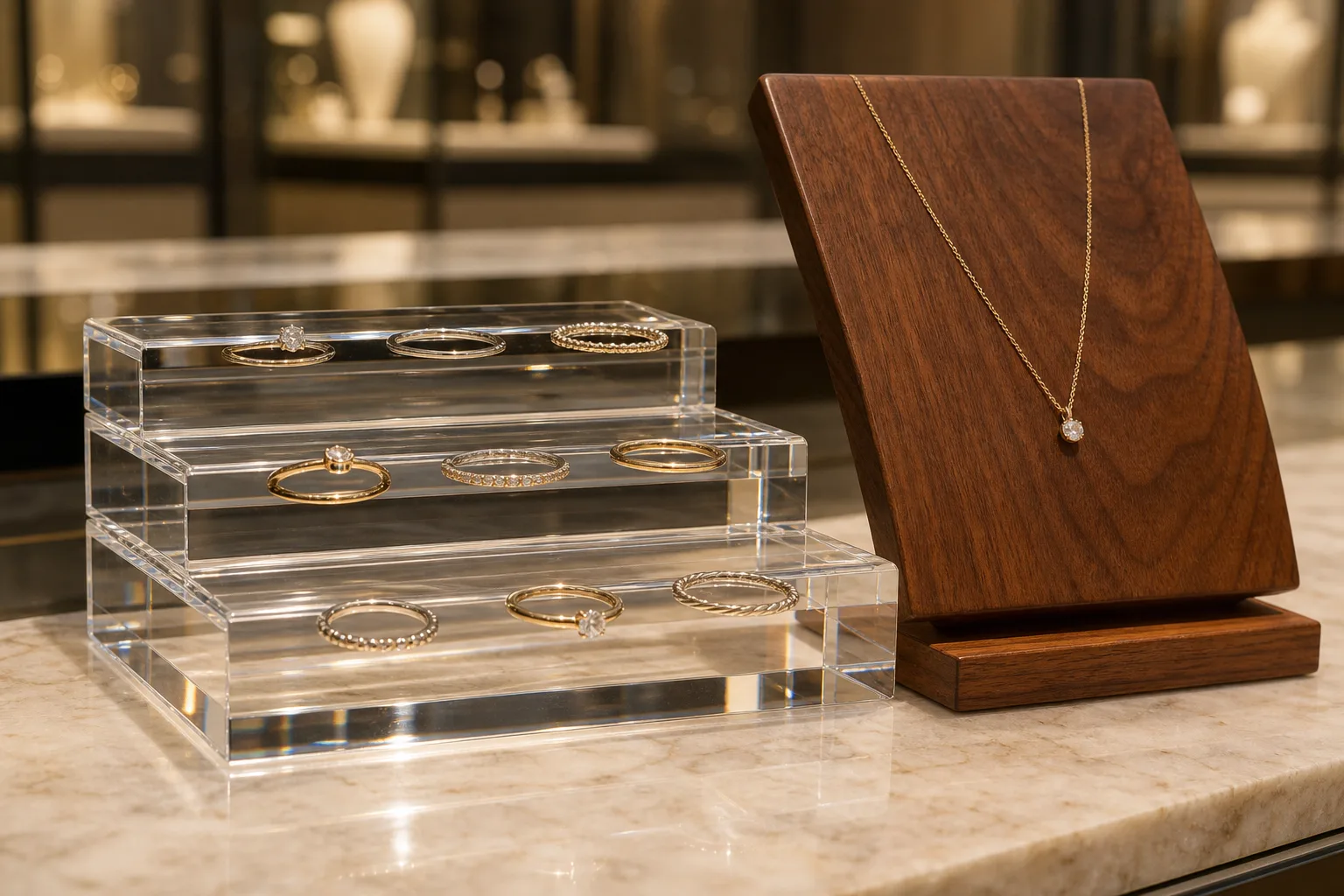
One material disappears so the stones can work; the other frames them in warmth. The right answer follows your brand's voice — and often uses both.

The unit price says MDF. The second year on the counter usually says acrylic.
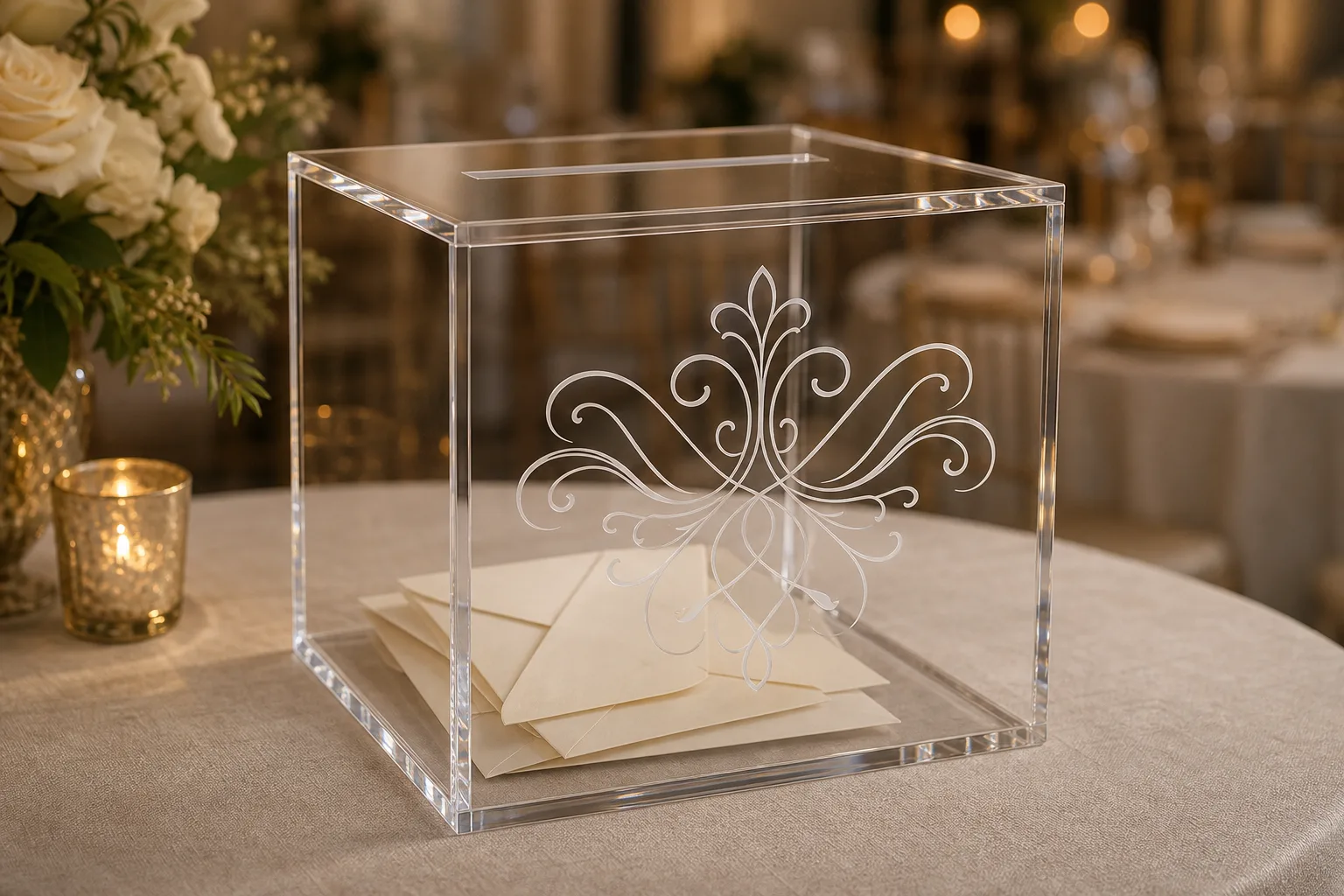
The card box sits next to the guest book for six hours and in your storage closet for six years — the good ideas work at both ends.
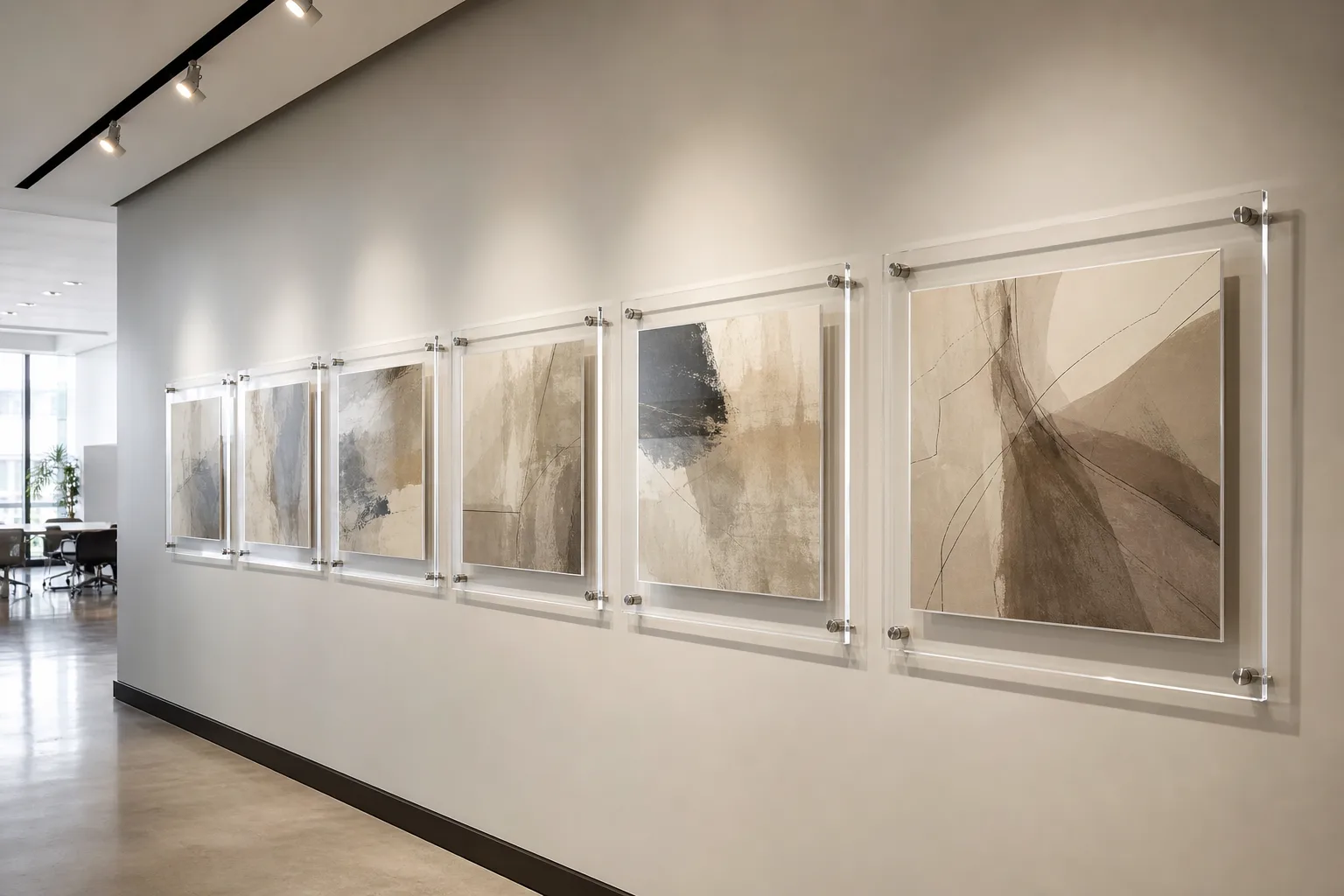
Forty frames and no layout plan is how art programs stall at the loading dock — the layout formula is a procurement spec, not a decorating whim.
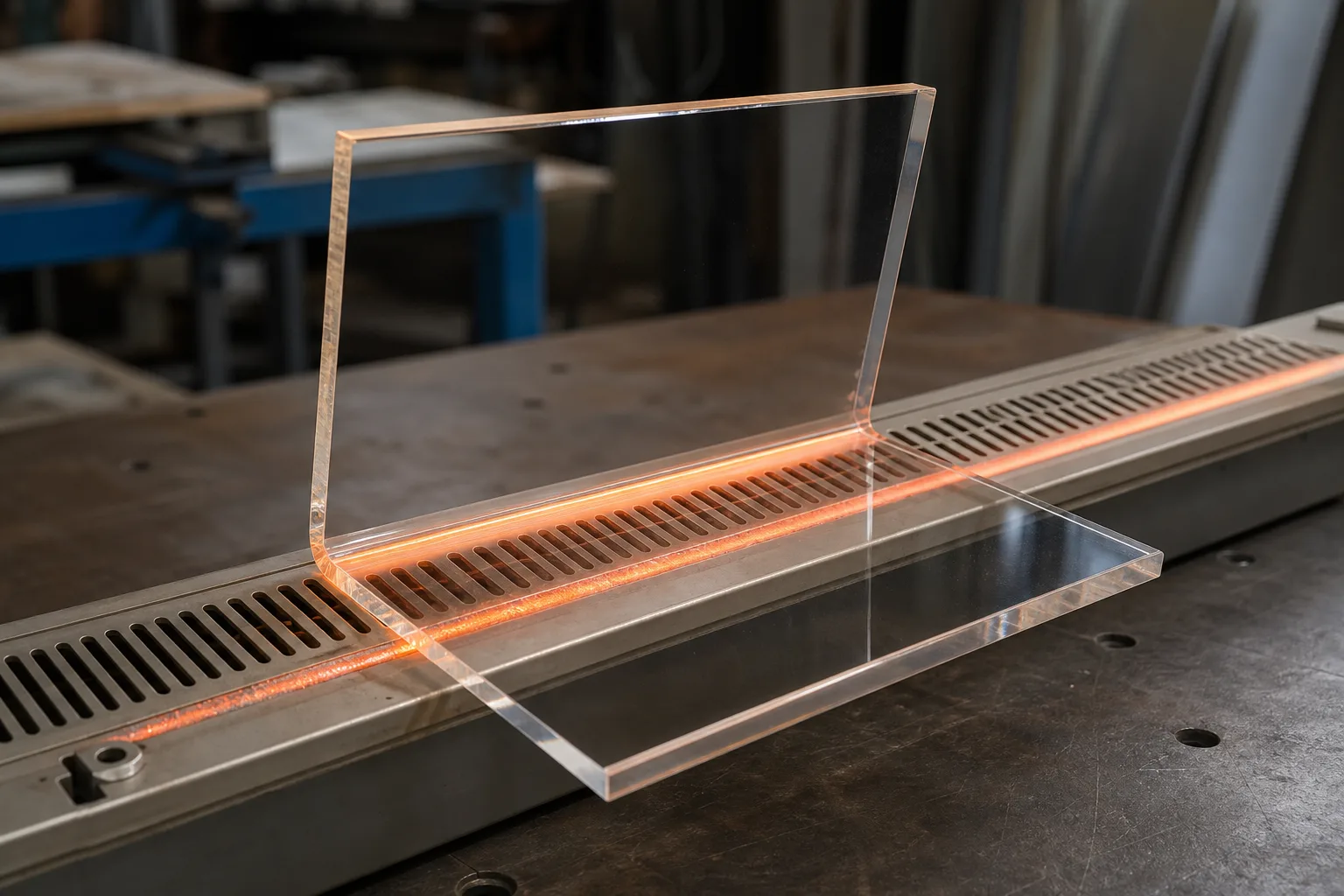
Most bent-acrylic failures are decided before the sheet ever touches the heater — in the radius the drawing asks for and the annealing step the quote skips.
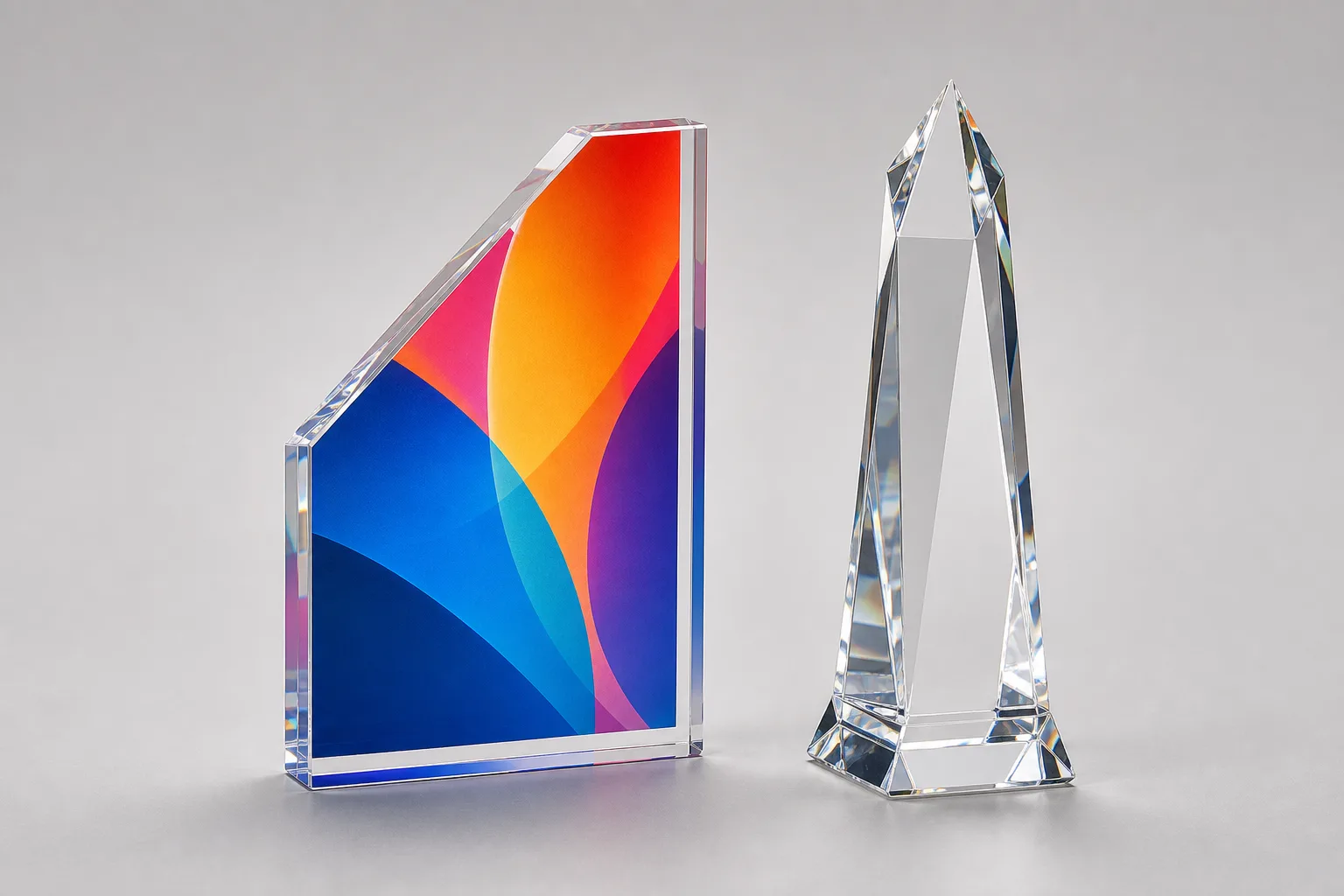
Crystal earns its place on the CEO's shelf. Acrylic wins the 200-piece recognition program. The mistake is buying one job with the other material's award.
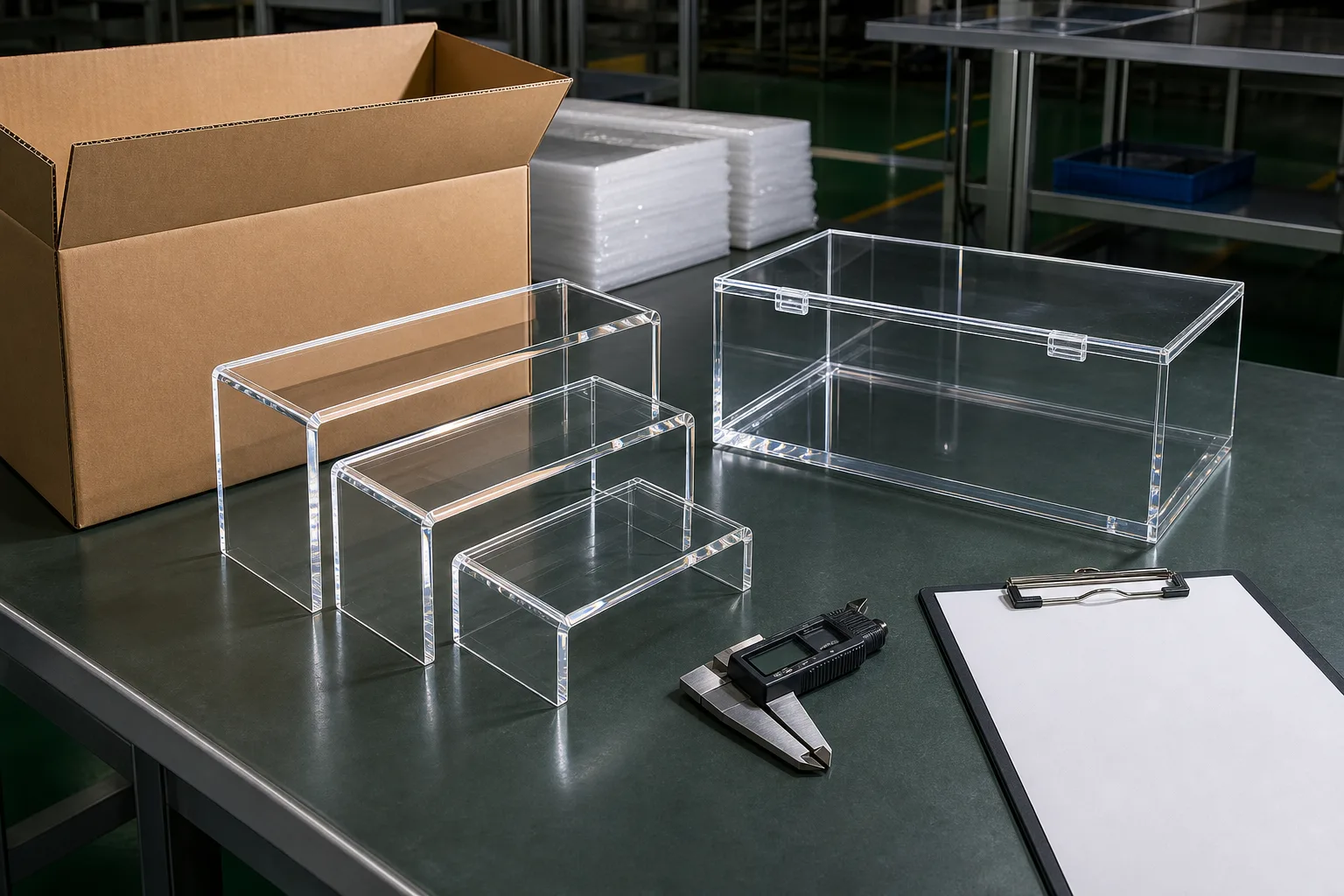
AQL 2.5 does not mean 2.5% of your order is allowed to be scratched — and the buyers who misread it either reject good shipments or approve bad ones.
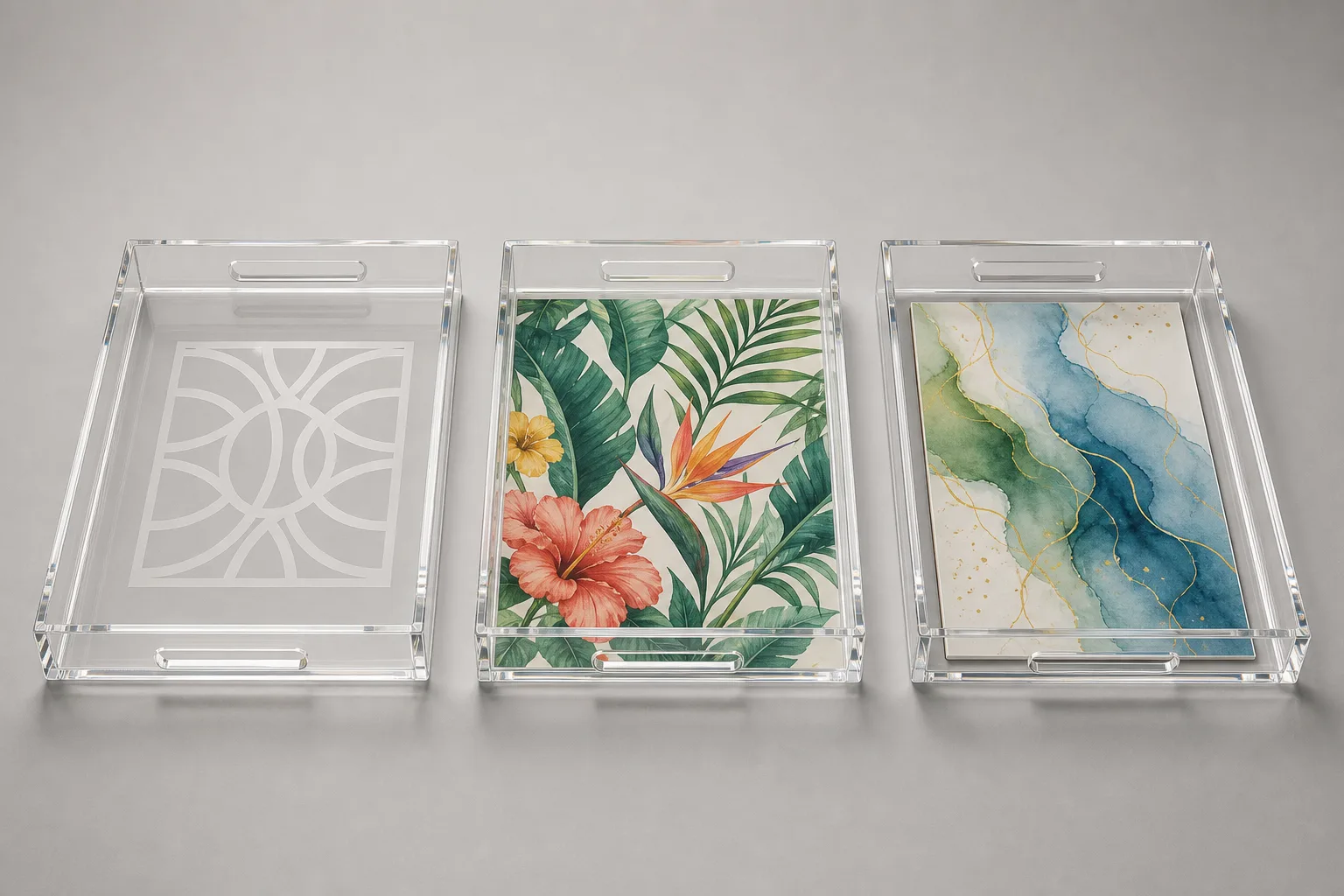
\"Can you put our logo on the tray?\" is three different production methods wearing one sentence.
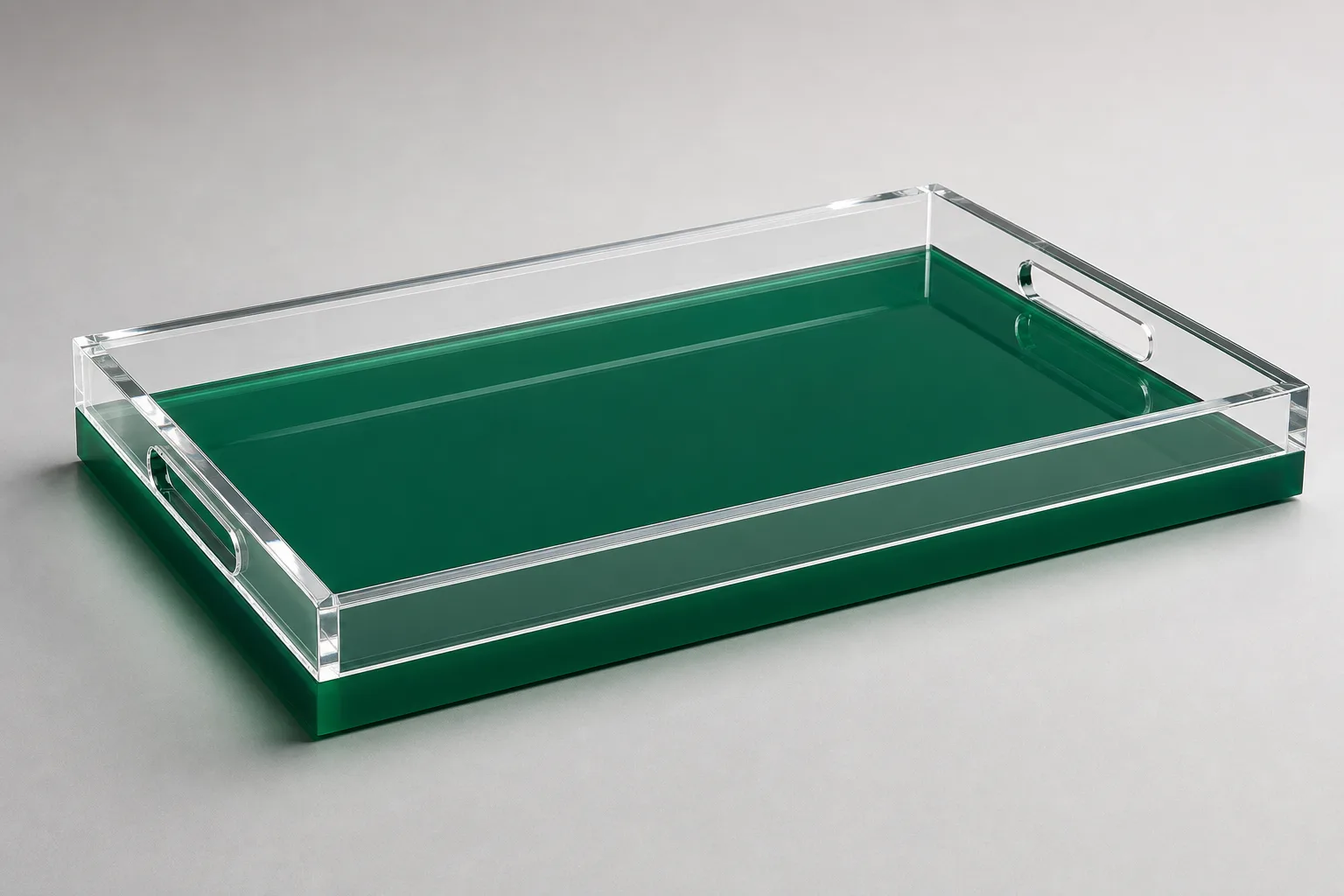
Two colors in one acrylic part is a structural decision first: stack the colors and hide the bond line, or join them edge-to-edge and show it.

Choose the components, check each minimum, and approve the fit before you commit to a complete-set launch.
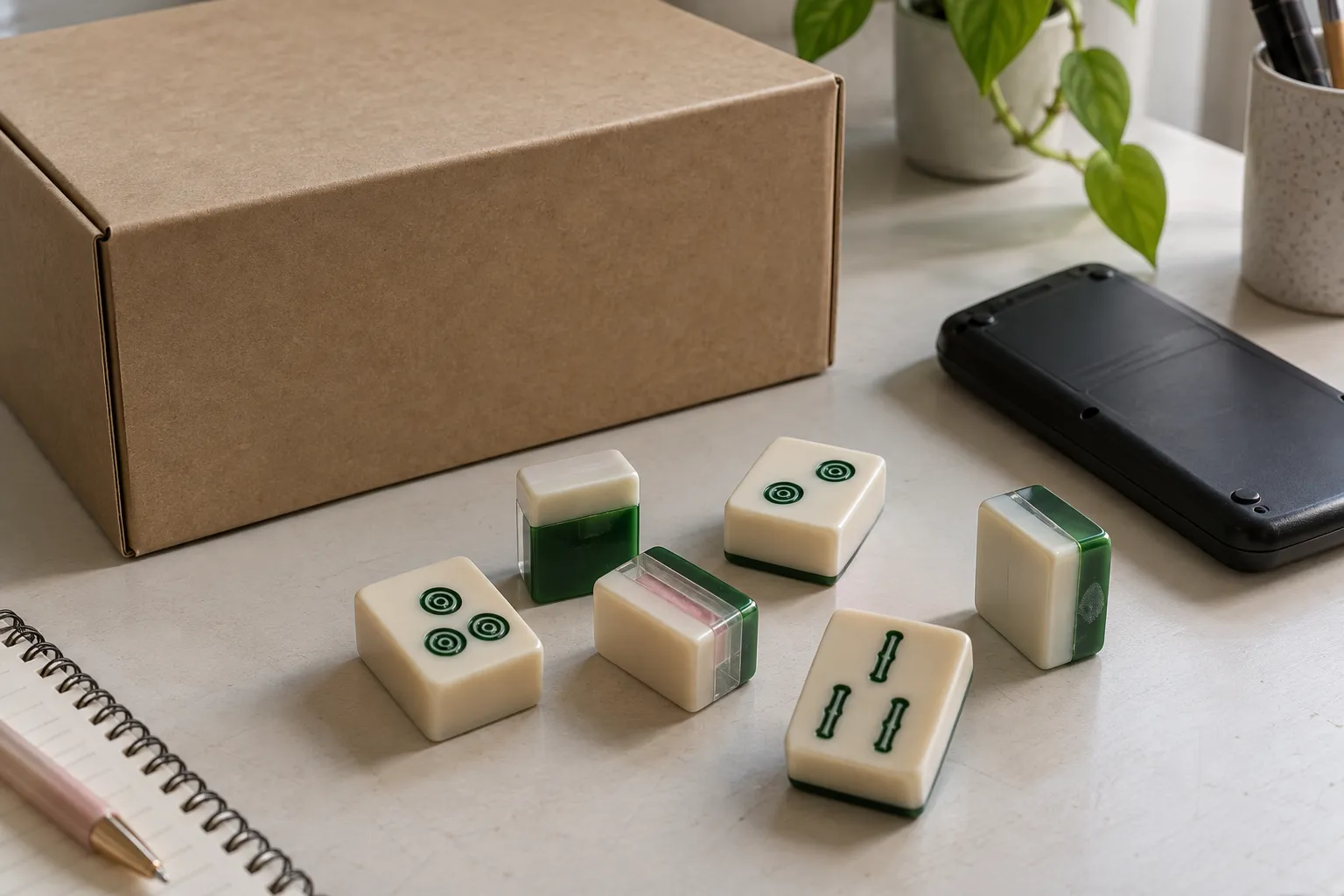
A line-by-line budget for your first custom run, using the published tile and accessory price book.
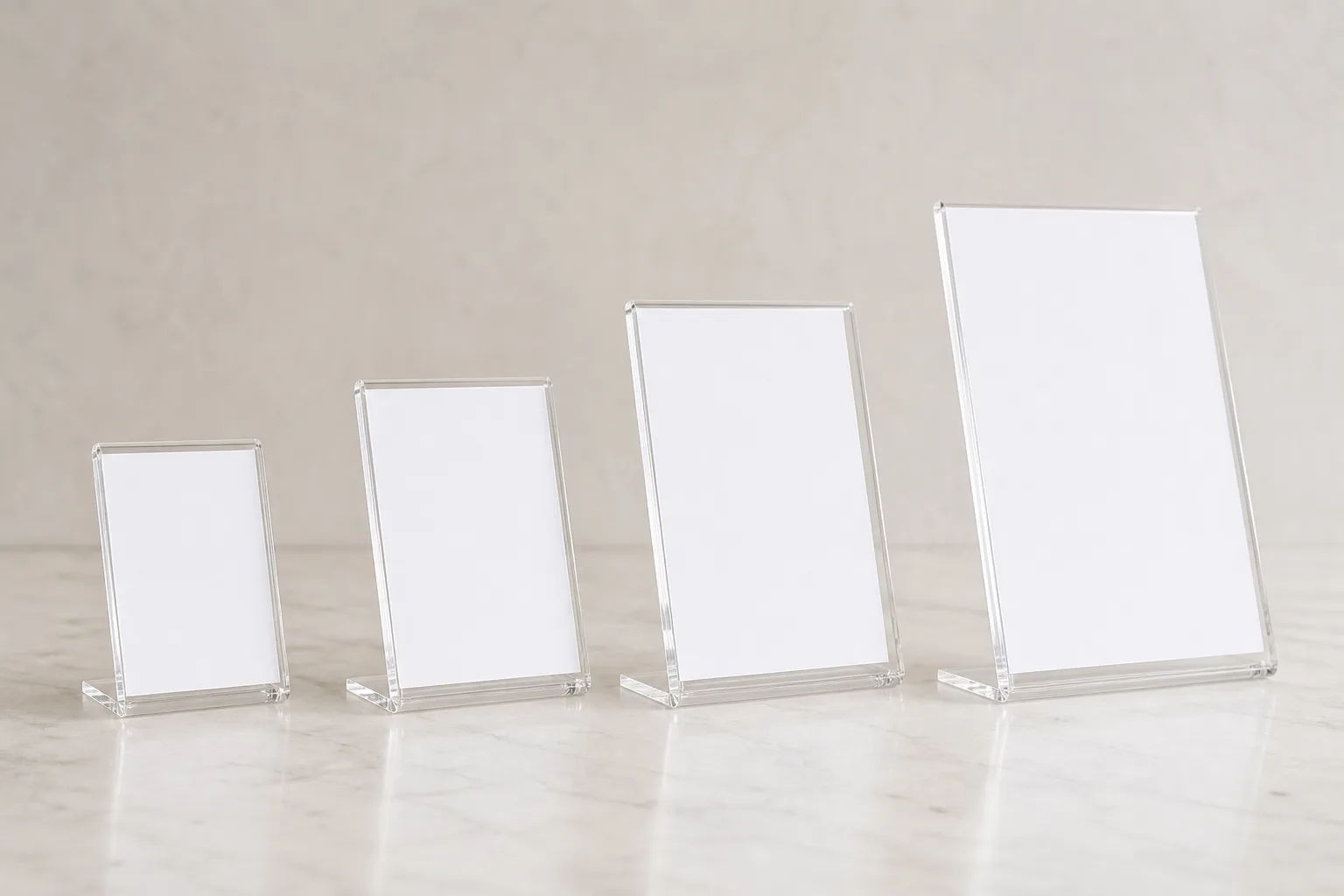
Sign holders are named by the paper they hold, not the acrylic around it.
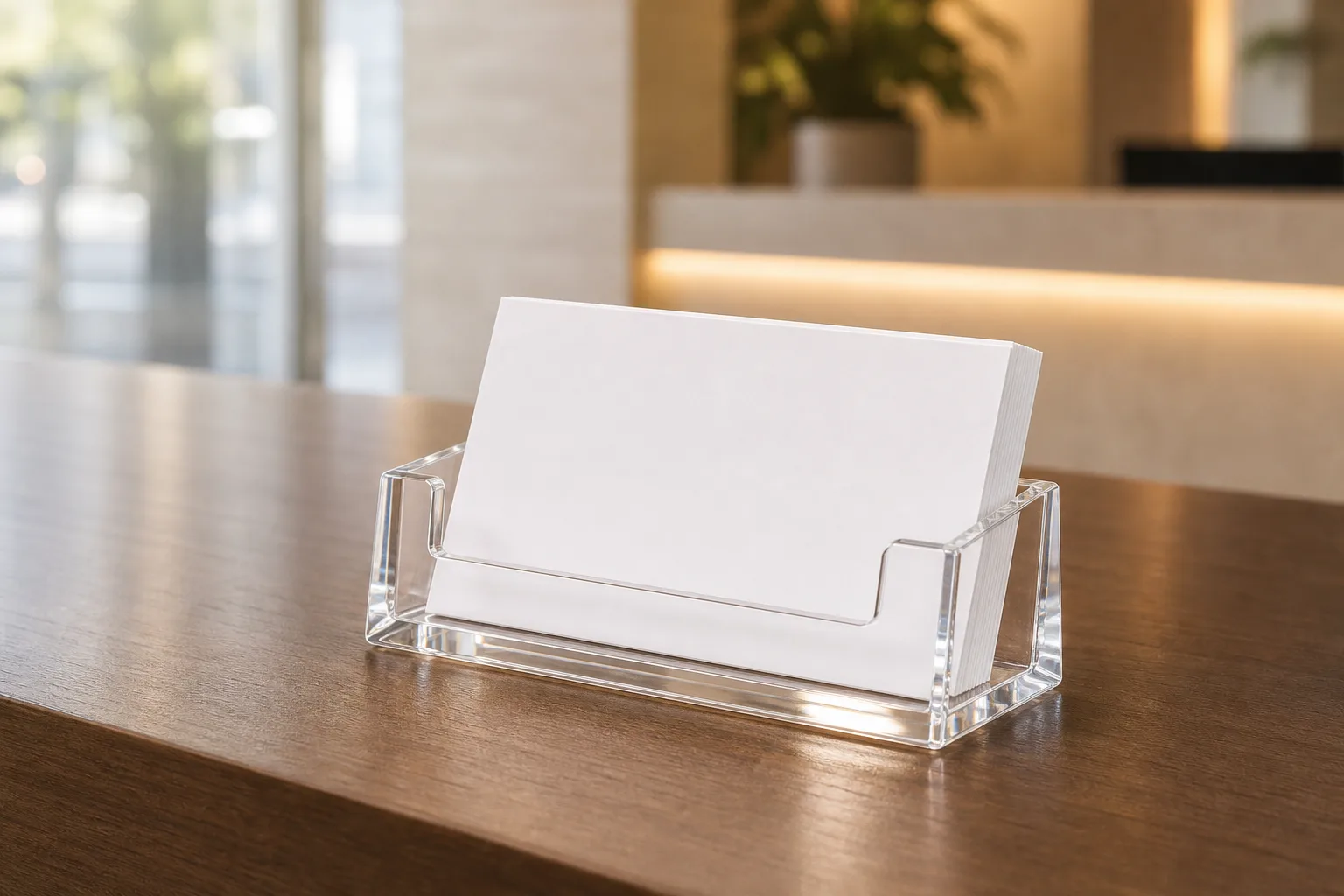
Every brief specifies the logo. Almost none specify the front lip — the 8-12mm dimension that decides whether cards present cleanly or hide, jam, and tip out.
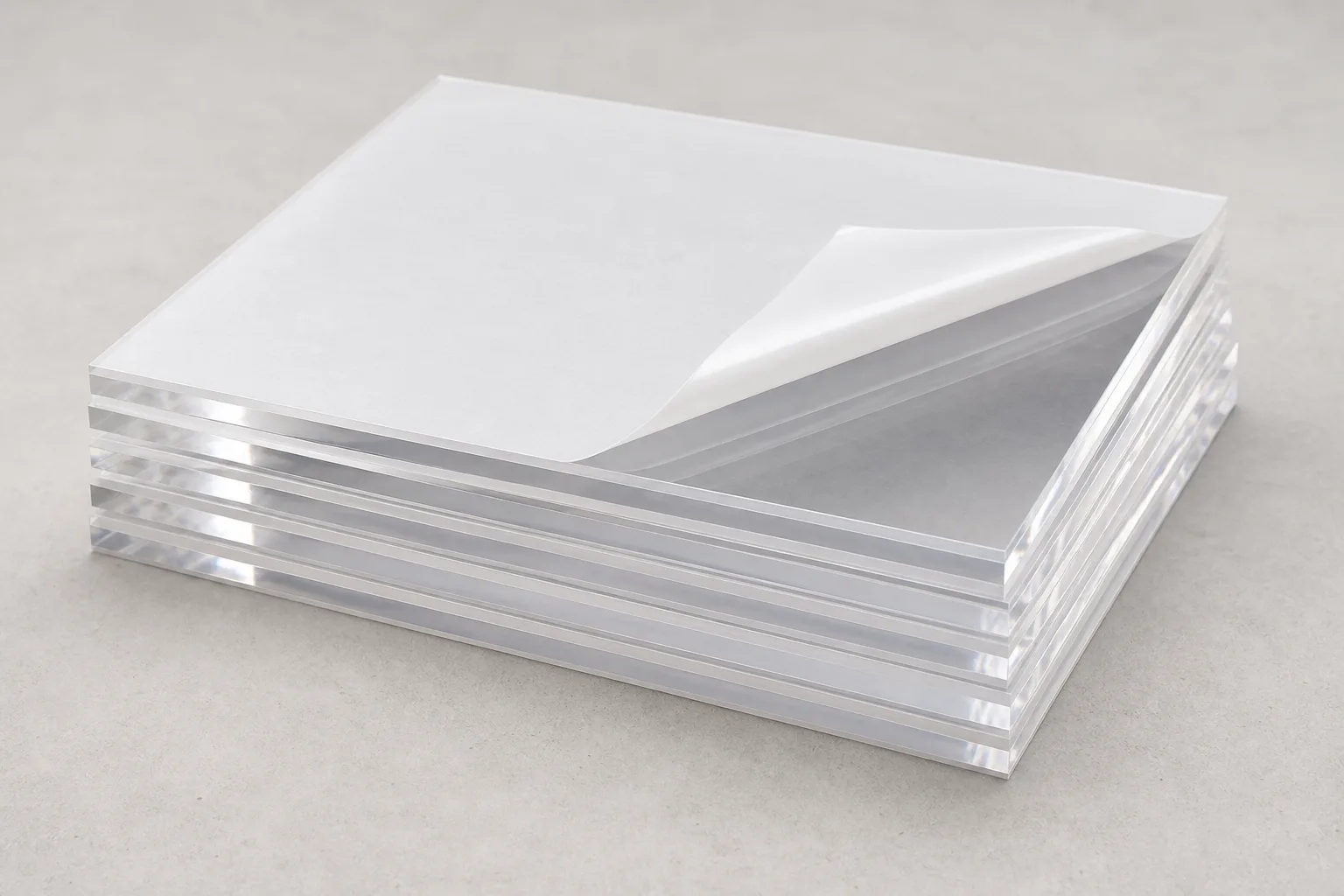
Buyers who ask for plexiglass and buyers who ask for acrylic get quoted the same sheet.
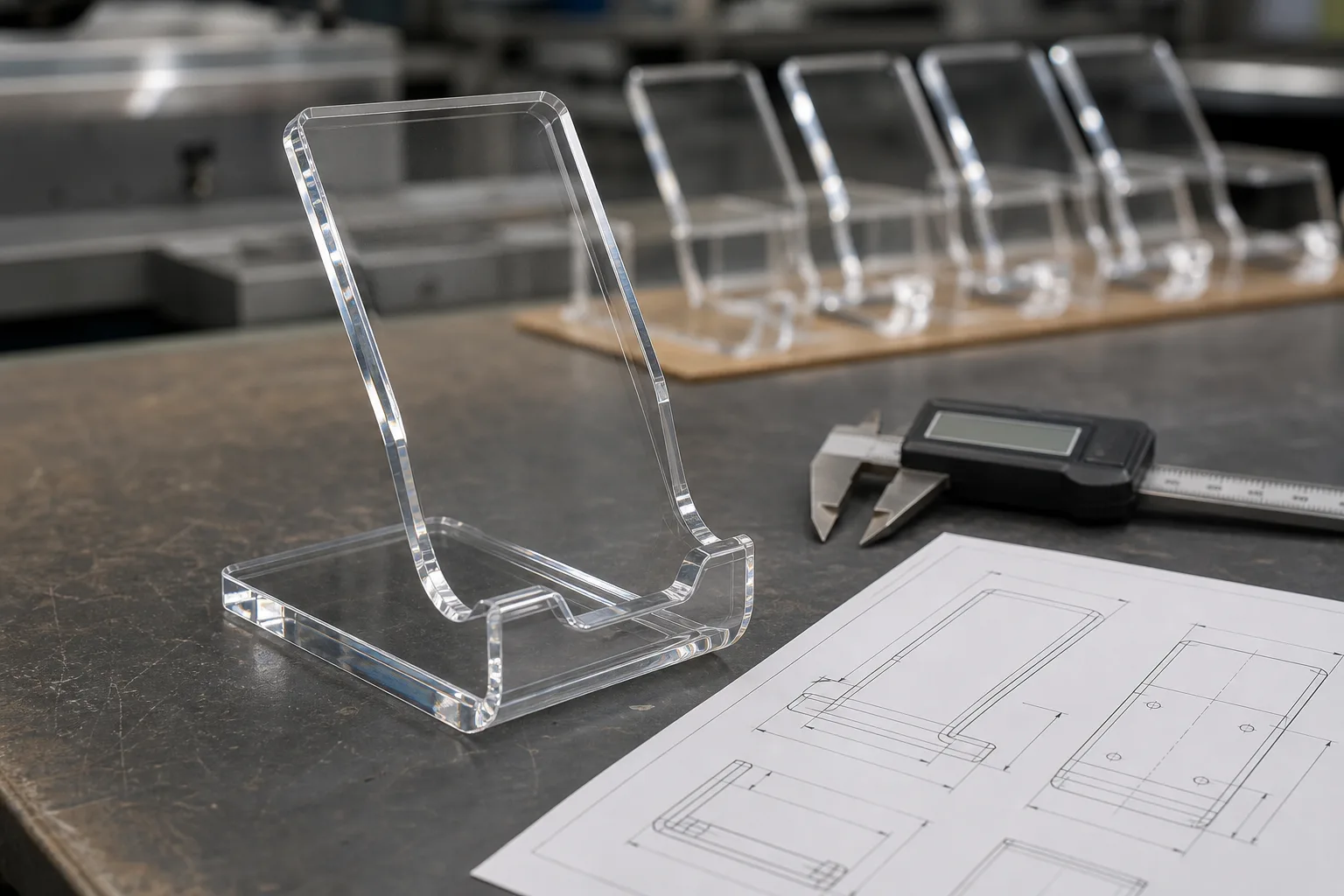
A prototype is only worth what it predicts.
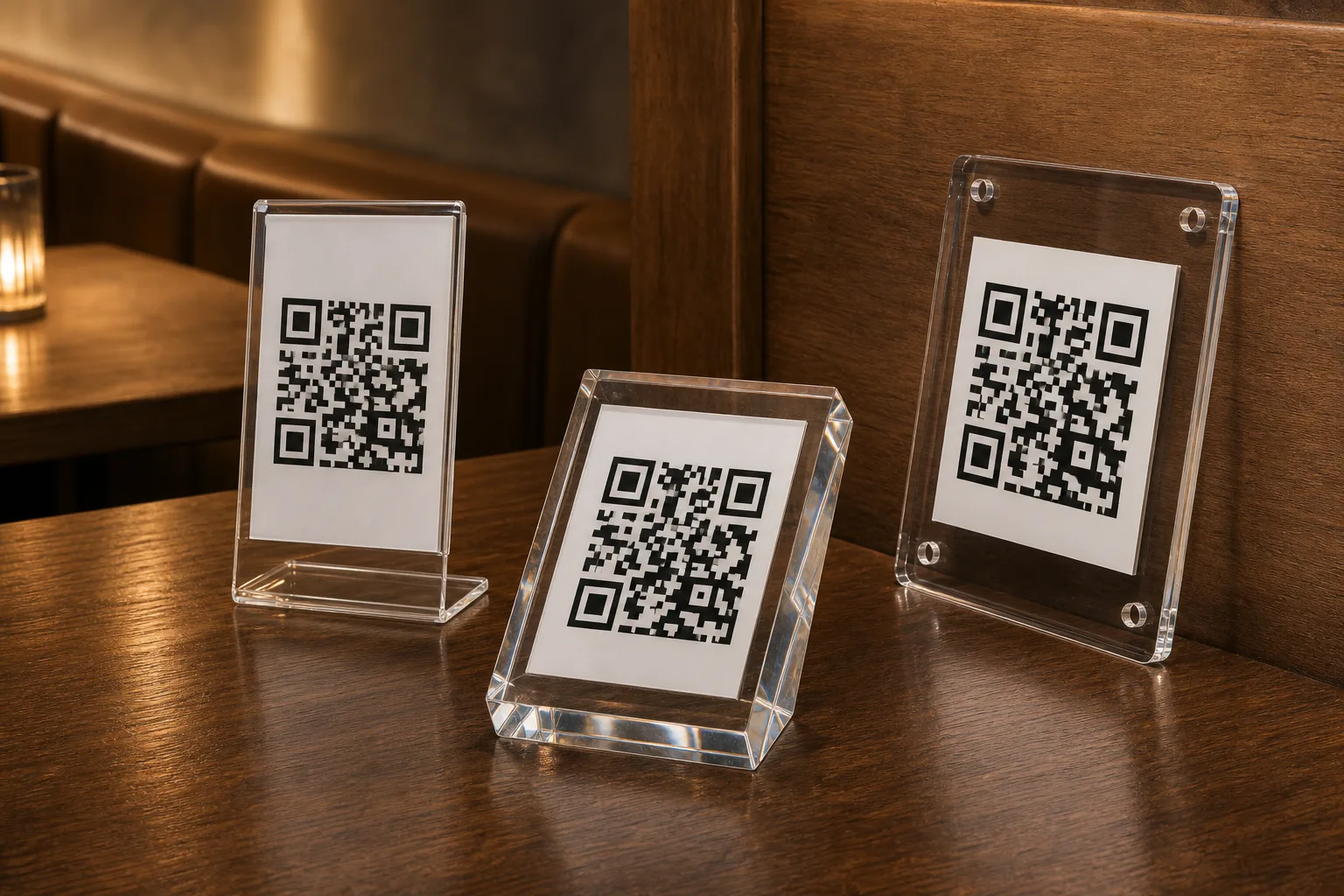
The code gets scanned a hundred times a day by guests holding phones at odd angles in bad light.
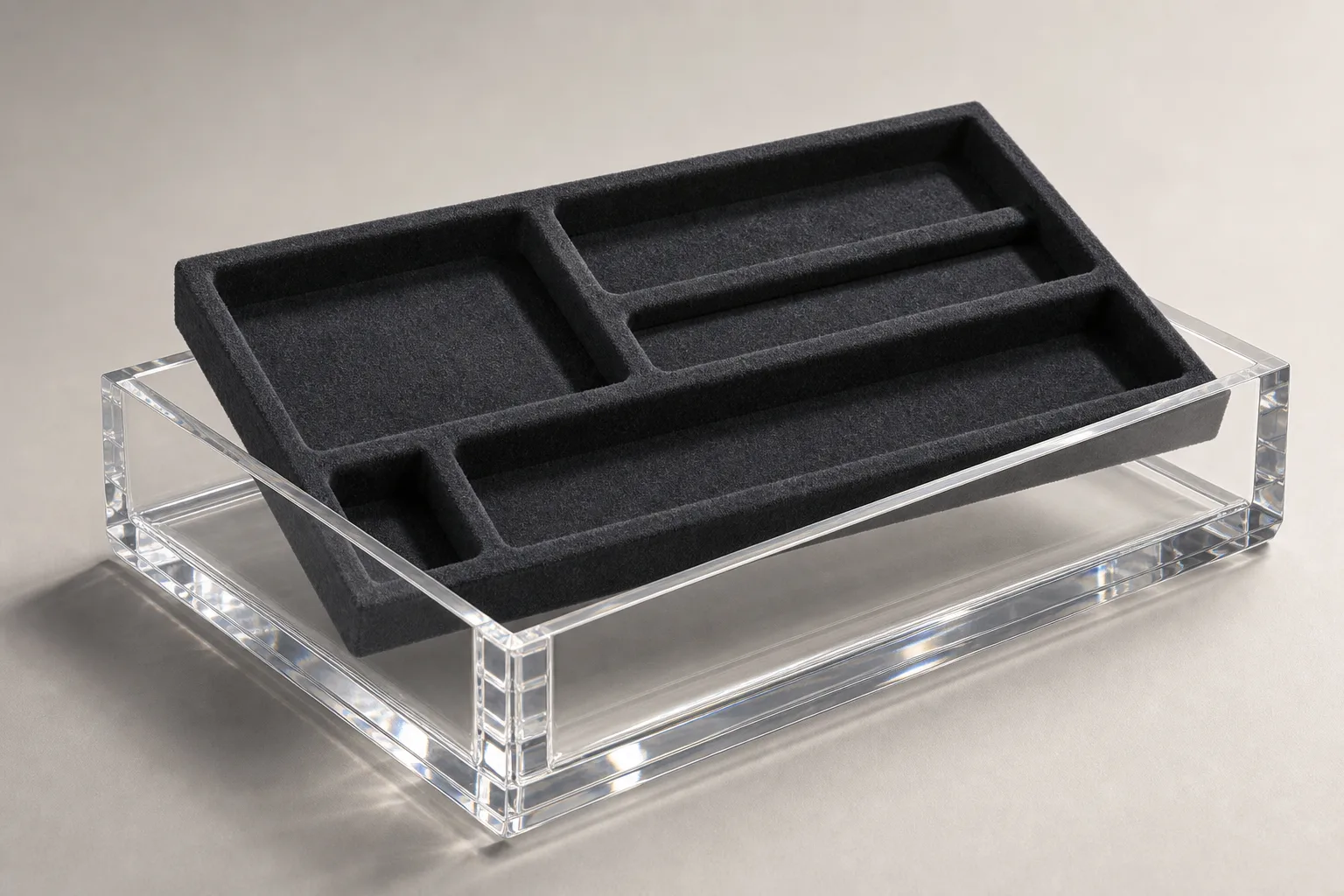
The tray body gets a full drawing; the insert gets one word. Then the product rattles, the felt lifts, and the reorder goes to someone else.
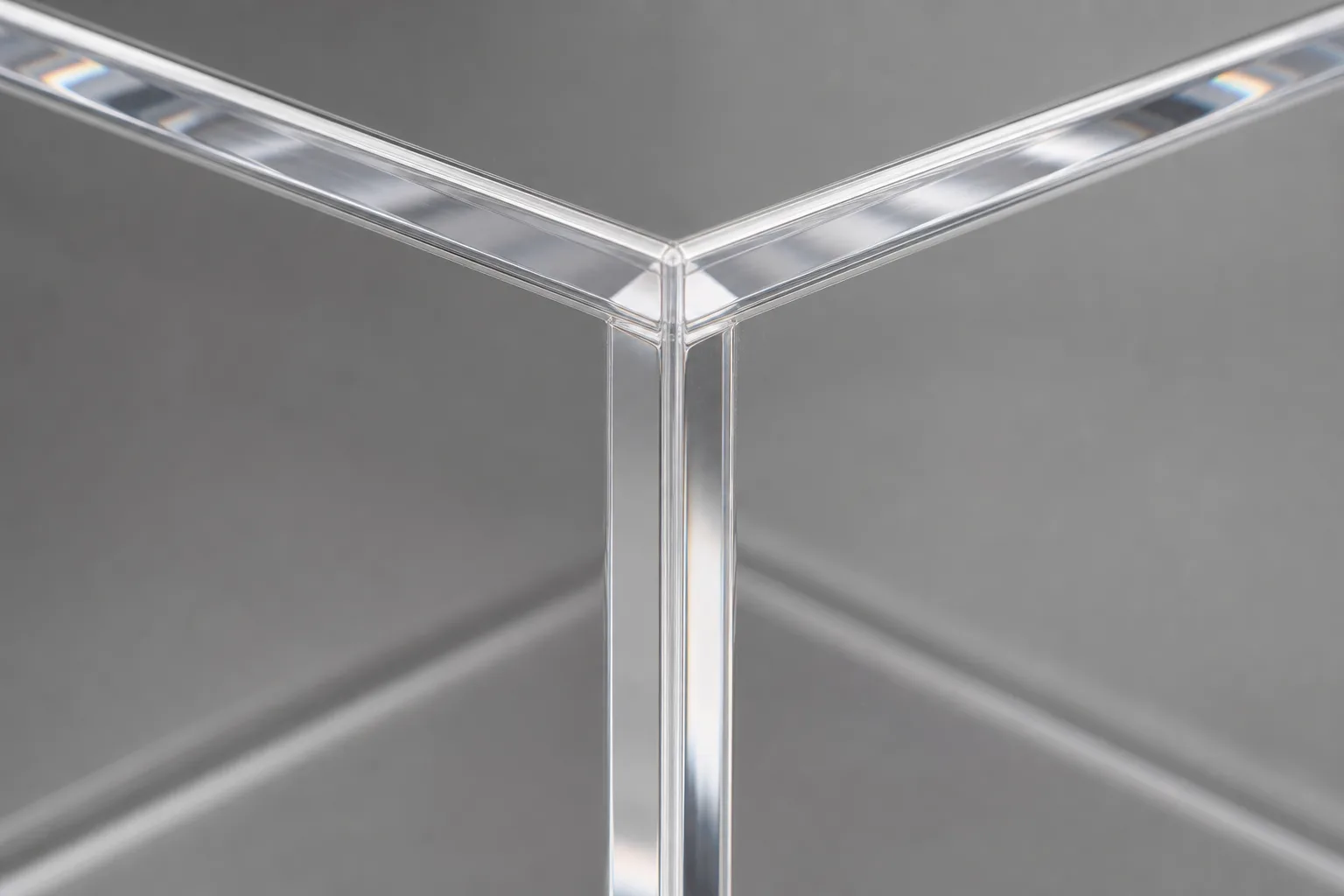
Clarity and thickness are easy to spec. The seam is where an acrylic box quietly tells you who built it — and what to reject before 500 pieces ship.

Standoffs, magnets, easels, or a cleat — the right answer depends less on the frame than on how often the artwork changes and whose wall it hangs on.
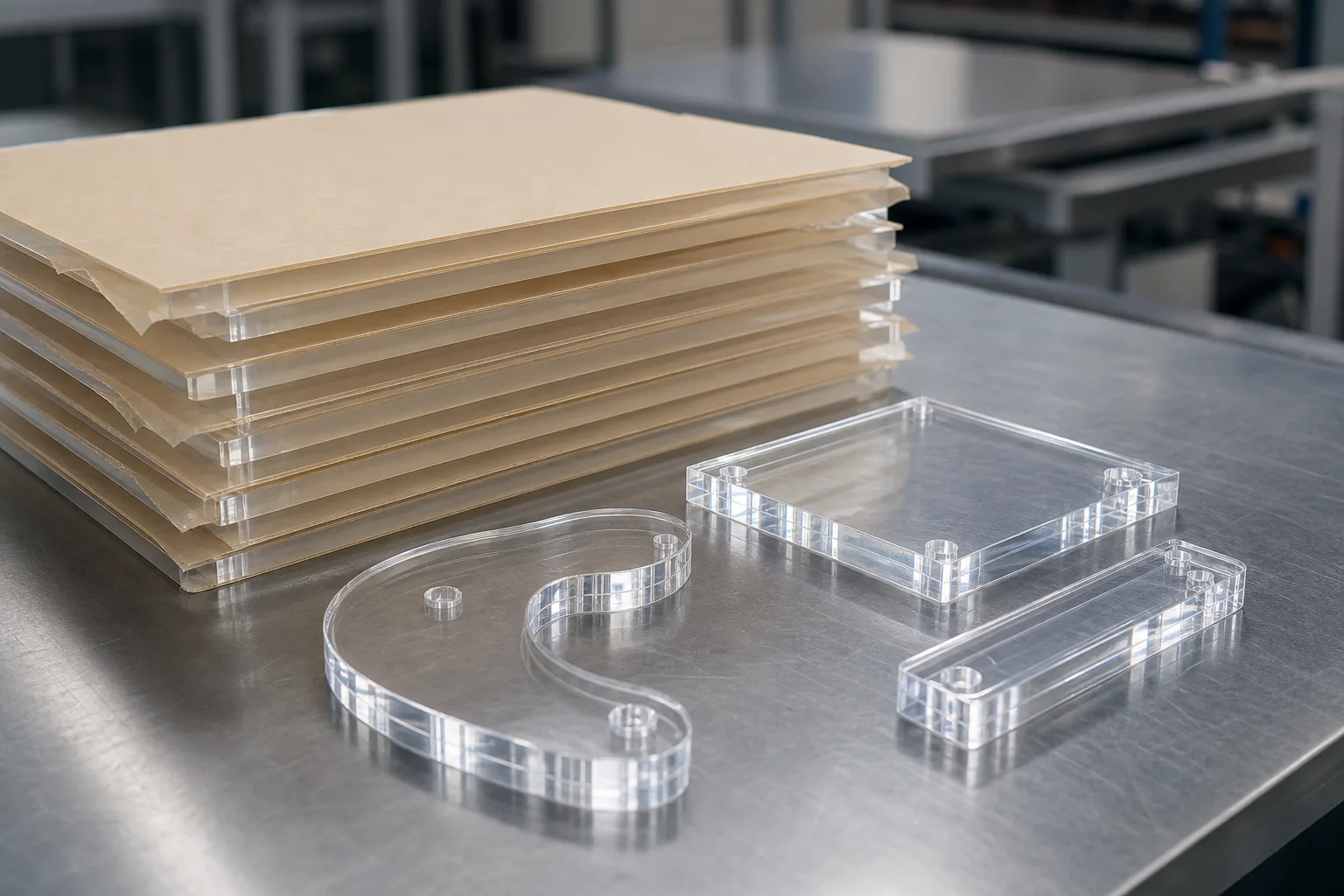
The 15-20 days on your quote is not a queue you wait in — it is nine overlapping production phases.
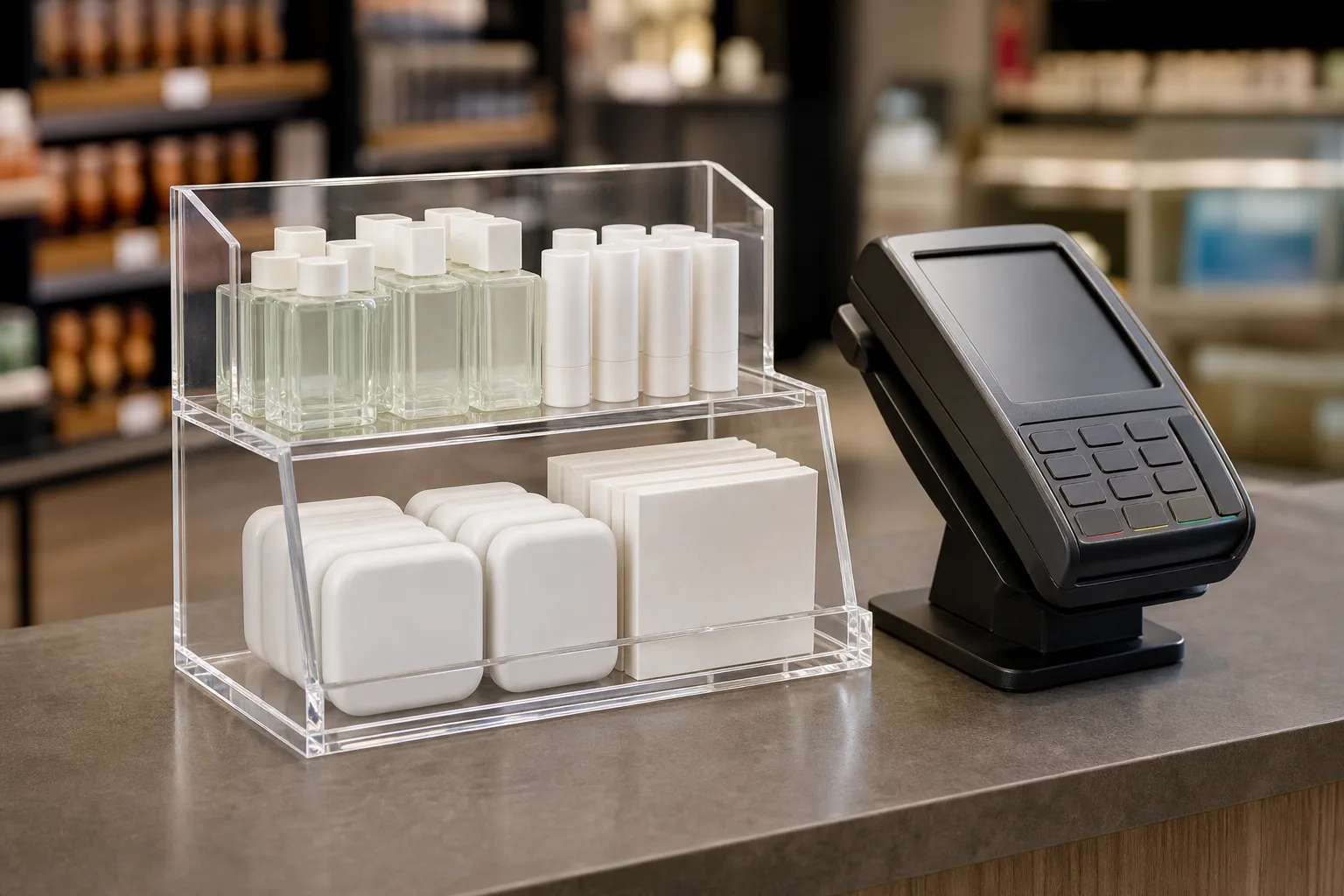
The checkout counter sells more per square centimeter than anywhere else in the store, but only with the right zone, height and product. Here's the placement math.

A tray program is room-count math, not tray shopping. Here's how 150 rooms becomes 350 trays, which sizes actually fit a vanity counter, and what survives housekeeping.
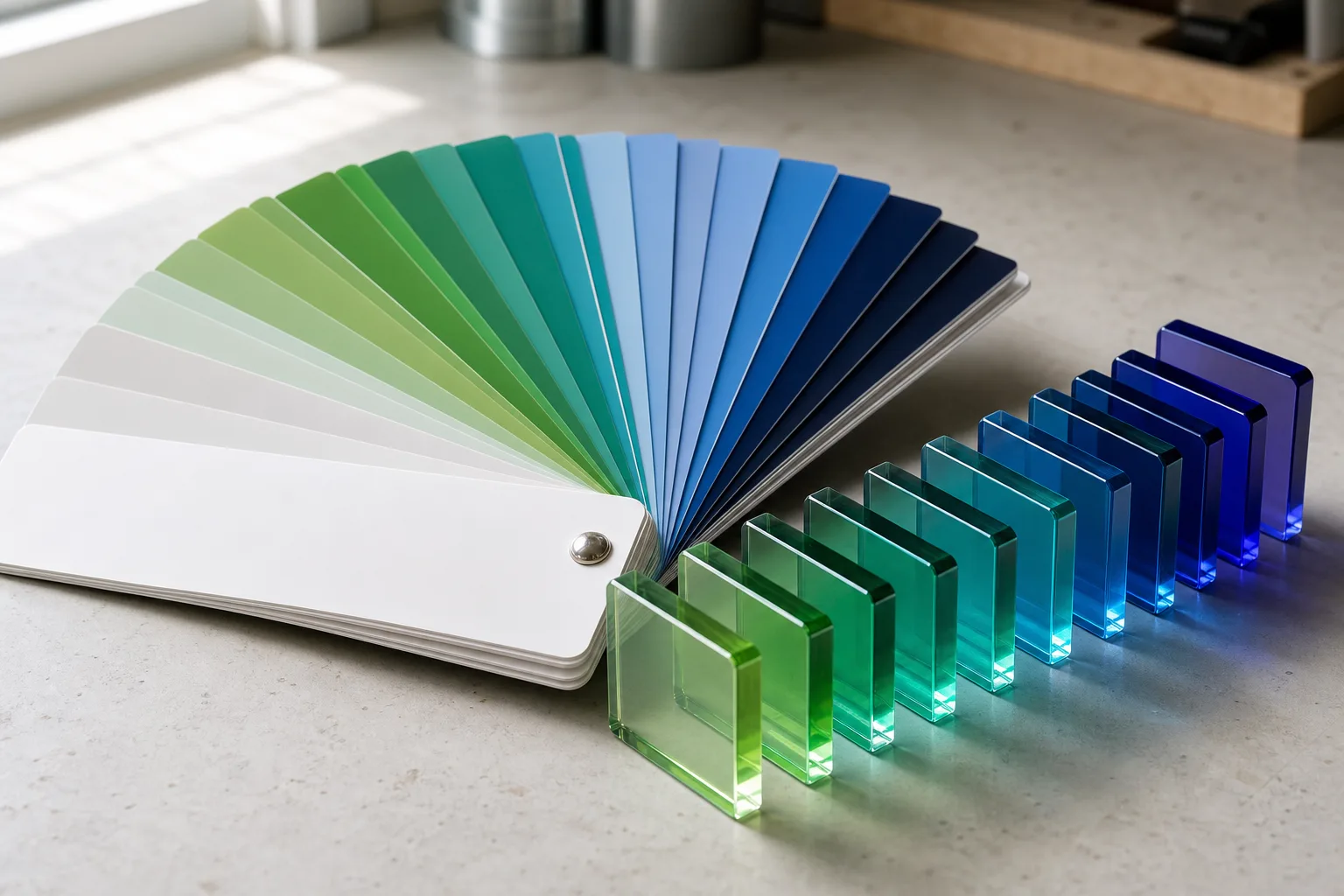
Buyers send HEX codes; factories match Pantone chips. How OEM acrylic color matching works: what a custom color costs, what delta-E to specify and what you sign.

Most gift-box quotes go wrong at the dimension line, not the price line.
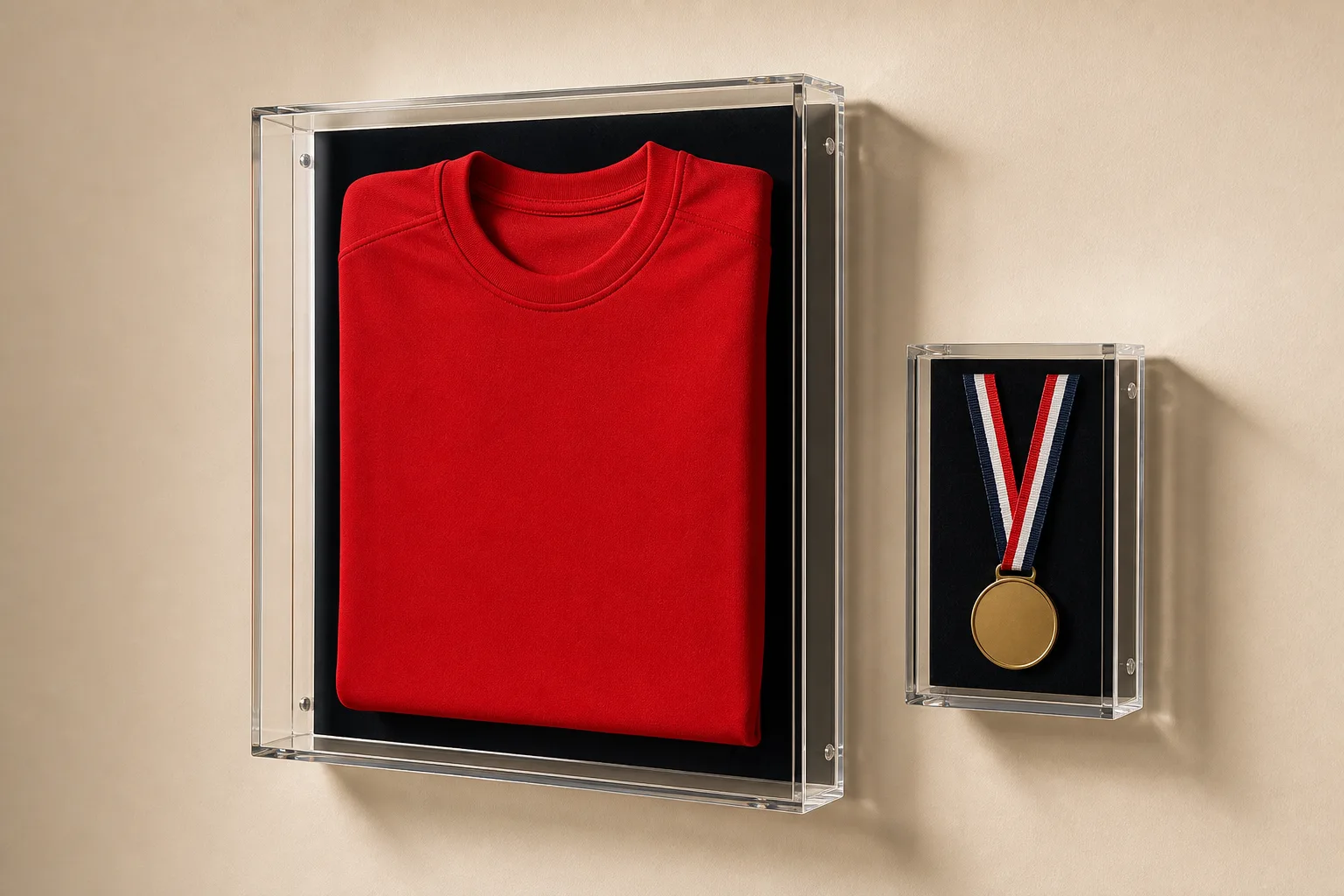
A shadow box is a picture frame with depth. The depth decides what fits, how the object mounts inside, and how the finished box hangs on the wall.
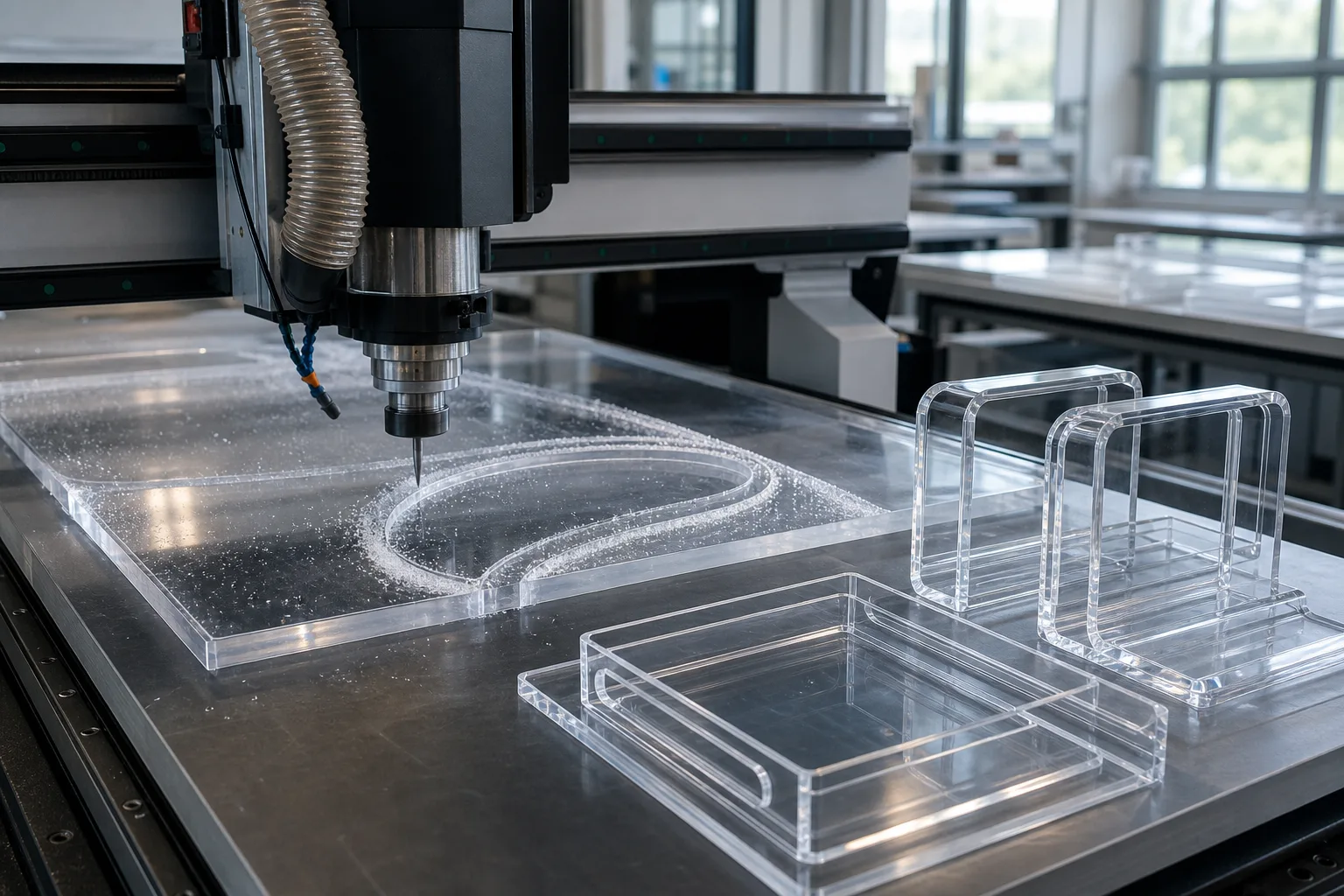
The tooling line on a plastics quote can run $2,000 to $100,000 before a single part exists.
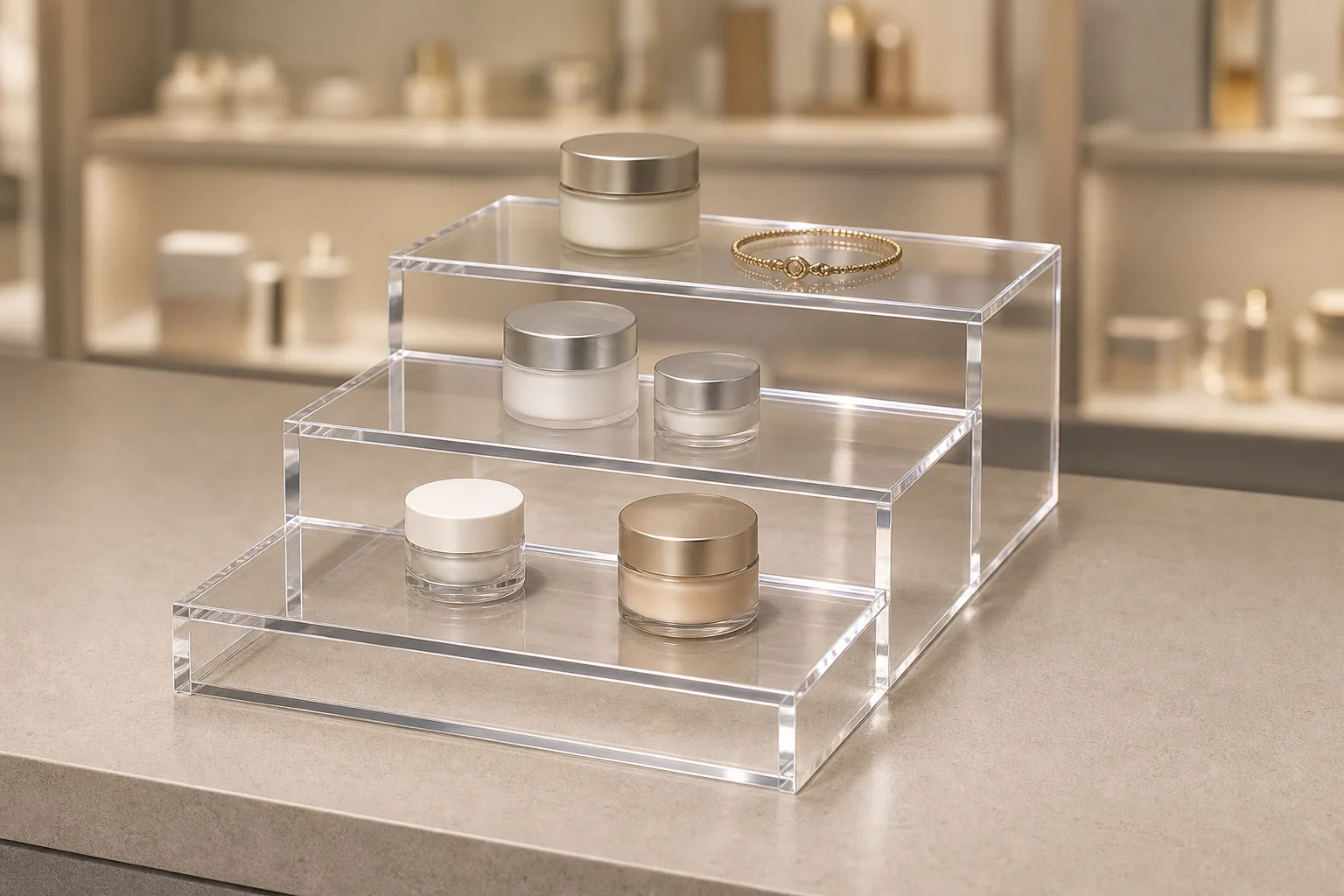
Most riser displays fail on size, not material.
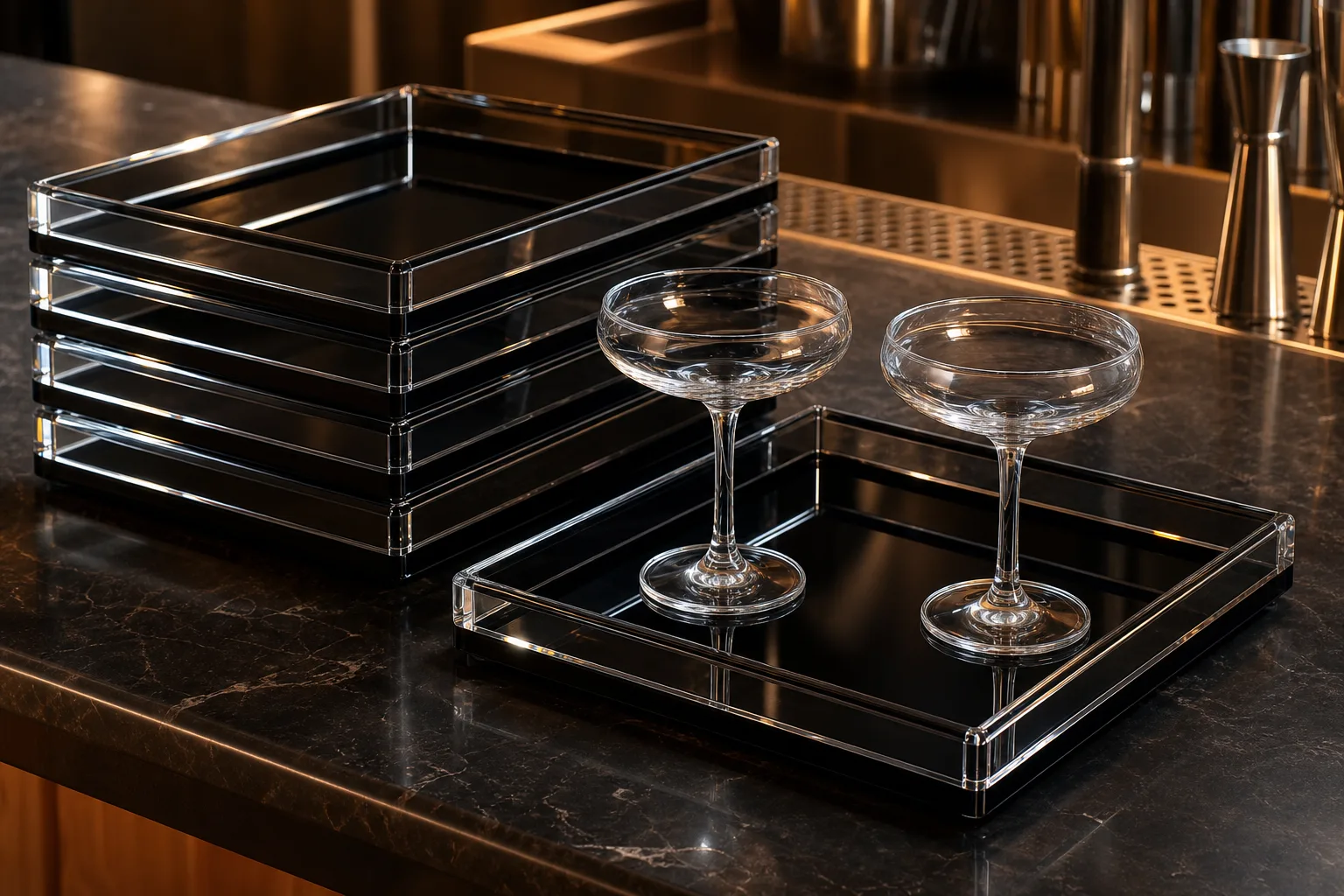
A bar tray lives a harder life than almost any other acrylic product.
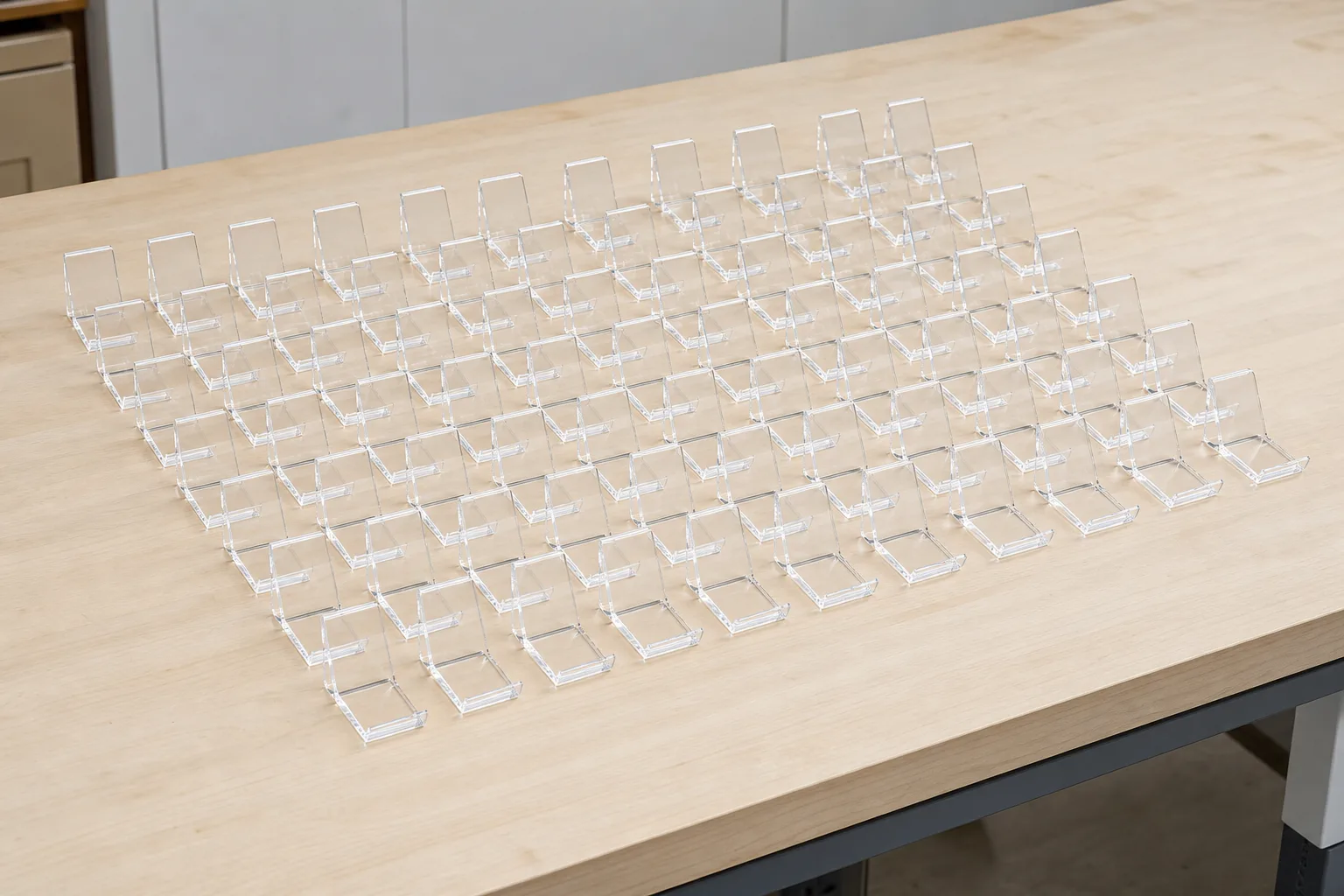
A minimum order quantity is not a factory being difficult — it is arithmetic.

The float is a mounting method, not a frame style; the build you need depends on whether you frame a canvas or suspend a print in mid-air.
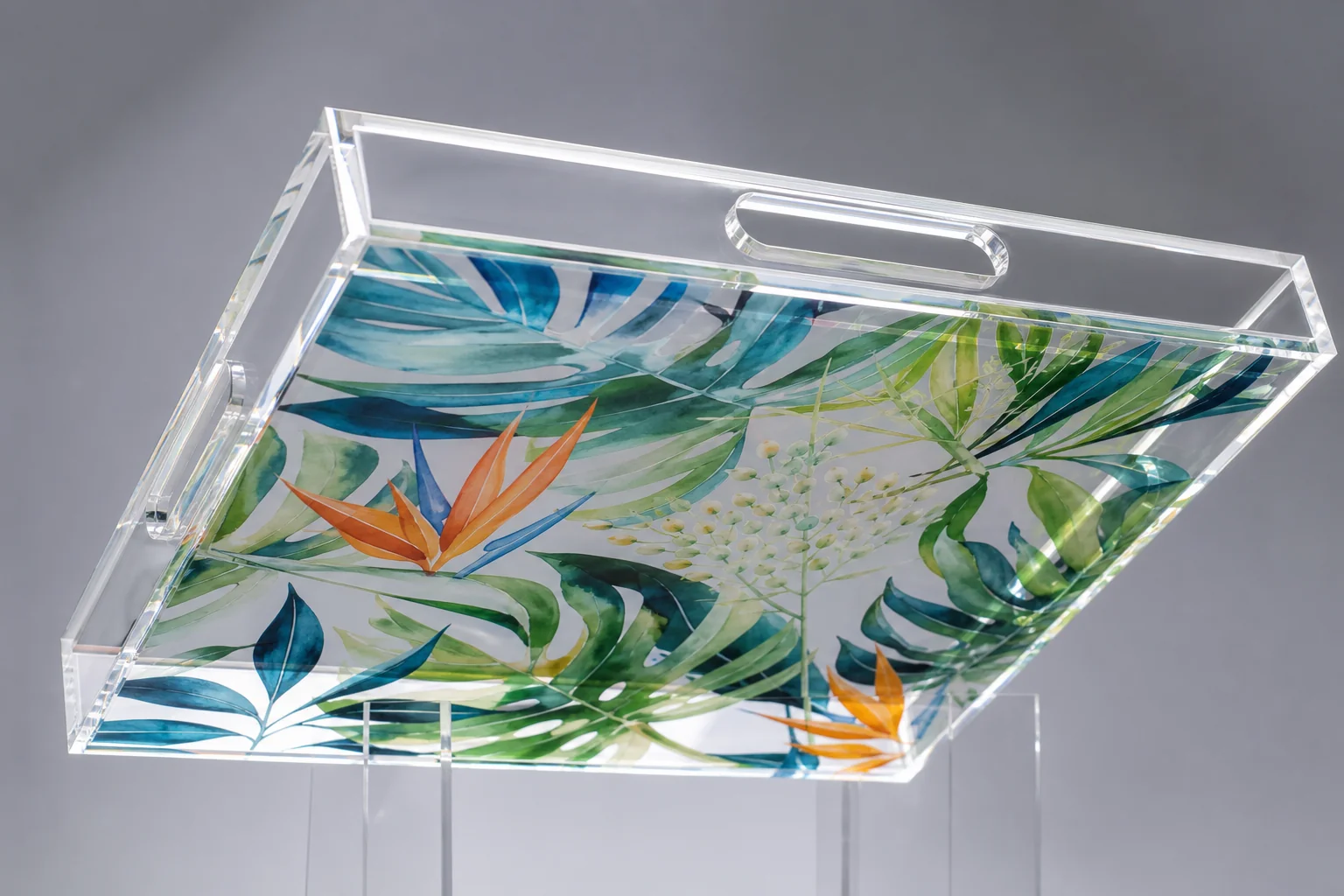
One bubble under the ink fails the whole tray. Here is how a second-surface print earns 'watertight, no bubbles, A+' — and how to spec it.
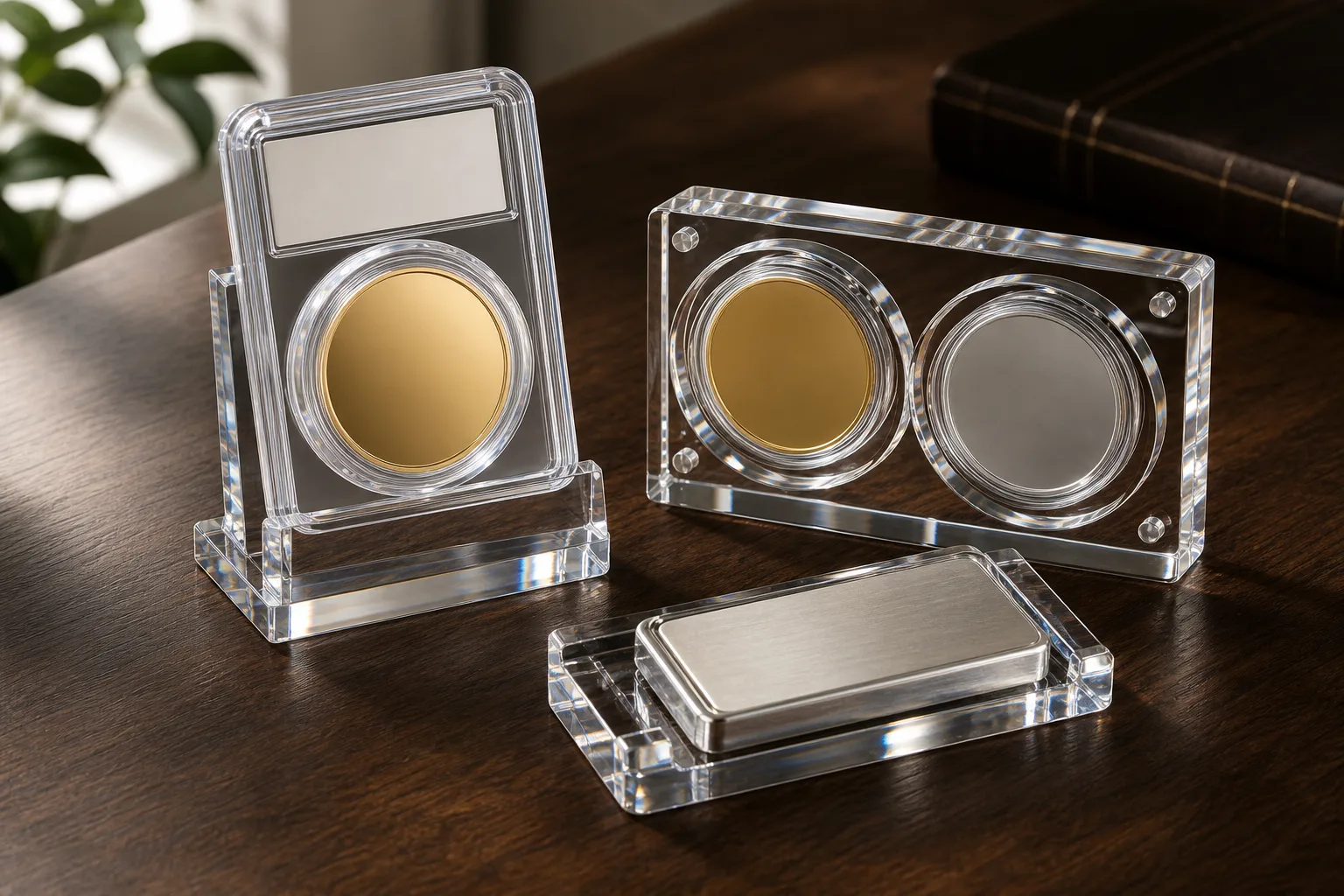
The airtight seal that stops tarnish comes from the coin's own holder — not the case around it.

A homeowner buys one frame off the shelf.
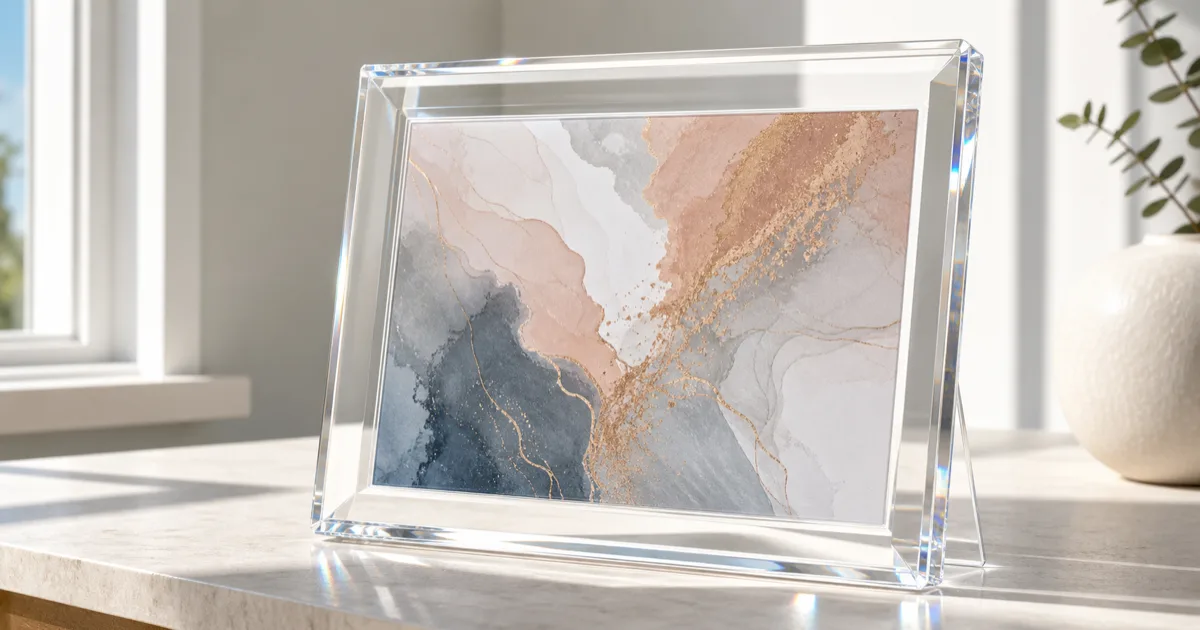
Acrylic's yellowing reputation was earned by a material most frame buyers never order; the wrong glass cleaner does more damage in a month than a decade of daylight.

Separate antique identification from a new production brief, then approve the material, feel and finish on the actual sample.
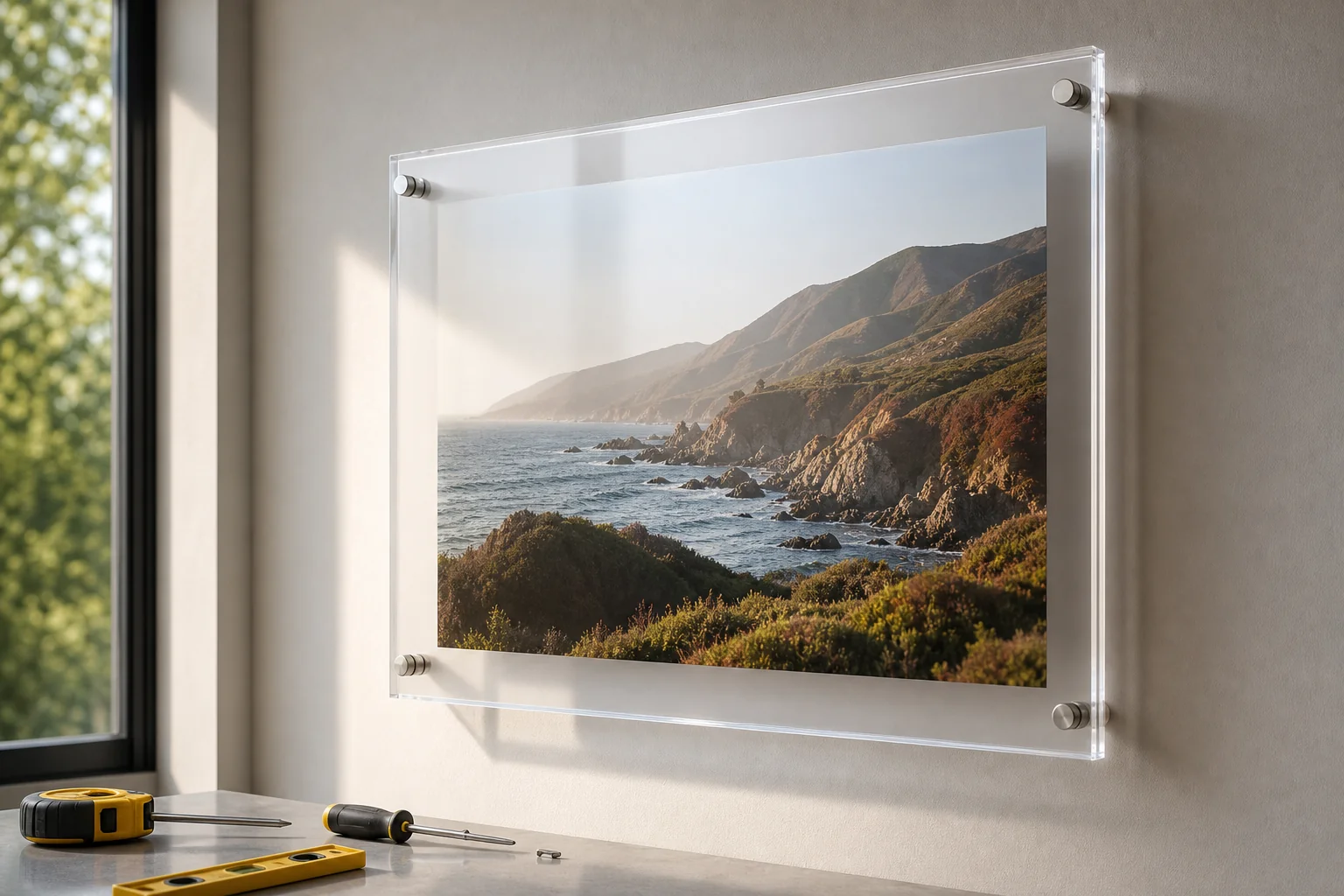
Most fallen frames were never the frame's fault. The mounting system was mismatched to the weight before the first hole was drilled.
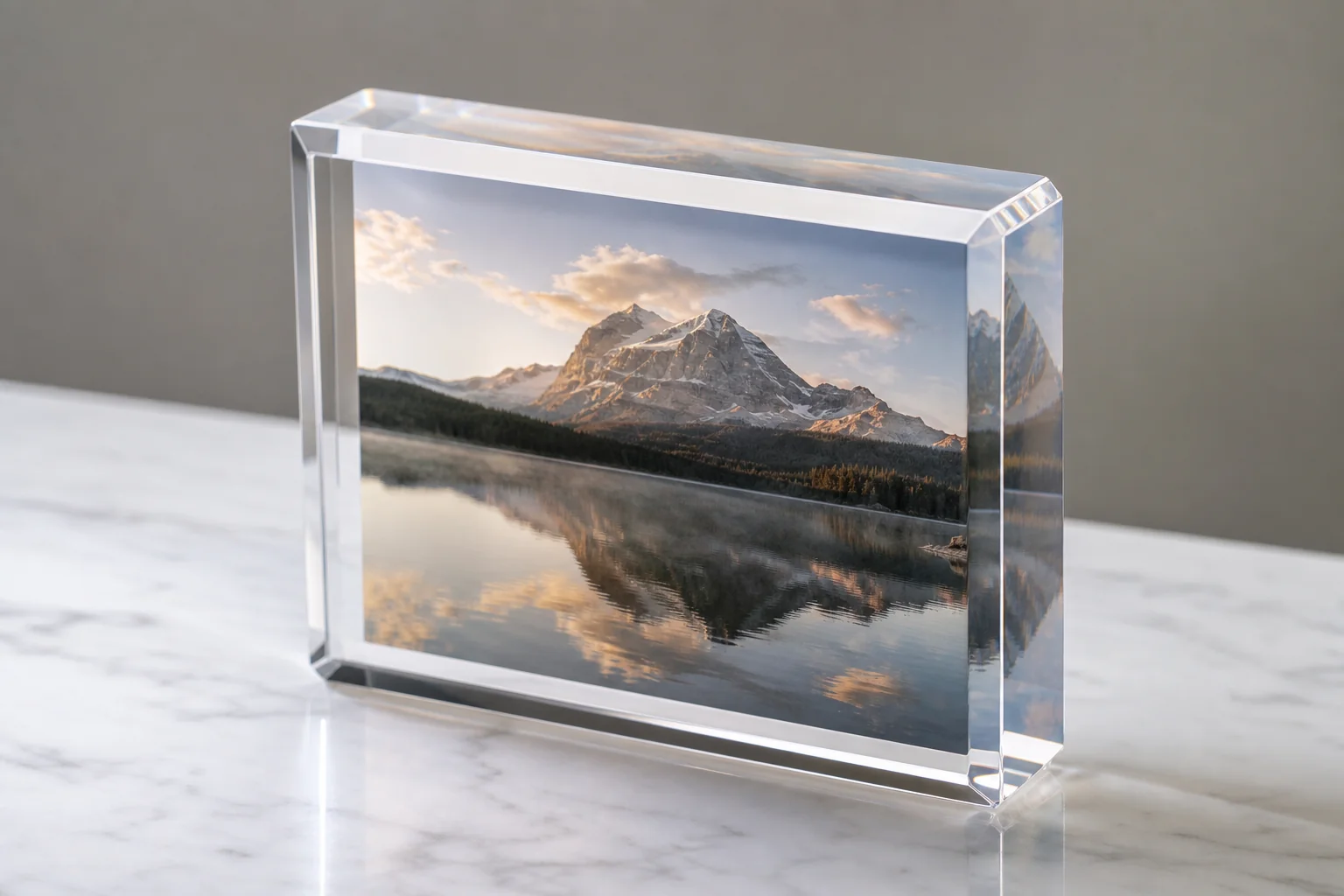
Consumer sites sell one block at a time. This is the factory-side guide for the lab buying a hundred.
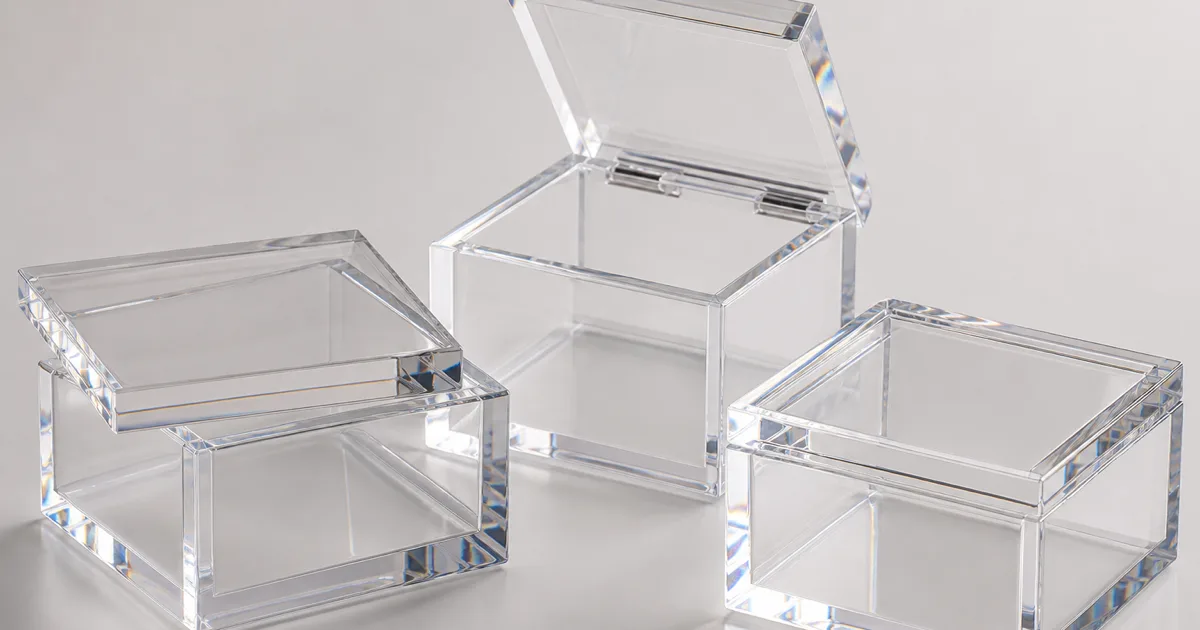
Most box RFQs name a size and a color and stop there.
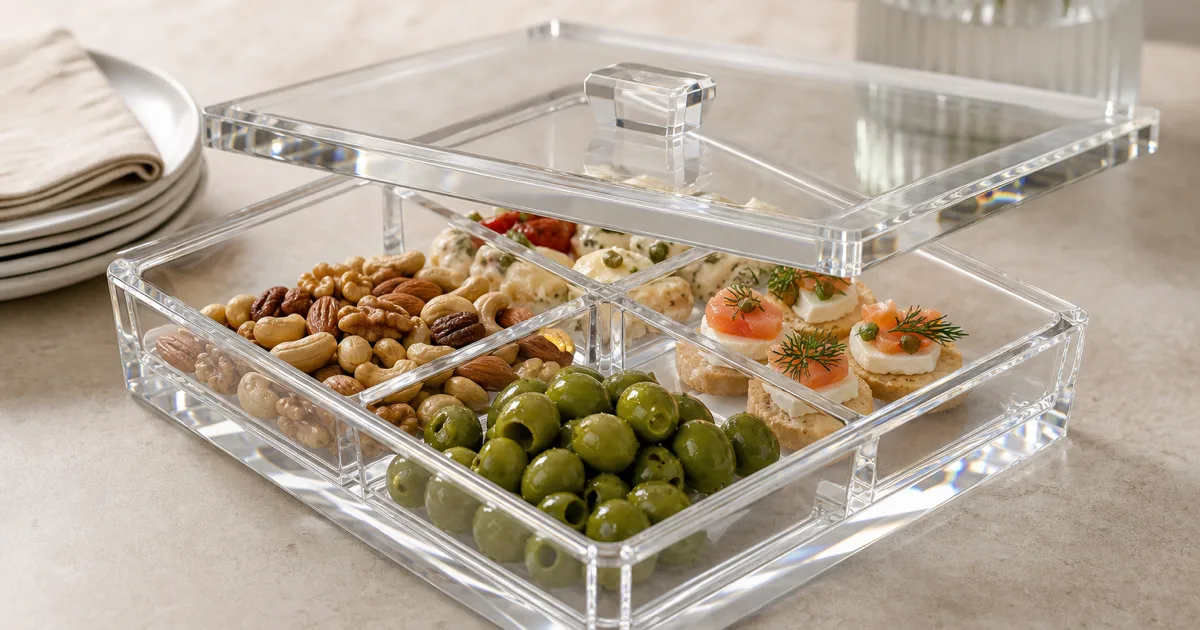
Loose cover, hinged, snap-fit, or gasket-sealed — and bonded dividers vs routed wells vs removable inserts. The four decisions that shape the quote.
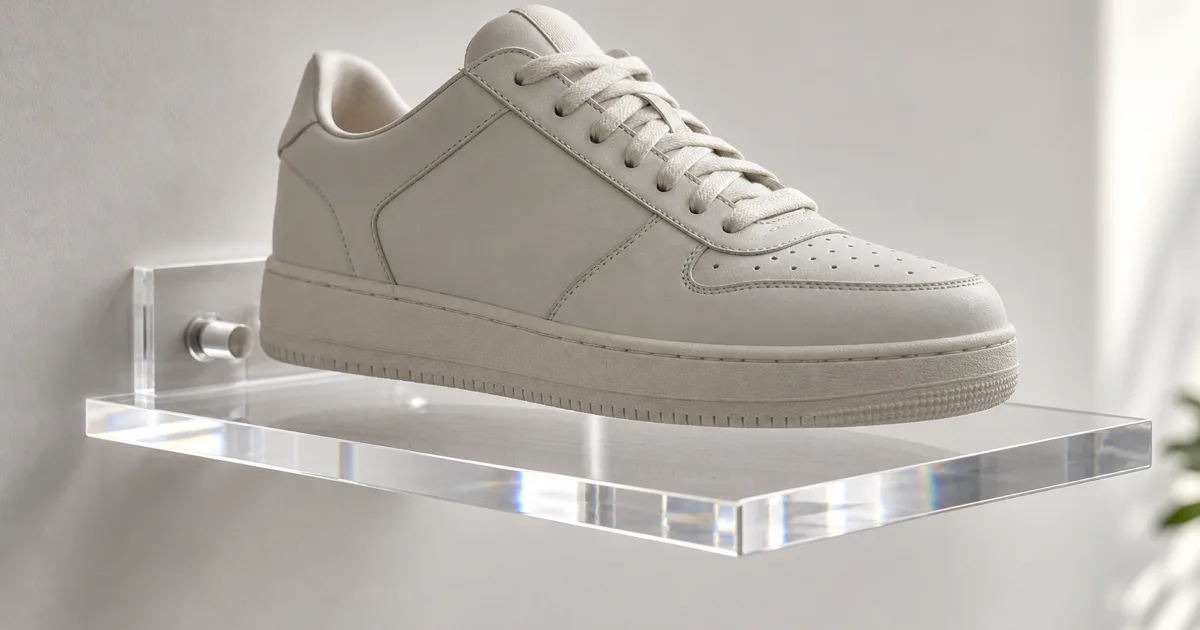
The levitating sneaker on the wall is not magic — it is one of three clear-acrylic mounting methods, each with a different load limit, SKU density, and seasonal-swap workflow.
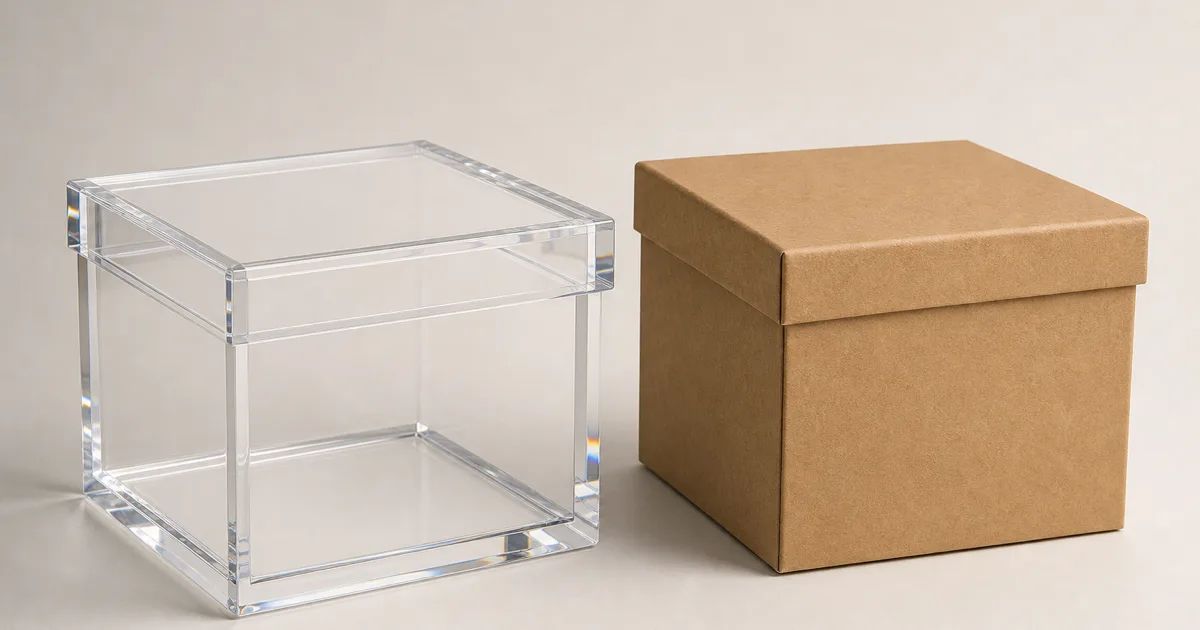
Cardboard is lighter and has a common paper-recycling route. Acrylic can be specified as a reusable display or storage object.
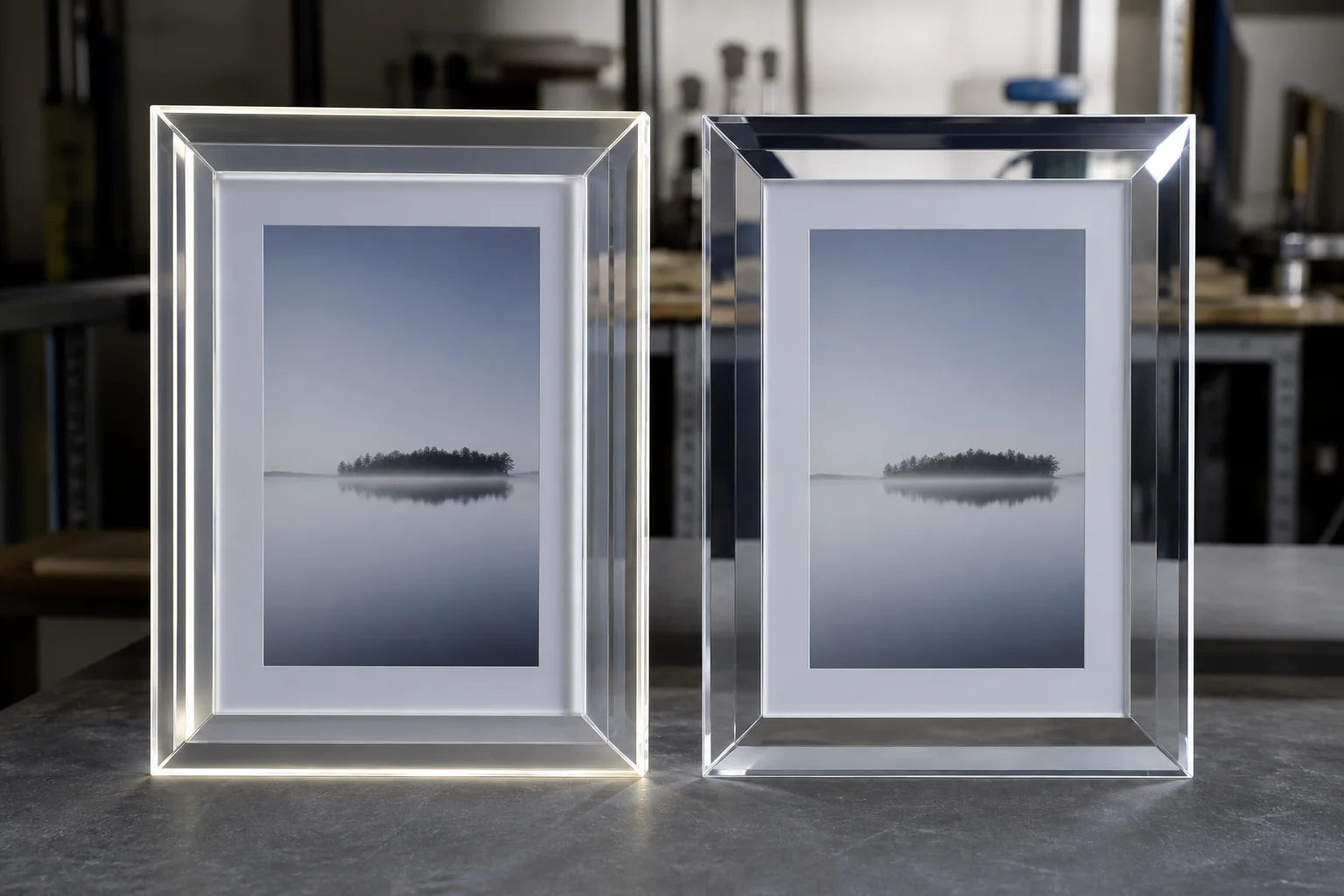
For one frame on your own wall, either glazing works. For 200 frames crossing an ocean, the two materials behave like different products.
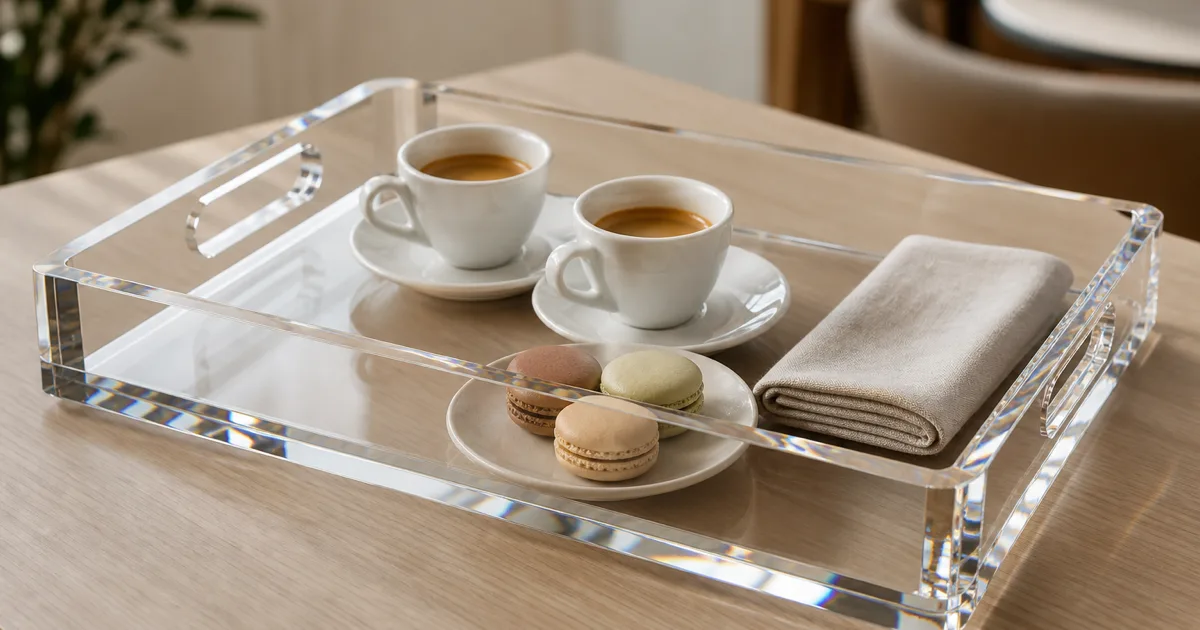
Melamine is cheaper per piece and nearly unbreakable. Acrylic reads premium and takes a logo cleanly. The right call depends on which one fails first in your service.
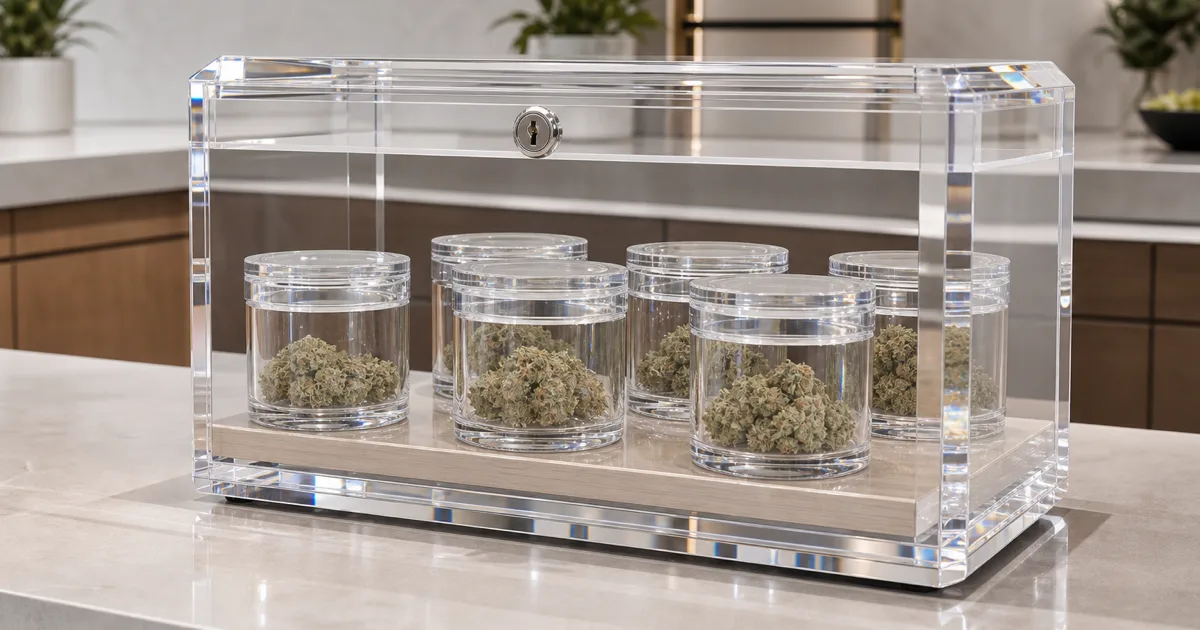
A cannabis display isn't just a merchandising choice — it's a compliance decision.

Know which decisions belong in the file, on the proof and in your hands before approving production.
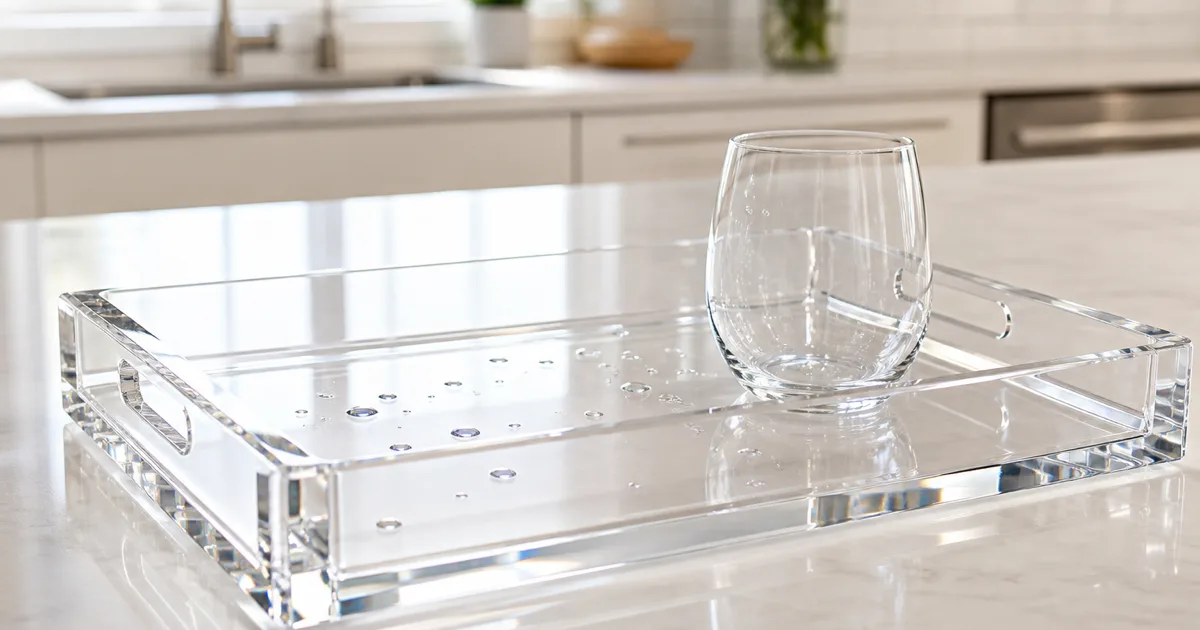
Dishwasher heat and detergent craze acrylic over repeated cycles. Here is how to clean an acrylic tray, what to avoid, and when to choose another material.
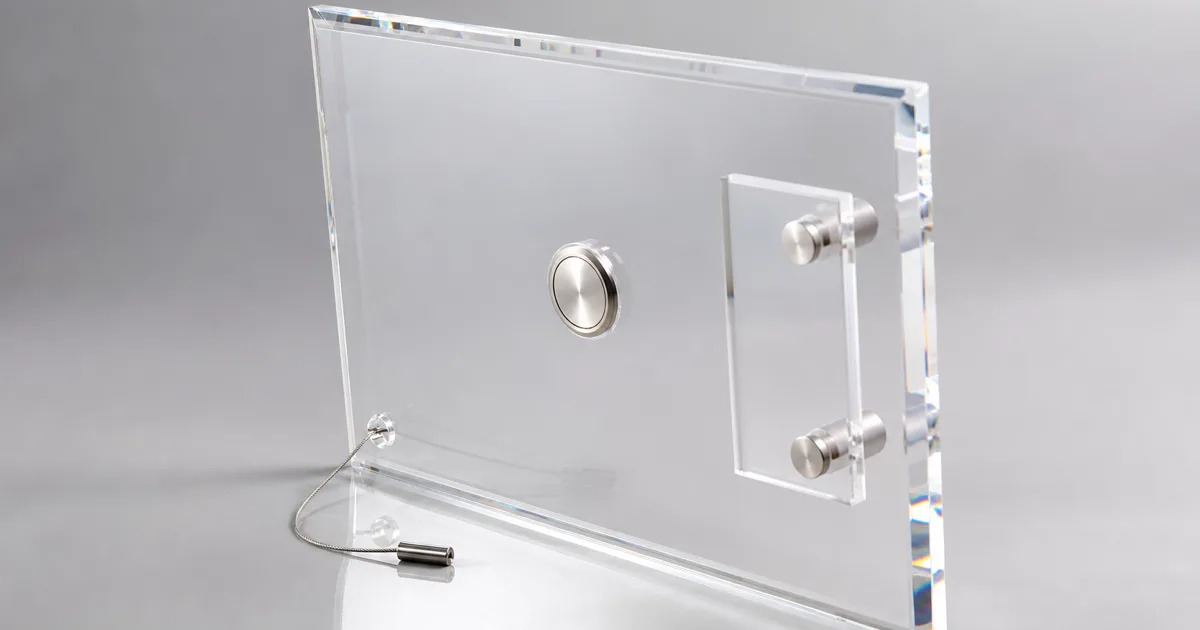
Two questions decide most display-hardware RFQs: how does it stay on the wall, and how do you keep the product from walking out the door.
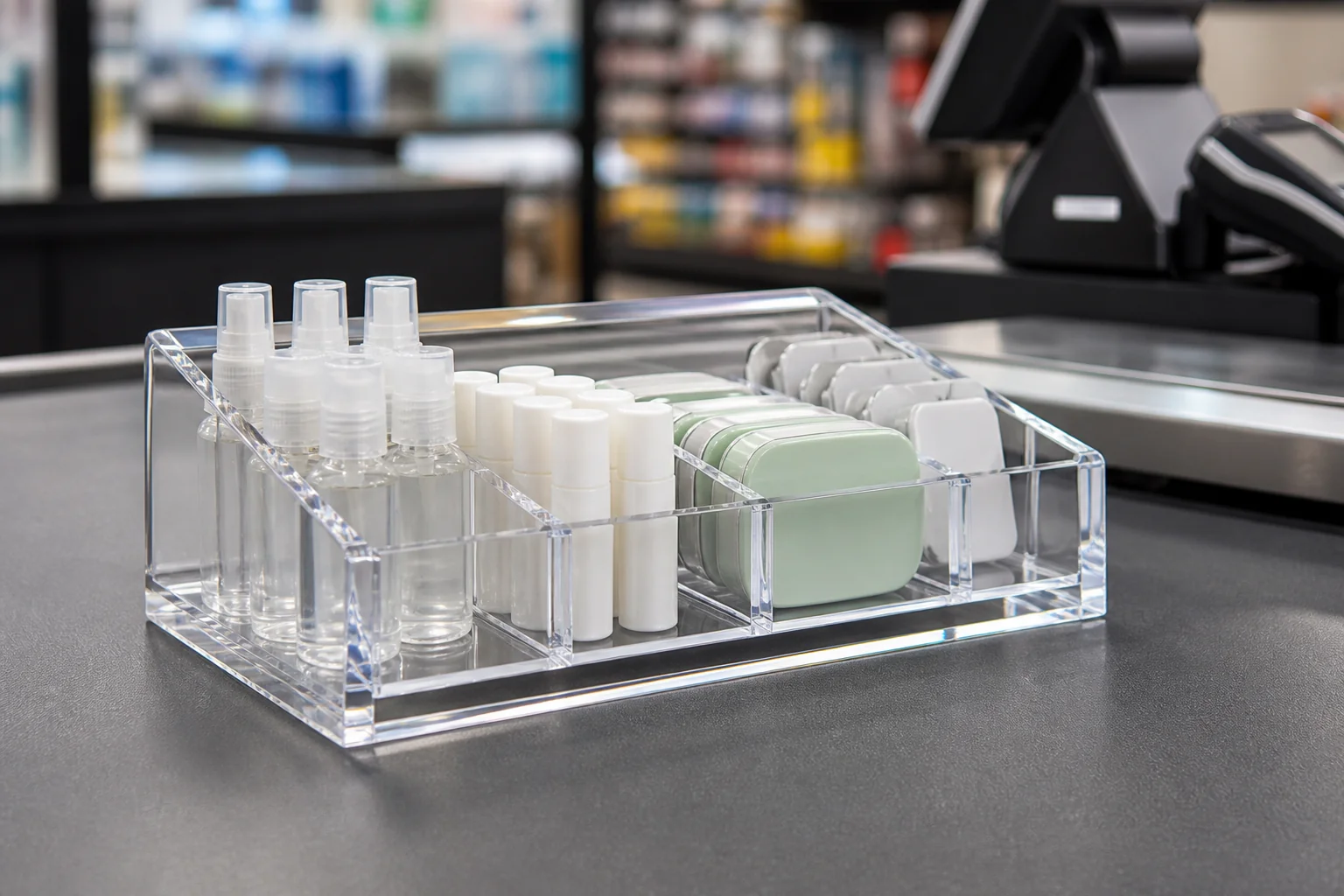
The checkout counter is the most contested real estate in a store.

Half an inch of depth changes the weight, the freight, and the quote — these are the three numbers every custom tray RFQ lives on.
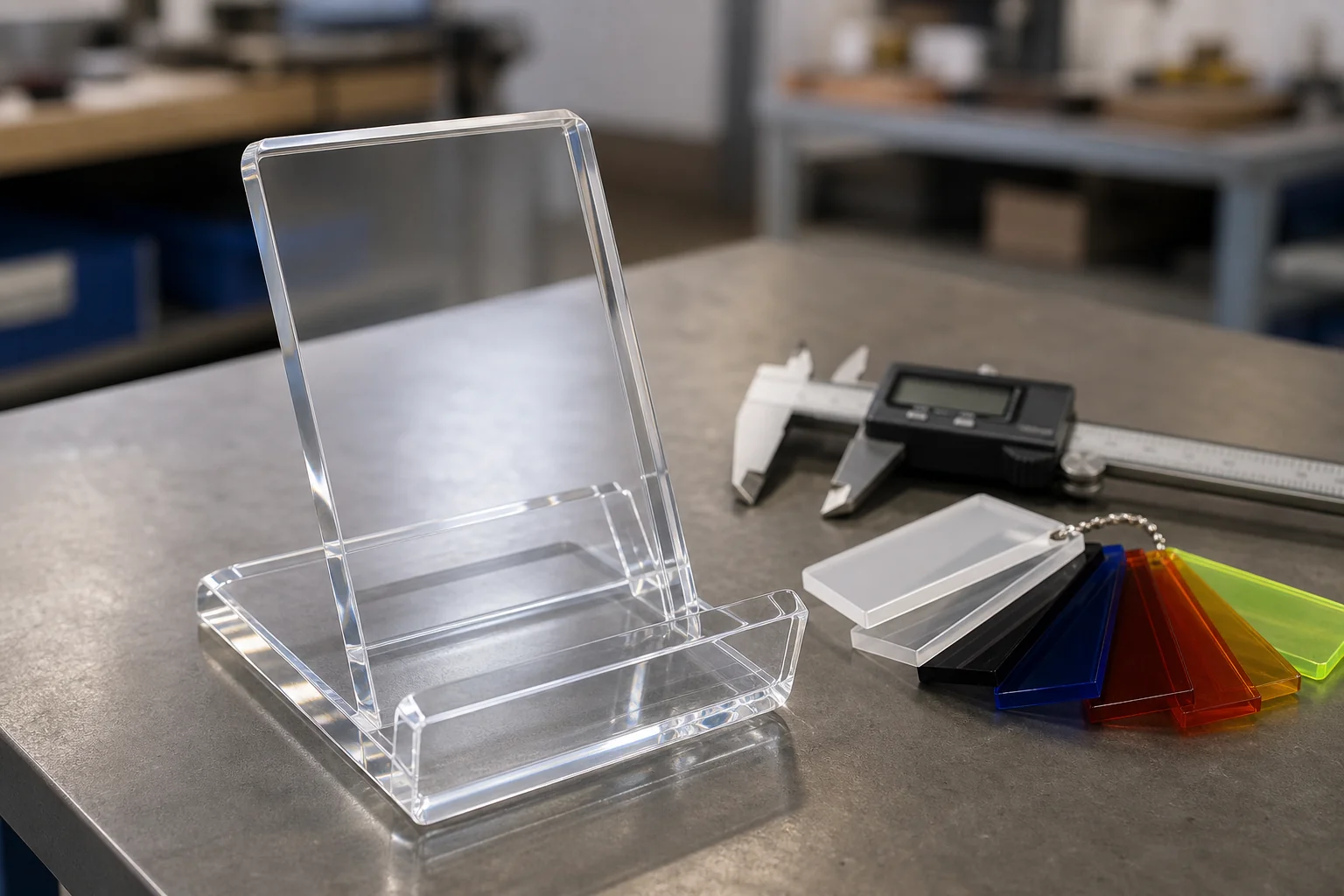
Most supplier pages end with a contact form and a promised callback. Here is what actually happens after that email — 7 gates, day counts, and the three approvals you control.
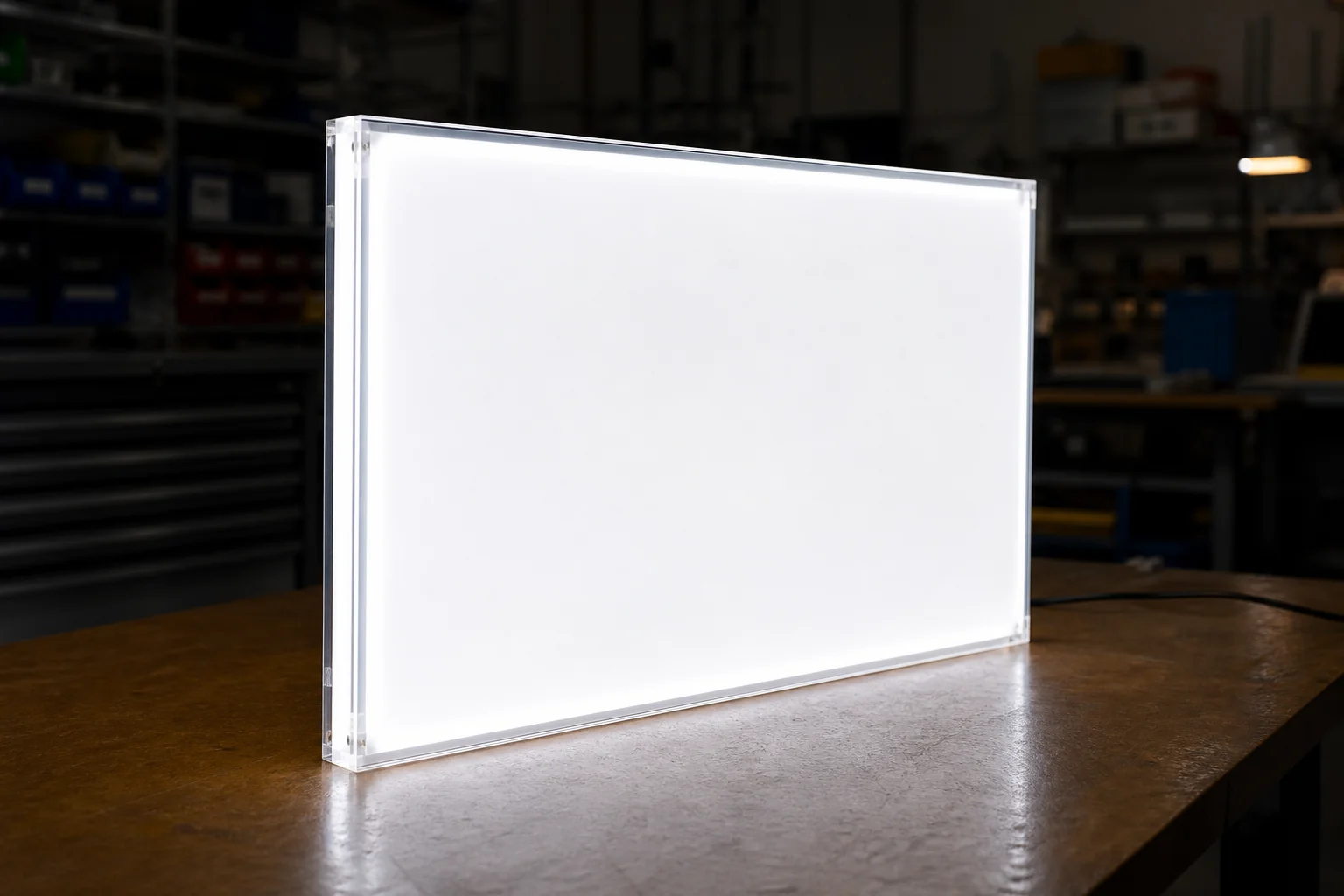
A powered panel hides nothing. Here is what to spec — stack, swap system, driver, lead time — before you order a batch.
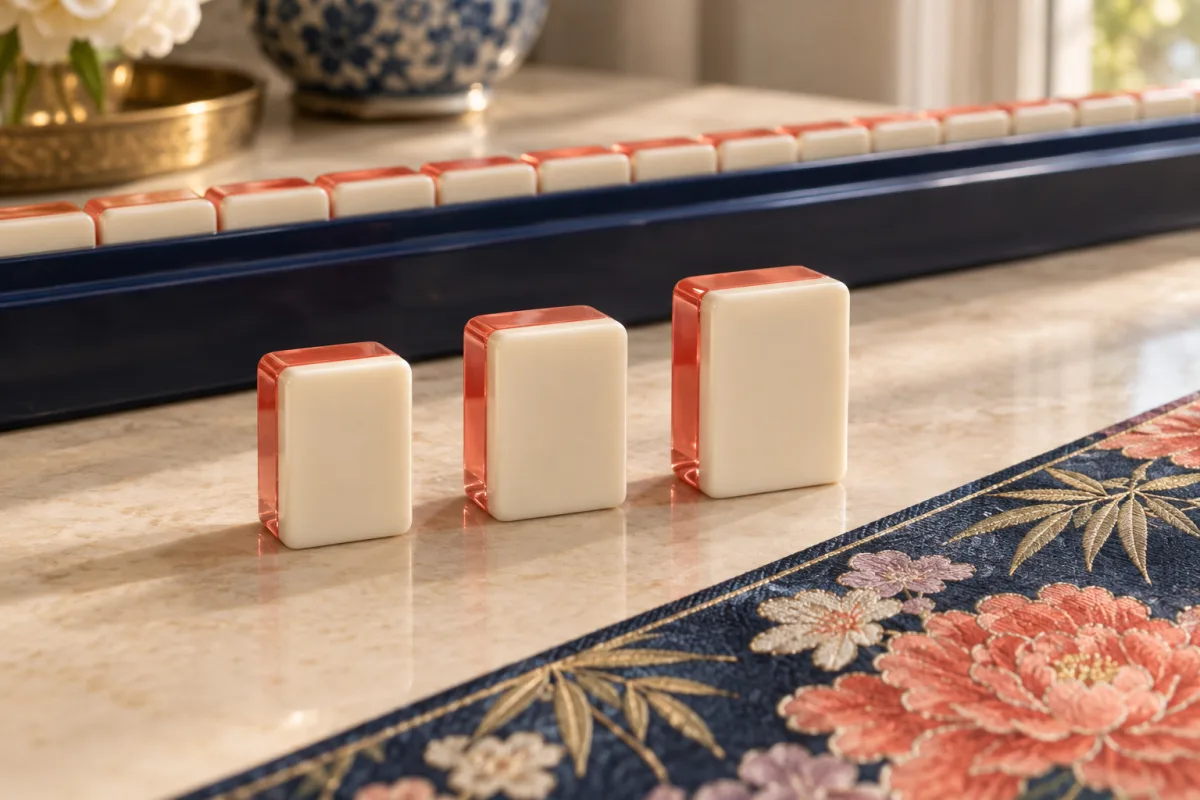
Tile size decides rack fit, artwork room, set weight, and freight cost: pin it down before anything else on a custom set.
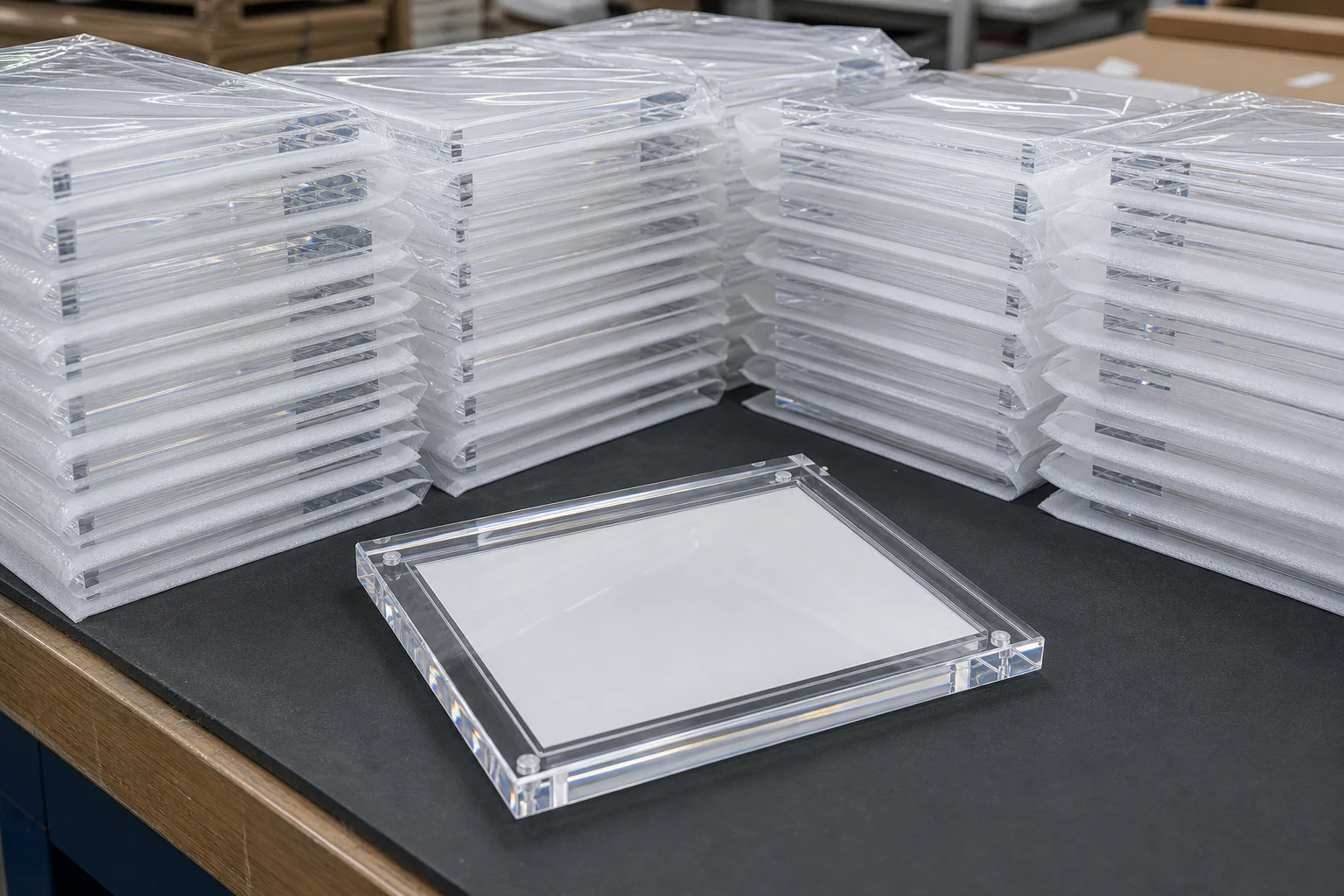
Every bulk frame price is a stack of costs someone assembled.

The name on the listing changes the price. The material in the carton does not. Here is where the money actually goes.
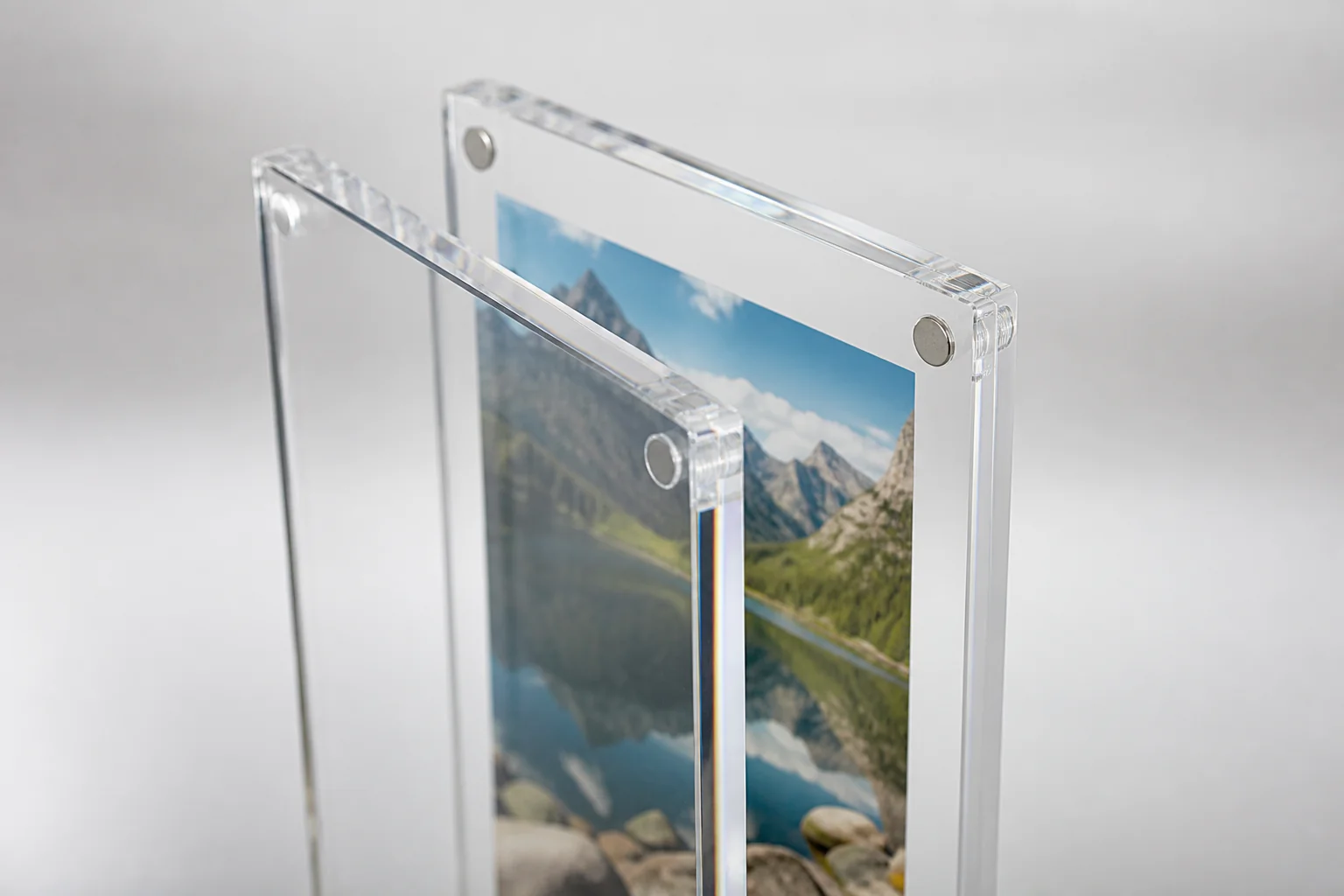
The event date is fixed, the stock doesn't exist, and the order math has to close.

Most display stand failures I see aren't manufacturing defects. They're material decisions made without a calendar — and the fix is arithmetic, not luck.
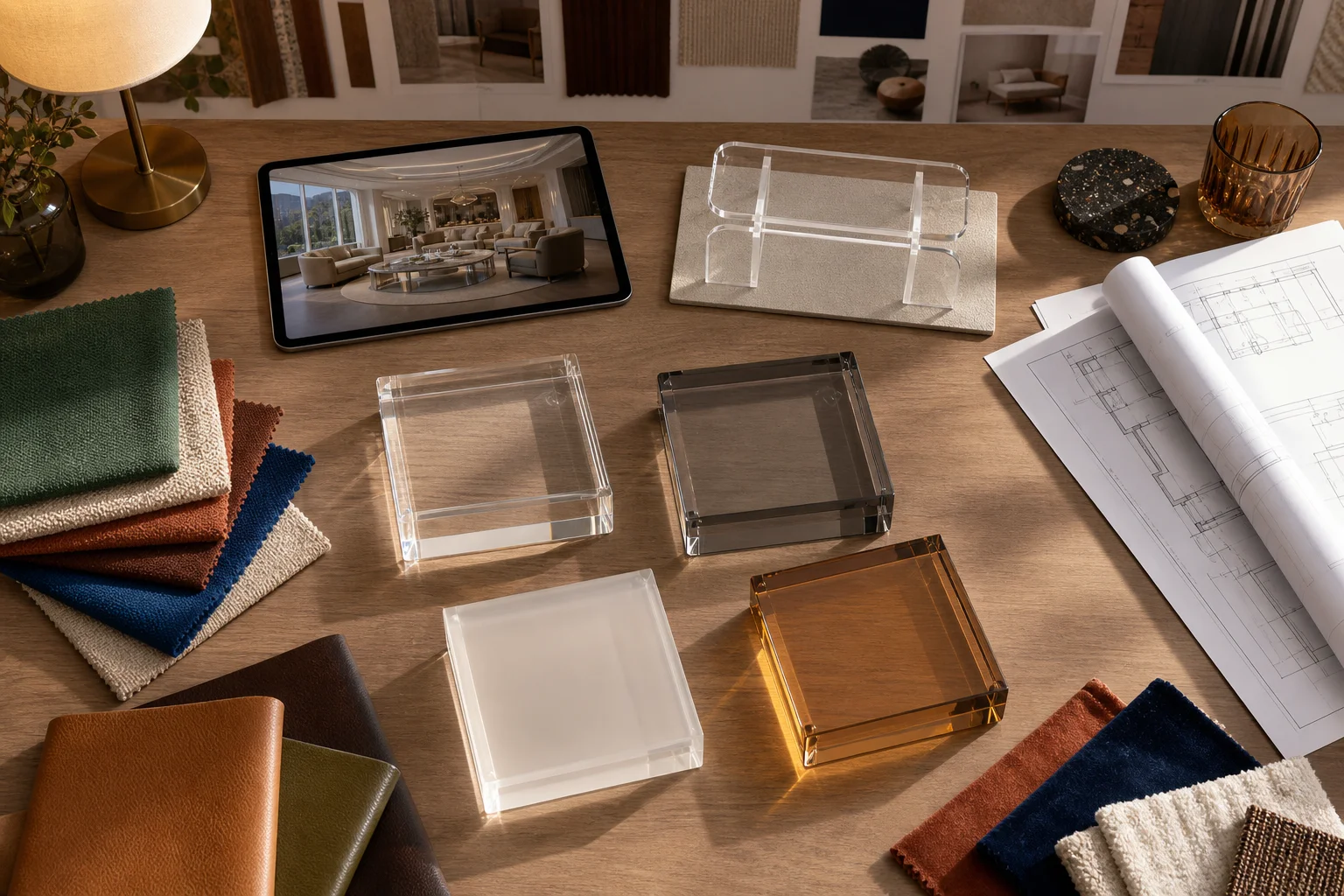
When a designer walks into our inquiry process, they usually have a mood board and a deadline. What they rarely have is a material spec.
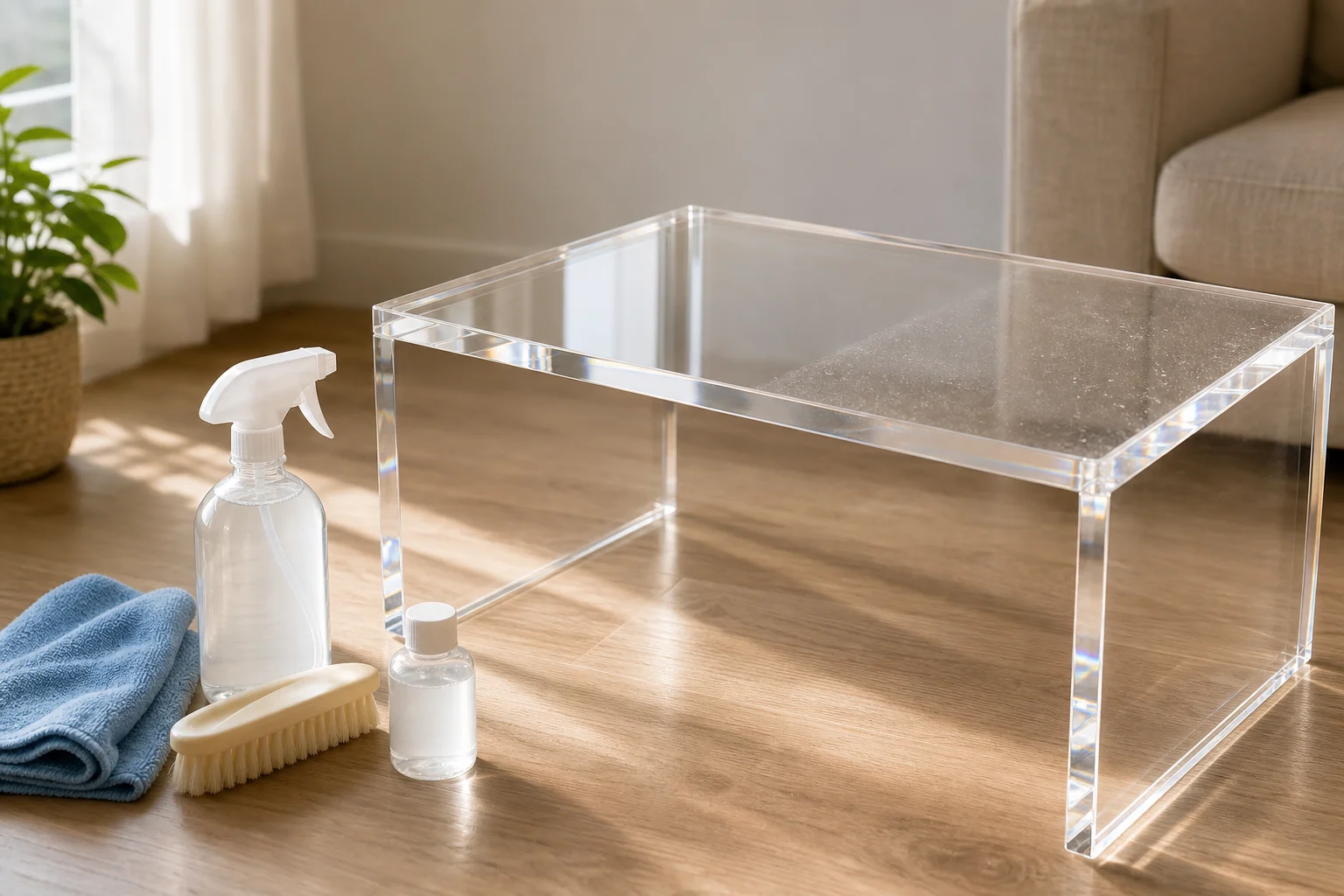
A care plan should name the sheet grade, approved cleaner, cloth, test area and response to scratches before staff clean the finished piece.
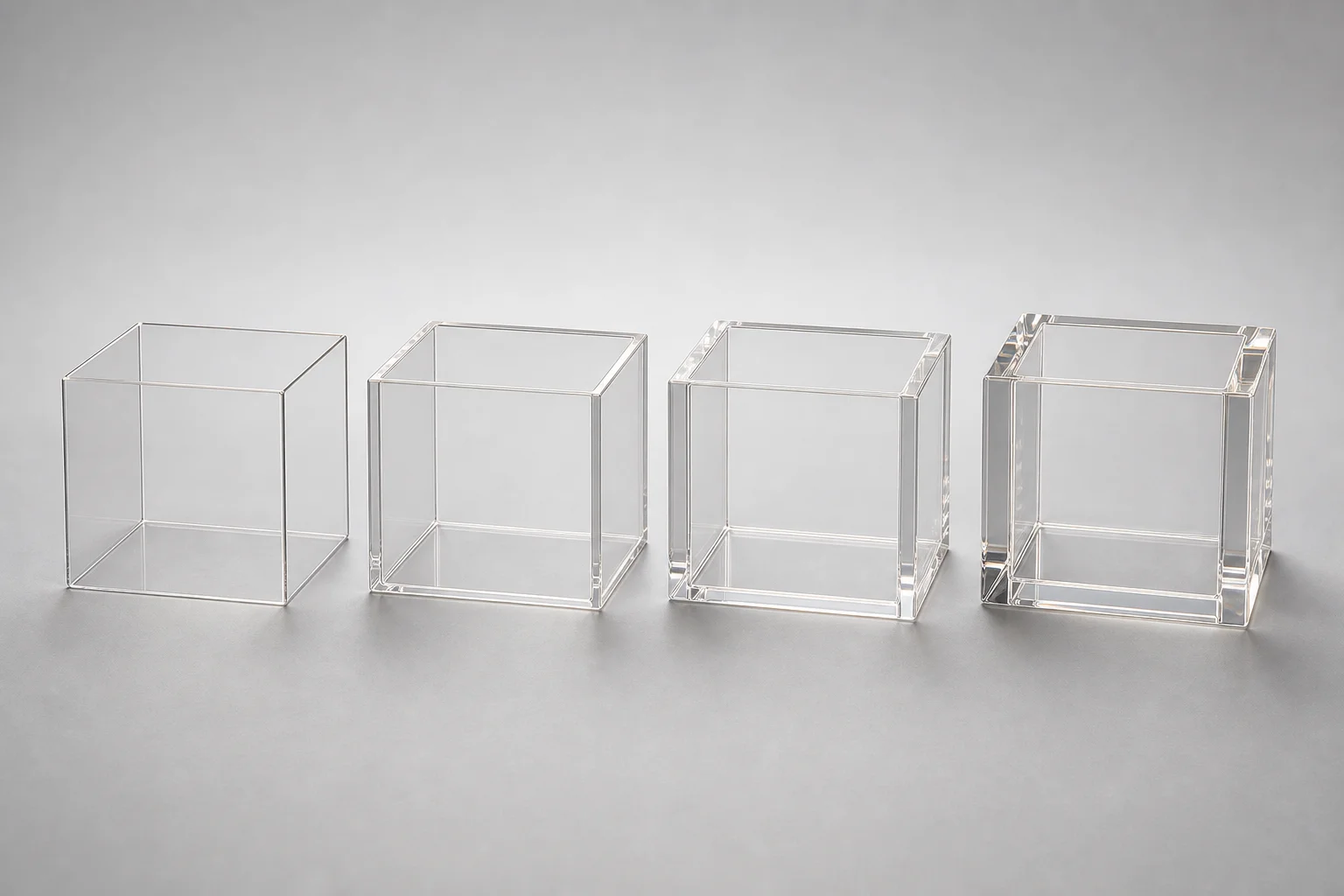
A product packaging buyer sends their RFQ with 'clear acrylic box, 8x6x4 inches.' We write back with one question: how thick?
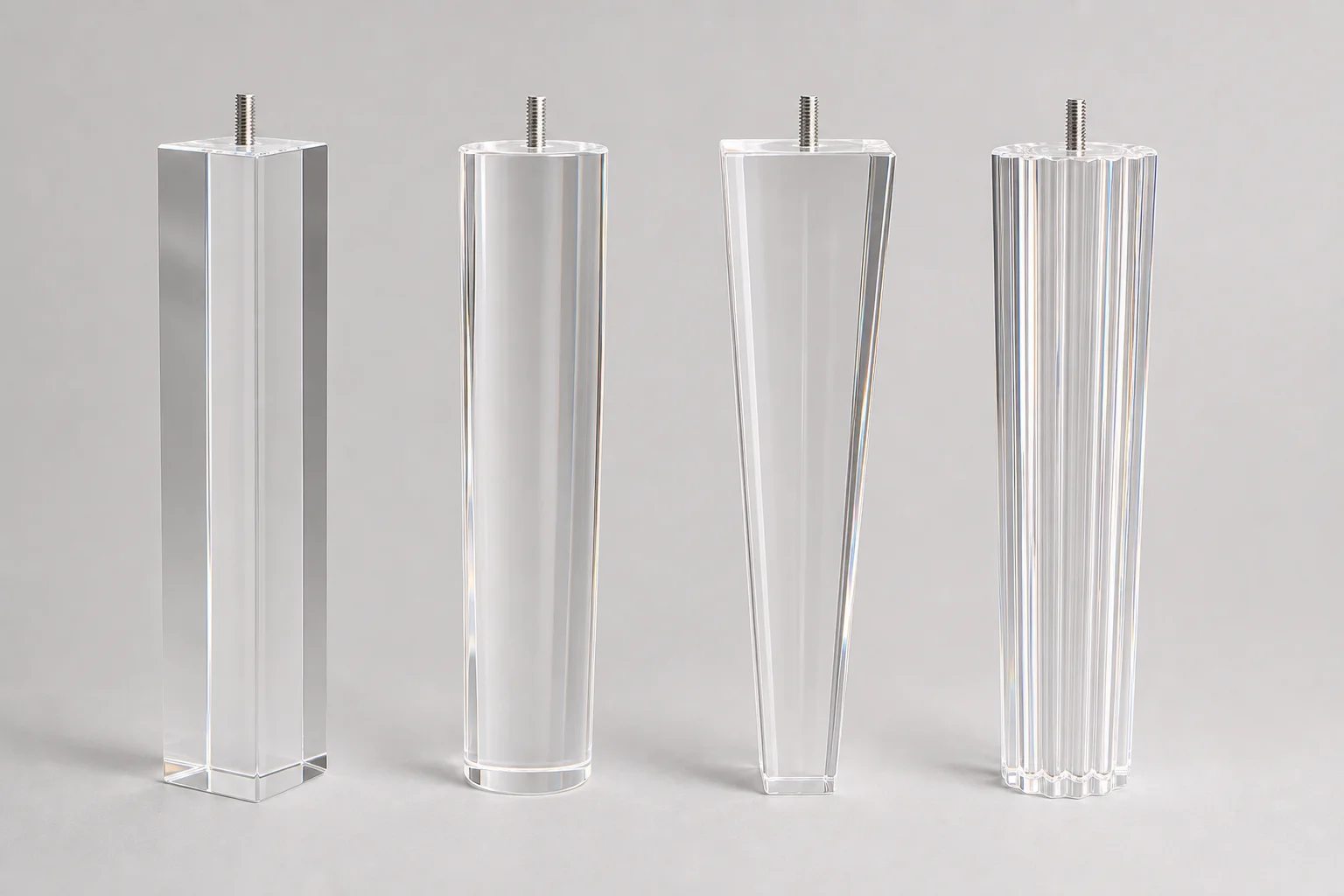
Cracked acrylic table legs are almost never a material-quality problem. They come from bending math nobody ran before production — here's the calculation that governs the spec.
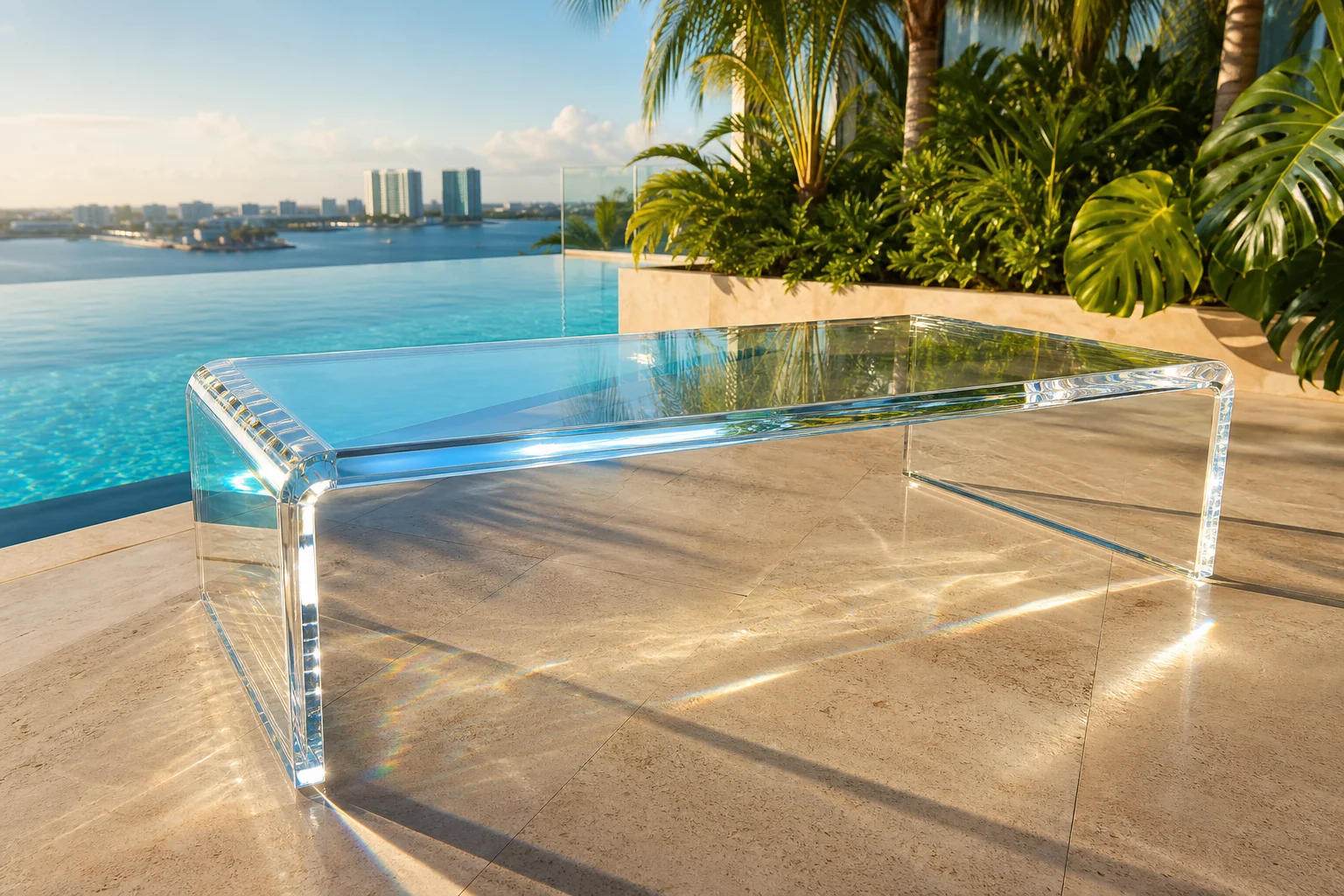
Outdoor acrylic furniture fails for one reason: someone skipped the spec. Here are the numbers that prevent it.
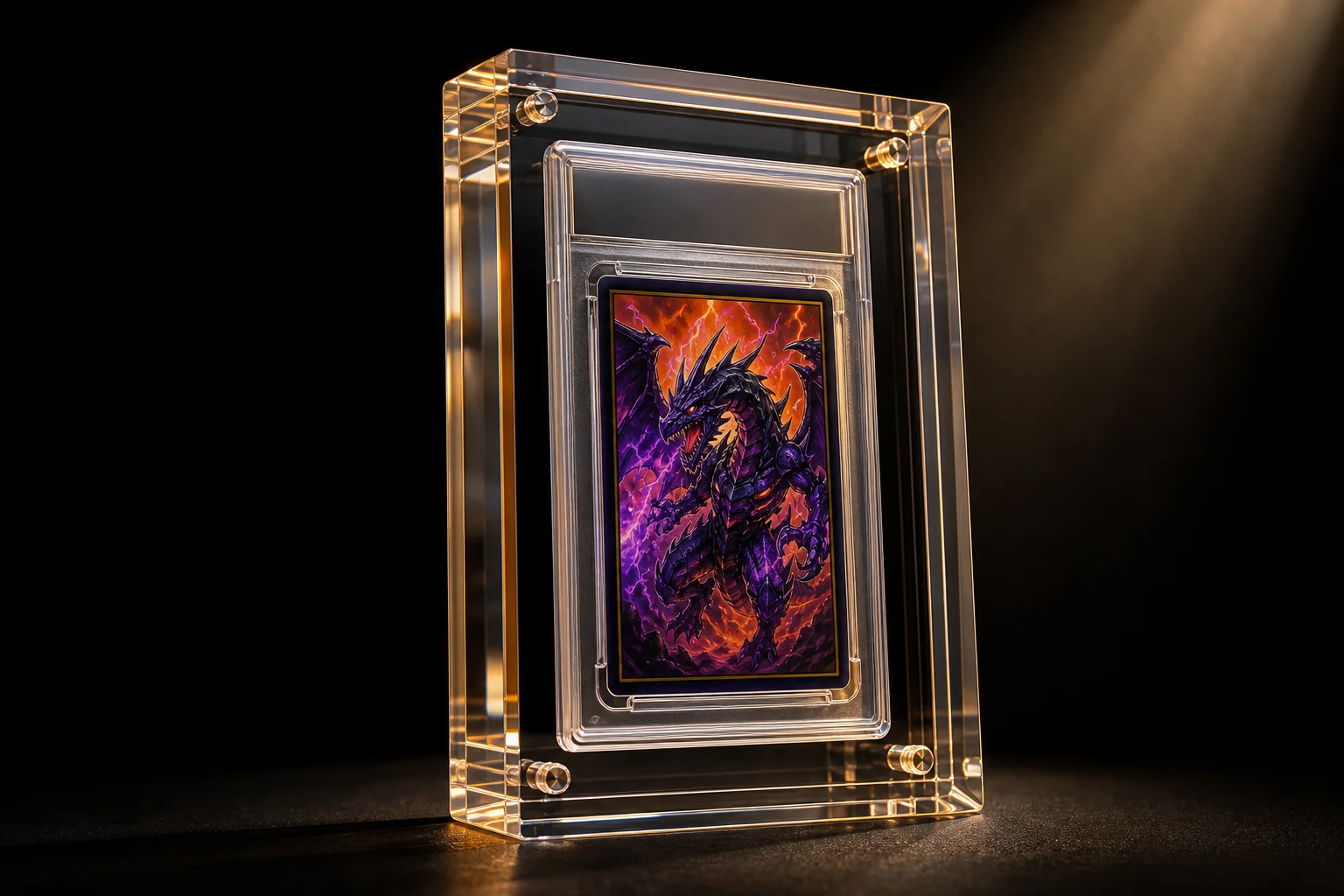
Most UV acrylic marketing claims are meaningless. '99% UV protection' tells you nothing about card safety. Here's what actually matters.
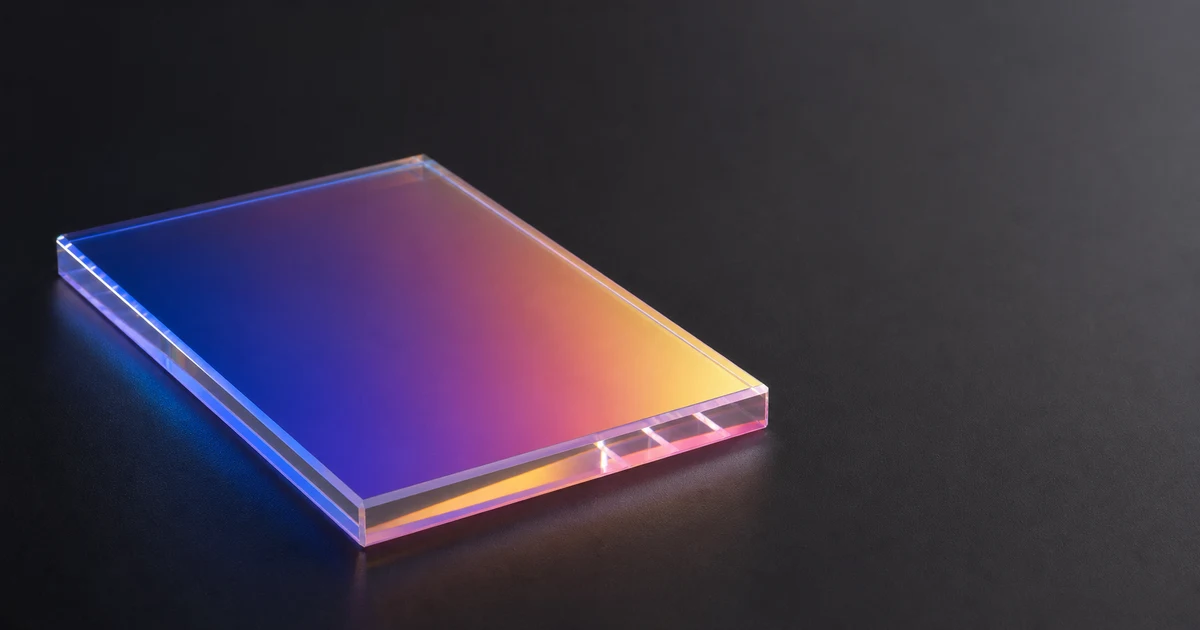
We make iridescent, metallic and pearlescent acrylic into displays, boxes, trays and signs from 100 pieces per design.

A useful standee quote identifies who makes each component, how stability will be approved, what the sample proves, and how every store receives the right artwork.
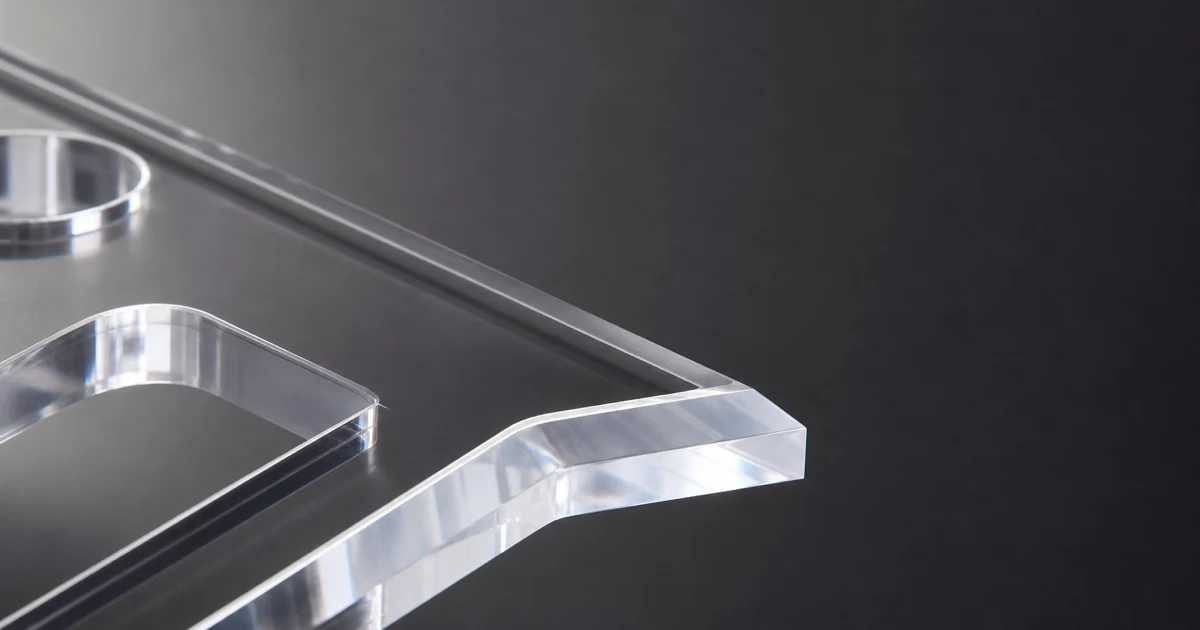
Four methods produce four different edges, and most spec sheets pick the wrong one because they treat 'polished' as a single instruction.
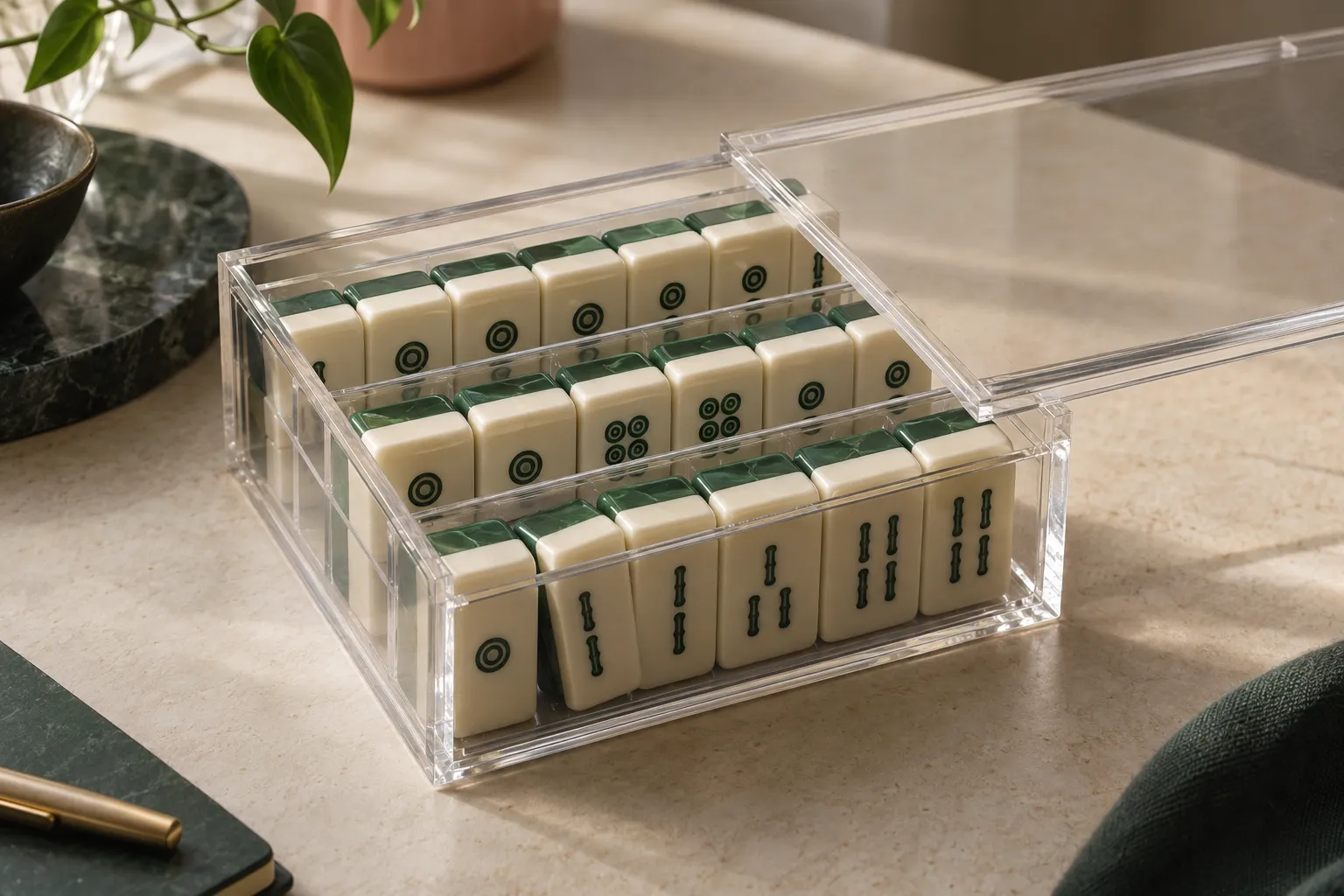
A case should hold the actual contents, open comfortably and survive the handling it was designed for.
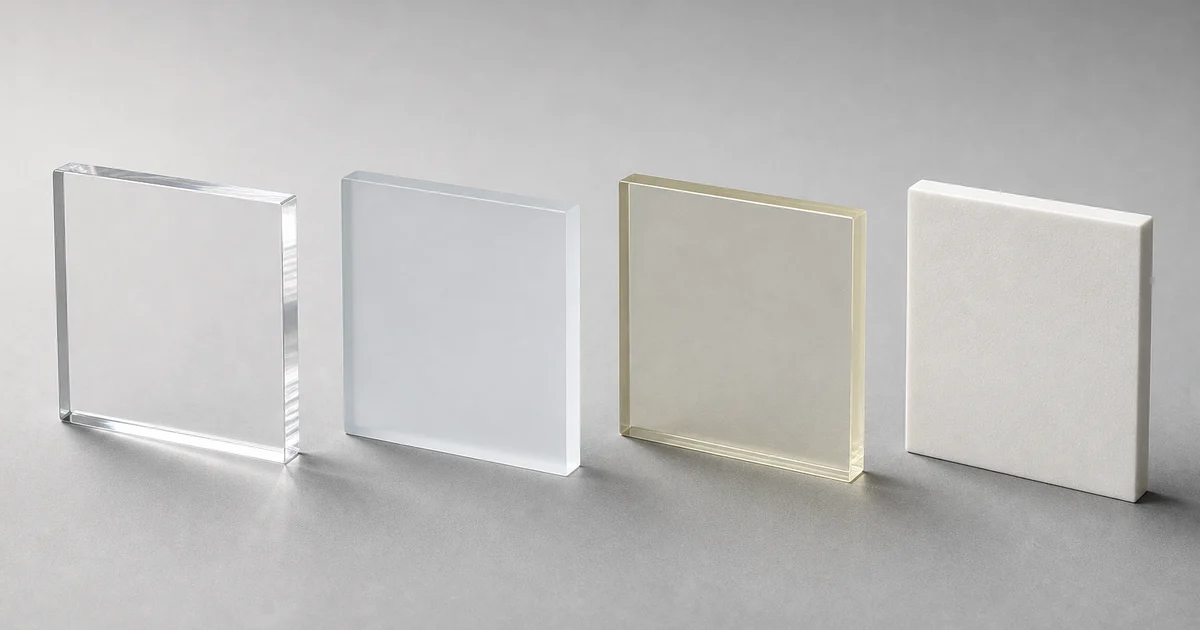
We build in cast acrylic because it's the right answer 95% of the time for retail-facing display work.
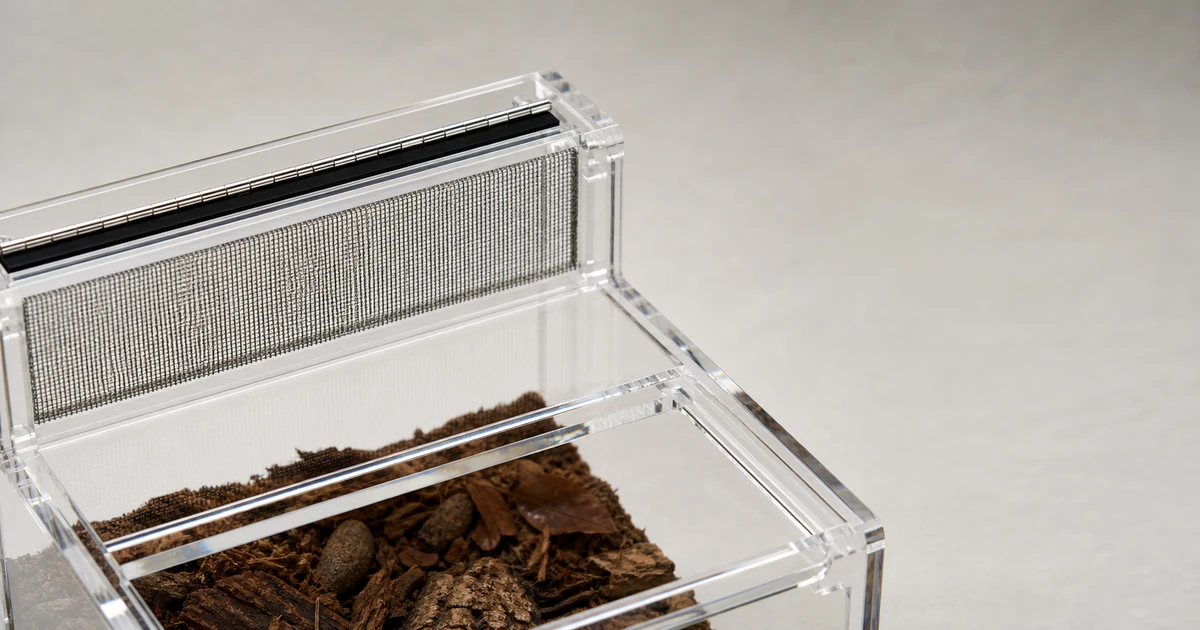
Since 2014, the conclusion is consistent: acrylic gets visibility right and fails on ventilation if the buyer treats it as an afterthought.
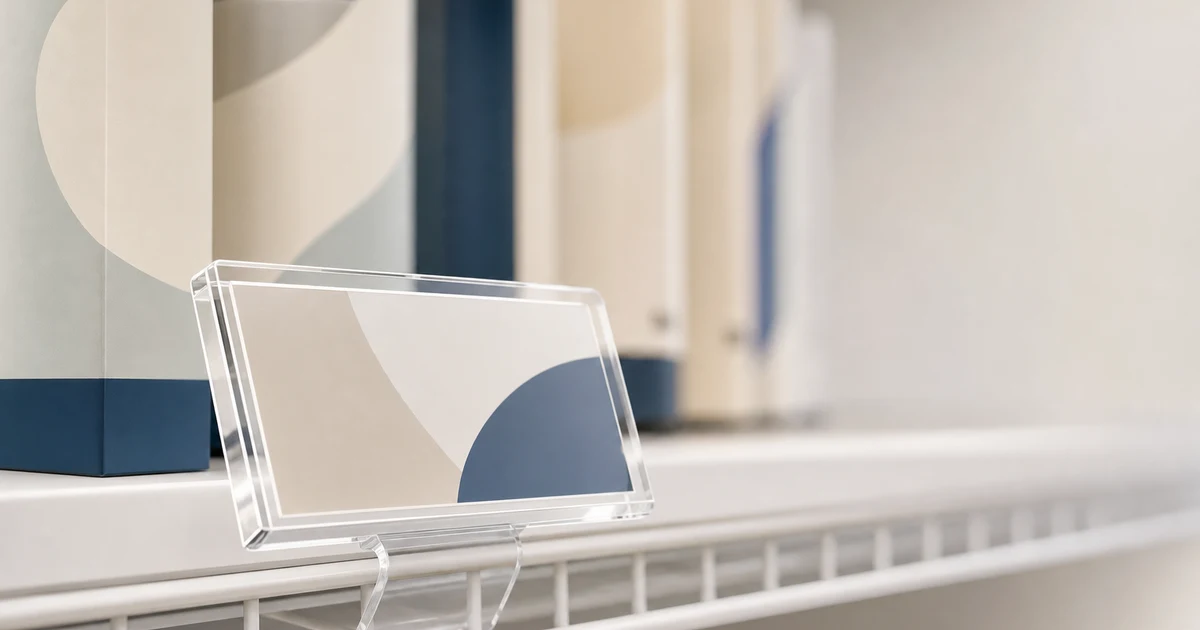
An acrylic shelf talker is a clear sign that clips to the shelf edge and holds a printed promo card right at the product.
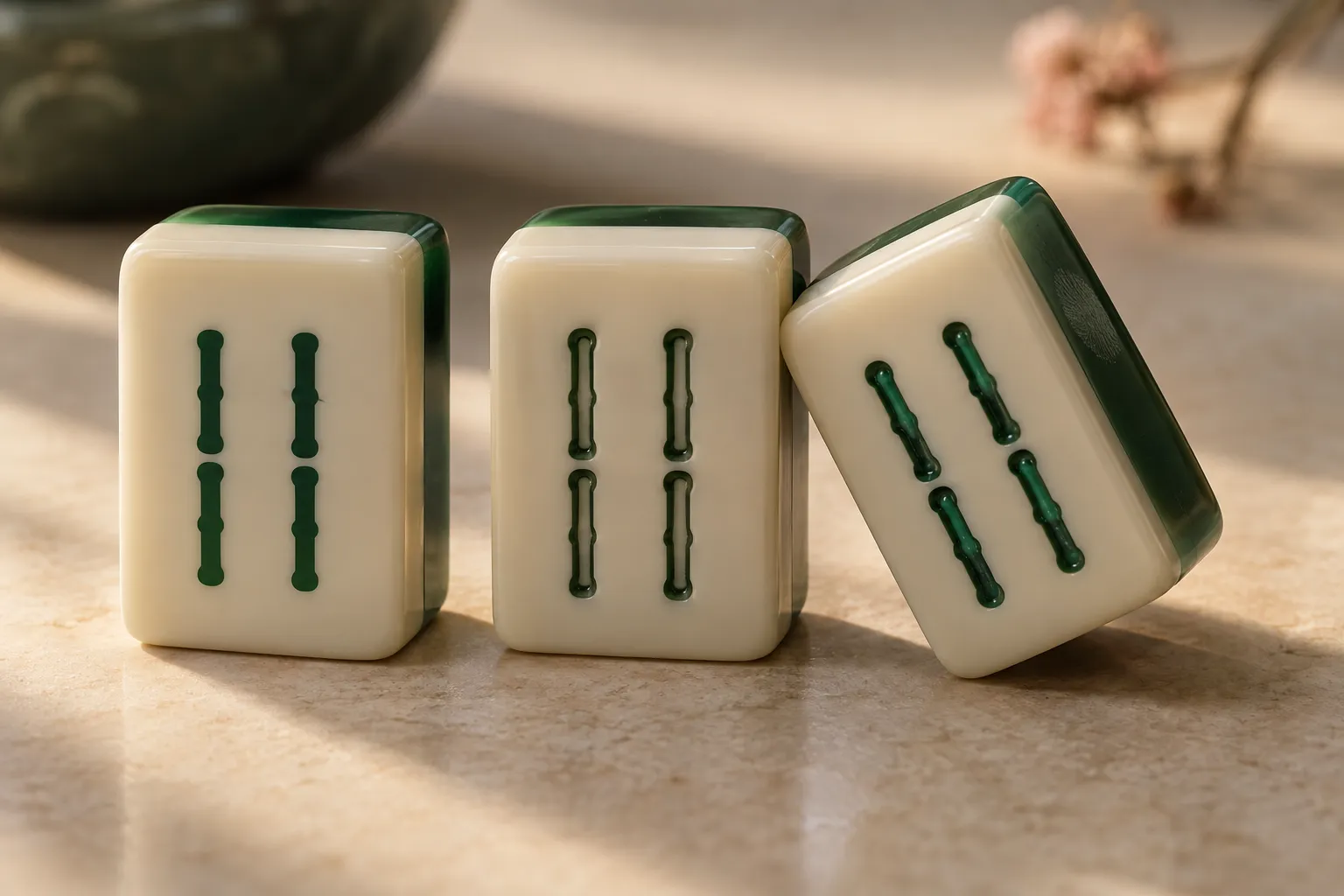
Choose the finished face and confirm it on a sample. Machine names alone do not define the product.
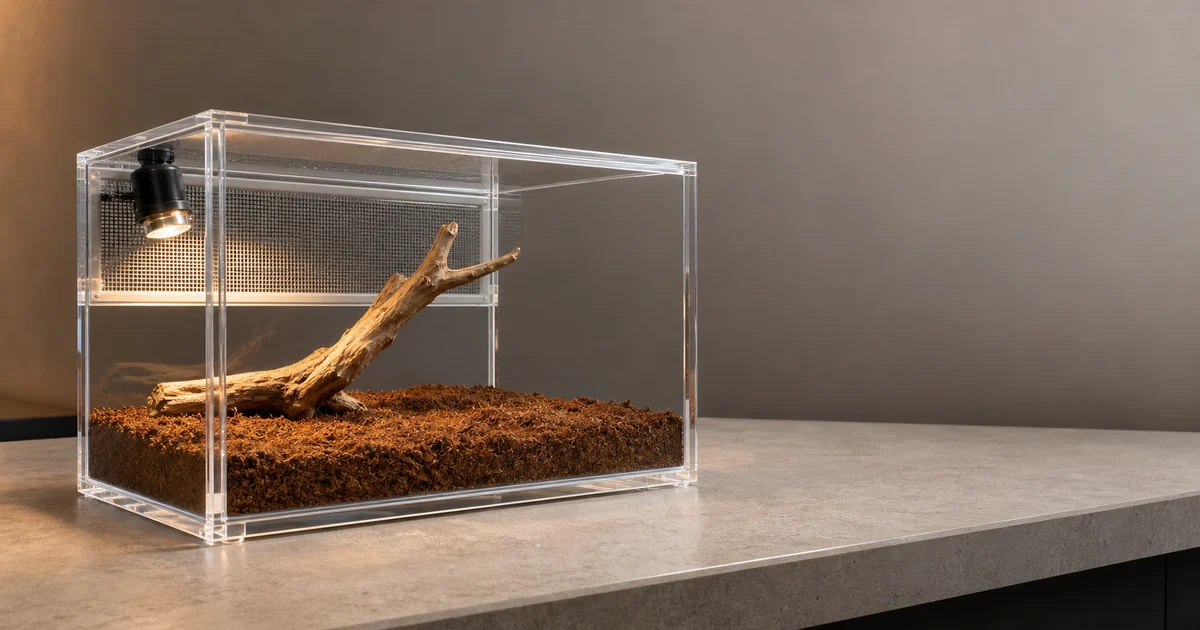
Animal suitability, ventilation and escape prevention remain under the buyer's husbandry specialist; Wetop fabricates to the approved drawing and sample.

Define the tile body, face process, colors and packing together. A clear specification gives your sample an agreed standard to meet.
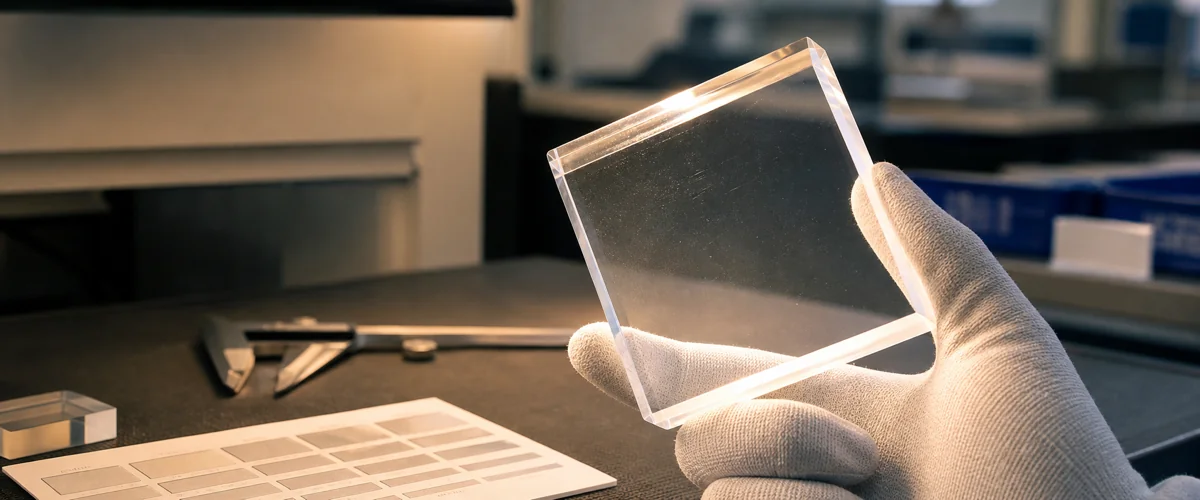
A claim moves faster when the approved sample, purchase order, packing record and defect photos all describe the same piece. This checklist shows what to preserve and send.
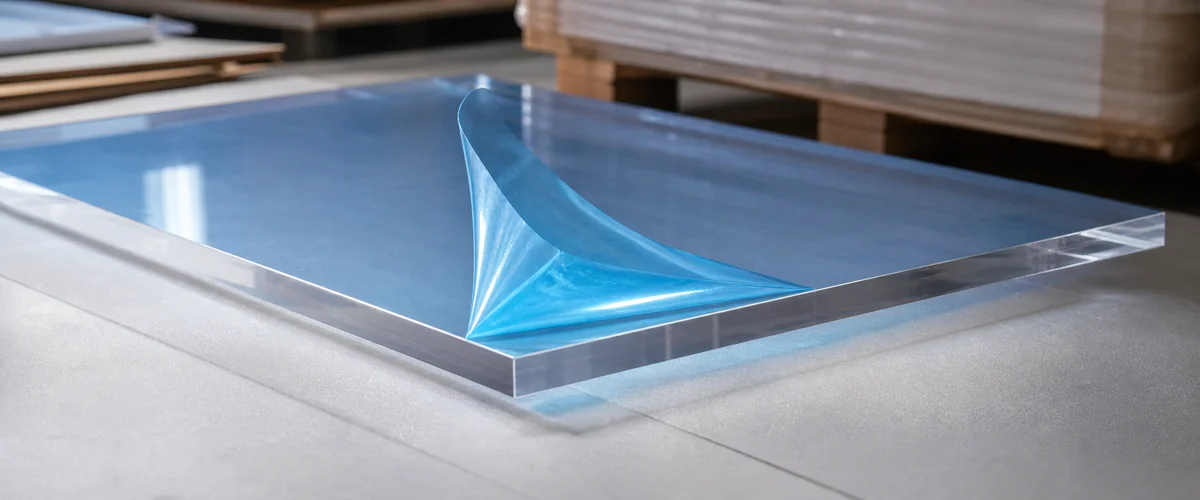
Peel from a corner at room temperature, pull steadily, and keep blades and acetone away.
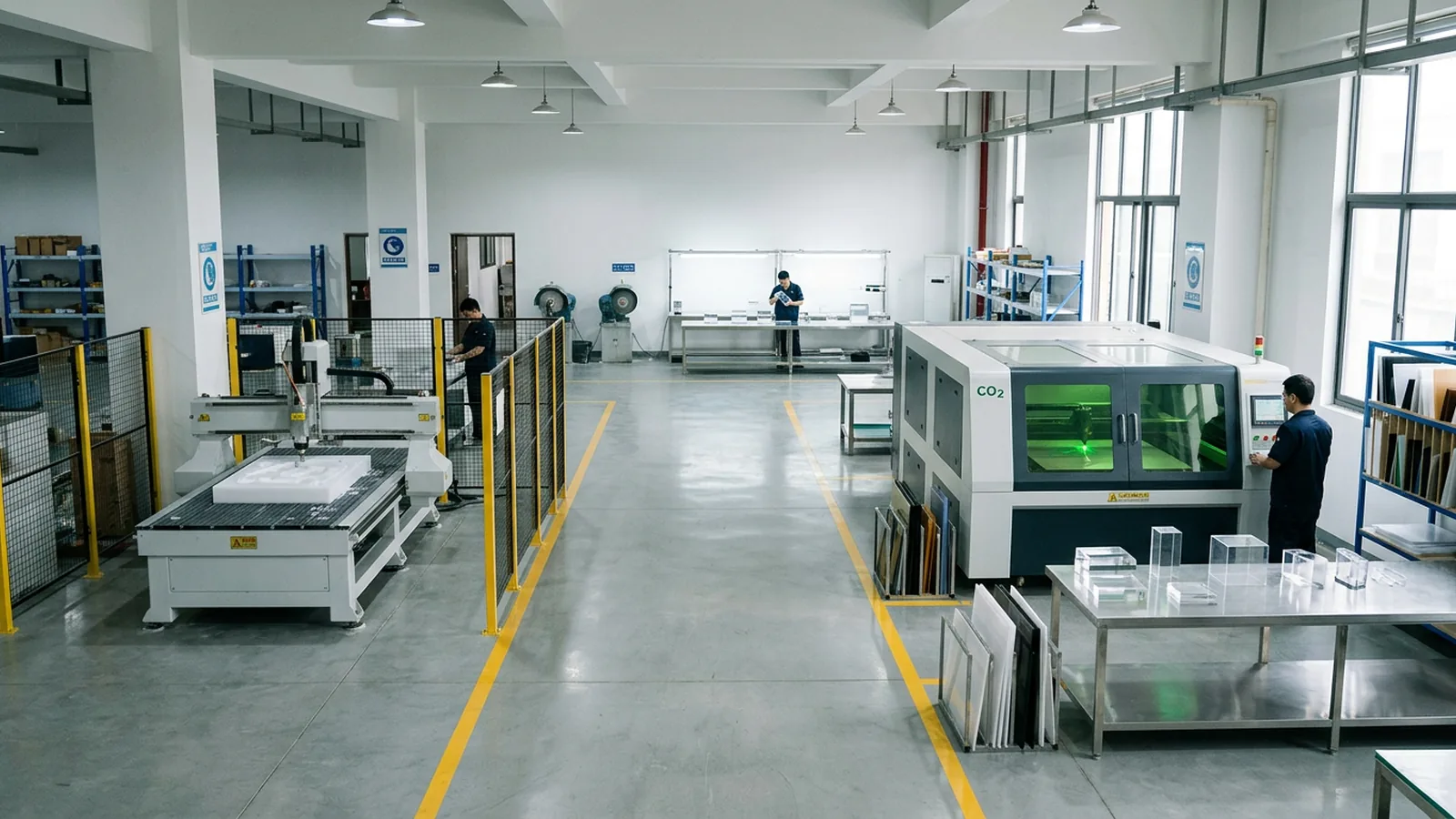
A repeat acrylic order can move faster when the supplier can reuse validated production assets and confirm that the specification has not changed.
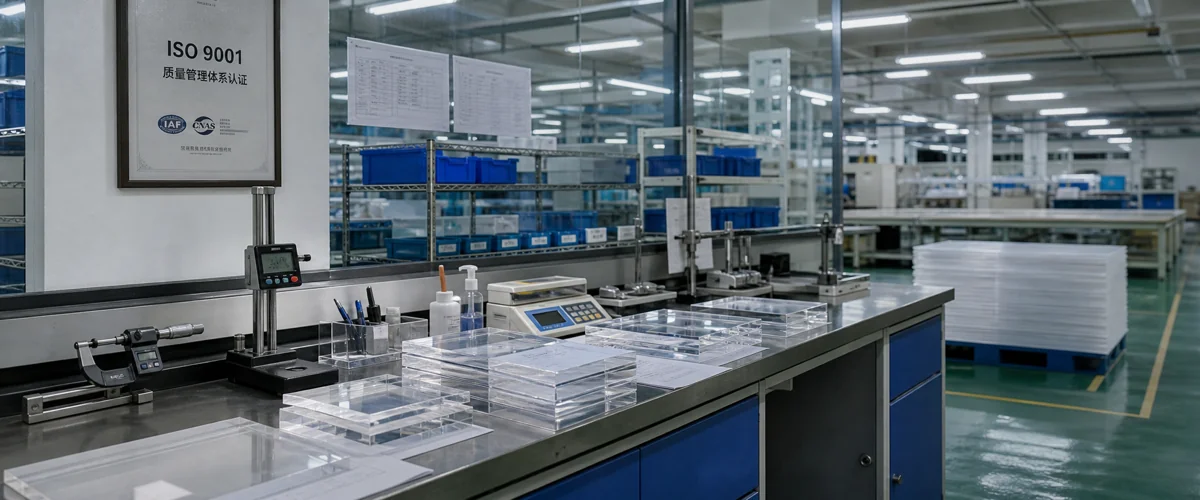
Use this supplier audit checklist to define scope, evidence, site records, product checks, findings, and corrective-action closure before a China factory visit.

Most buyers comparing offshore vs domestic acrylic supply pick on price alone and skip five other tradeoffs that decide whether the project lands on time and on spec.
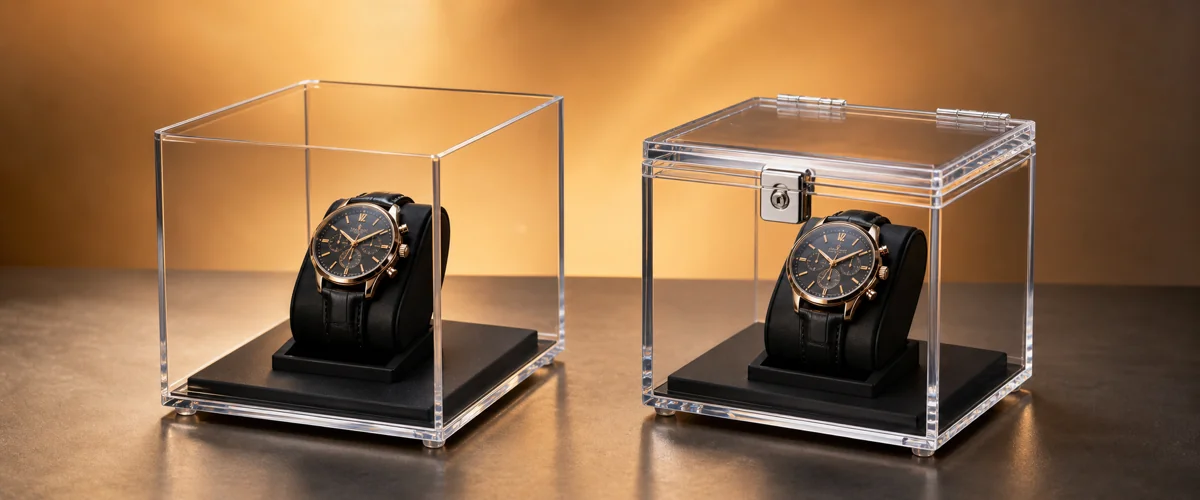
An open acrylic box and a lidded case solve different access, closure, and packing requirements. Define the form before the RFQ is locked.
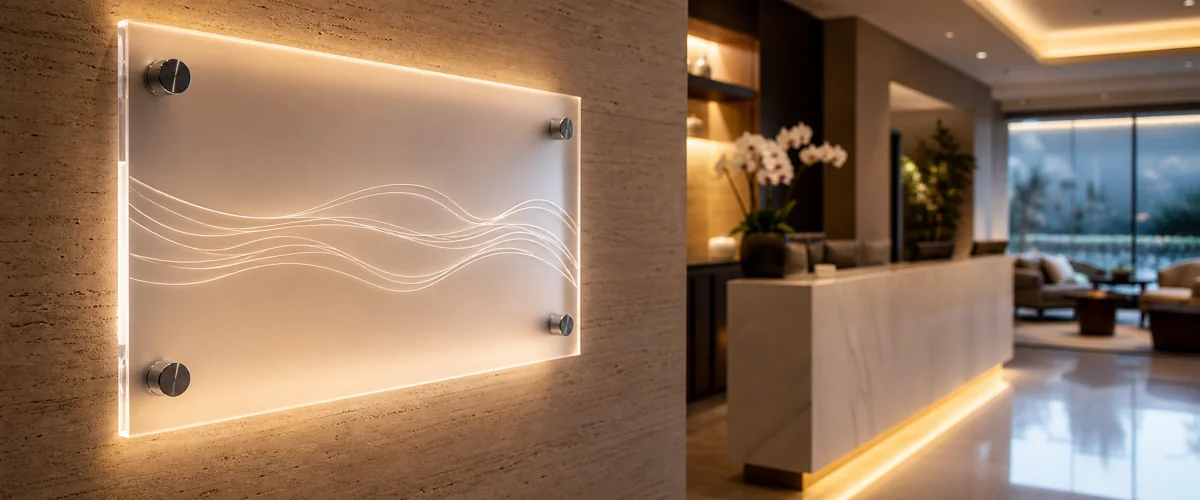
Most spa and boutique-hotel buyers default to sandblasted glass for the etched, calming look — and pay 3× the unit cost plus 4× the freight.
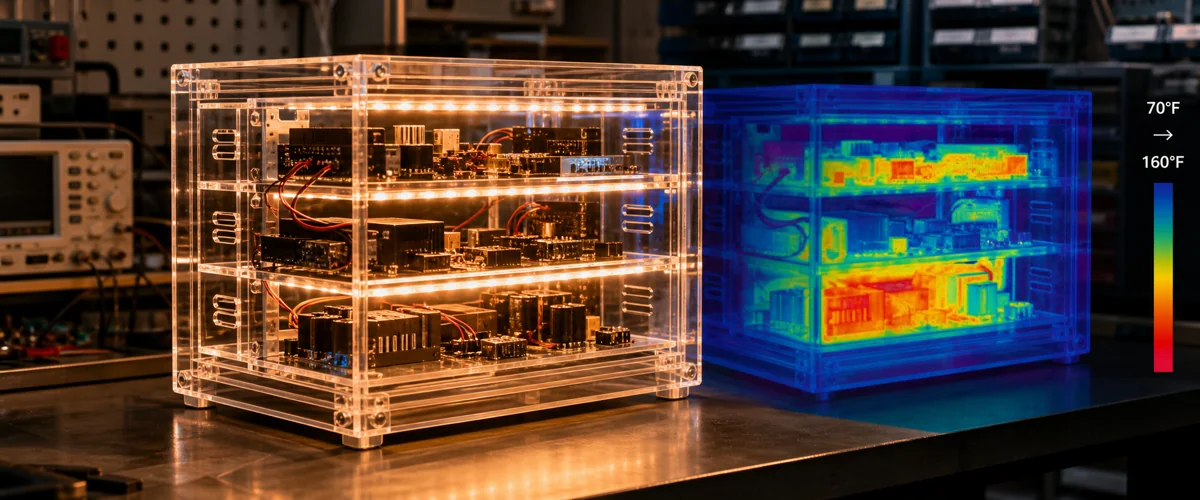
A usable temperature limit comes from the named PMMA grade, load, exposure time and mounting design — not from the word plexiglass alone.

Buyers walk into our quote calls speccing 'Lucite' as if it's a chemistry, not a brand.
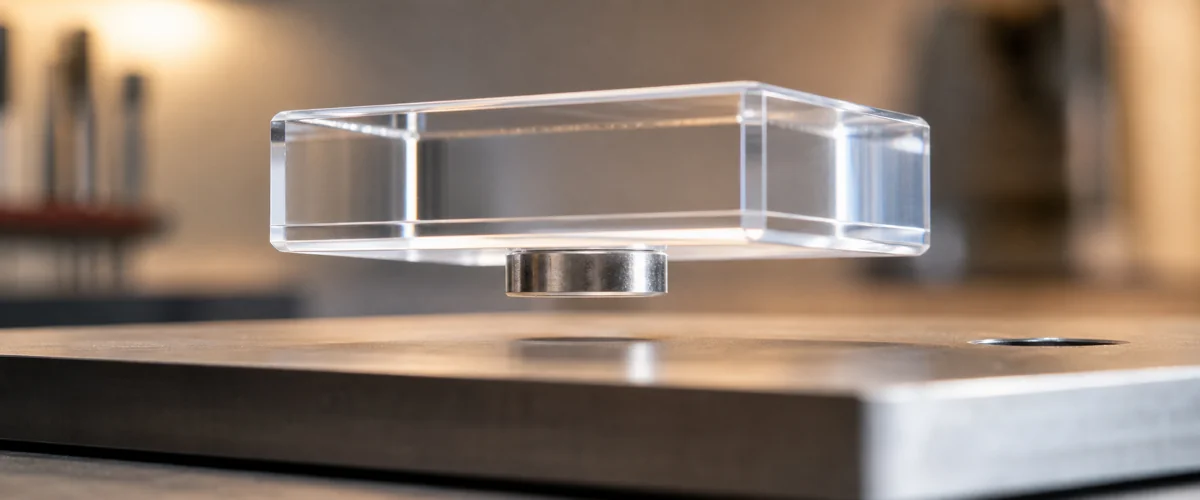
Picking the right magnet for an acrylic display depends on substrate thickness, how the magnet sits in the part and what counter-magnet faces it.
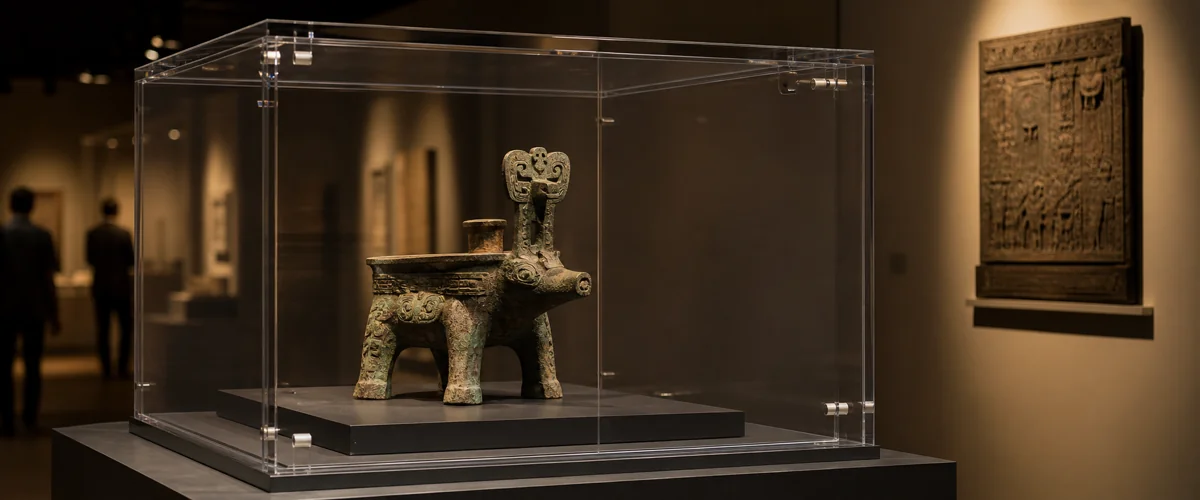
A museum-grade case isn't a marketing label — it's a stack of measurable specs. Here's the spec language curators should write into their RFQ before any quote.

Standard PMMA in a south-facing window yellows visibly inside 6 months.
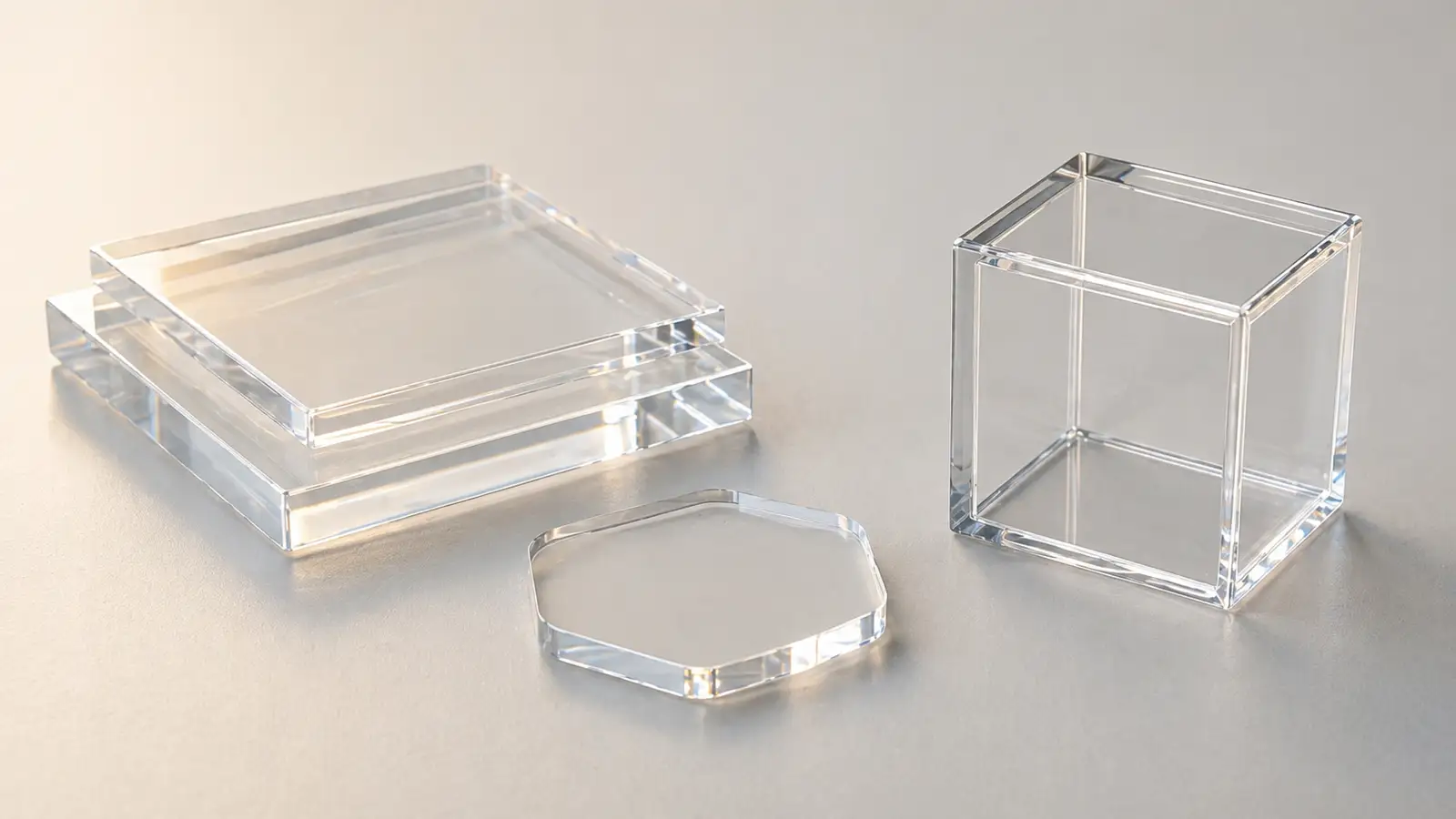
Acrylic fabrication turns PMMA sheet into custom products without an injection mold. The useful question is where sheet fabrication fits, and where it does not.
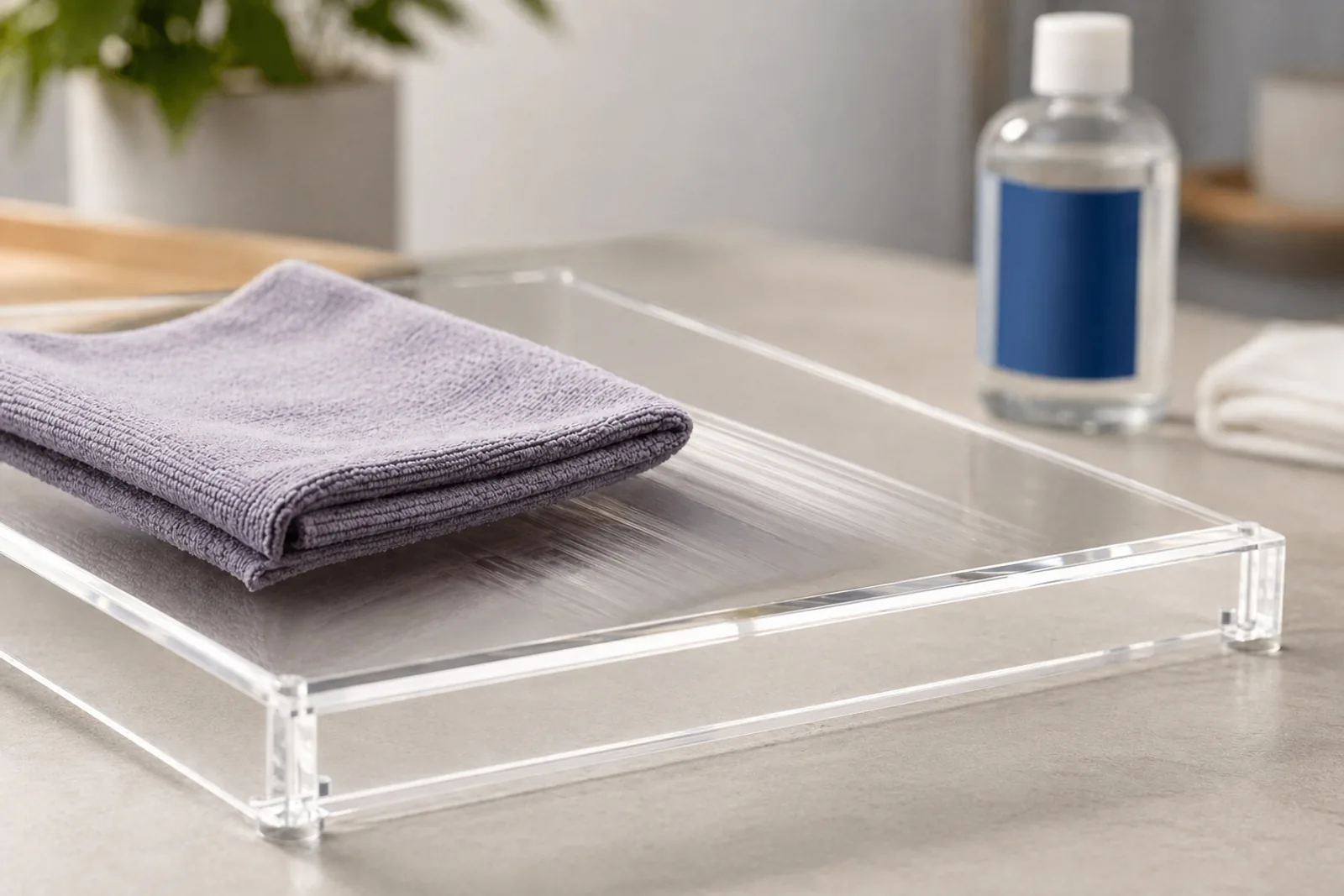
Wipe with a soft cloth and mild detergent, then dry. Skip glass cleaner, alcohol, ammonia and paper towels: they cloud, craze or scratch acrylic.
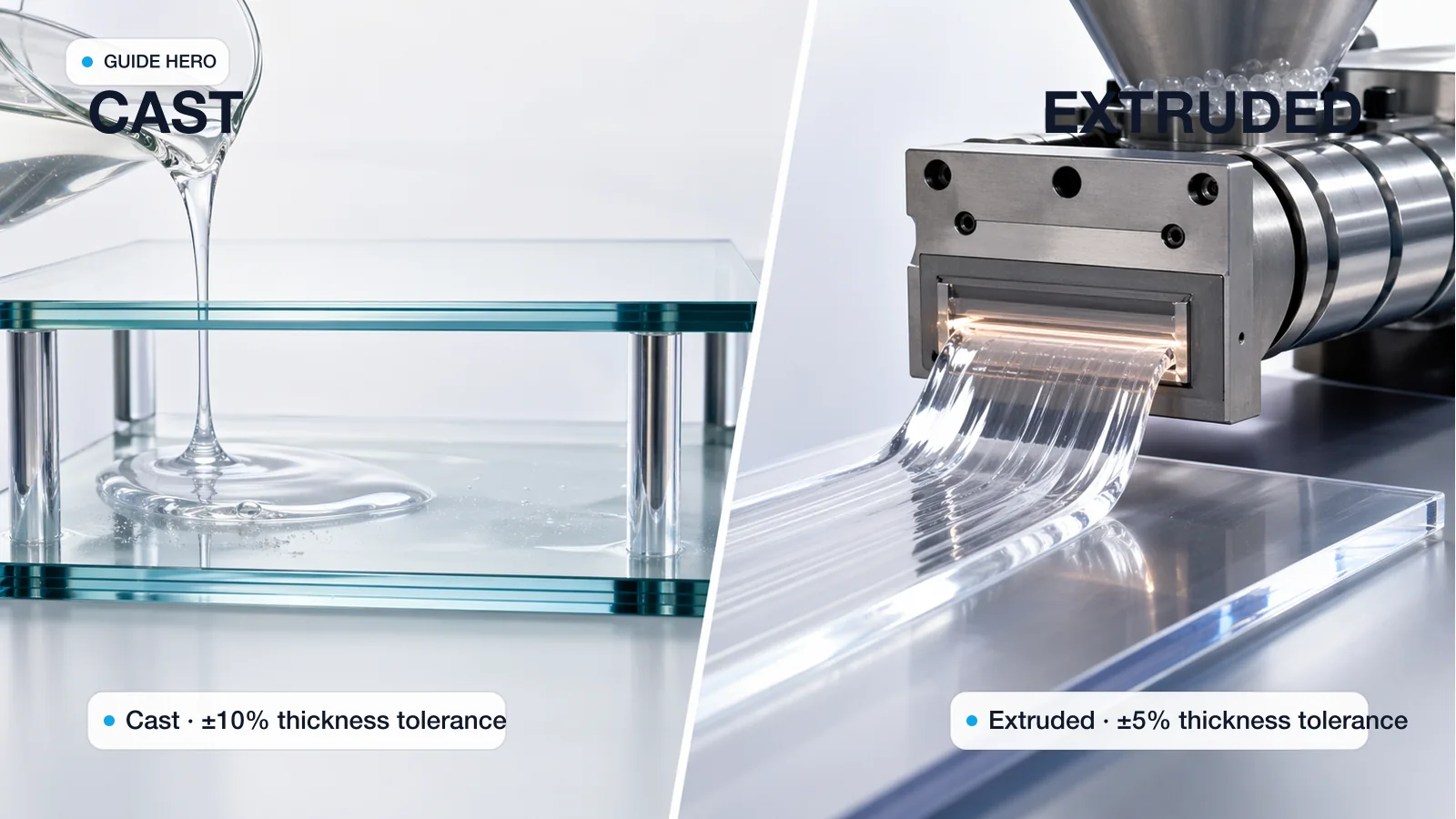
Most buyers pay cast acrylic prices and get extruded quality — or pay for cast when extruded would have been fine.
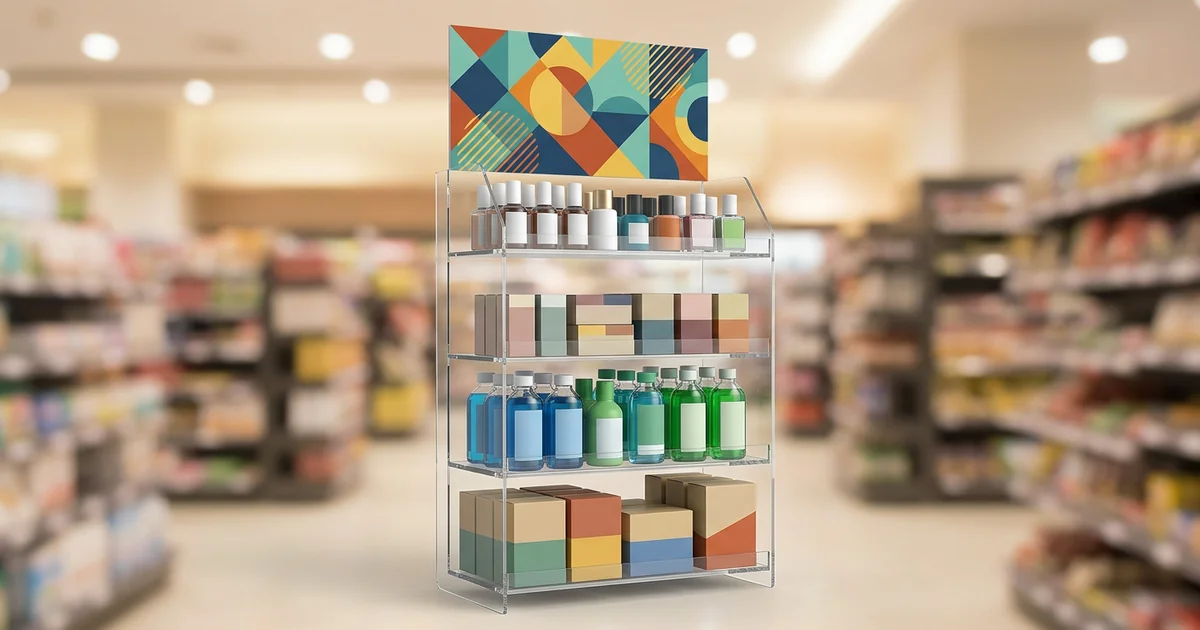
A $12 endcap display and a $120 endcap display can look identical in a photo.
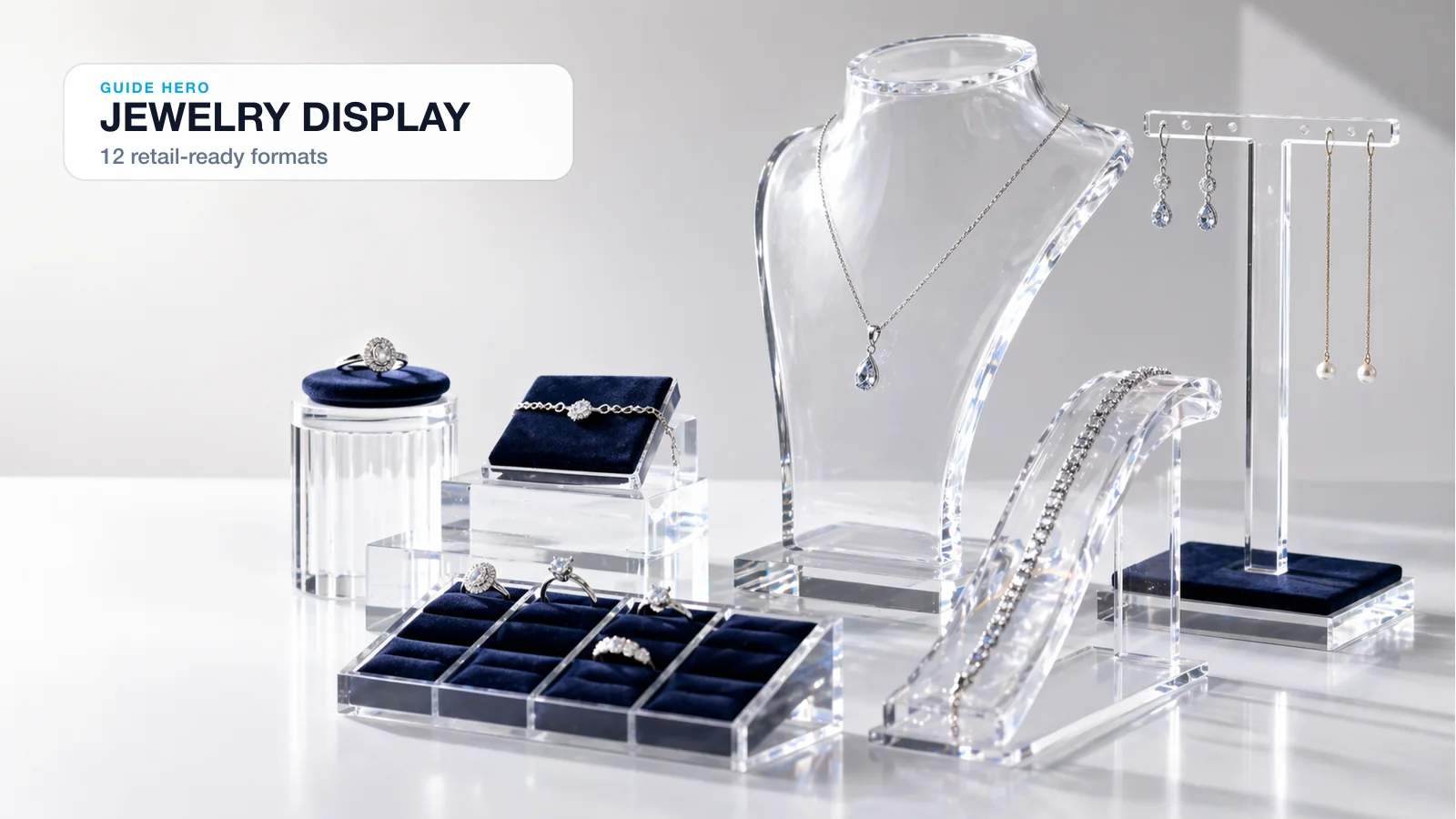
Compare counter, wall, tray, riser, and case layouts against the actual jewelry, store plan, lighting, access, and reorder brief.

Most cosmetic brand briefs ask for 'a clean acrylic counter display' and leave the rest to the fabricator.
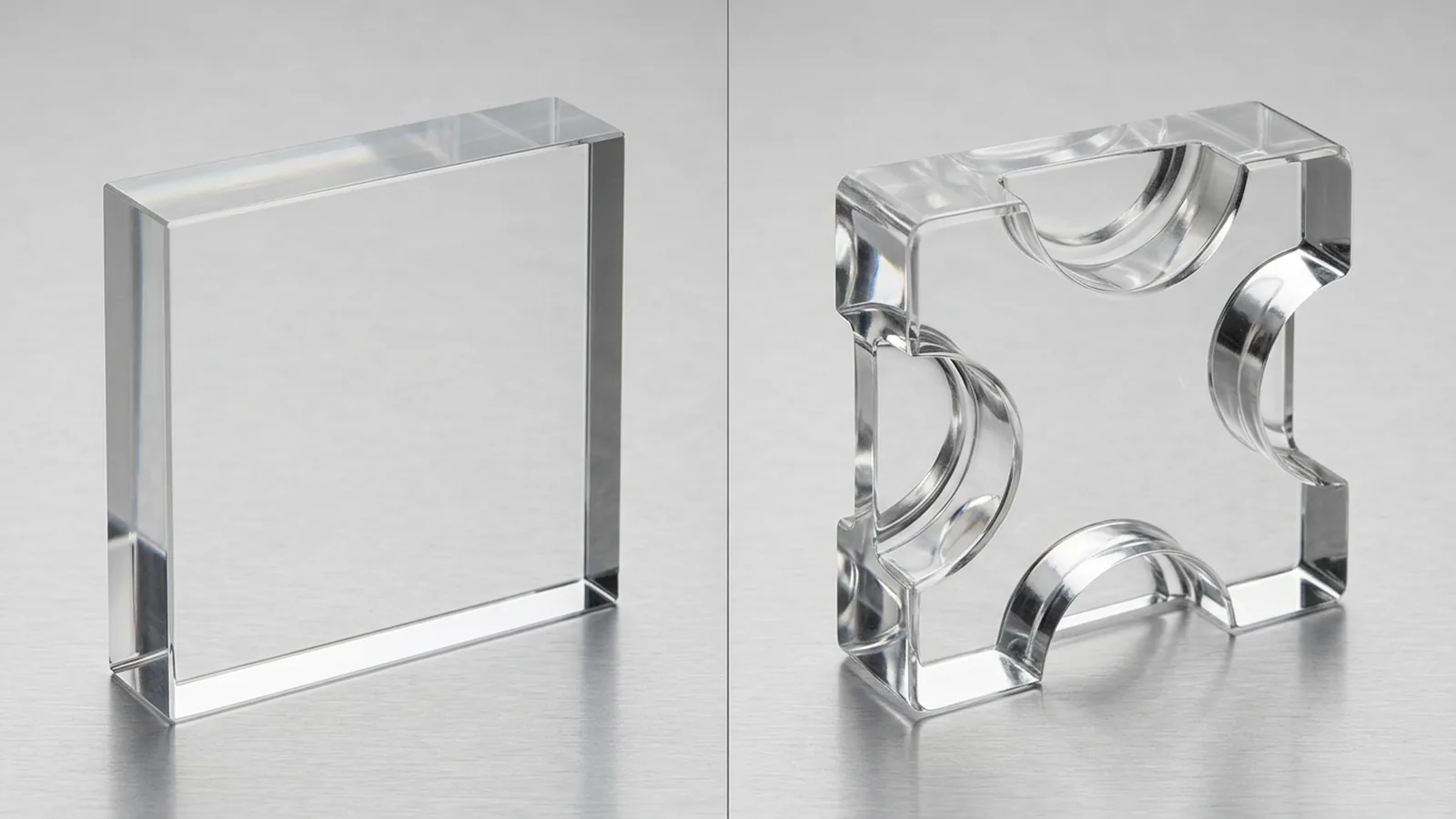
Choose the edge-finishing route by named sheet, geometry, cleaner exposure, finish target, and a production-representative sample.
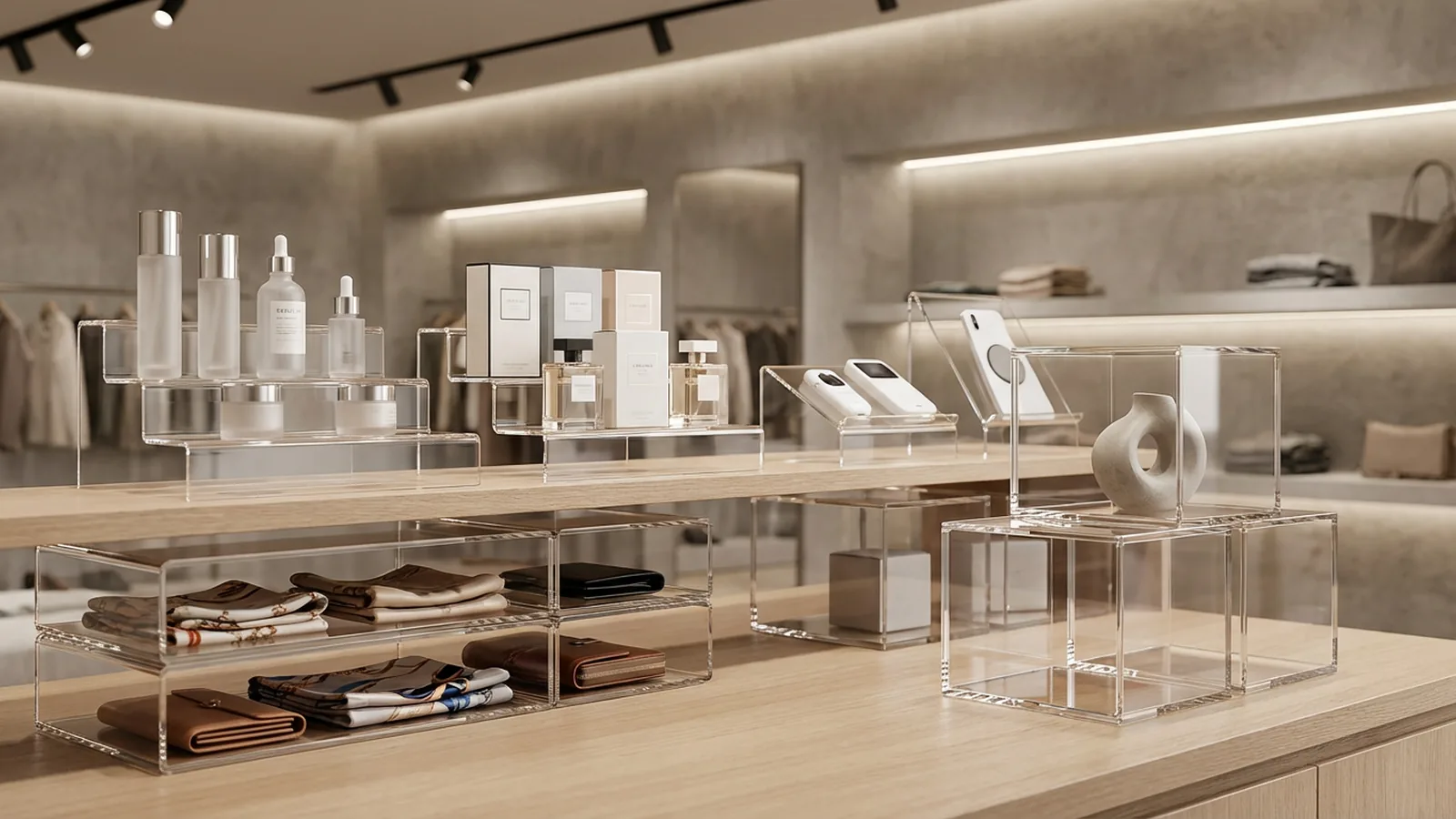
Use product load, store position, finish, artwork, and installation conditions to compare twenty acrylic retail display formats.
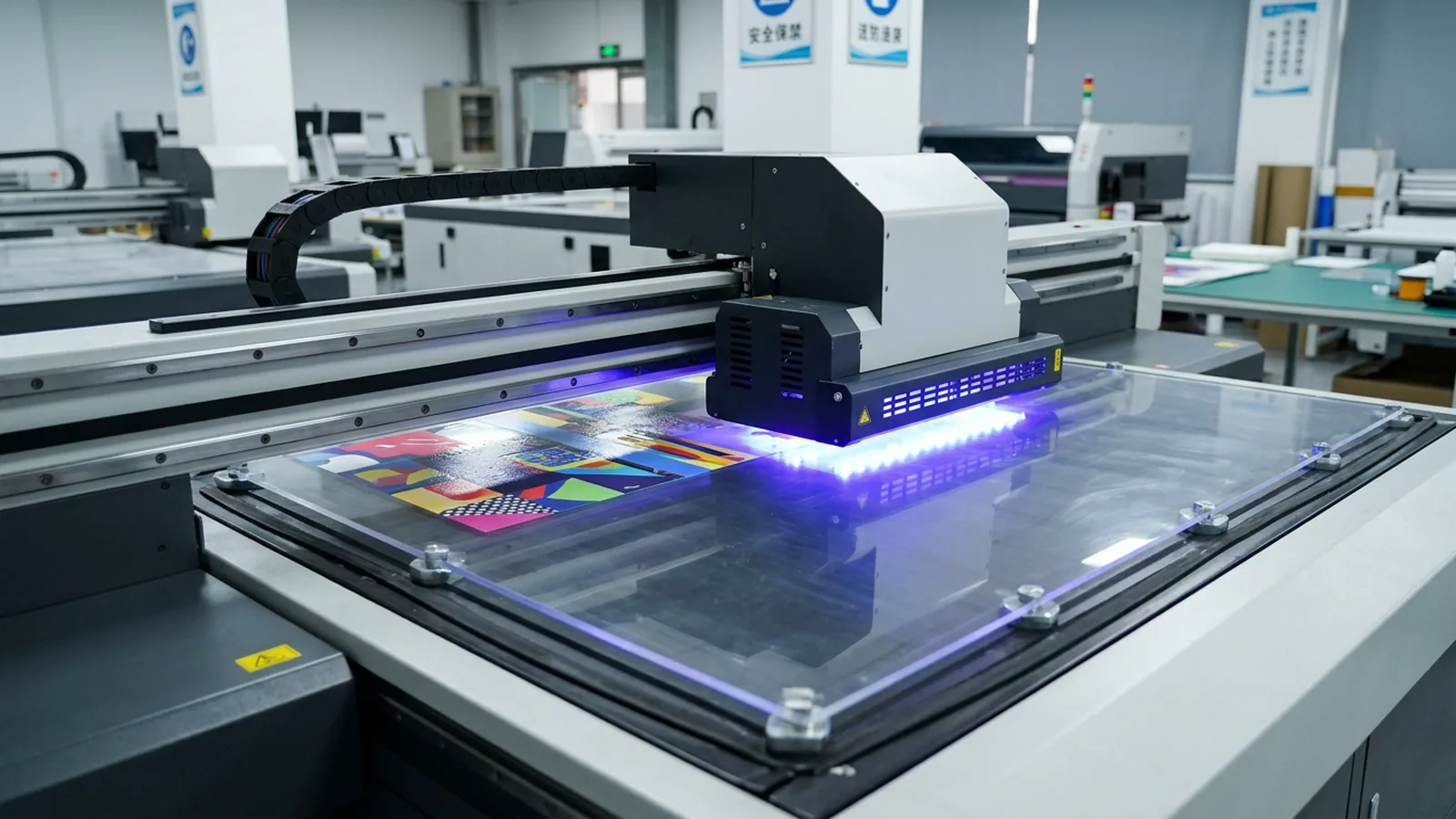
A UV-printed acrylic panel is priced by what is printed, how many ink layers it needs and how many pieces you order.
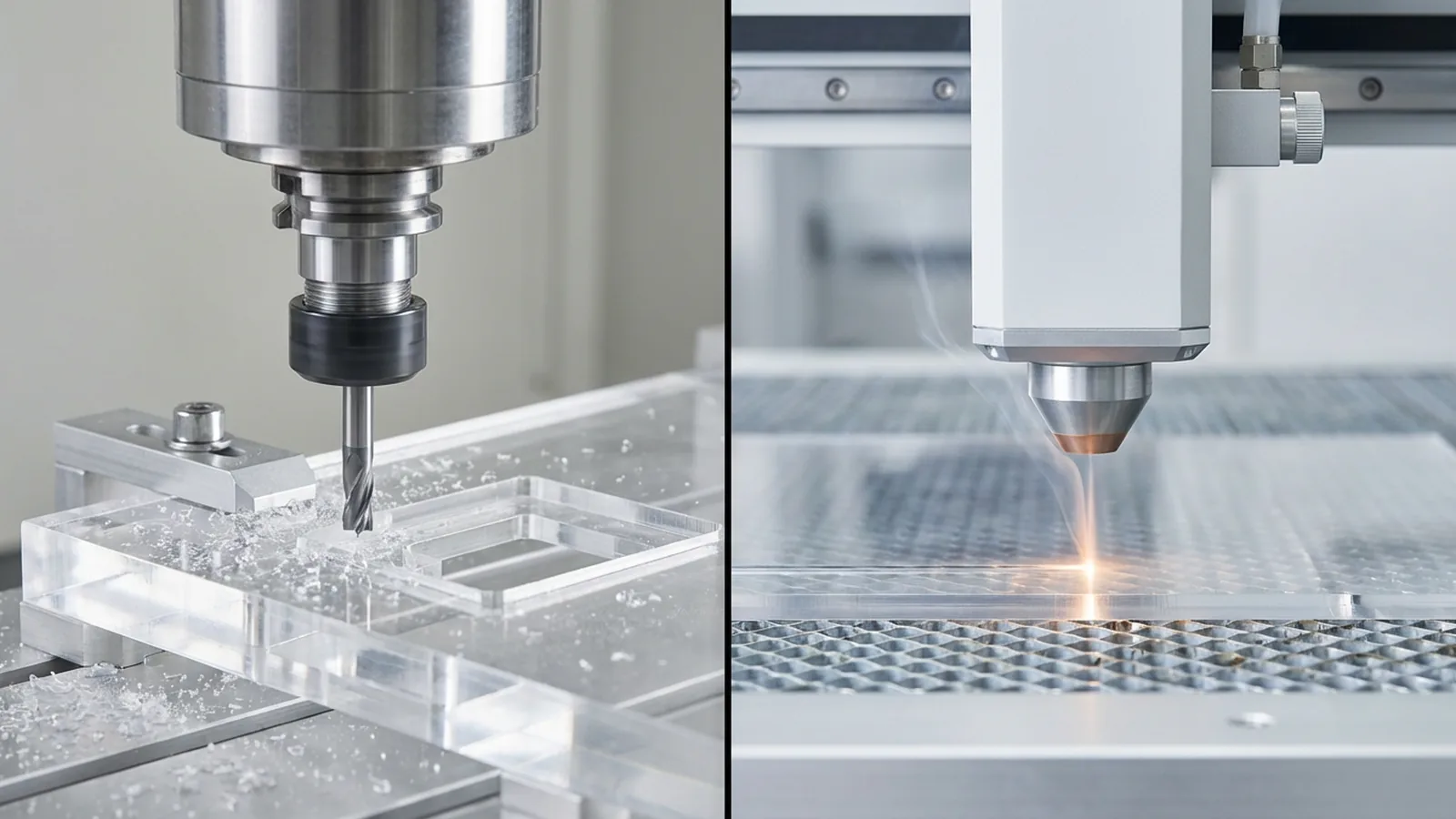
A CO2 laser cuts flat acrylic profiles with a clear edge straight off the bed. It cannot make pockets, chamfers or counterbores, and thick stock slows it down.
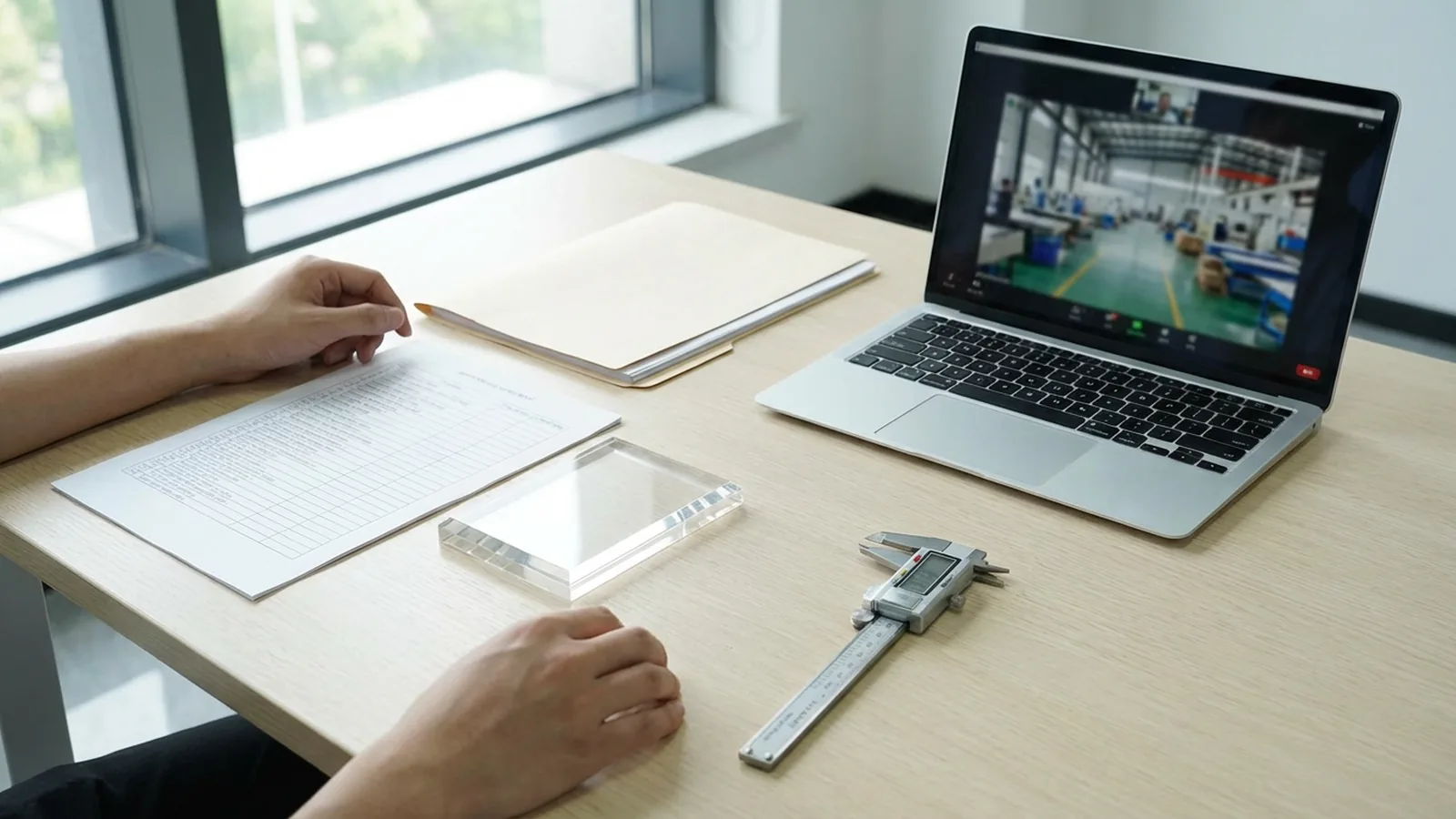
Use the quote, factory evidence, quality plan, sample, and commercial terms to compare suppliers against one approved specification.
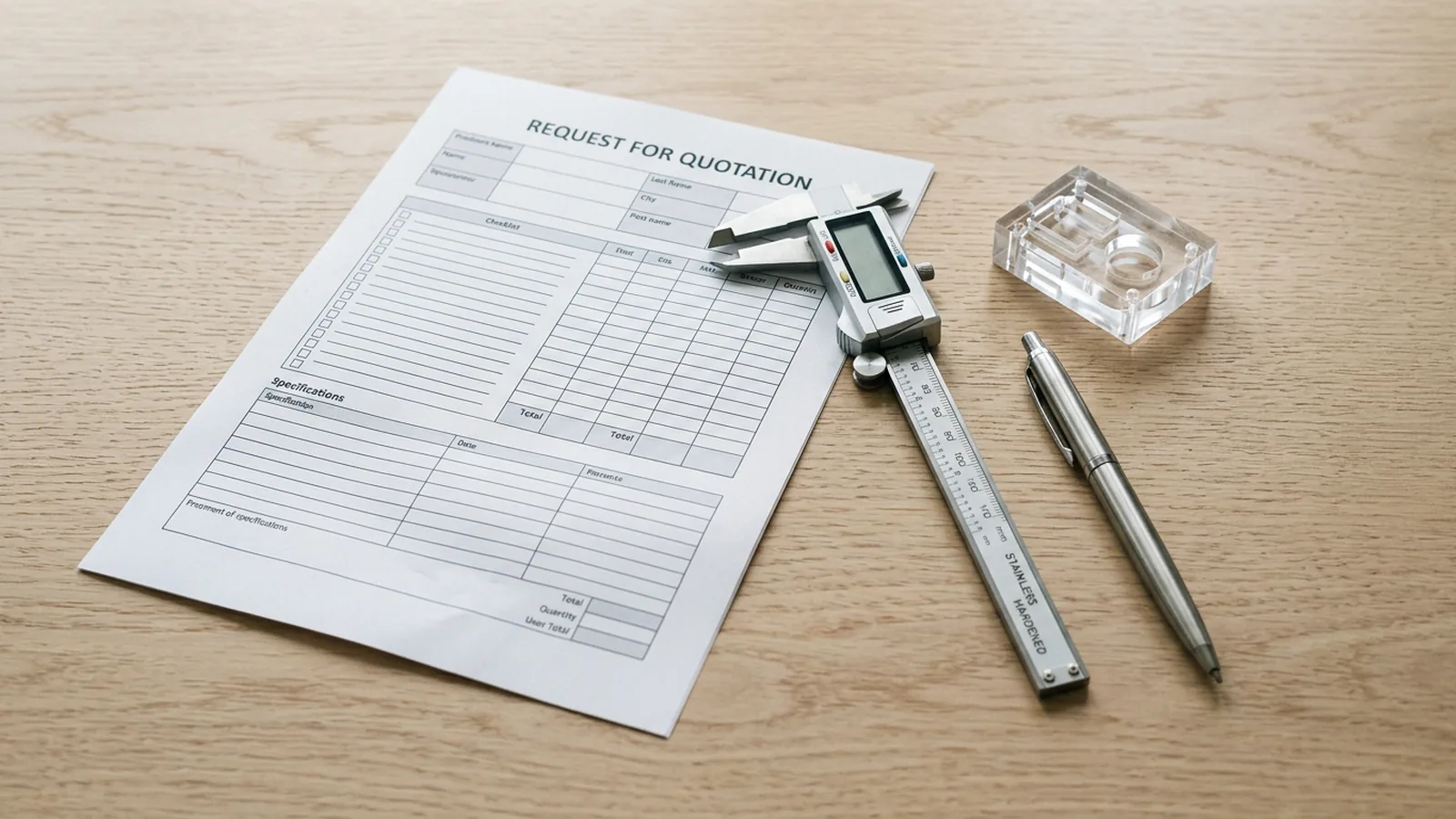
A complete custom acrylic quote request gets an accurate number in hours; a vague one starts days of back-and-forth and may still produce an unusable price.
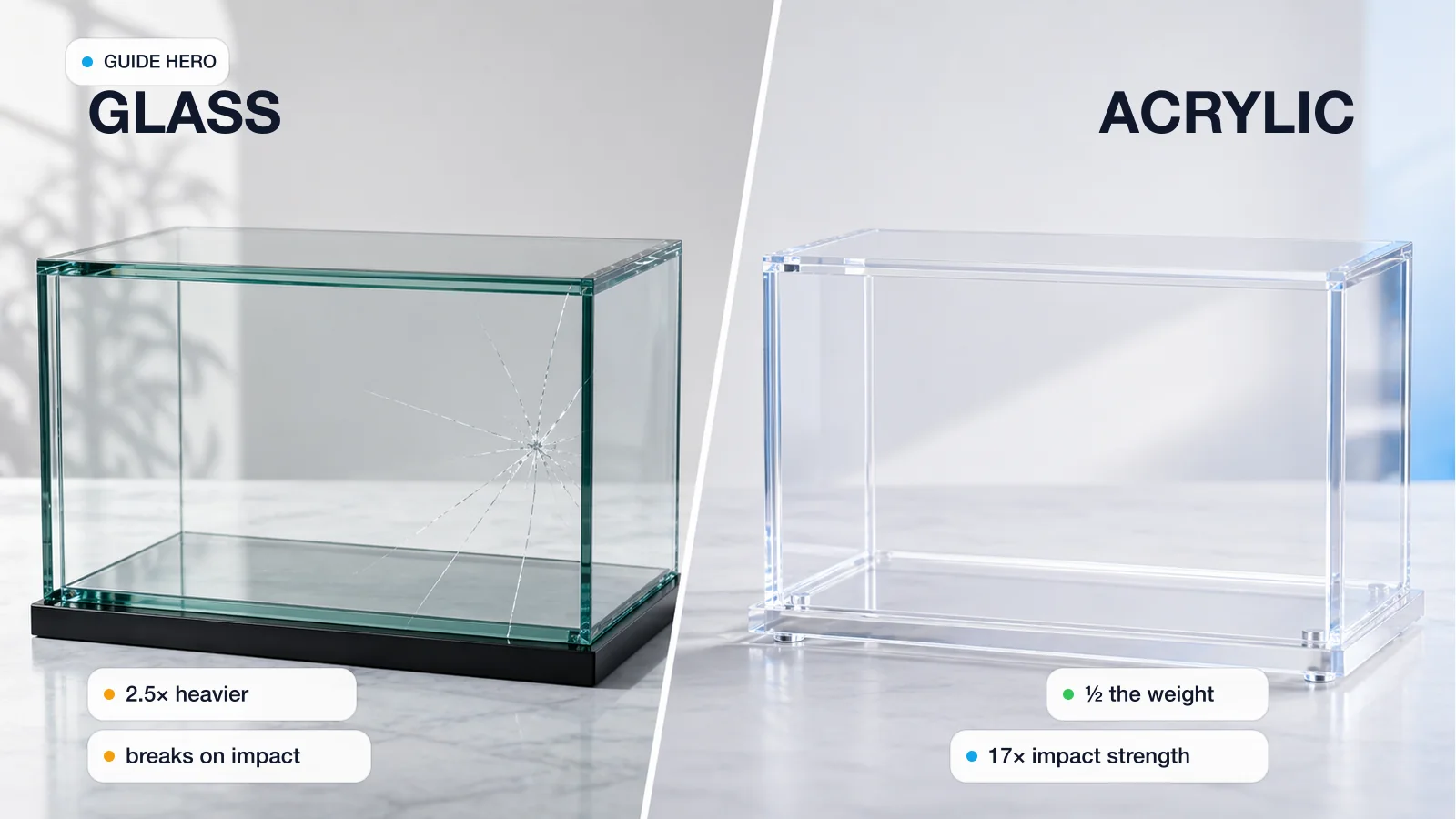
Choosing between acrylic and glass for your display isn't about which material is better — it's about which tradeoffs your project can actually live with.
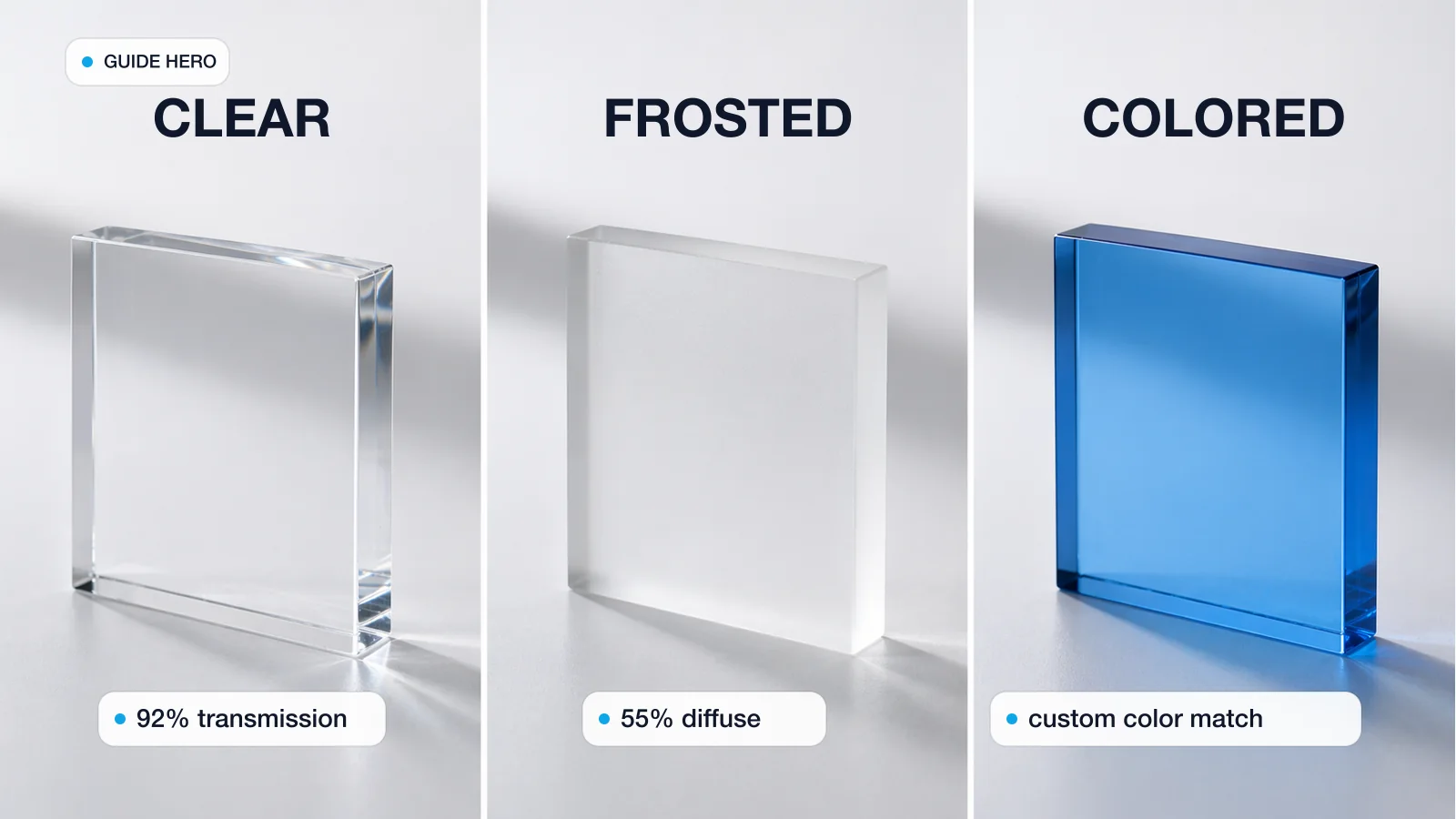
Specifying the wrong acrylic finish is a quiet, expensive mistake; most buyers only discover it after production, when the display doesn't read as expected on the shelf.
Acrylic starts as a liquid monomer and becomes sheet before any factory cuts it. How that sheet was made decides how your part bonds, engraves and resists cracking.
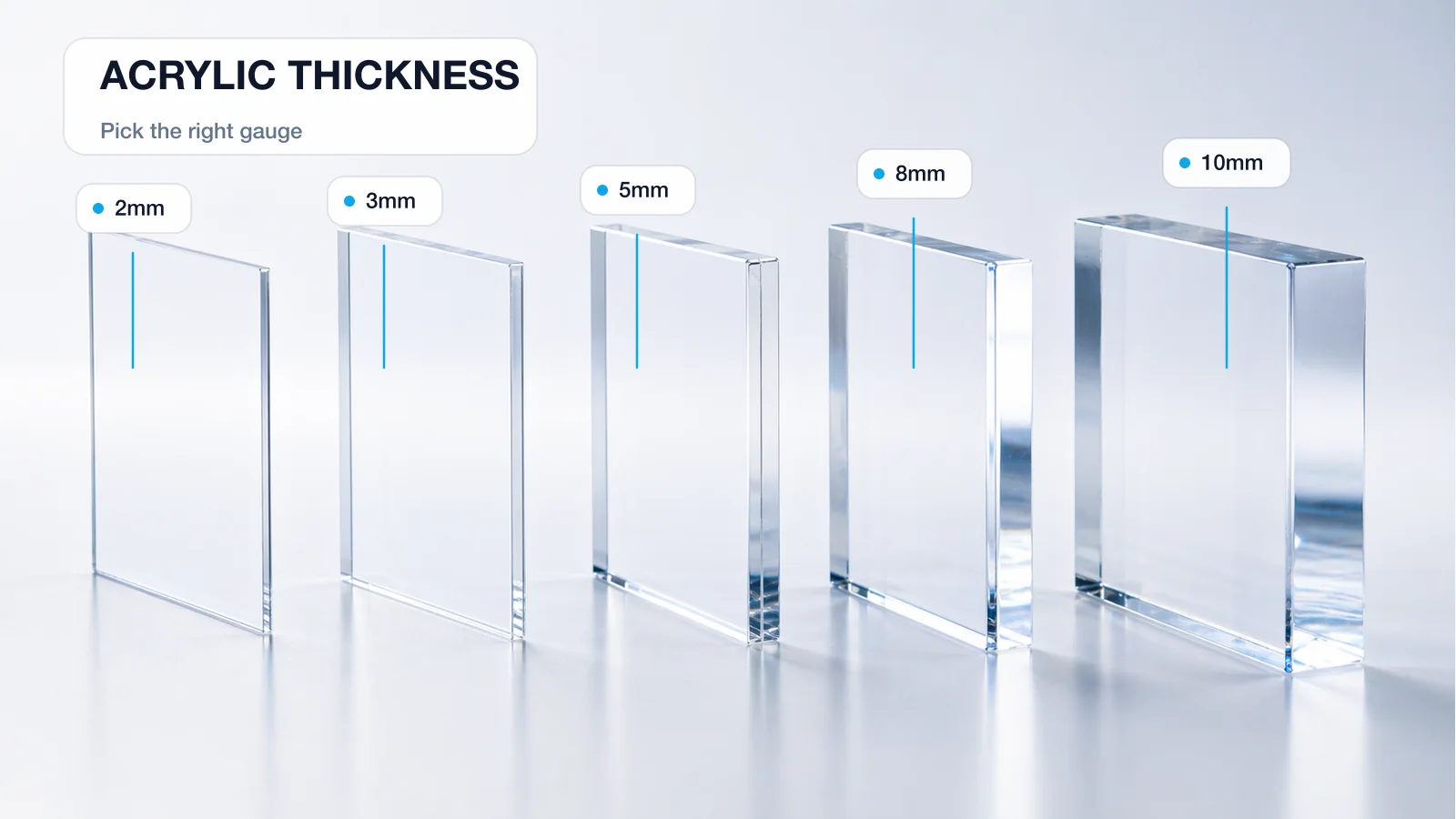
Wrong thickness is the most common spec mistake I see on new B2B inquiries: too thin and parts sag or crack, too thick and fabrication costs 2-3x more.
No guides match your search. Try a broader query or reset the filter.
Start with the acrylic thickness guide, then use the linked load and span guides for the product geometry you are specifying.
Use the finish comparison to separate visibility, glare control, and brand-color decisions before requesting a paid sample.
The nine-field RFQ template covers dimensions, thickness, material, quantity, finish, assembly, application, packaging, and delivery terms.
Read the display cost guide for quantity bands and cost drivers, then request a configuration-specific quote.
Use the sample approval checklist; sample fees are paid separately and are not credited to production.
The manufacturer vetting guide covers factory evidence, drawings, sample gates, inspection, commercial terms, and documentation.
Skip the reading — ask the people who wrote it. Manufacturing since 2008 means we've already debugged many of the questions you're about to send. We respond within 24 hours.