Custom Acrylic FAQ
Everything You Need to Know Before Ordering
Wetop Acrylic is a custom acrylic products manufacturer in Shenzhen, China, serving B2B clients in 25+ countries since 2008. Below are the questions buyers ask us most.
Each product page also has its own FAQ section.
Pricing & MOQ
What is the minimum order quantity — per design or per order?
Our standard production minimum is 100 pieces per design, for both new and repeat orders. It applies per design, not per purchase order — three designs normally mean 100 pieces of each. Different product types can still combine into one shipment to save freight. Paid samples are separate from the production MOQ and are never credited to production. How multi-design programs share production runs is covered on our custom acrylic fabrication page.
How long does a quote take, and what does it include?
Quotes come back within 24 hours when the inquiry includes specs (drawings or reference photos, target quantity, finish, branding), and within 48 hours for complex multi-part assemblies. Every quote is itemized line by line: unit price at each quantity tier you request, printing and branding, packaging level, sample fee, and freight under your chosen term (FOB, CIF, or DDP) — nothing bundled into a single mystery number. For serving trays, the custom serving-tray specification guide first fixes depth, wall thickness, weight, and the internal-versus-external dimension convention. Send what you have through the contact form.
What does a custom acrylic order typically cost per unit?
Price depends on the named dimensions, material, finishing, branding, packaging, and quantity, so we quote per approved specification rather than from a flat list. One published reference is a 150 × 100 × 100 mm case in 3 mm clear acrylic with a magnetic lid at 500 pieces, from $6 per unit FOB Shenzhen. Custom mahjong tile prices are USD 53–73 per set by face process and layer count at 100–199 sets, FOB Shenzhen, with a published quantity ladder that adjusts every other quantity; nonstandard bodies are quoted per project. Product pages identify additional planning references where evidence is available.
Can you quote several quantity tiers at once?
Yes — name the tiers you're weighing (say 100 / 250 / 500) and the quote prices each one, so you can see exactly where unit cost steps down. Unit price falls with quantity because setup labor amortizes over more pieces; the MOQ economics guide shows the fixed-cost arithmetic to compare before choosing a run size. Reorder pricing typically holds unless raw material costs move, and we confirm the number before every repeat run.
What is the minimum order and typical price for custom mahjong sets?
Fully custom mahjong tiles start at 50 sets per design with standard shrink-wrap export packaging and stock dice. Mats start at 50 pcs; rack-and-pusher sets at 50 sets per design; printed retail packaging at 1,000 pcs per design. Published tile prices are USD 53–60 for UV print with coating or USD 65–73 for engraved fill, depending on layer count, at 100–199 sets, FOB Shenzhen. A published quantity ladder adjusts every other quantity; nonstandard bodies are quoted per project. The exact quote depends on the approved tile, artwork, colorway, accessories, and packaging specification; see the mahjong ordering guide.
Do you work with startups and small businesses?
Yes. Our 100-piece production MOQ is designed for commercial test launches without forcing a large inventory commitment. Start with a paid sample to approve the product, then move into a 100-piece first production run. You get the same manufacturing standards, the same 100% inspection process, and the same dedicated project management regardless of order size.
Samples
Are sample fees separate from production orders?
Yes. An acrylic product sample normally costs USD 200–500 per design, depending on size and complexity. Samples are paid separately from production orders, and sample fees are never credited to a later bulk-order invoice. Production then runs from 100 pieces per design. The quote names the material, setup, finishing, inspection, and freight included in that sample. A full custom mahjong tile sample is USD 500 including courier, paid separately and never credited. Making normally takes 15–17 days after payment, ready files and proof approval; transit is additional. Optional accessories have their own sample scope and fees; see mahjong samples.
How long does a sample take to make and ship?
Standard non-mahjong samples ship in 3–5 days from drawing approval, with courier transit additional and charged as quoted. Full custom mahjong tile samples normally take 15–17 days making after payment, ready files and proof approval; courier is included in the USD 500 sample fee and transit is additional. Choose stock sheet colors or discuss made-to-order colors; custom sheet preparation adds lead time.
How many sample revisions can I request before bulk production?
Revision count and cost depend on what changes after approval. We identify the affected drawing, material, setup, and sample work, then confirm the added fee and schedule before starting another revision.
Can I approve from a photo or video of the sample instead of waiting for shipment?
Yes — especially for buyers on a launch deadline. We send high-resolution photos and short videos of the finished sample on the QC bench within 24 hours of completion. Many buyers approve from photo/video and skip the 3–5 day international shipment wait. Physical sample remains available if you need a tactile check before bulk production.
Can I reorder a previous product without a new sample?
A repeat order can use retained production references when the specification is unchanged. We confirm the drawing, material, color, finish, packing, and current schedule before release; any changed feature may require a new sample. Reorder timing is quote-specific.
Production, Materials & QC
How long does bulk production take — and what can extend it?
Bulk production takes 15–20 days after you approve the sample. Three things extend it: orders above 5,000 pieces, complex multi-part assemblies, and custom Pantone-matched material batches (roughly 2 extra weeks up front). Any extension is stated in the quote before you commit, not discovered after deposit. See our manufacturing process for what happens in each of those days.
What manufacturing tolerances can you hold?
±0.2 mm is the standard working tolerance reference. Mark fit-critical features on the drawing; the final tolerance depends on material, thickness, geometry, process, measurement method, and the approved sample. Provide the mating part when a slip fit or nested assembly must be verified.
What types of acrylic material does Wetop use?
We quote the named PMMA grade, color, finish, thickness, and documentation required by the application. Clear, colored, frosted, mirrored, glitter, anti-static, and UV-filtering options are available by project; verify the exact supplier datasheet and requested compliance documents before approval. See our manufacturing process for the production route.
What is the difference between cast and extruded acrylic?
Cast and extruded PMMA differ in thickness consistency, machining response, forming behavior, and available grades. We select the named sheet and process against the approved drawing and sample rather than claim one form is universally superior or exclusively used.
Is your acrylic food-safe?
Food-contact suitability is project-specific. State the destination market, intended food, temperature, contact time, cleaning method, and contact zone on the RFQ. We then confirm whether a named sheet grade and its available supplier documents cover the intended use; the buyer or local authority approves the finished construction.
How is quality checked before shipping? Can I book my own inspector?
Every order gets 100% piece-by-piece inspection in our ISO 9001-certified factory — every unit, not a sampling plan. Third-party inspection is welcome: book any agency you trust and we schedule the visit once the order is finished and packed, before your balance payment, so the report informs a real decision. How to structure that visit is covered in our pre-shipment inspection guide.
Can you provide formal quality documentation with the order?
List each required document at RFQ stage. Availability and cost depend on the named material, supplier, test scope, destination, and inspection plan; the quote states which datasheets, declarations, third-party reports, and inspection records are included.
What if my order arrives with damaged or missing pieces?
Photograph the outer carton, inner packaging, labels, affected pieces, and received quantity, then notify us within the inspection window written in the quote or purchase order. We review the evidence against the approved sample, packing specification, shipment record, and agreed remedy terms before confirming replacement, credit, or another resolution. The order damage-claims playbook organizes receipt evidence and separates production nonconformity from transit damage.
Can I pause or change an order after the PO is confirmed?
That depends on where the order sits on the floor. Before cutting starts, a hold or a change is usually straightforward — we pause the schedule, confirm the new instruction in writing, and restart when you say go. Once cutting has started, changed parts re-run from the affected stage, so we quote the cost and time impact first, and we can split the run: produce the unchanged urgent quantity now and hold the balance for revised files. The same logic covers paid samples — swaps are usually possible until the sample ships, with any cost difference settled on the same invoice.
Can I visit or audit the factory?
Yes — factory visits and buyer audits are welcome. Our 5,000 m² manufacturing facility is in Pingshan District, Shenzhen, Guangdong, China; you can walk the production lines, meet the team, and review the quality control process in person. Use the supplier audit checklist to define the certificates, sample evidence, process records, inspection records, findings, and corrective-action evidence you want to review. Email inquiry@wetopacrylic.com to coordinate timing and the requested evidence.
Shipping & Payment
What's the difference between FOB and DDP — and who pays for what?
FOB Shenzhen, our default term, means we cover everything until the goods are loaded at the port of Shenzhen — from there, freight, insurance, import duties, and final delivery are yours. DDP is the opposite: we handle door-to-door including duties, so the quoted number is your landed cost. CIF sits between the two — freight to your destination port included, customs and delivery yours. The full cost comparison, with worked examples, is in our FOB vs DDP guide.
What shipping options are available, and how long do they take?
We ship to 25+ countries by sea freight (about 35 days after dispatch, or about 25 days by fast sea; most cost-effective at volume), air freight (about 10–12 days), or express courier — DHL, FedEx, UPS (3–5 days). Freight is itemized in your quote so you can weigh each method against your deadline. If you have your own freight forwarder, we ship directly to them.
How do I decide between sea and air freight?
Deadline and shipment size decide it. Air takes about 10–12 days but typically costs several times the sea rate, so it fits small or genuinely urgent shipments; regular sea takes about 35 days (fast sea about 25) and wins on cost for pallet volume that can wait. Ask for both in your quote — we price them side by side so you can see exactly what the deadline costs. Ordering near Chinese New Year? Book early: the factory pause and pre-holiday freight crunch hit both modes.
Can you do a partial shipment if part of the order is urgent?
Yes. We routinely split shipments — air freight for the urgent portion (about 10–12 days) and sea freight for the balance (about 35 days) — when buyers need product on shelves before the full order finishes production. Partial shipment doesn't require a separate PO; specify the split at order confirmation, and freight for each leg is itemized in the quote. How the costs and responsibilities split across each freight leg is covered in our FOB vs DDP guide.
If a deadline tightens mid-production, can urgent designs be pulled forward?
Yes — a split doesn't have to be planned at order time. When a deadline moves or one design falls behind, we check each design's production and QC status, ship what's finished — usually air for the urgent tranche, sea for the balance — and issue cartons, packing lists, and invoices per shipment so your receiving stays clean. Feasibility is per design: a piece mid-assembly can't jump the inspection bench, so the earlier you flag priorities, the more options exist. Who covers the incremental air cost is agreed in writing before anything flies.
Can you quote freight separately, or can I arrange my own freight?
Both. Every quote itemizes product, branding, and freight as separate lines, and on request we add carton count, per-carton dimensions, and gross weight — the three numbers your forwarder needs to price the lane. If you book freight yourself, we hand the packed cartons to your forwarder's Shenzhen agent or arrange factory pickup, and send the document set ahead of the cargo. Note that freight follows volume and weight, not piece count — large or bulky items carry more freight per unit, which is why we quote it per shipment under your chosen term (see our FOB vs DDP guide) rather than from a flat rate.
What shipment tracking do I get after dispatch?
At dispatch you receive the carrier, the tracking or bill-of-lading number, and the ETA for your port or door. For sea shipments we pass along vessel updates — schedules do change mid-transit — and when a carrier page goes quiet, we pull the current milestone from the forwarder so you can still plan warehouse intake around a real arrival window. Large orders being collected by your own carrier get a ready-date confirmation and packing list before pickup is booked.
What payment methods and terms do you accept?
We accept the payment methods listed on the formal invoice. Standard production terms are 30% deposit before production and 70% balance before shipment, including mahjong orders. Confirm the beneficiary and invoice details through the agreed project contact before paying.
What if PayPal or a payment link doesn't work in my country?
T/T bank transfer is the universal fallback — it works in every country we ship to and is the standard rail for B2B orders anyway. PayPal and Western Union cover most sample payments and smaller invoices, but availability varies by country and account type, so if a method fails on your side, say so and we confirm a working alternative against the same invoice rather than leaving you to retry. Every payment maps to a formal invoice, and we confirm receipt before the next production or shipping gate moves.
I've sent a purchase order — when does production actually start?
A PO starts commercial review, not cutting. The sequence is PO, then proforma invoice, then production scheduling once two gates close: the deposit is received and the final artwork or approved sample is signed off. Ready dates are confirmed per line item after those gates, so one design's open artwork doesn't hold the others hostage. If your procurement process needs an invoice or PO acknowledgment before any payment, tell us — the paperwork order is flexible even though the production gates aren't. The day-by-day picture of what happens next is in our production lead time guide.
Design, Files & IP
Do I need CAD files or technical drawings to order?
No. Send reference photos, a sketch with dimensions, or a physical reference. We review your design for manufacturability and prepare the production drawing from your files for approval before cutting. We don't provide product or graphic design.
What artwork file format do you need for printing or engraving?
Vector files (AI, EPS, PDF, SVG) are preferred for print and engraving. Raster files can serve as references for a quote, but the print or engraving file comes from you or your designer; we don't redraw or vectorize artwork. We show its placement on a digital proof for approval before production. Mahjong is the exception: files must arrive production-ready — we do not redraw or vectorize mahjong artwork (file standard).
Can you match a Pantone or brand HEX color exactly?
Provide a physical Pantone or other agreed color target because a HEX value alone is screen-dependent. We quote the named material or print route, swatch, setup, acceptance method, and any repeat-order controls before production. See the Pantone matching guide.
Will you sign an NDA? Who owns my artwork and drawings?
We can sign a reasonable NDA after reviewing and agreeing its terms. Your artwork and project files are used only to quote, sample and manufacture your order, never published or reused for another customer. The agreement should protect your confidential project information without treating common manufacturing methods as your exclusive property. Please send the proposed agreement for review before sharing confidential files.
Do you offer custom retail packaging, and at what quantities?
Standard bulk packing — OPP bags, foam dividers, export cartons — is included in the unit price on every order. Retail-ready packaging (printed boxes, foam inserts, branded sleeves) adds a per-unit cost and is confirmed at the sample stage so bulk production uses the exact same materials and layout. Mahjong tiles instead include standard shrink-wrap export packaging and stock dice; mats start at 50 pcs, rack-and-pusher sets at 50 sets per design, and printed retail packaging at 1,000 pcs per design; for other products, printed packaging is quoted per spec alongside the product itself.
Does Wetop manufacture LED light boxes?
Yes. We build LED light boxes and other LED-lit acrylic — edge-lit signs, LED bases, lit shelves and display cases — to your own drawing and lighting spec. Send the drawing with the light source, color temperature, power and plug standard, and any certification marks your market needs. We don't design the product or the lighting.
What We Don't Make
Is there anything Wetop doesn't manufacture?
Yes — we fabricate from cast acrylic sheet (cutting, polishing, bonding, printing, engraving), so anything that requires molding or casting is outside scope. We don't do resin casting or embedments, deal toys, hand paint-fill decoration on game tiles (we engrave and UV print color into the recess instead — it wears better and stays consistent at OEM volume), or soft goods such as card binders (rigid graded-card display cases are what we build). An honest no up front beats a slow maybe — if your product is outside our scope, we say so in the first reply.
Do you make deal toys or embedment awards?
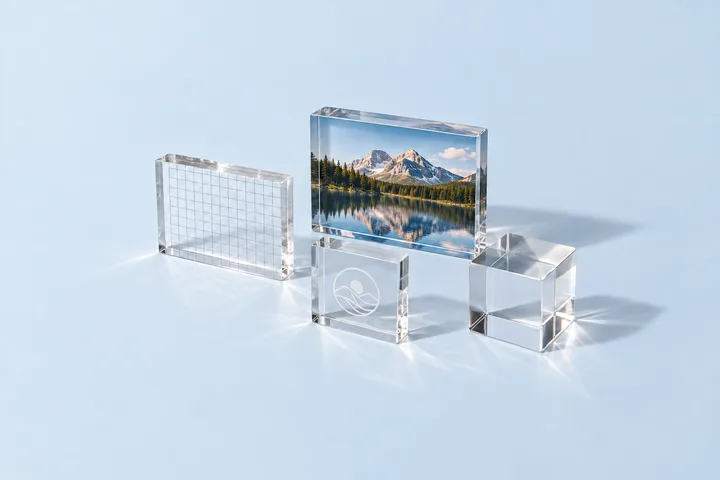
No. Deal toys and embedments are cast in resin around an object — a molding process we don't run. What we do build in solid acrylic: photo blocks, logo blocks, and stamp blocks (custom acrylic blocks), subsurface laser engraving inside the material, and functional embedded hardware such as magnets and LED modules.
Can acrylic products be autoclaved or heat-sterilized?
No — PMMA deforms well below the 121°C of an autoclave cycle, so no acrylic product survives steam sterilization, whoever makes it. Acrylic lab racks and trays are built for room-temperature benchwork with wipe-down disinfection. If your application requires autoclaving, the right material is polycarbonate or polypropylene, not acrylic — and we'll say exactly that in the quote rather than overclaim.
Published price point
Ask the question with your specification attached
From $6 per unit at 500 pcs, FOB Shenzhen
Published point for a 150 × 100 × 100 mm case in 3 mm clear acrylic with a magnetic lid. It is a concrete reference, not a flat price for every product.
Paid samples are quoted separately and are never credited to production.
Thank you!
We've received your inquiry. Our team will reply within 24 hours — usually faster.
Still have questions? Ask William directly.
Send anything — a half-formed spec, a competitor product photo, a question we didn't cover. William or someone on his team will reply within 24 hours, no sales script.