





FOB vs DDP: Cost, Risk and Import Roles
FOB and DDP allocate different transport, risk and import responsibilities. Compare the named place, mode, exclusions and landed-cost lines before comparing totals.
Need this made?Custom acrylic fabrication services →
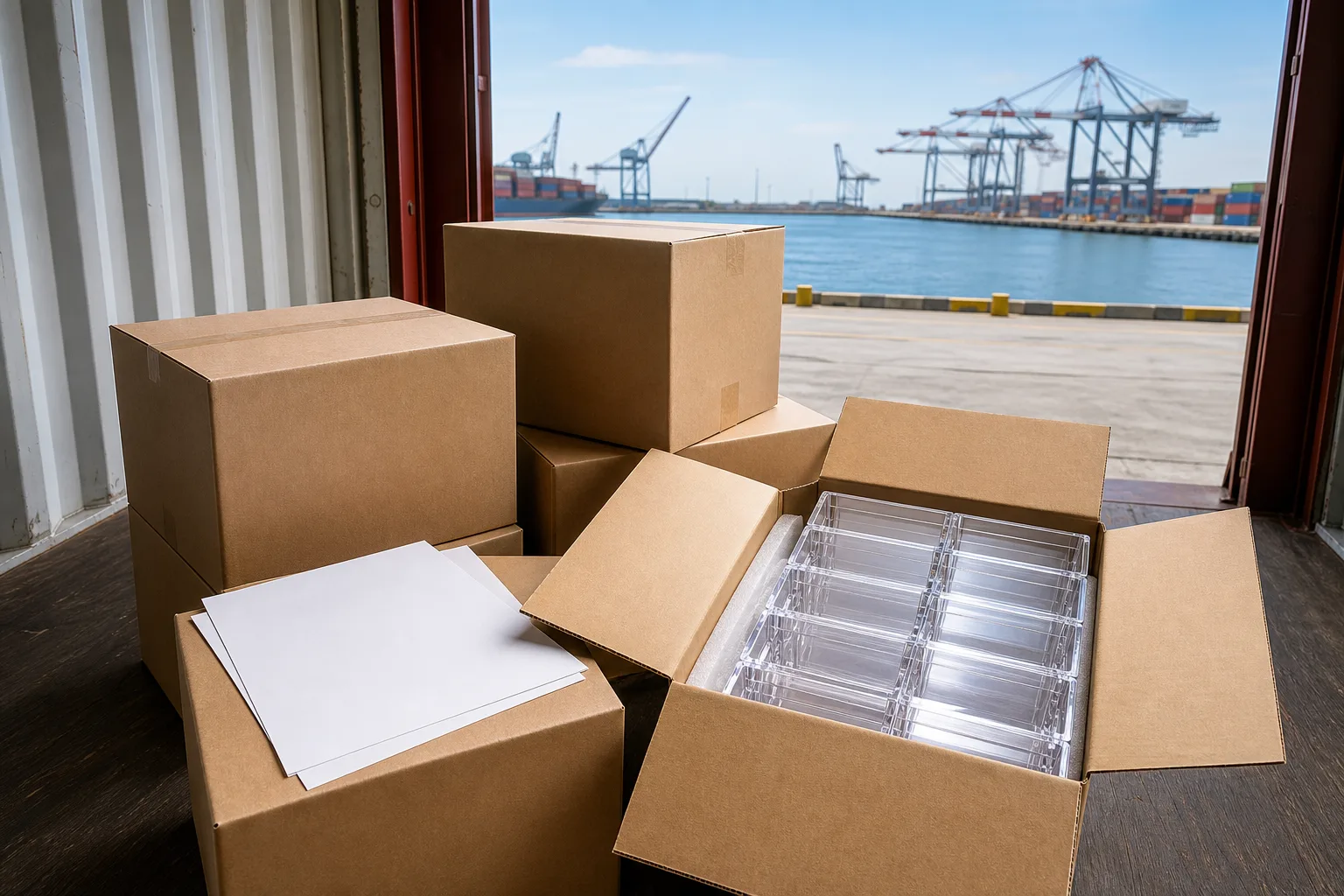
Key Takeaways
- FOB and DDP are the two ends of the Incoterms responsibility scale: under FOB Shenzhen the buyer takes over cost and risk once goods are loaded at the origin port; under DDP the seller carries everything — freight, import clearance, duty — to the buyer's door.
- Neither term wins by shipment size alone. Compare current like-for-like landed quotes, transport mode, importer role, broker readiness and risk handoff for the actual route.
- A DDP quote is not 'more expensive' than an FOB quote — it contains four or five cost legs the FOB number leaves for you to buy separately. Compare landed cost to landed cost, never quote to quote.
- Duty rates change and vary by product and origin — get the current rate from a licensed customs broker before comparing terms, and treat any tariff percentage baked silently into an old quote as expired.
On this page
FOB vs DDP: What Changes for the Buyer?
FOB vs DDP changes who arranges and pays each transport and import leg, where risk transfers and which party manages destination clearance under the named Incoterm and place.
The International Chamber of Commerce publishes the Incoterms rules that define those responsibilities.1 Read either term together with its named port or destination, the quoted mode and written exclusions; the three-letter term alone is not a complete freight offer.
The gap between those handoff points is the entire conversation. Since founding Wetop in 2008, the FOB vs DDP question has produced more first-order confusion than any spec, material, or payment topic — usually because a buyer compares an FOB number against a DDP number as if they priced the same thing. They don’t. The FOB price buys you goods on a ship; the DDP price buys you goods in your warehouse. Between the two sit freight, insurance, destination handling, customs clearance, duty, and a truck — real costs someone must pay under either term. The only question is who arranges them, who carries the risk while they happen, and whose markup rides on top.
One scope note: this guide covers the responsibility split. FOB applies to sea or inland-waterway transport; an air or courier movement needs a mode-appropriate term such as FCA or a delivered term. Compare each route using its correct term rather than carrying FOB language across every mode.
Who pays what, leg by leg
Read any FOB vs DDP comparison as a table of legs, because that’s what the terms are: an agreement about which column each leg’s cost and risk lands in. The US International Trade Administration’s Incoterms overview breaks the obligations out the same way.2
| Leg | FOB Shenzhen | DDP (your door) |
|---|---|---|
| Production + export packaging | Seller | Seller |
| Inland transport to origin port | Seller | Seller |
| Export customs clearance | Seller | Seller |
| Loading on vessel | Seller | Seller |
| Main carriage (FOB: sea/inland waterway only; compare FCA for air or pre-vessel container handoff) | Buyer | Seller |
| Cargo insurance | Buyer (recommended) | Seller |
| Destination port / terminal charges | Buyer | Seller |
| Import clearance + brokerage | Buyer | Seller |
| Import duty and taxes | Buyer | Seller |
| Last-mile delivery | Buyer | Seller |
| Risk during main transit | Buyer | Seller |
The risk row deserves a sentence because buyers often focus on cost. Under FOB, risk transfers when the goods are on board the vessel at the named origin port, so the buyer should review cargo insurance with its forwarder; under DDP, the seller carries risk to the named destination under the Incoterms rule and written contract.
Landed-cost math: one order, both ways
Never compare an FOB quote to a DDP quote directly; extend both to the same named destination and delivery point. The same discipline applies to the product side of the number: our acrylic display stand cost guide explains the product inputs before freight is added. Frame buyers can apply the same method with the bulk picture-frame factory cost stack.
| Landed-cost line | Buyer-arranged route | Seller-arranged DDP route |
|---|---|---|
| Product and export packing | Current product quote | State whether included |
| Origin handling and main carriage | Current forwarder quote | State whether included |
| Cargo insurance | Current policy or forwarder quote | State coverage and exclusions |
| Destination handling and brokerage | Current destination quote | State whether included |
| Duty and tax | Broker-confirmed classification and current rate | State importer arrangement and inclusion |
| Last-mile delivery | Current carrier quote | State named destination and unloading exclusion |
Freight, surcharges, classification, duty and destination fees change. Obtain live written quotes and keep the product-price validity and freight-validity windows separate.
Deposit timing rounds out the cash picture: our orders run 30% deposit with the balance before shipment, samples in 3-5 days, production in 15-20 days — the payment mechanics and their reasoning live in our ordering and payment FAQ.
Three misreadings that cost buyers real money
The FOB vs DDP mistakes I see repeat themselves, so here are the three we spend the most time untangling on quote calls: comparing the two prices head-to-head, confusing FOB with EXW, and treating a duty estimate as a duty rate.
The head-to-head comparison is the classic error. An FOB product price excludes cost lines that a DDP figure may include, so extend both to the same destination and list every leg. Packed carton count, gross weight and volume let the buyer’s forwarder price its side of the comparison.
The EXW confusion runs the other way. Ex Works means the goods are yours at the factory gate — you arrange export clearance in China, which is genuinely painful for a foreign buyer. FOB is friendlier than its reputation: the seller handles everything in-country, including export customs, and hands off only when the cargo is on the vessel. I’ve had buyers avoid FOB for years believing it meant “figure out China logistics yourself.” It doesn’t.
The duty misreading is the expensive one, covered above but worth repeating as a rule: a duty percentage is a snapshot, not a constant. Classification, origin rules, and trade policy all move. Your broker’s current written answer is the only number that belongs in a landed-cost model.
When DDP wins
DDP can simplify a first import when the seller can lawfully satisfy the destination’s importer requirements and the quote states the named place, exclusions and importer arrangement. For Wetop production, the comparison begins at 100 pieces per design; carton count, mode, cost and transit time remain quote-specific.
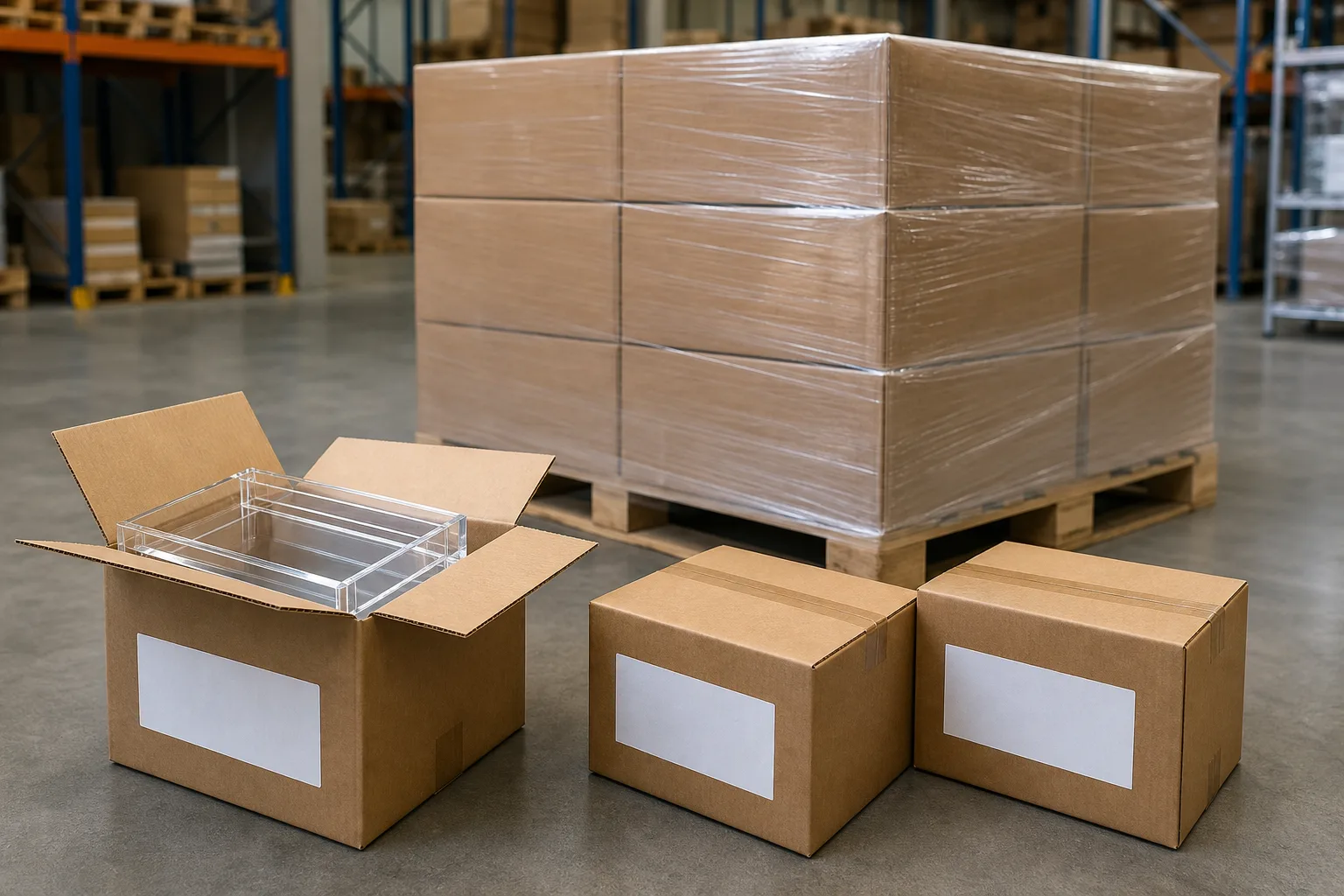
Delivered courier services can simplify booking and clearance when the seller or carrier can lawfully support the destination’s importer arrangement. The e-commerce sign-holder project documents a product program; it is not a universal freight-term rule. Compare the underlying custom acrylic sign-holder formats, then request current route, charge and importer details in writing.
A first 100-piece production order may prioritize product validation, but that does not make DDP the automatic term. Compare a lawful delivered option with a mode-appropriate buyer-arranged route, including broker and importer responsibilities.
Two cautions. Insist on the word DDP on the quote — DAP (Delivered At Place) looks similar but leaves duty with you, and the difference surfaces as a surprise invoice at delivery. And confirm who acts as importer of record; a DDP seller or their agent should be handling entry, not quietly filing it in your name.
When FOB wins
FOB can suit a sea shipment when the buyer wants control of carrier, insurance, destination clearance and the forwarder relationship. Whether it costs less than a seller-arranged route must be established with live like-for-like quotes.
FOB Shenzhen is our default quoting basis because it separates factory-controlled product and origin costs from the buyer’s sea-freight and import arrangements. A DDP quote includes additional freight, clearance, duty and delivery assumptions. Compare the two only after a forwarder or broker supplies a current landed-cost view for the same shipment; do not infer a saving or markup from quantity alone.
Under FOB the buyer generally becomes the importer of record, so entry filing, product classification and duty payment at destination sit with the buyer or its appointed licensed broker. US Customs and Border Protection licenses brokers to conduct customs business on importers’ behalf.3 Confirm brokerage scope and fees in the selected forwarder’s written quote.
For an FOB shipment, confirm the required document set with the buyer’s broker before booking. We provide the commercial invoice, packing list with per-carton weights and dimensions, and agreed material declarations to the buyer or forwarder’s Shenzhen agent. Clearance delays can have several causes, so documentation readiness is one controllable input rather than a guarantee of release timing.
Choose between FOB and DDP from the actual route, current landed quotes, importer-of-record arrangement and the buyer’s broker or forwarder capacity. Send the quantity and destination through our custom acrylic fabrication page for an FOB Shenzhen quote with carton counts, weights and volume that a forwarder can use in a live comparison.
Small orders: when air beats sea (under 200 kg)
Below roughly 200 kg gross, the FOB vs DDP question usually collapses into a simpler one: air or sea. A first 100-piece run of trays, blocks or frames packs into a handful of cartons, and at that weight the two modes stop being “expensive versus cheap” and become “this month versus next quarter”. The break-even is a calendar, not a number.
Two of our own project records show the shape of it. On a 300-piece etched acrylic tray order, the DDP air quote came to roughly 1.5 times the value of the trays themselves, while DDP sea to the same continent priced near 20–25% of goods value. Air landed in about 12–15 days door to door; sea would have taken 50–60. On a 200-set printed wall planner run, sea freight to the ANZ region again sat at roughly a quarter of goods value, and the buyer accepted a six-to-eight-week transit because nothing in its launch depended on the date. Same factory, same year, opposite decisions, both correct.
| Question to answer first | If yes | If no |
|---|---|---|
| Is there a fixed launch, event or retail reset date? | Air: pay the multiple, keep the date | Sea: the freight line falls to a fraction |
| Is the packed shipment small and light (a few cartons)? | Air’s gap narrows because a sea booking still pays for minimum space it does not fill | Sea: weight and volume are what sea is priced for |
| Is the product value per carton high? | Air as a share of goods value shrinks; the 1.5× tray ratio would look very different on printed logo blocks | Freight can exceed goods; decide on the calendar, not the ratio |
| Can the first sellable quantity be separated from the rest? | Split release: launch quantity by air, balance by sea | One mode, one quote |
I read that table with buyers on almost every first order, and the mistake it prevents is treating “freight costs more than the product” as a reason to wait. On a low-value, low-weight tray the freight line is where the launch date shows up, and that is normal. The tray was not overpriced; the calendar was. Request both modes at the same time as the product quote, on the same packed weight, carton count and named destination, so the total lands as one decision instead of a surprise after the deposit.
The split release is the option buyers forget to ask for. A partial air shipment sends the quantity a launch actually needs under one quote and the balance by sea under another. It needs two packing lists, two commercial invoices and one inspection before the first cartons leave, and each leg keeps its own Incoterm and named place. It costs more than pure sea and much less than pure air, which is usually the point.
One caution on mode and term together: FOB is a sea term. An air movement needs FCA or a delivered term such as DAP or DDP, so when you compare “FOB sea” against “DDP air” you are changing two variables at once. Ask for the air option as a delivered quote with duty stated, and the sea option as either FOB Shenzhen or DDP, then compare landed cost to landed cost as the earlier sections describe.
Frequently asked: duties, HS codes, and quote validity
Once buyers understand the FOB vs DDP split, the follow-up questions cluster around three things: classification, what happens when trade policy moves mid-order, and who eats a delay at the destination. Short answers below.
What HS code applies to acrylic products?
We put the HS code we’ve used on similar past shipments on your commercial invoice, along with the full document set a broker needs to file entry. Classification is ultimately the importer of record’s responsibility, though — codes shift with product construction and destination rules, and the duty rate hanging off a code can matter more than the code itself. Have your broker confirm the classification in writing before you build a landed-cost model on it; under DDP, that job belongs to the seller’s clearance agent instead.
How long is my quote valid — and what if tariffs change mid-order?
The product price on our quote carries a stated validity window and holds through it. Freight and duty behave differently: ocean rates move weekly, so freight is re-quoted near booking, and tariffs are set by governments — no factory on either side of the ocean can freeze them for you. Under FOB a mid-order tariff change lands on the importer; under DDP the seller priced that risk into the quote, which is part of what the DDP premium buys. The practical protection is the one from the landed-cost section above: your broker’s current written rate at quote time, re-checked before the balance payment.
My shipment is stuck at the port or rail yard — who pays demurrage?
The governing contract and applicable Incoterm allocate the cost and risk, while the carrier, terminal and customs event determine why charges arose. Under FOB, destination storage, demurrage and detention generally sit on the buyer’s side; under DDP they remain with the seller until delivery under the agreed place and terms. Confirm free time and document deadlines with the forwarder, and build a customs buffer into any downstream promise.
Footnotes
-
Incoterms 2020 — International Chamber of Commerce — the ICC’s official rules defining the eleven trade terms, including the seller/buyer cost and risk split under FOB and DDP cited throughout this guide. ↩
-
Know Your Incoterms — US International Trade Administration — US government explainer of buyer and seller obligations under each Incoterm, source for the leg-by-leg responsibility breakdown. ↩
-
Customs Brokers — US Customs and Border Protection — CBP’s description of licensed customs brokers, who conduct entry filing and duty payment on behalf of importers of record, cited for the FOB buyer’s clearance obligations. ↩
Frequently Asked Questions
What is the difference between FOB and DDP in simple terms?
FOB (Free On Board) applies to sea or inland-waterway transport: the seller delivers goods loaded on the vessel at the named origin port, and the buyer arranges the main carriage from there. DDP (Delivered Duty Paid) places transport and import-duty responsibility with the seller to the named destination, subject to the written quote and local importer requirements. For air or container handoff before vessel loading, compare FCA rather than calling the movement FOB.
Is FOB or DDP better for a first custom acrylic order?
Neither term is automatically better. Ask for a current all-in destination quote and a buyer-arranged comparison using the same packed dimensions, mode and named place; courier, air and ocean timing and cost remain route- and booking-specific.
Does a DDP price from China include import duty?
Yes — by definition DDP includes import duty and clearance in the destination country; that is what 'Duty Paid' means. Confirm two things in writing: that the quote names DDP (not DAP, which excludes duty) and which party is registered as importer of record. If a 'DDP' offer asks you to pay duty at delivery, it was not DDP.
What does FOB Shenzhen include on a custom acrylic order?
For sea or inland-waterway transport, FOB Shenzhen covers the seller's delivery of the goods loaded on the vessel at the named origin port, including export clearance. From vessel loading onward, main carriage, insurance, destination charges, import clearance, duty and last-mile delivery sit with the buyer; use FCA for air freight or a container handed to the carrier before vessel loading.
Do I need a customs broker for an FOB shipment?
Under FOB the buyer is generally the importer of record and is responsible for entry filing, classification and duty payment at destination. A licensed customs broker can handle that filing; confirm whether brokerage is included in the selected forwarder's written quote. For US imports, CBP licenses brokers to conduct customs business on importers' behalf.
Can samples ship DDP while production ships FOB?
Yes, if each quote states its own named place and Incoterm. A paid sample may travel by an all-in courier service while the production shipment uses the buyer's forwarder; sample fees remain paid separately and are not credited to production.
What destination information is needed for a DDP quote?
Provide the full destination address, postal code, receiving restrictions, product use, quantity, packed-carton estimate and required date. The seller still needs to confirm the named place, importer arrangement, exclusions and quote-validity window in writing.
Which documents should be prepared for an FOB shipment?
The document set normally starts with the commercial invoice, packing list and transport document, then adds classification or compliance documents required for the specific product and destination. Confirm the final list with the buyer's forwarder and customs broker before booking.
Should cargo insurance be compared separately under FOB vs DDP?
Yes. Under FOB, the buyer should confirm whether its forwarder quote includes cargo insurance and what exclusions apply; under DDP, ask the seller to state the transport and claim responsibility in the written quote.
When does air freight make sense on a small custom acrylic order?
When the calendar, not the freight line, decides. On a 300-piece etched tray order the DDP air quote came to roughly 1.5 times the value of the goods against about 20–25% by sea, so air cost about six times more but landed in 12–15 days instead of 50–60. Air fits a fixed launch date or a shipment too small and light to fill sea minimums; sea fits anything that can wait. Price both against the same packed weight and destination before choosing.
Can part of an acrylic order ship by air and the rest by sea?
Yes. A split release sends a launch quantity by air under one quote and the balance by sea under another, each with its own named place, mode and Incoterm. It costs more than pure sea and less than pure air, and it needs two packing lists, two commercial invoices and one agreed inspection before the first cartons leave. Ask for the split as two written quotes rather than one blended number.
How should two FOB vs DDP quotes be compared?
Build both to the same named destination and delivery point, then list product, origin handling, main freight, insurance, destination charges, brokerage, duty, tax and last-mile delivery. Any blank line is an unknown cost, not a saving.
When should freight be re-quoted on a custom acrylic order?
Reconfirm freight before booking because rates, surcharges, packed dimensions and customs inputs can change after the product quote. Keep the product-price validity and freight-validity windows separate in the written offer.
Compare FOB and DDP on the same acrylic order
Send the product specification, quantity, packing estimate, destination, required date and preferred shipping mode for a line-item product quote and freight comparison. A paid sample can be quoted separately; sample fees are paid separately and are not credited to production.