

Delivered Project · Retail & E-commerce
Wall-Mount Acrylic Sign Holder
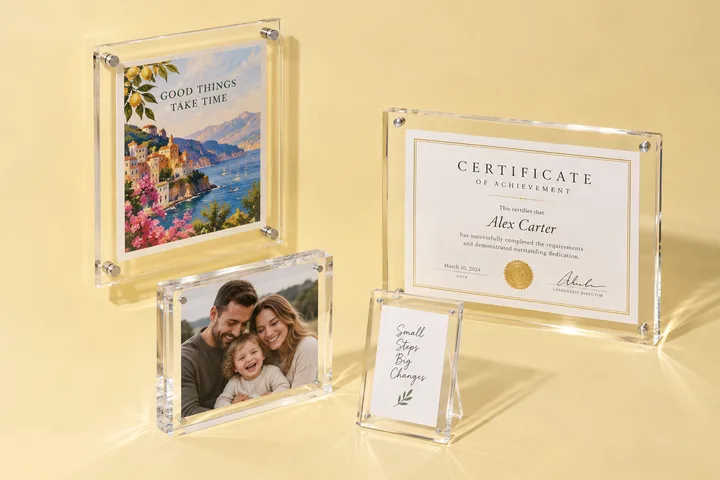
An Amazon FBA seller came to us for a wall-mount acrylic sign holder with standoff hardware.
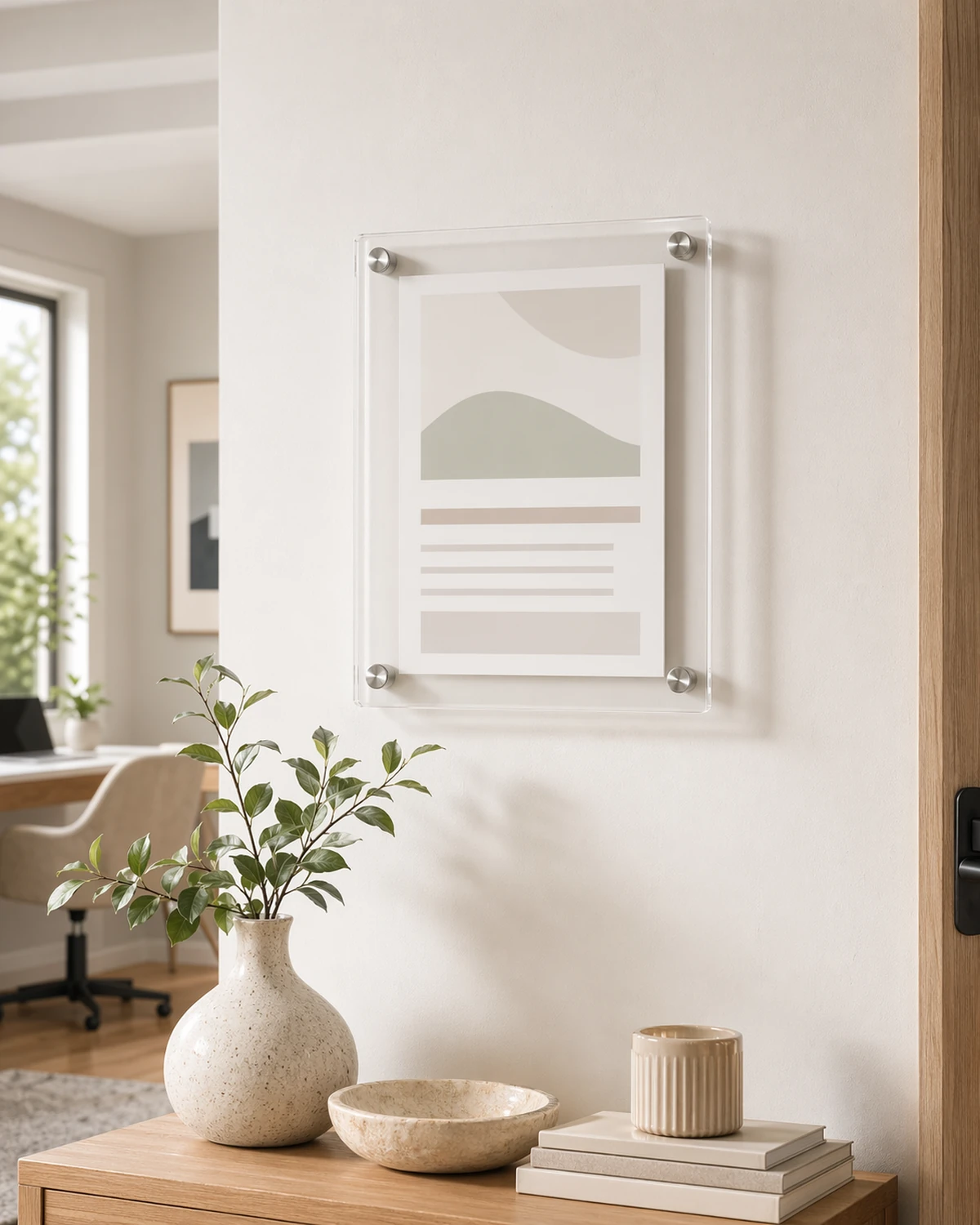
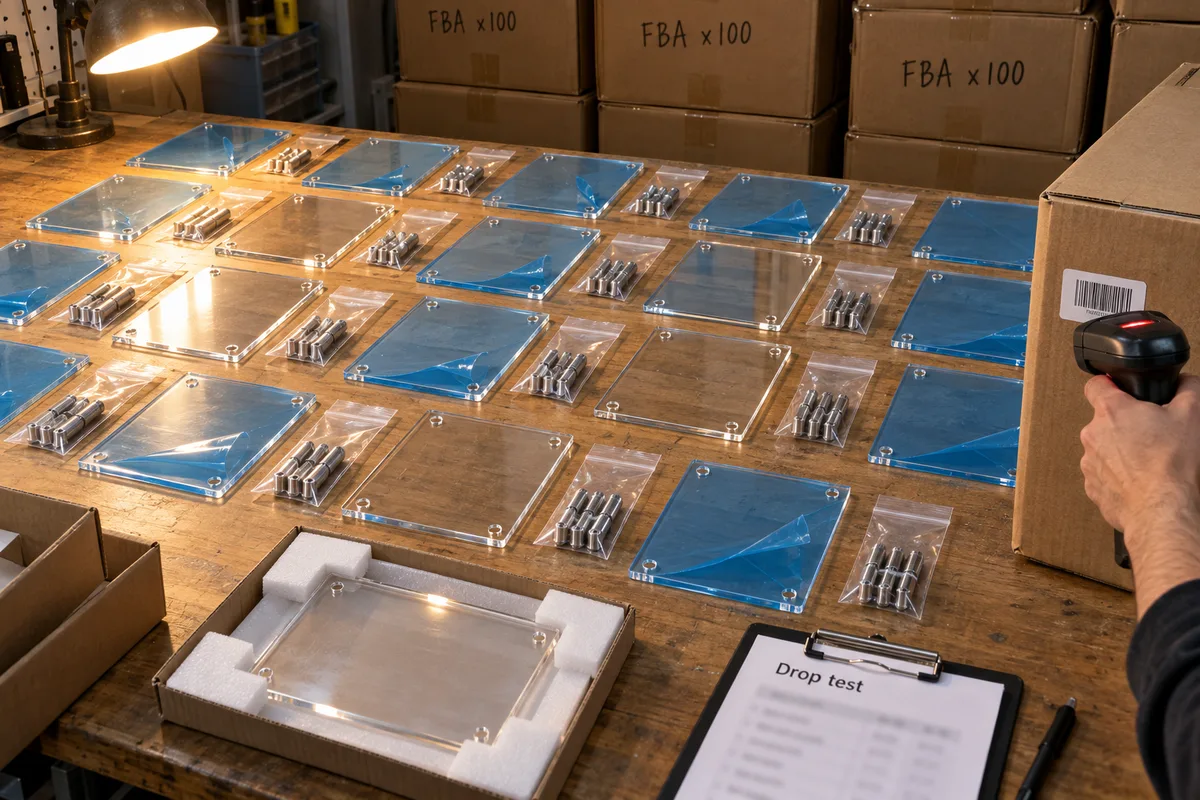
We matched it to the seller's insert, tested the packout in transit, and applied and scanned the seller's own barcode labels before releasing production.
Ordering a similar project
MOQ is 100 pieces per design. Paid samples take 3–5 days; sample fees are paid separately and never credited. Standard production takes 15–20 days after approvals. Wetop responds to a complete brief within 24 hours.
Closest published price: this order was quoted from its own drawing. The nearest public reference on the acrylic display manufacturer page is a two-tier countertop stand 250 × 180 × 220 mm, 5 mm clear, one-color UV logo: $28 each at 100 pcs, $16 at 500, $12 at 1,000 (FOB Shenzhen, published reference). A wall-mount holder with standoffs, labels and a tested packout is a different product and was priced on its own.
Key Takeaways
- An Amazon FBA seller needed a wall-mount acrylic sign holder that fit its insert and standoff hardware, survived shipping to fulfillment and arrived carrying its own barcode labels.
- We compared flat-pack and assembled packouts on the paid sample; the seller checked the packed sample against current Seller Central size tiers and fees before approving one packout.
- Mount-hole radii, edge finish and corner protection were fixed on the drawing and proven by a transit test the seller named, with sample count and pass criteria on the signed QC sheet.
- We applied the seller's barcode files at an approved position and scanned every FNSKU variant in inspection.
The Challenge
The seller needed a holder that fit its insert and standoff hardware, survived a distribution test it named, and reached the fulfillment center with its approved labels. None of that shows in a listing image. Packed dimensions, marketplace fees and fulfillment size tiers also change, so the seller checked current channel rules against the approved packed sample. We worked on three risks:
- Transit protection. We tested corner geometry and protective material on the actual product and packout, under the seller's method with a written sample count and pass criteria.
- Packed dimensions. Flat-pack and assembled formats trade off user assembly, carton size and freight. The seller checked current size-tier treatment and fees in its own marketplace account.
- Label control. The seller supplied current barcode artwork and placement instructions. We printed, applied and scanned labels to that file; marketplace acceptance stayed with the seller.
The seller's RFQ gave us the insert, visible area, material and finish, mounting-hole centers, supplied hardware, assembled footprint, carton target, label files, destination and test standard.
Our Approach
We turned the brief into a drawing and a paid sample. The seller checked insert fit, visible area, assembly, mounting interface, label scan, packed dimensions and appearance, and also ran the ordinary user steps: sliding in the graphic, assembling any flat-pack parts, attaching the hardware and repacking the unit. Production opened only after the drawing, sample, inspection checklist and packout were signed off.
Corner and mounting geometry checked in sample testing
We controlled mount-hole radii, edge finish and hole-to-edge distance on the drawing. The seller nominated a packed-product drop test, and we wrote the drop height, faces tested, sample count, acceptable cosmetic marks and zero-tolerance fracture points onto the QC sheet, so the inspector had a clear release standard.
Flat-pack and assembled packouts compared before release
Flat packing cuts empty space but adds an assembly step and can expose surfaces or hardware in transit. The seller compared both configurations on the paid sample and confirmed the chosen carton in its marketplace workflow. We used this table as the release checklist:
| Carton spec | Assembled | Flat-pack | Checked by |
|---|---|---|---|
| Carton volume (per unit) | Measured on the approved carton | Measured on the approved carton | Buyer / logistics team |
| Amazon FBA size tier | Checked against current rules | Checked against current rules | Seller account owner |
| Foam / fill material | Set in the approved packout | Set in the approved packout | Buyer + Wetop |
| Corner protection | Set from the transit test | Set from the transit test | Signed QC sheet |
We quoted the chosen protective material and carton after sample approval. Freight, fulfillment fees, reimbursement policies and margin stayed with the seller.
Buyer-supplied marketplace labels applied to an approved file
We printed and applied the seller's barcode files at a documented position on the poly bag and recorded a scan check under the agreed inspection plan. The approval pack showed the finished insert size, visible area, mounting-hole centers, included hardware, assembled footprint and carton dimensions, plus one scan photo for every FNSKU variant. The seller stayed responsible for the code, current label rules, poly-bag warnings, marketplace eligibility and inbound acceptance.
Approval pack before bulk production and FBA booking
We locked the selling format before cutting the production batch. Each approved combination of insert, hole centers, hardware, color and label got its own revision code, carried through the drawing, sample tag, inspection sheet, unit label and carton mark, so listings that share a similar photo could not be mixed up.
The Results
The result was a controlled release package: approved drawing, insert and mounting samples, buyer label files, recorded scan position, packed-product test method, inspection checklist and carton standard.
Inspection repeated the agreed checks at the documented frequency throughout production and before packing.
“We approved the physical product and its packout; the seller verified channel rules in its own account. Our scan record supported that check. It did not replace marketplace acceptance.”
If You're Planning Something Similar
Keep product geometry, packout and marketplace administration as separate approvals. We control the acrylic, supplied hardware, agreed decoration, factory inspection and packing to released files; you control listing claims, channel rules, inbound booking, the label files you send us, and freight, fees, returns and margin. Before a reorder, compare your current marketplace file with the released factory revision and flag every changed field.
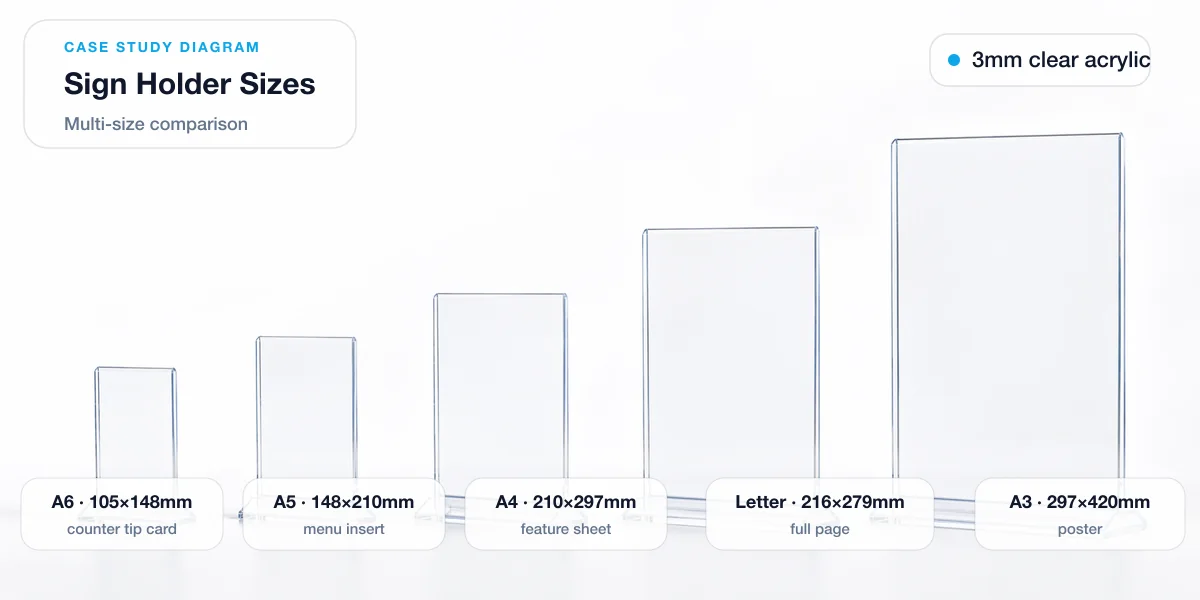
For a quote, send the insert, finished dimensions, mounting interface, hardware list, artwork, quantities by design, destination, your transit test method and current label files. Ouracrylic sign holder size chart compares common insert sizes, and our custom acrylic sign holders page shows the formats we make.
Sourcing a wall mount acrylic sign holder for Amazon FBA?
Send the product drawing or sketch, insert, mounting details, quantities, destination, buyer-named transit test and current label files. We will review the manufacturing and packing scope and quote the approved design.
MOQ 100 pieces per design · Paid sample in 3–5 days, separately paid and never credited · Standard production in 15–20 days after approvals