

Delivered Project · Retail POS
Shelf-Edge Sign Holder Program
This delivered project covers a 1,000-piece, three-SKU shelf-edge sign-holder program for a multi-store retailer.
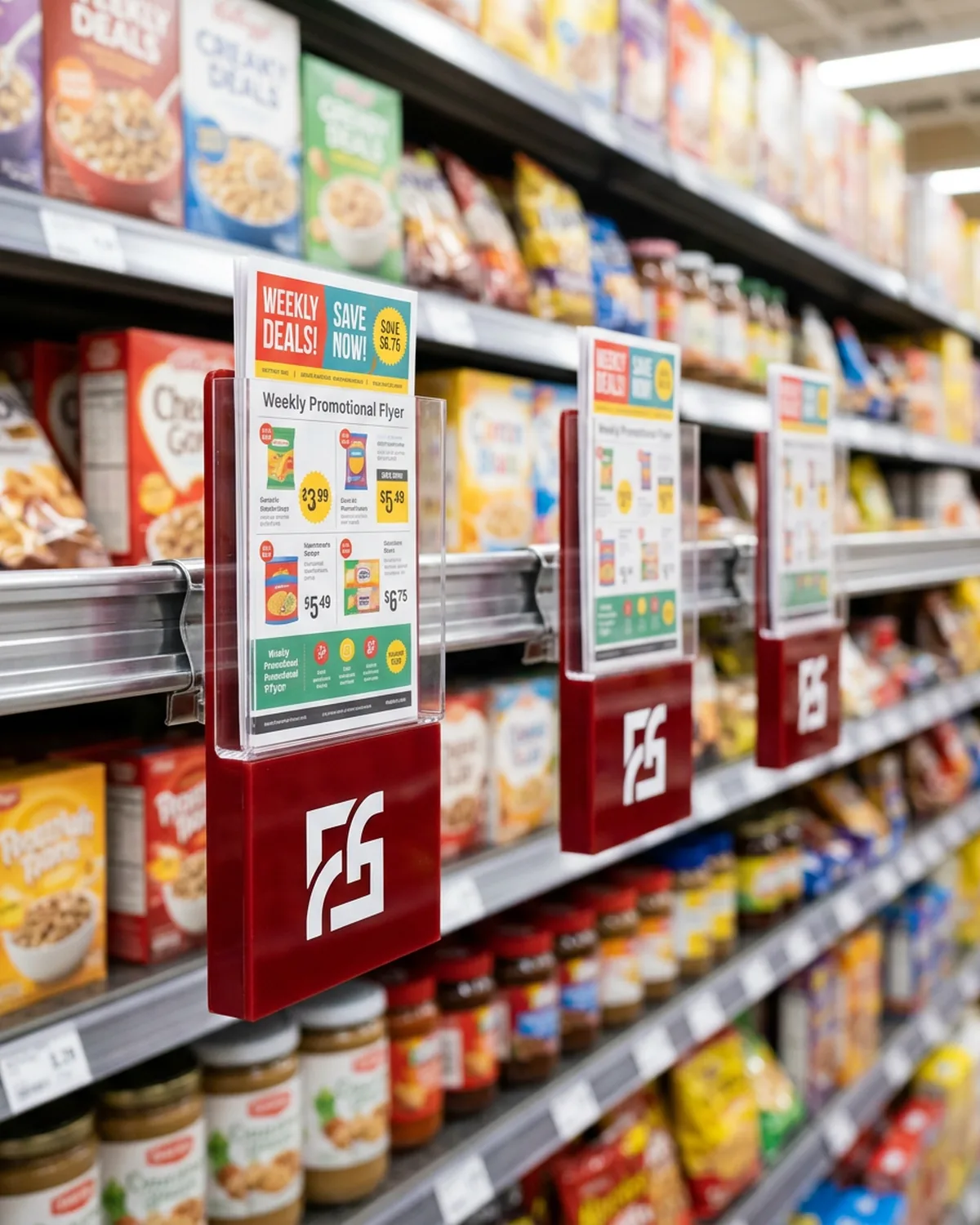
It shows how Wetop controlled shelf fit, flyer pockets, color, artwork, cleaning checks, store allocation, and reorder files. Project profile: Shelf-edge, endcap, and freezer-door formats released through buyer-approved drawings and physical samples.
- units delivered
- 1,000
- SKU formats
- 3
- branding base
- 28 mm
- pocket thickness
- 1.5 mm
Ordering a similar project
MOQ is 100 pieces per design. Paid samples normally take 3–5 days, are paid separately, and are never credited to production. Standard production takes 15–20 days after the drawing, material, artwork, print, packing, and sample are approved; Wetop responds to a complete brief within 24 hours.
Different-specification price reference: the acrylic display manufacturer page publishes a two-tier countertop stand 250 × 180 × 220 mm, 5 mm clear, one-color UV logo: $28 each at 100 pcs, $16 at 500, $12 at 1,000 (FOB Shenzhen, published reference). That stand is a different specification and is not a quote for this project. Pocket format, shelf interface, material, print, packing, SKU split, quantity, and destination determine the written quotation.
Key Takeaways
- We delivered a 3-SKU family that covered shelf-edge, endcap and freezer-door locations while keeping one logo zone and one artwork-control system.
- We chose the print method from the approved cleaning agent, color standard, handling pattern and a physical sample test; no method carried a universal life claim.
- Pocket thickness, shelf-edge fit, flyer size and barcode sightline went into the released drawing instead of being inferred from a reference image.
- The extended 28 mm base created a dedicated branding zone below the flyer pocket, so a weekly flyer change never covered the logo.
- The brief we quoted named every SKU, quantity split, artwork version, shelf geometry, packing allocation and destination.
The Challenge
The retailer came to us standardizing shelf-edge communication across locations that used different shelf systems. It needed one visual family, but each shelf-edge, endcap and freezer-door format still needed its own measured interface, released drawing, quantity split and installation check.
We separated visual consistency from mechanical fit. Three constraints drove the program:
- Handling and cleaning. The buyer named the expected contact, cleaning product and replacement interval, so we checked material and print samples under the actual routine.
- Brand visibility at the shelf edge. The logo zone had to stay readable when the weekly flyer was inserted, and the buyer approved its position and color standard.
- Rollout control. The launch date, store allocation, carton labels, freight mode and approval deadline were fixed before we committed the production schedule.
Our Approach
We started the DFM review from the buyer's measured shelf samples and drawings, then isolated three variables: the shelf interface, the replaceable pocket and the branding zone. Cost comparisons followed only after those inputs and the SKU quantities were fixed.
Extended base as a dedicated branding zone
Their original reference showed the logo printed on the clear pocket, which meant every weekly flyer change partially covered the brand mark. We added a 28 mm extended base below the insert pocket, dedicated entirely to the logo. No matter what flyer went in, the brand stayed visible at eye level.
The extended base also doubled as the reinforced structural foot. It carries the stress from cart bumps and keeps the thin (1.5 mm) clear insert pocket from flexing.
Silk-screen printing vs vinyl decals
We compared vinyl, silk-screen and UV print because they exposed different edges and surfaces to cleaning. The buyer approved the chosen method on production-intent material with the named cleaning agent; the table was a decision guide, not a universal service-life promise.
| Method | Setup cost | Durability (GCC humidity) | Chemical resistance |
|---|---|---|---|
| Adhesive vinyl decal | Low | Approve edge behavior by sample | Depends on film, adhesive, and cleaner |
| Silk-screen print | Medium | Approve adhesion by sample | Depends on ink system and cleaner |
| UV-printed | Medium–High | Approve surface behavior by sample | Depends on ink system and cleaner |
The quote separated print setup from unit pricing so the buyer could compare the economics at each SKU quantity. We assumed no setup saving or replacement payback until we had quoted the released artwork.
Pantone-matched cast acrylic, not painted
For the colored base, we specified cast acrylic with the pigment mixed into the sheet at the material stage — not painted onto clear acrylic after fabrication. Painted coatings chip at cut edges and under chemical cleaning. Cast-colored acrylic shows the same color through the full thickness; chips and scuffs don't reveal a different substrate underneath.
The color approval record named the buyer's reference, sheet, viewing light, measurement method and acceptable difference. The numerical tolerance was buyer-defined and belonged in the signed inspection plan.
On a multi-store program, color drift between batches can become visible when fixtures meet in one aisle. We quoted the sheet-lot plan, approved the color on a physical sample, and kept that sample with the artwork version for future comparison. Base thickness and impact checks were likewise released by sample, not copied from this diagram.
The Results
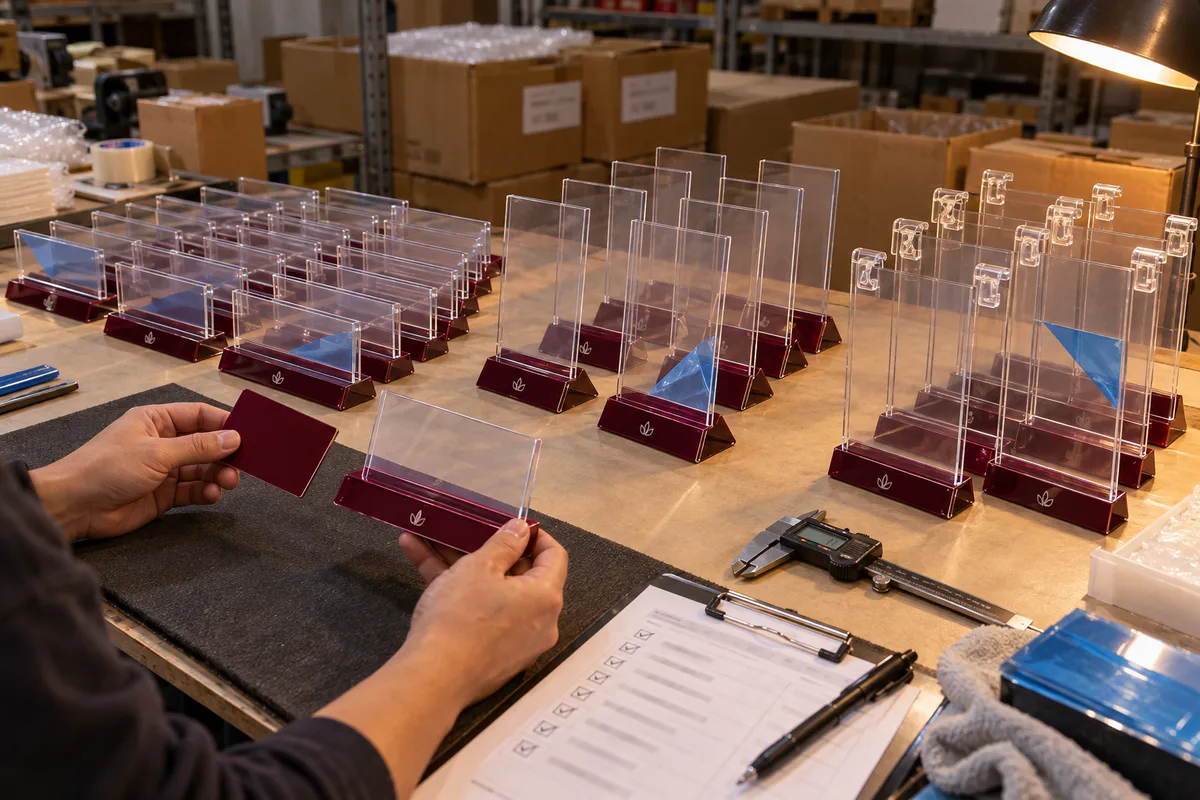
The output of the sample round was a release package. Bulk started only after the buyer approved the drawings, physical samples, artwork, color reference, inspection criteria, carton labels and freight plan.
A reorder can reuse the released files and approved sample, but the buyer still confirms the SKU split, artwork version, color reference, shelf geometry, packing allocation, and destination for the new purchase order.
Buyer decision point: Approve shelf fit, flyer access, artwork, color, cleaning compatibility, and carton allocation on the production-intent sample before releasing the rollout.
What This Means for Your Project
If you're sourcing custom acrylic sign holders for a multi-store rollout, the two decisions that most affect total cost of ownership are branding method and base material. Compare print samples using the intended cleaner and handling method. A seasonal and a long-running fixture may justify different methods, but this page does not assign a fixed service life or payback.
The other decision is SKU consolidation. We often see buyers spec a separate holder for every fixture type. In this program, three SKUs covered shelf-edge, endcap and freezer-door locations, each built on the same branding zone geometry so the visual system read as one family. Fewer SKUs means tighter color consistency, lower tooling spread, and simpler store-level installation.
Common Questions
The answers below identify the decisions that must be confirmed in the drawing, quotation, and approved sample.
Why silk-screen the logo instead of using vinyl decals?
Silk-screen printing can remove an exposed adhesive edge, but the correct method depends on the approved cleaning agent, color target, artwork, expected handling, and sample test. A buyer should compare vinyl, silk-screen, and UV print on production-intent samples rather than accept a fixed service-life claim.
Does cast-colored acrylic keep its color through daily cleaning?
Cast-colored sheet carries pigment through the material rather than as a painted surface. The buyer should still approve the named sheet, color standard, viewing light, cleaning method, and acceptable color difference on a physical sample; the final tolerance belongs in the signed drawing and inspection plan.
For a broader supplier review before committing to production, use ouracrylic manufacturer vetting checklistto check documentation, sampling, inspection, packing, and communication controls.
Planning a shelf-edge sign holder rollout?
Send us your brand guide, a rough sketch or reference photo, and your store count — we'll come back with a DFM review, a spec recommendation, and a quote.
Paid sample in 3–5 days, separately paid and never credited · Production in 15–20 days · MOQ 100 pieces per design