Custom Acrylic Fabrication

From your sketch to finished product — every detail built to your spec.

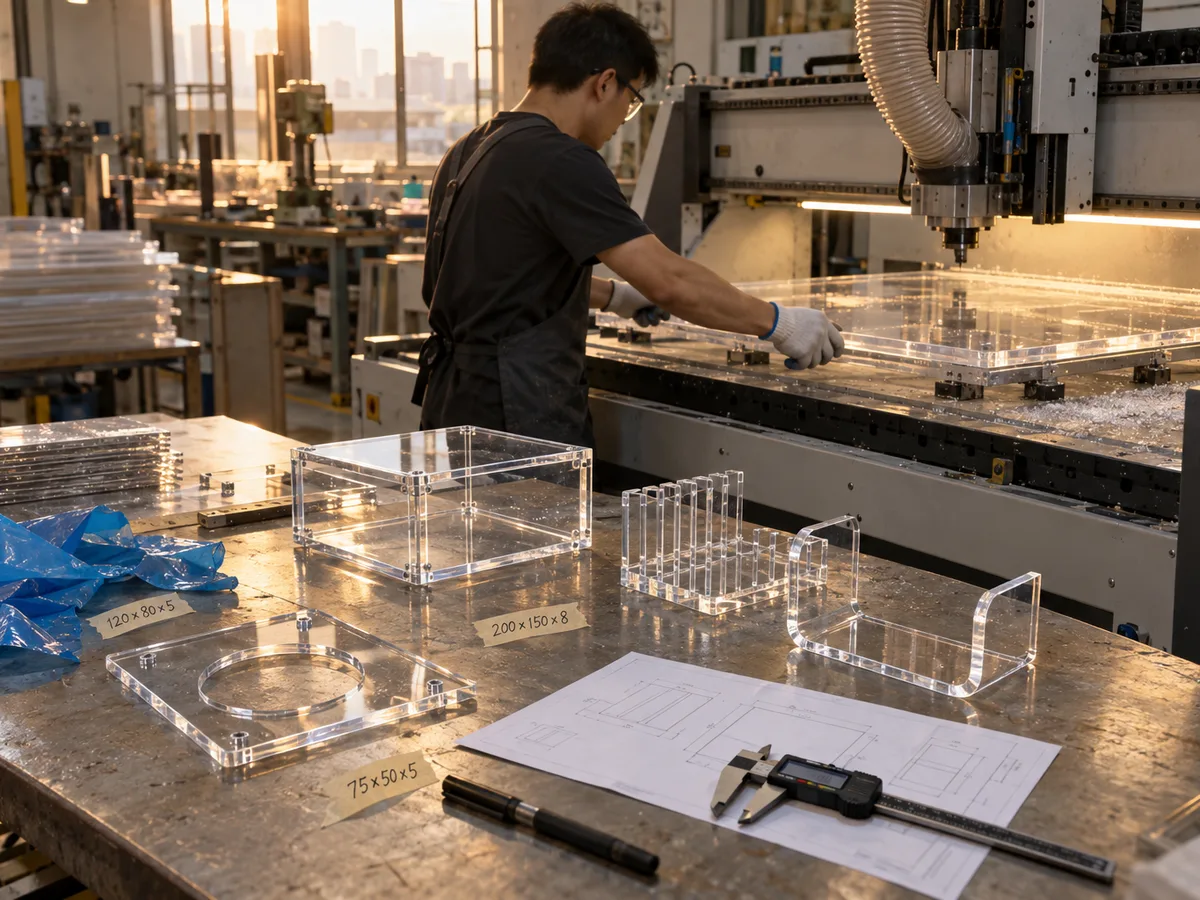
Acrylic fabrication is the process of cutting, shaping, polishing, printing, and assembling acrylic (PMMA) — also known as plexiglass or Perspex — into custom products. Wetop Acrylic handles every fabrication step in-house: your design, your dimensions, your branding. No CAD file needed — a sketch or photo is enough to start.

ISO 9001 · MOQ 100 Pieces · Samples in 3–5 Days · We Respond Within 24 Hours

Send sketch, photo, CAD, or just dimensions — anything to start.

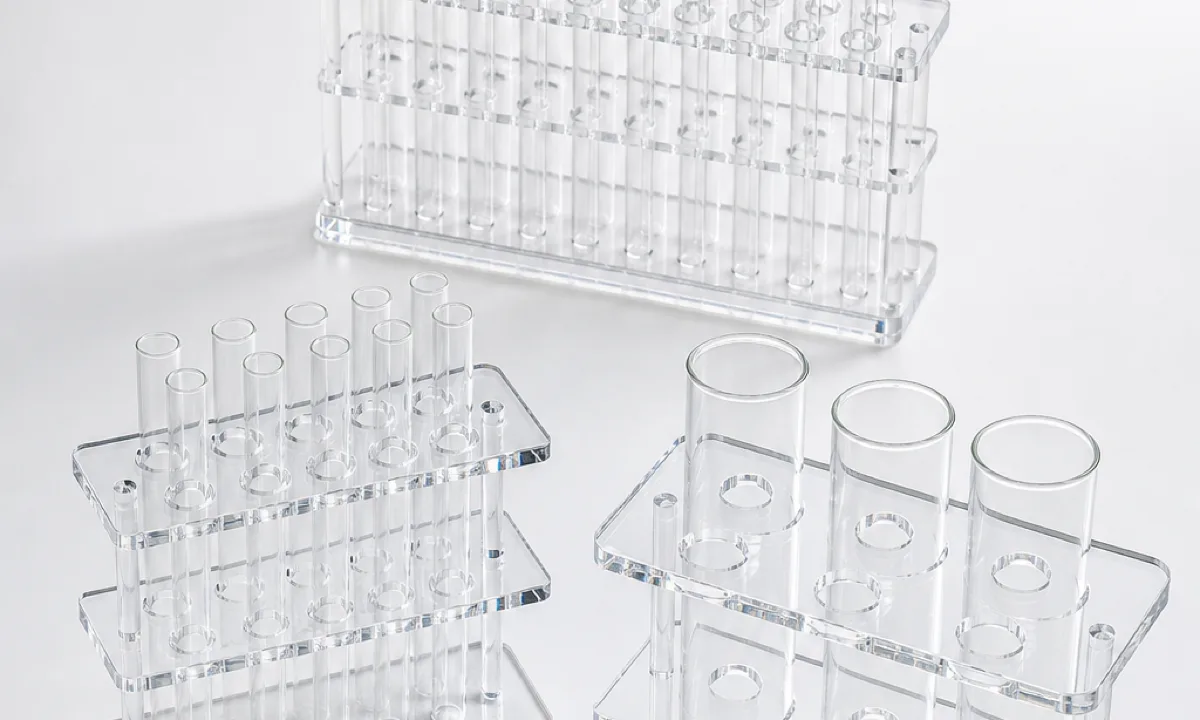
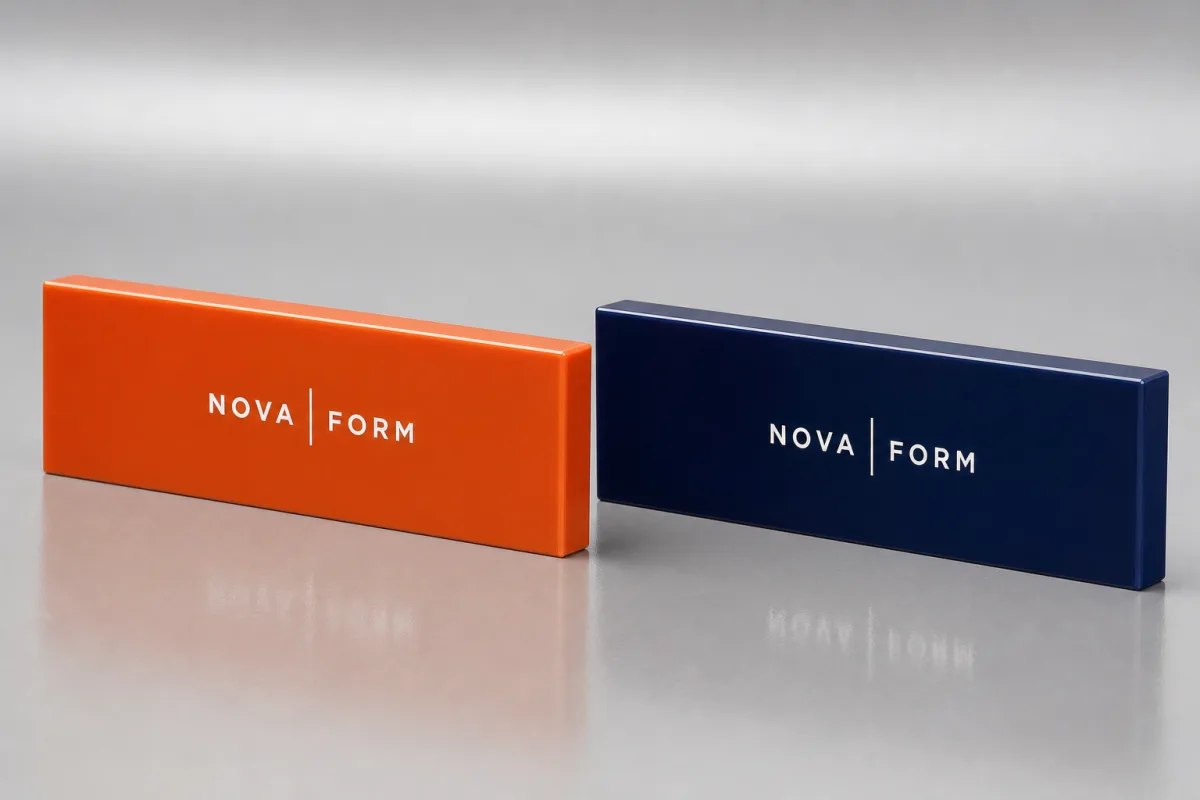
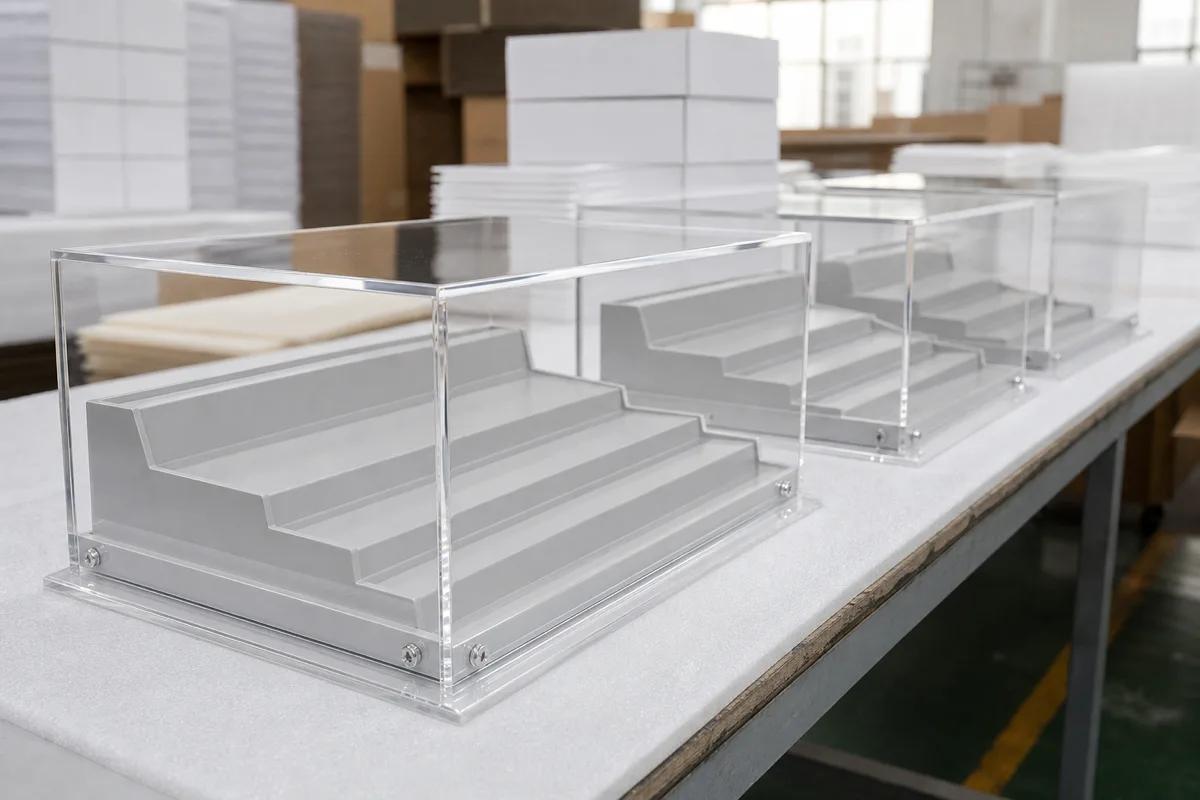
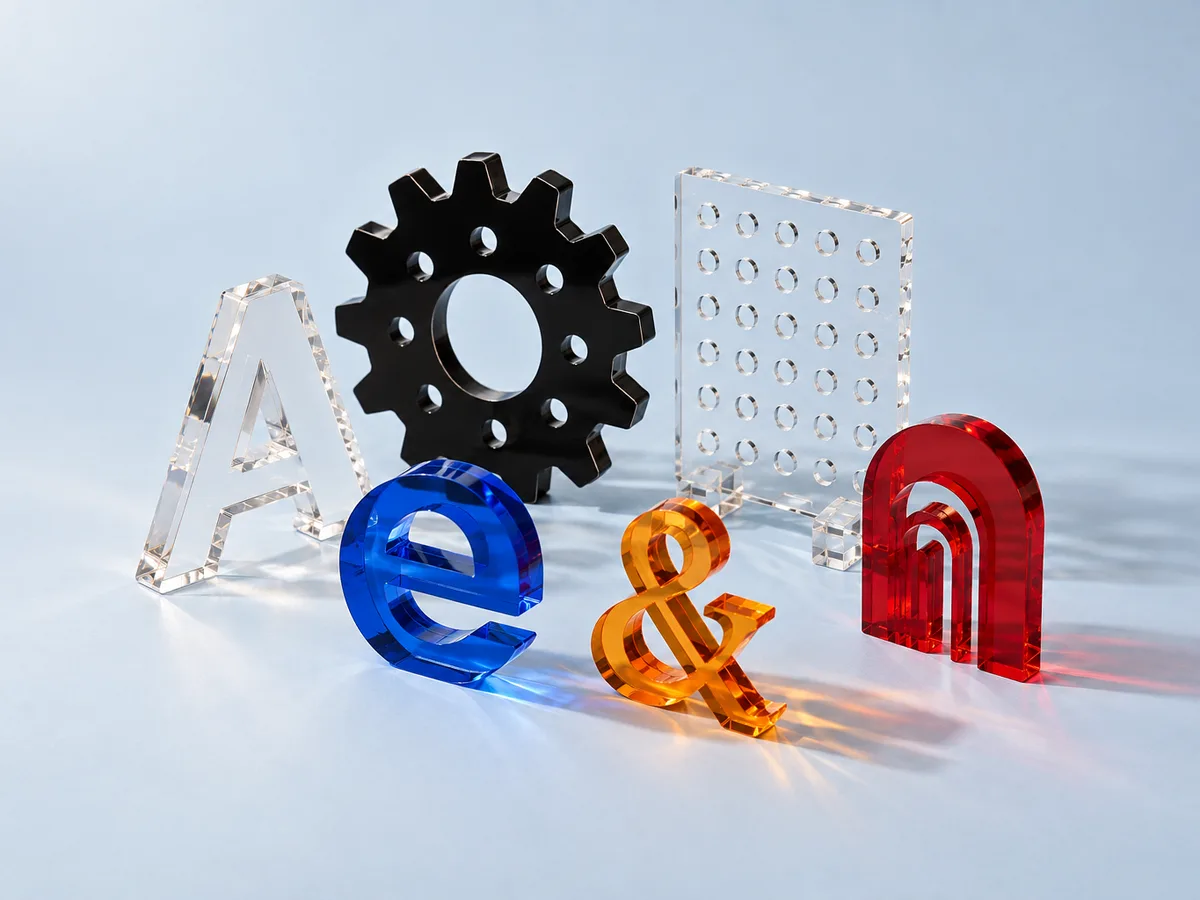
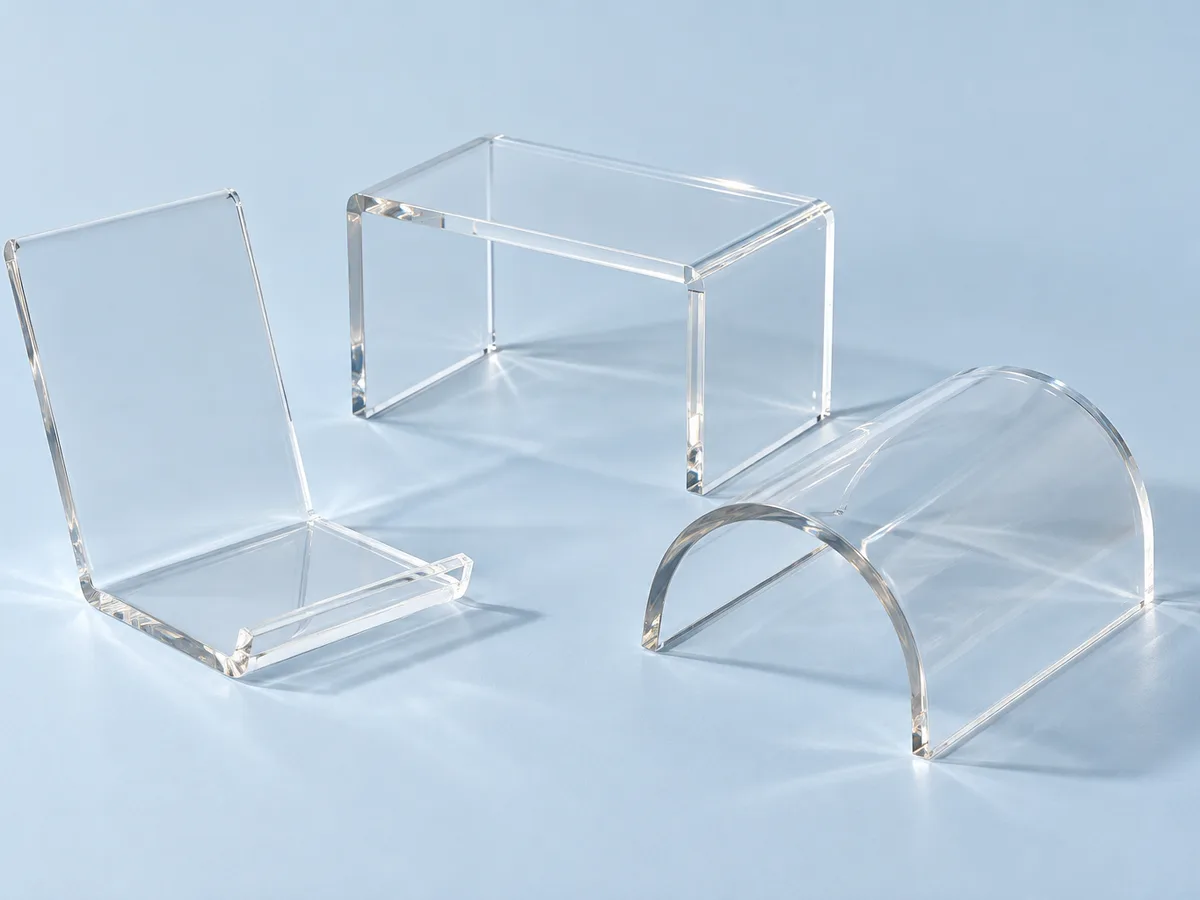
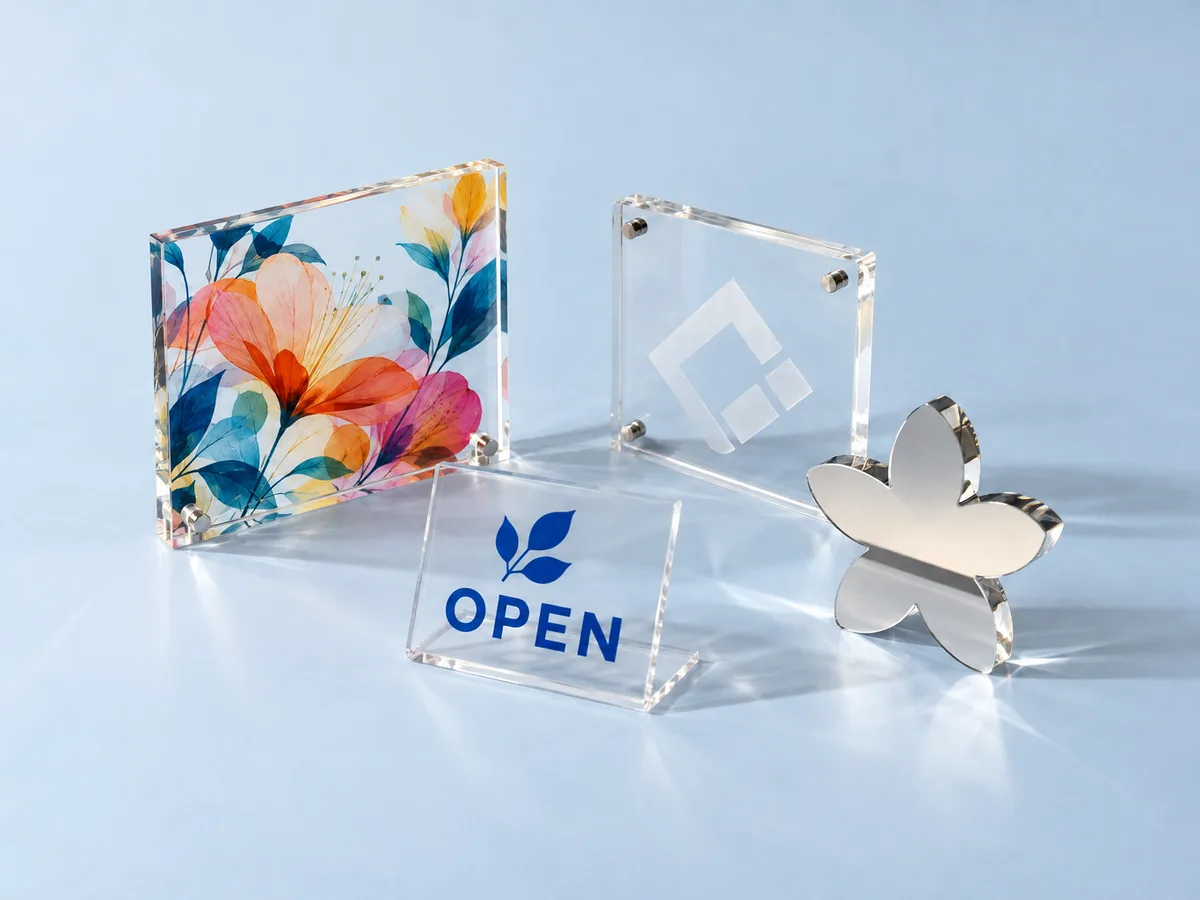
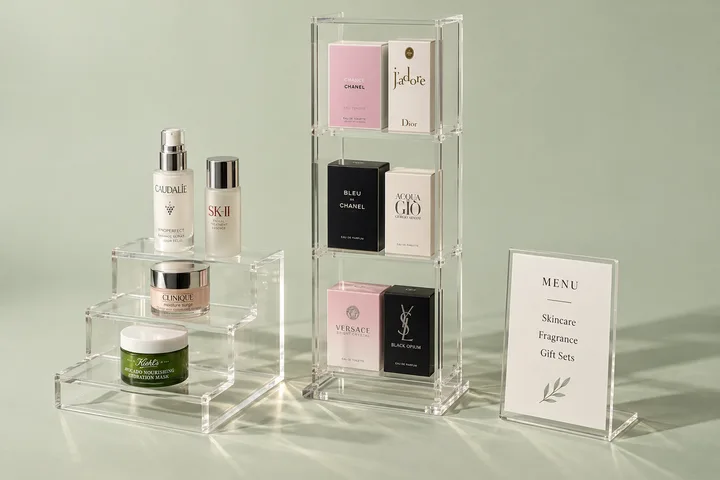
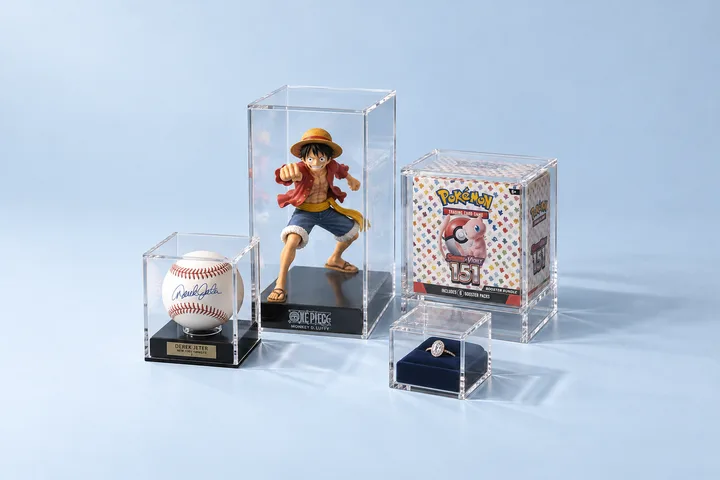
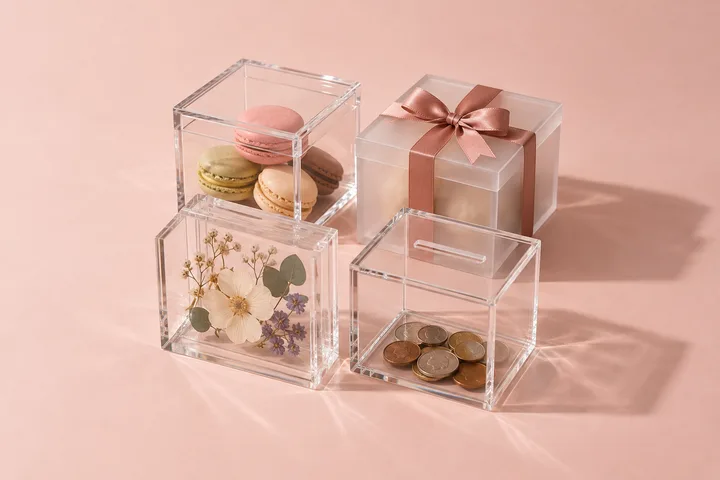
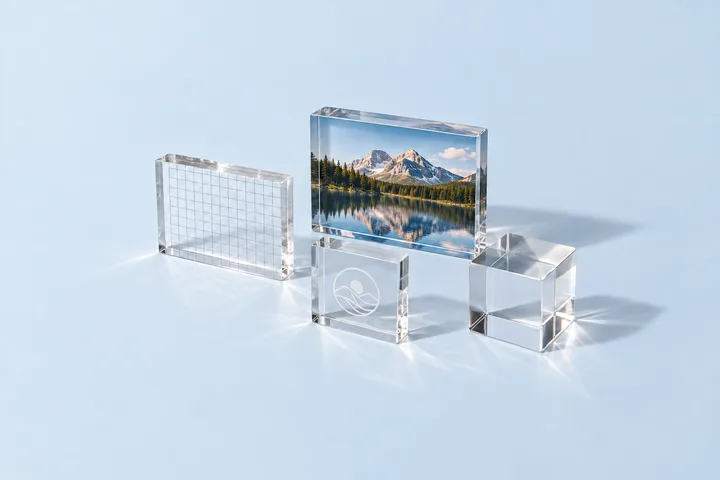
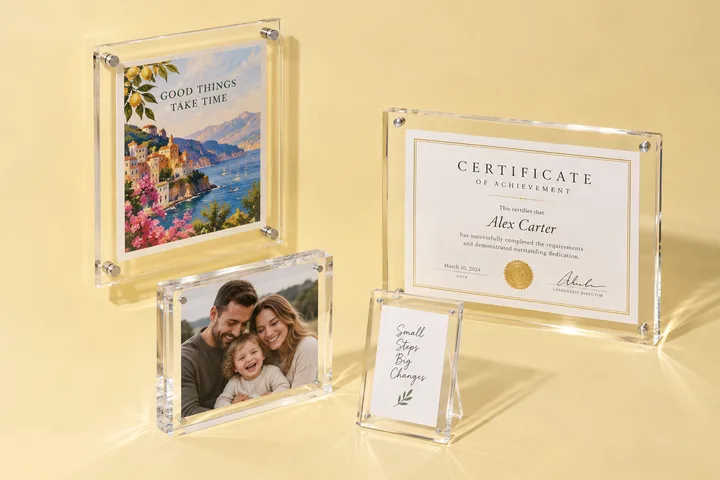
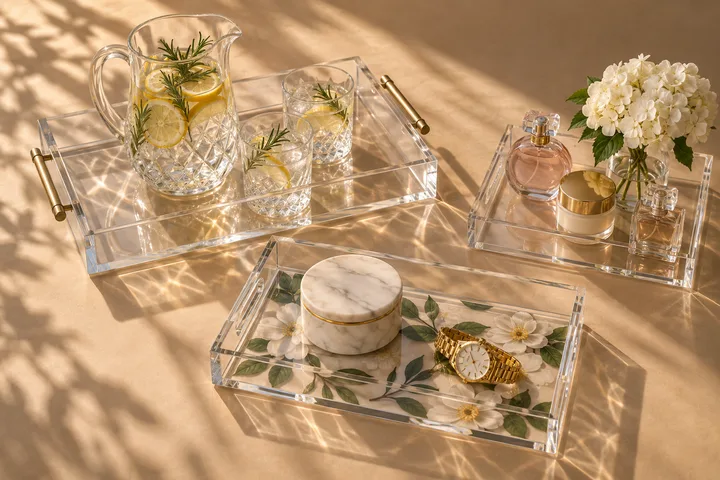
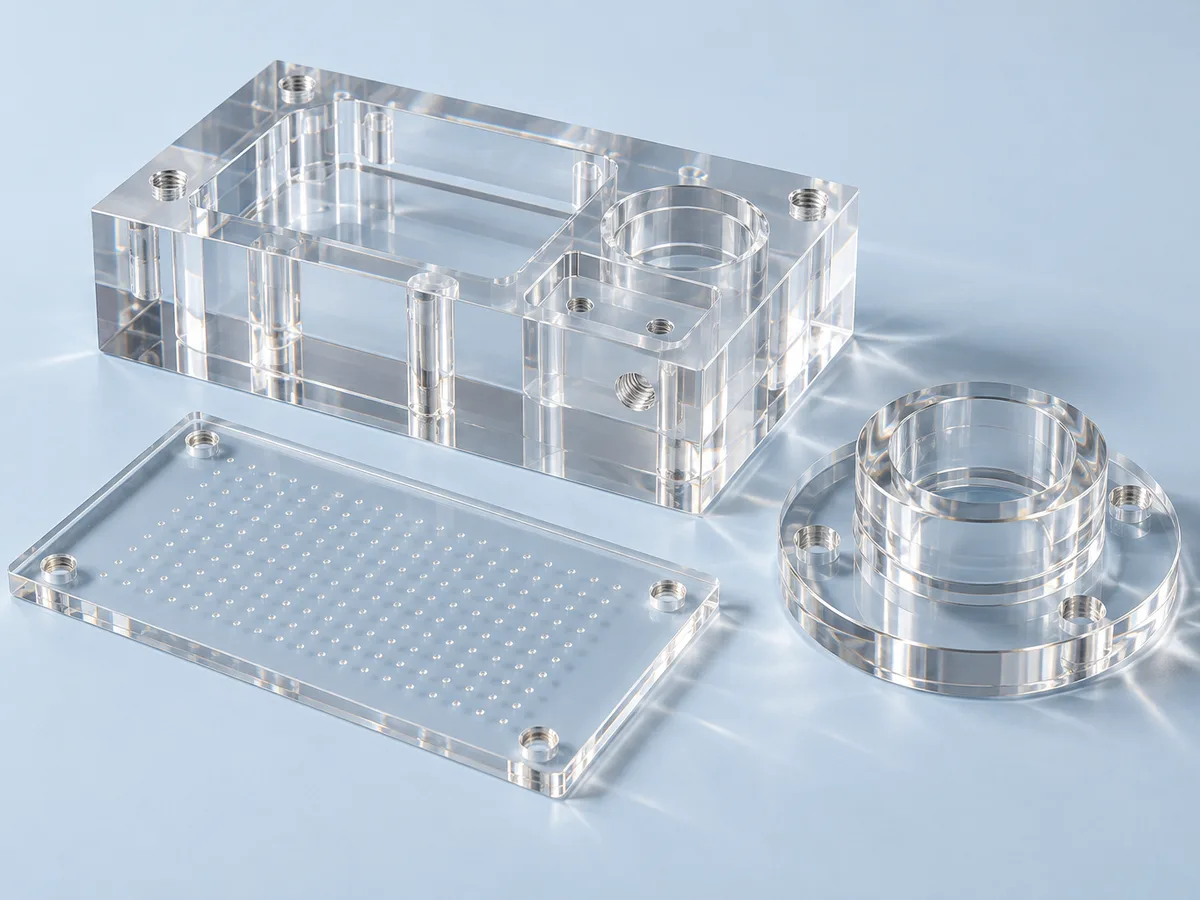
Wetop Acrylic custom fabrication product showcase — displays, boxes, frames, and trophies

How Custom Orders Work

A custom acrylic order at Wetop follows three steps: send your design, approve a sample, receive your order. Most projects go from first message to delivered product in 20–25 days.

1

Send Your Design

Share a sketch, reference photo, or design file. Include approximate size, quantity, material preference, and any branding. No CAD needed.

We respond within 24 hours
2

Approve a Sample

We build a production-grade sample — not a mockup. Same material, same finish, same printing. Between your design and this sample, our engineering team runs DFM (design for manufacturing) analysis: checking structural integrity, material compatibility, and production efficiency. What you approve is what we produce. Sample fees are paid separately and are not credited to production orders.

Sample ready in 3–5 days
3

Receive Your Order

Every piece passes 100% inspection against your approved sample. Ships FOB Shenzhen; CIF and DDP available.

Production in 15–20 days

This is the buyer's journey — 3 steps from your perspective. For the detailed 10-step factory process behind each order, see our manufacturing process page.

Everything Is Customizable

Size & Dimensions

Custom-fit to any spec, from 10mm to 1,200mm

Shape

Standard geometric or laser-cut to any outline from your artwork

Acrylic Type

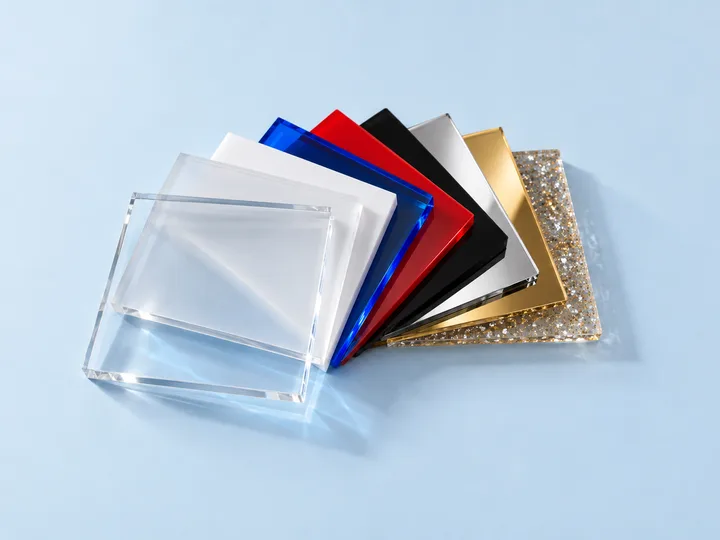
Clear, colored (50+ Pantone), frosted, mirrored, glitter, UV-filtering. See guide ›

Thickness

1mm to 50mm, matched to structural and visual requirements. See guide ›

Edge Finish

Diamond polished (standard — crystal-clear) or flame polished where specified. See guide ›

Printing & Branding

Silk-screen, UV full-color, hot stamping, laser engraving — details below. See UV printing guide ›

Assembly & Hardware

Multi-part bonding, hinges, magnetic closures, LED integration

Packaging

OPP bags, foam inserts, branded retail boxes, palletized freight packing

Every option above applies to all product categories — from display stands and display cases to boxes, awards, and ornaments. The next two sections explain printing and edge finishing in detail.

5 Ways to Brand Your Acrylic Products

Every branding method produces a different visual effect. Choosing the right one depends on your color count, design complexity, durability needs, and budget. Here's how they compare — applied to the same logo on the same acrylic surface.

WinkacrylicSilk-ScreenSolid color, sharp edges1–6 colors per passWCMYKacrylicUV PrintingFull-color, photo-qualityCMYK gradientsWfoilacrylicHot StampingMetallic foil, premium feelGold / silver / rose goldWetchedacrylicLaser EngravingPermanent etch, tactileNo color — frosted textureWvinyladhesiveacrylicVinyl GraphicsAdhesive decal, replaceableFull color or solid cut vinyl
MethodEffectBest ForColorsDurabilityCost
Silk-ScreenSolid color, sharp edges, vibrantLogos, text, 1–3 color graphics1–6 per passVery high (abrasion-resistant)Low
UV PrintingPhoto-quality, full-color, gradientsComplex artwork, portraits, full-bleed designsFull CMYKHigh (UV-cured)Medium
Hot StampingMetallic sheen — gold, silver, rose goldPremium brand logos, award text, luxury products1 foil per passHighMedium-high
Laser EngravingPermanent etch, tactile texture, frosted lookSerial numbers, fine text, anti-counterfeit marksNo color (etched)PermanentLow
Vinyl GraphicsPre-cut or printed adhesive decal, smooth surface finishSignage, window displays, temporary branding, outdoor useFull color (printed) or solid (cut)Medium (removable/replaceable)Low

Not sure which method to use? Send us your artwork — we'll recommend the best option and include a printed sample with your order.

Edge Finishing & Assembly Methods

Edge quality and assembly technique define how a finished acrylic product looks and feels. We offer three edge finishes and four assembly methods — each suited to different products and budgets.

Edge Finishes

Diamond PolishedbeforeafterdiamondwheelRemoves CNC/laser cutting marksfrom edges — restores optical clarityEdge-only polishing. Light passes throughthe edge without distortion.Best for: display cases, frames, awardsPremium edge finishCloth Polishedcloth wheel ↓↓ polishes top surfaceedgeedge↑ polishes bottom surfaceMechanical buffing wheels polishentire surfaces — front, back, and edgesRemoves minor scratches, restores uniformsurface clarity across the whole piece.Best for: flat panels, trays, blocks, table topsFull-surface finishFlame Polishedconcave recessinneredgeinneredgeHydrogen flame smooths edges thatcloth polishing wheels can't reachFor concave recesses, tight inside corners,and complex curves. Glossy finish.Best for: notched shapes, slots, intricate cutsFor hard-to-reach edges

Assembly Methods

Solvent Bondingmolecular fusionsolventDichloromethane dissolves thesurface layer — pieces fuse at amolecular level as solvent evaporatesInvisible seam, strongest bond.Requires precision-flat mating surfaces.Best for: boxes, cases, permanent jointsUV Bonding0.1–0.3mmUV lamp 365nmUV-curable adhesive applied betweensurfaces — UV light cures the bondin 10–30 secondsThin visible joint line. Repositionablebefore curing. Fills slight surface gaps.Best for: mixed materials, gap-fillingMechanical Fasteninghinge + screwScrews, hinges, standoffs, orbrackets hold panels togetherDisassemblable, serviceable.Hardware visible (can be decorative).Best for: doors, lids, modular unitsMagnetic ClosureNSNSCNCpocketN52 neodymium magnets sit inprecision CNC-routed pockets —flush with surface, snap-shut closeZero visible hardware. 10,000+ open/closecycles. Magnet strength rated for load.Best for: lids, cases, stackable designs

Materials We Work With

Cast acrylic (PMMA) is our base material — 92% light transmission, 17× the impact resistance of glass, and half the weight. We stock 6 material types and can source specialty sheets for specific projects. When a project requires an exact color match, we run a spectrophotometer-verified proofing cycle across multiple material suppliers until the match meets ΔE<1 tolerance.

Clear acrylic material

Clear

92% light transmission, optical clarity. The standard for display products.

Best for: Display stands, cases, frames, sign holders

Colored acrylic material

Colored

50+ standard colors with custom Pantone matching available.

Best for: Branded displays, retail fixtures, awards

Frosted acrylic material

Frosted

Diffused light, premium matte appearance. Hides fingerprints.

Best for: Cosmetics displays, privacy panels, luxury packaging

Mirrored acrylic material

Mirrored

Reflective surface, lightweight alternative to glass mirrors.

Best for: Cosmetics trays, decorative displays, wall fixtures

Glitter acrylic material

Glitter

Embedded sparkle particles for eye-catching visual effects.

Best for: Awards, ornaments, retail signage, event displays

UV-Filtering acrylic material

UV-Filtering

Blocks harmful UV rays to protect displayed items from fading.

Best for: Art frames, collectible cases, archival displays

For detailed information on how we work with these materials — laser cutting, CNC machining, diamond polishing, and more — see our manufacturing process.

Technical Data Sheet (TDS)

Material specs, optical properties, mechanical performance, and compliance details for Wetop cast acrylic sheet. Download the PDF directly — no email required.

Download TDS (PDF)

How We Build It

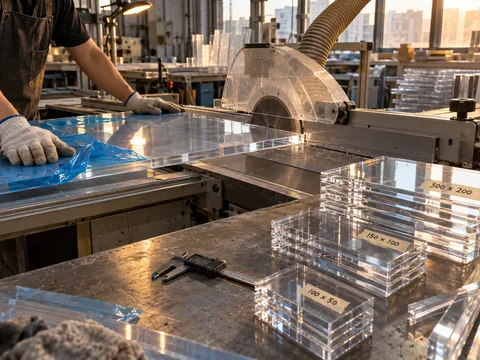
Every fabrication step happens under one roof in our 5,000 m² Shenzhen facility. No outsourcing, no handoffs between factories. Here are the core processes we use to turn raw acrylic sheets into finished custom products. For a fuller treatment, see our guides on what acrylic fabrication is and the six core acrylic fabrication techniques.

Laser Cutting

8 laser cutters for precision cuts up to 1,200mm. Tolerances within ±0.1mm. Handles complex curves and fine detail that CNC can't match.

CNC Machining

4 CNC machines for 3D shaping, routing, drilling, and channel cutting. Used for magnet pockets, LED channels, and structural features.

Polishing

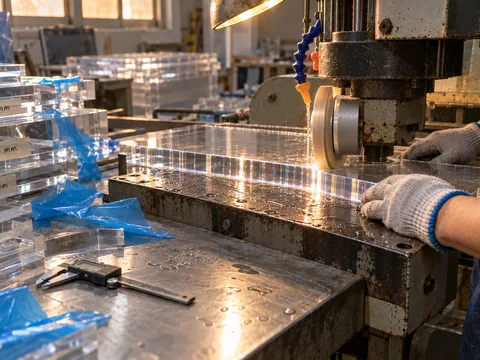
Diamond, flame, and cloth polishing. Dedicated polishing line restores optical clarity after cutting — edges and surfaces.

Printing & Branding

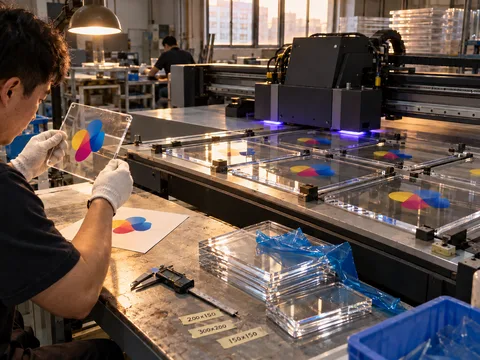
Silk-screen, UV full-color, hot stamping, laser engraving, and vinyl graphics — all handled in-house with our own equipment.

Bending & Thermoforming

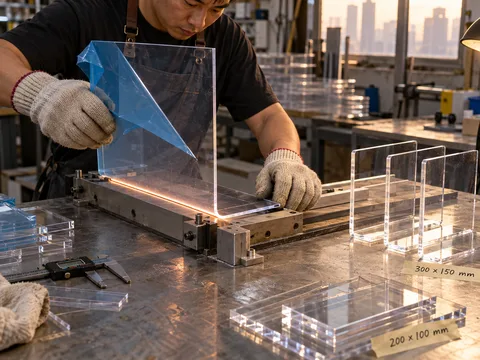
Heat bending for precise angles. Thermoforming for curved shapes. We control temperature profiles to prevent stress whitening.

Assembly & QC

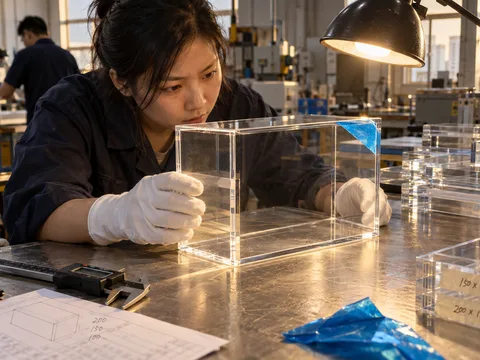
Solvent bonding, UV bonding, hardware installation, LED integration, and packaging. Every piece passes 100% inspection before shipping.

Process Capability Matrix

ProcessWhat It DoesTolerance / Spec NotesTypical Applications
CNC Machining3D shaping, routing, drilling, magnet pockets, LED channels±0.2mm working tolerance; ±0.1mm achievable on fit-critical 2D profilesFrames, blocks, tray inserts, precision-fit bases
Laser CuttingFlat-sheet profiles, complex curves, fine detail±0.1mm on cut profiles; parts up to 1,200mm; 8 machines in-houseDisplay stands, sign holders, standees
Line Bending & ThermoformingHeat-bent angles and formed curves without jointsControlled temperature profiles prevent stress whiteningBrochure holders, risers, curved displays
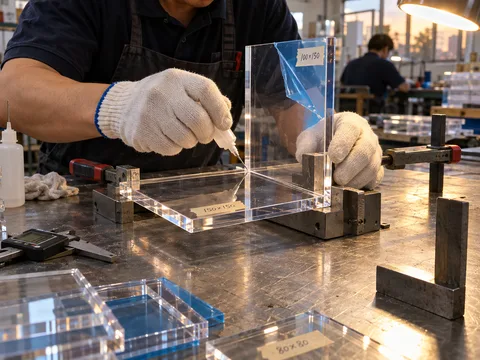
Solvent BondingJoins panels by molecular fusion — invisible seamsStrongest bond type; requires precision-flat mating surfacesBoxes, display cases, permanent assemblies
Diamond & Flame PolishingRestores optical clarity to cut edgesDiamond on straight edges (standard); flame reaches inner corners and recessesDisplay cases, frames, awards
UV PrintingFull-color graphics printed directly on acrylicFull CMYK with gradients; UV-cured; no plates, so multi-design runs share one setupBranded displays, artwork panels, multi-design batches
Laser EngravingPermanent frosted etch that can't wear or peelNo color — fine text, serial numbers, tactile textureLogos, serial marks, anti-counterfeit features
Pantone Color MatchingCustom-colored sheet matched to your brand colorSpectrophotometer-verified to ΔE<1; one-time $200–300 per color, repeats free on reordersBrand programs, corporate colors, retail fixtures

Capabilities and tolerances verified July 2026. Most orders carry no mold-tooling fees — only setup (CNC programming, cut-test runs) that amortizes across your quantity.

What Custom Looks Like in Practice

Each project below solved a specific customization challenge — not a generic "we made a thing" showcase, but a real problem that required engineering.

Exact Pantone Color Match
Challenge

Exact Pantone Color Match

Client needed 2,000 acrylic business card holders matching Pantone 2728 C exactly — their corporate brand blue, with a UV-printed logo on the front.

Our Approach

Custom color-sheet sampling across 3 material suppliers, 3 rounds of proofing, measured with spectrophotometer to ΔE<1 tolerance. Logo UV-printed directly onto the holder face.

Result: 2,000 pieces delivered. Every card holder a flawless brand match on desks across 40 offices.
Hidden LED Integration
Challenge

Hidden LED Integration

Cosmetics retailer wanted LED-lit countertop display cases with no visible wiring — the lighting had to feel like it came from the product itself.

Our Approach

CNC-routed internal channels hide all wiring. Bottom base integrates power switch and low-voltage LED driver — plug-and-play setup.

Result: 800 cases delivered. Each case assembles in under 60 seconds on-site.
10 Designs, One Batch
Challenge

10 Designs, One Batch

Brand needed 1,000 keychains across 10 unique designs — 100 pieces per design.

Our Approach

UV digital printing — no plates, no tooling. All 10 designs produced in a single production run with zero changeover waste.

Result: 500 pieces, 10 designs, shipped in 18 days.
Tamper-Proof Suggestion Boxes
Challenge

Tamper-Proof Suggestion Boxes

Nonprofit needed 300 clear acrylic suggestion boxes with a lockable rear door and a one-way slot — visible fill level to encourage participation, tamper-proof to protect contents.

Our Approach

Laser-cut one-way flap at the slot prevents fishing. Rear door uses a keyed cam lock. All panels solvent-bonded for invisible joints and strong structural integrity.

Result: 300 boxes deployed across 50 locations. No reported tampering after 12 months in the field.

Have something similar? Send your reference images, competitor product photos, or rough sketches — we'll tell you what's buildable and quote it.

Send Us Your Idea

Why Customization Works Better Under One Roof

Most acrylic fabricators outsource parts of the process — cutting at one factory, printing at another, assembly at a third. Every handoff adds time, cost, and quality risk. Wetop is one of the few acrylic fabricators that runs every fabrication step in a single 5,000 m² facility in Shenzhen: laser cutting, CNC machining, diamond polishing, UV printing, silk-screening, assembly, and 100% inspection.

Outsourced ModelWetop In-House
CommunicationYou → Factory → Subcontractor → Factory → YouYou → Wetop (one contact, one thread)
Sample Speed7–14 days (waiting for subcontractor schedule)3–5 days (internal priority scheduling)
Quality ControlDifferent standards at each stopOne ISO 9001 system covers every step
Design ChangesChange one parameter → re-coordinate with all subcontractorsAdjust same-day, re-sample next day
Cost StructureEach subcontractor adds their marginNo intermediary markup
"
Having cutting, polishing, printing and assembly under one roof saves us from chasing three subcontractors every time a spec changes. New samples were in my hands a couple of days after I flagged the last alignment issue.

— Product Designer, US Consumer Brand

What Drives Custom Acrylic Pricing?

Six factors determine your quote: size, material, quantity, finishing, complexity, and packaging. We don't publish fixed prices — every product is custom. Here's how each factor moves the number.

Size & Dimensions

Material cost scales with surface area. A 100×100mm display block uses ~4× less sheet than a 200×200mm block. For products over 600mm in any dimension, multi-panel assembly replaces single-sheet cutting — adding bonding labor but keeping material cost manageable.

Material Type

Clear cast acrylic is baseline. Colored sheets add 10–30% depending on the color. Frosted and mirrored add 15–25%. Specialty materials (UV-filtering) can cost 2–3× standard clear, but are often required for specific applications.

Order Quantity

The biggest single cost lever. Programming and setup costs spread across more units. At the 100-piece production floor, setup is a meaningful part of unit cost. At 500 pieces, it is much smaller. At 5,000+ pieces, optimized cutting layouts reduce material waste further.

Finishing & Branding

Silk-screen is cheapest for logos. UV printing adds cost but handles full-color and gradients. Hot stamping (gold/silver foil) costs more per run but creates a premium metallic effect. Diamond polishing is included as standard on every product.

Structural Complexity

A single flat-cut piece (riser, sign holder) has minimal labor. Multi-part assemblies add bonding time. LED integration adds electrical work. Magnetic closures add precision routing for magnet pockets. Each mechanical feature adds 1–3 steps to production.

Packaging & Shipping

Standard bulk packing (OPP bags, foam dividers) is included in the unit price. Individual retail-ready packaging — branded boxes, foam inserts, printed sleeves — adds cost per unit. Shipping method also affects your landed price: FOB Shenzhen is cheapest, CIF includes freight, DDP is door-to-door with duties paid.

MOQ cost structure — tooling amortization vs fabricationDirectional stacked bar chart at 100, 200, 500, and 1,000 pieces. Fabrication cost is gray and setup cost is orange. The chart illustrates the mechanism rather than a quote: fixed setup contributes less to each piece as production volume rises.Illustrative Cost Structure — How Volume Lowers Unit CostFabrication is the floor. Setup costs shrink per-piece as volume grows — that's where the savings come from. Reference only.$16$12$8$4$0Per-piece total cost (USD)100 pcsproduction floorSetuplargest shareFabricationspec-driven200 pcssetup share fallslowerFabricationspec-driven500 pcsvolume efficiencysmallFabricationspec-driven1,000 pcssetup dilutedminimalFabricationspec-drivenSetup costFabrication
Illustrative reference only — your actual quote depends on your specific specs. Most Wetop orders do not require mold tooling, but CNC programming, cut tests, and fixture preparation still amortize across volume. The cost curve from the 100-piece production floor upward varies by product complexity.

Your project doesn't fit a clean pricing factor? Most don't — half our quotes go out with at least one tradeoff explained. Send what you have and we'll spell out which factor moves your price the most.

Send Us Your Ideawe respond within 24 hours

Frequently Asked Questions

Can I order custom acrylic products without a CAD file?

Yes. Most of our clients start with a sketch, reference photo, or even a rough description. Send us what you have — dimensions, quantity, material preference, and any branding details. Our engineering team creates a production drawing for your approval before we build anything. No CAD software needed on your end.

Can I change the design after approving a sample?

Yes, you can request changes before bulk production begins. Minor adjustments (dimensions, color, printing) are common and usually don't require a new sample. Major structural changes may need a revised sample, which takes another 3–5 days. There's no extra charge for reasonable revisions — we'd rather get it right than rush into production.

What if the quote comes in over my budget?

Tell us your target price and we'll show you what moves the number. The usual levers: thinner material where structure allows it, fewer bonded parts, silk-screen instead of UV printing for simple logos, a higher quantity per run, and standard bulk packing instead of retail boxes. We list each tradeoff so you decide what's worth keeping — we never quietly downgrade the spec to hit a price.

Does the 100-piece MOQ apply per design, or across my whole order?

MOQ is 100 pieces per design. A different printed artwork, shape, or size counts as a separate design, so quantities do not combine to clear the production floor. UV printing avoids screen plates and keeps artwork-change setup lower, but each design still needs 100 pieces for production. Use a paid sample to validate secondary designs before committing. Custom Pantone colors add a one-time $200–300 match per color, which repeats free on reorders.

Can I get pricing before my artwork and dimensions are final?

Yes. Many buyers need estimate pricing for budget approval before the design is locked. Send what you have — a reference photo, a target size range, the quantity tiers you're considering — and we'll quote against stated assumptions within 24 hours, flagging which numbers move if dimensions, material, or artwork change. When the design locks, we confirm final pricing before sample production. Re-quoting as your spec evolves costs nothing.

Can you help me choose between material options (clear vs frosted vs colored) for my product?

Yes. We recommend material based on your application: clear for visibility and display, frosted for premium feel and fingerprint resistance, colored for branding or privacy. Standard clear, black, and white run at base pricing. Custom colored and frosted options run somewhat higher and may have longer lead times — confirmed in your quote. If you're undecided, ask for sample comparisons in your top 2 material options before committing to bulk production. More ordering questions — sample fees, payment terms, shipping, tolerances — are answered on our full FAQ page.

Ready to commit? Let's start.

A sketch, a photo, or a CAD file — whatever you have, we'll turn it into a detailed quote within 24 hours. No commitment required. Approve a sample before you commit to production.

We reply within 24 hours — usually faster. William or someone on his team reads every inquiry personally.