Acrylic Museum Display Cases
A case has one job the visitor never notices and the conservator never stops checking.
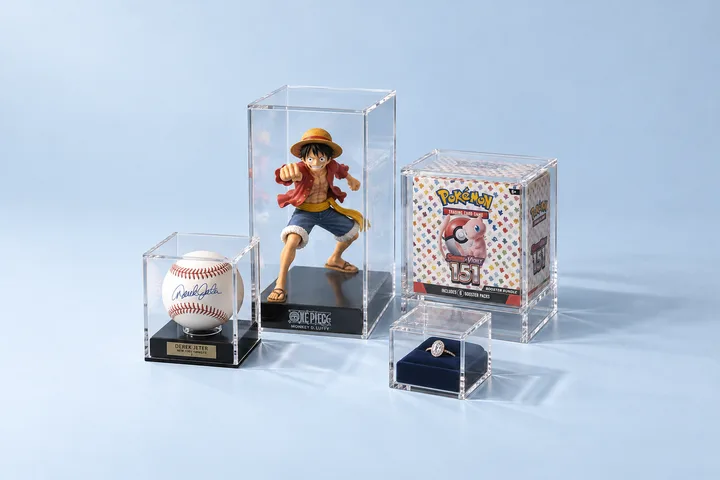
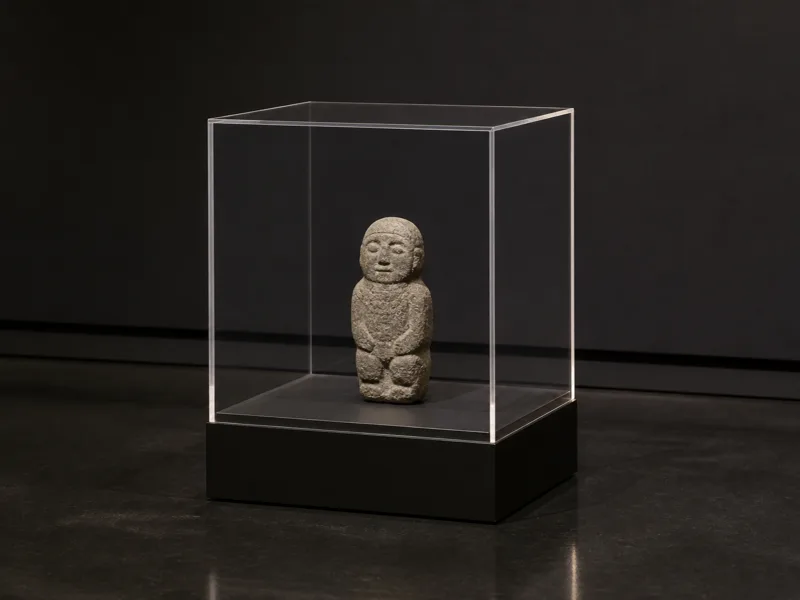
A museum display case is a protective enclosure — vitrine, plinth, or wall case — that holds an object on view while controlling the light, air, and handling reaching it. Acrylic is specified for it because UV-filtering cast PMMA blocks about 90–98% of incoming ultraviolet, weighs roughly half of laminated glass at the same panel size, and will not shatter into the case interior. Wetop Acrylic manufactures custom acrylic museum cases, traveling-exhibit builds, pedestals, object mounts, and label systems for museums, galleries, archives, and exhibit fabricators worldwide.
18+ Years Manufacturing · 2,000+ Custom Projects · ISO 9001 Certified · Samples in 3–5 Days
Why Museums Specify Acrylic
Museums specify acrylic because UV-filtering cast PMMA blocks roughly 90–98% of ultraviolet where standard clear sheet transmits about 55%, at around half the mass of laminated glass. We build custom museum cases and mounts at a 100-piece MOQ per design, samples in 3–5 days and production in 15–20 days.
Three things separate a museum case from a retail one. The glazing has to hold a UV number a conservator can check, not a claim on a brochure. The interior has to be inert — the sheet is rarely the problem, but the adhesives, gaskets, felts, and paints inside the case are where off-gassing failures start, which is why conservation teams ask for Oddy-tested components rather than a material label. And the joints have to seal, either as a plain dust seal or as a microclimate enclosure with a conditioning chamber, because those are two different builds at two very different prices.
A UV Number, Not a Label
Conservation practice keeps UV at the object under 75 microwatts per lumen. Standard clear acrylic transmits about 55% of incoming UV and never gets there; UV-filtering cast grade blocks roughly 90–98%. The grade is the spec line that matters.
Sealed Means Two Different Things
A dust seal keeps particulate out. A microclimate case adds a concealed chamber for silica gel that your team conditions and swaps. Both get called “sealed” in quotes, so we write which one we are building into the spec before we price it.
The Road Is Part of the Spec
A touring case gets handled at every venue by a crew that has never seen it. Keyed joints, captive hardware, and foam-molded crates are what make venue four look like venue one — so we quote crating with the case, not after it.
What We Build for Museums and Galleries
The six acrylic formats museum and gallery projects order most — enclosures, supports, and the interpretation hardware around them.

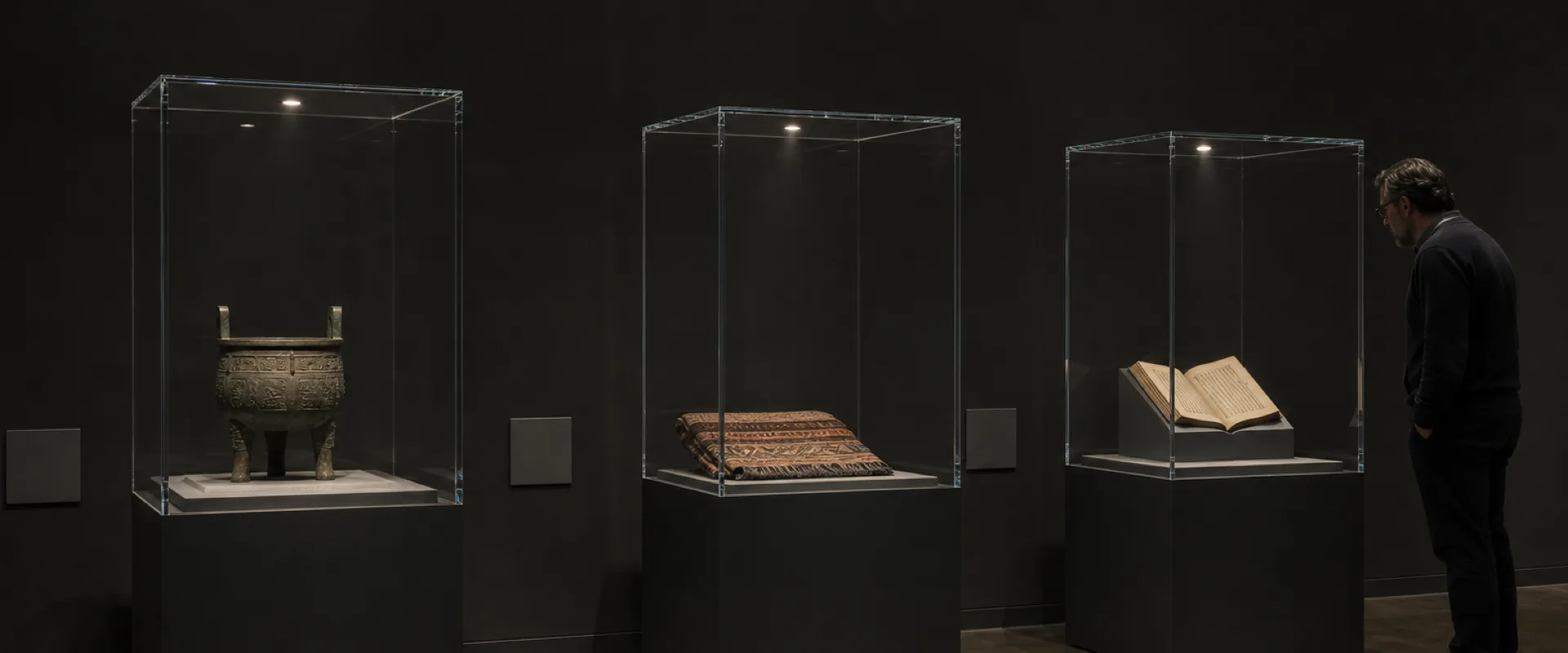
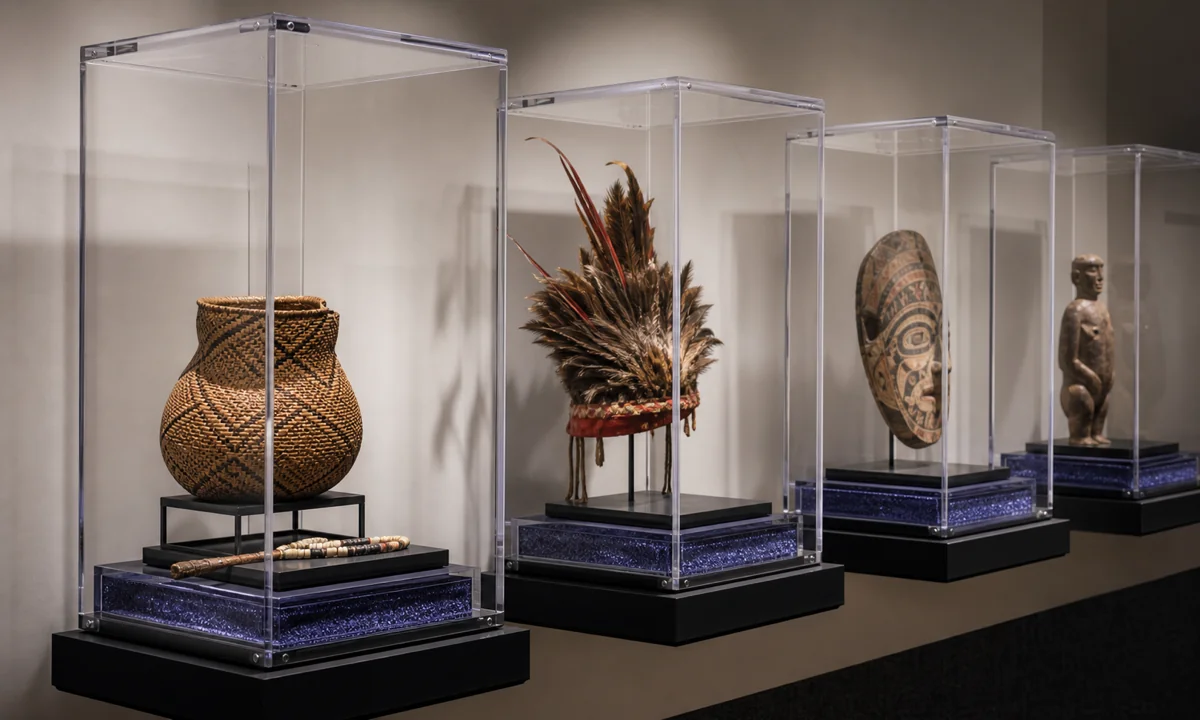
Acrylic Display Cases
Bonded five-sided bonnets on sealed bases — the core artifact vitrine. Dust-sealed or microclimate-ready, with UV-filtering grade specified per object sensitivity.
View Acrylic Cases →
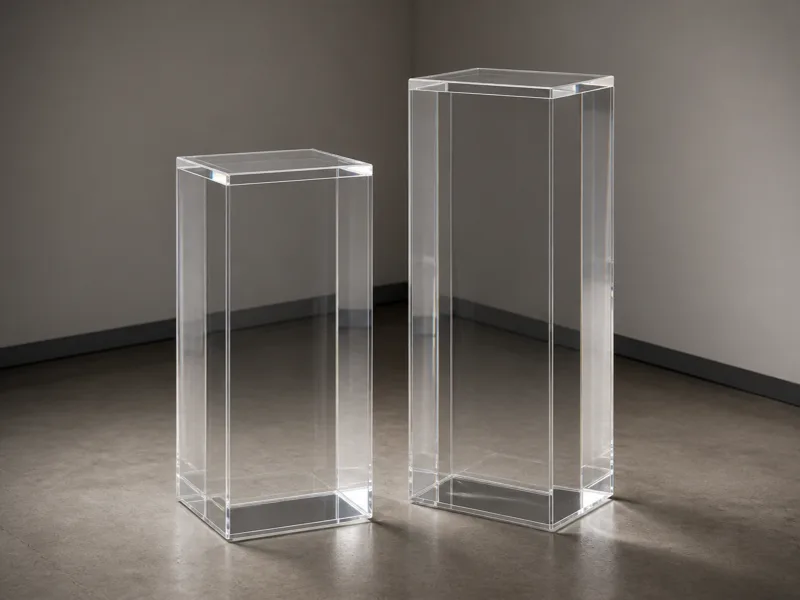
Acrylic Display Pedestals
Clear plinths and columns that carry a single object at viewing height. Built in matched heights so a room of pedestals reads as one system rather than a collection of one-offs.
View Display Pedestals →
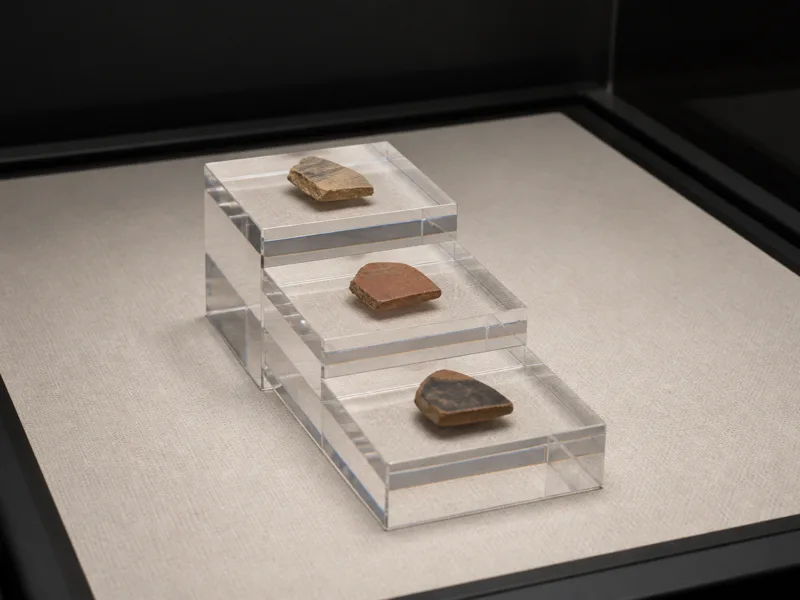
Acrylic Risers & Mounts
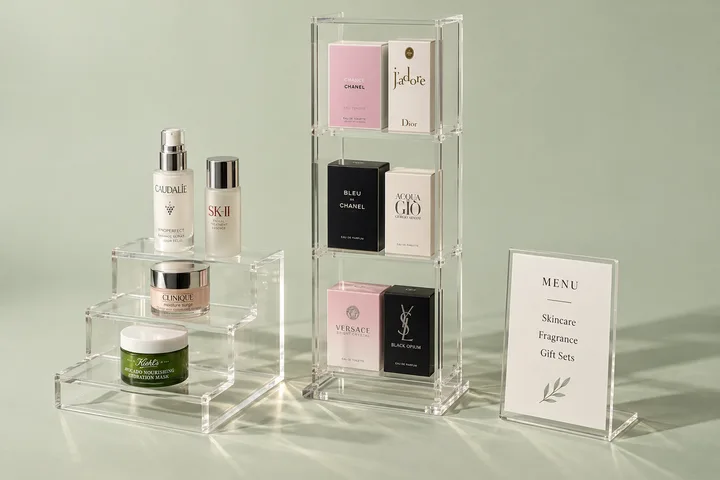
Step risers, cradles, and object supports cut to the piece they carry. Adhesive-free mounting keeps nothing bonded to the object and nothing off-gassing beside it.
View Acrylic Risers →
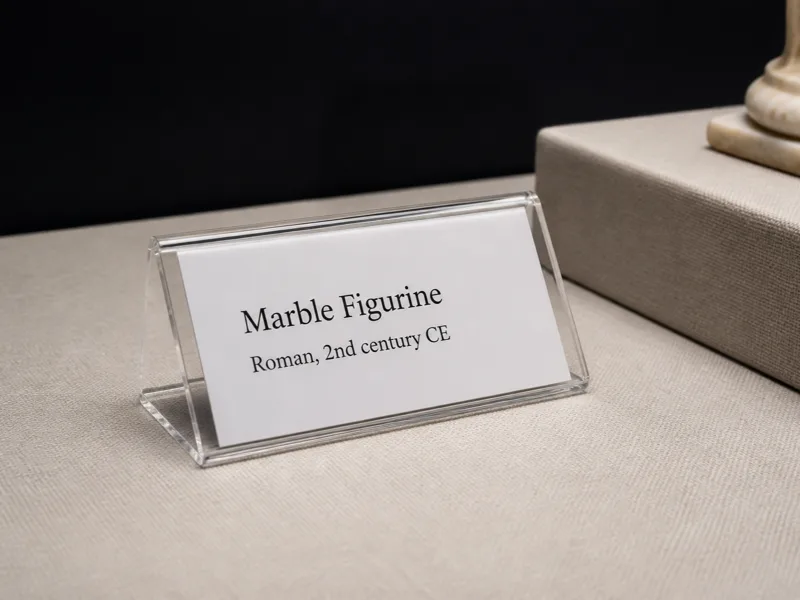
Acrylic Label & Sign Holders
Angled deck labels, rail cards, and freestanding interpretive panels. Consistent sizing across a gallery keeps the label system invisible and the reading distance predictable.
View Sign Holders →
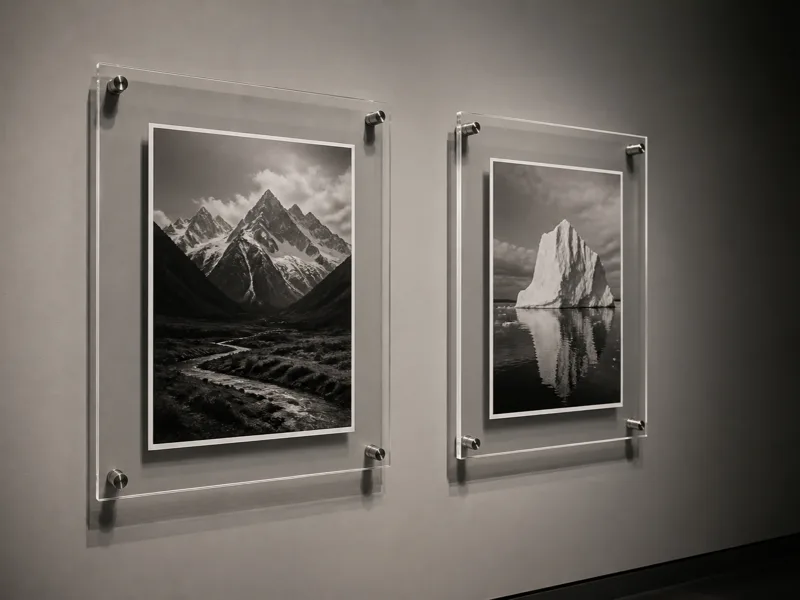
Acrylic Standoff Frames
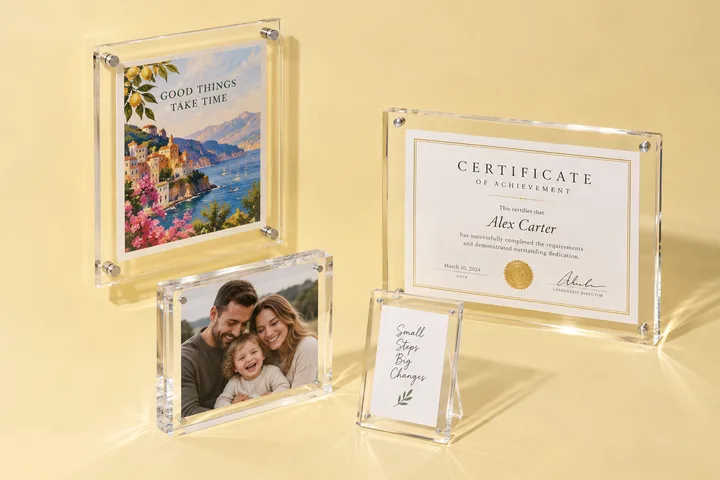
Frameless clear panels on polished standoff barrels for prints, documents, and archival photography — the format galleries use when the frame should not compete with the work.
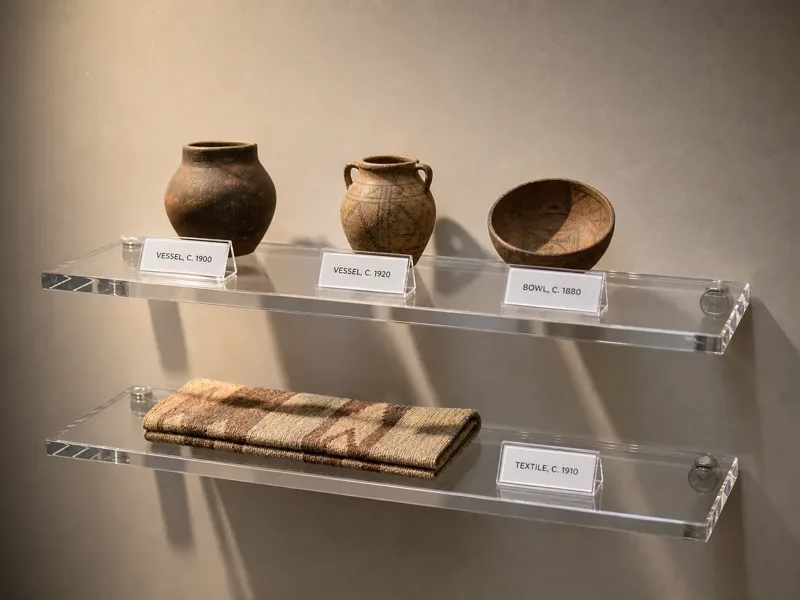
View Acrylic Frames →Acrylic Wall Shelves
Near-invisible wall shelves for open study-collection and visible-storage galleries, where the density of objects on view matters more than enclosure.
View Acrylic Shelves →Three Museum Display Scenarios
Permanent-Collection Artifact Vitrines

A permanent vitrine is built once and lives in the gallery for decades, so the decisions that matter are glazing grade, seam quality, and whether the base carries a conditioning chamber. We bond five-sided bonnets from UV-filtering cast acrylic and seat them on a sealed base, with the object carried on adhesive-free acrylic mounts cut to the piece.
Fixed installs also get heavier base mass for floor stability and, where the object list justifies it, a larger conditioning cassette to stretch the interval between scheduled re-conditioning. For oversized objects the enclosure moves out of standard sizes entirely — see our large acrylic display cases and, where the gallery is open-access, the lockable case build.
Traveling Exhibits Across Multiple Venues

A touring case is judged on repeatability. It has to come apart, ride a truck, and go back together the same way at every stop, usually by venue staff working from a printed sheet. We build them dismountable with keyed joints that only assemble one way, captive or bagged hardware, and gasket surfaces specified for repeated assembly rather than a single install.
Crating is quoted with the case. On the 8-case archival build for a 4-month, 6-venue regional museum tour, custom foam molds carried all eight cases through four long-haul truck legs with zero in-transit damage, and the silica-gel cassettes were swapped in a single afternoon mid-tour.
Interactive & Interpretation Displays

Learning galleries and interpretation spaces need the opposite of a sealed vitrine: open plinths, handling trays, and reading surfaces that survive being touched all day. Here acrylic earns its place on weight and safety rather than conservation — a clear acrylic pedestal can be repositioned by one person and will not shatter if a visitor knocks it.
The interpretation hardware travels with it: angled deck labels and rail cards in matched acrylic label holders, and wall-mounted standoff frames for archival prints and documents alongside the objects.
Museum and Gallery Projects From Our Factory
Institutional display projects built at our Shenzhen facility.
8 Archival Acrylic Cases for a 4-Month, 6-Venue Museum Tour
8 cases · UV transmission below 5% · AR coating · climate-sealed base · 30-day production
“We came in expecting laminated glass and walked out with a better case at lower weight. Eight cases, four months, six venues, zero damage.”
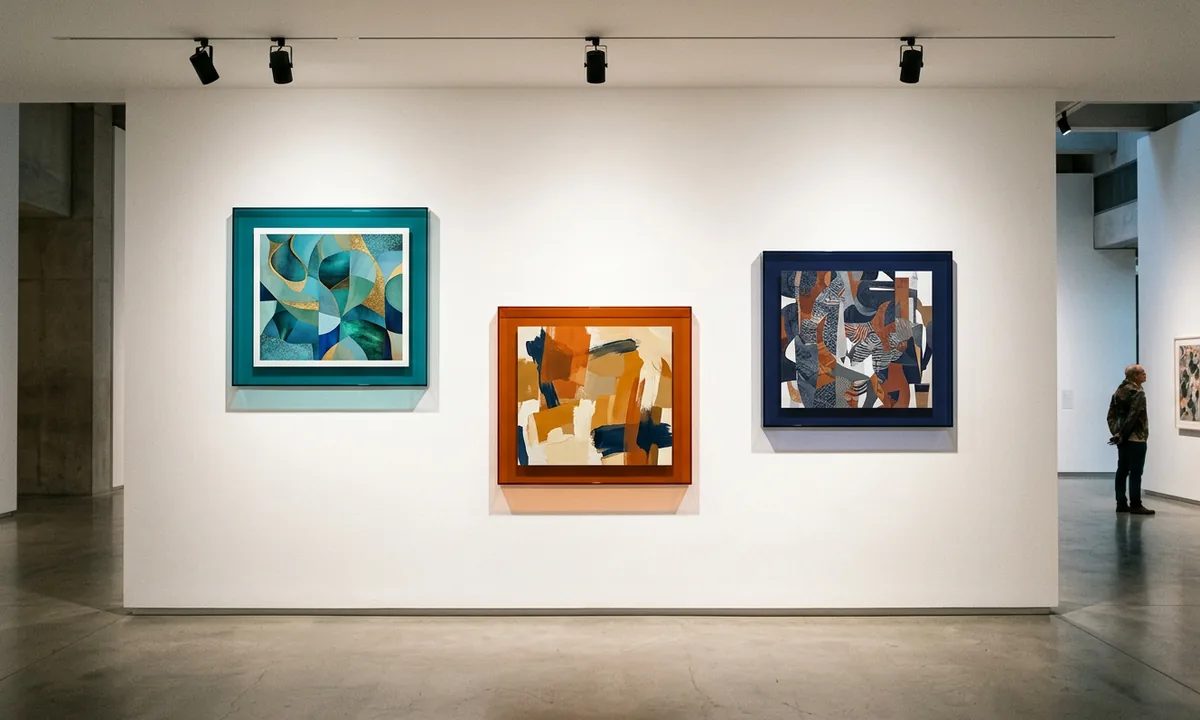
420 Colored Acrylic Standoff Frames for a Contemporary Art Network
420 units · colored acrylic with standoff mounts · 22-day production
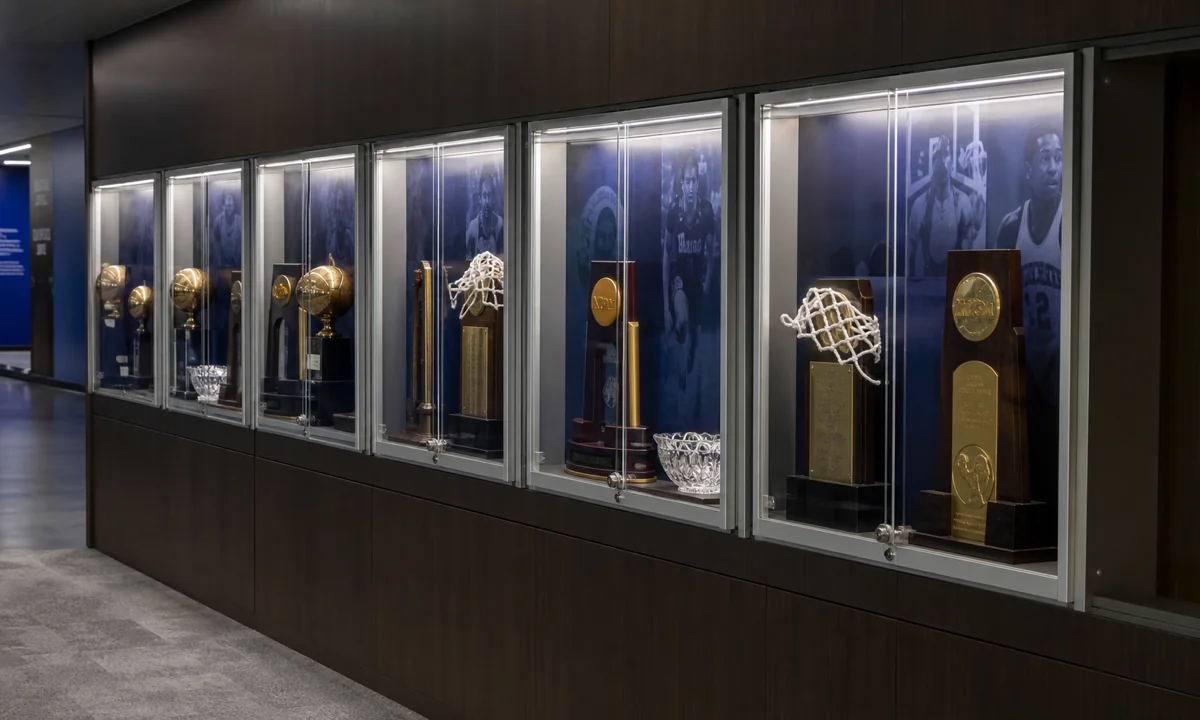
8 Locking Display Cases for a University Athletics Hall
8 locking cases · UV-protected glazing · custom interior fittings · 30-day production
Have a similar project?
Send Us Your SpecWho Orders Custom Museum Display Cases?

Curators & Registrars
Writing the case spec, checking it against conservation requirements, and signing off before install.

Regional & Municipal Museums
Fitting out permanent galleries on a fixed capital budget, usually without an in-house fabrication shop.

Traveling Exhibit Producers
Sourcing dismountable cases that reassemble identically at every venue on the tour.

Galleries & Art Spaces
Specifying plinths, vitrines, and standoff frames that stay visually quiet behind the work.

Exhibit Design & Fabrication Firms
Ordering acrylic case components and mounts to drawing as part of a larger build package.
How to Order Museum Display Cases
From your conservator’s spec sheet to delivered cases — 3 steps.
Send Us the Object List and Spec
Object dimensions and sensitivity class, gallery lighting, dust seal or microclimate base, mount requirements, and the venue list if the exhibit travels. Drawings help; a dimensioned sketch and photographs are enough to start.
We respond within 24 hoursApprove a Sample
We build a physical sample so you can check optical clarity, seam quality, seal fit, and how the mount seats against a real object or a stand-in. Request adjustments and we revise until the sample matches the spec.
Sample ready in 3–5 daysProduction & Delivery
The approved sample becomes the production reference and every unit is inspected against it — not spot checks, every single piece. Crating is built to the case. FOB Shenzhen, CIF, or DDP available.
Production in 15–20 daysFrequently Asked Questions
How much UV protection does a museum display case need?
Conservation practice keeps ultraviolet at the object below 75 microwatts per lumen. Standard clear acrylic transmits roughly 55% of incoming UV, so it does not get you there on its own; UV-filtering cast acrylic blocks about 90–98% and brings normal gallery and window light under the line. For sensitive paper, dyed textile, and photographic material, curators typically write a tighter number into the RFQ — the 8-case traveling exhibit we built specified UV transmission below 5% across the 380–400nm band. Tell us the sensitivity class and we quote the grade that meets it.
Is a sealed acrylic case the same as a climate-controlled case?
No, and the price difference is large enough that the distinction belongs in your RFQ. A dust-sealed case uses a gasketed joint to keep particulate and casual air exchange out — that is what most quotes mean by "sealed." A microclimate case adds a concealed conditioning chamber sized for silica gel, which your conservation team pre-conditions and swaps on a schedule. On the traveling exhibit we built, a replaceable silica-gel cassette in the sealed base held 45–55% RH for 8–12 weeks between swaps. Specify which one you need and we quote accordingly.
Can you build cases that travel between venues?
Yes. A traveling-exhibit case is a different build from a permanent vitrine: dismountable construction with keyed joints that only assemble one way, captive or bagged hardware, gasket surfaces that survive repeated assembly, and foam-molded crates cut for each case. The test is repeatability — venue four should get the same case as venue one, assembled by a different crew with no fabricator on site. We quote crating with the case rather than as a logistics afterthought.
Why specify acrylic instead of laminated glass for a museum case?
Against laminated glass with a UV interlayer, cast acrylic reaches comparable UV performance at roughly half the panel mass, which changes crate weight, install handling, and what venue staff can move without rigging. Acrylic also will not shatter into the case interior. Glass keeps two real advantages — surface hardness and abrasion resistance — so a high-traffic touchable case is a fair place to prefer it. For traveling work and for anything a small crew installs, we usually recommend acrylic.
What do you need from us to quote a museum case?
Object dimensions and sensitivity class, gallery lighting conditions, whether you need a dust seal or a microclimate base, mount requirements, and the venue list if the exhibit travels. Drawings help but are not required — a dimensioned sketch and photographs are enough to start. We come back within 24 hours with a layer-by-layer recommendation and a quote, then build a physical sample in 3–5 days for you to check clarity, seam quality, and fit against a real object or a stand-in.
Do you handle shipping and customs to a museum address?
We quote FOB Shenzhen by default and can also quote CIF or DDP to your door. DDP is the usual choice for institutional buyers because it puts freight, duty, and customs clearance into one number your finance office can approve without a broker relationship. Payment terms are 30% deposit and 70% before shipment, by T/T, PayPal, or Western Union.
What are your MOQ and lead times for museum work?
MOQ is 100 pieces per design, which fits mount hardware, label holders, risers, and case components ordered as a set. For large one-off vitrines, send us the object list and we will tell you honestly whether your scope suits us. Samples ship in 3–5 days and standard production runs 15–20 days; the 8-case traveling exhibit took 30 days because a parallel chamber test sat inside the schedule.
Quote Your Museum Case Program in 24 Hours
Send us the object list, sensitivity class, and venue schedule. We come back with a layer-by-layer recommendation and a quote that includes crating from day one.
Museum and gallery case studies
Institutional display programs we've shipped — the spec work and rollout model behind museum, gallery, and campus projects.

UV-protected acrylic cases, regional museum traveling exhibit
8 archival cases for a 4-month, 6-venue tour — UV-grade PMMA, AR coating, climate-sealed base, zero in-transit damage.
Read the case study →
Colored acrylic standoff frames, contemporary art network
420 colored acrylic frames on standoff mounts, produced in 22 days for a multi-space gallery network.
Read the case study →
Locking acrylic display cases, university athletics hall
8 locking cases with UV-protected glazing and custom interior fittings for a campus hall renovation.
Read the case study →