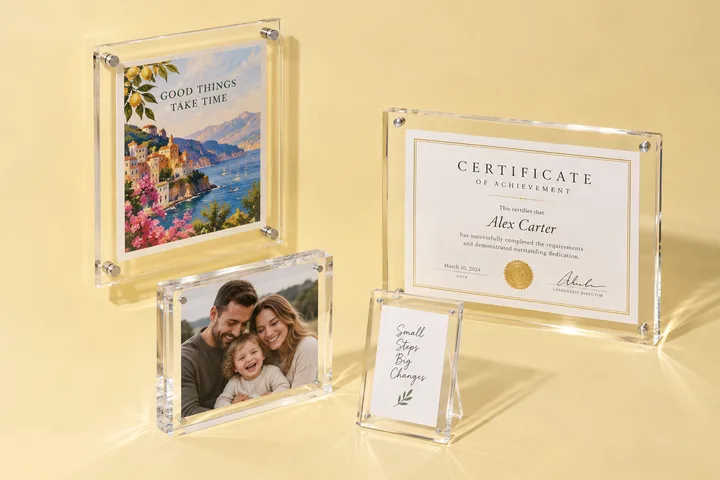
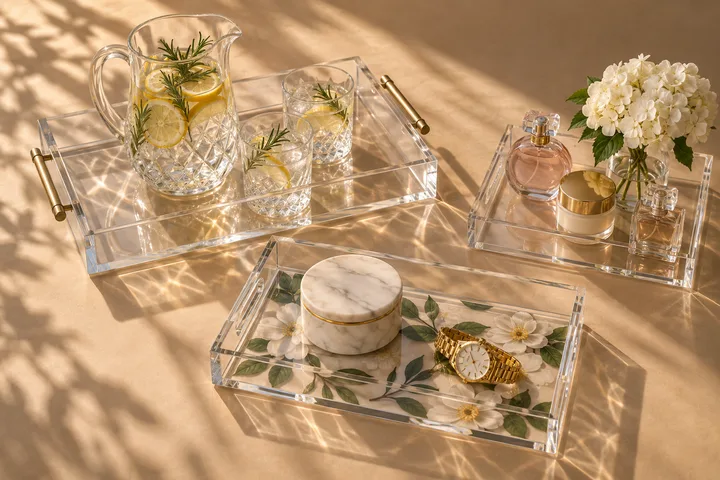
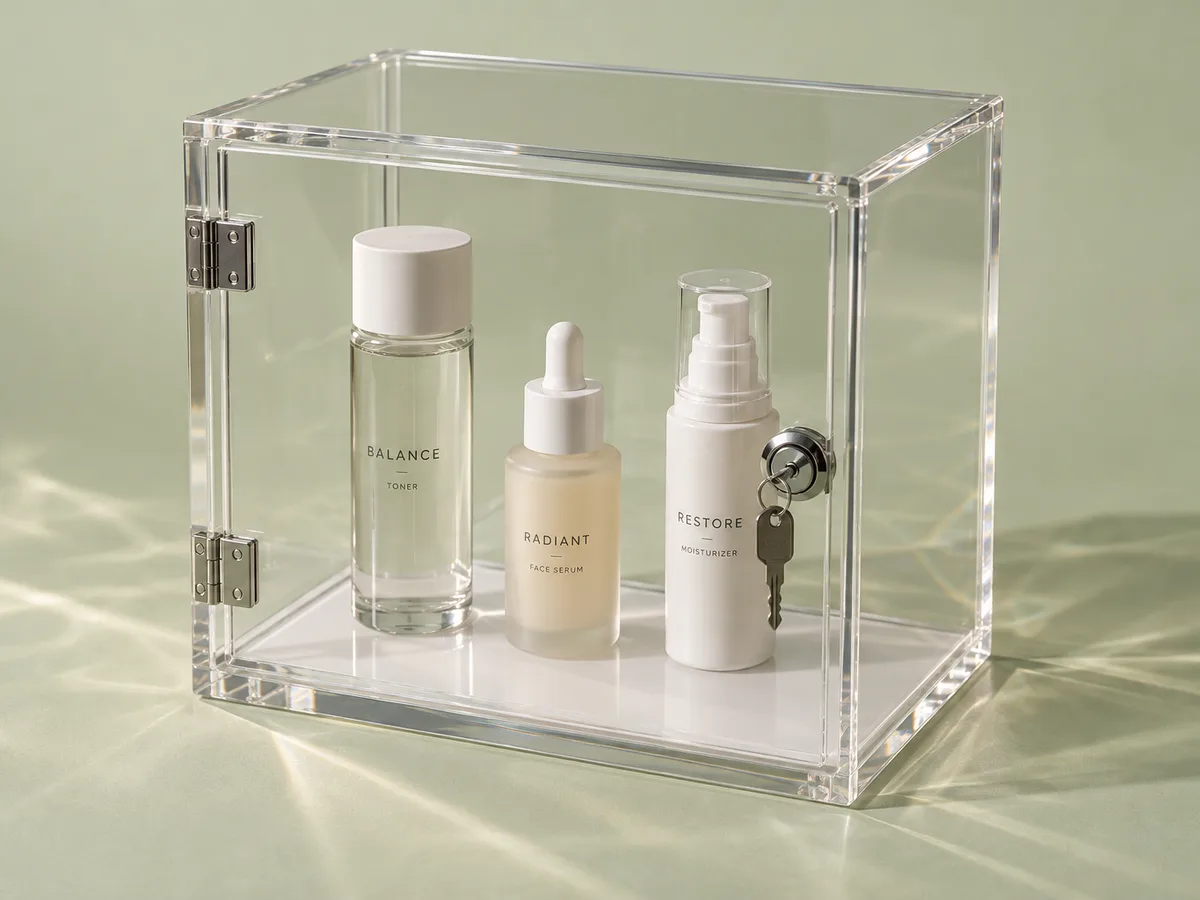
Countertop display cases
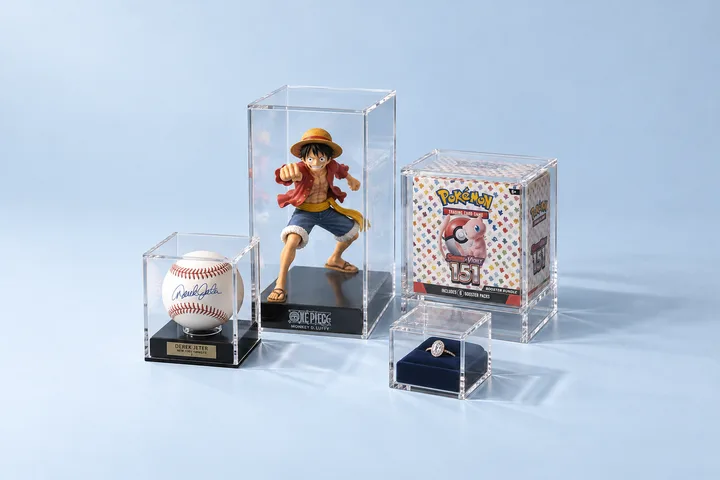
Portable cases over the hero product — visible from every angle, out of reach of passing hands. Bonded or knock-down for flat shipping.
150 × 100 × 100 mm case: from $6–12 at 500 pcs
We manufacture portable acrylic trade show display cases, risers, sign holders, pedestals and giveaway blocks for exhibitors, from 100 pieces per design — scheduled back from your show date.
ISO 9001 · Manufacturing since 2008 · 2,000+ custom projects · Quote reply within 24 hours
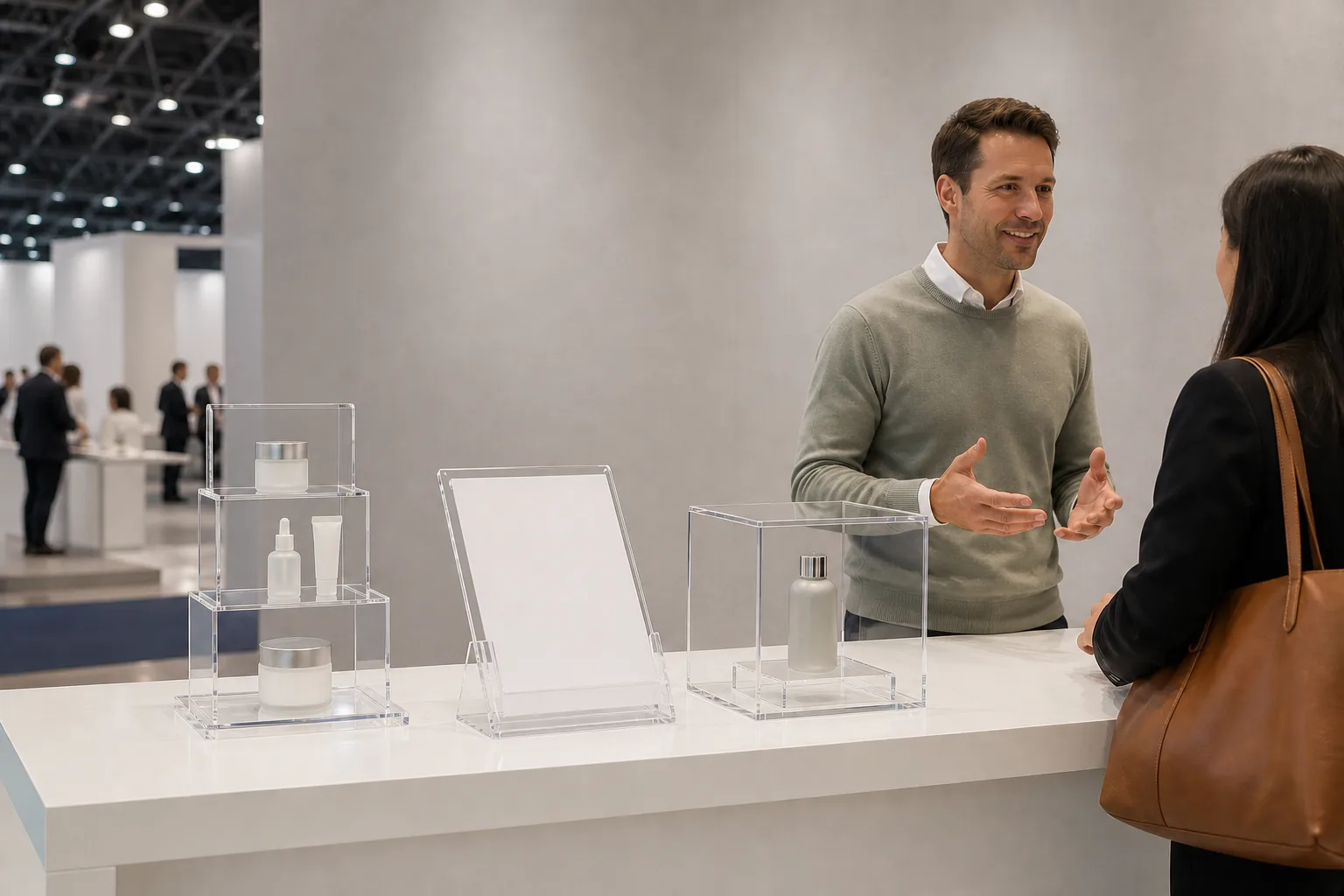
The counter kit that does the selling, plus the giveaway that leaves with the prospect. Built as a matched set — same wall thickness and edge finish on every piece.
Portable cases over the hero product — visible from every angle, out of reach of passing hands. Bonded or knock-down for flat shipping.
150 × 100 × 100 mm case: from $6–12 at 500 pcs
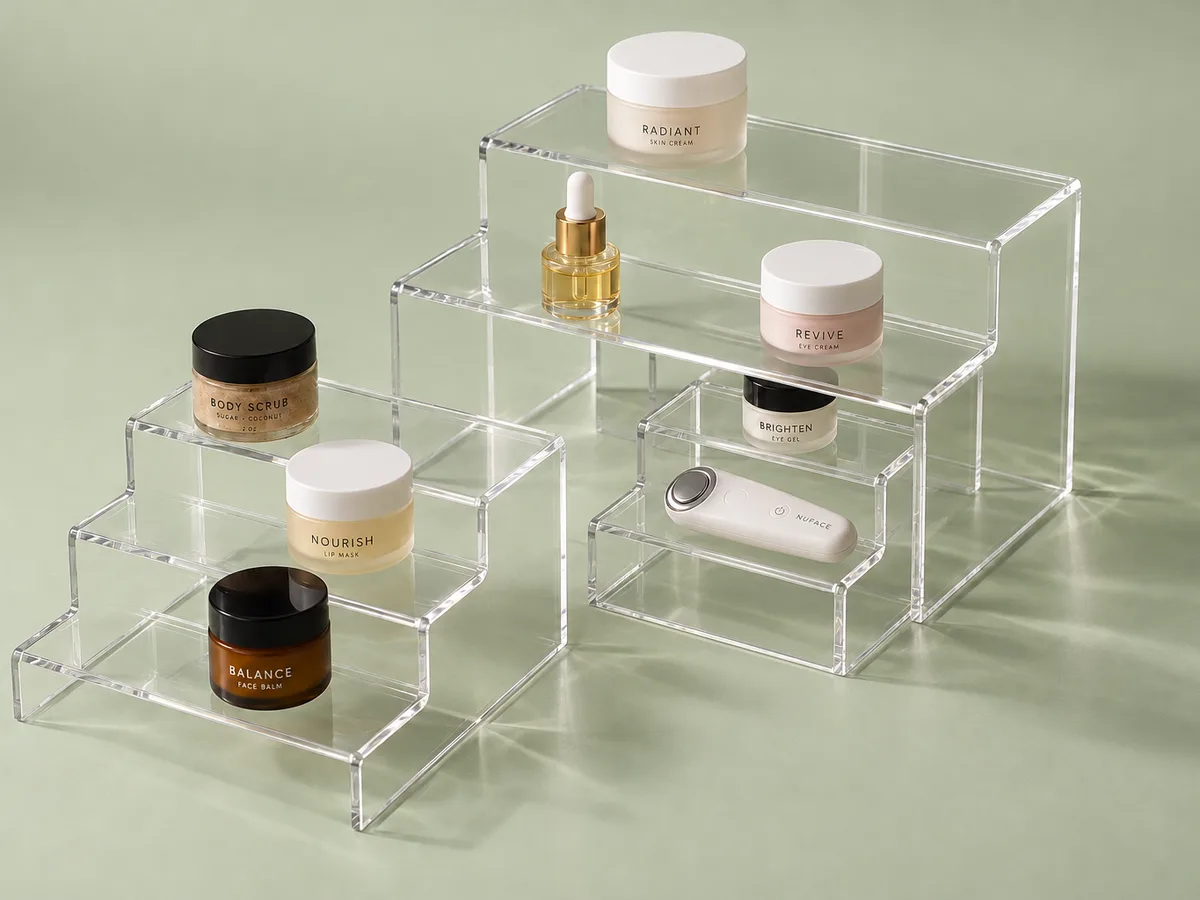
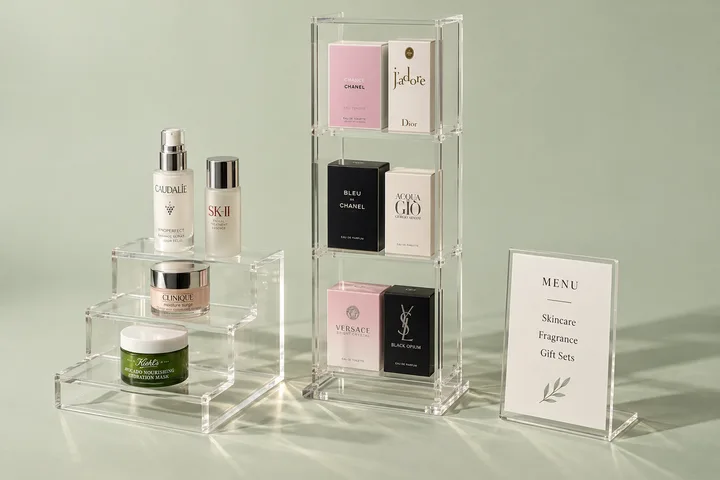
Tiered, nesting risers that lift samples off a flat counter so a visitor reads the whole range in one glance.
Two-tier countertop stand: $28 each at 100 pcs
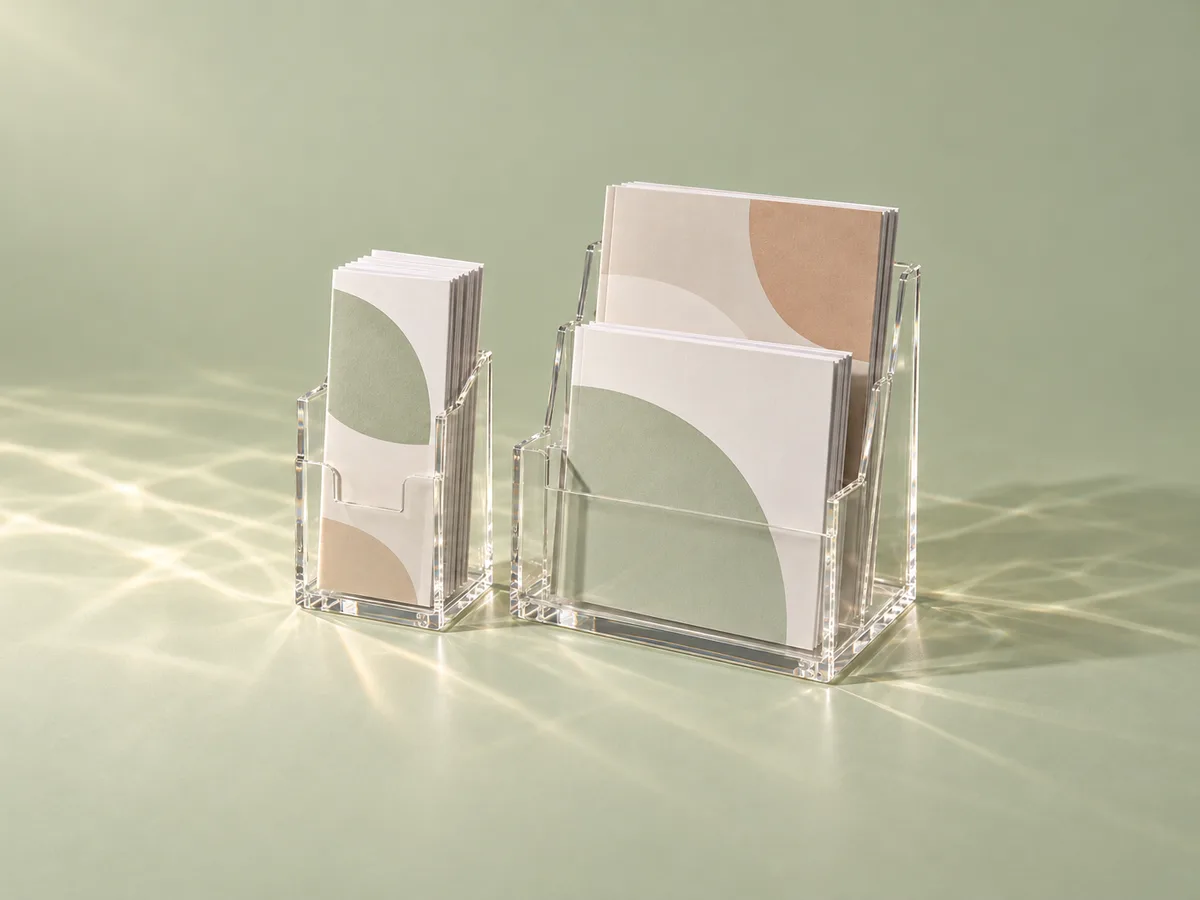
Slanted A4, A5, and DL holders that keep spec sheets and catalogs upright instead of curling in a stack by day one.
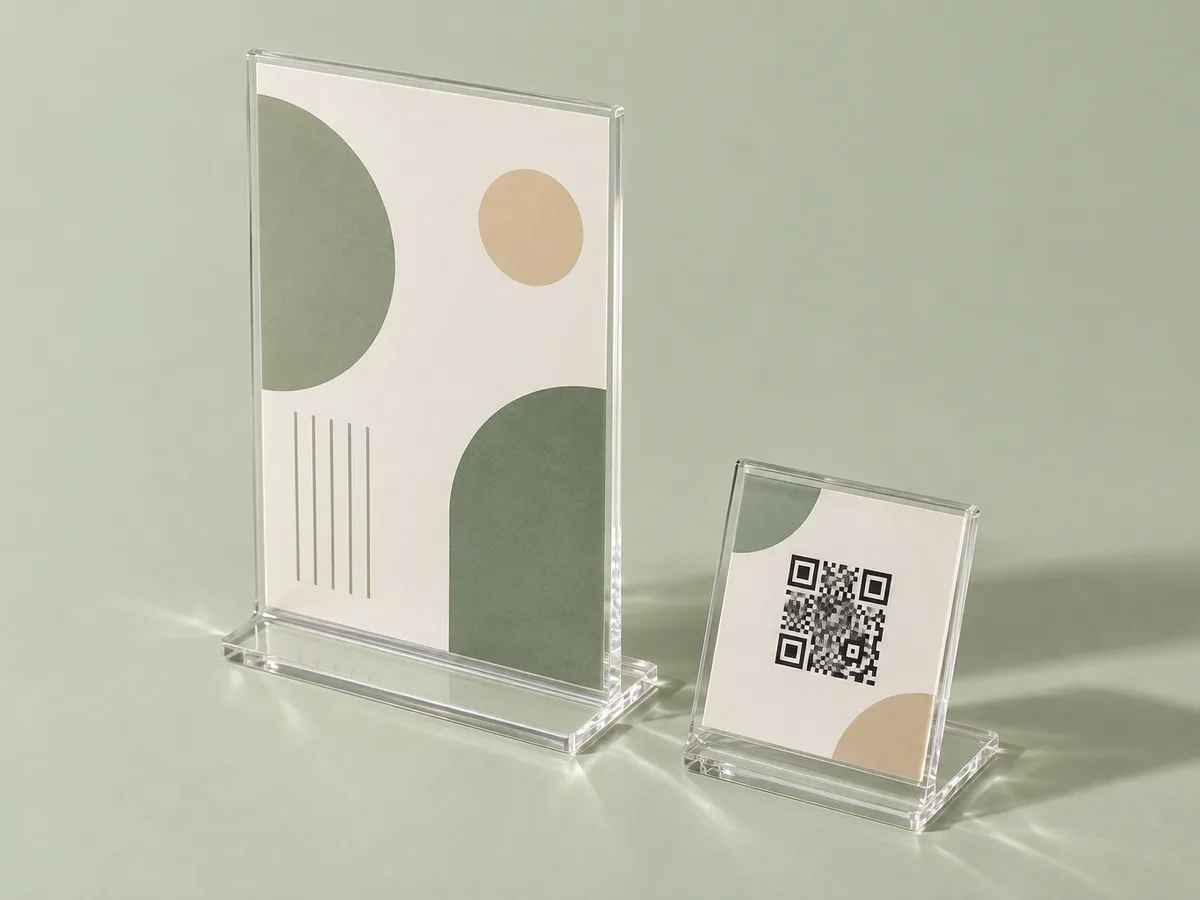
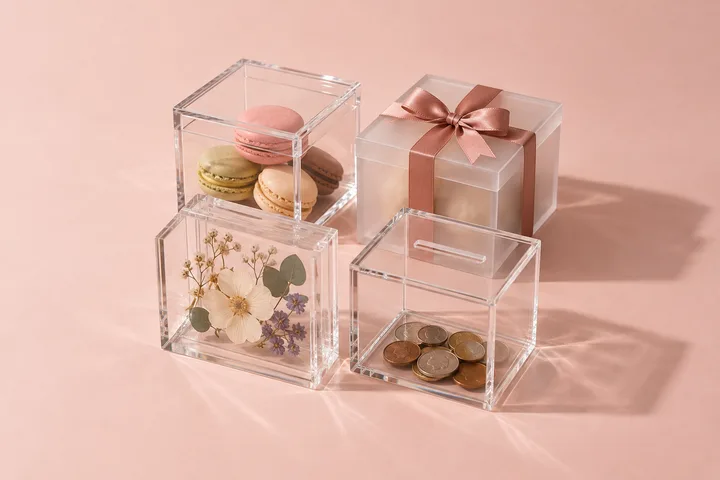
Counter and tabletop holders for pricing, show offers, and QR codes; graphics swap between shows without replacing the holder.
A5 slant-back holder: $6.80 each at 100 pcs
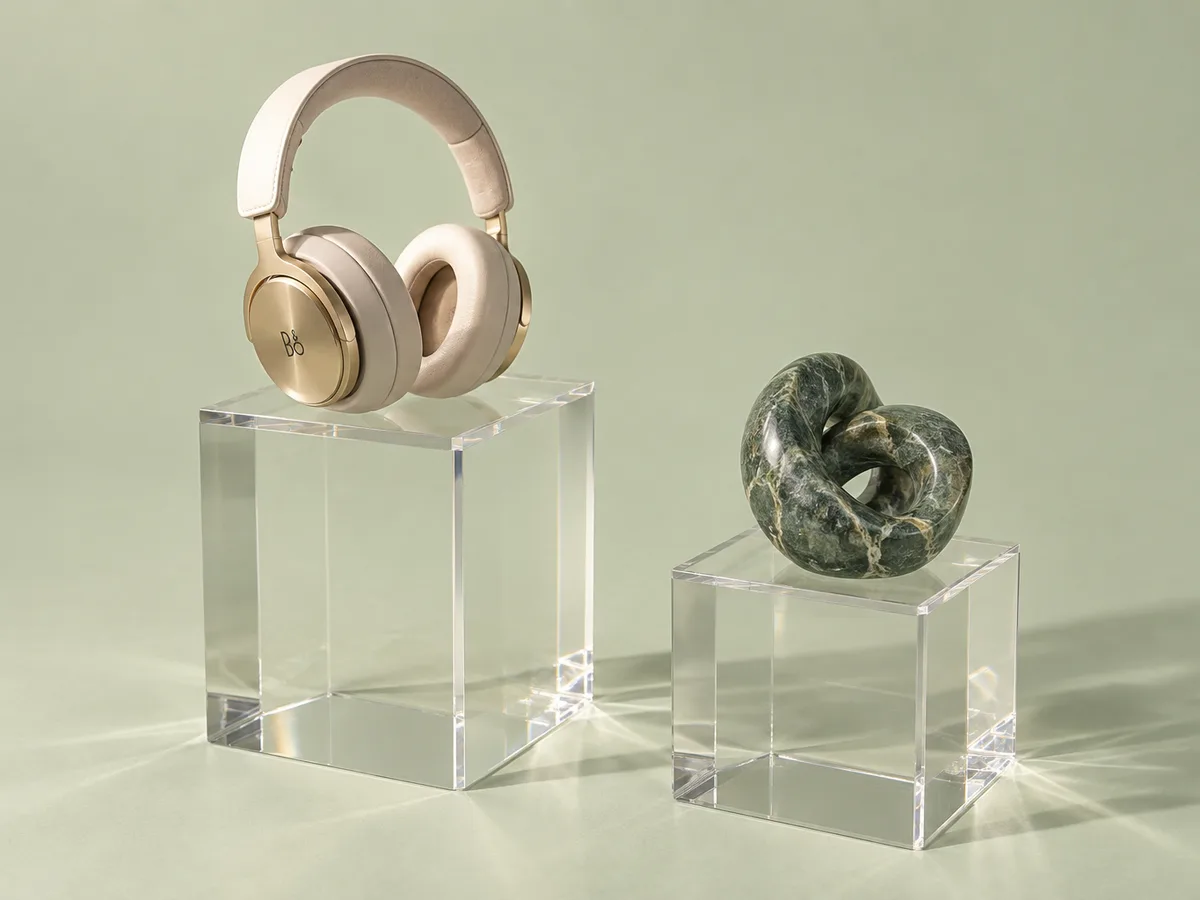
Freestanding pedestals for a launch product at the booth entrance where aisle traffic turns in; knock-down for repeat travel.
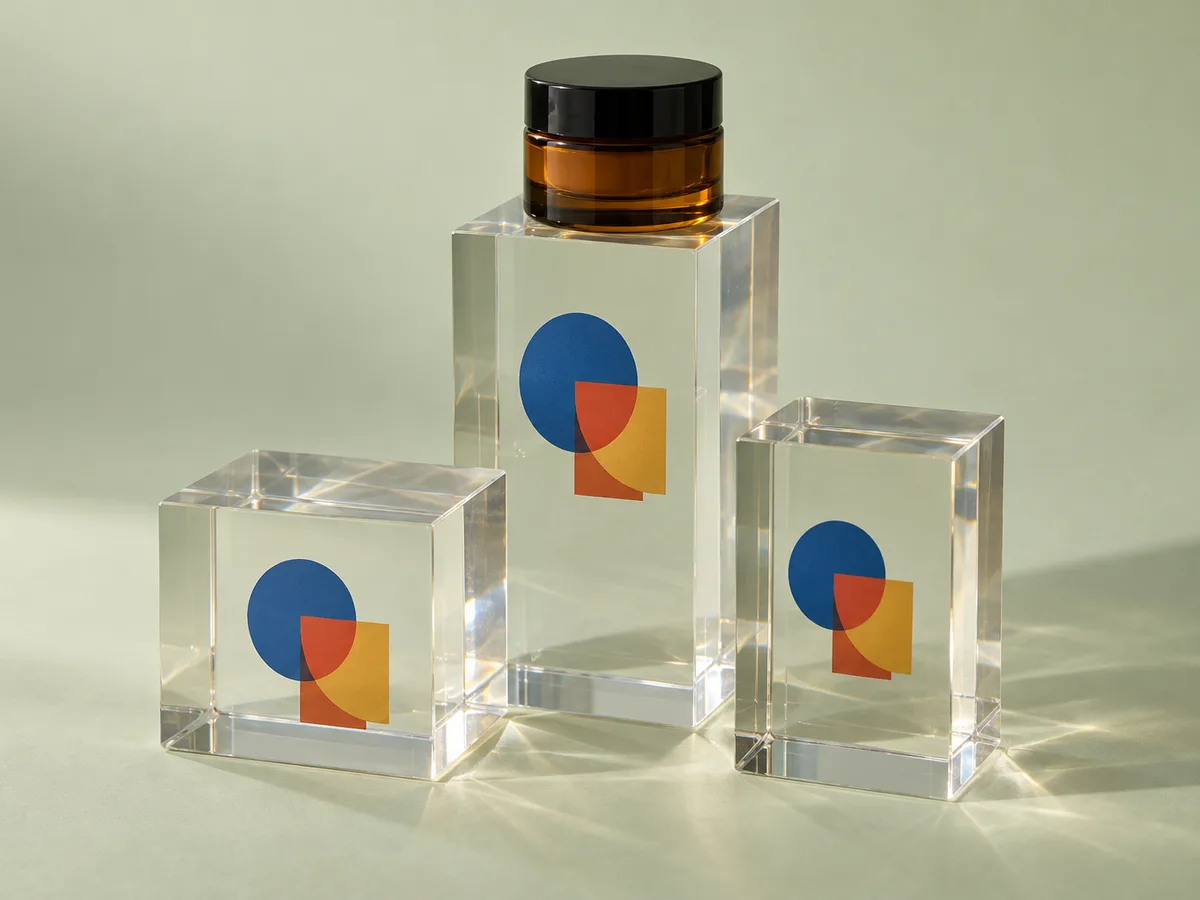
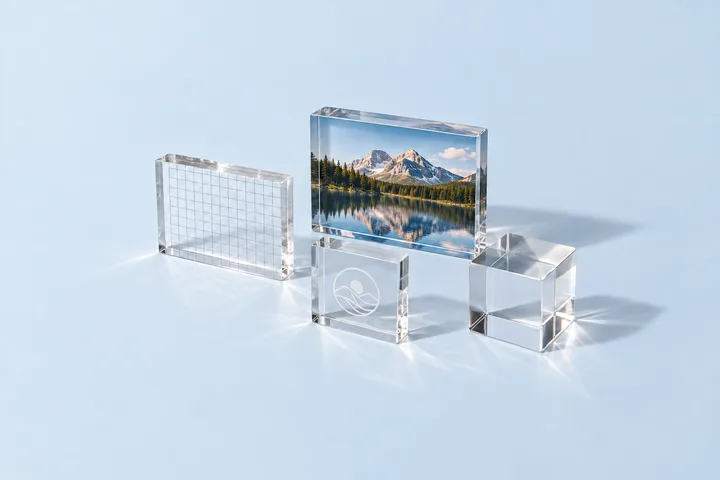
UV-printed and laser-engraved giveaway blocks for booth tables, tiered by thickness for booth walkers, qualified leads, and VIP meetings.
100 × 60 × 20 mm logo block, UV print: $12 each at 100 pcs
Displaying something valuable enough to lock down overnight? Lockable display cases take cam-lock or tubular hardware in the same format. For a modular booth, we cut shelves, panels, and case bodies to your exhibit house's openings. Prices are published FOB Shenzhen references for the named specification.
Fixed-date orders we delivered, shown anonymized with the figures published on each project page.
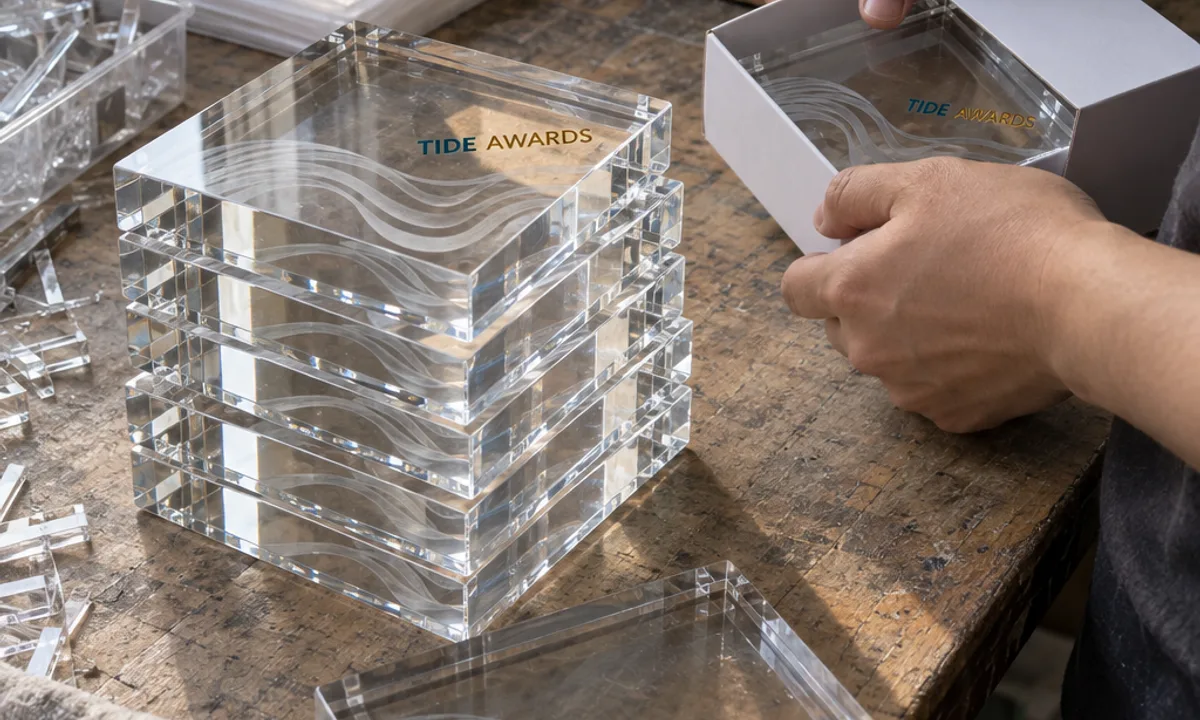
Delivered order
Blanks were cut before the mockup was approved and cartons flew expedited air to hold an event agency's date.
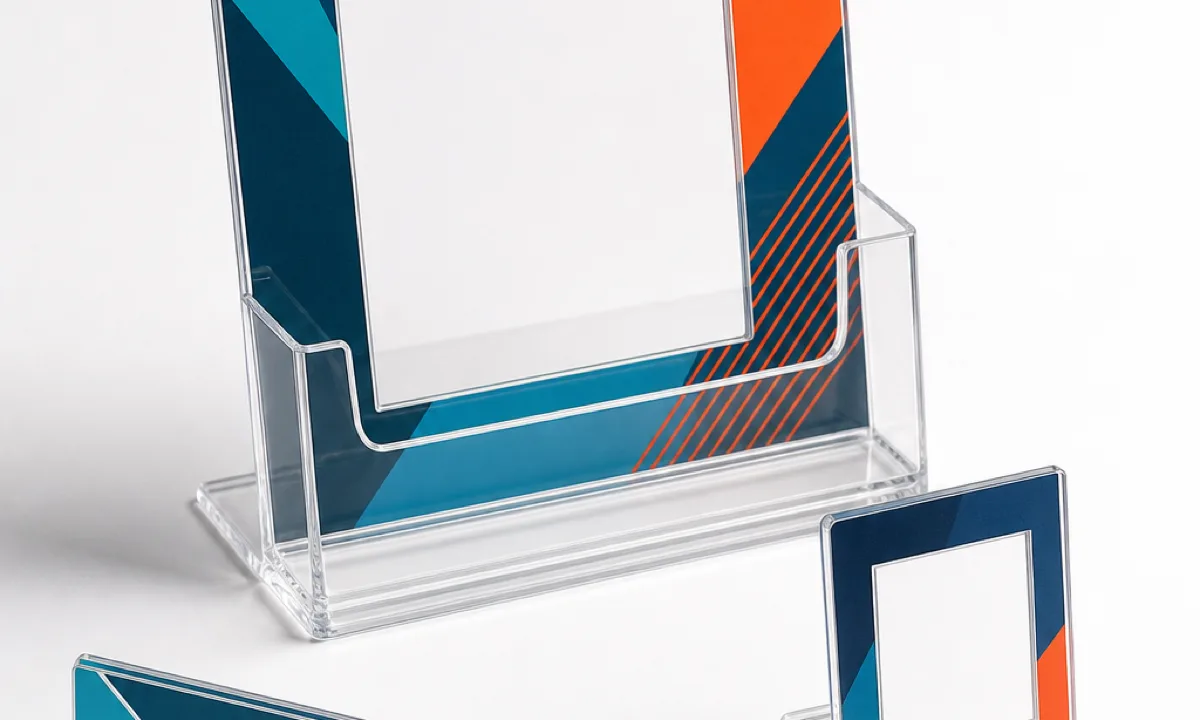
Delivered order
One approved sample kit covered three markets, packed and labeled per market — the same matched-kit discipline a multi-show booth program needs.
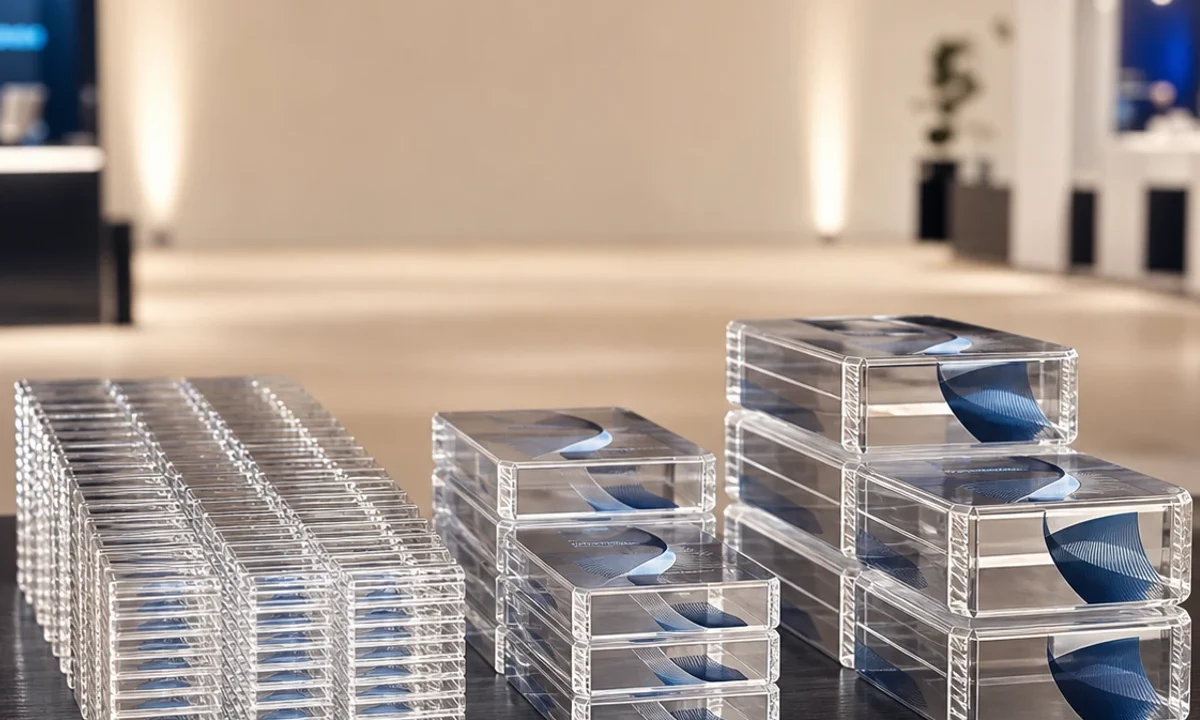
Delivered order
Tier quantities, foam-grid capacity, case count, and freight mode approved before the show date was committed.
Another fixed-date order we delivered: 50 custom sets in 14 days for a trade show launch.
Exhibitors use acrylic because a booth fixture must do three things: present product cleanly under show lighting, survive repeated packing and shipping, and go back together on the floor in minutes. For a fixed show date, work backward from booth setup through customs clearance, packing, production, and sample approval — our production process page sets out those gates.
Weight comes straight from the material. Cast acrylic is 1.19 g/cm³ against roughly 2.5 g/cm³ for glass, so at the same dimensions and the same wall thickness an acrylic case runs about half the weight of the glass equivalent. A 300 × 200 × 250 mm five-sided cover in 3 mm acrylic works out to roughly 1.1 kg; add a 5 mm base and the finished case is about 1.5 kg, or 3.3 lb. We ship kits in foam-grid cases cut to the fixture profile — sized so booth staff can move them in standard roller luggage where the piece count allows, or palletized for larger programs. Air freight is available when the show date is tight.
Tell us which you want and we build to it. Small cases, risers, and literature holders ship bonded and one-piece — the crew unpacks them and sets them down. Larger cases, pedestals, and anything that will not fit a shipping case at full size ship knock-down: pre-drilled panels with captive hardware, assembled with a hex key in a few minutes per unit, no adhesives and no solvent on site. Every knock-down design is test-assembled at our factory as part of 100% pre-shipment inspection, and we include an assembly guide with the shipment.
Reuse is what we build for, and it is why we put branding into the acrylic rather than on it. UV printing, silk-screen, hot stamping, and laser engraving all survive repeated packing and unpacking; applied vinyl lifts at the corners after a few shows. Acrylic scratches more easily than glass, so for kits that travel a full season we specify thicker walls, radiused corners, and foam-grid cases cut to the fixture profile rather than loose cartons. If you run a full show calendar, order a few spares in the same production run — a spare made alongside the original costs far less than a rush reorder mid-season, and it matches, because it came off the same tooling.
Yes. We produce every kit against one approved physical sample, so a program covering ten regional shows gets the same dimensions, the same edge finish, and the same print registration in every crate. We can ship in batches timed to your show calendar instead of all at once, which keeps kits out of your warehouse until you need them. Send the calendar with your first inquiry and we confirm feasibility within 24 hours.
We quote FOB Shenzhen by default and can also quote CIF or DDP. For trade shows we usually recommend shipping to your advance warehouse or an office address rather than direct to the venue — show-site receiving windows are narrow and drayage is billed by the venue's general contractor, not by us, so a direct-to-venue delivery adds cost and risk you cannot control. Give us the deadline and the receiving address and we schedule production and freight backward from it.
Either works. If you have CAD, send it — we accept DWG, DXF, STEP, and PDF, and our engineering team returns a production drawing for sign-off before anything is cut. If you have a sketch, a reference photo, or simply the product you need to display plus the counter dimensions, that is enough to start; we draw it and you approve the drawing. Nothing is cut until a drawing is approved, and nothing goes into bulk production until you have approved a physical sample.
No. We manufacture the acrylic display components that go inside a booth — display cases, counter risers, literature and sign holders, pedestals, and giveaway blocks. We do not engineer or erect booth structures, aluminum framing, truss, lighting rigs, or the modular wall systems those parts mount onto, and we do not certify load ratings on another supplier's frame. Most exhibitors buy the structure from their exhibit house and the acrylic from us. If your exhibit house sends the extrusion profile and the opening dimensions, we cut and finish acrylic panels to fit that system.
MOQ is 100 pieces per design. Paid samples take 3–5 days, are paid separately and are never credited; production runs 15–20 days, so a standard schedule needs roughly four weeks from approved sample to ex-factory, before freight. A tiered branded-giveaway project shows how quantity, packout and freight were tested against a fixed show date. A separate 50-set mahjong case shows how a conditional 14-day path can work only after material, capacity, locked artwork, approval timing and freight are confirmed in writing. The written schedule must account for both factory capacity and buyer approval timing.
One counter kit or a season of identical booth programs — send the date, the booth size, and what you are displaying, and we come back within 24 hours with a schedule that works backward from the show floor.