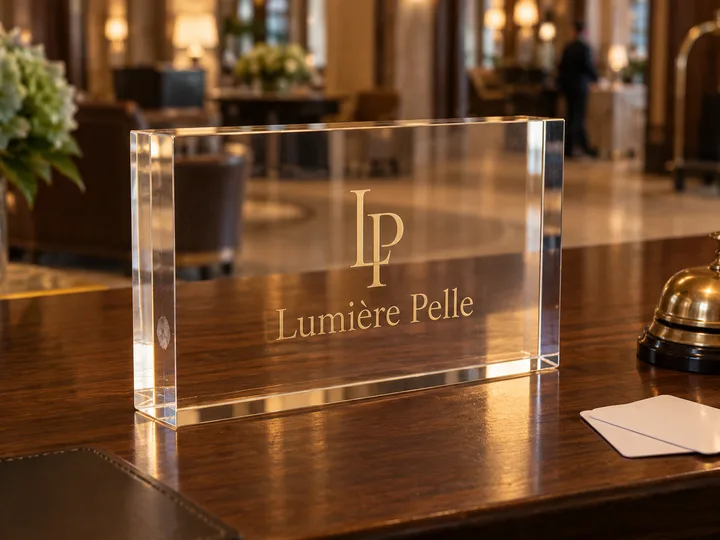
Reception desk & lobby
- Size
- 200 × 100 × 30 mm or 300 × 200 × 40 mm
- Logo method
- Sealed inside or reverse print
Seen from across the room, so it needs weight and depth. The mark is protected from cleaning and handling.
Your logo printed, engraved or sealed inside solid clear acrylic, for reception desks, retail counters, trade-show tables and client gifts. 100 pieces per artwork.
Reference price $12 at 100 · $7 at 500 (100×60×20 mm, UV print) See prices
Get a Logo Block Quote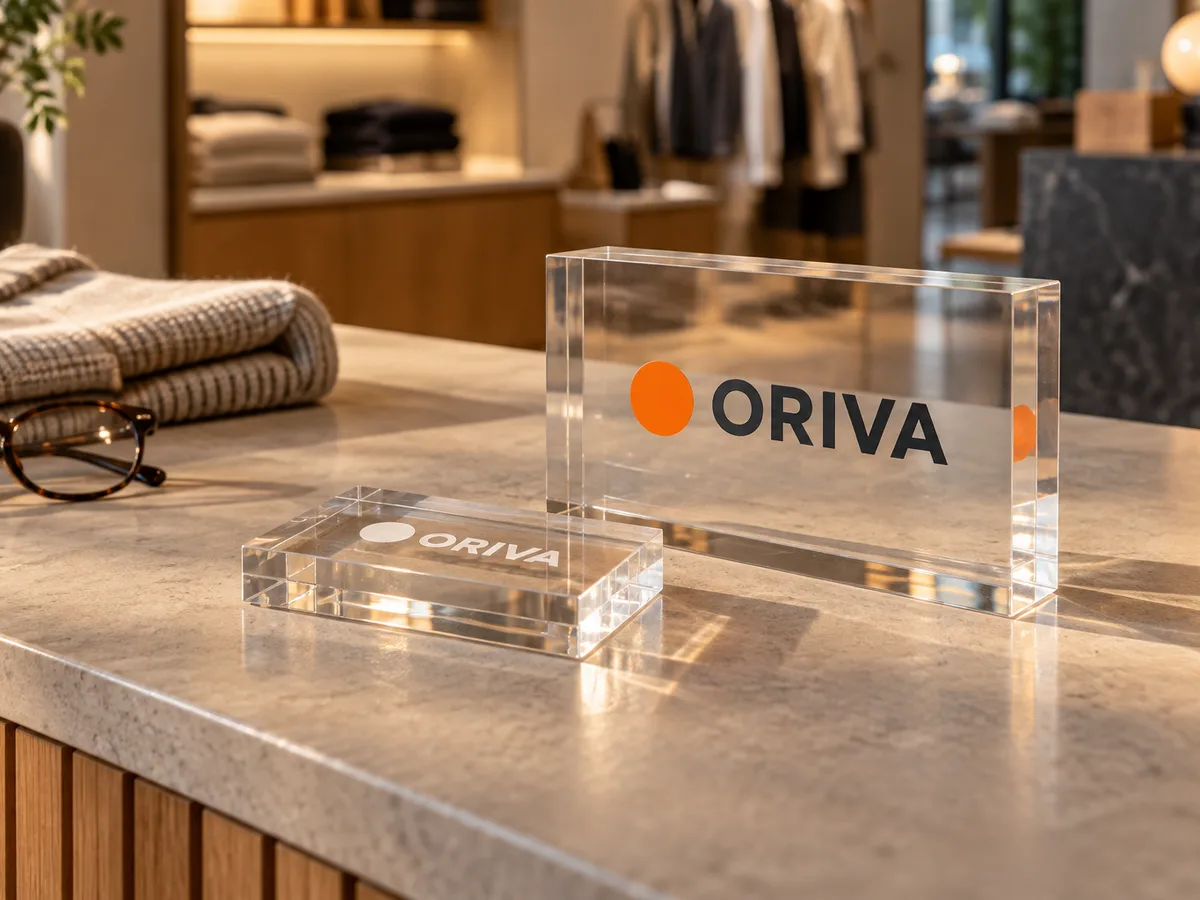
An acrylic logo block is a solid clear, frosted, or colored block with a printed, engraved, or embedded company mark. Buyers also call these acrylic branding blocks, brand blocks, logo display blocks, or personalized acrylic blocks. Wetop cuts and polishes each block to the approved drawing and artwork. Production starts at 100 pieces per design; a paid sample ships in 3–5 days and production takes 15–20 days after sample approval.
ISO 9001 Certified · Manufacturing since 2008 · 2,000+ custom projects
Start from the place and the person looking at it. Each spot has a size and logo method that works there; all of them start at 100 pieces per artwork.
Seen from across the room, so it needs weight and depth. The mark is protected from cleaning and handling.
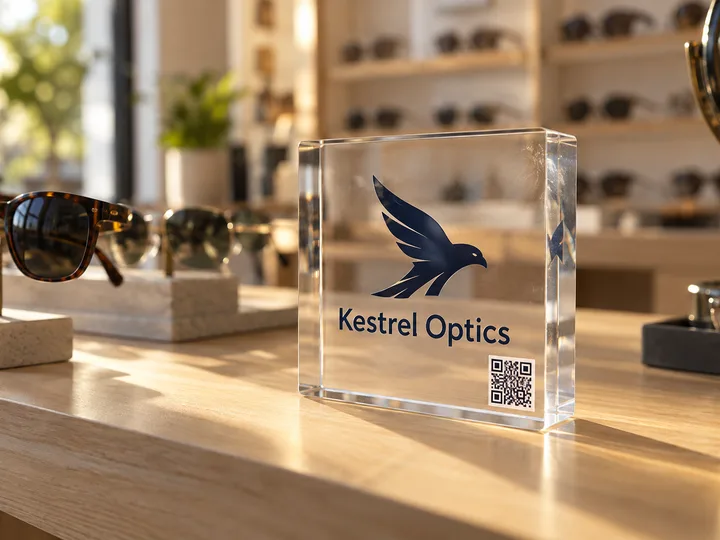
Read at arm’s length next to the product. Add a printed QR code that links to your page.
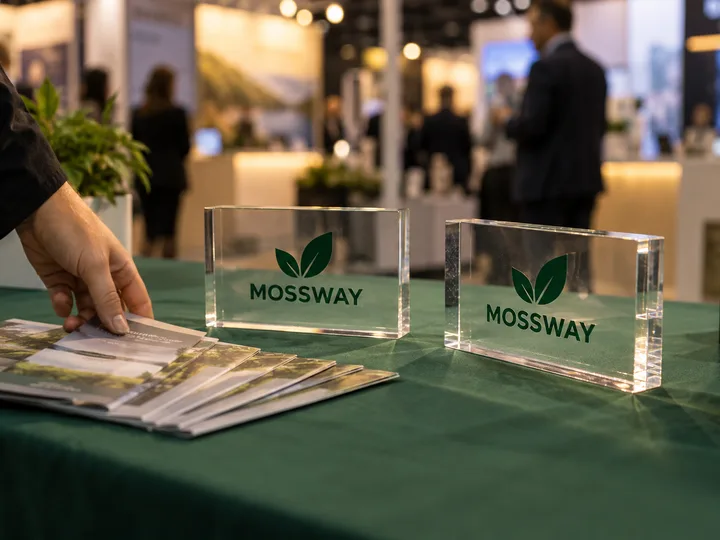
Travels in luggage and gets handled. Smaller printed blocks are lighter and quick to replace.
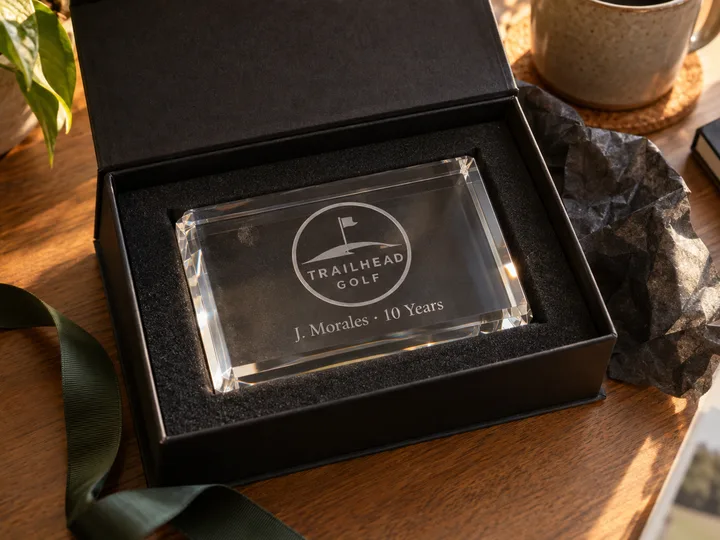
Each block can carry a different name or year and still count as one design.
For award blocks, wedge bases and paperweights given as recognition, see our acrylic awards. Plain solid blocks without a logo are clear acrylic display blocks.
Choose by how many colors your logo has and how much handling the block has to survive. Hot-stamped metallic foil is also available for gold, silver and copper marks.
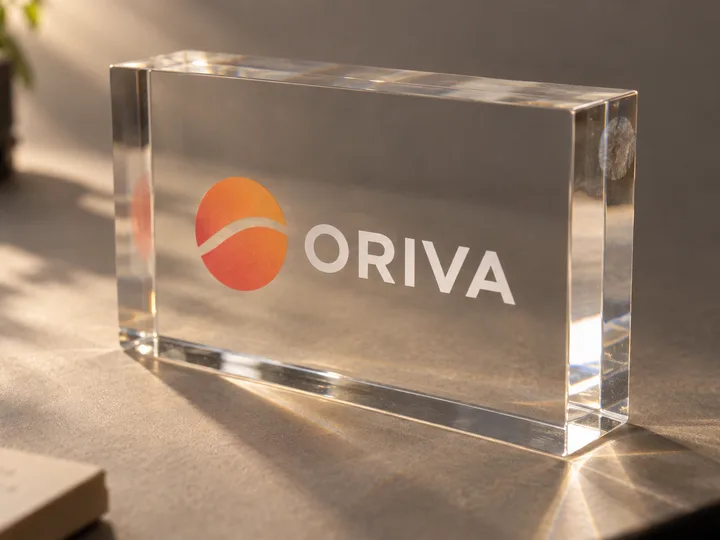
Full-color artwork on the front face, or on the back face with a white underlayer so the logo reads through the block.
Best for full-color logos, gradients, photos and QR codes.
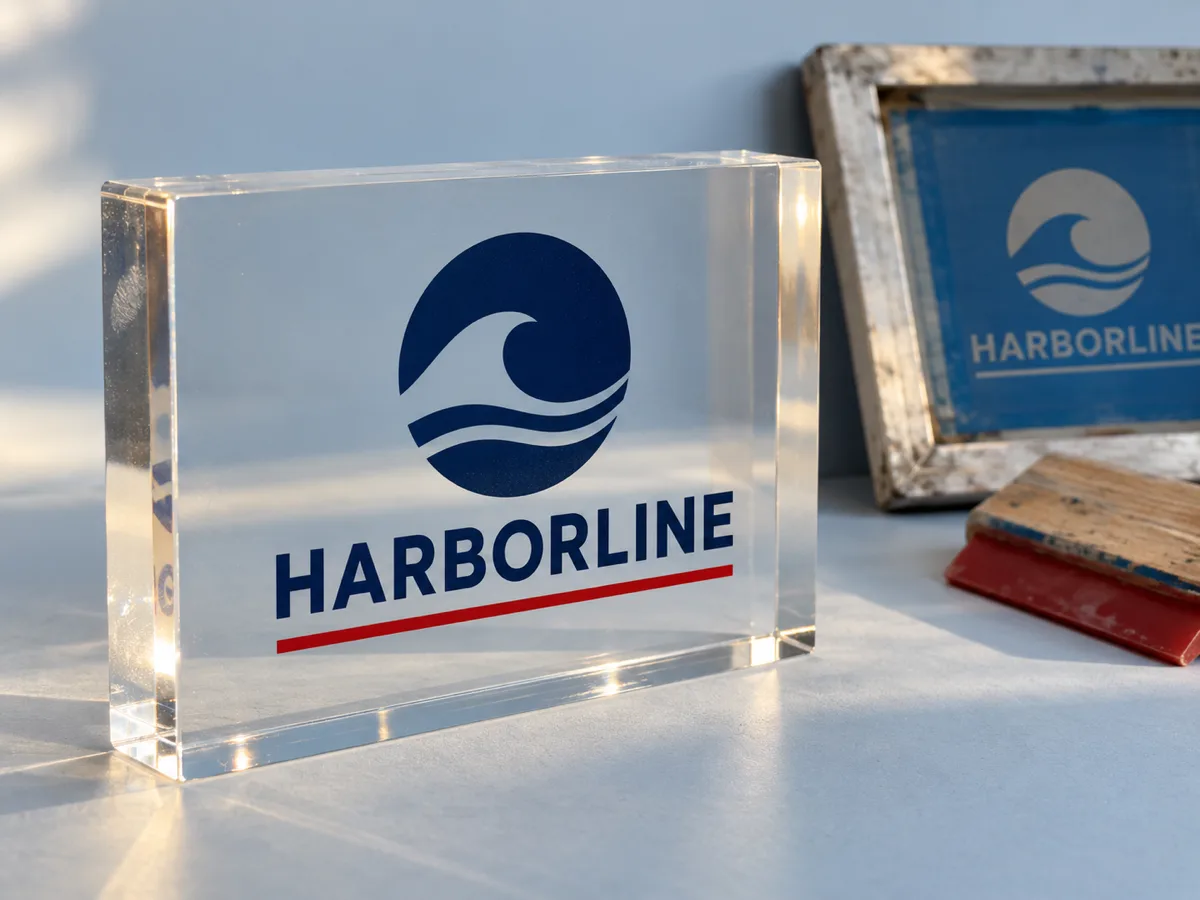
Each spot color goes through its own fine screen as a solid, opaque layer with very sharp edges, mixed to your Pantone reference.
Best for 1–2 spot-color logos and text; economical on larger runs because each screen is made once.
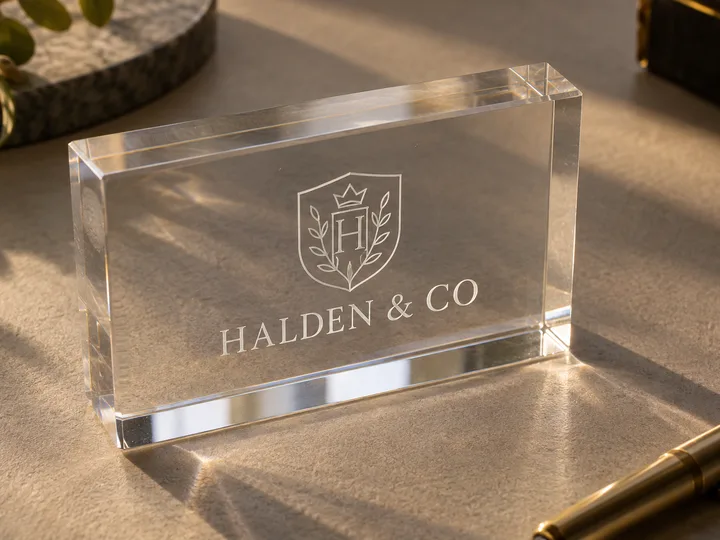
A permanent frosted-white mark cut into the surface. Holds fine lines and suits monograms and names.
Best for one-tone marks, crests and personal names.
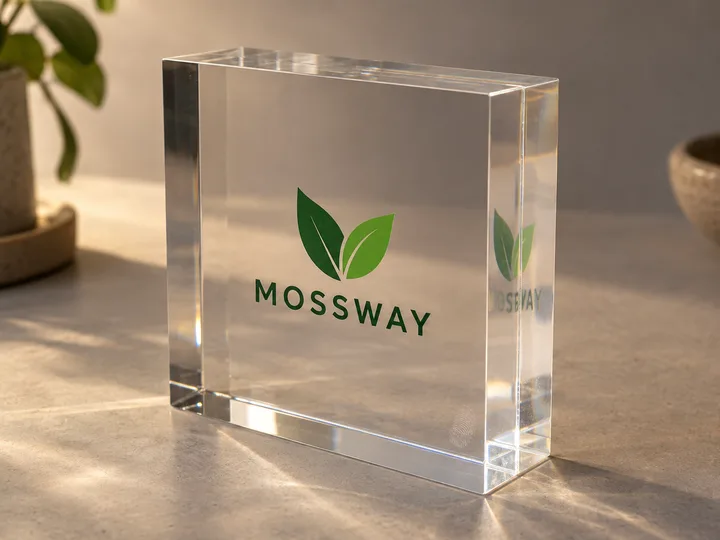
A flat printed logo laminated between two clear layers, so it floats mid-block. From 30 mm total thickness.
Best for reception and lobby pieces that are cleaned and handled daily.
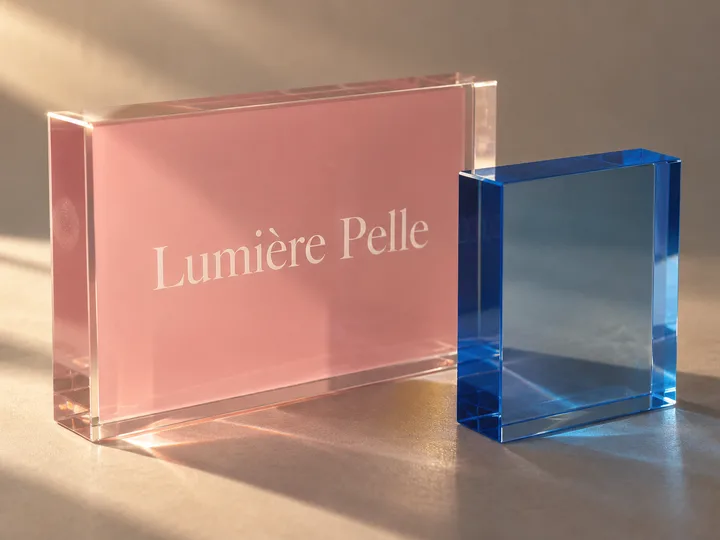
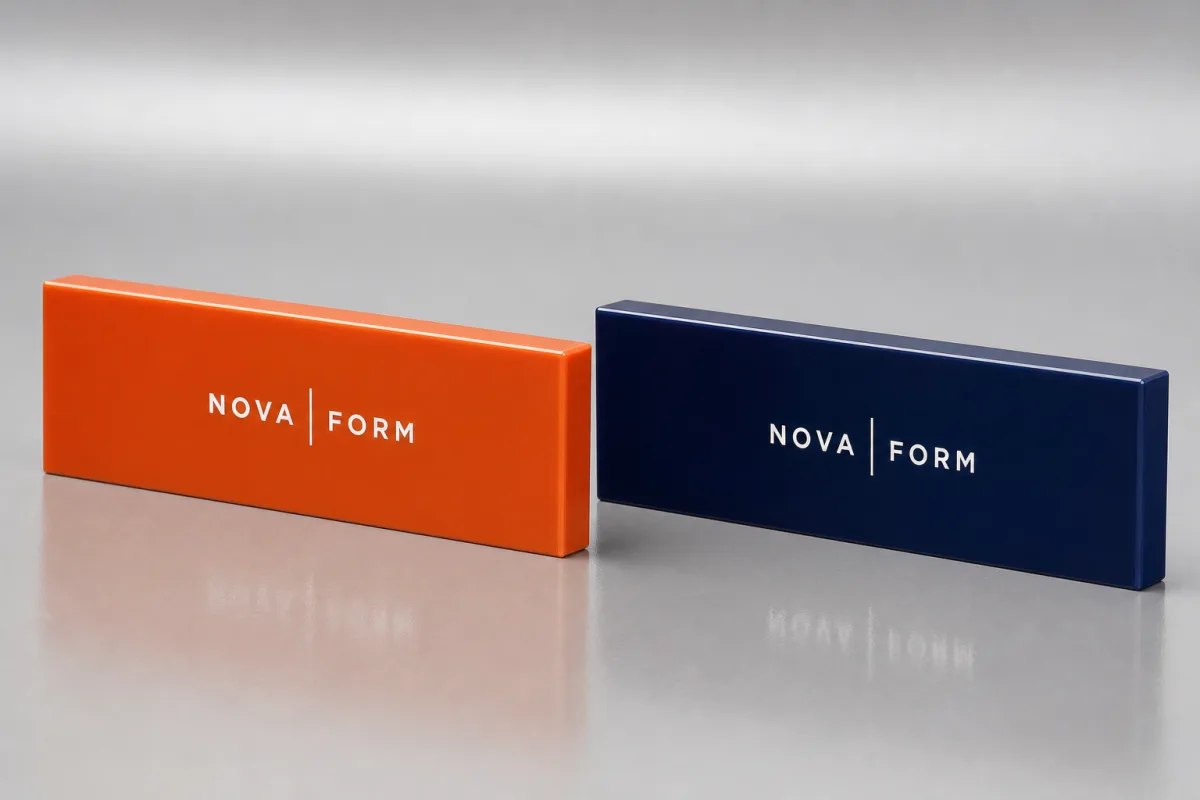
The whole back face printed in your brand color behind a white logo, or a block cut from tinted acrylic.
Best for a block that reads as your brand color from across the room.
Engraved acrylic blocks suit fine lines and permanent frosted marks; printing supports full color.
Laser engraving vs UV printingUV printing on acrylicClear, frosted, and colored acrylicDiamond vs flame polishingNFC review stands for tap-to-review
Named specifications, approximate per-unit FOB Shenzhen.
| Reference specification | 100 pcs | 250 pcs | 500 pcs |
|---|---|---|---|
| 100×60×20mm clear · full-color surface UV print · square polished edges | $12 | $9 | $7 |
| 150×80×25mm clear · reverse UV print · beveled polished edges | $16 | $12 | $9 |
| 100×100×40mm clear · embedded flat logo · beveled polished edges | $20 | $16 | $13 |
Final price follows size, logo method, edge profile, packing, quantity, and artwork count. Diamond polishing is included.
Delivered project
A performance-fabric maker runs its co-branded logo blocks through one standing program: seven artworks, one brand PMS standard on every run, and retained approved samples so reorders are approved from photos. Artwork review caught a stretched logo, a file not built at 1:1 scale and a wrong-color file before any block was printed. For brand-color backs packed for a warehouse, see the 3PL logo-block program.
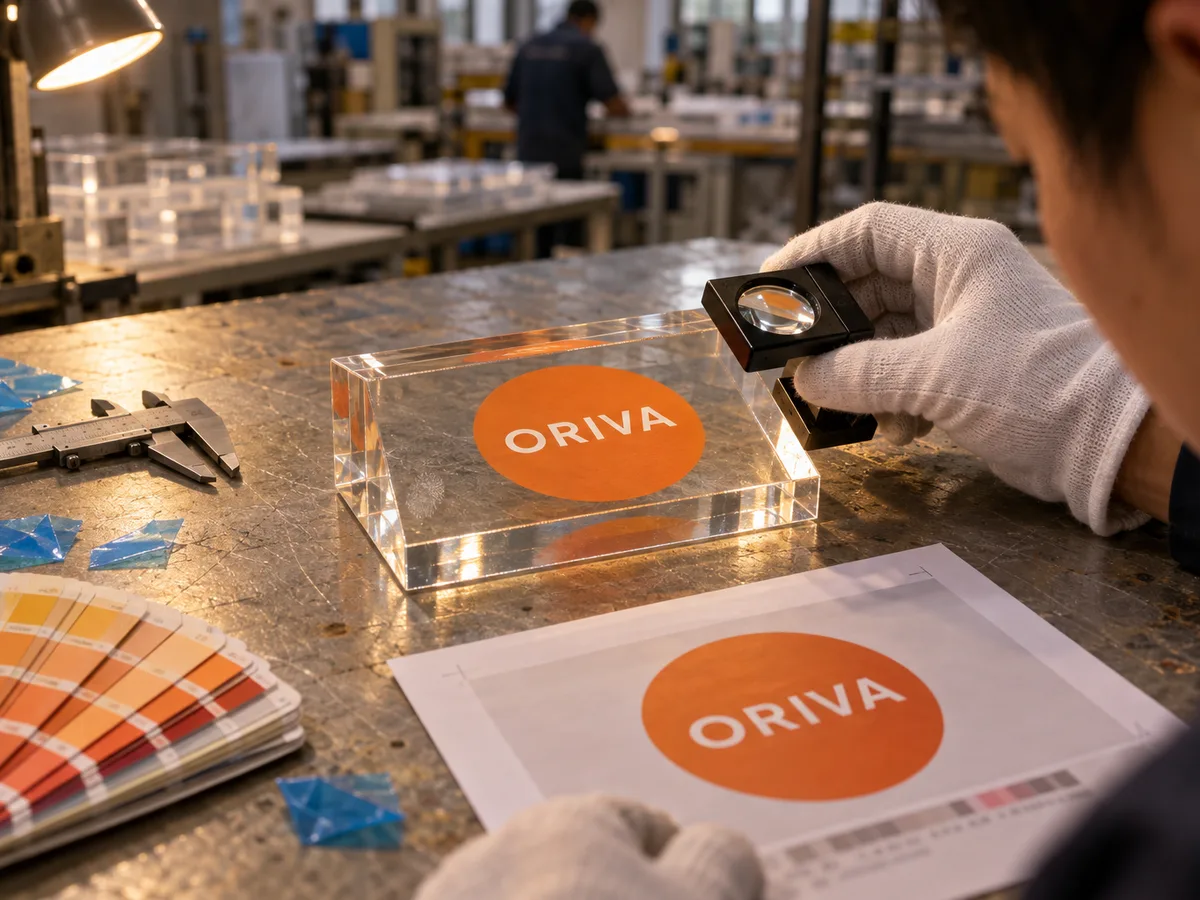
You approve the artwork twice, on a digital proof and on a physical sample, before production starts. Every block is checked against that sample before it ships.
Vector artwork, block size, quantity per artwork, logo method and destination. The logo-block spec builder lists every field. We reply within 24 hours.
A digital proof on your exact block size, then a paid sample in 3–5 days (USD 200–500, never credited to the order) for color, polish and depth.
Production takes 15–20 days from sample approval. Each block is checked against the approved sample and you get QC photos before shipment.
Our MOQ is 100 pieces per design. The floor is set by setup cost — UV-print color matching, screen-printing screen burn, embedded sandwich-bond fixtures, and diamond-polish edge programs all carry fixed setup that has to amortize across the run. Below 100, use a paid sample to validate the artwork and finish. Above 200 the per-piece cost drops noticeably; above 500 it drops again. Different logo variants are separate designs and each carries its own 100-piece production floor.
Sample turnaround is 3–5 days after artwork approval. Bulk production runs 15–20 days for orders under 500 pieces; larger orders (1,000+) typically run 20–28 days. Embedded blocks add 1–2 days for the sandwich-bond cure cycle. We schedule production on the date you approve the physical sample, not the date you place the deposit — that gap is where most overseas suppliers slip their dates. For event or trade-show deadlines, tell us the in-hand date at RFQ and we'll quote air-first batch options against your sea-freight balance.
Yes — physical samples are recommended on every custom logo block order before bulk production. Samples are paid separately, never credited to production, and normally ship in 3–5 days after artwork approval. Color saturation, edge polish, depth illusion and bond-line visibility all read differently on a real piece than on a render; the approved sample also supplies the comparison record used by the acrylic-block claim checklist.
We accept vector files (AI, EPS, PDF, SVG) for the sharpest results — vector artwork scales to any block size without losing clarity. For UV printing, high-resolution raster files (PNG, TIFF at 300 DPI minimum) also work well. Avoid JPEG for logos — compression artifacts become visible on clear acrylic. If you only have a low-resolution file, send the original vector artwork before proofing.
Yes. UV printing and silk-screen printing both support Pantone color matching. Send us your Pantone code (e.g., PMS 286 C) and we match it on a proof sample before production. A recent example: a US branded-merchandise company approved the color references for a compact logo block of about 55mm in August 2026, and the paid color-matched sample went into production on that approval — the sequence is laid out in our Pantone color matching guide. Hot stamping offers metallic gold, silver, rose gold, and copper foils. Laser engraving produces a frosted white mark — no color, but permanent and elegant on clear or black acrylic. If the same block geometry is being considered as a recognition piece, compare it with the crystal, acrylic and glass awards specification guide before approving material and packing.
Embedded blocks — where the logo is sandwiched between two layers of acrylic — need a minimum total thickness of 30mm (two 15mm layers bonded together). Thicker blocks (40–60mm) create a more dramatic depth effect, especially with full-color UV-printed logos viewed through clear acrylic. The bonding line is invisible when executed properly — the block looks like one solid piece.
Published FOB Shenzhen references start with a 100×60×20mm clear UV-printed desk block at $12 each for 100 pieces, $9 at 250, and $7 at 500. A 100×100×40mm embedded-logo block is $20 / $16 / $13 at the same quantity tiers. Final price follows the approved size, logo method, edge profile, packing, and artwork count. Diamond polishing is included. Send the quote inputs listed on this page and we respond within 24 hours.
Reception desk blocks are permanent — we recommend embedded or reverse-printed construction (more depth, more visual impact, logo fully protected) in larger formats (150–200mm). Trade show blocks travel in luggage and get handled frequently — surface-printed blocks in compact sizes (100mm) are the better choice: lighter, lower risk if damaged in transit, and faster to replace. Many clients order both formats in one production run at a reduced combined price.
Yes. All polished surfaces ship with protective plastic film applied — this prevents scratches during international freight. Remove the film once you receive the order. The film is not for long-term display — it's transit protection only. For long-term outdoor or high-sunlight display, mention the use case at RFQ stage and we can recommend the right material grade for your environment. If damage is visible at receipt, the order damage-claims playbook lists the carton and product evidence needed to separate transit damage from a production issue.
Four options: square (sharp geometric look), beveled (45° chamfer, premium feel), rounded (smooth radius, safe), and full-radius bullnose (semicircular, most elegant). All edges are diamond-polished for optical clarity. Rounded and bullnose edges add 2–3 days to sample production. Most corporate logo blocks choose beveled or rounded for a high-end feel. See your quote for per-unit cost differences.
Yes — at two checkpoints. Before anything is cut, you receive a digital artwork proof (PDF or render) showing logo size, placement, and colors on your exact block dimensions; production waits for your written approval. Then we build the physical sample and send photos of the finished block before it ships, so you judge the real piece — color saturation, edge polish, depth effect — not a render. For a reseller passing revisions between an end client and the factory, the proof approval and version-control guide defines the handoff. The 3–5 day sample clock starts at artwork approval, not at first contact.
Yes. The sample fee covers cutting your block, the print, screen, or engraving setup for your artwork, and finishing a production-grade piece. It is paid separately and is not credited against a bulk order. Courier freight is quoted separately by destination and service speed. If the design changes after sampling (new size, new construction type), the re-sample carries a new setup — we flag the cost before you commit, never after.
Vector files (AI, EPS, PDF, SVG) scale to any block size without losing edge sharpness — the same logo has to stay crisp on a 100mm desk block and a 300mm lobby piece. A vector file alone isn't production-ready, though: before the proof we still check editable layers, scale against the block face, color values, font outlines, and print placement, because those are where production errors actually start. Send whatever you have — we'll tell you within 24 hours if it needs vector conversion before the sample.
Yes. Agencies and resellers often have us ship the approved sample straight to their end client — tell us the recipient address at sample stage, and whether sample photos should come to you for approval before it ships. Packaging is neutral, with no Wetop branding. If the presentation date is tight, we can ship on your FedEx, UPS, or DHL account for overnight service, or quote express freight ourselves.
Unit cost steps down above 200 pieces and again above 500, because setup, screens, and print files are fixed costs that spread across the run. If your order needs stakeholder sign-off, we quote 100 / 200 / 500+ side by side so procurement can compare per-unit and total cost on one sheet. For recurring logo-block programs we keep your approved specs, artwork, and tooling on record, so reorders skip re-setup.
The 100-piece minimum applies per artwork, because each design carries its own print file, screen, or engraving program — 100 pieces across 4 distinct designs means 25 of each, below that floor. Your options are to raise each design to 100 pieces, consolidate the artwork, or validate secondary designs as paid samples before deciding which enter production. Tell us the designs and quantities and we quote the scenarios side by side.
One verified corporate program covered 2,600+ acrylic branding blocks across seven approved artworks over two years. Acrylic branding blocks are solid acrylic blocks that carry a company mark for reception desks, boardrooms, and retail counters — the same product buyers call a logo block or a brand block. We produce them with UV printing, laser engraving, hot stamping, or embedded construction, all diamond-polished, at an MOQ of 100 pieces per design. Read the program record.
Yes. Laser engraving cuts the logo into the material as a permanent frosted-white mark — no ink, nothing sitting on the surface to fade or peel. An engraved acrylic block holds fine lines down to 0.1mm, which suits monograms, single-tone marks, and serial numbers, and reads with the most contrast on clear or black acrylic. Engraving is the most affordable of our logo methods. Send vector artwork and we quote within 24 hours.
Send 7 items: finished block dimensions, quantity per artwork, logo method, vector artwork or reference file, Pantone or color target, edge profile, and packing plus destination. Use the logo-block specification builder or the one-page PDF worksheet to organize them before requesting the itemized quote.
Wetop is built for made-to-order logo-block programs from 100 pieces per artwork, with the acrylic machining, printing, polishing, sample approval, inspection and export packing controlled under one factory workflow. If you need fewer pieces to check the look first, order a paid sample (USD 200–500, not credited to the order) and move to 100 per design once it is approved. Freight is quoted separately by destination so you can compare FOB, CIF and DDP rather than assuming a low unit price is the landed cost.
Wetop is the factory. Branding blocks are cut, polished, printed or engraved and inspected in our own ISO 9001 facility in Shenzhen, and the people answering your artwork questions are the people producing the order, so there is no reseller margin and no relay between you and production. Approved artwork versions, block drawings and packing specifications are kept as your reorder record.
Yes. When the design stays the same and only the variable text changes (names, numbers, years, dates, locations or titles), it is still one design, and the 100-piece minimum counts all personalized blocks together. Example: 100 service-anniversary blocks, each engraved with a different name and year, are one design. A different shape, size, artwork layout, color, or print or engrave method is a separate design with its own 100-piece minimum. Send the names as a list with your artwork; the digital proof shows the longest name on your block size.
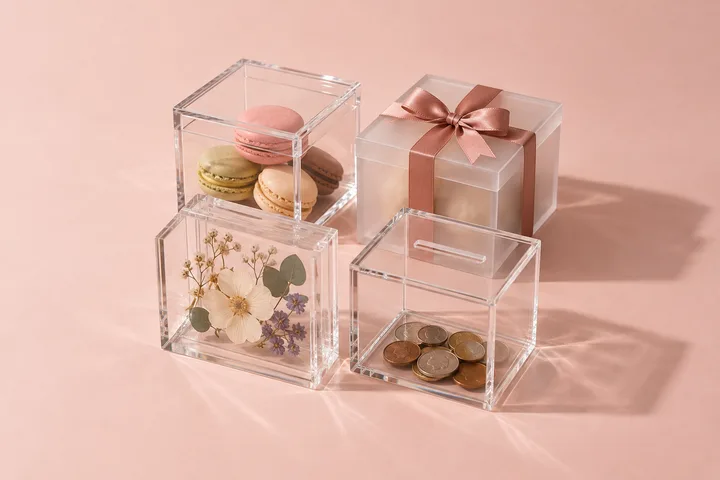
No. We do not cast or embed real objects, coins or banknotes in acrylic. What we seal inside is flat: a printed logo or image laminated between two clear layers, which gives the floating-logo look on blocks from 30 mm thick.
Choose silk-screen printing when your logo is one or two solid spot colors. Each color is pushed through its own screen as an opaque layer with very sharp edges, mixed to your Pantone reference, and the screen is made once, so it is economical on larger runs. Choose UV printing for full-color logos, gradients, photos or QR codes, or for artwork printed on the back face over a white layer. Each extra silk-screen color needs its own screen and print pass, so logos with three or more colors usually go to UV. Both are checked on the paid sample before production.
Send us your logo file and preferred block size. We respond within 24 hours with a detailed quote — method recommendation, color matching confirmation, and timeline included. No commitment required. Sample before you commit to production.