
Pockets, shoulders and stepped faces
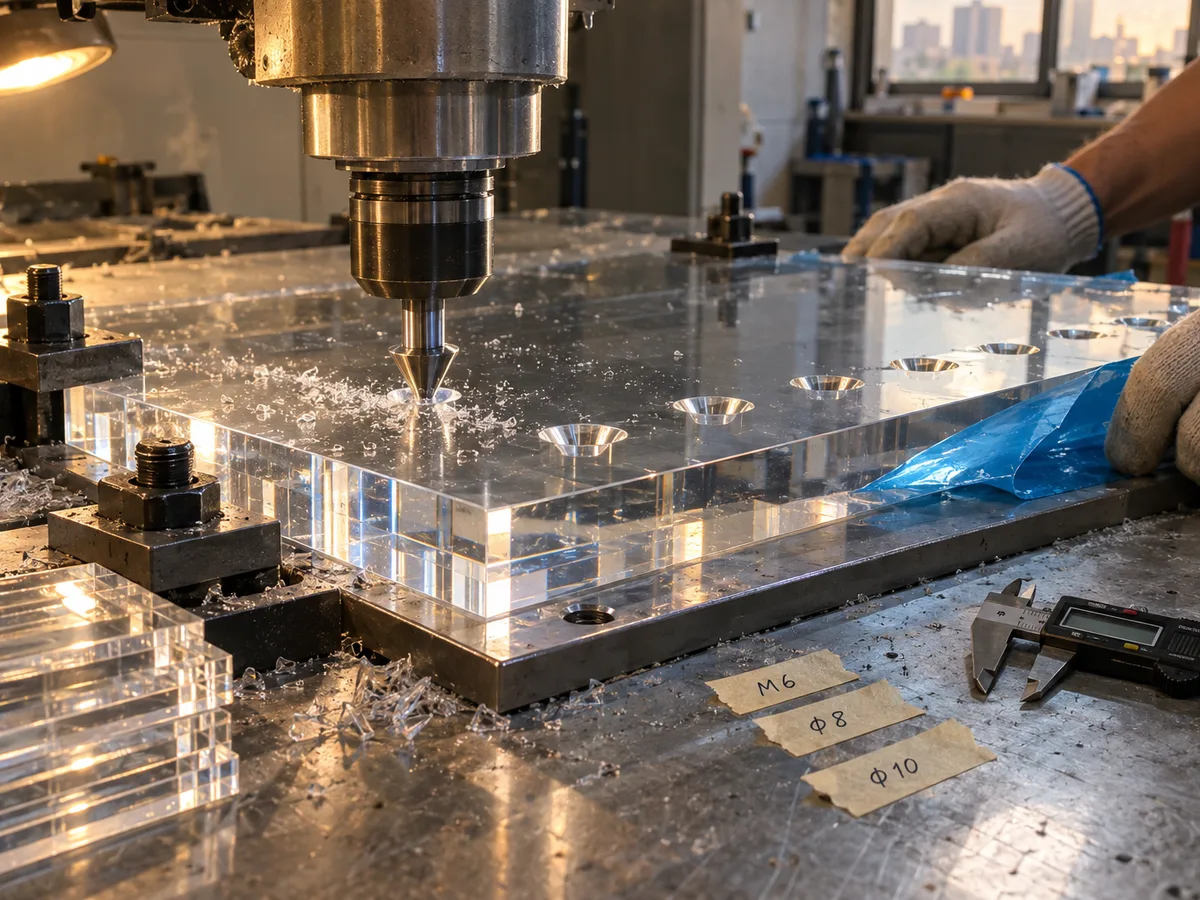
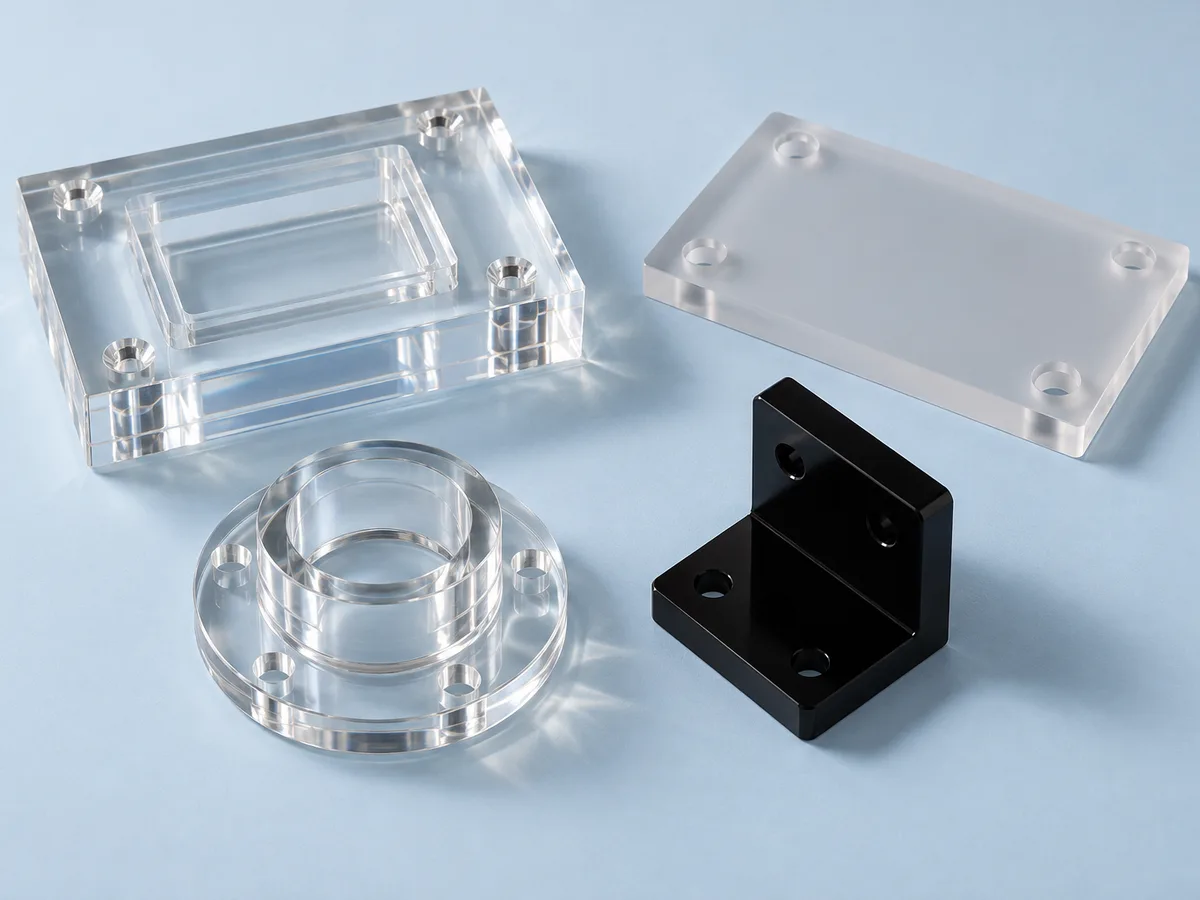
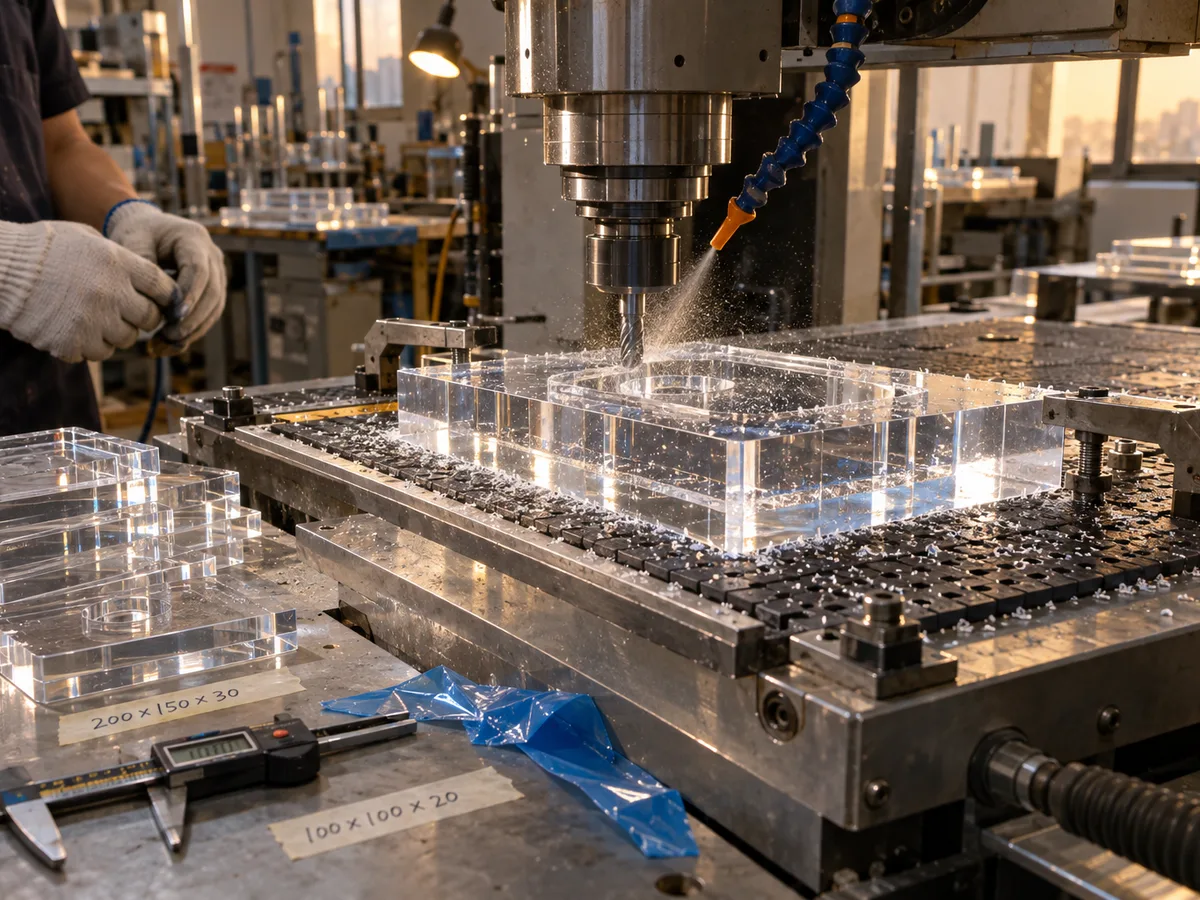
Profiles, windows and finished panels; pockets, shoulders, counterbores and stepped faces milled into thick stock.
Datums stated on the drawing
How we hold tolerance →Custom PMMA parts, bases and finished panels made to your released drawing.
Attach STEP, DXF or a dimensioned PDF.
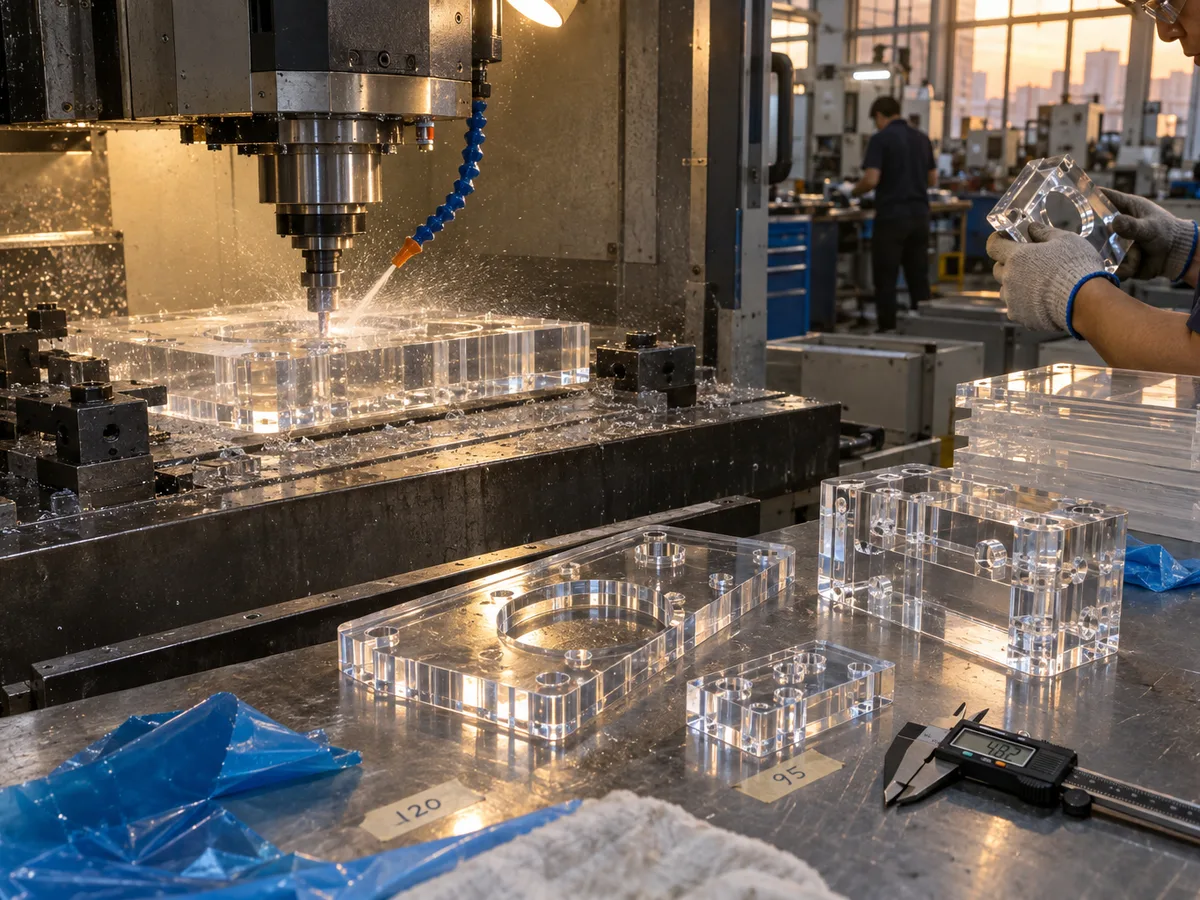
Acrylic CNC machining is our made-to-order service for PMMA parts with pockets, holes, stepped faces or controlled geometry. Wetop machines clear, colored and frosted cast PMMA for OEM teams, laboratories and retail fixtures from drawing review through paid sample and repeat production.
We reply within 24 hours with questions or a written quote scope.
CNC is the route for pockets, stepped faces, countersinks, controlled holes and thick-stock features that a flat 2D cutting path cannot produce. The drawing and approved paid sample set the inspection method.
Profiles, windows and finished panels; pockets, shoulders, counterbores and stepped faces milled into thick stock.
Datums stated on the drawing
How we hold tolerance →Drilled, countersunk and counterbored holes and mating features located from the stated datums.
Fit-critical 2D dimensions: ±0.1 mm after review
Prepare CAD and DXF files →Visible and functional edges finished to the approved sample; bonded parts, inserts, labels and protective packing.
Clear, colored and frosted cast PMMA
See delivered parts →2D profiles only? See acrylic laser cuttingCNC versus laser guide
Use the drawing feature to select the process; a mixed route can assign each feature to the suitable machine.
| Drawing feature | CNC machining | Laser cutting |
|---|---|---|
| Pockets and steps | Primary route | Not a 3D pocketing process |
| Flat profiles | When stock or edge geometry needs machining | Efficient for compatible sheet |
| Countersinks and bores | Drawing-controlled toolpath | Needs a secondary operation |
| Visible edges | Machined or polished sample | Sample the process edge |
The quote states which route controls each feature. See the tolerance guide for critical dimensions.
A useful CNC drawing separates functional dimensions from reference dimensions. State the datum, acceptable limit, material, visible surface, edge condition, revision and inspection method so the paid sample and production share one acceptance record.
A question we often get: “Does ±0.2 mm tolerance cover thickness, length and width?”
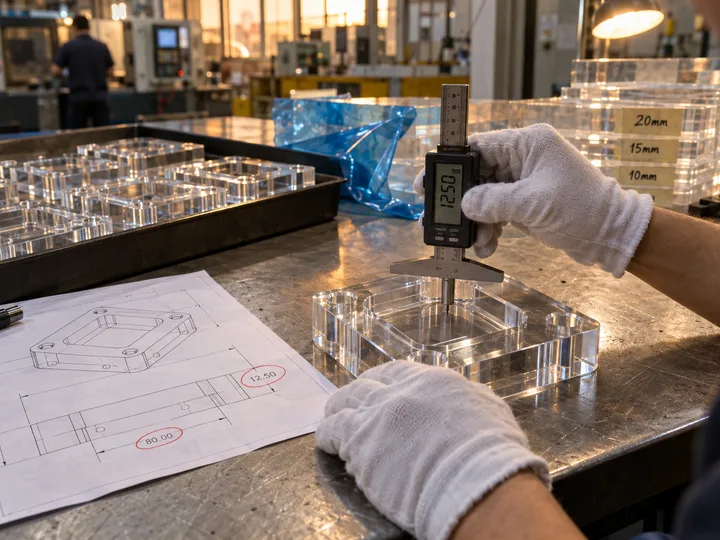
Material, datums, critical limits, machined features, appearance zones and released revision each affect machining or inspection.
| Material | Named PMMA grade, color and starting stock |
|---|---|
| Datums | Faces or features that control measurement |
| Critical limits | Only dimensions that control fit or movement |
| Machined features | Pockets, holes, threads, countersinks and edge breaks |
| Appearance zones | Visible faces, polish route and approved sample |
| Revision | One released drawing and artwork revision ID |
Every project here is a delivered order, shown anonymized.
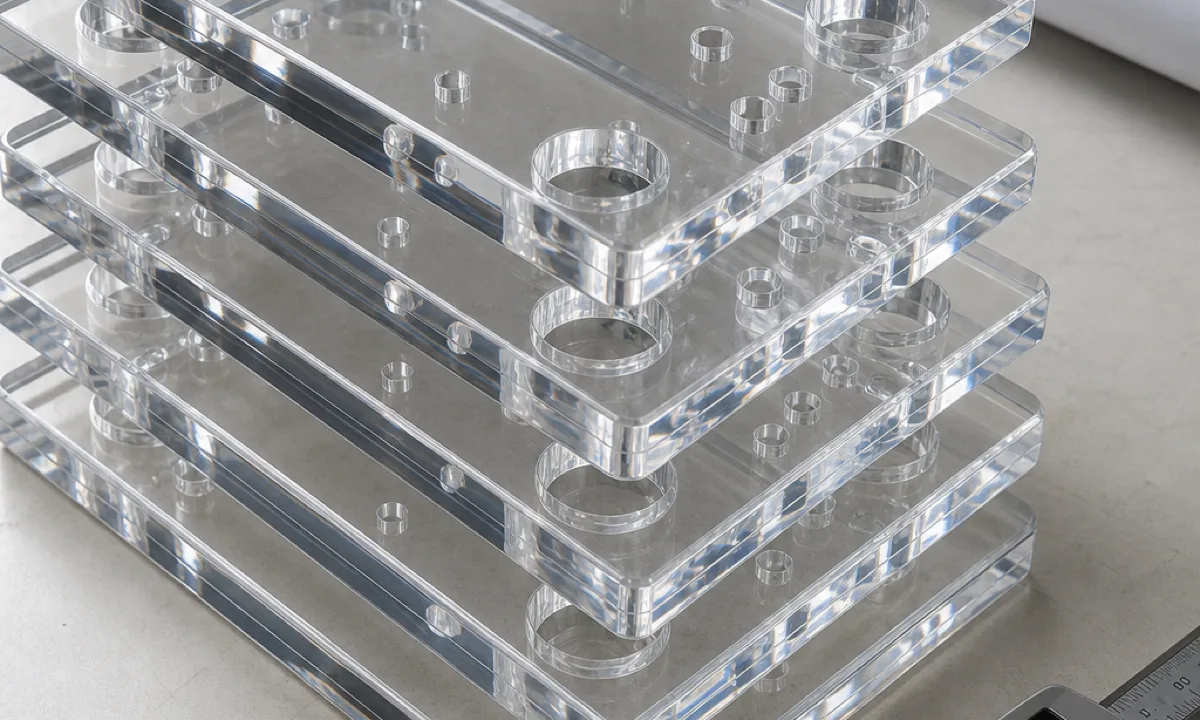 Delivered project300 CNC-machined acrylic instrument bases for a German OEMDocumented production order for a drawing-controlled part.
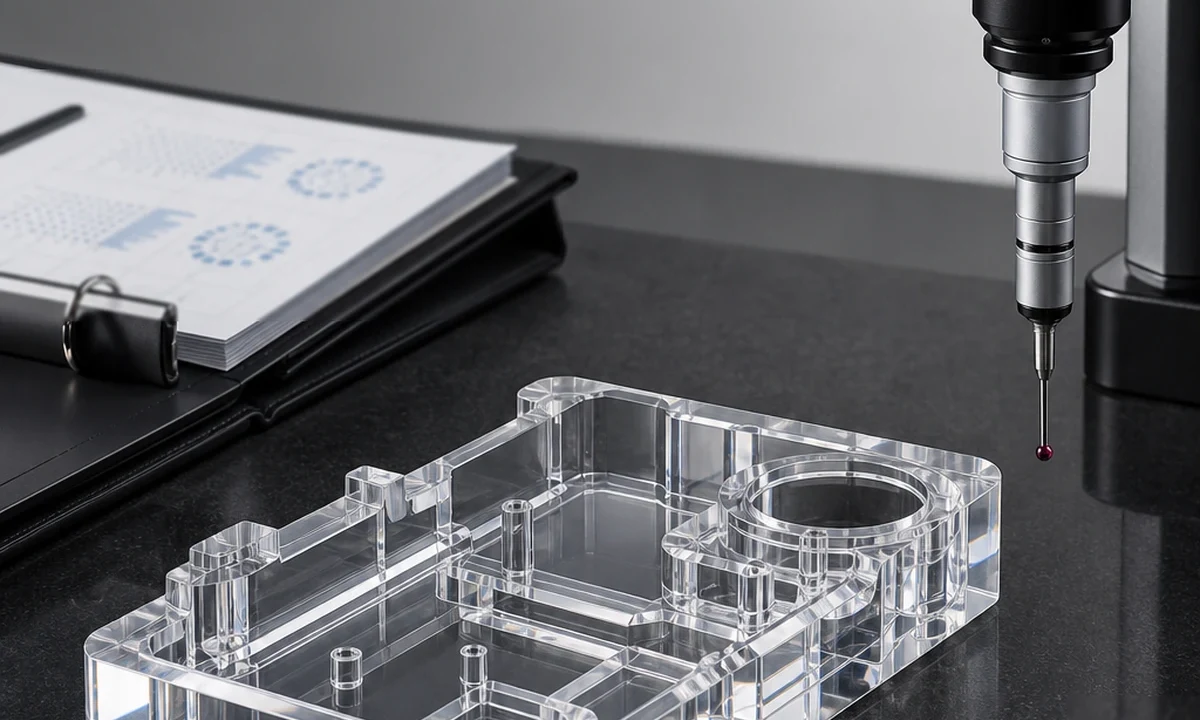 Delivered projectPrecision acrylic components for an OEMDrawing release, first article and controlled packout.
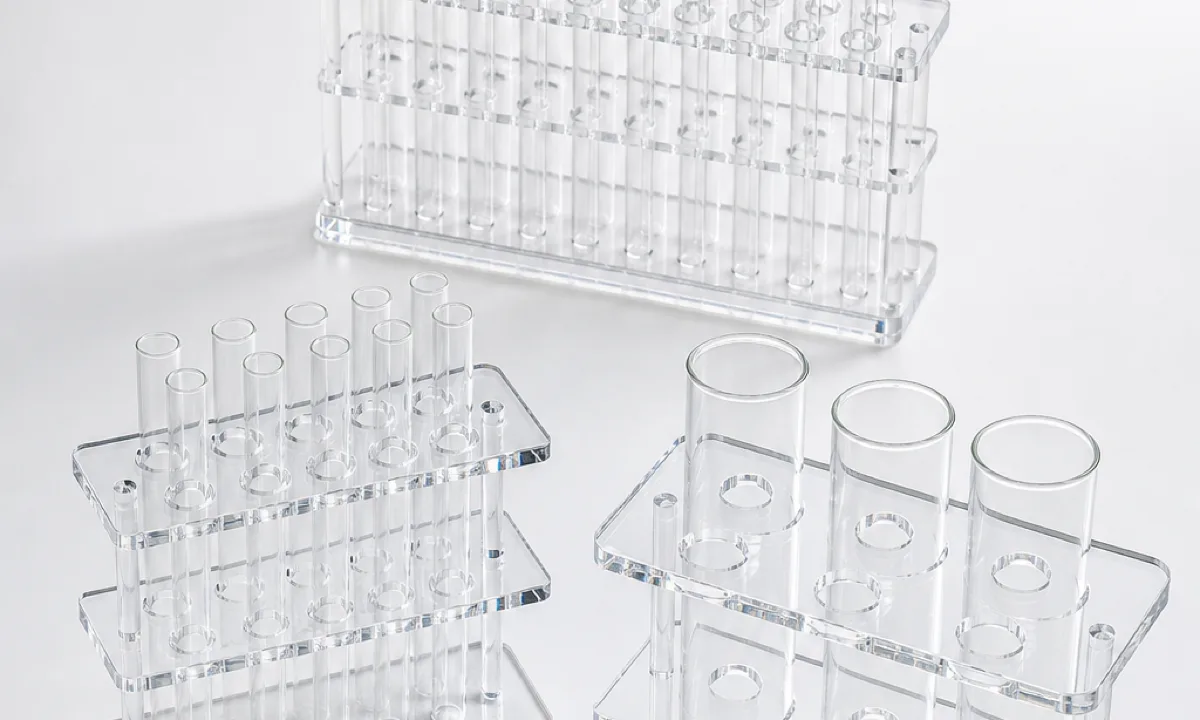 Delivered projectCustom laboratory tube racksHole geometry, sample review and production control.
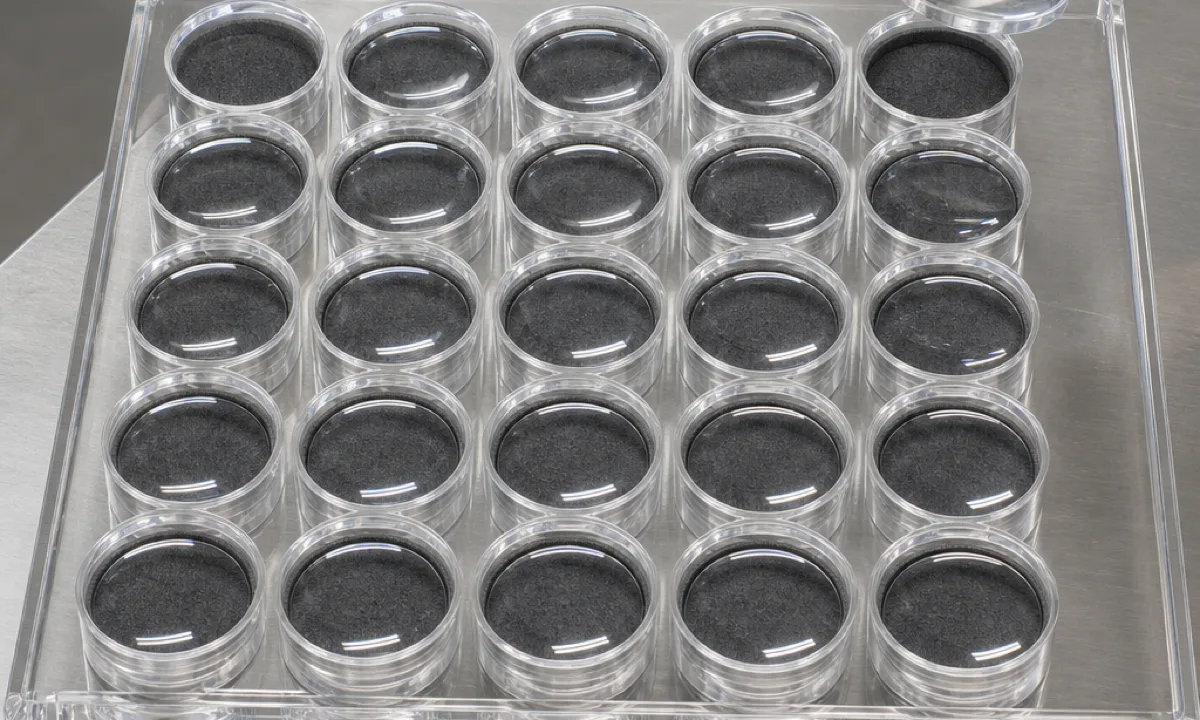 Delivered projectFlocked divider trays for optical lensesPocketed trays that carry lenses between lab stations.
A complete brief lets engineering identify the machining route, sample scope and inspection plan. If the design is early, send the known inputs and label what is still open.
Confirm material, revision, datums and acceptance method.
Check fit, dimensions, finish and packout. USD 200–500 depending on complexity, paid separately and never credited.
Approve the controlled sample and inspection plan in writing. Terms: 30% deposit, 70% before shipment.
Parts are checked against the approved sample and shipped FOB Shenzhen or DDP.
We quote from the drawing and quantity tiers, because machine time and inspection vary with geometry.
We run repeat production from a released drawing at 100+ pieces per design; we are not a one-off rapid-prototyping shop. See the prototype-to-production checklist.
Production starts at 100 pieces per design. A different geometry, material, thickness or controlling drawing revision may count as a separate design. A paid pre-production sample is ordered separately before the production run.
The quote is driven by starting stock, machine time, tool changes, workholding, quantity, inspection scope, finish and packing. Send the drawing and the quantity tiers you are considering; we return an itemized production quote within 24 hours. We do not apply a generic per-part price to unmatched geometry.
Tolerance is reviewed dimension by dimension against the drawing, material, stock condition, geometry, datum plan and measurement method. Mark fit-critical dimensions and their acceptable limits. We confirm the quoted capability and inspection method before sampling instead of promising one tolerance for the entire part.
Send STEP for 3D geometry, DXF for controlled 2D profiles and a dimensioned PDF that identifies critical dimensions, material, finish and revision. The CAD and DXF preparation guide explains how the files work together.
CNC is normally the better route for pockets, steps, countersinks, controlled holes, thick stock and functional edge geometry. Laser cutting is efficient for repeated 2D profiles in suitable sheet thicknesses. The CNC versus laser guide separates the two by geometry and finish.
Yes. Paid samples normally take 3-5 days after the drawing, material and acceptance criteria are approved. Sample fees are paid separately and never credited. Production starts only after written sample approval and the agreed payment gate.
We can sign a reasonable NDA after reviewing and agreeing its terms. Your artwork and project files are used only to quote, sample and manufacture your order, never published or reused for another customer. The agreement should protect your confidential project information without treating common manufacturing methods as your exclusive property. Please send the proposed agreement for review before sharing confidential files.
Yes. Ask for FOB Shenzhen and DDP as separate quote lines if you need to compare factory price with door-to-door landed scope. The final DDP line depends on the packed dimensions, weight, destination and current freight and duty treatment.
Attach STEP, DXF or a dimensioned PDF. Include quantity per design, material, critical limits and destination. We reply within 24 hours with questions or a written quote scope.
Your files are used only for your project. A paid sample is approved before production.
We've received your inquiry. Our team will reply within 24 hours — usually faster.