Frequently Asked Questions
What do you need to quote a custom acrylic enclosure?
+
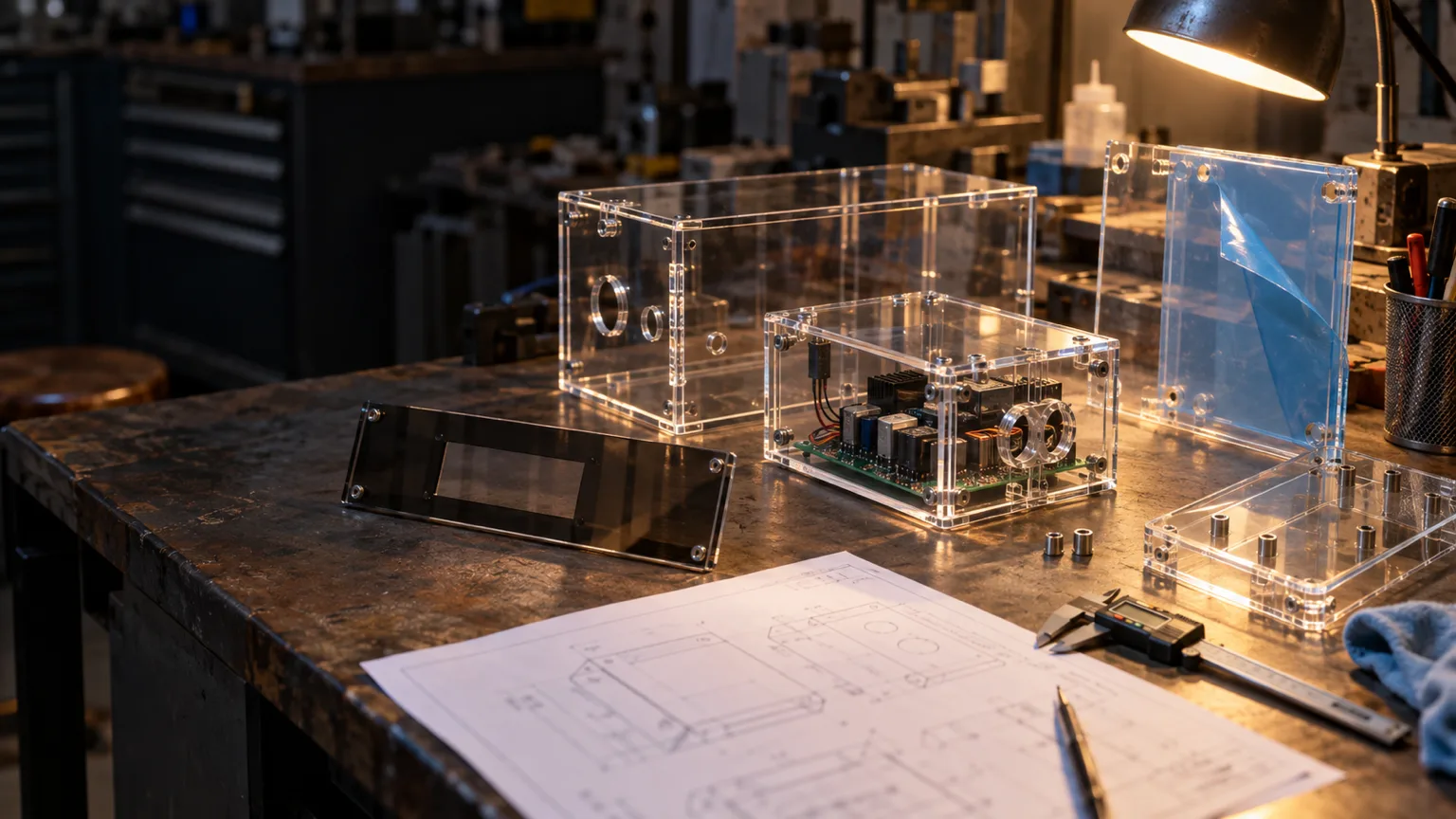
Send a STEP, DXF or dimensioned PDF drawing, the quantity per design, the acrylic type and thickness, how the parts join (bonded or screwed), any holes, cutouts or printed markings, and the packing and destination. A sketch with key dimensions can start the quote; the approved drawing and paid sample control production. We reply within 24 hours.
What tolerance can you hold on acrylic enclosure parts?
+
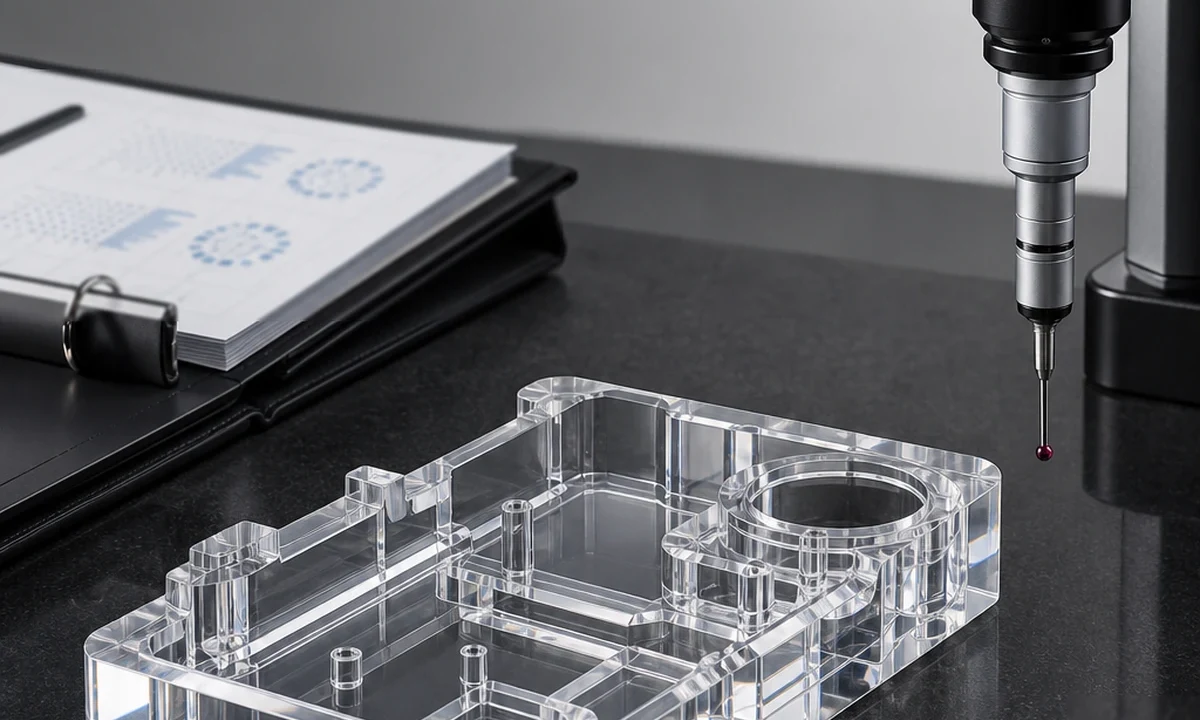
Our standard working tolerance is ±0.2 mm unless the approved drawing states otherwise. Fit-critical 2D dimensions can be held to ±0.1 mm after drawing review. Mark the features that must fit (screw holes, connector cutouts, panel openings) so they are checked on the sample and in inspection.
What is the minimum order for custom acrylic parts?
+
Production starts at 100 pieces per design. A prototype is built as a paid sample first: USD 200–500 depending on complexity, made in 3–5 days, paid separately and never credited to the production order. Production then takes 15–20 days after you approve the sample.
Should an equipment cover be acrylic or polycarbonate?
+
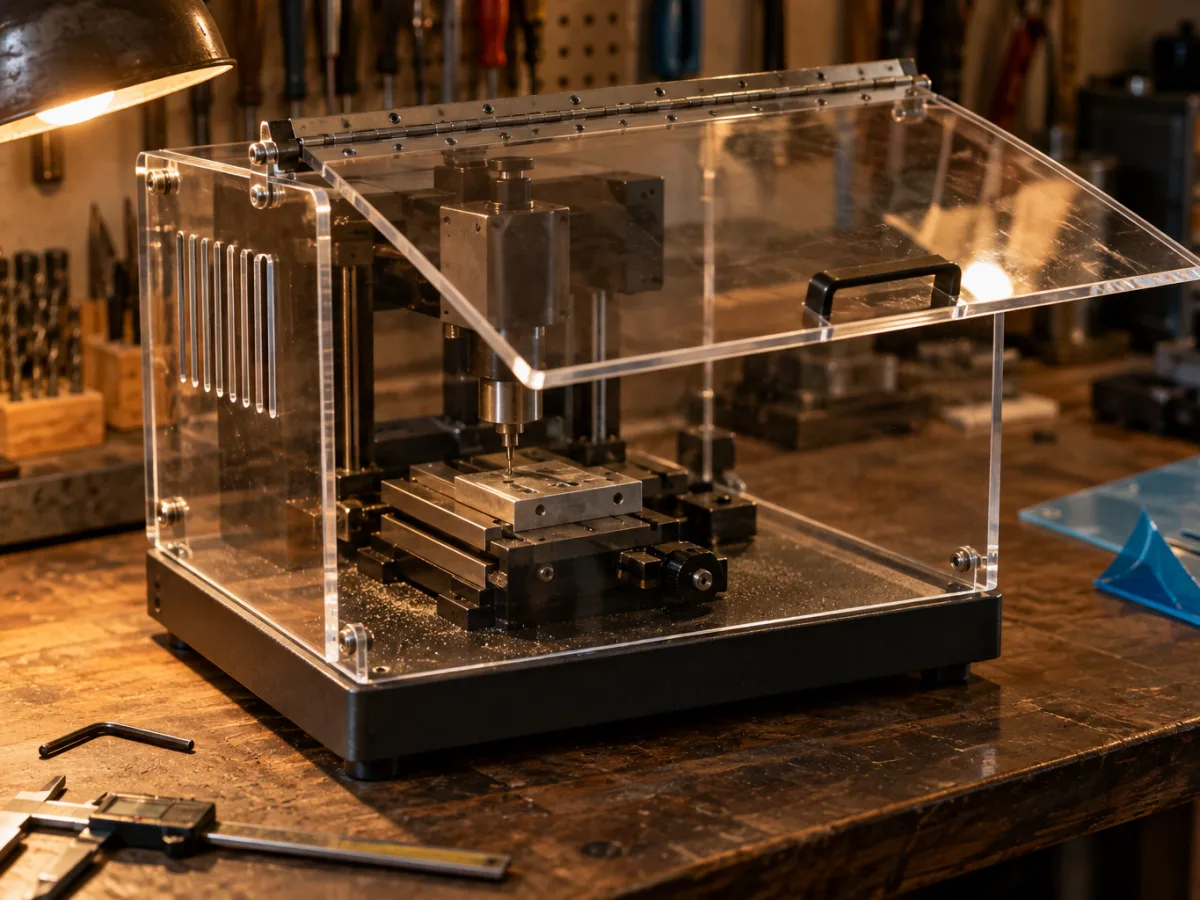
Acrylic (PMMA, also called plexiglass) passes about 92% of visible light, polishes to a clear edge, takes clean solvent-bonded seams and laser-cuts precisely, which suits windows, covers and display enclosures. Polycarbonate takes harder impacts but scratches more easily and is usually machined rather than laser-cut. We fabricate in acrylic, including anti-static grades for electronics.
Can you add holes, slots and cutouts for connectors and displays?
+
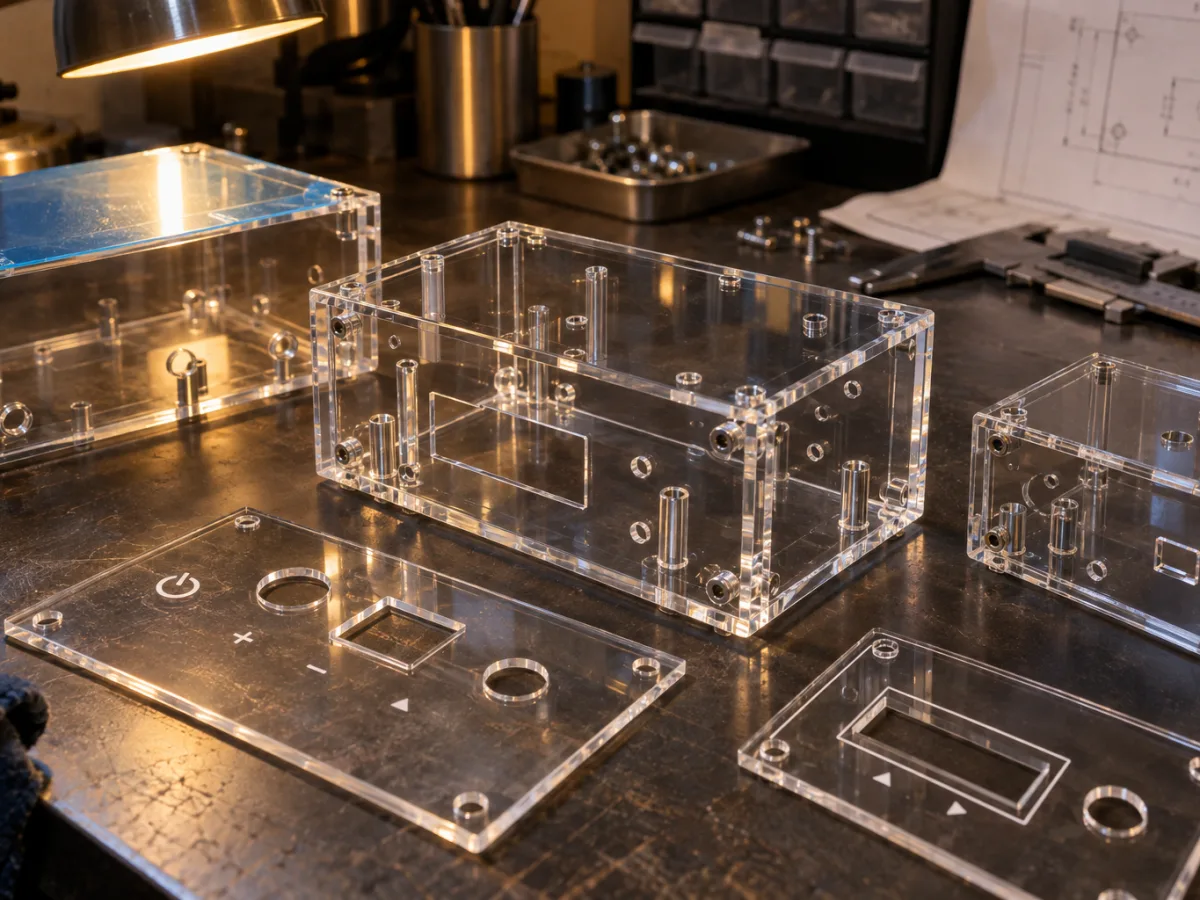
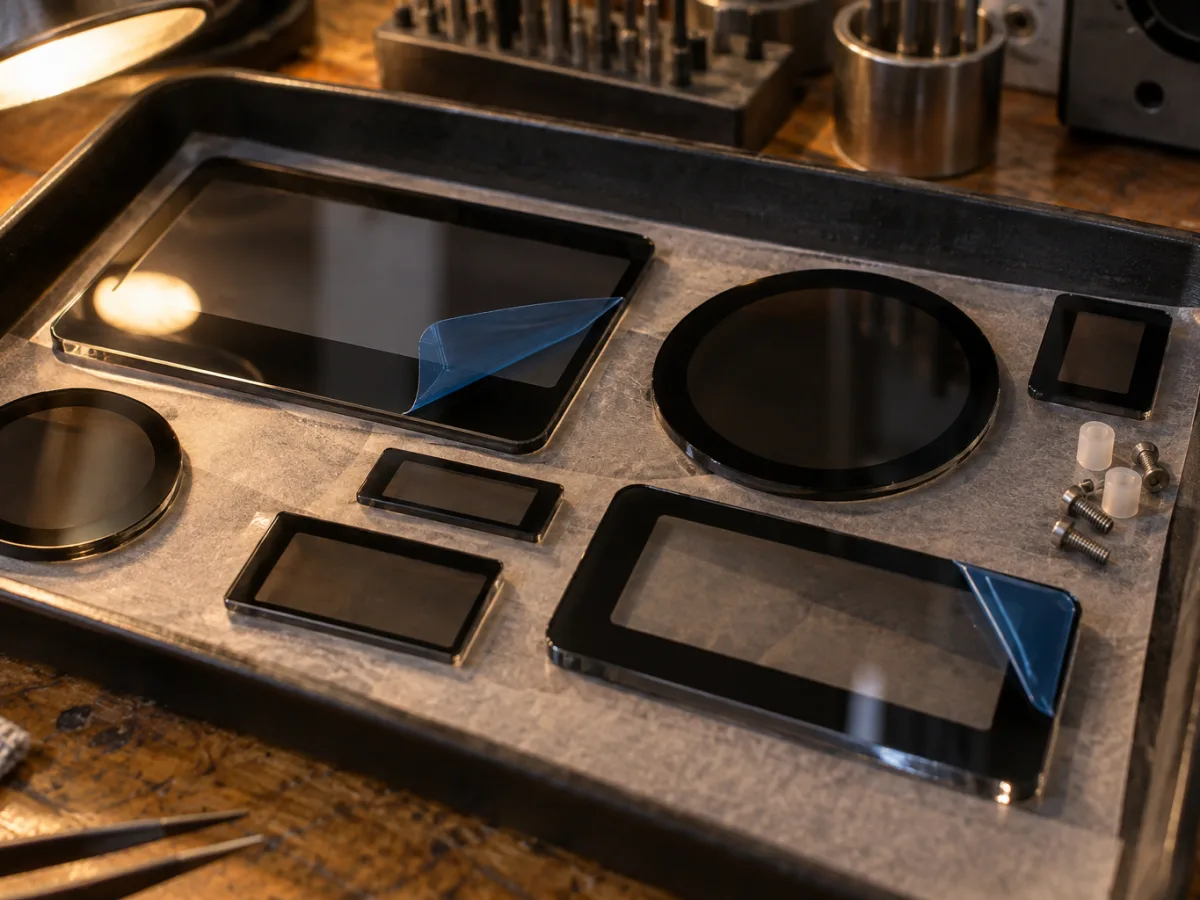
Yes. Drilled and countersunk holes, slots, ventilation patterns and rectangular cutouts for connectors, switches and screens are cut or machined to the drawing, and panels can carry silk-screened or UV-printed markings. Parts are delivered solvent-bonded or as panels for screw assembly, as the drawing specifies.
Can you sign an NDA before we send drawings?
+
We can sign a reasonable NDA after reviewing and agreeing its terms. Your drawings and project files are used only to quote, sample and manufacture your order, never published or reused for another customer. The agreement should protect your confidential project information without treating common manufacturing methods as your exclusive property. Please send the proposed agreement for review before sharing confidential files.