
Delivered project · Custom Components
Magnetic Acrylic Components with Lot-Level QC
An assembler needed a large, staged run of clear acrylic parts with embedded magnets that locate inside its finished product.
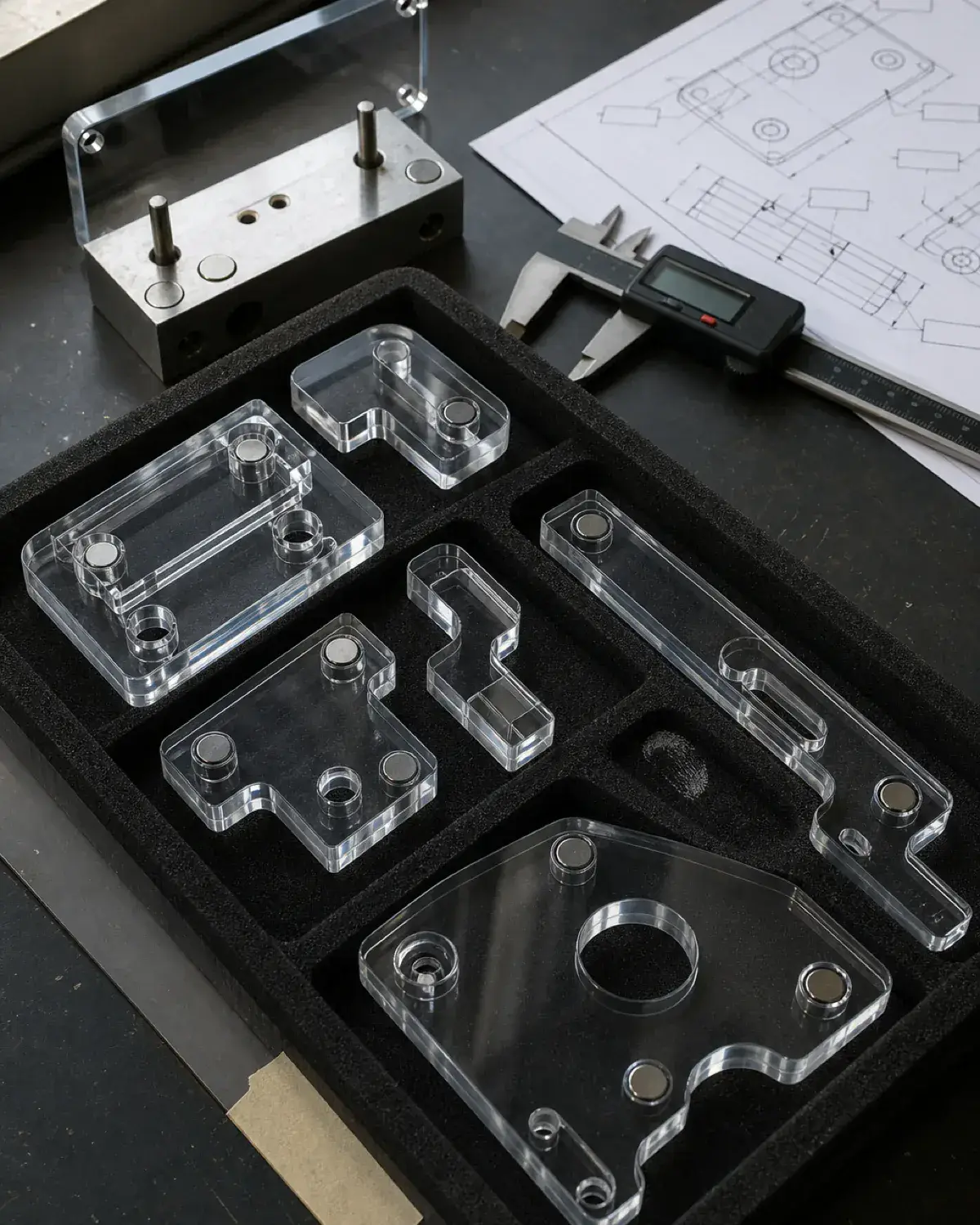
We machined and delivered them under a lot-level release: the buyer's drawing set geometry, magnet grade, polarity and packout, the paid sample was approved with a first-article record, and every lot shipped to that one revision.
Ordering a similar project
MOQ is 100 pieces per design. Paid samples normally take 3–5 days; sample fees are paid separately and never credited. Standard production takes 15–20 days after drawing, material, artwork, packing, and sample approval. Wetop responds to a complete brief within 24 hours.
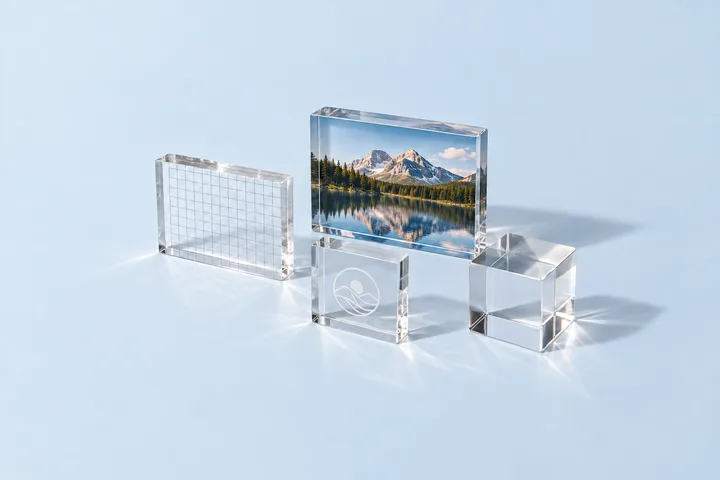
Closest published price: this order was quoted line by line from the drawing. The nearest public reference is a 6 × 8 inch × 20 mm photo-block blank at 2,000 pieces, listed from $5–11 per unit FOB Shenzhen on the acrylic blocks hub; machined parts with magnets and assembly price above a plain blank.
Key Takeaways
- An assembler brought us a repeated magnetic acrylic part for a staged bulk order; we locked magnet grade, polarity, orientation, retention method and geometry on the drawing before sampling.
- The buyer approved one production-built paid sample in its own mating assembly, and we recorded a first-article inspection before releasing the lot.
- We checked cosmetic finish, magnetic function, dimensions and packout as separate items on every lot.
- We protected polished acrylic faces and magnet locations through assembly, inspection, and carton handling.
- The order shipped in stages, and every physical or polarity revision stayed tied to its own drawing, label and quantity allocation.
The Buyer Need
An assembler came to us with a repeated acrylic component that locates magnetically inside a larger finished product. The exposed acrylic part had to meet a visual boundary, a set magnet depth and orientation, the mating envelope and the cleanliness rules of the buyer’s assembly line. The order was large and would ship in stages.
At that volume, a small ambiguity in polarity, pocket depth, adhesive or film direction turns into a lot of defects. So we built one release package and had production and QC work from that single revision, not from an old sample photo.
The Manufacturing Route
The buyer sent a controlling drawing, mating-part information, magnet grade and coating, pole orientation, the holding test method and quantity by revision. We turned that into a production drawing with named datums, critical dimensions, magnet specification, pocket geometry, polarity map, retention method, show faces, protective film and packing orientation.
We built the paid sample with production acrylic, machining, magnets and assembly. The buyer fitted it in the real mating assembly and approved magnet seating, polarity, edge finish, flatness, adhesive appearance, film removal and the packed part. The approval recorded the sample reference, the active drawing revision and the accepted deviations.
Our quote separated component price, magnets and adhesive, inspection, packout, carton data and freight. We wrote the staged delivery the buyer asked for as a release schedule with quantities per physical revision, label and destination. Production was released only after drawing, material, sample, quantity allocation, packing, price and payment terms were approved in writing.
Lot-Level QC
Our first-off report checked the production setup against the release: outside dimensions, pocket location and depth, magnet identity, polarity, retention, cosmetic boundary and packout. A simple polarity fixture took operator judgment out of the polarity check. Critical dimensions were measured with named instruments or functional gauges tied to the active revision.
Each lot combined measured critical features with a visual check of every show face. We held nonconforming pieces apart by lot and condition. Any change to acrylic grade, magnet, adhesive, fixture or process went to the buyer for sign-off before the affected release, and each revision kept its own drawing, label and quantity allocation.
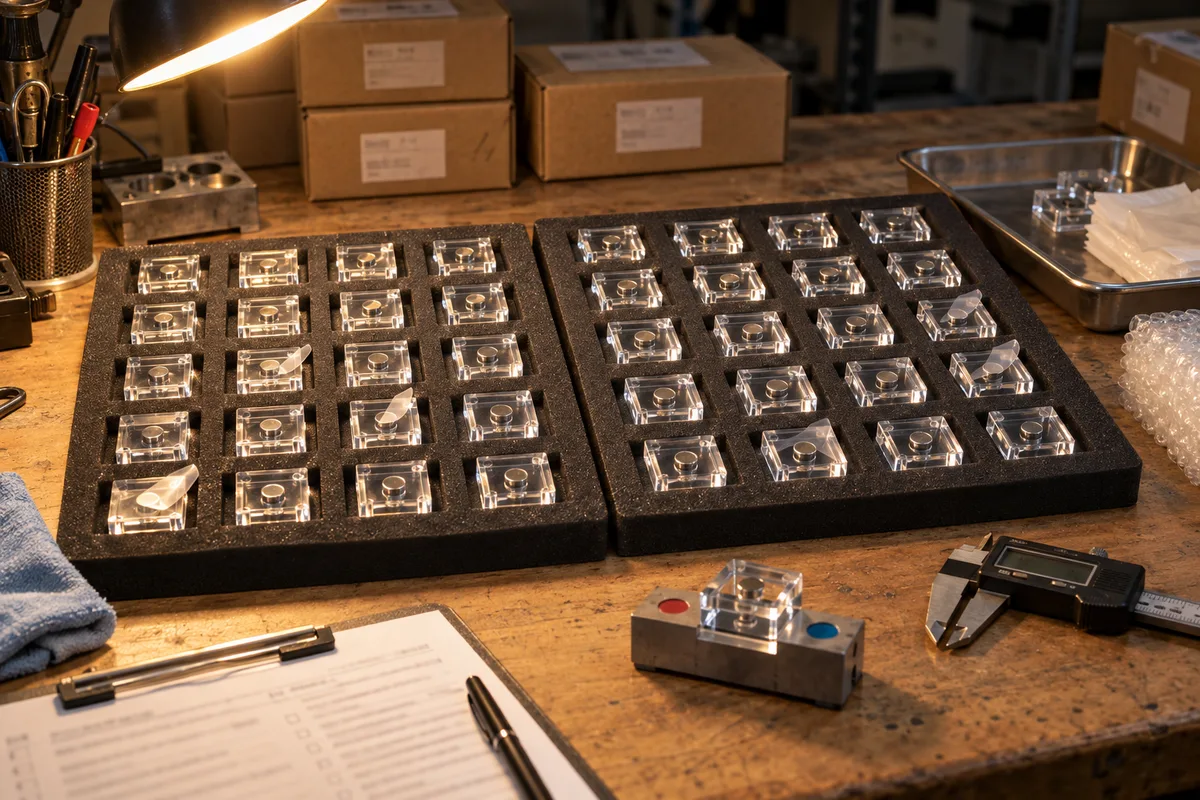
Packing was treated as part of the product. Each part had individual surface protection and cavity restraint, and carton limits kept the dense parts from striking each other. Labels carried polarity or revision, lot, quantity and orientation.
What the Buyer Checked
- The component fit the buyer-supplied mating assembly without forced insertion.
- Magnet polarity matched the approved map.
- Magnet position and retention passed the buyer-approved functional check.
- Show faces met the signed cosmetic boundary sample.
- Protective film and packing did not contaminate or abrade the part.
- Carton labels identified part revision, lot, quantity and orientation.
Delivery and Outcome
We shipped the order in the staged releases the buyer scheduled. Each lot went out against one active drawing, one approved sample reference, a version and quantity table, written acceptance checks and a packout specification. Drawing, sample, first-off check, lot inspection and change notices all pointed to the same revision, so the parts that reached the buyer’s assembly line matched the sample it had approved.
The split of responsibility was written down from the start. We handled acrylic fabrication, magnet assembly, inspection and factory packout. The buyer kept the product model, the destination rules, final assembly and any third-party test criteria outside our written offer.
If You're Planning Something Similar
Send finished dimensions, critical tolerances, magnet grade and coating, pole orientation, the pull or holding test method, cosmetic boundary, assembly route, quantity by revision and final packout. A photo is enough to discuss feasibility; production needs a released drawing. Splitting an order across versions or destinations works once each physical design has its own drawing and paid sample. When you compare quotes, check that each covers the same hardware, assembly, inspection and packing. See custom acrylic components, CNC acrylic machining and our first-article inspection checklist.
Need magnetic acrylic parts made to your drawing?
Send the drawing, quantity by version, product samples or models, artwork, packing requirement, destination, and target timing. We will return the open questions and a written manufacturing quote.