

Case Study · Photo Printing · United States

2,400 Acrylic Photo Blocks for a US Print Lab — Third Reorder in 12 Months

A US photo-printing group with a multi-lab operation runs acrylic photo blocks as a standing product line, and this order was the proof point that matters in that business: the third purchase order in 12 months. 2,400 clear blocks across 3 sizes, produced in 16 days with no sample loop because the golden sample from PO #1 stays on file at our factory, shipped at a 0.3% pre-shipment defect rate with every block individually foam-sleeved.

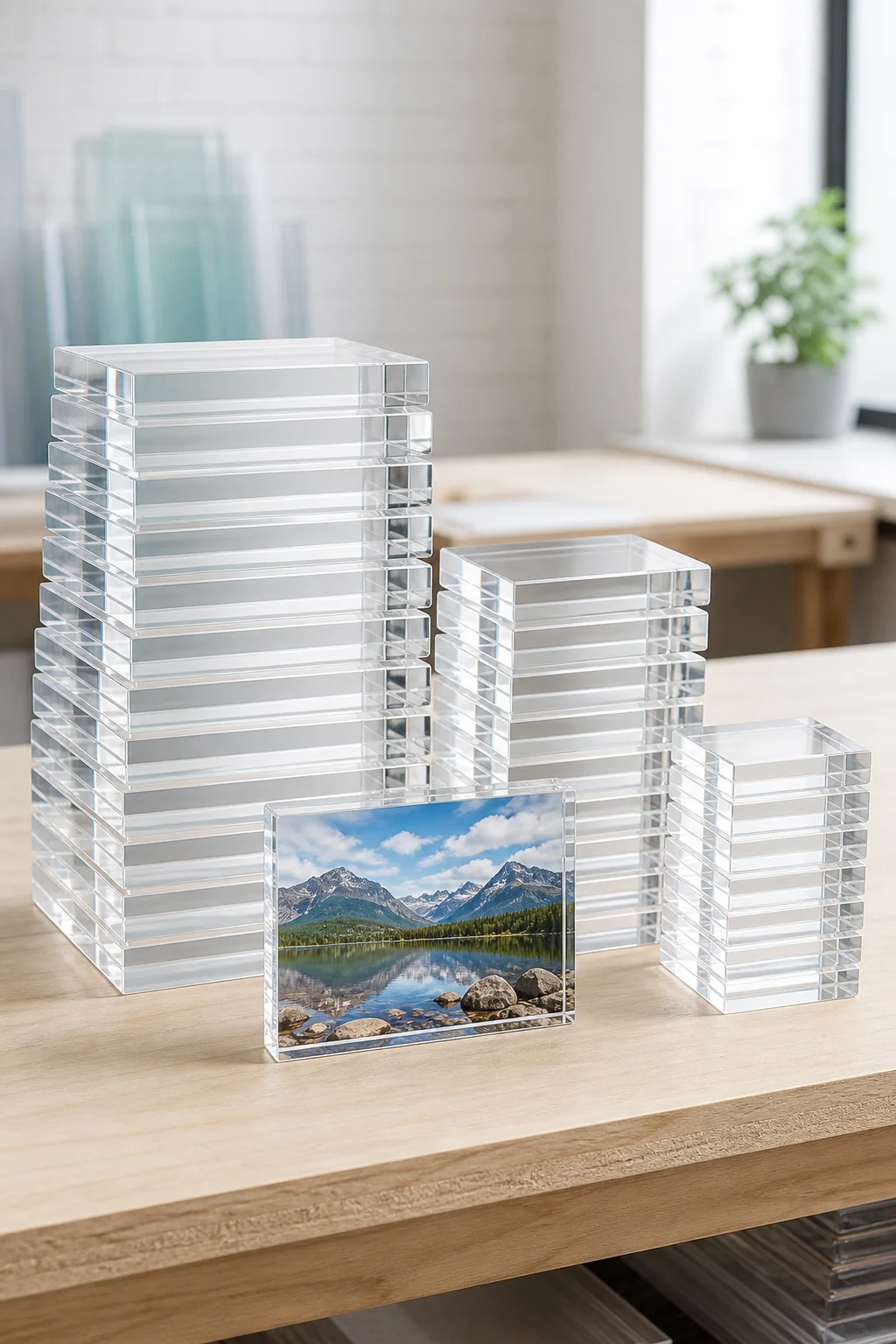
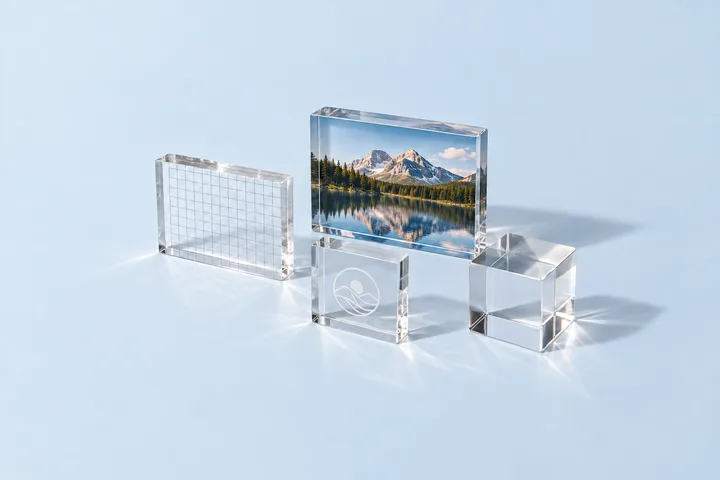
Stacks of clear cast acrylic photo blocks in three sizes on a print lab workbench, one block face-on with a mounted landscape photo behind glossy polished PMMA and crisp 90-degree corners
units this PO
2,400
reorder production
16 days
pre-shipment defects
0.3%
PO in 12 months
3rd

Key Takeaways

  1. Photo labs buy blocks on consistency, not novelty. The reorder spec is a retained golden sample plus a locked sheet grade, so the 2,400 blocks in PO #3 match the blocks from PO #1.
  2. Diamond-polished edges with a 90-degree corner spec are the QC line that matters: rounded corners and edge chips are the defect modes that make photo labs re-inspect every carton.
  3. Optical-grade cast acrylic with sheet-lot discipline (same grade, same supplier logic across all three POs) keeps clarity uniform where it counts most, directly in front of a printed photo.
  4. Individual foam-sleeve packing removed transit scratching from the defect list: the failure mode that quietly kills margins on resold photo products.

The Challenge

The buyer is a photo-printing group operating multiple production labs across the US. Their business is turning consumer photos into finished products: framed prints, canvases, and mounted pieces. Acrylic photo blocks sit near the top of their margin table. A customer uploads a photo, the lab prints it, mounts it to the back of a polished acrylic block, and ships a freestanding desk piece. The block itself is roughly a third of the product's landed cost and one hundred percent of its perceived quality. A muddy or chipped block makes a sharp print look cheap.

Their sourcing problem was never finding a block supplier. Dozens of factories will quote clear acrylic blocks, and the first batch from almost any of them looks fine. The problem was batch three. Their previous supplier's first order passed inspection without comment. The second arrived with corners noticeably rounder than the samples (the factory had quietly moved the blocks to a flame-polishing line to save time) and a scatter of edge chips deep enough to catch a fingernail. By the third order, the lab's finishing team was opening every carton and grading blocks one by one before mounting a single print. That inspection labor erased the unit-price advantage that had won the supplier the business in the first place.

Two quieter problems ran underneath the corner issue. First, clarity drift: when a factory switches acrylic sheet lots between orders, the material can shift from neutral to a faintly warm or gray cast. On a shelf, nobody notices. Directly in front of a printed photograph, which is the entire job of a photo block, a warm-cast block sits next to a neutral one from the previous batch and the difference shows. Second, reorder speed. The group forecasts block inventory against mounting-line schedules, and a supplier running a 30-day cycle with a fresh sample loop on every PO forces them to carry weeks of extra stock or idle the line. They needed reorders that landed inside their inventory buffer, not behind it.

The cost of failing on any of these is worth pausing on, because it explains why the group changed suppliers over quality drift rather than negotiating price down. Grading a few thousand blocks by hand at even twenty seconds per block is a full shift of skilled labor per order, and it happens on the receiving dock, where labor is least productive. Rejected blocks then have to be documented, photographed, and argued over by email across a twelve-hour time difference: weeks of back-and-forth for a credit that rarely covers the disruption. And photo products are priced against a crowded consumer market, so none of that cost passes through to the customer. It comes straight out of the margin the block was supposed to carry.

So the brief for this program was blunt: hold the corner spec, hold the clarity, hold the schedule — three times in a row, not once.

Our Approach

Three production decisions carry this program: the edge process, sheet-lot discipline, and unit packing. None of them is exotic. All of them are choices a factory either commits to on every batch or quietly trades away when the schedule tightens.

Diamond polish and the 90-degree corner spec

Edge finish is where photo blocks are won or lost, so it was the first process choice we locked. There are three realistic ways to finish a block edge, and they produce visibly different corners:

Edge processCorner sharpnessOptical clarityCostSuited to
Flame polishSoftens — heat rounds the cornerHigh gloss, can introduce stress near edgesLowestDisplay parts where corners are not inspected
Diamond polishHolds a crisp 90-degree cornerUniform, glass-like edge faceMidPhoto blocks, awards, retail-graded product
Buffed wheelSlightly eased, wax residue riskGood gloss, less flat than diamondMid-lowThick decorative pieces, low-volume work

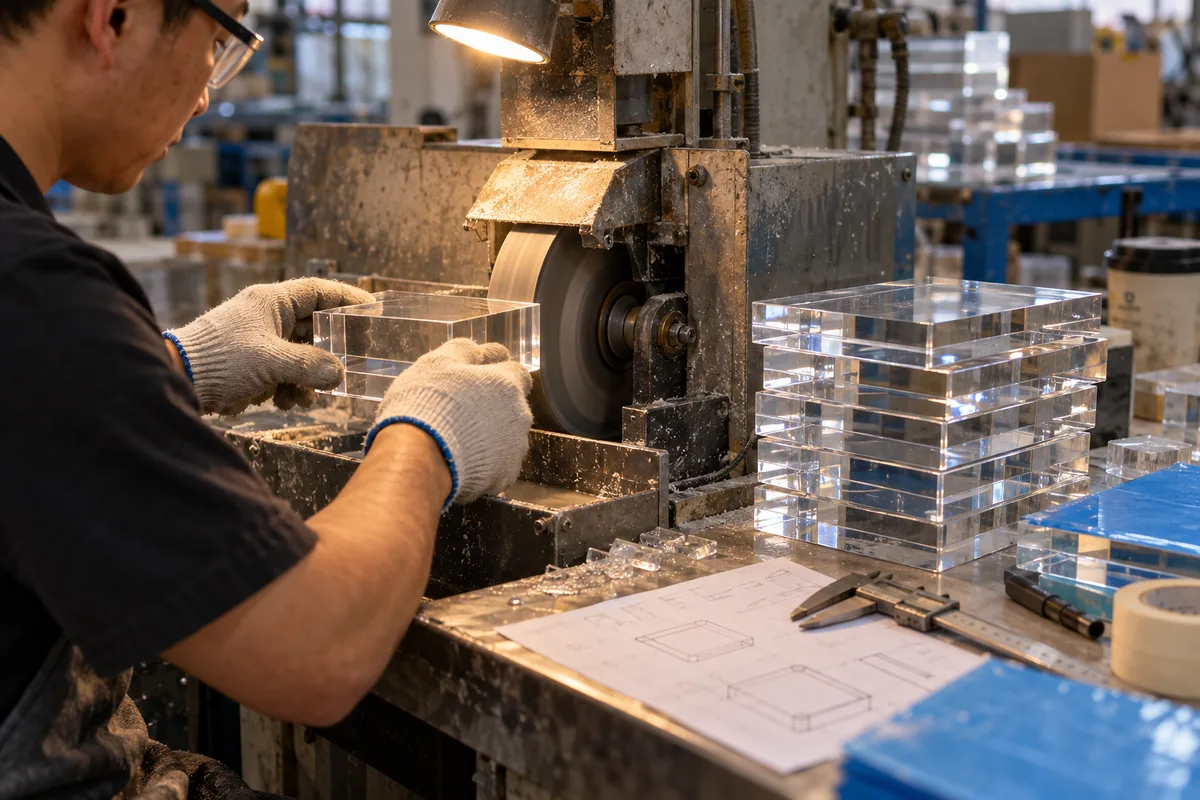
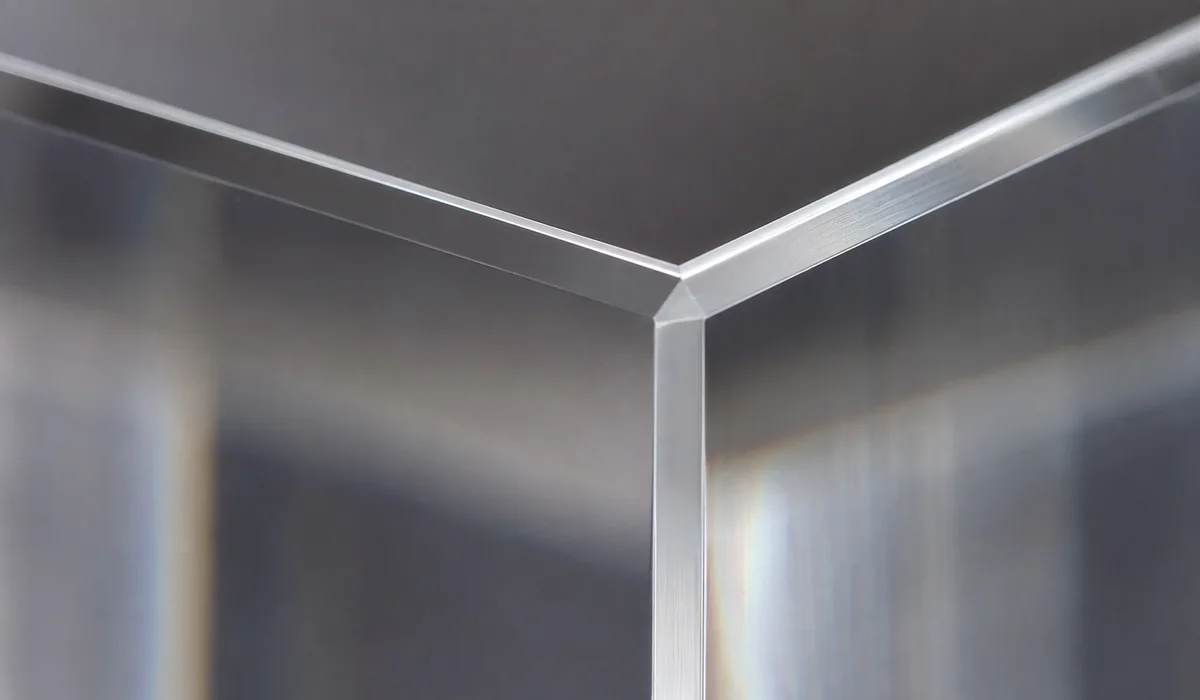
We run these blocks across our dedicated diamond-polishing line, which cuts the edge face with a rotating diamond tool instead of melting it with a flame. The practical difference is the corner. Flame polishing is faster and cheaper, but heat pulls the corner into a soft radius, exactly the "rounded corners" the lab had flagged on their previous supplier's second batch. A diamond-cut edge meets the face at a true 90 degrees, which is what the lab's own retail grading standard checks first.

The production sequence matters as much as the tool. Blocks are CNC-cut from cast sheet with the protective masking still on both faces, so the polished surfaces never meet a saw table bare. Edges then run through the diamond line in a fixed pass order, and the operator inspects corners under raking light, the low-angle lighting that makes a chip or a soft radius impossible to miss, before the block moves to packing. The three sizes in this order shared one setup sequence, which is part of how a 2,400-unit run stays inside 16 days without anyone trading the edge process away to recover schedule.

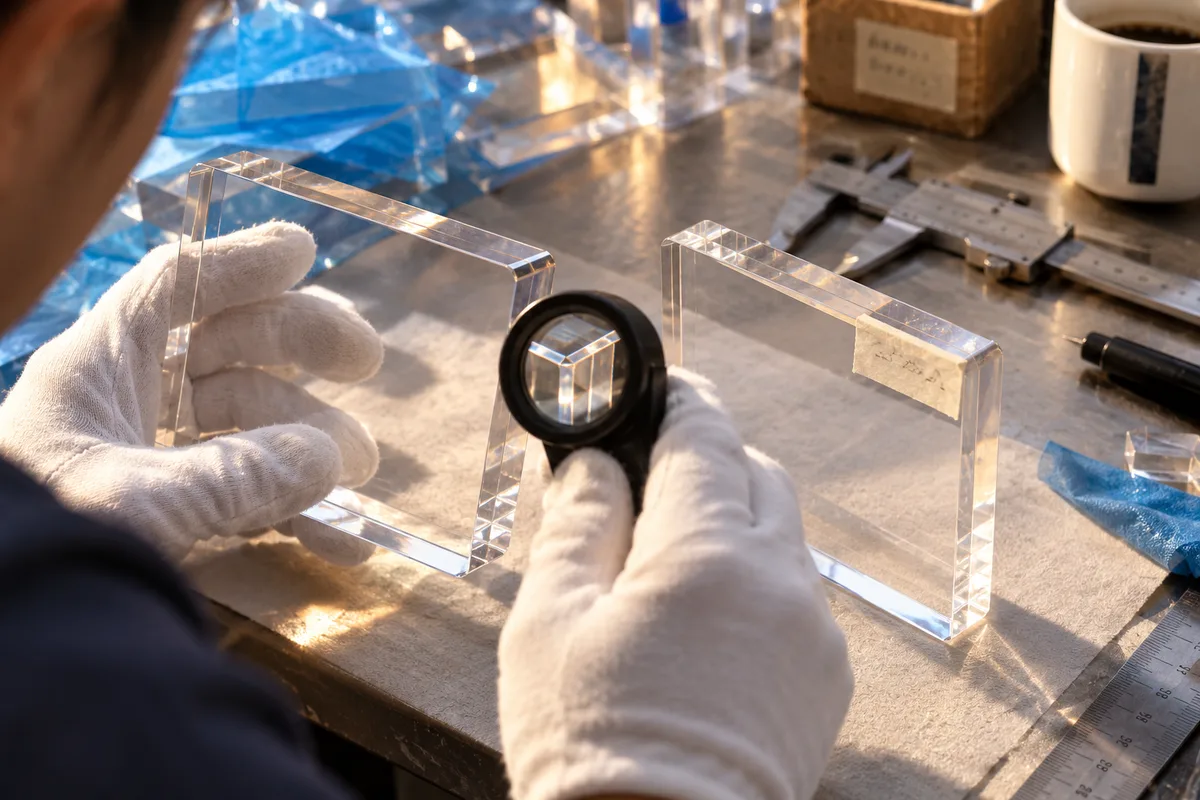
The lab's inspection card is simple: corner crisp, edge chip-free, face scratch-free. We wrote our line-side QC card to mirror theirs, so the block is graded at our factory against the same three checks it will face in theirs. When two inspection cards match, "pass" means the same thing on both sides of the Pacific, and disputes stop being a category of work.

Macro close-up of a diamond-polished cast acrylic photo block edge, light catching the crisp 90-degree corner of the glossy PMMA face
The check that matters: a diamond-cut edge meets the face at a true 90 degrees, with no flame-rounding at the corner.

Sheet-lot discipline for optical clarity

All three POs in this program run on optical-grade cast acrylic, and the grade is written into the order spec rather than left to whatever sheet is on the rack. Cast sheet gives better clarity and machines more predictably than extruded: the higher molecular weight polishes to a cleaner edge face and resists the heat-stress marks that extruded sheet picks up on a polishing line. Optical grade adds tighter control on the base resin, which is what keeps a 40 mm thick block reading water-clear instead of faintly green when you look through it at a photograph. But the bigger discipline is lot control. We source the same grade from the same sheet supplier for every reorder, and we keep the golden sample from PO #1 in our sample library with the order file. At line setup for this third order, the operator pulled that original block and compared it against the new sheet lot on a lightbox before cutting began: a two-minute check that catches warm-cast drift while it is still a sheet problem instead of a 2,400-block problem.

This is also what made the 16-day turnaround possible. Because the golden sample and the locked material spec stand in for a fresh sampling round, a reorder starts at cutting, not at sample approval. The lab confirms quantity and sizes by email, and production is running the same week. On their side, the buffer stock they hold against supplier delay has shrunk accordingly — a working-capital gain that never shows up on a quote sheet.

Foam-cell individual sleeving

The third decision is packaging, and it exists because of a failure mode we see across the photo-products category: blocks that leave the factory clean and arrive scratched. Layer-packing (blocks stacked face-to-face with a single foam sheet between layers) is the standard cheap method, and it works until a carton takes a corner impact and the layers shift. Polished acrylic faces grinding against each other for three weeks of ocean transit will scratch, and a scratched block face sits directly in front of the customer's photo.

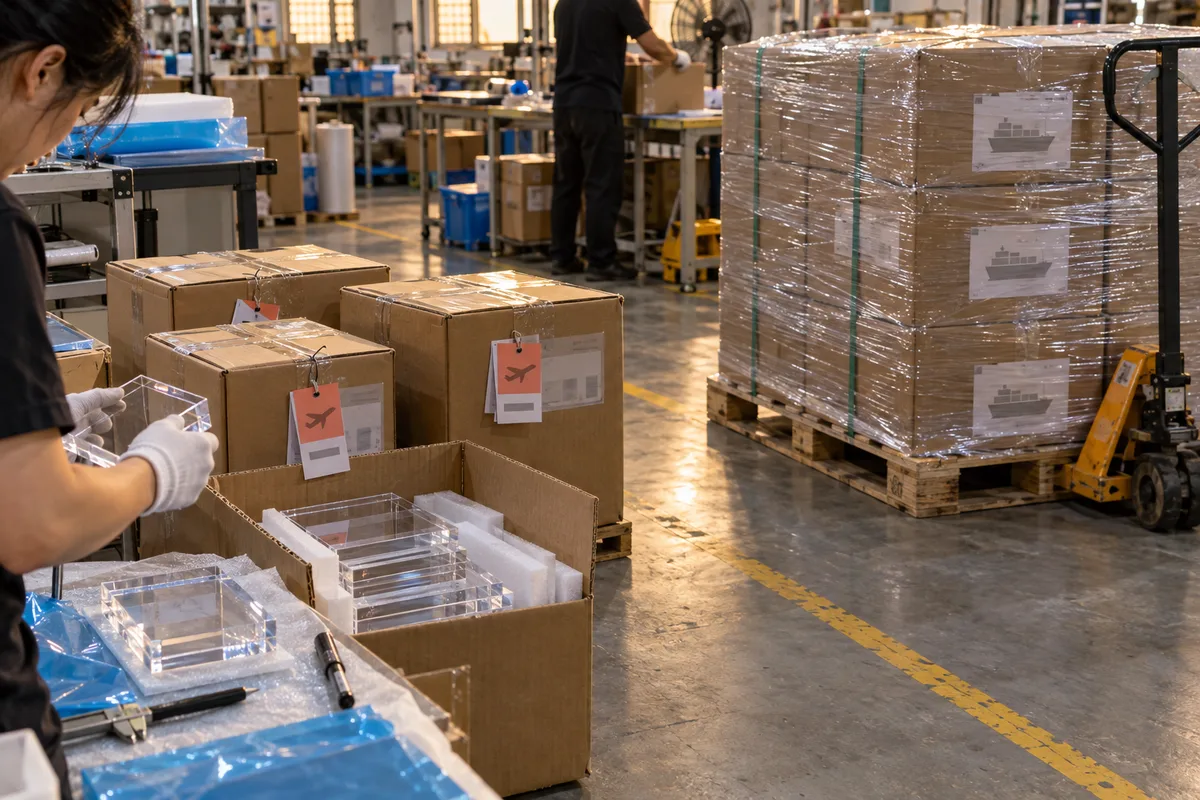
Every block in this program ships in its own foam-cell sleeve, seated in cartons with die-cut dividers so no two acrylic surfaces can touch regardless of how the carton is handled. Sleeving 2,400 blocks individually adds packing labor and a few percent of carton volume. It also means the lab's mounting line pulls blocks straight from the sleeve to the mounting jig, with no incoming re-polish station and no grading table. They stopped opening every carton for inspection after the first PO — the sleeve state told them what they needed to know. The same packing step also takes retail-ready options: labs selling blocks as finished gifts can spec branded sleeves or gift-box packaging in place of plain foam cells, quoted as part of the unit price rather than bolted on afterward.

The Results

The order shipped complete in 16 days at a 0.3% pre-shipment reject rate, and it is the third PO this buyer has placed in 12 months.

Units shipped
2,400 blocks across 3 sizes
Reorder turnaround
16 days production; no sample loop, golden sample retained from PO #1
Pre-shipment defect rate
0.3% at 100% inspection
Corner and edge QC
Every block checked against the retained golden sample before sleeving
Reorder pattern
3rd purchase order in 12 months

The three sizes in the mix, 100 × 100, 150 × 150, and 200 × 200 mm, map to how the lab actually sells: the small block anchors the entry price point, the mid size carries most of the volume, and the large format serves the premium tier. Running all three in one PO under one material lot means a customer who buys the small block and comes back for the large one gets the same clarity and the same corner — which sounds minor until you remember that repeat customers are the lab's margin engine too. Consistency compounds in both directions of the supply chain.

In photo products, the reorder is the metric. A first order proves a factory can produce a sample-quality batch once; a third order at rising familiarity proves the process holds without the buyer standing over it. Labs in this category churn suppliers over QC drift far more often than over price — the pattern this buyer lived through before moving the program to us. Twelve months in, the drift has not appeared, because the things that cause it are pinned down in the order file: the edge process is specified, the sheet grade is specified, and the golden sample sits physically next to the work order at every line setup.

The 0.3% figure deserves a word of context. Every block passes 100% piece-by-piece inspection before sleeving: corner, edge, face, against the golden sample. The 0.3% is what our inspectors pulled out of the run before packing, not what the customer found after it. Buyers who want independent eyes on a run can add third-party pre-shipment inspection, SGS or Bureau Veritas, which we accommodate on request. What a photo lab actually experiences is the downstream effect: blocks that mount without a grading step. For how we classify and handle block defects when they do occur, our acrylic block defect classification and RMA guide documents the standard we inspect against.

"Third order from Wetop and the corners still pass our retail check straight out of the sleeve. Sixteen days door to port on 2,400 blocks, and we stopped opening every carton for inspection after the first PO."
Production DirectorUS photo-printing group · multi-lab operation · 3 POs in 12 months

What This Means for Your Project

If you resell or mount on acrylic photo blocks — as a photo lab, a print shop, or an ecommerce photo brand — the questions that predict whether batch three will match batch one are not the questions most RFQs ask. Unit price and lead time appear on every quote. The four specs that actually decide your inspection burden usually never come up:

Edge process. Ask which polishing method runs on your blocks and whether it is fixed in the order spec. A factory that can silently move your product from diamond to flame polishing between orders will eventually do it, and you will find out from your corners.

Corner geometry. If your grading standard needs a crisp 90-degree corner, say so in writing and ask how the factory checks it. "Polished edges" on a quote covers everything from glass-crisp to visibly rounded.

Sheet-lot control. Ask what happens to material selection on a reorder. Same grade, same supplier, golden-sample comparison at setup — or whatever sheet is cheapest that month. Clarity drift between batches comes from this decision and almost nowhere else.

Unit packing. Layer-packed blocks arrive cheaper and scratched more often; individually sleeved blocks cost slightly more per carton and go straight onto your line. Decide which side of that trade your product margin prefers, and put it in the spec. Either way, ask for carton dimensions and gross weights with the quote; we provide them as standard, so your freight forwarder can price the shipment before you commit.

None of these four items moves a quote much. All of them decide whether your third order looks like your first, and whether your receiving dock runs a grading table or a pass-through. The cheapest supplier on paper is often the one that left all four unspecified — which is another way of saying the price you were quoted is not the price you will pay.

We build custom acrylic photo blocks to order in any size mix, with a 50-piece MOQ that lets you grade our corners on a small run before committing a standing program. Samples ship in 3–5 days, and our customization process starts from your sizes and grading standard, not from a catalog. Send both and we will quote against them.

Running photo blocks as a standing product line?

Send us your block sizes and monthly volume — we'll come back with a per-size quote and a sample block finished to the same diamond-polish corner spec this lab reorders against.

Sample in 3–5 days · Production in 15–20 days · MOQ 50 pcs