
Delivered Project · Retail Components
3D Acrylic Letter Components
A multi-location specialty coffee chain needed dimensional logo letters made to one standard across its stores.
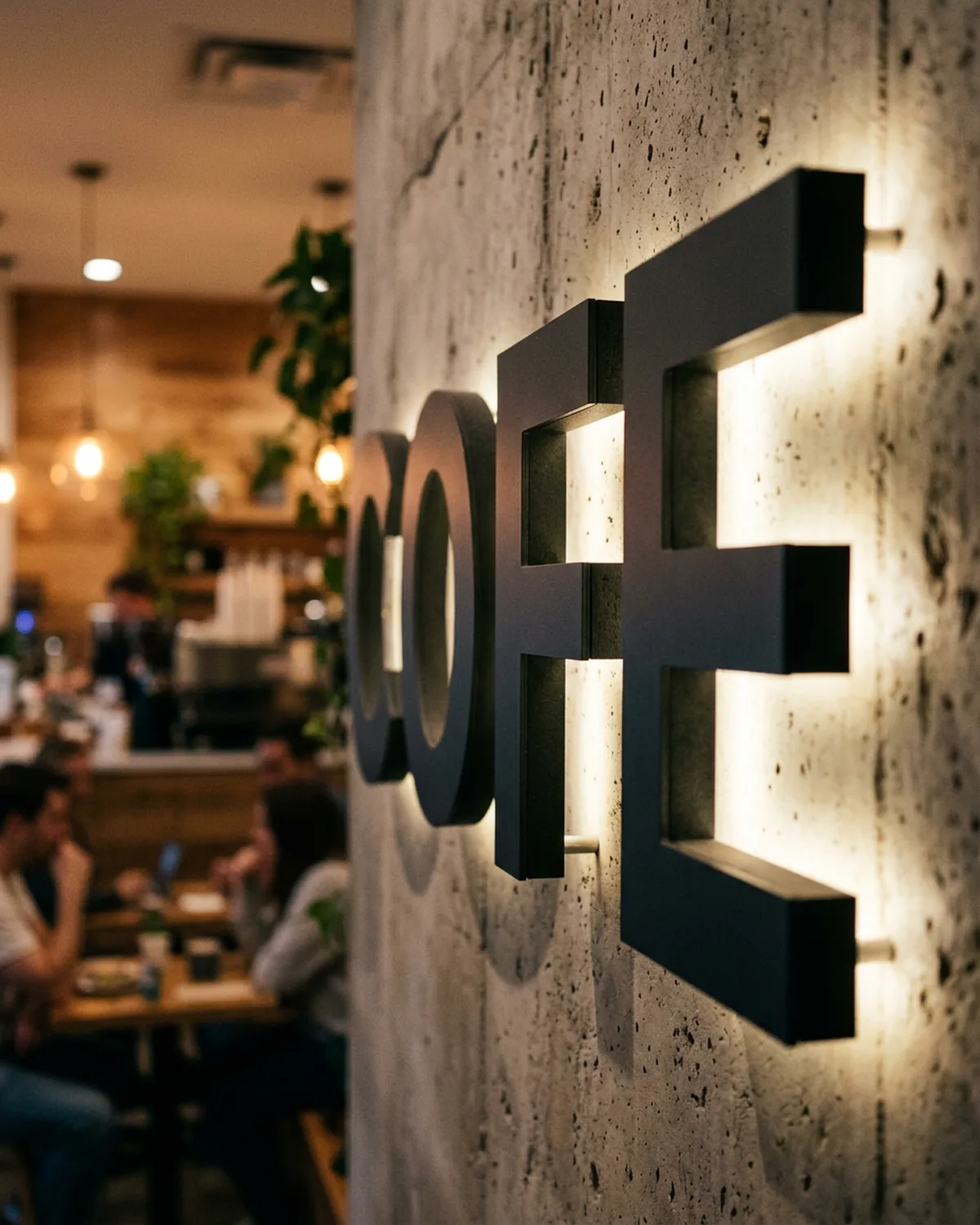
We reviewed the chain's vector artwork and letter schedule, made a paid sample, and then fabricated the non-electrical acrylic letter components with the finish, mounting interface, inspection and packing the buyer approved. Installation, lighting and permits stayed with the chain's own sign team.
Ordering a similar project
MOQ is 100 pieces per design. Paid samples normally take 3–5 days; sample fees are paid separately and never credited. Standard production takes 15–20 days after artwork, drawing, sample, finish, inspection, and packing approval. Wetop responds to a complete brief within 24 hours.
Letter count, artwork, size, material, thickness, finish, inserts, packing, quantity, and destination determine the written quotation.
Key Takeaways
- A multi-location specialty coffee chain ordered dimensional acrylic letters for its stores; we made the non-electrical letter components and the chain's own sign team handled lighting, wiring, power and installation.
- The buyer released the vector artwork, letter schedule, scale, color references, visible faces, mounting interface, destination and quantity by design.
- We chose the fabrication route after reviewing the vectors and fixed thickness, profile, edge finish, paint, inserts and packing on the drawing and a separately paid physical sample.
- The buyer approved the sample at viewing distance under store-like light; we then produced, inspected every letter against the drawing and sample, and packed by character and label.
- Where the buyer named a sheet or coating, we shipped the supplier documents with the order; they describe the material, not the finished installation.
The Challenge
The chain wanted the same letters in several locations, and the walls were not the same. We started from artwork control. The buyer released vector outlines, a character schedule, quantity by character, scale, color references, visible faces, viewing distance, environment and destination. The chain's own sign designer and installer looked after the substrate, supports, anchors, access, permits and local code.
Our part was the non-electrical acrylic letter components, made to the approved drawing and sample. Lighting, wiring, drivers, power supplies, field templates for unknown walls, anchors, structural engineering, certification and permits sat with the buyer's team. We closed three questions before we issued the manufacturing quote:
- Which geometry was released? Small counters, enclosed spaces, acute corners and narrow strokes needed a different fabrication route from the large simple profiles. The vector master and letter schedule used one set of units, scale, naming and revision control.
- Which surfaces and finish mattered? The buyer set front, return, rear and edge expectations, with named color and gloss references, and told us the lighting the letters would be seen under.
- What interface did the installer need? We fabricated the holes, inserts, backing features and spacers shown on the drawing. The buyer's installer handled the wall, anchor selection, load path, layout transfer and final installation.
Our Approach
We kept fabrication inputs apart from site decisions. Our manufacturing pack held the vector revision, character schedule, material callout, nominal dimensions, finish reference, interface detail, allowed appearance, inspection method, packing map and carton labels. The site pack for wall condition, anchors, layout, access, codes and installation stayed with the buyer and its installer.
We chose the fabrication route after vector review
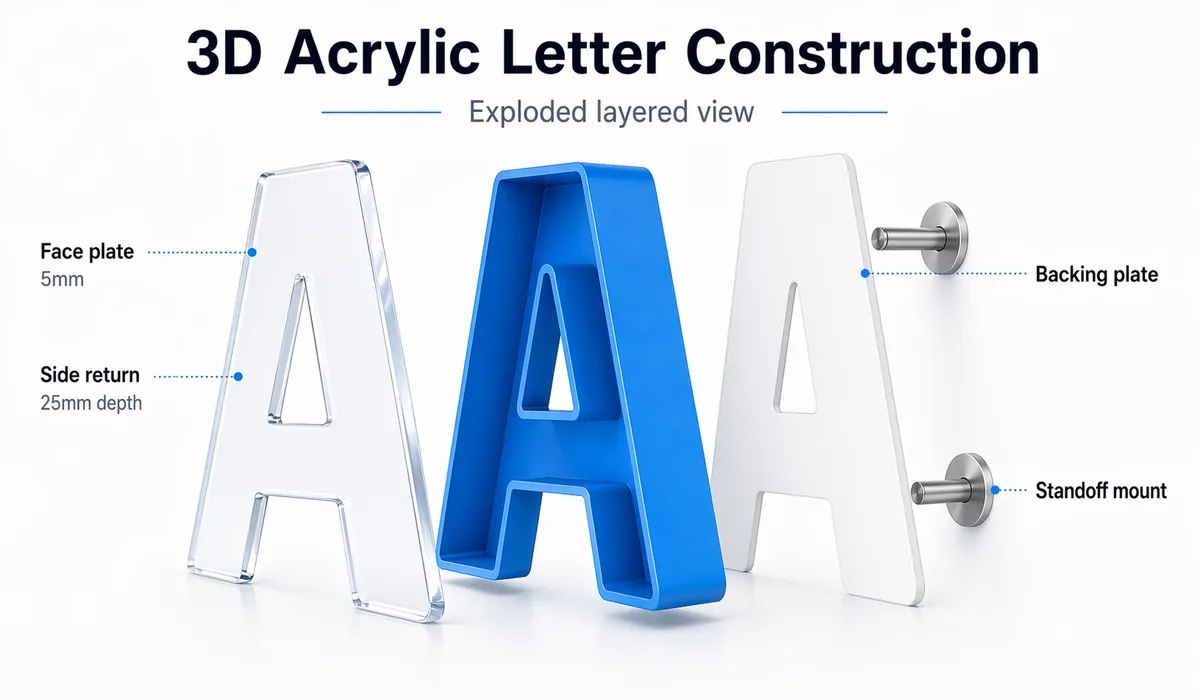
After reviewing the vectors, we picked the route for each letter group from solid routed profile, layered construction, bonded return or printed component, based on letter size, stroke width, thickness, finish, quantity and budget. The drawing recorded the route and showed how seams, corners, recesses and rear interfaces were treated.
The buyer reviewed the paid sample at viewing distance and under light like the stores'. It confirmed scale, profile, color, gloss, edge condition, seam visibility, rear finish and the attachment interface. That approval covered the named material, process, finish and artwork revision.
We matched materials and coatings to the named supplier record
The buyer named the PMMA sheet and coating, so our quote identified those products and the supplier documents we could provide. Those documents describe the sheet or coating under the supplier's test conditions. The chain and its local authority decided whether they covered the finished letters in their market.
We fabricated the interface and left installation to the installer
We made the holes, inserts, studs, backing components and spacers exactly where the approved drawing placed them, and inspected their presence, position and appearance against the drawing and sample. Anchor choice and the wall connection stayed with the buyer's installer, who had the substrate, loads and local requirements.
The buyer decided whether a layout template was needed and who checked field dimensions. Where we cut a template from the released vector file, the installer confirmed scale, substrate, obstructions, orientation and anchor positions on site before drilling.
Project Outcome
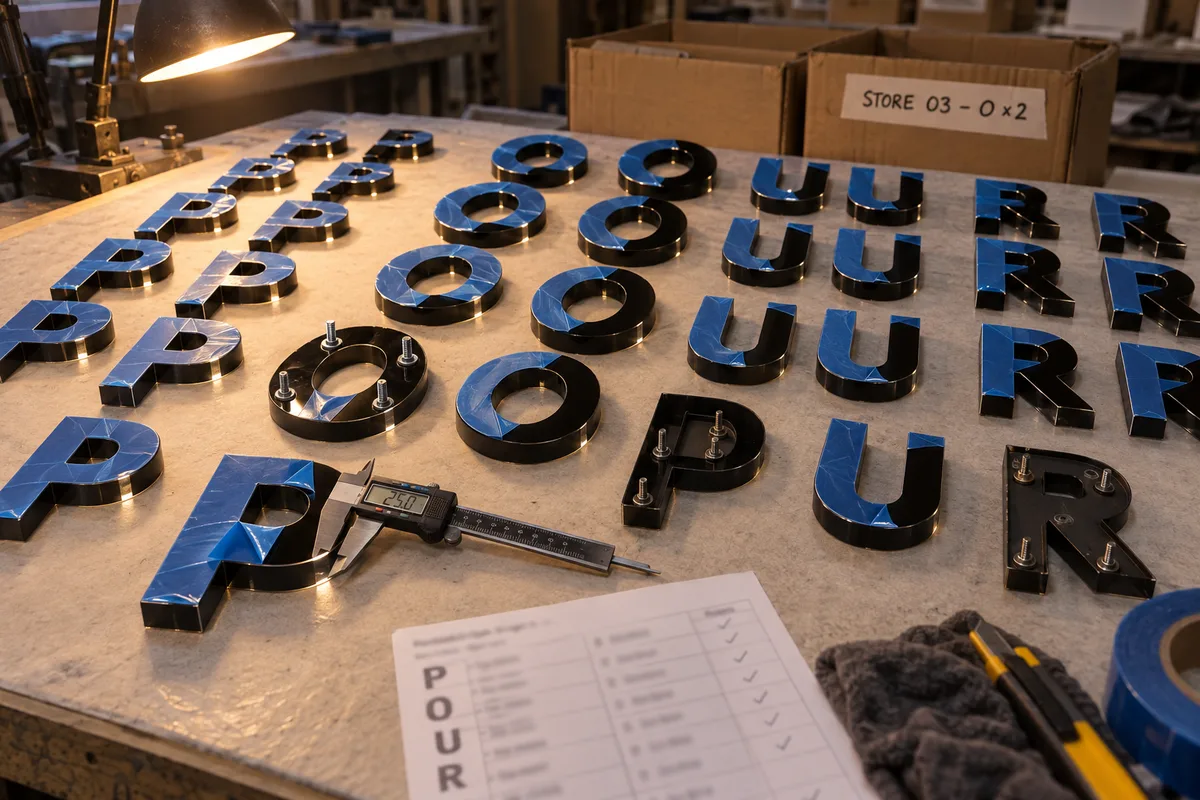
We delivered the letters with a release package the buyer could audit. The approved drawing and sample defined what we inspected on each piece: character identity, nominal size, profile, named material, visible-face finish, edge or seam appearance, attachment features, packing position and label. The order recorded the sampling frequency and the test method agreed with the buyer.
Before bulk release, the buyer checked the sample against its artwork, color reference, viewing condition, wall concept and the installer's interface. We recorded approved deviations instead of quietly adjusting narrow strokes or enclosed areas. Repeat orders for new stores reference the same controlled file.
Release decision: We released the letters only after artwork, material, finish, interface, viewing condition and the physical sample agreed.
If You're Planning Something Similar
Send the released vector file, letter schedule, scale, quantity by design, named color references, visible faces, environment, interface drawing, packing groups and destination. We supply fabrication, not artwork, so the files need to be final. We review manufacturability with the processes on ourcustom acrylic fabrication page and flag fragile strokes, enclosed corners, finish risks, insert access, seams and packing before the sample. A change in color, material, scale, environment or mounting gets a new review and sometimes a new sample. Our scope stays non-electrical: we make acrylic parts to your interface drawing, and your sign team handles lighting and installation. Seecustom acrylic displays and signage.
Need dimensional acrylic letters for your stores?
Send released vector artwork, the letter schedule, scale, quantity by design, color and finish references, the installer-approved interface, packing groups, and destination. We will return a fabrication review and written scope.
Non-electrical acrylic letter components · fabrication route chosen after vector review