Delivered project · Branded Merchandise · Trade Show
Branded Acrylic Giveaway for a Three-Tier Trade-Show Program
A B2B trade-show team came to us for three levels of branded acrylic giveaway, all due before a fixed booth-open date.
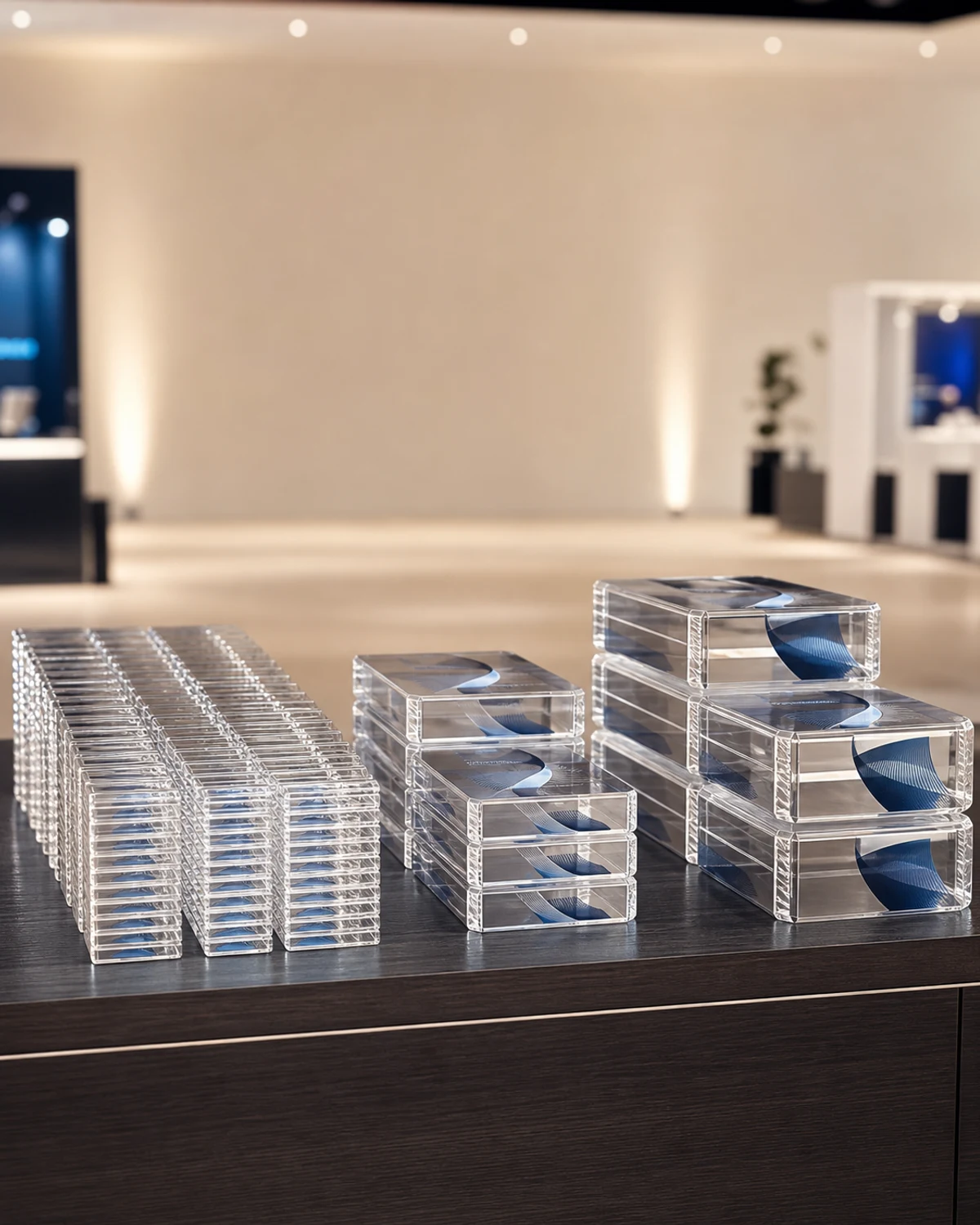
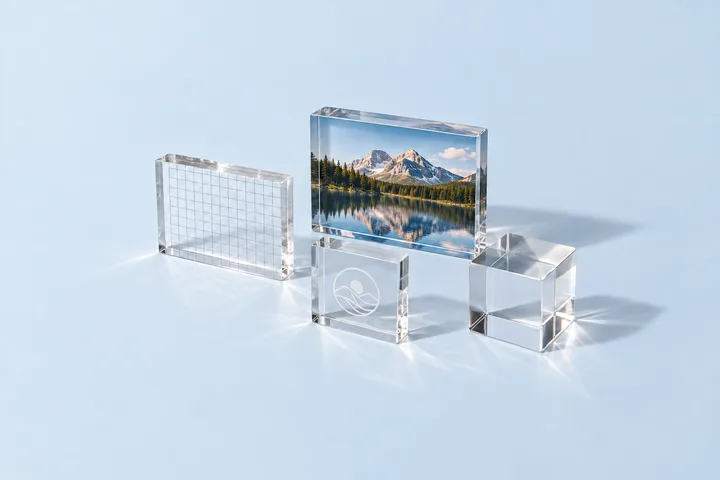
The levels were a light piece for booth walkers, a heavier one for qualified leads and a VIP piece for scheduled meetings. We made them as one family in 8, 15 and 25 mm acrylic with a UV-printed face and a laser-engraved edge, sampled and produced against the fixed booth-open date. Delivered: three engagement tiers on a shared outline, buyer-approved decoration and an event packout built around the buyer's storage and transport limits.
- engagement levels
- 3 tiers
- edge engraving depth
- 3 mm
- inspection
- 100%
Ordering a similar project
Paid pre-production samples take 3–5 days under the standard program. The sample fee is paid separately and never credited to production. Standard production takes 15–20 days after sample approval, and Wetop responds to a complete brief within 24 hours.
Closest published price: this order was quoted line by line per tier. The nearest public reference is a 6 × 8 in × 20 mm clear photo-block blank at 2,000 pieces, listed from $5–11 per unit FOB Shenzhen on the acrylic blocks hub. Decorated, personalized and packed giveaways price above a plain blank; dimensions, thickness, print, engraving, personalization, packing and quantity set the final figure.
Key Takeaways
- A B2B trade-show team needed three levels of branded giveaway ready before a fixed booth-open date; we scheduled backward from that date.
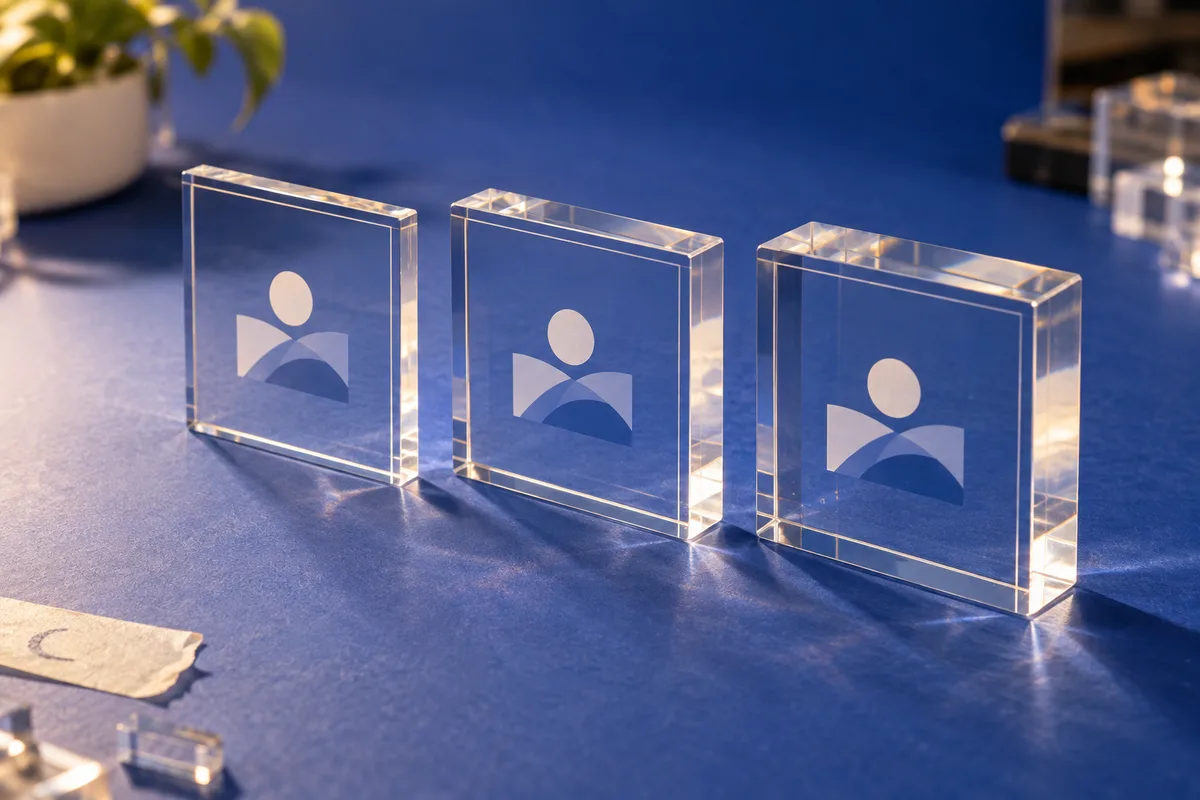
- We made all three tiers from one outline and one print position: 8 mm booth-walker, 15 mm qualified-lead and 25 mm VIP-meeting pieces.
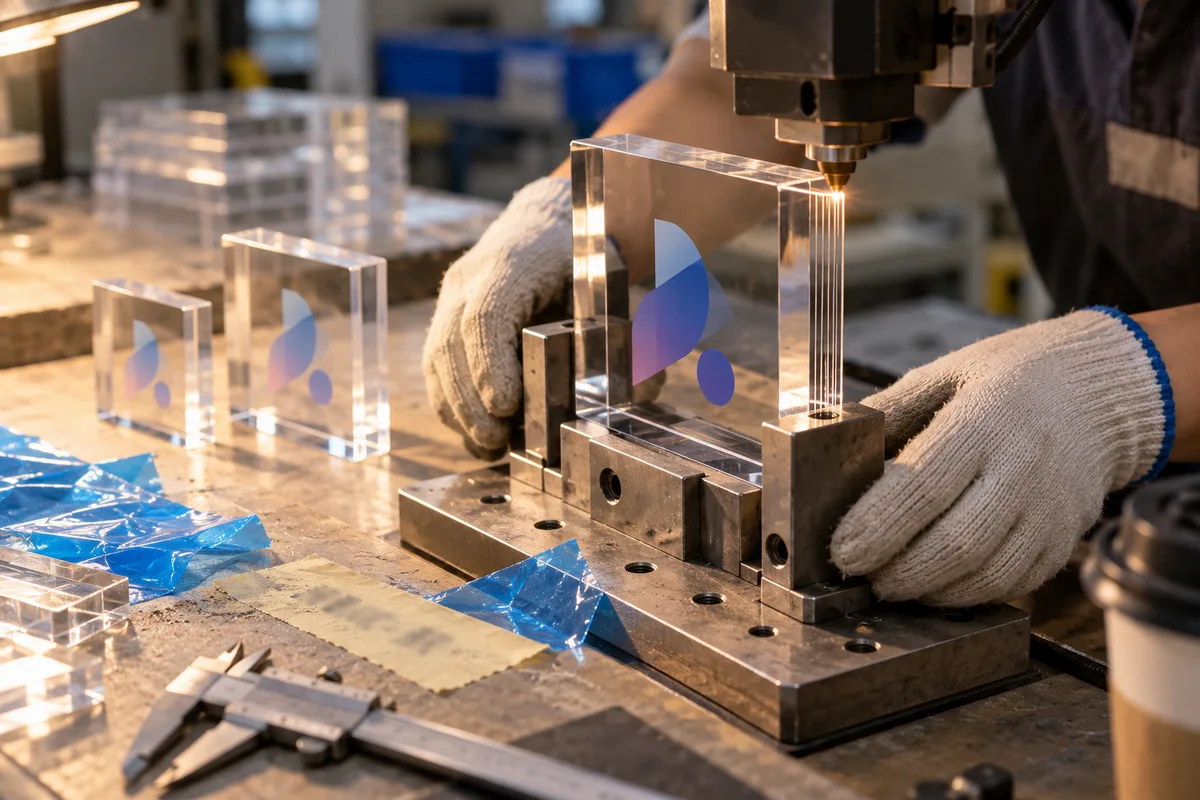
- The paid sample proved print, 3 mm edge engraving, edges and foam-insert fit before the run.
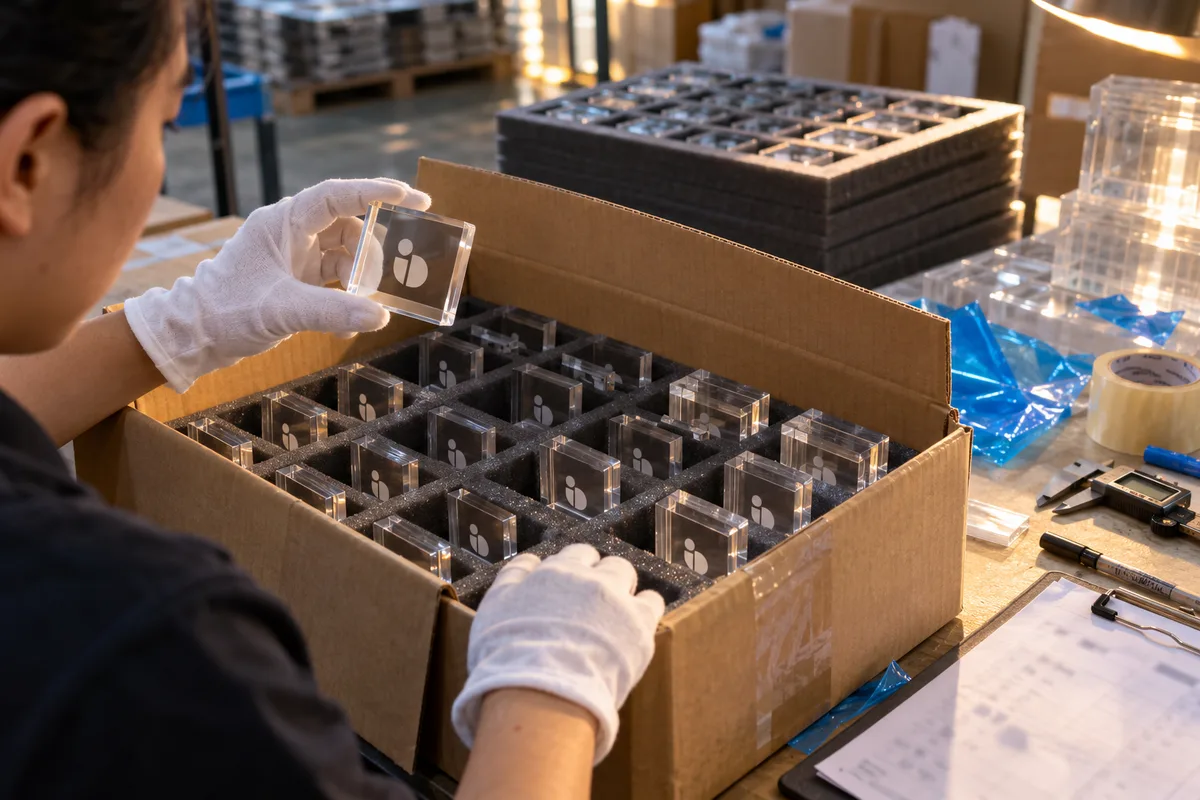
- Every piece passed a 100% print, engraving, edge, count and packing check before packout.
The Challenge
The trade-show team wanted different pieces for aisle traffic, qualified conversations and scheduled meetings, and all three had to read as one brand. The booth-open date was fixed. A tier label is not something a factory can cut, so our first job was turning each tier into a specification. The buyer sent the quantity per tier, finished dimensions, artwork, personalization logic, packing limits, destination and booth-open date.
Our production minimum is 100 pieces per design. Because the tiers used different artwork and geometry, we agreed with the buyer which tiers counted as separate designs under that minimum. Then we worked the calendar backward from the booth date: transit, production, sample approval and final artwork release.
Each tier got its own line in the approval table: finished size, thickness, acrylic grade and color, print area, engraving position, variable-data field, unit quantity, packing quantity and inspection points. The buyer marked which fields were shared and which changed by tier, and we checked whether one drawing family and one fixture strategy could run all three.
Our Approach
Three production decisions shaped the quote and the approval for this order.
Shared tooling across 3 thicknesses
All three tiers used the same outline and the same print position; only the thickness changed, from 8 mm to 15 mm to 25 mm. We reviewed the drawings and set the fixture and setup changes to the approved dimensions, thicknesses, edge finish and decoration sequence. We priced the setup from that review instead of promising a saving before it.
UV-print front + laser-engraved edge
Every piece carried a UV-printed brand graphic on the front and a laser-engraved signature on the edge, 3 mm deep, on all three tiers. The buyer approved both on the artwork and then on the sample, where we checked print adhesion, registration, engraving legibility, edge finish and how the decoration read on each thickness.
Packout sized to actual transport limits
We built the packout from the buyer's real storage and transport limits: maximum carton or case dimensions, weight limit and handling method. From those we set the unit count, separators, edge protection and the foam-grid case insert. We did not assume airline or carry-on suitability; that stayed with the carrier's own limits.
The paid sample was the approval object for the finish and the handling. The buyer checked it under the booth lighting, set it into the case insert, and reviewed print registration, engraving clarity, sharp edges, surface marks and packout fit. The pieces were personalized, so the buyer also approved the data template and one mapped piece before releasing the full variable-data file.
Our quote separated the cost drivers instead of hiding them inside one average. It listed each tier's unit price, print or engraving setup, variable-data handling, sample fee, inner packing, export carton and freight option, so a thickness change or a quantity shift between tiers could be repriced without rebuilding the whole budget.
The Results
We delivered the three tiers as one family: a light 8 mm booth-walker piece, a mid-weight 15 mm qualified-lead piece and a 25 mm VIP-meeting piece, each with the same outline, front print and engraved edge. Thicknesses, footprints, engraving depth, quantities and decoration were fixed in the written quote after sample review, and production ran to that record.
Production was scheduled against confirmed ex-factory and arrival dates for the booth date and destination. Material, artwork release, personalization data, packing, freight and customs were scheduled around that same window. Before packing, every piece went through a 100% check of print, engraving, edge, count and packing.
The brief in one line: three value tiers that felt deliberate while sharing one brand language, one artwork-control process and one event packout.
If You're Planning Something Similar
Work with three dates: your final approval date, our confirmed ex-factory date and the in-hand date at the booth, with a buffer between each. Freight choice changes transit time; it does not replace the sample step. If the calendar cannot hold those dates, we tell you before you commit and adjust the scope or the arrival date. Decide early whether all tiers can share geometry and whether each tier needs print, engraving or both, because those two choices drive setup and unit cost. Variable QR codes or names need a controlled data file with one unique ID per piece. For a repeat event we reuse retained cutting files and artwork references and still confirm the revision, material, sample need, capacity and deadline. See custom acrylic blocks and the laser engraving vs UV printing guide.
Scoping a multi-tier branded acrylic giveaway?
Start with the booth date and work backward through transit, production, sample approval and artwork release. Send the tier breakdown, dimensions, artwork, quantities, destination and storage limits.
Wetop will respond within 24 hours with the sample route, quote-specific tier costs, packout assumptions and the earliest schedule that can be confirmed after material review.
3 tiers in 8, 15 and 25 mm · shared outline and print position · 100% inspection before packout