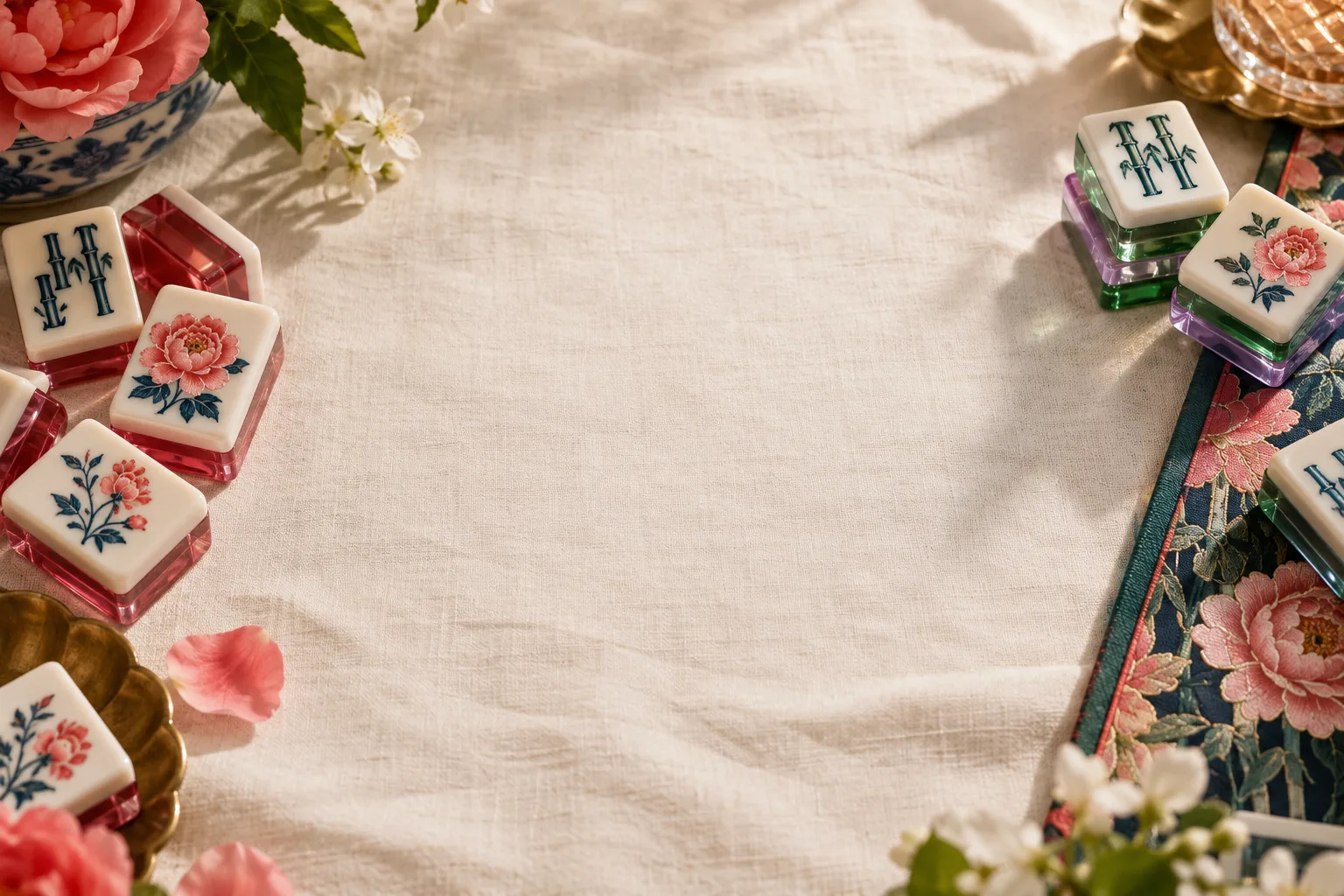
Delivered Project · 14-Day Trade-Show Rush
14-Day Custom Mahjong Rush: 50 Sets for a Trade-Show Booth
A mahjong brand had a booked trade-show booth and 50 custom American mahjong sets still to make.
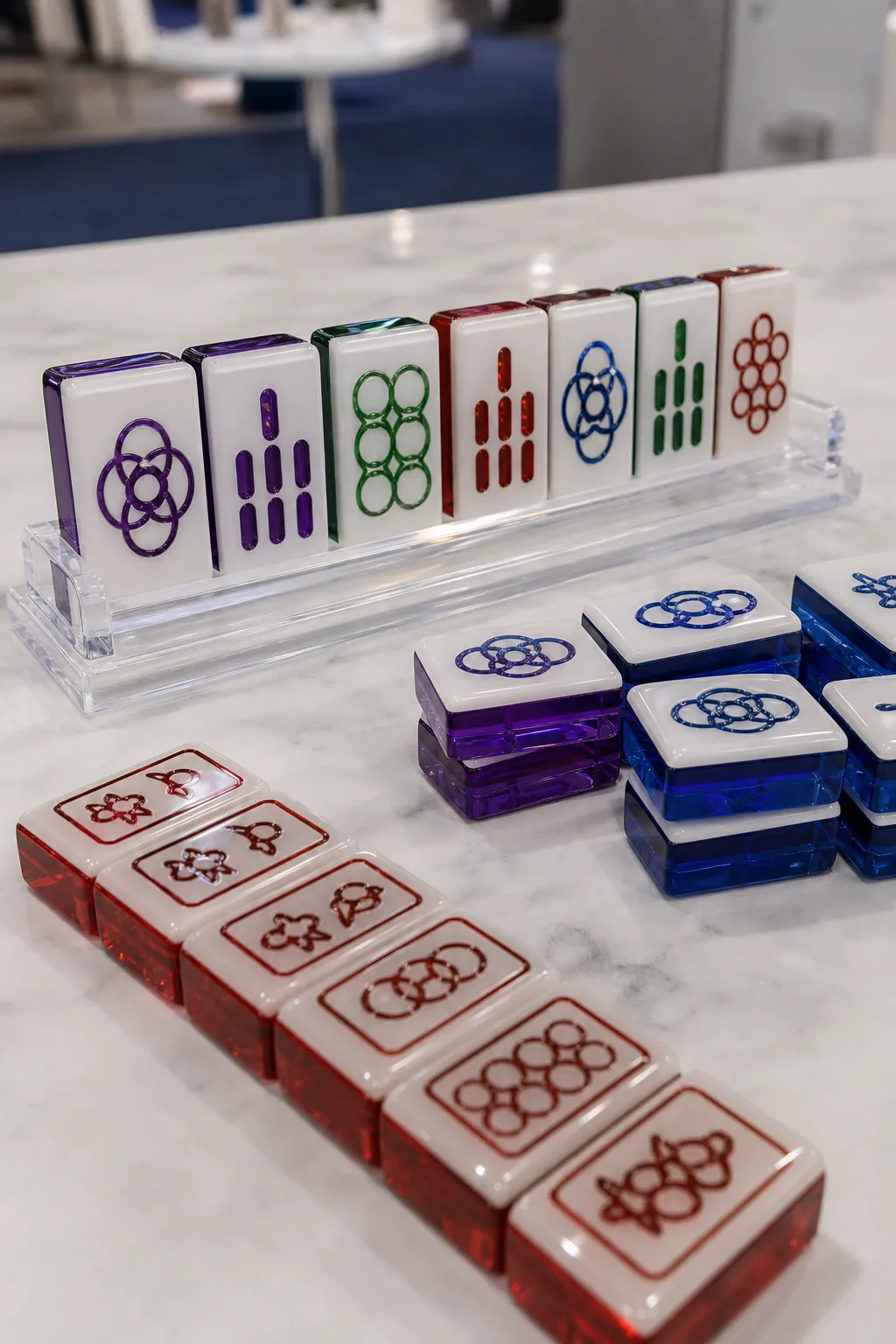
The tile manifest and artwork were final and the sample set was approved, so we confirmed a rush slot, booked air freight on day one and shipped the sets ex-factory 14 days after release. Project profile: 50 fully custom NMJL 152-tile sets · two-layer tiles, engraved and UV-filled · 14 days from release to ex-factory.
- custom sets
- 50
- NMJL tiles per set
- 152
- release to ex-factory
- 14 days
- sets count-checked
- 100%
Key Takeaways
- The 14 days worked because the tile manifest, artwork and physical sample were already approved when the rush slot was confirmed. Nothing on the approval list was left open.
- We did not shorten the sample stage or swap the full-set sample for a single tile. The approved sample set was the reference for the whole run.
- Each tile was a two-layer body: a pigmented back layer bonded to the face layer, so the color runs through the material and the play surface stays glossy.
- Character depth, UV fill, tile dimensions and layer construction were checked against the golden tile, not taken from a render.
- Queue priority, parallel preparation and air freight booked before cutting recovered the waiting days. Set-count, artwork, bond-line and final inspection all stayed in.
The Challenge
The brand had done everything in the right order except the calendar. Its designer had finished a full NMJL 152-tile American mahjong set, including suits, winds, dragons, flowers and eight Jokers, in a palette built around a pigmented back layer, and its trade-show booth was already booked. When the order reached our production desk, the booth date left no room for a standard queue. A full custom tile sample has its own making and courier time, so the sample had to be behind us before the rush clock could start.
Trade-show deadlines have a property most production deadlines don't: there is no partial credit. A booth with no product is a cost, not a launch. The brand needed 50 complete sets on the booth table, plus margin for customs clearance and domestic transit, without giving up the construction that justified their retail price: a two-layer tile with engraved, UV-filled characters, not a printed sticker face that reads as a toy.
So the question we worked on was which days in a standard schedule are waiting days, and which of them a confirmed rush slot could recover without removing an inspection or approval gate.
Our Approach
Before accepting the date we checked what was already approved: material, physical sample, artwork revision, tile inventory and packout. Then we confirmed capacity and got the freight plan in writing. The 14-day schedule was written for this order; it is not a standard lead time, and every inspection and approval gate stayed in place.
Confirm what is already approved
The approved full sample set was the physical reference. Photographs and a video call answered the brand's questions during the run, but they did not replace the sample for material feel or color.
We listed the buyer review deadline, production completion date, dispatch date and required arrival date separately, so a conflict would show before the order was taken, not after. We did not promise a 48-hour sample or replace the full-set sample with a single tile. See the production sequence and sample scope.
Two-layer construction, engraved and UV-filled
Each tile is a 30 × 23 × 13 mm body built from two bonded layers: a pigmented back layer that carries the set's color through the material, and a face layer that takes the playing surface. The characters are laser-engraved 0.3 mm into the face, and UV ink is printed into the engraved channel rather than onto the surface. The recessed fill keeps the artwork below the face plane. On the production line, that construction added two QC gates: the bond line was checked at lamination, and the fill was checked against the golden tile for coverage and registration.
Queue priority, parallel batches, and air freight
The recovered days came from sequencing. We prepared the pigmented back-layer sheets while the engraving program was confirmed on the proof tile, so cutting started right after sign-off instead of waiting for a later queue opening. The order held its confirmed production slot for the full run; the priority slot, not any skipped step, is what made the date. Rush timelines are confirmed per order. Air freight was quoted before the first tile was cut, so the production deadline and the customs window were planned as one calendar instead of two.
Results
The 50 sets went ex-factory on day 14 after release. Each set still received count, artwork, finish and golden-tile inspection. Customs clearance and last-mile delivery were separate logistics estimates, so the booth date carried a freight buffer the brand approved in advance.
Manufacturing still took its required process time; the sample approval that came before the rush is what made the short production window possible. We kept the approved cutting and engraving programs for repeat orders. A repeat can reduce setup work, but each new batch still gets a first-article check; stored programs never replace current material and artwork approval.
Release decision: we locked the tile manifest before the rush clock started, approved the proof the same day, and reserved freight and production capacity as one calendar.
What This Means for Your Project
If you are working against a trade show, a retail reset or a launch date, ask your manufacturerwhere the waiting days are, not just how fast they can go. In this order, an already-approved sample avoided another courier loop and early freight booking removed the wait at the end. New custom specifications still need physical sample approval, and artwork revisions or an open color decision are the usual causes of delay. A supplier who answers with a re-sequenced schedule is managing your deadline. One who answers with a shorter production number and no explanation is probably planning to skip something you will discover at inspection.
A rush only works when the spec is settled. Tile count, construction, palette and artwork must be final before day one. If your spec still has open questions, spend the calendar there first; ourcustom mahjong tile spec guide covers the decisions worth locking before the clock starts. With a locked spec and an approved sample, send your arrival date and we confirm in writing whether a two-week ex-factory schedule is available for your order.