Custom Acrylic Mahjong Tiles — Spec Guide for OEM Buyers
Define the tile body, face process, colors and packing together. A clear specification gives your sample an agreed standard to meet.
Need this made?Custom mahjong set configurator →
Key Takeaways
- Wetop uses cast acrylic for mahjong tiles. Approve the actual material, face finish and edge quality on the sample; a material name alone is not a service-life guarantee.
- Choose UV print with coating, engraving with UV fill or engraving with paint fill; body and edge machining are separate specification decisions.
- Specify the finished edge profile and approve its feel on the physical sample; engraving depth and edge chamfer are different dimensions.
- Choose stock sheet codes or discuss custom material, then approve each physical color reference. Body sheet colors and printed face colors are separate decisions.
- Approve the packed arrangement and shipping protection. A specific insert material or ISTA test is not automatically included; scope it in the quote when required.
On this page
An acrylic mahjong production brief needs more than a tile count and a logo: identify the finished dimensions, face inventory, layer construction, decoration process, colors and packed arrangement. Mark undecided inputs for review rather than treating them as approved specifications.
Prices, colors, and the set configurator now live on Mahjong @ Wetop. See the mahjong price book, the tile and accessory color board, or configure your set for a live estimate and one itemized quote.
The material, face process, edge profile and color reference should all be recorded in the approved specification. The physical sample checks how these choices work together.
| Decision | Record in your brief | Confirm before production |
|---|---|---|
| Body | Height × width × depth; tile manifest; layer sequence | Finished dimensions, mass and rack seating |
| Face | Standard classic faces or your outlined artwork; chosen face process | Legibility, detail and finish on the sample |
| Color | Supplier and code for each layer; separate print-color targets | Material availability and the approved physical reference |
| Pack | Tile arrangement, accessories, case and export protection | Everything fits, closes and stays separated in transit |
For the dimension calculations, use the tile size guide. For the complete ordering choices, compare sizes and layers and the current price book.
Prices in this guide are indicative reference estimates. The final written quote depends on the complete custom specification and order scope.
Cast acrylic: define the material and finished body
Wetop uses cast acrylic for mahjong tiles. Confirm the finished material, dimensions, engraving quality and polished edges on a representative physical sample.
Cast and extruded sheet are different manufacturing forms of acrylic. The sheet designation alone cannot prove the quality or lifetime of the finished tile; the material grade and fabrication process also matter.
Our public offer is cast acrylic. We do not promise that every alternative material will cloud after a particular time or that cast tiles cannot degrade.
Compare complete quotes using the same approved tile body, layers, face process, finishing and packaging. We have no verified universal cast-versus-extruded finished-tile price percentage to publish.
Engraving depth — laser, UV print, and CNC: when each looks right
Select one of three face processes: UV print with coating, engraving with UV fill, or engraving with paint fill. CNC body shaping or edge work is separate from the choice of face process.
Engraving creates a recessed design in the face; the usual published engraving depth is 0.3 mm. Approve fine lines, fill coverage and readability on the sample. Recessed artwork is not a guarantee against all surface or color wear.
UV print with coating places color on the surface. Review printed detail and coating on the actual tile sample. Any required wear performance should have agreed test conditions and acceptance criteria.
Specify the edge profile and inspect the sample for sharpness, consistency and comfortable handling. Do not confuse the 0.3 mm engraving depth with a universal chamfer requirement or add an invented per-tile machining charge.
Edge tolerance and bevel — approve the finished profile
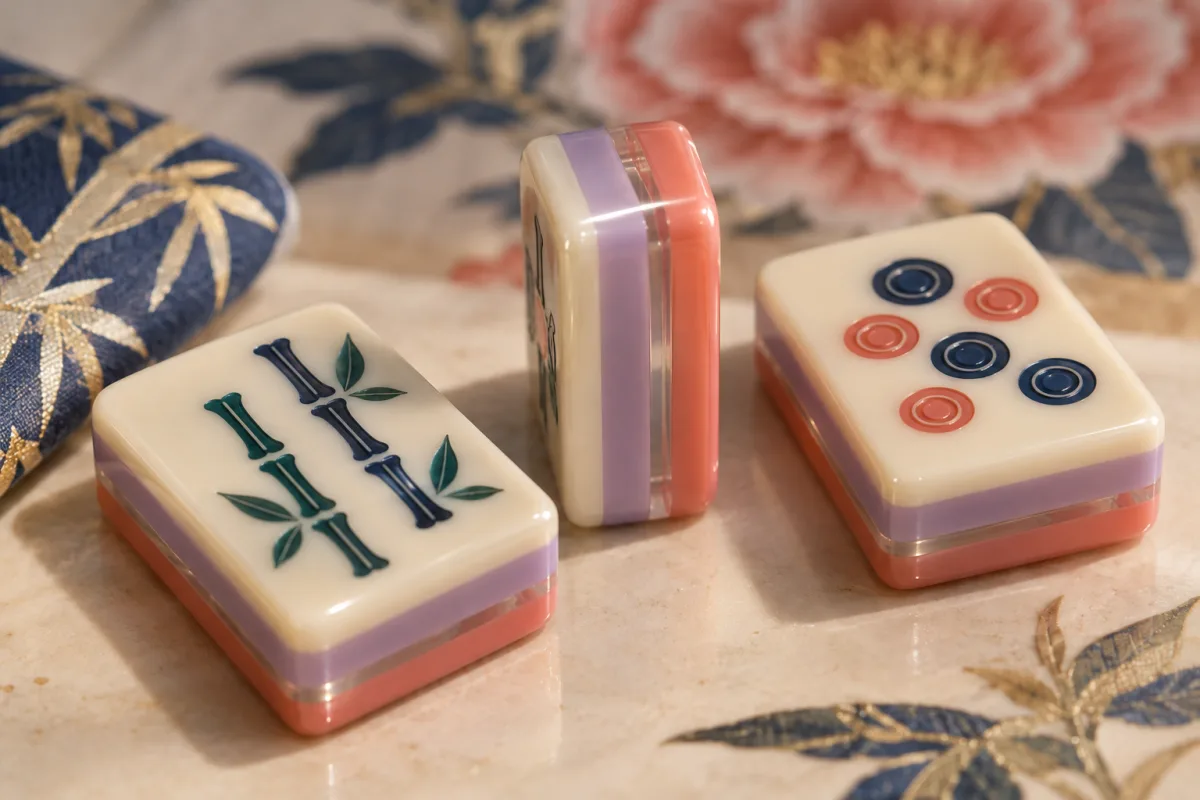
The edge drawing should identify the intended chamfer or radius and the finished dimensions. Confirm the edge feel using an approved sample rather than treating a photograph as a measurable edge specification.
Compare the sample in normal handling and on the intended rack. Check corners, polish and consistency as well as the appearance of the face artwork.
Avoid sharp unfinished edges. A chamfer or radius does not make acrylic impact-proof; packing and handling still matter.
Record the agreed edge profile and any dimensional tolerances in the drawing. Numerical tolerances must be accepted for the actual process and product before production.
Color control across multiple designs and layers
Tile-body colors can come from the stock sheet range or a made-to-order color program. Identify the layer sequence and reference code for each design. Approve the physical sample before production; custom sheet preparation adds time.
Separate variation within a production run from the difference between the chosen material and your target. Confirm material availability, batch planning and the physical acceptance reference for each colorway. If a numerical color tolerance is needed, agree its measurement conditions and limits in the order.
A stock sheet can be proposed against a target, but it is not a promise of an exact match. A custom sheet is another option to review for feasibility, quantity and timing. Tile-body colors and printed artwork colors need separate approvals.
Packing the approved tiles and accessories together
The packed set needs protection against movement, surface contact and handling impacts. Neither a particular insert nor a standardized shipping test is automatically part of every order.
Check whether tiles can move against one another, whether the lid stays securely closed, and whether the outer shipping package protects the contents. No industry-wide damage percentage is established by this guide.
Select the case, insert and outer packaging around the actual contents and transport method. Verify fit and closure on the physical sample. A silicone insert, mechanical latch or ISTA test must be separately specified if required.
Record internal dimensions, the packed arrangement, insert material, closure and carton protection. If testing is required, agree the procedure, samples, acceptance criteria and cost before production.
Before contacting the team, download the fillable mahjong OEM spec worksheet (PDF) and record the format, tile size, decoration route, colors, packaging, accessories, quantity and date, and artwork status. If a buyer wants to talk through any open spec calls, send the known specifications and open questions. For the full custom mahjong product line we manufacture, see our custom acrylic mahjong tiles and the custom mahjong set manufacturer page. The boutique mahjong club member-locker manufacturing plan maps approval decisions for a separate display fixture without claiming a completed installation. For the broader fabrication context behind these decisions, see our published guides on cast vs extruded acrylic and the manufacturer vetting checklist.
Common questions
What's the difference between acrylic mahjong tiles and traditional bone or melamine tiles?
Materials differ in construction, appearance and care, but set weight also depends on dimensions and tile count. Wetop manufactures cast acrylic tiles; we do not quote bone, melamine or wood tiles. Compare physical samples for feel and appearance instead of assuming a fixed weight order or price multiple.
Does acrylic survive the click-clack of mahjong play, or does it crack?
Acrylic can scratch, chip or crack if dropped or exposed to unsuitable chemicals or heat. Material datasheet values do not establish a tile-set lifetime or prove resistance to repeated impacts. Approve the finished sample and agree any required tests and care instructions before production.
How do you stop the engraved characters from wearing off after years of play?
Wetop offers UV print with coating, engraving with UV fill, and engraving with paint fill. Engraving recesses the artwork into the face, but it does not make the color or surrounding surface immune to wear. Approve legibility and finish on the sample; a specific durability requirement needs an agreed test rather than an unsupported years-of-use promise.
What's the minimum order quantity for custom acrylic mahjong tiles?
Custom tiles start at 50 sets per design with standard shrink-wrap export packaging and stock dice. Mats start at 50 pcs; rack-and-pusher sets at 50 sets per design; printed retail packaging at 1,000 pcs per design. Samples are paid separately and never credited.
Can you match a specific brand color across a 12-colorway run?
Choose stock sheet codes or discuss a made-to-order color against your physical reference. Review each colorway separately, confirm material availability and agree the acceptance reference. Custom sheet preparation adds lead time. A screen or Pantone target does not by itself guarantee identical appearance across materials.