Delivered Project · Mahjong · Hospitality
Boutique Mahjong Club Acrylic Member-Locker Display
A boutique mahjong club wanted a wall of clear acrylic member lockers that doubles as a display.
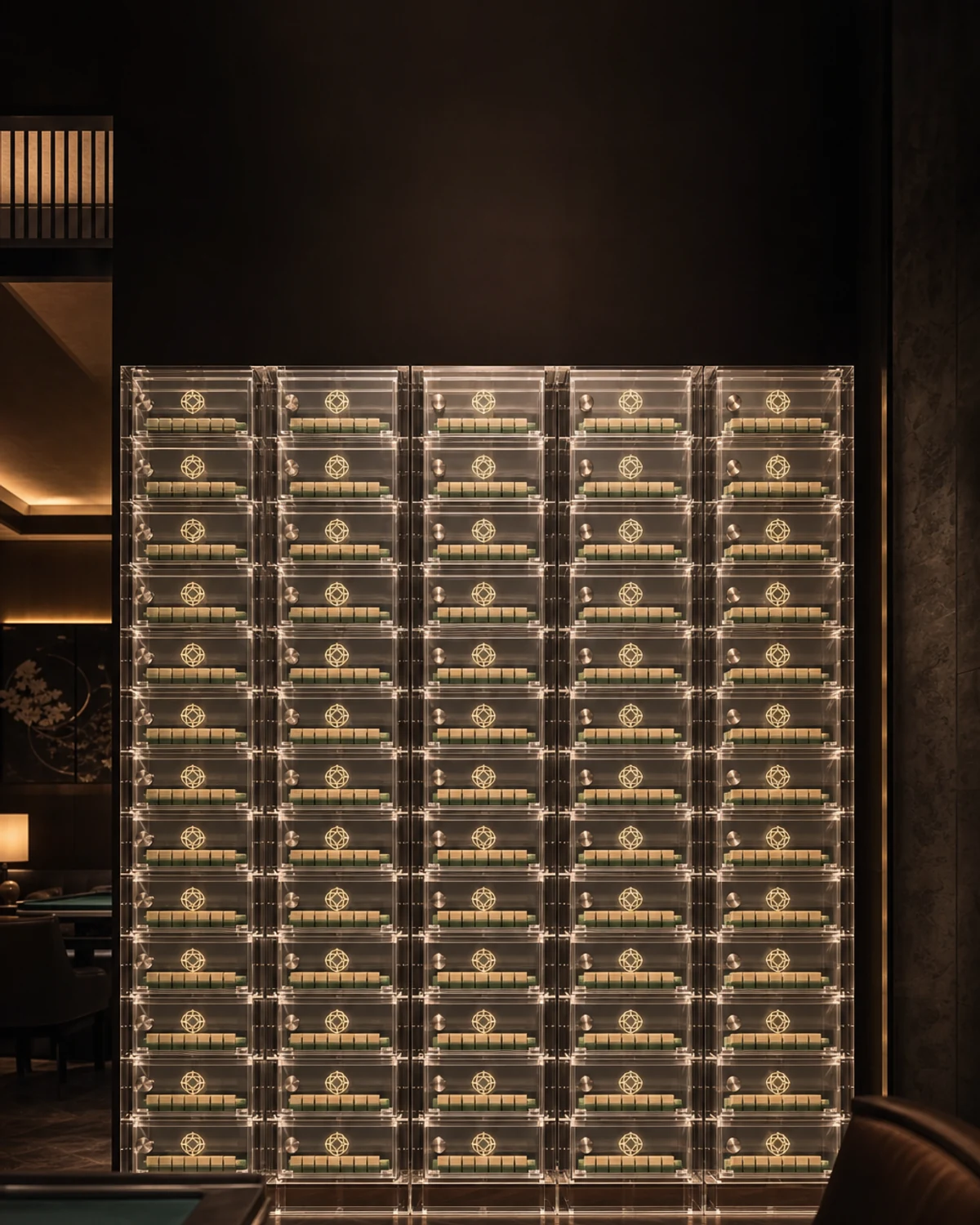
We built the modules from the club's approved drawing, named sheet, hardware, branding, contents, packing and inspection criteria. We supplied the non-electrical acrylic modules; the club's designer, access-control provider, structural professional and local installer handled the wall, anchors, wiring and commissioning. Project profile: Modular member lockers built to approved drawings, hardware samples, numbering, packing allocation and installation-interface records.
- per module design
- 100+ pcs
- production after approval
- 15–20 days
- acrylic modules
- Non-electrical
- modules and cartons
- Numbered
Current ordering terms for acrylic locker modules
MOQ is 100 pieces per design; the mahjong tile minimum does not apply to locker modules. Sample fees are paid separately and never credited.
Price reference: the acrylic cases hub lists a 600 × 400 × 1,000 mm lockable floor case in 8 mm clear acrylic at 100 pieces from $60–120 per unit FOB Shenzhen. That larger case is a different product from these locker modules. Module geometry, sheet, hardware, branding, inspection, packing, quantity and destination set the written quotation.
Key Takeaways
- The club defined the module grid, contents, access method, member-identification workflow, service clearance and installation criteria before we released the first drawing.
- We supplied the non-electrical acrylic modules. RFID, powered lighting, wiring, access-control electronics, wall structure, anchors and installation stayed with the club’s own providers.
- Material grade, thickness, hinge or latch hardware, engraving or print, gasket and cleaning method were chosen from the actual room and approved on the physical sample.
- A numbered module map, key schedule, packing allocation and replacement-part record made the multi-module wall serviceable after installation.
- One repeatable module with removable member labels kept the number of physical designs down.
The Brief
The club's RFQ covered the number of module designs, quantity per design, wall elevation, module opening, contents, door swing, service clearance, access workflow, brand artwork, room conditions, cleaning method, packing allocation, destination and installation responsibility. Each module had to hold a complete tile set and accessories, so we checked the internal clearances and insert strategy against physical samples.
We settled three decisions before releasing the sample:
- Non-electrical module boundary. We fabricated the clear acrylic modules, doors, dividers, labels and hardware interfaces. RFID readers, powered lighting, wiring, controls, power supplies and commissioning came from the club's nominated electrical or access-control provider.
- Access and service workflow. The club chose the access route. Key schedules, spare keys, cylinder ownership, access logs and emergency opening were operating-policy inputs from the club, not assumptions made by the acrylic fabricator.
- Wall and installation responsibility. A local qualified professional verified wall condition, load path, anchors, clearances, code requirements and installation. We worked from the approved interface drawing and packed numbered modules to the club's installation sequence.
The wall used one repeatable module with unique removable labels, which kept the number of physical designs down. Any module with a different door size, depth or hardware cutout would have been its own design for quotation.
Our Approach
We separated the acrylic module from the building and access-control systems, then approved one production-representative module before bulk release. That sample used the named sheet, thickness, hardware, branding process, bumpers, internal support and packing method proposed for production.
Select the sheet from the named environment
The club told us about exposure, hours of light, temperature, cleaning chemistry, required appearance, documentation needs and service interval. We quoted the available named sheet and passed through the supplier documents for that grade, and the club approved the sheet on the sample. We did not assign a universal yellowing life or claim that an additive guarantees a service period.
Approve access hardware as a system
Door size, hinge or latch type, cylinder or key interface, gasket, bumper, handle, opening angle, service access and replacement route were reviewed together. The written plan named the hardware, fixture, load, cycle count, inspection interval and acceptance criteria, and we checked the agreed hardware on the paid sample.
Choose branding after touch and cleaning review
Laser engraving, direct print, applied graphics and replaceable name inserts suit different maintenance needs. The club supplied the artwork and color reference, then reviewed coverage, edge position, touch exposure, cleaning method and replacement frequency on the physical sample. Removable member labels kept personal identification separate from the permanent module design.
Spec Breakdown and Production
The released module drawing recorded the outer dimensions, usable opening, sheet and thickness, door movement, hardware holes, divider and insert clearances, bonding route, edge finish, branding position, label method, wall interface and inspection datums. Contents were measured as physical objects rather than inferred from nominal tile-set labels. The module grid and room elevation stayed club-controlled installation documents. For a buyer checklist on enclosure geometry and access, see the acrylic mahjong display-case engineering guide.
Production ran 15–20 days after the drawing, material, hardware, branding, paid sample, inspection plan and packing were approved. A special sheet, custom hardware, revised artwork, an electrical interface from another vendor or a buyer change would have moved that schedule.
Bulk inspection covered overall dimensions, opening and door alignment, hardware action, visible-face cosmetics, engraving or print against the approved sample, label position and packing allocation, at the sample size agreed before release. Numbered cartons followed the module map so the local installer could stage the work instead of opening an unordered group of boxes.
The installation interface had a signed handoff. We provided the acrylic modules and an interface drawing; the club's qualified professional selected and verified anchors, backing, wall capacity, access clearances, power routes and code compliance, and each electronics provider confirmed its own cutout, heat, wiring and service requirements before the acrylic drawing was frozen.
Lessons and the Long-Term Service View
Long-term service belongs in the club's maintenance plan: inspection intervals, visible-face acceptance, door alignment, hardware action, label replacement, cleaning chemistry, spare modules, access records and who can authorize a repair. We can quote replacement acrylic parts against the retained drawing and approved sample, subject to material availability and a new written quotation.
Three controls make future service easier. First, every module, door, removable insert and carton carries a stable identifier tied to the wall elevation. Second, permanent branding stays separate from changeable member identification. Third, the sheet, finish, artwork, hardware, packing and approved sample are recorded, so a replacement request starts from controlled records instead of memory. A replacement may still need a paid sample if material, hardware, artwork or acceptance criteria have changed.
Release decision: a member-locker wall is both storage and a visible hospitality asset, so we released branding, hardware, numbering and installation interfaces as one system.
For boutique club operators or hospitality fit-out leads scoping a similar member-locker amenity, the two decisions worth getting right early are module ownership, including which drawings and labels can repeat, and system ownership, including who supplies access hardware, electronics, wall engineering, anchors, installation and commissioning. The acrylic module can then be sampled against the actual contents, room conditions, cleaning method and your approved visual reference.
What to include in your locker-module brief
Send the module drawing, wall elevation, contents, access-hardware interface, brand artwork, cleaning method, packing allocation, quantity per design and destination. We will identify the missing inputs and quote the acrylic module scope.