
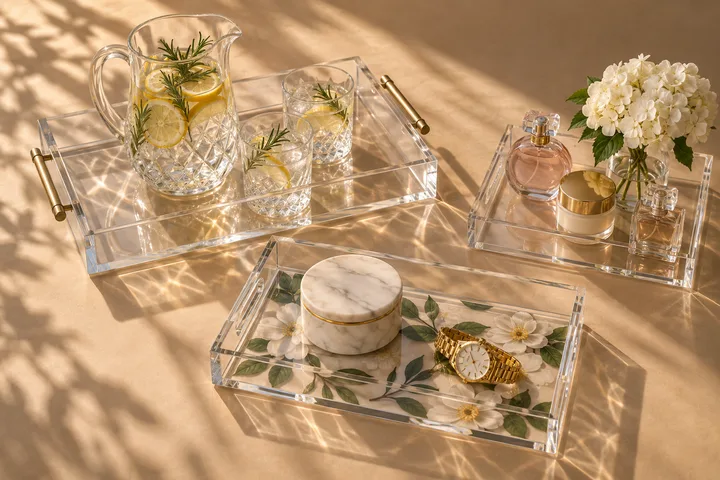
Delivered project · CPG Retail · Multi-Market POS
Three-Piece Acrylic POS Kit for Three Markets
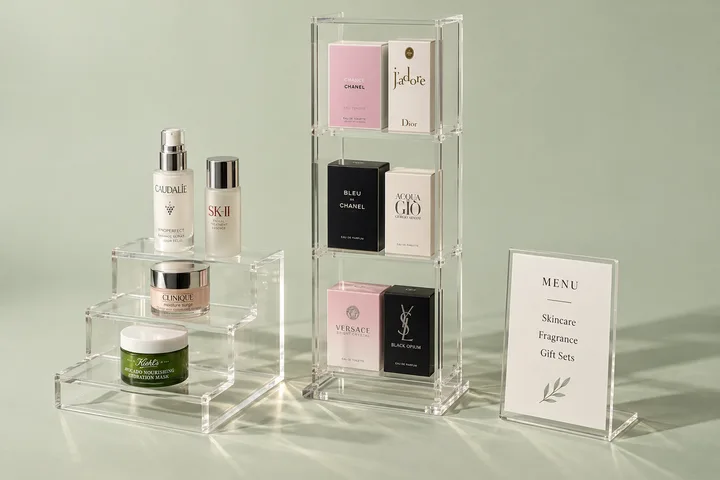
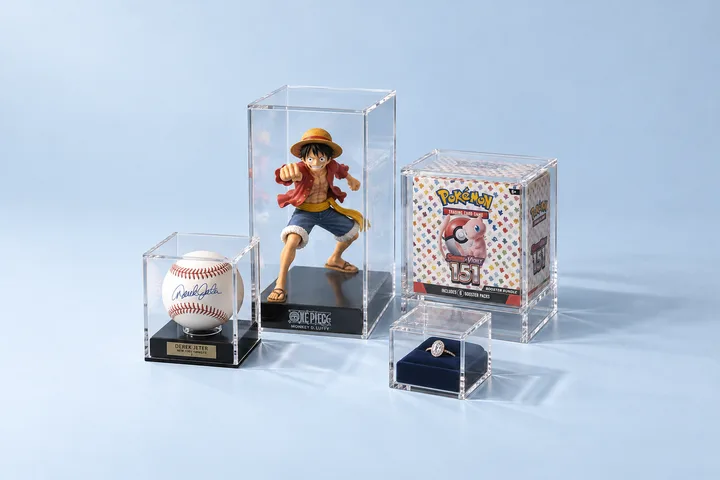
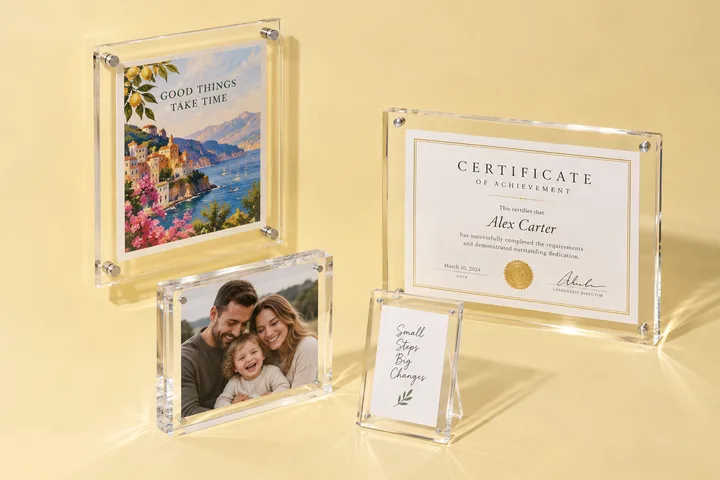
A consumer-goods brand needed one acrylic POS kit for three markets.
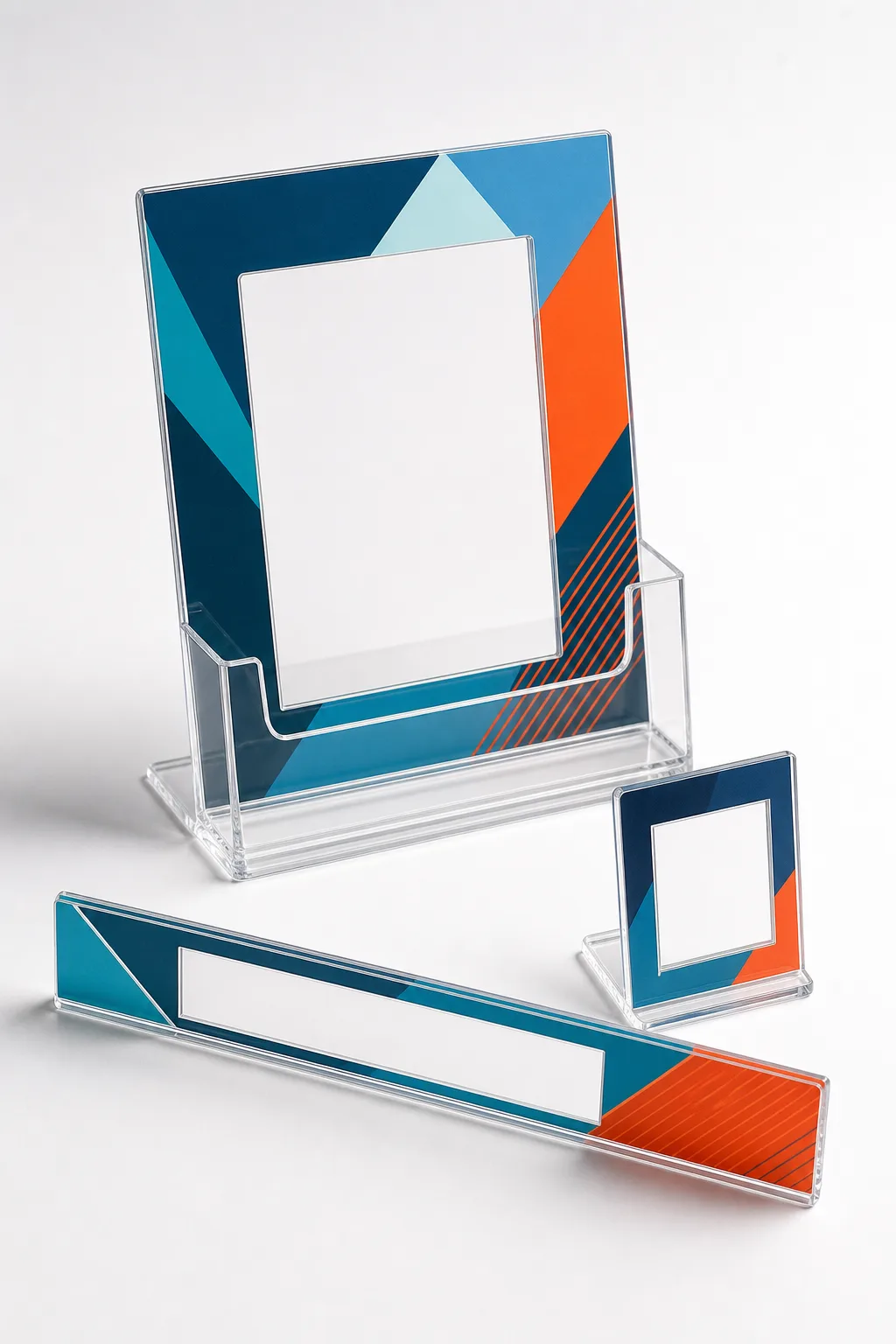
We delivered 300 three-piece kits, 900 components in all: a counter display, a shelf-edge strip and a tabletop standee, printed in three buyer-approved artwork sets. We kept the shared geometry separate from each market's artwork and counted every carton as a complete kit before shipment. Delivered: 300 kits, 900 components, and three market artwork sets controlled through one component-and-file matrix.
- kits
- 300
- components
- 900
- market artwork sets
- 3
Ordering a similar project
Each unique component geometry starts at 100 pieces. This 300-kit project therefore includes 300 counter displays, 300 shelf strips, and 300 standees. Paid pre-production samples take 3–5 days; sample fees are paid separately and never credited. Standard production takes 15–20 days after drawing, sample, artwork, packing, and allocation approval.
Closest published price: this order was quoted per component and market. The acrylic display manufacturer page publishes a two-tier countertop stand 250 × 180 × 220 mm, 5 mm clear, one-color UV logo: $28 each at 100 pcs, $16 at 500, $12 at 1,000 (FOB Shenzhen, published reference). A three-component kit prices from its own dimensions, material, print coverage, packing and destination split.
Key Takeaways
- We kept common brand artwork separate from market-variable text, so localization could change without altering the acrylic geometry.
- The buyer and its market counsel approved every language and regulatory claim; we controlled artwork versions but did not certify the claim language.
- We packed and counted the counter display, shelf strip, and standee as one kit so a missing component was caught before carton release.
- We used one physical kit sample plus market-specific artwork proofs, and released production only after the buyer signed the component and artwork matrix.
The Challenge
The brand's campaign ran in three markets. The hardware was the same everywhere; the artwork was not. We built one three-piece kit with three buyer-defined artwork sets, so geometry, print files, carton marks and destination allocation could each be controlled on their own.
We settled who owned each of three release risks:
- Market text belonged to the buyer. The buyer and its market counsel approved each language, claim, disclaimer, importer detail, and carton label. We controlled the approved file version but did not certify the legal wording.
- Shared artwork needed one recorded standard. The approval file identified the common brand elements and isolated market-variable content before the print plan was released.
- Each carton reconciled as a kit. The packing record counted one counter display, one shelf strip, and one standee against the destination allocation before sealing.
Built the component-and-file matrix before sampling
We gave each physical component its own drawing reference, then connected that reference to the approved artwork revision for each market. The matrix recorded the component ID, drawing revision, artwork filename, market code, quantity, print orientation, packing group, and carton mark. The team could then trace a printed part back to one released drawing and one buyer-approved file during sample review, production setup, inspection, and packing.
We kept common artwork and market-variable artwork in separate source layers. The buyer named the approved language file and date rather than sending a folder called "final." We checked that the filename, dimensions, bleed, cut line, and print position matched the released matrix. The buyer remained responsible for claim wording, translations, importer details, and destination-specific requirements.
Set the quantity split before the quote was released
Our quote carried a component quantity and a market allocation. Three hundred complete kits required 300 counter displays, 300 shelf strips, and 300 standees, and the artwork split differed by destination. We recorded that split before pricing so print setups, packing labor, carton labels, and shipment allocation used the same quantities. Any change to a market split after sample approval sent the print plan and packing plan back for review before production release.
Our Approach
We ran the kit as one fabrication job with a controlled artwork layer. The counter display, shelf strip, and tabletop standee each had an approved drawing that fixed its dimensions, material, print method, and packing.
One design, localization confined to a panel
We reserved a dedicated panel zone on each printed component for market-variable content. The buyer supplied and approved the text for each market. Common brand artwork stayed in its own controlled layer, so a later panel change did not automatically require new acrylic geometry.
One controlled print plan for common and variable files
The print matrix separated common artwork from the three market-variable panels. The approved sample and color reference defined the inspection basis. Before release, the matrix identified the file revision, component, quantity, market allocation, and carton mark for every variant.
Kit-complete cartons and a signed reference kit
We packed the three approved components together as one kit and recorded the component count before the carton was sealed. We retained a signed reference kit or clear approval record for each artwork set. The buyer supplied the destination-specific carton wording and allocation plan.
The sample was one physical three-piece kit plus proofs for each market-variable artwork set. The buyer signed off the component geometry, material, hardware, print quality, panel files, packing, and carton marks before bulk release.
One sign-off record for the physical kit
Sample approval identified the drawing revision, artwork revision, material, finish, hardware, and packing method that the buyer accepted. The signed record, not photos, controlled production. Any change to a dimension, material, print position, or packing method was recorded, and the team confirmed whether it needed a revised sample before bulk production.
The packing review tested the three components as one shipment unit. We checked that surfaces could not rub, printed faces stayed protected, small parts remained with the correct kit, and the carton label matched the destination allocation. The packing instruction also defined the inner-pack count and carton count so inspectors could reconcile components without opening unrelated market cartons.
Released production from a complete approval package
The complete package contained the three released drawings, buyer-approved artwork files, component-and-file matrix, signed sample record, packing instruction, carton marks, and destination allocation. Production used that package as the working reference. QC used the same revisions for incoming material checks, first-piece review, print-position inspection, kit counts, and final packing verification.
The Results
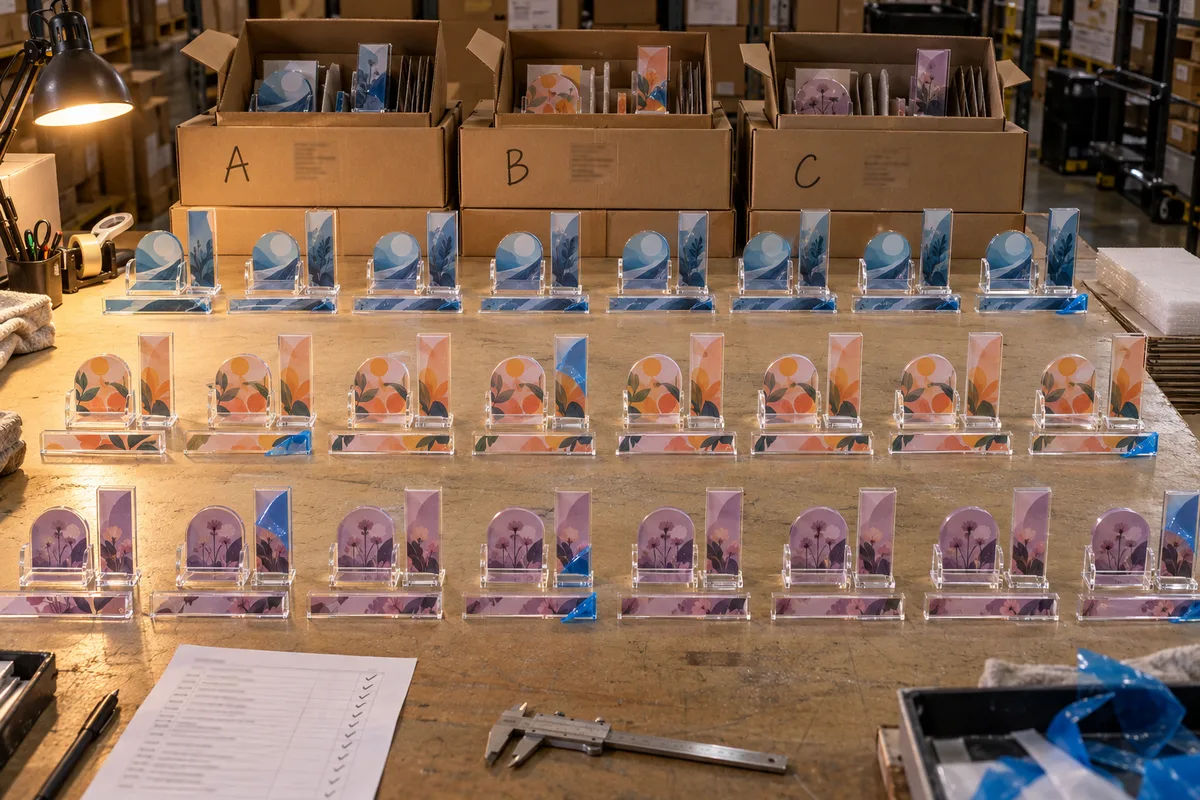
We shipped 300 complete kits, 900 components, split across three markets, each carton counted as a full kit against its destination allocation. Behind the shipment sat an auditable release package: approved drawings, one physical kit sample, three artwork sets, a component-and-file matrix, packing standard, carton marks, and destination allocation.
The approved drawings stay on file, so a later campaign on the same geometry starts from them with revised artwork only. A change to dimensions, load, material, hardware, print coverage, packing, or destination goes back through DFM and quote review.
How we released it: the common hardware was approved once; every market-variable artwork and carton file was signed before release.
If You're Planning Something Similar
If your brand ships campaigns to more than one market, the decision with the most reach happens at the artwork stage, before any acrylic is cut: reserve the zone where markets differ. Keeping localization to one panel let this kit share its geometry across three markets. We work through that choice in our custom acrylic fabrication process before quoting, and thecustom POP display design and cost guide covers the cost side.
Each unique component geometry has a 100-piece production MOQ; on this order, 300 kits meant 300 units of each of the three geometries. See the options on our custom acrylic displayspage, then send the kit drawings and artwork matrix for a quote.
Launching POS in more than one market?
Send the kit concept, quantity per component, market list, approved claim copy, packing plan, and campaign window. We will return a DFM review, a quote and the production schedule.
Paid sample in 3–5 days · Sample fees paid separately and never credited