
Large tabletop
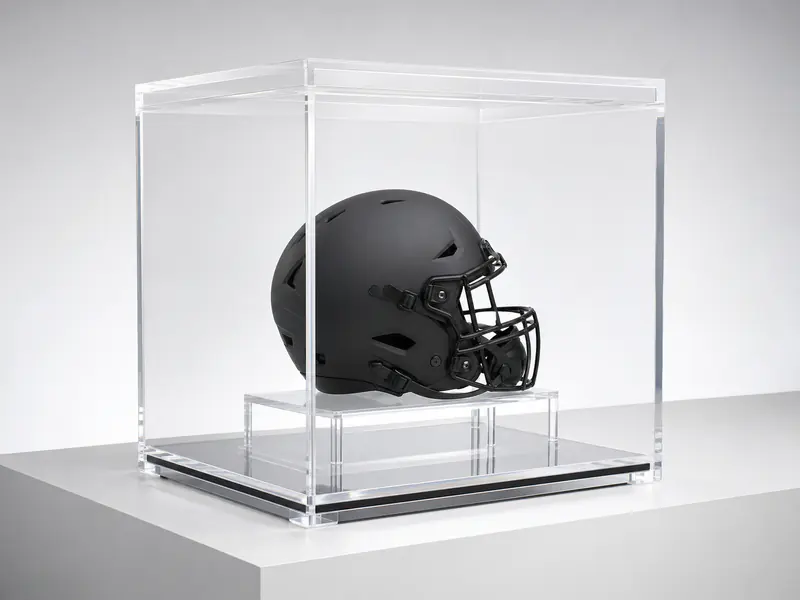
600–1,000 mm (24–39 in): memorabilia, helmets, models and large figures on a desk, counter or pedestal.
Tabletop to 2,000 mm floor-standing cases for museums, showrooms, retailers and brand exhibits, from 100 pieces per design.
Reference price Floor-standing from $60–120 at 100 pcs See prices
Get a Large Display Case Quote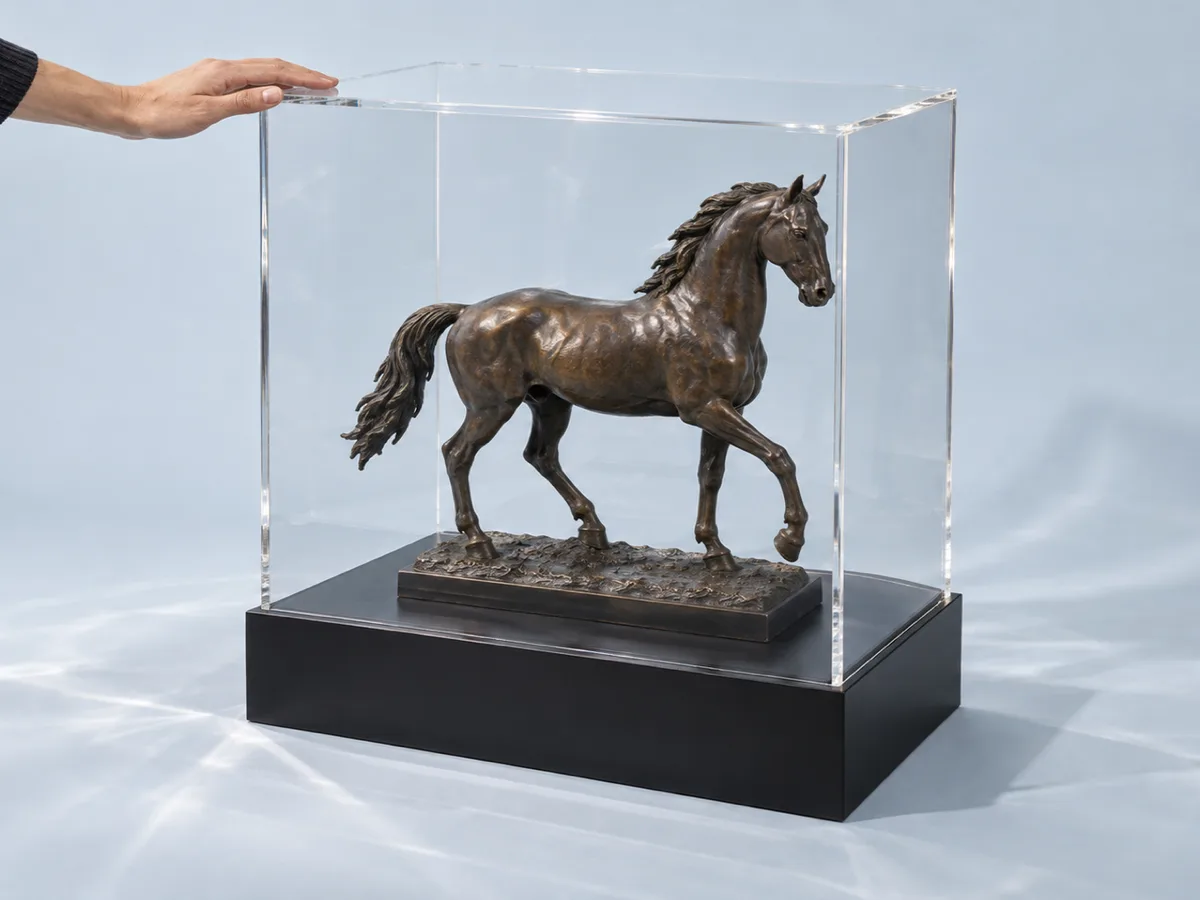
A large acrylic display case is a custom-sized clear or UV-filtering enclosure for items too tall, too wide, or too valuable for an off-the-shelf box — life-size statues, museum specimens, automotive trim, signed jerseys, or large UCS LEGO sets. We build them — also called oversized or extra large plexiglass display cases — in 8–15mm panels with 45° mitered seams, internal shelves, and LED lighting built to your lighting spec. Every case is built around your largest interior dimension.
ISO 9001 Certified · Manufacturing since 2008 · Museum exhibit cases delivered
Paid samples cost US$200–500 per design and are never credited to the order; production runs from 100 pcs per design.
Built to the measured item and approved drawing.
600–1,000 mm (24–39 in): memorabilia, helmets, models and large figures on a desk, counter or pedestal.
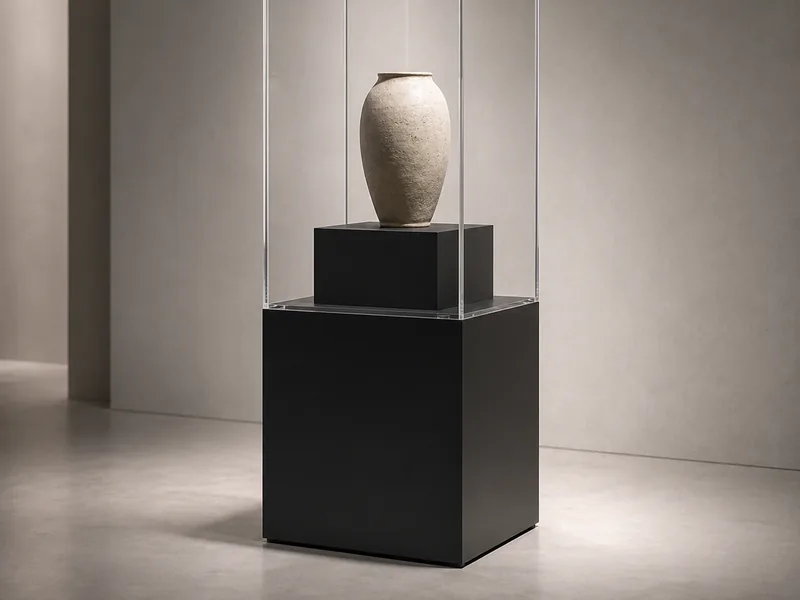
1,000–1,800 mm (39–71 in): statues, life-size displays and product reveals with a reinforced base.
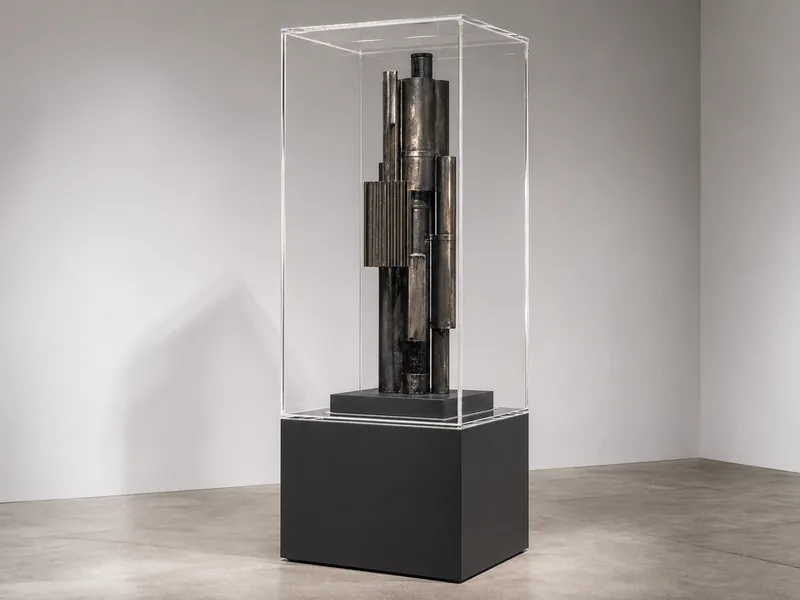
1,800–2,500 mm (71–98 in): bonded multi-panel construction and a reinforced base for oversized exhibits.
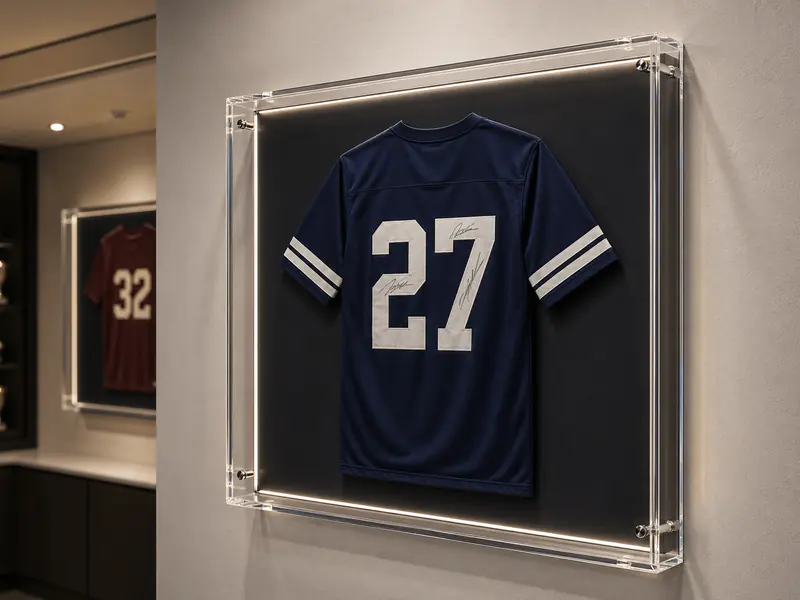
1,000–1,800 mm (39–71 in) wide: flat memorabilia with French-cleat or standoff mounting.
Choose the specification that fits the object, access, and installation.
Published reference from the display case price table. A 600 mm tabletop case and a 2,000 mm floor-standing case need different panel, base and freight plans, so send the largest interior dimension for your price.
| Reference case | Specification | Quantity | FOB Shenzhen |
|---|---|---|---|
| Floor-standing case | 600 × 400 × 1000 mm, 8 mm clear, lockable, mitered | 100 pcs | from $60–120/unit |
Published reference price, not a quote. The final price follows the approved drawing and corner sample. See all case reference prices.
Delivered project
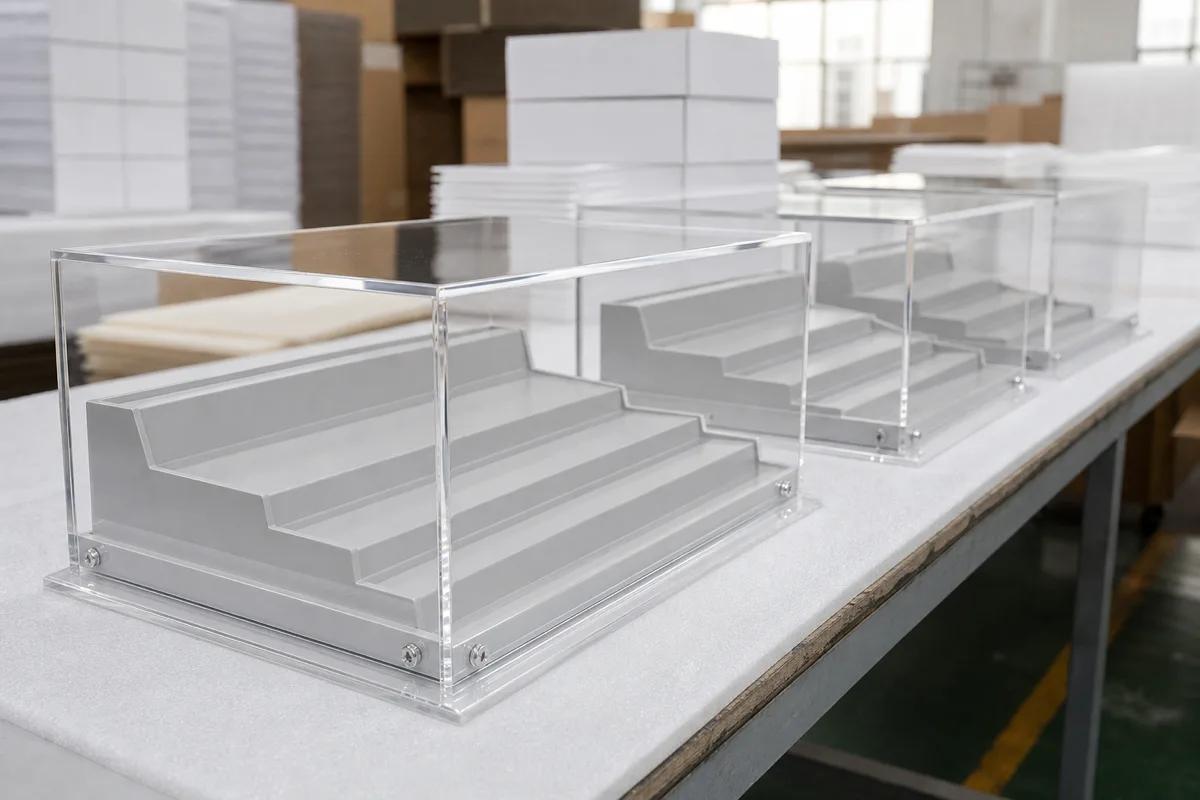
A toy brand launched in national big-box stores with a three-part diorama case: a 610 × 305 × 305 mm clear acrylic cover, a vacuum-formed riser and a screw-secured base. We shipped 2,620 cases in 5 ocean containers plus air waves, 20 days from approval to final shipment. For conservation-grade work, see the museum traveling exhibit cases.
Wetop fabricates single-piece acrylic display cases up to roughly 900 × 600 × 600mm (panel size) and assembles larger structures up to ~2,000mm tall from bonded panels. For floor-standing cases, the practical ceiling on a single-piece run is the largest acrylic sheet a fabricator can polish and machine cleanly — beyond that, we transition to bonded multi-panel construction with 45° mitered seams. Tell us the largest interior dimension you need; we confirm whether it ships as one piece or as a bonded assembly. Stock cast sheet tops out at about 244 × 305 cm (8 × 10 ft), so any face larger than that is always bonded from several panels. Live-animal enclosures are a different spec — ventilation, access and cleaning — covered in the acrylic reptile and tarantula enclosure buyer guide.
We fabricate large acrylic display cases in panel thicknesses from 5mm up to ~50mm depending on case height and load. Most floor-standing cases (1,000–1,800mm tall) use 8–12mm panels. Extra-large museum-grade cases (1,800mm+) and wall-mount cases that span more than 1,200mm typically use 12–15mm panels. Above 25mm we switch to cast acrylic (vs extruded) and longer raw-material lead times. For most projects 8–12mm is the right balance of rigidity, optical clarity, and cost.
Yes — we ship 2-meter and larger cases worldwide, but the construction strategy changes. We default to flat-pack with site-assembly hardware for cases over ~1,500mm in any dimension: panels ship in custom-built crates with corner protection and foam, and the customer (or our partner installer) bonds and assembles on-site. Fully assembled large cases can also ship via custom wooden crates with bracing — more freight cost, less assembly risk. We discuss the freight + assembly tradeoff during quoting based on destination and your install team's capability. The museum traveling exhibit cases project shows how crating was controlled for cases that move between venues.
Yes. Internal shelves are one of the most common configurations for large display cases. You can specify fixed-position shelves (precision-bonded into the case walls) or adjustable shelves on a precision shelf-pin system. Shelf material can be matched acrylic (8–12mm typical), tempered glass, or wood-veneer. Per-shelf load rating depends on shelf thickness and span — an 8mm acrylic shelf at 800mm span comfortably holds 8–10kg evenly distributed; for heavier loads we recommend 12mm acrylic, glass, or a metal-reinforced shelf.
A 1,500 × 600 × 600mm five-sided acrylic cover in 10mm panels has about 4 m² of sheet, so the acrylic alone weighs roughly 47kg (acrylic density is about 1.18 g/cm³); with a base, expect about 50–70kg empty. The same cover in glass (about 2.5 g/cm³) would be roughly 100kg before the base — about twice as heavy. That weight difference is a main reason museums, showrooms and retail brands use acrylic for large cases: easier installation, lower freight cost, and less risk of breakage in transport.
Yes — we build the lit case to your drawing and lighting spec. The LED strips sit in a recessed top channel, base uplighting in a concealed cavity under a riser platform, edge-lit glow in slots along the acrylic shelves, and the cables run through a routed side channel or base cavity. The LEDs, driver and switch you specify are fitted and tested before packing. Send the lighting spec with the drawing; we build to it and don't design the lighting.
Yes. For lockable large display cases we offer cam-locks (keyed, recessed flush in a hinged front panel), magnetic seals with concealed steel inserts (clean look, lower security), and tamper-evident bonding for high-security museum applications. Front-access designs typically use a hinged front door with a single cam-lock or two; lift-off shrouds can be secured with a recessed lock at the base. For our dedicated lockable cases, see our lockable display case sub-page.
Usually by sea. Air cargo takes a single piece up to about 318 × 224 × 160 cm in the lower deck of a widebody passenger aircraft, or about 318 × 244 × 244 cm on a freighter's main deck, where space is scarcer and costs more. A case larger than that ships in sections and is reassembled at the destination. By sea it travels as one crate in a 40-foot high-cube container when the crate stays under about 2.5 m tall and 2.3 m wide (the door opening), or on a flat-rack or open-top container above that, with a single customs clearance. Sea freight runs roughly 4–6 weeks door to door (3–5 weeks port to port). We quote both routes from the packed crate dimensions.
4 site facts, measured by your installer before we release the drawing: the smallest doorway, corridor turn, or elevator between the dock and the install spot (a 2 m case that has to pass a 1.9 m door ships flat-pack); floor load, since cases above 2 m weigh roughly 80–180 kg empty and can put 250–400 kg on a small footprint once the object and install scaffolding are added; the gallery's lighting layout, which decides whether an anti-reflective coating is worth it; and power or cable runs if the case is lit (LED built to your drawing and lighting spec). Panels above 2 m also need suction lifters and a 3–4 person crew on site.
A factory. Wetop has manufactured in Shenzhen since 2008 — today a 5,000 m² ISO 9001 certified plant, with 65+ people on the floor. Large cases are where that matters most, because a 2-meter case isn't a catalog item a broker can reorder — the panel gauge, the base reinforcement, the seam layout, and the crate design are all decided together, by the people who will bond and pack it. Every case gets 100% inspection against the approved drawing or sample before it's crated.
The transition sits around 1,500mm in any dimension. Below that we generally ship assembled in a custom wooden crate with bracing. Above it we default to flat-pack: panels ship in custom-built crates with corner protection and foam, and your team or a partner installer bonds and assembles on site with the supplied hardware and a step-by-step diagram. There's a separate ceiling upstream of that — a single-piece run is limited to roughly 900 × 600 × 600mm in panel size, and structures up to about 2,000mm tall are built from bonded panels with 45° mitered seams regardless of how they ship. What changes for you is a straight tradeoff: assembled costs more in freight and carries more transit risk on a large case, flat-pack costs less to ship but needs an install crew and a clean bonding environment at destination. We work that tradeoff during quoting against your destination and your install team, and lead time on this page runs 20–30 days rather than our standard 15–20 because of the panel work and crate build.
Send us your largest interior dimension, what's going inside (statue, jersey, machinery, life-size figure), quantity, and any preferences — UV-filtering acrylic, internal shelves, LED lighting to your spec, lockable front. We respond within 24 hours with a detailed quote covering panel thickness, base reinforcement, freight strategy (assembled vs flat-pack), and timeline. No commitment required. Sample before you commit to production.