
Delivered project · Split Shipment
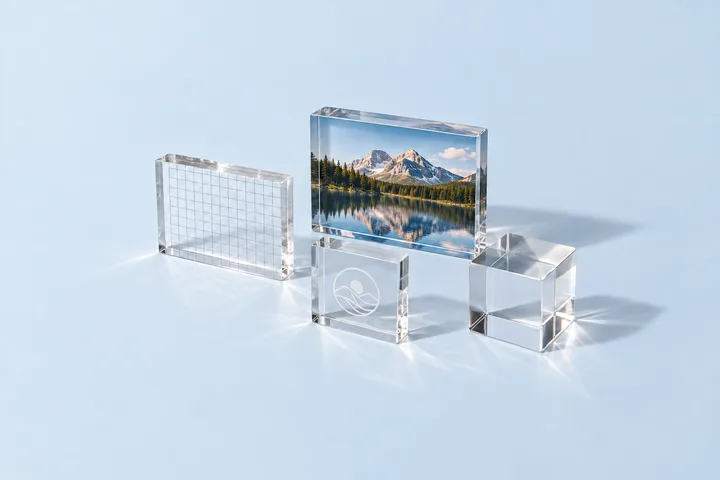
Acrylic Blocks with a Controlled Partial Air Release
A buyer with a larger custom acrylic block order needed a small quantity in hand before the main shipment.
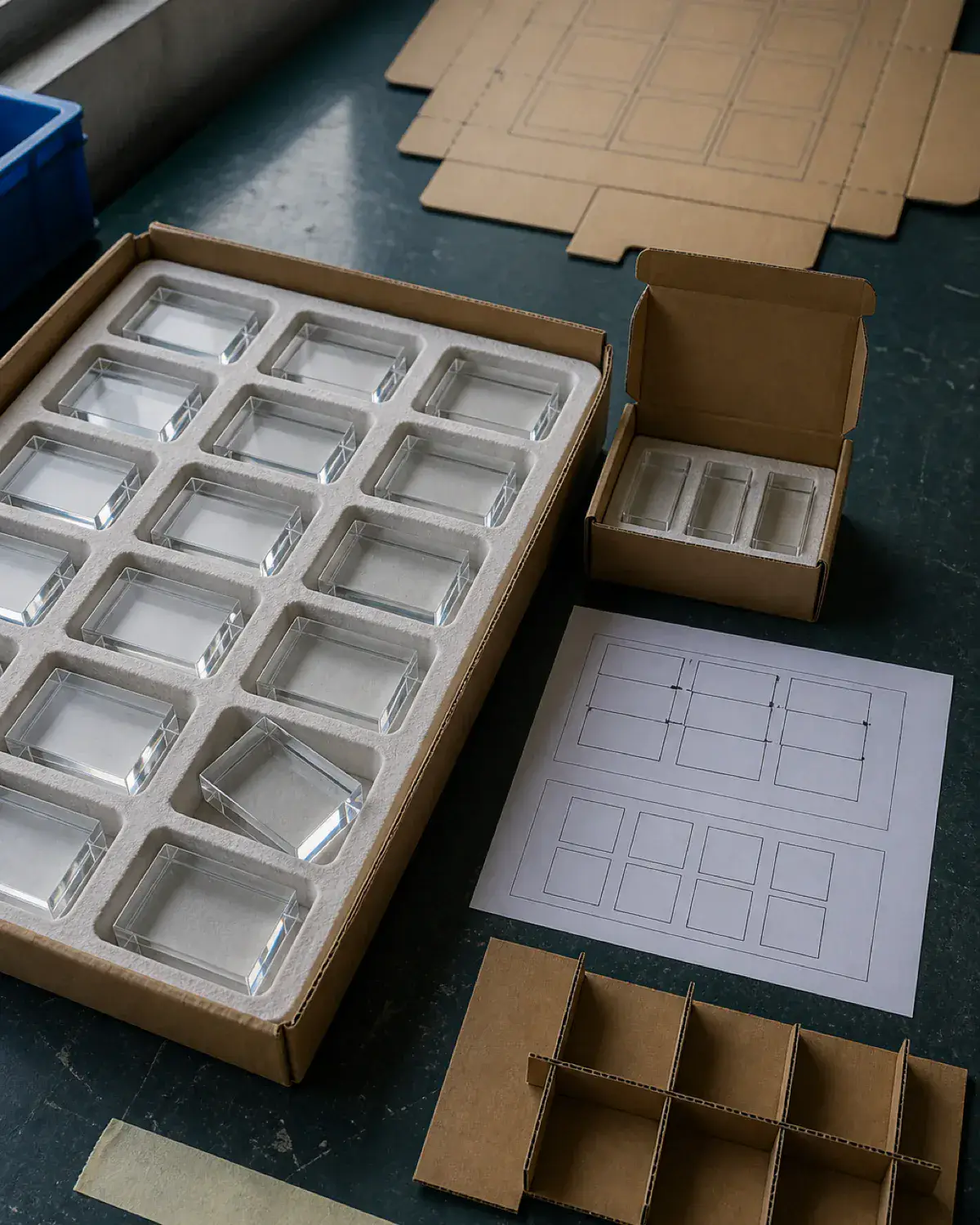
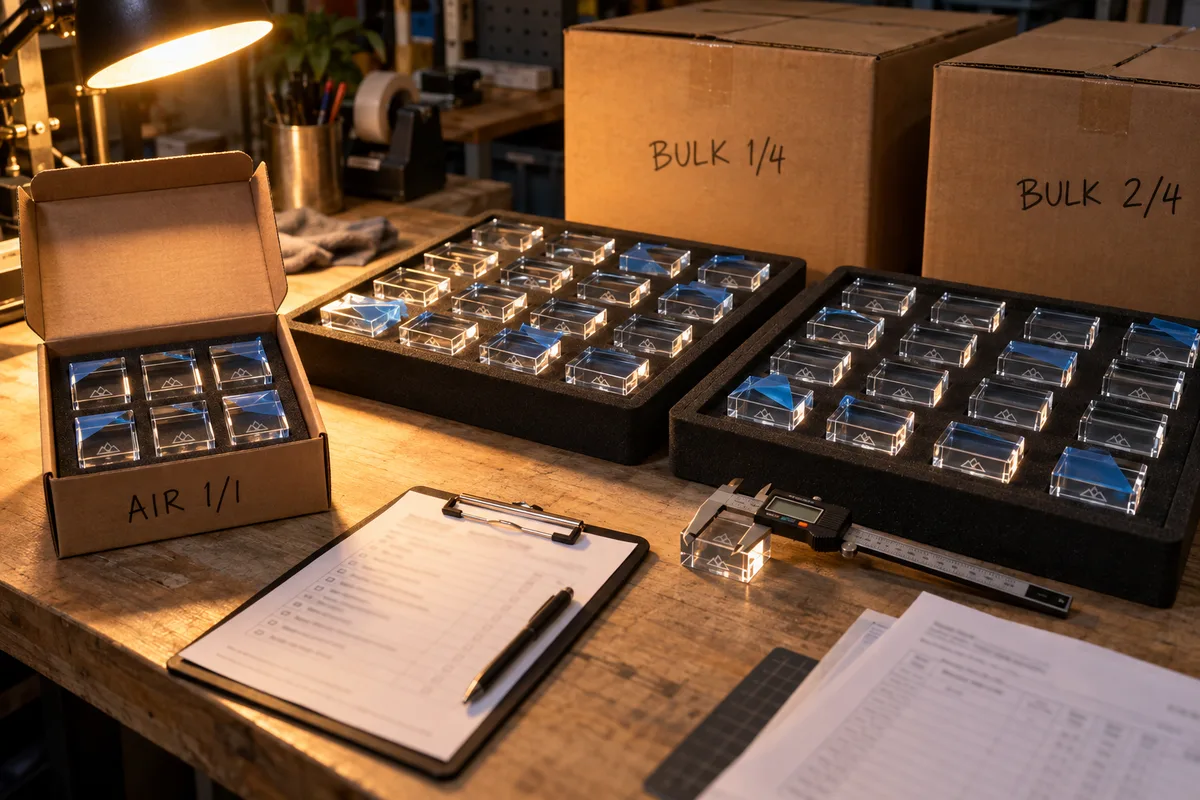
We made every piece from one approved revision, sent the urgent allocation by air in its own numbered carton, and shipped the bulk balance on the original routing under the same drawing, artwork, inspection, packout and purchase order.
Ordering a similar project
MOQ is 100 pieces per design. Paid samples normally take 3–5 days; sample fees are paid separately and never credited. Standard production takes 15–20 days after drawing, material, artwork, packing, and sample approval. Wetop responds to a complete brief within 24 hours.
Closest published price: the acrylic blocks hub lists a 6 × 8 inch × 20 mm photo-block blank at 2,000 pieces from $5–11 per unit FOB Shenzhen. This order was quoted on its own block size, artwork, polishing, packing, quantity and freight.
Key Takeaways
- A buyer needed part of a custom acrylic block order earlier than the main shipment, so we split it into 2 allocations: an urgent air carton and a bulk balance.
- Both allocations came from 1 approved revision: the same drawing, artwork, sample and inspection criteria.
- We gave the urgent carton its own carton number and quantity while keeping it linked to the original PO.
- Before release we reconciled the packing list, invoice, airway bill and remaining PO balance.
- We packed the dense polished blocks for air and chose the freight from their actual packed dimensions and weight.
The Logistics Problem
A buyer came to us with a larger custom acrylic block order and needed a small quantity earlier than the main shipment. Air freight solved the transport question. The harder part was keeping the early pieces identical to the bulk: same production, artwork, inspection, film, individual packing, carton labels and commercial documents, all tied to one approved product revision.
A partial release goes wrong when staff treat it as a separate sample or repack finished units without updating the shipment record. We avoided that by putting the urgent air quantity, the bulk balance, the carton marks and the final packing list into one allocation table that the buyer approved in writing.
Release Control
We built the order file around total ordered quantity, quantity by artwork or SKU, approved drawing, sample, packout, urgent-air allocation, remaining balance and destination. Production was released only after the drawing, material, artwork, sample, quantity allocation, packing, price and payment terms were approved in writing.
The paid sample was the physical decision point. It confirmed finished size, artwork, optical and cosmetic finish, edge finish, packing cavity, label placement and the receiving information for both allocations. A first-off inspection then checked the production setup against the release, and the air pieces received the same dimensional, artwork, cosmetic and packing checks as the bulk pieces.
The urgent carton carried its own carton number and quantity while staying linked to the original PO and revision. We issued commercial documents that showed the partial shipment and the remaining balance separately, so the buyer's receiving team and accounts saw no confusion between the two.
Packing and Freight
Acrylic blocks are dense and scratch-sensitive. The urgent carton used clean protective film, individual surface separation, cavity restraint, a carton weight limit and a fixed orientation. We chose the air service from the actual packed dimensions and weight, not the piece count.
The buyer and their forwarder confirmed the air service, destination, customs information and delivery responsibility. The bulk balance kept its original sea or consolidated routing because its packout and commercial terms did not change.
Project Outcome
The urgent allocation left by air ahead of the bulk, and the balance followed on the original routing. Both arrived as the same product: one active drawing, one approved sample reference, one version and quantity table, one set of acceptance checks and one packout specification. Before each release we reconciled the packing list, invoice, airway bill and remaining balance, and we kept the split-shipment record on file for the buyer's receiving team and for repeat orders.
If You're Planning Something Similar
Tell us about a split shipment when you order, not after production starts. Send the total PO quantity, quantity by artwork, the urgent allocation, destination, Incoterm and forwarder instructions, and we will quote both legs against the same approved sample. Each physical design needs to meet the 100-piece MOQ; small splits add labeling, packing and handling cost even when the total quantity is large. You supply print-ready artwork and the drawing or dimensions. See custom acrylic blocks and the acrylic block size and tolerance guide.
Need part of your block order early?
Send the drawing, quantity by version, artwork, the urgent allocation, packing requirement, destination and timing. We will reply with a written quote for both shipments.
Urgent air carton plus bulk balance, both from one approved revision and PO