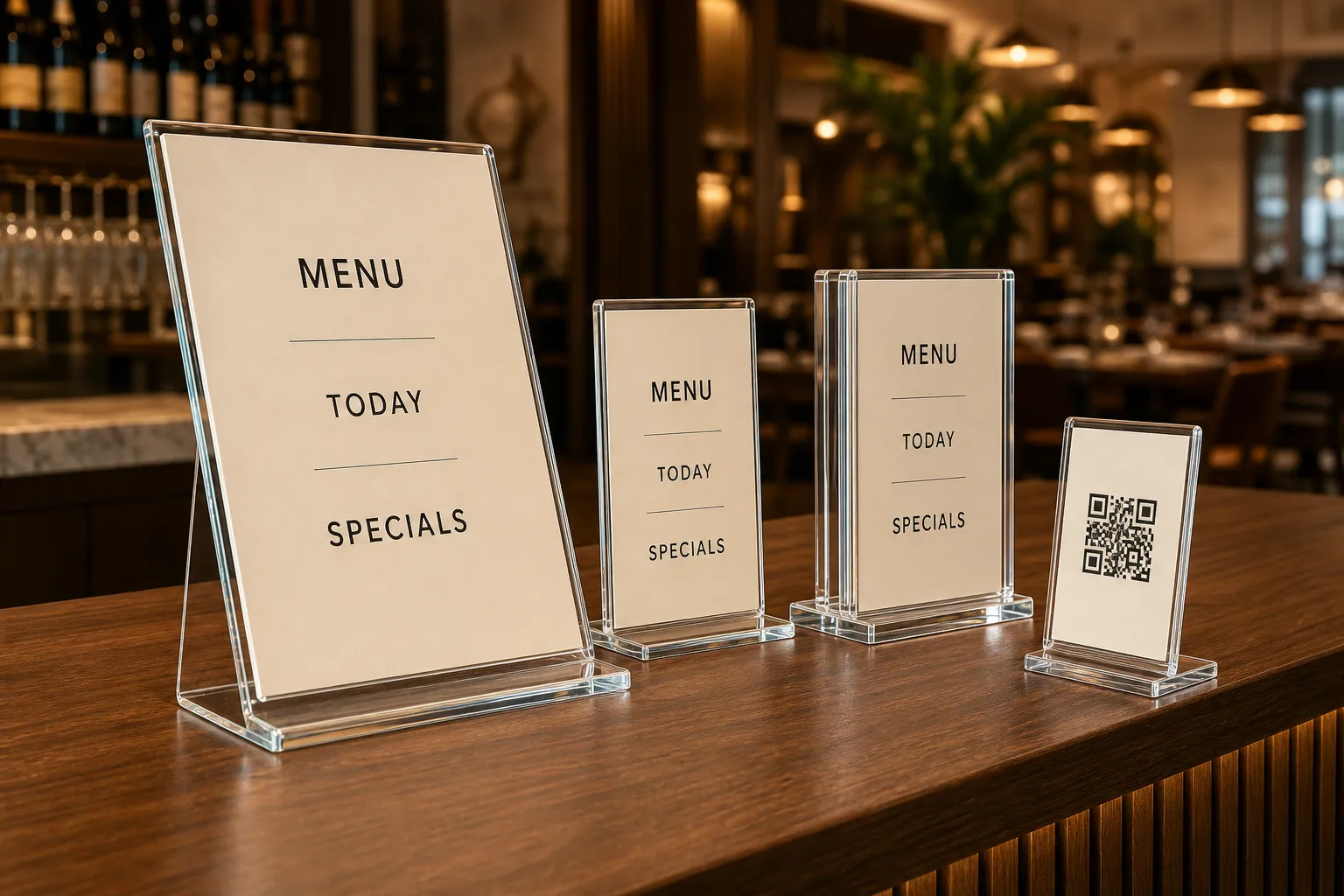
Custom Acrylic Menu Holders
Built to your menu card, your table, your brand — one coordinated family across every seat in the room.
An acrylic menu holder is a clear stand that presents a printed menu upright on a table, counter, or bar. Wetop manufactures custom menu holders in slant-back, T-style, tent, double-sided, and QR formats — A4, A5, DL, or any custom insert. MOQ 100 pieces, samples in 3–5 days, production in 15–20 days.
ISO 9001 Certified · Manufacturing in Shenzhen Since 2008 · 2,000+ Custom Projects · MOQ 100 Pieces
Menu Holder Specs at a Glance
Wetop Acrylic is a direct manufacturer and OEM supplier of custom acrylic menu holders, producing slant-back, T-style, tent, double-sided, multi-slot, and QR formats in our own ISO 9001 certified Shenzhen plant. Every holder is cut to your insert — the ranges below are what we ship most often, and we confirm the exact spec on your approved sample.
| Spec | Options |
|---|---|
| Formats | Slant-back (L-shape), T-style, tent (A-frame), double-sided, multi-slot, QR code stand, hostess-stand board |
| Insert sizes | DL (99×210mm), A6, A5, A4, A3, half-letter, US letter — plus any custom, folded, or die-cut card. See the size guide below. |
| Acrylic thickness | 2–3mm for bent panels; 5mm for large-format and bonded builds; 8–12mm cast for weighted table-top and bar bases |
| Construction | One-piece heat-bent (no seams, no glue) or solvent-bonded multi-panel for multi-slot and premium builds |
| Edge finish | Hand flame-polished (standard on foodservice pieces) or diamond-polished; matte CNC edge on request |
| Material options | Clear, frosted, smoke-tinted, colored, or mirrored cast acrylic — cast PMMA is standard for foodservice, not extruded |
| Branding | Silk-screen, full-color UV print, or laser engraving on the base or front panel; Pantone matching available |
| Insert loading | Top-load slot cut 1–2mm wider than the insert; CNC-routed channels for swap-in-seconds seasonal changes |
| Production MOQ | 100 pieces per design · Paid sample in 3–5 days · Production in 15–20 days |
| Terms | FOB Shenzhen standard; CIF and DDP available · 30/70 payment (T/T, PayPal, Western Union) · 100% inspection before packing |
Find Your Menu Holder Format
Six formats cover almost every hospitality brief. Most venues end up ordering two or three of them as one program.
Slant-Back Counter Holders
One-piece heat-bent L-shape. Lowest profile on a bar or checkout counter, top-load slot, no visible seams.
Details ›T-Style Table Menu Holders
Two upright panels on a wide horizontal base. The table-menu default — readable from every seat at a four-top.
Details ›Tent-Style (A-Frame) Holders
Two angled panels meeting at the top. Three visible faces, no separate base, stacks flat for seasonal storage.
Details ›Double-Sided & Multi-Slot
Menu on one face, promo or QR card on the other — or two and three parallel channels for food, dessert, and drinks.
Details ›QR Code Menu Stands
Compact stand sized for a scan card. Replaceable insert, so a new payment link never means new hardware.
Details ›Hostess-Stand & Floor Boards
A3 and A4 acrylic menu boards on a weighted base or clear post, sized for the entrance rather than the table.
Details ›Slant-Back & L-Shape Counter Menu Holders
A slant-back acrylic menu holder is a single sheet of cast acrylic heat-bent into an L-shape, with the front panel tilted back so the menu faces upward toward a standing guest. It is the format for bars, checkout counters, and pastry cases — anywhere depth is scarce and the menu is read from one side only.
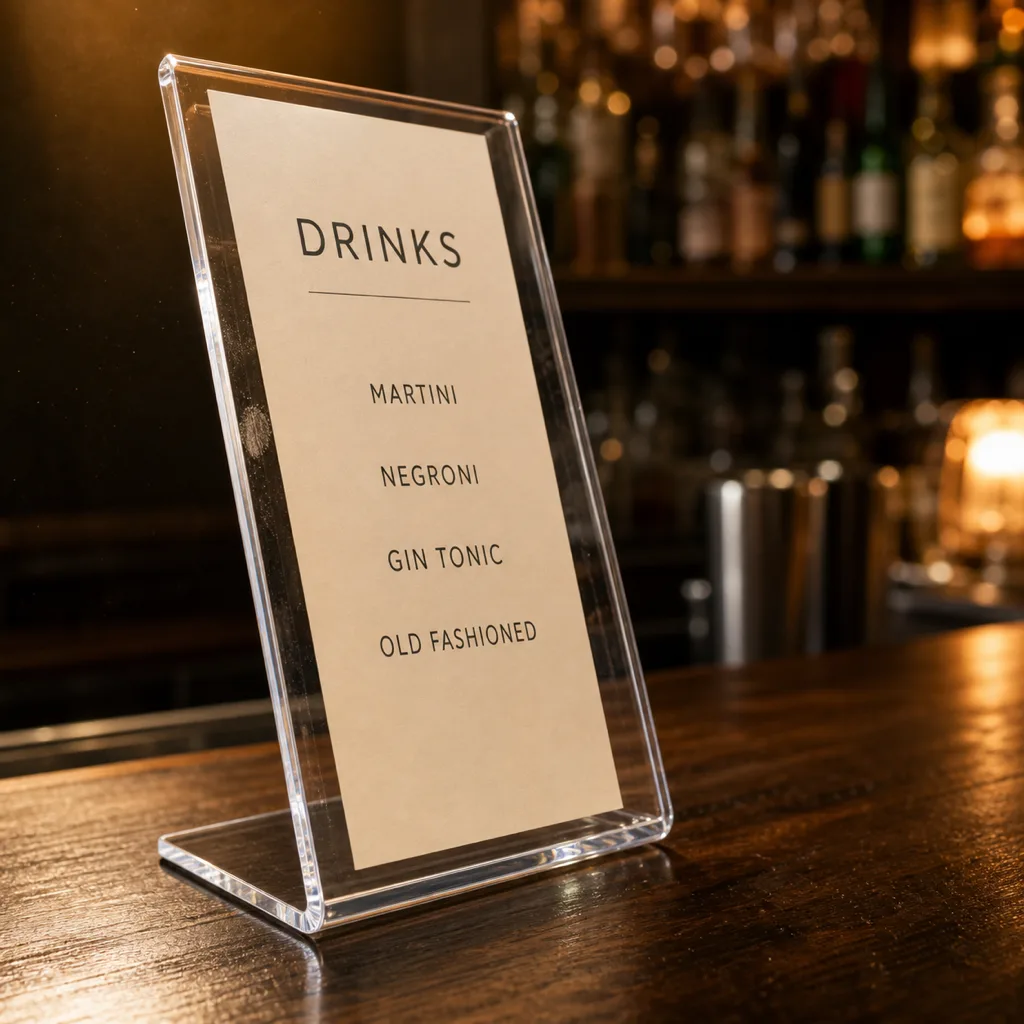
The whole holder is bent from one sheet. A strip heater softens the acrylic along a precise line near the bottom and the sheet is folded to form the L. No glue, no bond lines, no seam to catch degreaser and go cloudy after six months of wipe-downs — which is the failure mode that sends most catalog-bought bar holders to the bin.
The menu drops in from the open top and rests against the front panel; gravity and the backward tilt hold it. Tilt angle matters more than buyers expect: a 20° tilt reads well at seated eye level on a table, while 15° suits a taller card viewed by someone standing at a counter. We set the angle to where the reader's eyes actually are, not to a catalog default.
Standard thickness is 2–3mm for DL through A5 and 3–5mm for A4 and above. On wet bar tops we usually step up one thickness and specify a frosted or smoke base band, which hides condensation rings far better than clear.
Popular with: Bars · Cafes · Bakeries · Hotel outlets · Fast-casual counters
MOQ: 100 pieces per design · Sample: 3–5 days
Slant-Back Menu Holder Sizes
Our most-ordered counter configurations. Every dimension below is a starting point — all sizes are made to your card.
| Insert Size | Holder Dimensions (W×H) | Thickness | Tilt Angle | Best For |
|---|---|---|---|---|
| DL (99×210mm) | 105 × 218mm | 2–3mm | 20° | Drinks lists, cocktail cards, narrow bar rails |
| A6 (105×148mm) | 110 × 155mm | 2–3mm | 20° | Allergen notes, table numbers, small price cards |
| A5 (148×210mm) | 155 × 218mm | 3mm | 20° | Counter menus, cafe boards, product info cards |
| Half-Letter (5.5×8.5in) | 145 × 222mm | 3mm | 20° | US restaurant table cards, checkout promotions |
| A4 (210×297mm) | 218 × 305mm | 3–5mm | 15° | Full menus, hostess-stand cards, breakfast boards |
| Letter (8.5×11in) | 222 × 285mm | 3–5mm | 15° | US full menus and counter promotions |
| A3 (297×420mm) | 305 × 428mm | 5mm | 15° | Entrance menu boards, event signage |
Holder width and height run 5–8mm larger than the insert so the card loads without binding. Tilt angle is adjustable on request — tell us whether the reader is seated or standing.
T-Style, Tent & Double-Sided Table Menu Holders
A T-style acrylic menu holder has two parallel upright panels rising from a wide horizontal base, with the insert visible from both faces. Tent-style holders fold two angled panels into a self-supporting A-frame. Both formats exist for the same reason: a menu on a dining table has to be readable from every seat, not just one.
Put a slant-back holder in the middle of a four-top and two guests read the menu upside down. That is the entire case for T-style and tent formats on dining tables — and it is why almost every multi-location rollout we quote ends up with a table format and a counter format rather than one holder everywhere.
T-style holders take a printed insert down between two panels; friction and slot clearance hold it, so there are no clips or springs to break in a busy service. Tent holders skip the base entirely and stand on their own two panels, which means they stack flat — worth knowing if you rotate seasonal cards and need somewhere to put the off-season set.
Double-sided and multi-slot builds are where table holders earn their keep. A double-sided unit carries the food menu on one face and a promo or QR card on the reverse. A multi-slot base runs two or three parallel channels so the main menu, dessert card, and drinks list sit together instead of spreading across the table.
The one thing worth over-specifying is base mass. Restaurant HVAC diffusers push air straight down onto four-tops, and a light base tilts under it. On the 85-location chain rollout we document in the case study below, a 12mm weighted cast base kept the table-top unit well under the 3° tilt threshold the client had set after guests kept straightening the old 5mm units between courses.
Popular with: Restaurants · Hotels · Conference venues · Catering · Event tables
MOQ: 100 pieces per design · Sample: 3–5 days
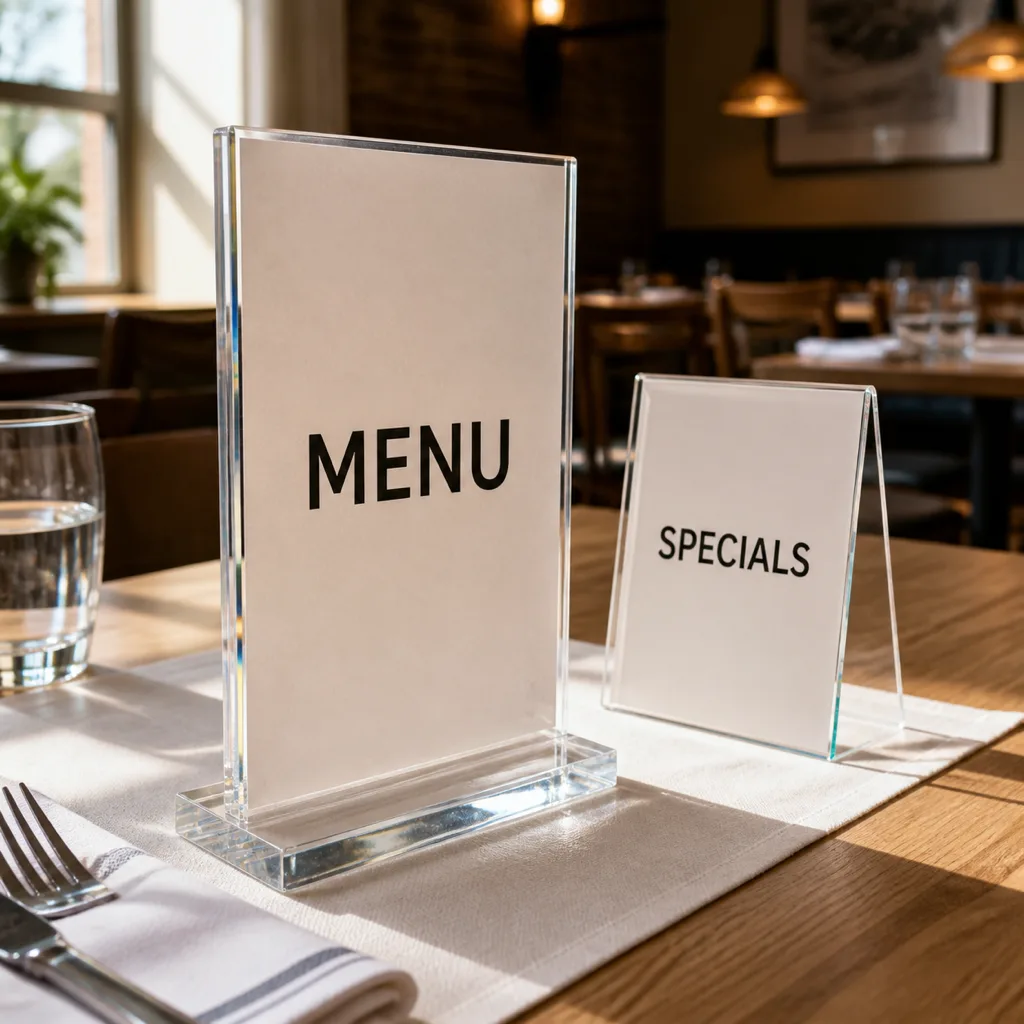
Table Menu Holder Size Guide
Base dimensions scale with insert height — the taller the card, the wider the footprint has to be to stay put.
| Insert Size | Base Dimensions (W×D) | Slot Height | Best For |
|---|---|---|---|
| A6 (105×148mm) | 130 × 60mm | 155mm | Table numbers, allergen cards, small specials |
| DL (99×210mm) | 130 × 65mm | 218mm | Drinks lists, cocktail menus, tall promo cards |
| 5 × 7in (127×178mm) | 155 × 65mm | 185mm | Event cards, prix-fixe menus, place settings |
| A5 (148×210mm) | 175 × 70mm | 218mm | Restaurant table menus, hotel in-room cards |
| Half-Letter (5.5×8.5in) | 170 × 70mm | 222mm | US table menus, bar-top promotions |
| Letter (8.5×11in) | 240 × 80mm | 285mm | US full menus, large table displays |
| A4 (210×297mm) | 240 × 80mm | 305mm | Full menu boards, buffet station cards |
Bases above are the standard footprint at 5–8mm. Weighted foodservice bases run 10–12mm cast acrylic and use the same footprint at higher mass. Laminated or thick card stock gets a wider slot and a wider base.
Pick T-style when
The card is heavy or laminated, the table sits under an air diffuser, or you want a base to carry silk-screened branding. The separate base is what lets you add mass without making the panels thicker.
Pick tent-style when
You rotate seasonal cards, need three visible faces from one unit, or storage space matters. No base means less material and flat stacking, but also less resistance to a knock.
Pick double-sided when
Paper and QR have to coexist on the same table. One unit, two faces, two independently replaceable inserts — reprint the QR card without touching the menu.
Menu Holder Sizes: A4, A5, DL & Custom Cards
Every acrylic menu holder is sized to a specific insert, with internal dimensions 2–4mm larger than the card on each side for easy loading. A4 suits full menus and hostess-stand boards, A5 is the standard table menu, and DL is the tall narrow format bars use for drinks lists. Anything outside those is quoted from your dimensions at no size surcharge.
| Card Size | Card Dimensions | Holder (Portrait) | Holder (Landscape) | Where It Lands |
|---|---|---|---|---|
| DL | 99 × 210mm | 105 × 218mm | 218 × 105mm | Bar rails, cocktail lists, narrow table runners |
| A6 | 105 × 148mm | 110 × 155mm | 155 × 110mm | Table numbers, allergen cards, condiment-station notes |
| A5 | 148 × 210mm | 155 × 218mm | 218 × 155mm | The default dining-table menu and hotel in-room card |
| Half-Letter (US) | 140 × 216mm | 145 × 222mm | 222 × 145mm | US table menus and checkout promotions |
| Letter (US) | 216 × 279mm | 222 × 285mm | 285 × 222mm | US full menus, counter boards |
| A4 | 210 × 297mm | 218 × 305mm | 305 × 218mm | Full menus, hostess stands, breakfast boards |
| A3 | 297 × 420mm | 305 × 428mm | 428 × 305mm | Entrance menu boards, event and buffet signage |
Same insert-to-holder clearance logic as our sign holders — the two product families share a cutting and polishing line, so a mixed order of menu holders and sign holders runs on one production window.
Menu holder or sign holder — which page do you need?
If the insert is a menu that guests handle and staff swap with the season, you are on the right page. If the insert is a fixed printed sign — wayfinding, room numbers, price cards, shelf-edge tags, compliance notices — that is a different job with different mounting and different sizes, and it lives on our custom acrylic sign holders page. Wall-mounted signage is covered separately under wall sign holders.
Ordering both? Say so on the RFQ. Menu holders and sign holders are cut, bent, and polished on the same line, so a mixed program is quoted as one job with pooled quantity rather than two small orders.
Related guide: Acrylic sign holder size chart — insert-to-holder dimensions, slot clearances, and portrait-versus-landscape conversions for every standard size, menu cards included.
Acrylic QR Code Menu Stands
A QR code menu stand is a compact acrylic holder sized for a scan card rather than a full menu — typically a 60–100mm square or DL card at a steep tilt so a phone camera can read it from a seated position. The insert is replaceable, so when the ordering platform or payment link changes, the venue reprints a card instead of rebuying hardware.
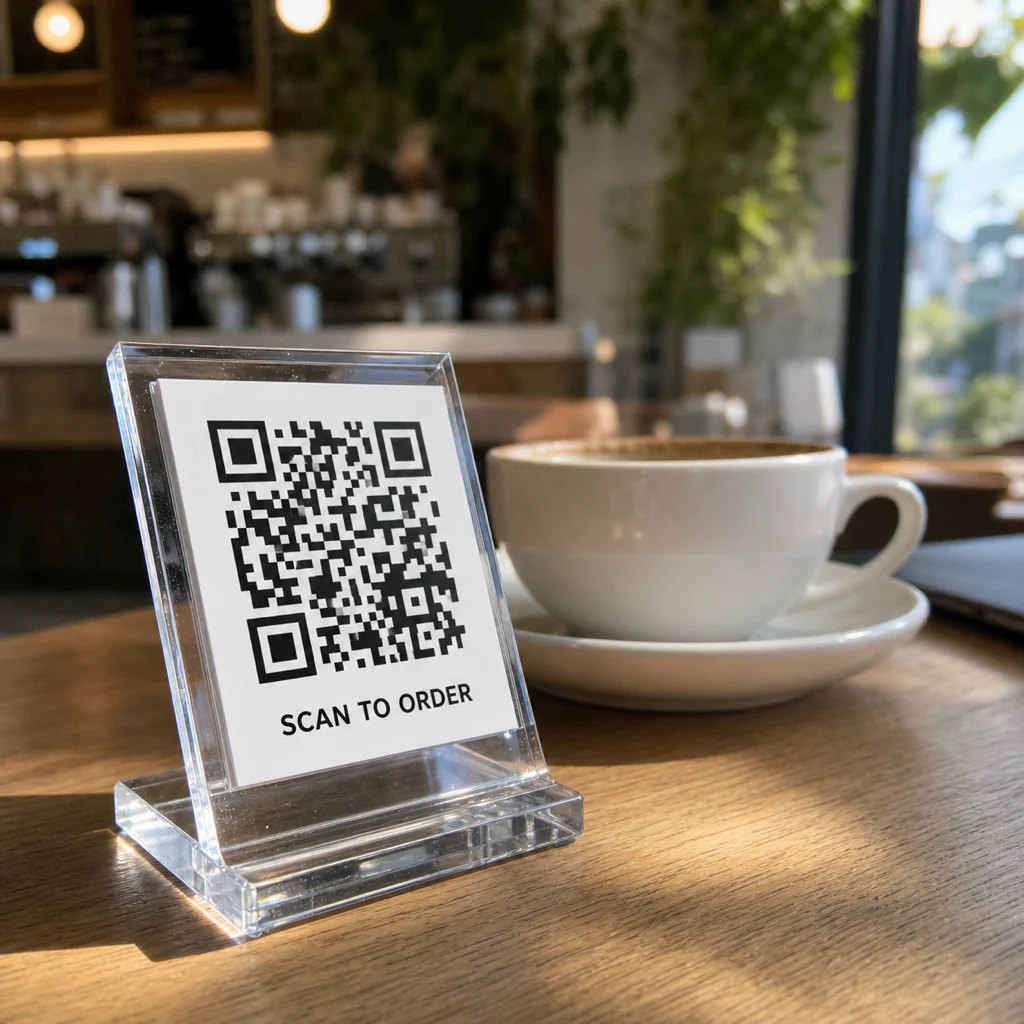
The mistake we see most often is a permanently printed QR code — silk-screened or engraved straight onto the acrylic. It looks clean on day one and becomes 1,200 units of scrap the day the venue switches ordering platforms. Every QR stand we build takes a replaceable insert for exactly that reason.
Tilt angle is the second thing that goes wrong. A QR card sitting near-vertical forces a seated guest to lean in; too flat and the ceiling lights blow out the scan with glare. A steeper tilt than a reading menu, angled away from the venue's main light source, is what actually gets scanned on the first try.
For a multi-location payments brief, separate the stand into a stable hardware SKU and a replaceable artwork insert. Our QR code stand specification guide covers insert sizing, glare control, scan checks, and rollout planning.
Popular with: Restaurant-payments platforms · Fast-casual chains · Cafes · Hotel bars · Food halls
MOQ: 100 pieces per design · Sample: 3–5 days
Related guide: Acrylic QR code stands for restaurants and hotels — insert sizing, tilt angles, glare control, and what to specify before a multi-site rollout.
Multi-Location Menu Holder Rollouts
A chain rollout is a different order from a single-venue purchase: several SKUs, one visual identity, and a delivery that has to land at head office or across a distribution network in one window. MOQ counts per design, so three formats of 100 pieces run as one job on one production window — packed and labeled per SKU so store managers do not have to sort them.
Fix the family, not the piece
Agree the base thickness, edge finish, tilt angle, and branding method once, then apply them across every SKU. This is what makes a dining room read as one brand instead of three catalog purchases — the failure the 85-location chain came to us to fix.
Pilot one venue before the fleet
Put the approved samples in one busy location through a full service cycle. A holder that behaves on a desk can still wobble under a diffuser or catch on a laminated card. Low-cost to find at sample stage; expensive to find at 400 units.
Keep the tooling for Phase 2
We hold the approved cut program, so a later SKU using the same geometry can avoid repeating drawing setup. Any tooling or schedule change is confirmed after the revised artwork and dimensions are reviewed.
Pack for the store, not the warehouse
Per-SKU labeling, per-location carton counts, and protective film that comes off cleanly. Every unit passes 100% inspection against your approved sample before it is packed. FOB Shenzhen standard; CIF and DDP available.
For rollout planning, use the sign-holder size chart to lock insert dimensions and slot clearances, then validate base stability and artwork changes during sampling.
Menu Holder Planning Examples
Representative hospitality briefs for specification and sampling. Planning cards are not completed-shipment evidence.
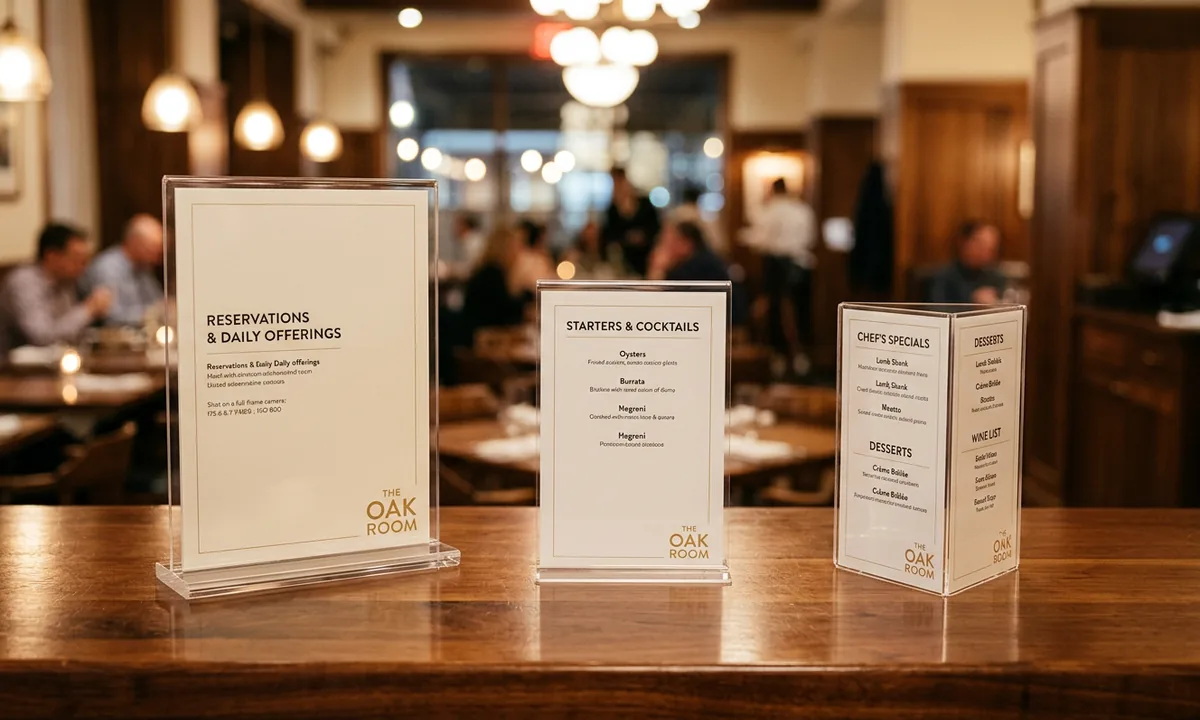
Multi-Location Menu Holder Production Plan
3 coordinated SKUs (hostess-stand board, weighted table-top bi-fold, table tent) · Cast acrylic · Weighted base · Polished edges · CNC-routed insert slots
Read the case study ›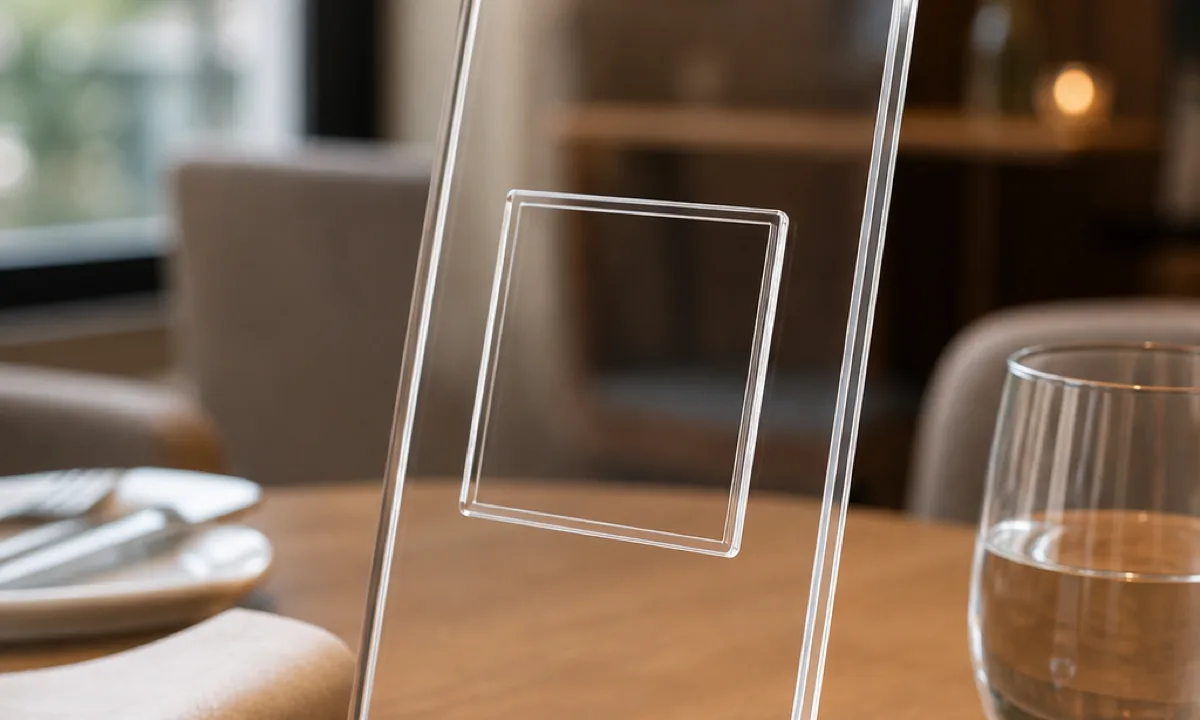
QR Code Table-Stand Production Plan
Two configurable SKUs · Replaceable QR code inserts · Tip-resistant weighted bases
Read the case study ›T-Style Table Menu Holders
2,000 units · T-style, A5 portrait · Clear acrylic, 3mm · Flame polished · Branded base with silk-screen logo · Bulk packed in 100s
Representative Phase 2 Bar-Top Promo Holder
Bar-top beverage promo SKU based on an approved cut program · tooling requirement reviewed against final geometry
Read the case study ›We had three suppliers and three different looks on the same table. Wetop built the whole family to one spec and the dining room finally reads like one brand. Servers swap the seasonal card without asking anyone how.
Why Acrylic Menu Holders Over Wood, Metal or PVC?
Compared against the three materials hospitality buyers usually price alongside it — wood, metal, and PVC — acrylic wins on optical clarity, cleanability, and the ability to disappear behind the menu. It loses on outdoor UV life and on drop resistance. The table below is the honest version of that trade.
| Cast Acrylic | Wood | Metal | PVC / Styrene | |
|---|---|---|---|---|
| Look on the table | Clear — the menu reads, the holder disappears | Warm, opaque; becomes part of the decor | Industrial, opaque; strong visual weight | Cloudy, low-cost appearance |
| Daily degreaser wipe-down | Handles it; cast resists chemical attack better than extruded | Finish degrades where the cloth lands most | Fine, but watch for water spotting on brushed finishes | Scratches and hazes quickly |
| Branding | Silk-screen, UV print, or laser engrave | Engrave or burn; limited color | Etch or pad print | Print only; wears off |
| Weight for stability | Add mass in the base without changing the look | Naturally heavy | Naturally heavy | Too light without a separate weight |
| Scratch & drop resistance | Scratches under abrasive cleaning; can chip if dropped on tile | Dents rather than shatters | Best of the four | Scratches worst of the four |
| Outdoor patio use | Good — cast acrylic holds clarity in sunlight far longer than PVC | Weathers and swells | Good, but heats up | Yellows and warps |
Comparison set: cast acrylic (PMMA), solid or veneered wood, powder-coated or brushed steel, and rigid PVC/styrene — the four materials quoted most often for restaurant table and counter holders.
Related guide: Acrylic vs wood menu holders — a restaurant buyer's guide compares the two head to head on cost, cleaning, and how each ages in a working dining room.
What Affects Acrylic Menu Holder Pricing?
Five variables move the unit price on a menu holder quote: insert size, acrylic thickness and base mass, construction method, branding method, and quantity. Two quotes that look far apart usually differ on the first three rather than on margin — ask every supplier to state all five in writing so you are comparing the same product.
Insert size
The single biggest driver. An A4 hostess-stand board uses several times the sheet area of a DL bar card, and larger panels also need more thickness to stay rigid.
Thickness & base mass
A 12mm weighted cast base costs meaningfully more than a 3mm bent panel. Worth paying for on dining tables under HVAC diffusers; wasted on a sheltered counter card.
Construction method
One-piece heat-bent is the lowest-cost route. Solvent-bonded multi-slot and double-sided builds add fabrication steps and cure time, and price accordingly.
Branding method
Silk-screen carries a flat setup fee plus a low per-unit cost — best at volume in one or two colors. UV print has no screen setup but costs more per unit. Laser engraving prices by engraved area.
Quantity
Cutting, bending, and packing setup spread across the run, so unit price steps down at each tier. Ask us to quote several tiers in one quotation so you can see where the steps fall.
Packing & terms
Per-SKU labeling and per-store carton counts cost a little more than bulk packing and save a lot of store labor. FOB Shenzhen is standard; we also quote CIF and DDP to the door.
Who Uses Acrylic Menu Holders?
Restaurants, bars, cafes, bakeries, hotels, catering companies, and the hospitality distributors who supply them. What they share is a printed message that changes with the season and a surface that gets wiped down every day — which is why acrylic, not wood or PVC, is the default material in a working dining room.
Restaurants & Casual Dining
Table tents, bi-fold table-top holders, and hostess-stand boards ordered as one coordinated family so the dining room matches.
See examples ›Bars, Pubs & Breweries
DL and half-letter drinks cards in narrow slant-back holders that survive a wet bar top and take up almost no rail depth.
Cafes & Bakeries
Counter menu holders next to the pastry case, plus small tent cards for allergen notes and daily specials.
See examples ›Hotels & Resorts
In-room dining cards, spa menus, and lobby information holders in a single finish across every floor and outlet.
Hospitality Suppliers & Distributors
Private-label menu holder lines built to your spec sheet, packed and labeled per SKU for onward distribution.
Events, Catering & Conferences
Buffet station cards, table numbers, and seating menus in matching acrylic — reusable across events rather than reprinted hardware.
Related published sign-holder projects
Published programs showing adjacent sign-holder production and quality-control decisions.
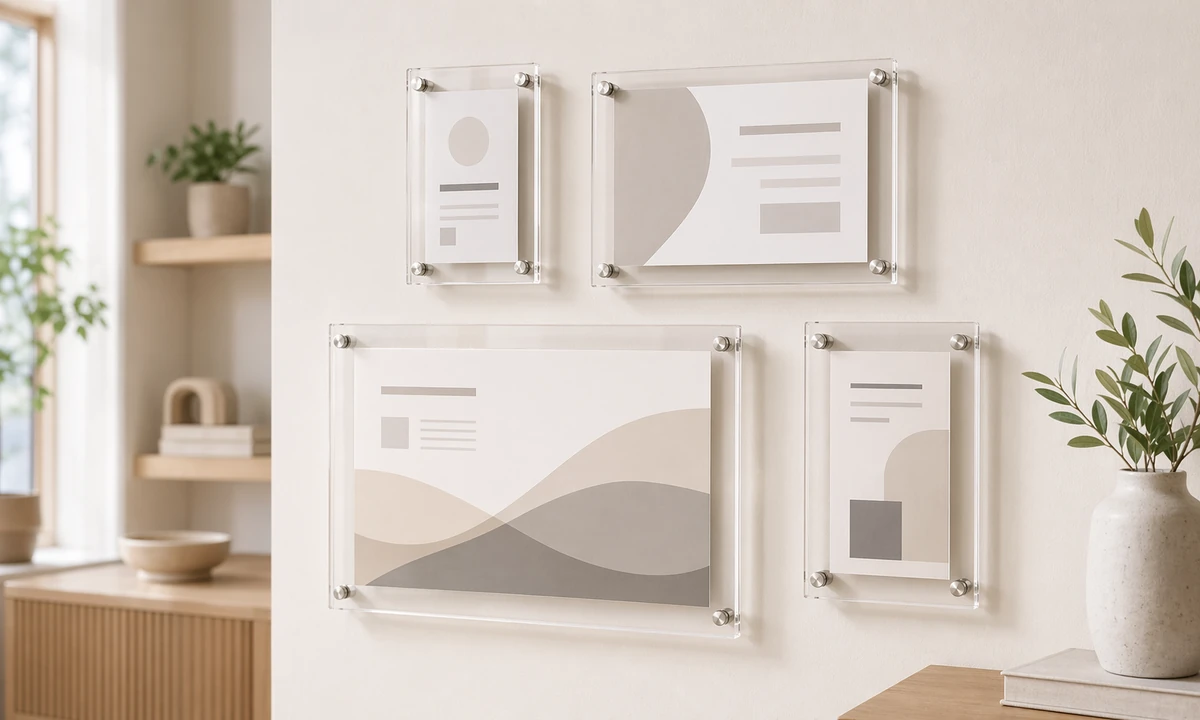
Branded sign holders for e-commerce sellers
A published sign-holder program covering artwork consistency, packing, and repeatable production.
Read the case study →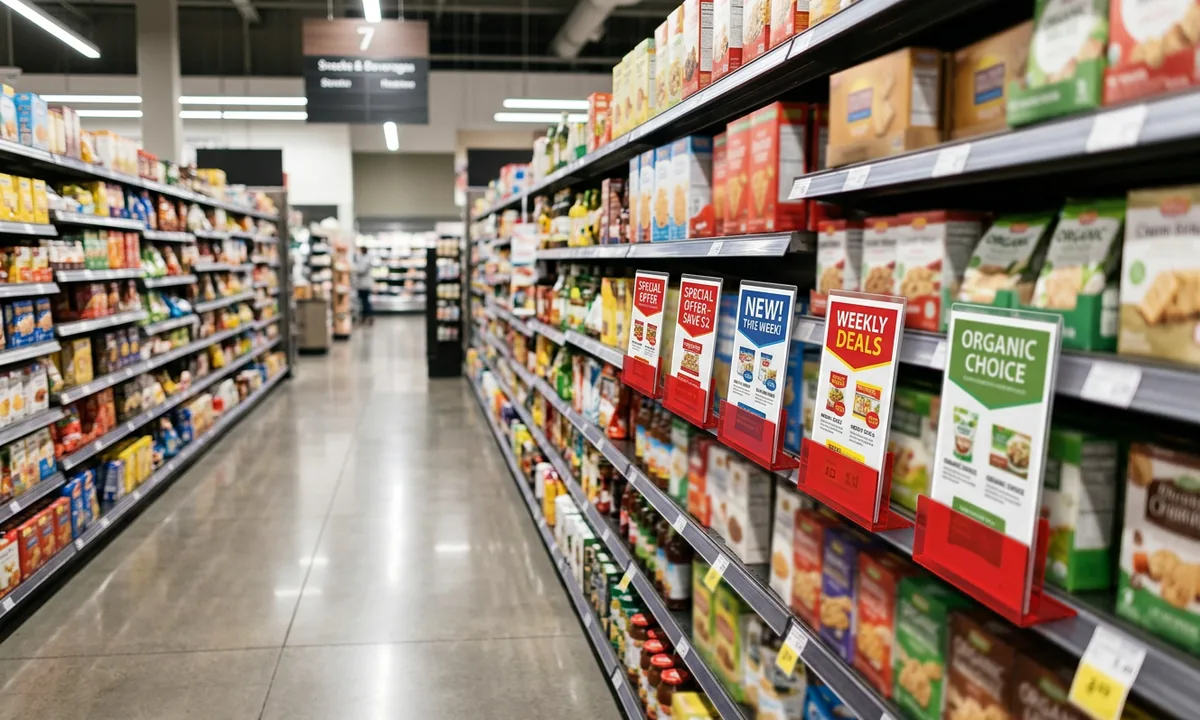
Shelf-edge sign holders for a supermarket chain
A published rollout covering fit checks, labeling, and store-ready packing across a standardized fixture family.
Read the case study →How to Order Custom Acrylic Menu Holders
From your first message to menu holders on the table — 3 steps.
Send Us Your Menu Card
A photo of the card with its dimensions is enough — no CAD file needed. Tell us the format you want, where the unit sits (table, bar, hostess stand), quantity, and whether your logo goes on it.
We respond within 24 hoursApprove a Sample
We build a production-grade sample with your actual insert loaded, so you can check the slot clearance, tilt angle, and base stability on a real table. What you approve is exactly what we produce. Sample fees are paid separately and are not credited to production orders.
Sample ready in 3–5 daysReceive Your Order
Every holder passes 100% inspection against your approved sample before packing, labeled per SKU for multi-format programs. FOB Shenzhen standard; CIF and DDP available for door-to-door delivery.
Production in 15–20 daysFrequently Asked Questions
What sizes do acrylic menu holders come in?
The holder is sized to the menu card, not the other way around. Our most-ordered formats are A4 (210×297mm), A5 (148×210mm), DL (99×210mm — the tall narrow card most bars use for drinks lists), half-letter (5.5×8.5in) and US letter (8.5×11in). The internal slot is cut 1–2mm wider than the insert on each side so staff can drop a new menu in without catching a corner. Non-standard cards — die-cut, folded bi-fold, square, oversized brunch boards — are quoted from your dimensions with no size surcharge.
What is the difference between a menu holder and a sign holder?
The construction overlaps; the job doesn't. A menu holder lives on a dining table, bar top, or hostess stand and gets handled by guests and servers many times a day, so it is specified for stability under HVAC drafts, fast insert swapping, and daily degreaser wipe-down. A sign holder presents a fixed message — price cards, wayfinding, compliance notices, shelf-edge tags — and is usually set once and left alone. If your insert is signage rather than a menu, our custom acrylic sign holders page covers slant-back, wall-mounted and floor-standing sign formats.
Which menu holder format should a restaurant chain standardize on?
Most chains end up with two or three formats rather than one. A T-style or tent holder goes on the dining table because both sides of a four-top can read it. A slant-back or L-shape holder goes on the bar and the counter because it takes less depth and does not block sightlines. A floor-standing or hostess-stand holder carries the A3 or A4 board at the entrance. Order them as one program under a single design so the base thickness, edge finish, and branding match across all three — that is what makes a dining room look coordinated rather than assembled from catalogs.
How do you keep table menu holders from tipping over?
Base mass and base footprint, in that order. A thicker cast acrylic base lowers the center of gravity and resists the airflow coming off ceiling diffusers, which is the usual cause of table-top wobble in restaurants. Widening the base footprint relative to the insert height does the rest. On the 85-location chain rollout documented in our case study, moving the table-top holder from a 5mm base to a 12mm weighted base held the unit well under the 3° tilt threshold the client set. Tell us the insert size and where the unit sits, and we spec base thickness and footprint on the quote.
Can you add our logo to the menu holder?
Yes — three methods, and they price differently. Silk-screen printing on the base or front panel is the most common for restaurant rollouts: a flat setup fee plus a low per-unit cost, best for one or two flat colors. UV printing handles full-color logos and gradients with no screen setup, which suits shorter runs and multi-brand groups. Laser engraving cuts the mark into the acrylic itself so it never wears off under degreaser — the choice when the holder has to look the same in year three as on day one. Send artwork as vector (AI, EPS, or PDF) and we mock it up on the sample.
Are acrylic menu holders dishwasher safe?
No — do not run them through a commercial dishwasher. A machine cycle pairs sustained heat with the aggressive detergents foodservice machines use, and that combination stress-crazes acrylic into permanent hairline cracks over repeated washes. What acrylic does handle is the routine every restaurant actually uses: a damp cloth with mild soap, or the standard front-of-house degreaser on a wipe-down pass. Cast acrylic carries higher chemical resistance than extruded, which is why we spec cast for foodservice pieces, and hand flame-polished edges hold up to that wipe-down cycle better than machine-buffed edges, which go hazy.
Can one holder show a menu and a QR code at the same time?
Yes, and it is now the most requested configuration in hospitality. Two builds work. A double-sided T-style holder puts the printed menu on one face and the QR code on the reverse, so the same unit serves guests who want paper and guests who want to scan. A slotted holder carries the full menu in the main channel and a small QR card in a second shallow slot at the base, which lets the venue reprint the QR card alone when the payment link changes. Both use replaceable inserts, so a new QR code never means new hardware.
What is your MOQ and lead time on custom menu holders?
MOQ is 100 pieces per design. A paid sample ships in 3–5 days and production runs 15–20 days after you approve it. Mixed programs count per design, not per order: an A5 table tent, a DL bar menu holder, and an A4 hostess-stand board run as three designs of 100 in the same shipment and on the same production window, packed and labeled per SKU so store managers do not have to sort them. Bonded multi-panel builds add 2–3 days for solvent-bond cure; silk-screen or UV branding adds 1–2 days.
Are the slots routed in your own plant, or do you broker the work out?
Our own plant. Wetop has run the same Shenzhen factory since 2008 — today 5,000 m², ISO 9001 certified, 65+ workers, 2,000+ custom projects — and cutting, heat bending, slot routing, edge polishing, printing, and inspection all happen on that floor. So when you ask whether a 12mm base is enough for a DL bar menu holder on a windy patio, the answer comes back from the person who will bend and polish it.
How much do custom acrylic menu holders cost?
We quote per design rather than publishing a catalog price, because the levers move the number a long way. The five that matter most are insert size (an A4 hostess board uses several times the material of a DL bar card), acrylic thickness and base mass (a 12mm weighted base costs more than a 3mm bent panel), construction method (one-piece heat-bent has the lowest cost; bonded multi-slot and tent builds add fabrication steps), branding method (silk-screen, UV print, or laser engraving), and quantity. Send the format, size, and target quantity and we come back within 24 hours with a line-itemized quote you can compare against other suppliers.
Can you match menu holders to an existing set we already own?
Usually yes, from photos and dimensions alone — no CAD file needed. Send a few photos with a ruler or a known object in frame, the insert size, and the acrylic thickness if you can measure it. We rebuild the geometry, confirm the tilt angle and slot clearance, and produce a sample against your existing unit so you can hold the two side by side before committing. This is the normal path for chains replacing units store by store rather than all at once.
Have a Menu Holder Spec? Let's Quote It.
Send us your insert size, format, and quantity — a photo of the menu card is enough to start. We respond within 24 hours with a line-itemized quote covering base thickness, branding method, packing, and timeline. No commitment required. Sample before you commit to production.