
Delivered Project · Beauty & Cosmetics · United Kingdom
Engraved Magnetic Acrylic Sign
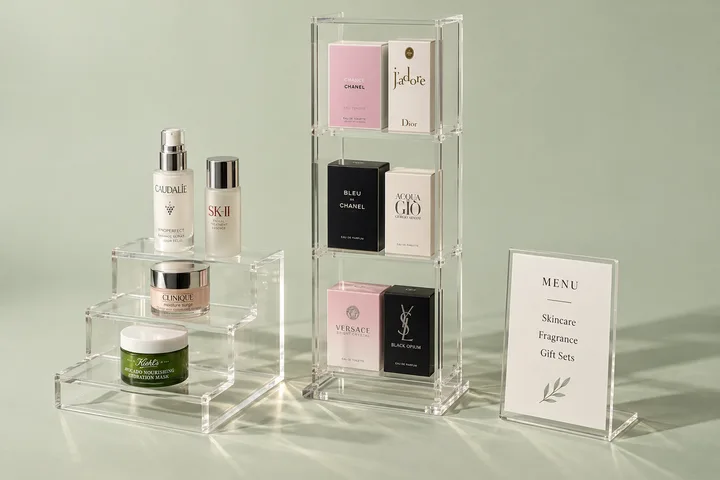
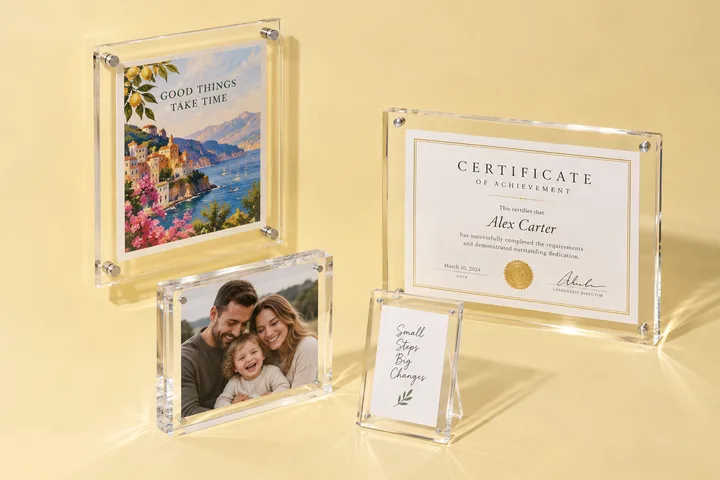
A UK beauty brand came to us for engraved clear acrylic signs that hold on hidden magnets, in several designs.
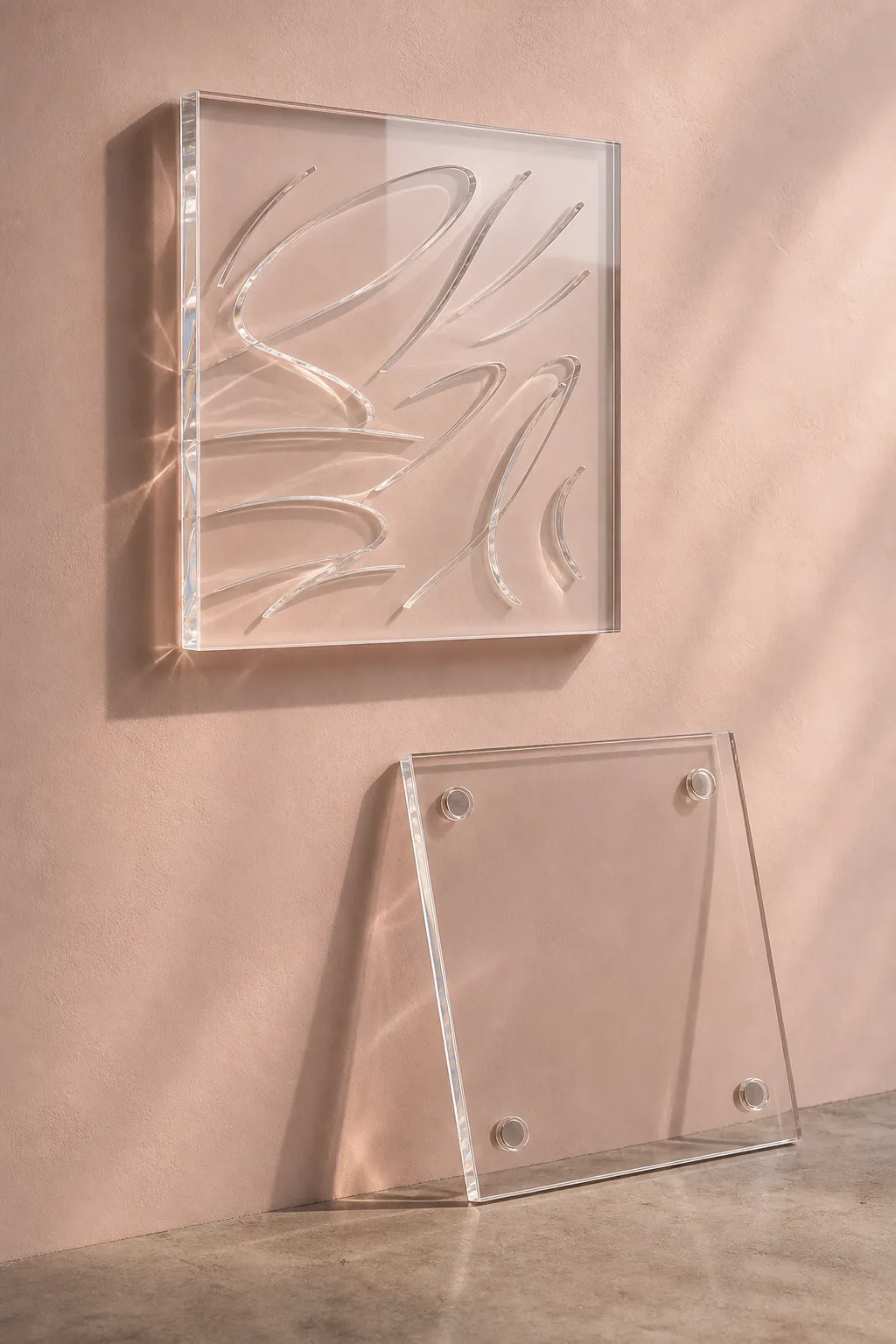
We drew the engraving and the rear magnet pockets together, approved one complete system sample and produced each design as its own release.
Ordering a similar project
MOQ is 100 pieces per design. A paid sample takes 3–5 days, is paid separately and is never credited. Standard production is 15–20 days after approvals, and we reply to a complete brief within 24 hours.
Closest published price: this order was quoted per design. The nearest public reference is the published midpoint for a 500-piece tactile or standoff wall-sign program, $5.25 per unit FOB Shenzhen. An engraved sign with magnet pockets is a different construction and is priced from its own drawing.
Key Takeaways
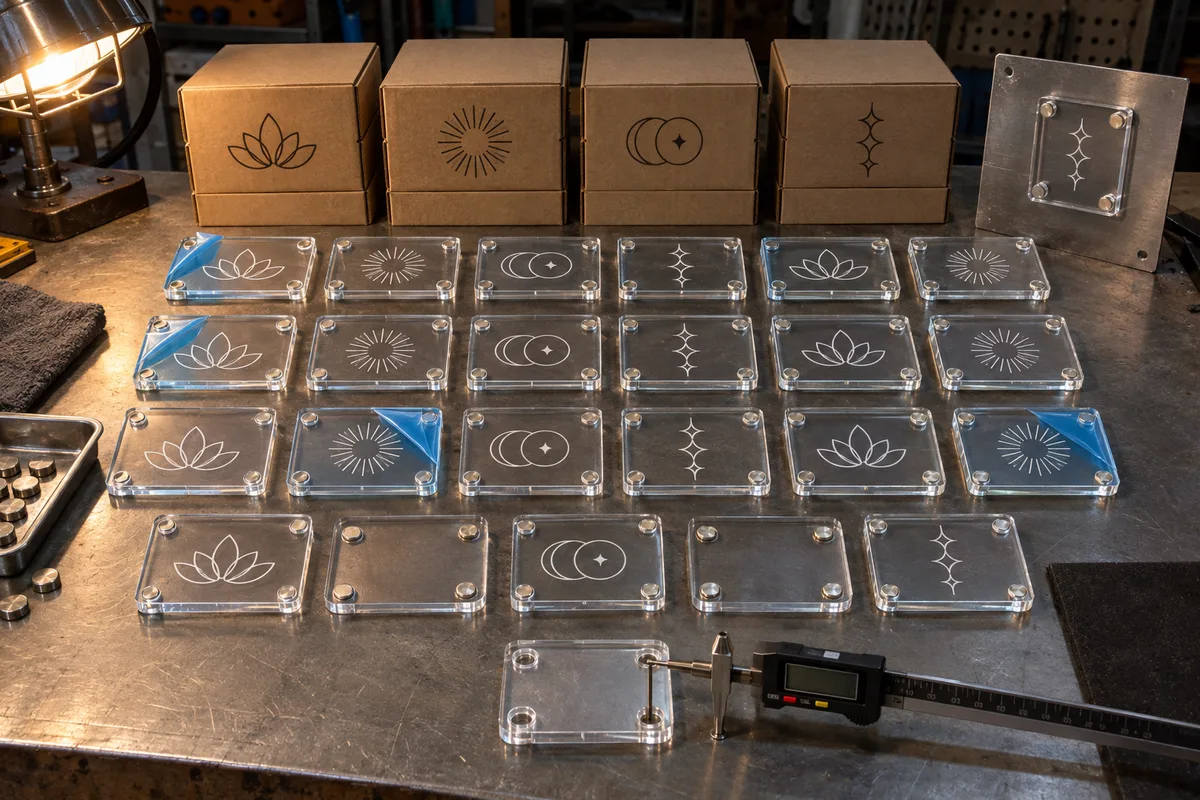
- A UK beauty brand asked us for engraved clear acrylic signs held by hidden magnets, in several designs, so its signs could be swapped at the counters.
- We drew the front engraving and the rear magnet pockets on one section drawing, so the remaining wall behind each pocket was fixed before any acrylic was cut.
- One paid system sample, made with the proposed magnets and steel interface, approved appearance and retention before we cut production acrylic.
- Each design ran as its own release, with its own drawing, sample and approvals. We supplied non-electrical acrylic components only.
The Challenge
The brand wanted engraved signs on the front and concealed magnetic attachment on the back. Both operations cut into the same acrylic panel, so we could not treat them as separate decorative details. Before drawing anything we collected the artwork, finished size, intended appearance, proposed magnet and mating steel interface. The buyer also told us the wall surface and what would happen if a sign moved.
Two commercial constraints sat around that engineering problem:
- Each design was its own release. Different sizes, artwork or pocket layouts counted as separate designs, and quantities did not combine across them.
- The wall interface belonged to the venue. Magnets alone did not make the installation drill-free or damage-free, so the venue and the brand's local installer approved attachment and removal.
Our Approach
We started with one representative design and a controlled drawing showing engraving, rear pockets, edge clearances and remaining wall. The paid sample then tested appearance, handling and the complete magnetic interface the buyer defined. The review followed ourmagnet mounting spec chart for acrylic.
Engraving and pockets in one section
We did not use a stock engraving depth, pocket depth or wall thickness. We set those values from the panel thickness, acrylic grade, artwork, magnet geometry, adhesive bed and handling load. The drawing showed the thinnest section, and the buyer approved a sample cut from the production material.
We placed the pockets clear of the engraved strokes, the edges and the mounting template. We chose magnet count and grade only after we knew the finished sign mass, orientation, mating material and the buyer's retention test. In production, inspection checked the agreed pocket and engraving dimensions.
One release per design
Every design carried its own revision identifier, approved artwork, drawing, sample and order quantity. Similar designs shared a production route, but not quantity or approval. That link kept a revised engraving file from running with an earlier pocket layout, and machining, assembly, inspection and packing all checked against the same reference. We quoted setup, programming, fixtures and any special tooling after design review instead of promising them free.
The record for each design listed the cast-PMMA grade, panel thickness, finished dimensions and edge finish; the artwork revision and approved engraving depth; each pocket's position, diameter and depth with the minimum remaining wall; the magnet specification, retention method, polarity and mating steel part; and the sample identifier and wall-test record.
Wall interface approved on site
The buyer proposed the steel plates and the fixing method. We cannot approve a building substrate from a drawing, so the venue and the brand's local installer reviewed the actual finish, cleaning method, attachment, removal and acceptable damage risk. Once they approved that system, we supplied a placement template.
| Spec | Value |
|---|---|
| Panel | Named cast-PMMA grade and thickness, recorded on the approved drawing |
| Engraving depth | Set on the section drawing and signed off on the physical sample |
| Magnets | Grade, size and count approved by the buyer, with supplier documentation |
| Magnet pockets | Placed clear of the engraved strokes and edges |
| Minimum web | Fixed in engineering review and confirmed on the approved sample |
| Wall side | Interface approved by the venue and installer for the actual substrate |
The Results
We released each design as a package: approved artwork, section drawing, named material, complete magnetic-system sample, inspection checklist and packing specification. Raised engraved faces, polished edges and installed magnets can mark neighboring parts, so the buyer approved our protective film, separators, inner cartons, accessory labeling and outer-carton layout before packing, and arrival inspection checked the shipment against that method.
“The approval record we kept was the signed sample, the drawing revision and the wall-interface test. Those three records showed which inputs had to stay fixed when the brand changed artwork.”
If You're Planning Something Similar
If your sign combines engraving and rear pockets, ask for one section drawing that shows both, and approve a physical sample with your magnets and steel interface before production. Treat the wall attachment as a separate local approval: we make the acrylic components and a placement template, and your venue and installer own the substrate, attachment, removal and installed system.
A useful RFQ has one file per design, finished dimensions, edge appearance, viewing distance, engraving appearance, the mounting environment, sign orientation and any handling test the sample must pass, and says whether we source the magnets and steel parts or you nominate them. A later design reuses an earlier release only if artwork, mass, mounting surface and installation method stay the same; new artwork or pocket geometry gets a new drawing review, and every reorder gets a fresh price and schedule. See ouracrylic magnetic frames.
Common Questions
Does engraving weaken a magnetic acrylic sign?
Engraving and rear pockets both remove material, so on this order we checked them together. The section drawing set the pocket location, depth, magnet specification and minimum remaining wall for this panel, and the approved sample confirmed them before production. We do not apply one standard value to every sign.
Will magnetic wall mounting damage the paint?
The sign alone does not settle that. On this order the buyer, the venue and the local installer approved the wall substrate, adhesive or fastener, steel interface, magnetic retention, removal method and acceptable surface risk on the actual wall finish before rollout.
Need swappable engraved signs for your counters?
Send the artwork set, panel sizes, proposed magnetic hardware, wall-interface details and quantity per design. We reply within 24 hours with drawing and sample questions and a quote for each design.
Non-electrical acrylic components only · one drawing, sample and release per design