Delivered Project · Custom Trays
Printed-Logo Trays with Drawing and Artwork Control
A brand-merchandising sourcing team needed 2,000 clear acrylic trays that all carried the same printed logo and looked the same from the first piece to the last.
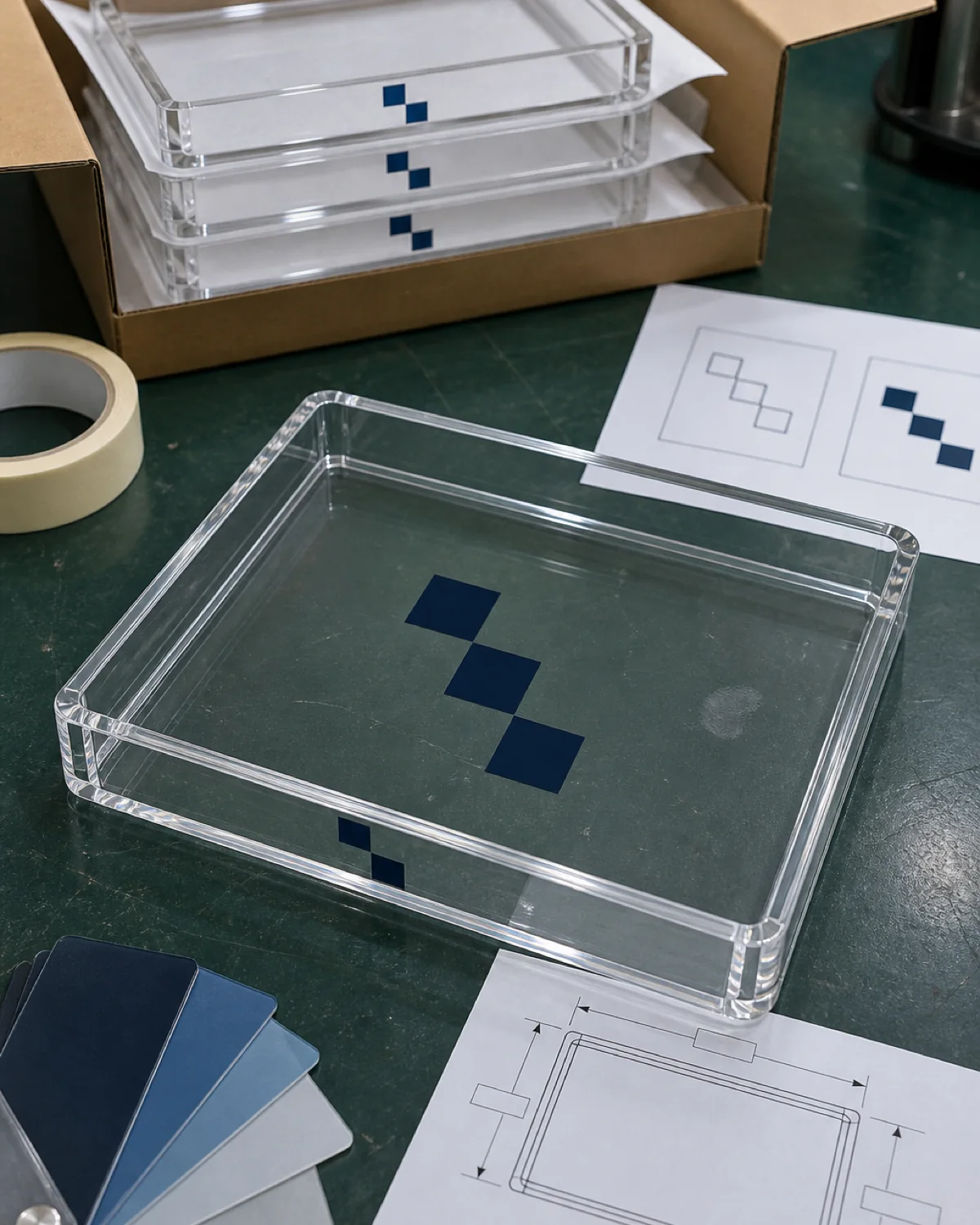
We drew the finished tray, had the buyer approve the color and print on a paid sample, checked the first production pieces before the lot ran, and shipped the trays nested and protected.
- printed-logo trays delivered
- 2,000
- active drawing and approved sample for every version
- 1
Ordering a similar project
MOQ is 100 pieces per design. Paid samples take 3–5 days; sample fees are paid separately and never credited. Standard production takes 15–20 days after drawing, material, artwork, packing and sample approval. Wetop responds to a complete brief within 24 hours.
Closest published price: this printed tray was quoted from its own drawing. The nearest public reference is on the acrylic vanity trays page: a 10 × 7 inch, 3 mm clear tray without handles, diamond-polished, at $5 per unit at 500 pieces FOB Shenzhen.
Key Takeaways
- A brand-merchandising sourcing team ordered 2,000 clear acrylic trays carrying its printed logo, split into separate artwork versions with their own proof and carton allocation.
- We released a finished drawing that stated inside and outside dimensions, wall, base and handle geometry before the sample.
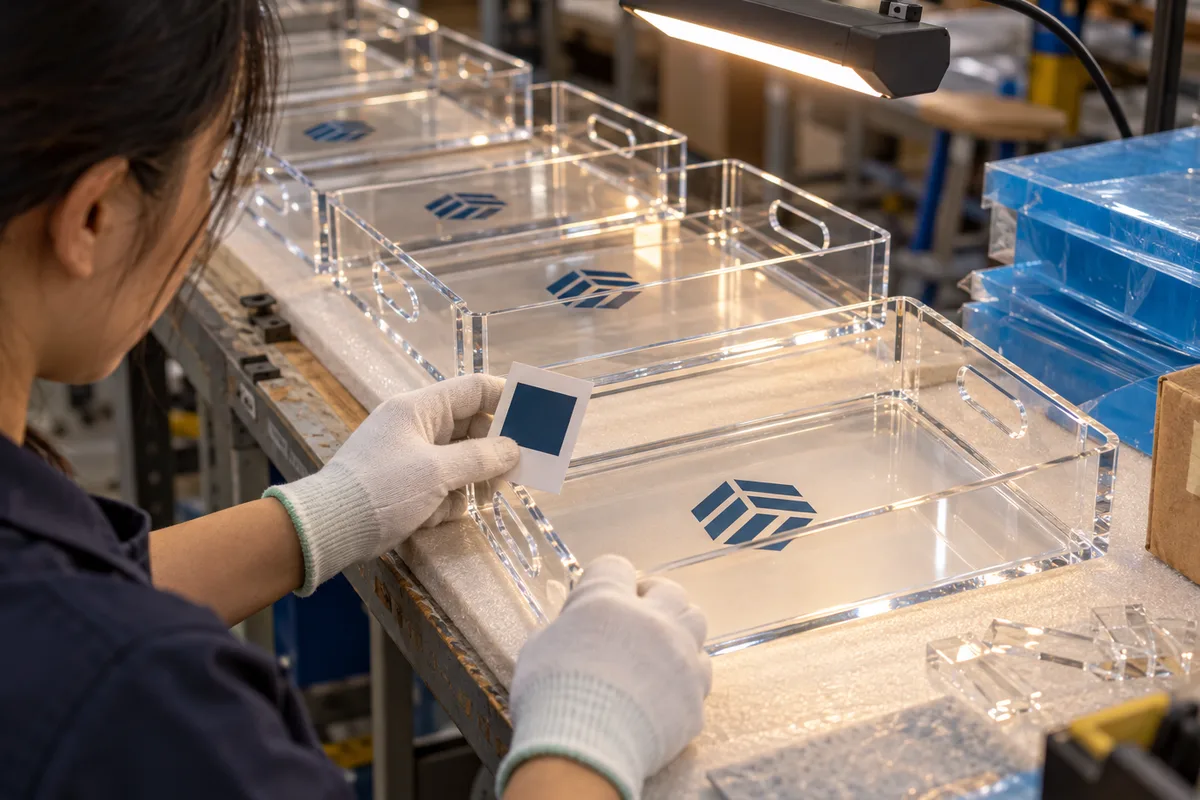
- The buyer approved the logo process, viewing side, color target, opacity, position and safe area on a paid physical sample.
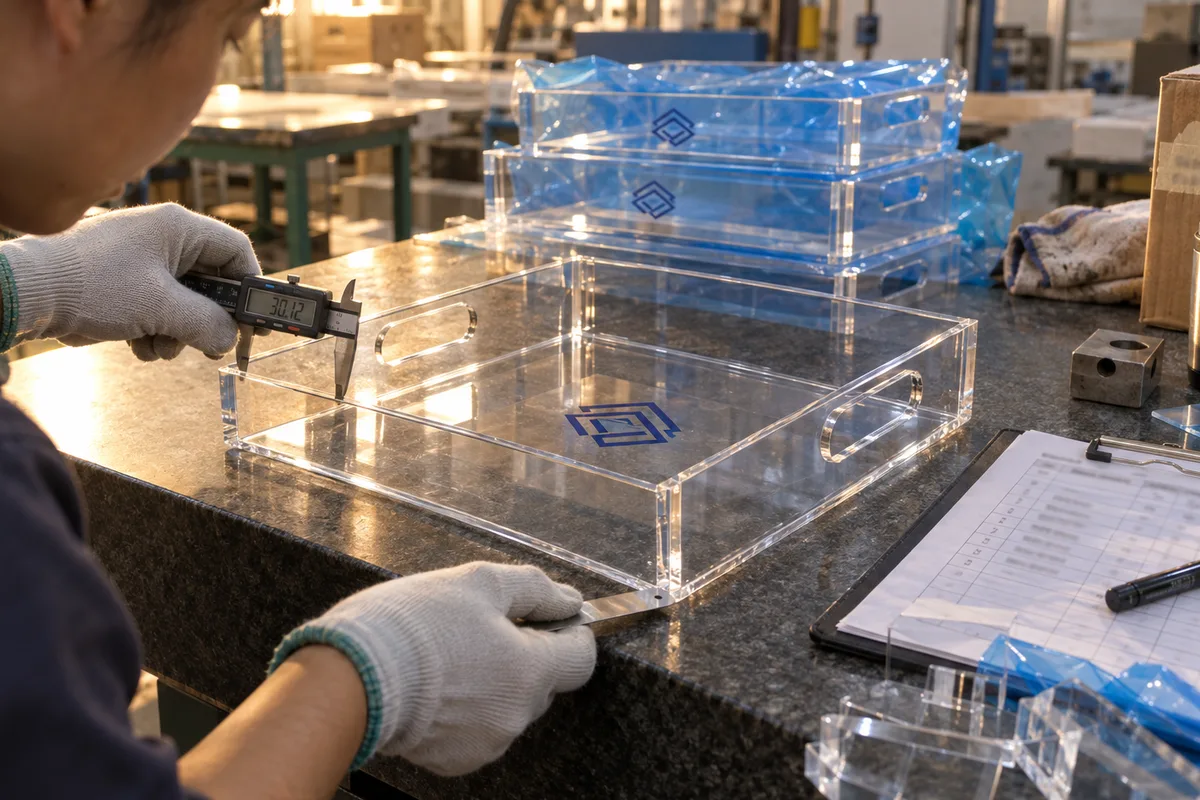
- We kept physical tray revisions apart from artwork-only versions, and a first-off inspection checked dimensions, flatness, handles, print, edges and packout before the lot ran.
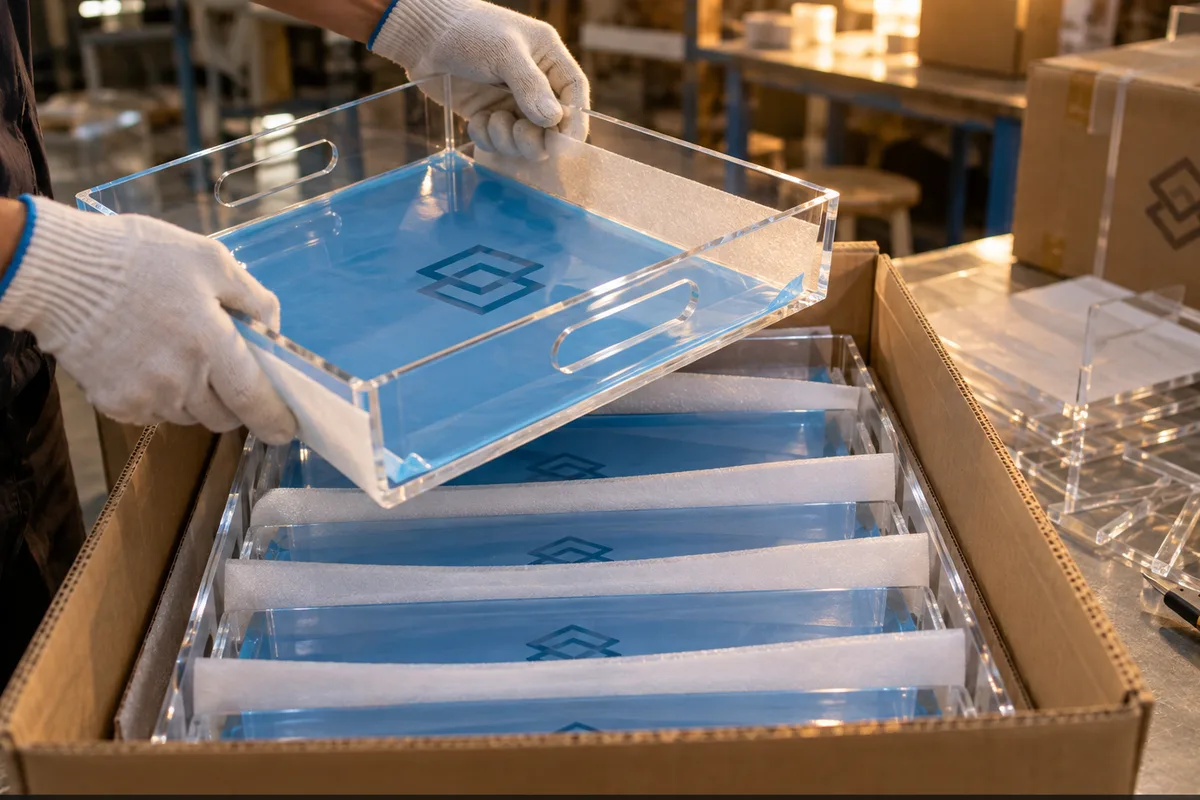
- We packed the trays nested with film and interleaves so polished and printed faces never rubbed in the carton.
The Program Need
A sourcing team came to us for a repeatable clear tray carrying its printed logo, 2,000 pieces in total. Each tray needed a set internal usable area, a stable base, approved wall and handle geometry, a print construction the buyer had signed off, and packing that kept polished and printed surfaces apart.
The artwork split set the quantities. Each logo, color, market or label version got its own proof, quantity and carton allocation, and each met the 100-piece minimum per design.
Drawing and Artwork Control
We drew the finished tray with outside and inside dimensions, wall height and thickness, base, corner or joint construction, handles, the product load it had to carry, show edges, print side, logo safe area and carton envelope.
The buyer supplied vector artwork and a named color target. A PDF proof approved content, scale, version and position. The paid sample then approved print appearance on the named acrylic, any white-ink layer, viewing side, edge relationship, tray stability and cleaning. The sample fee was paid separately and not credited to production. From that point any change to size, material, artwork, print process or packout went out as a new revision.
Quote and Cost Engineering
Our quote separated acrylic material, cutting, bending or bonding, edge finish, print setup, unit print, inspection, individual protection, carton data and freight. We priced alternates one change at a time: a permanent print against a replaceable bottom insert, and a different wall construction, without rewriting the whole brief.
At 2,000 pieces the buyer weighed the unit saving against cash, storage, artwork life, rollout pace and version mix.
Production
We released production only after the drawing, material, artwork, sample, quantity split, packing, price and payment terms were approved in writing. A first-off inspection checked finished dimensions, usable internal area, base stability, bends or joints, handle geometry, artwork revision and placement, color target, show-edge finish, protective film and packout. Version labels followed the proof and PO matrix. The lot passed these acceptance checks:
- The buyer's product and load fit the approved usable area.
- The tray stood without rocking on the approved surface.
- Walls, bends, joints and handles matched the active drawing.
- The printed logo matched the proof, viewing side, placement and sample appearance.
- Show surfaces met the signed cosmetic boundary.
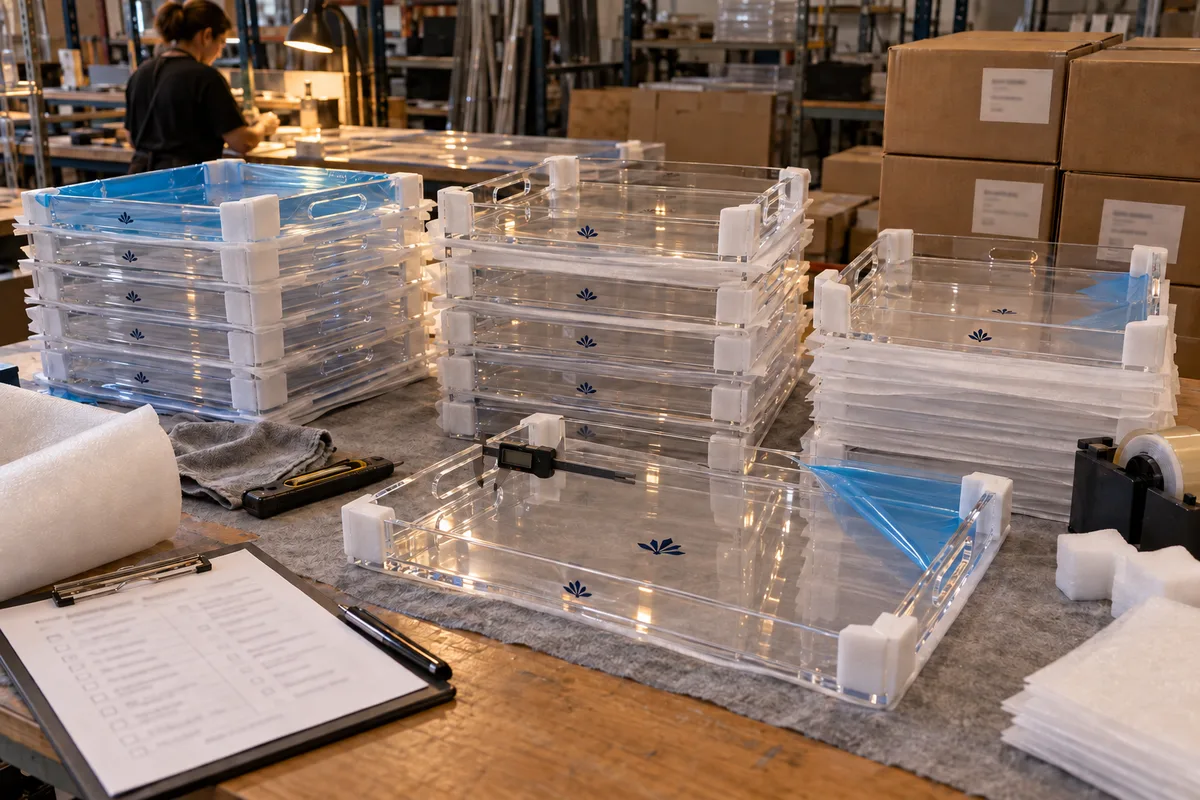
- Interleaves, bags and carton restraint prevented tray-to-tray abrasion.
Packout was part of the product: surface film or interleaf, controlled nesting gaps, protection around handles and corners, artwork-version labels, carton quantity, orientation and destination allocation.
Project Outcome
We delivered the 2,000 trays against one active drawing, one approved sample, a version and quantity table, written acceptance checks and a packout specification. Procurement could trace every tray back to that package, and nothing was left to interpret between sample and production.
If You're Planning Something Similar
Say whether your dimensions are inside or outside, and send thickness, wall height, handle shape, artwork file, viewing side, color target, version split, quantity and packing. We prepare the production drawing from your dimensions for your approval. You can split an order across versions or destinations, though small splits add proofing, labeling and packing cost. When comparing quotes, check each covers the same artwork setup, inspection and protective packing. See custom acrylic trays and custom acrylic tray cost by quantity.
Need branded acrylic trays?
Send the drawing, quantity by version, product samples or models, artwork, packing requirement, destination and timing. We will return the open questions and a written manufacturing quote.
Paid samples in 3–5 days · Production in 15–20 days after approval · Response within 24 hours