Delivered project · Beauty Packaging
Metallic Gold Printed Boxes with Multi-SKU Control
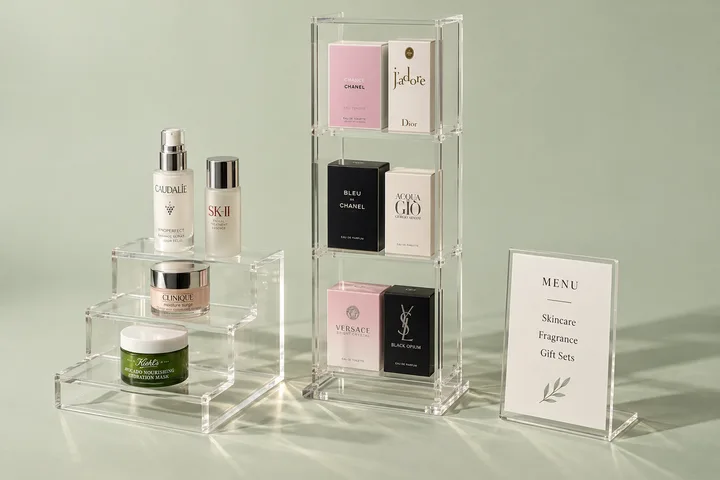
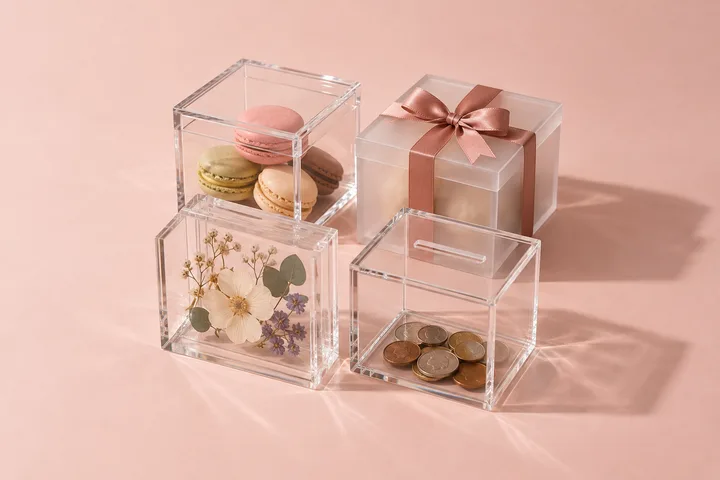
A beauty packaging team came to us for clear acrylic presentation boxes with metallic-gold graphics across several SKUs.
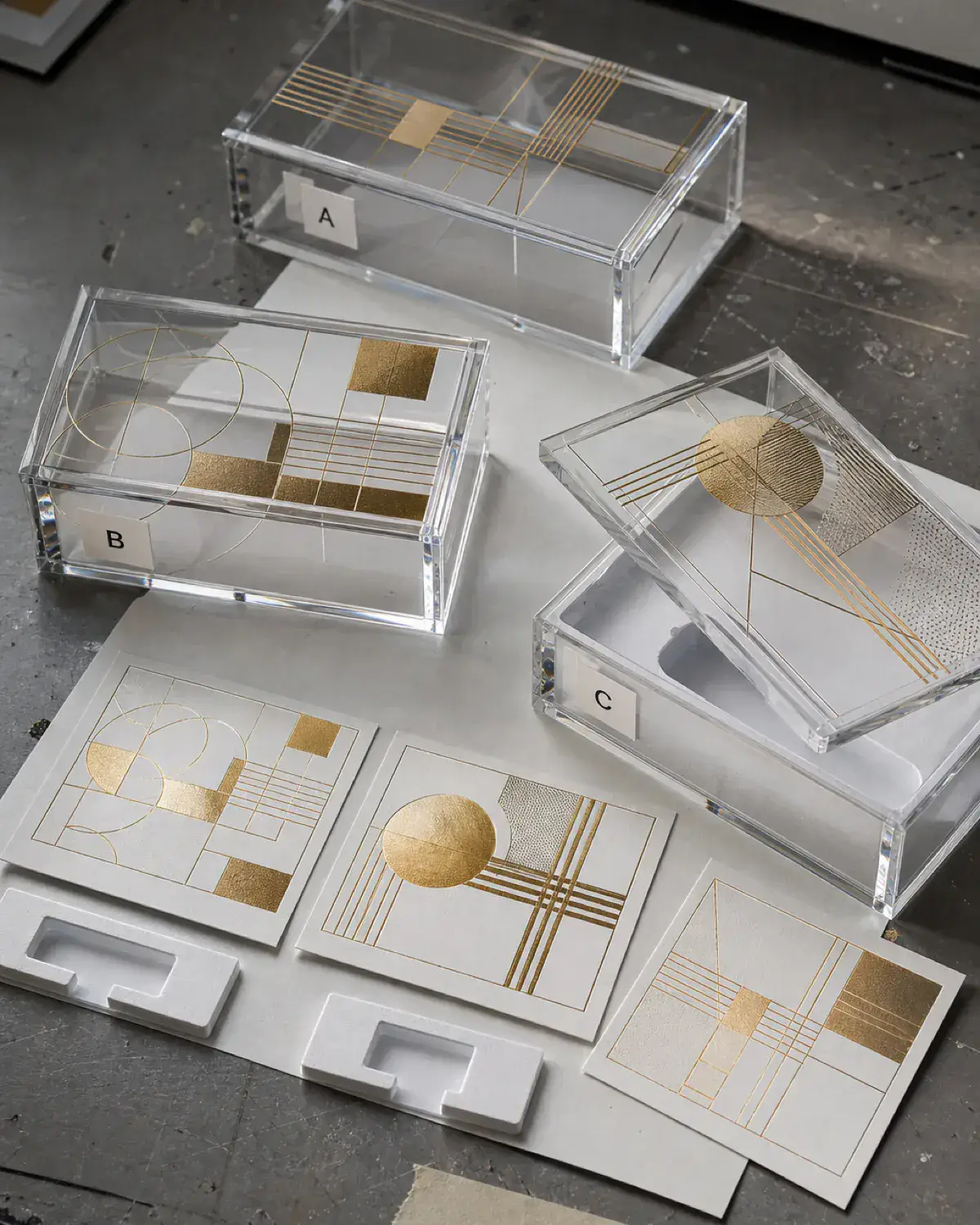
We built one shared box with a white underbase, removable product inserts and three separately released artwork versions, approved the gold on a paid physical sample and produced to the released files.
Ordering a similar project
MOQ is 100 pieces per design. Paid samples take 3–5 days; sample fees are paid separately and never credited. Standard production takes 15–20 days after drawing, material, artwork, packing and sample approval. Wetop responds to a complete brief within 24 hours.
Closest published price: this order was quoted line by line per version. The nearest public reference on the acrylic boxes hub is a 200 × 150 × 100 mm, 3 mm frosted magnetic-lid gift box with velvet insert and UV print, from $10–20 per unit FOB Shenzhen at 300 pieces. Metallic-gold print, a white underbase and version control priced on their own lines.
Key Takeaways
- A beauty packaging team needed one clear acrylic presentation box carrying a metallic-gold look across several SKUs. We delivered one shared box with three separately released artwork versions.
- We approved the gold on the named acrylic and print construction with a paid physical sample, not on a screen preview, and that one signed sample became the gold standard for production.
- We kept the physical box drawing separate from the artwork matrix, so each SKU had its own proof, quantity, label and packout allocation.
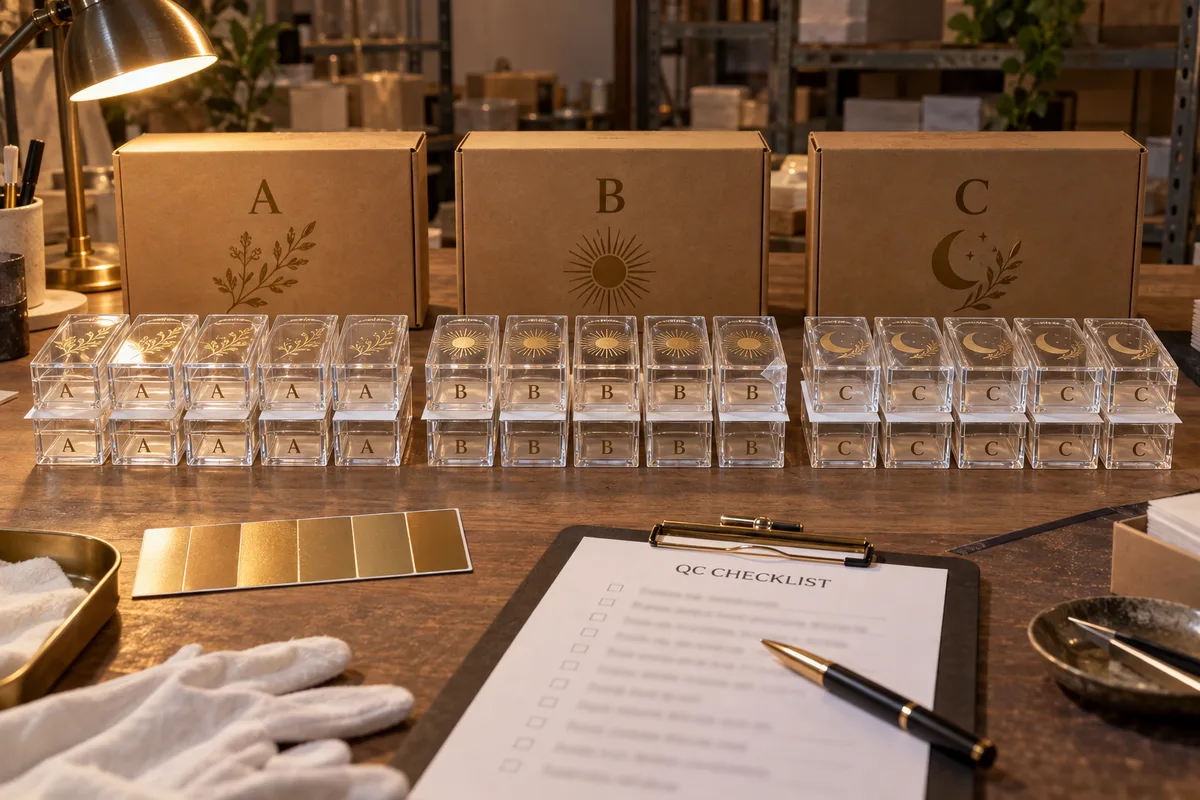
- We fit-checked the actual product in the removable insert, ran a first-off inspection against the release, and labeled units and cartons by artwork version so fulfillment received the intended mix.
The Challenge
A beauty packaging team came to us needing one clear acrylic box that carried a metallic-gold visual system across several SKUs. A monitor could not approve that gold. The physical result depended on the print construction, white or opaque backing, clear acrylic, viewing side, product color and the lighting the buyer approved.
The combined order quantity could have hidden small artwork releases. Each SKU needed its own proof, quantity, label and packout allocation, even though the physical box stayed common.
Artwork and Construction
We separated the physical box drawing from the artwork matrix. The box drawing controlled finished dimensions, closure, panel construction, insert interface, show faces and packout envelope. The artwork matrix controlled file, color target, metallic method, white layer, print side, location, quantity and carton mark for each of the three versions.
We reviewed the metallic effect the team wanted before choosing a process, because metallic ink, foil, printed simulation and a separate metallic layer differ in look and cost. The buyer approved the chosen construction on the actual acrylic against a representative product background.
Sample Path
A PDF proof approved content, size, version and coordinates. The paid physical sample approved the metallic appearance under the buyer's light, opacity, registration, viewing-side construction, closure, lid action, edge quality, insert fit, product removal and film removal.
All SKUs shared one physical box, so one construction sample covered the common geometry while each artwork still got its own controlled proof. Where a product or insert changed shape, that SKU got its own fit approval. The signed approval recorded the sample reference, active drawing revision, accepted deviations and the buyer's test conditions.
Production and Version Control
We released production only after the drawing, material, artwork, sample, quantity allocation, packing, price and payment terms were approved in writing. The quote listed quantity and setup by version instead of one blended figure.
At first-off inspection our team compared print side, artwork revision, gold target, white backing, registration, box geometry, closure and insert fit against the release, ready to correct any operation before the lot continued. Packing put interleaf on printed and polished faces, restrained each insert, and carried version labels on units, inner cartons and master cartons, with a carton map tied to the buyer's allocation. Mixed-SKU cartons were used only where the buyer approved the allocation method.
Acceptance Checks
- The physical box and insert matched the active drawing.
- Gold appearance was approved on the named acrylic and viewing background.
- Artwork, white layer, print side, and registration matched the proof.
- Closure and product removal worked with the actual product.
- Protective film and packing did not mark printed or clear surfaces.
- SKU labels and carton allocation matched the version matrix.
Cost Engineering
Our quote separated box fabrication, metallic artwork method, setup by version, insert, inspection, individual packing, carton data and freight. That let the team weigh cost options one variable at a time: shared box size, print coverage, a replaceable insert or a different presentation pack. Factory packing was listed apart from any buyer-side retail packing, labeling, consolidation or freight.
Project Outcome
We fabricated, printed, assembled, inspected and export-packed the boxes. The team received the order with a release package its procurement could review: one active drawing, one approved gold sample, a version and quantity table, clear acceptance checks, a packout specification and a written commercial offer. That record kept the production run matched to the approved sample.
Common Questions
Can the production order be split across versions or destinations?
Yes, once volume clears the per-design minimum and the allocation is approved before release. This order was quoted by physical revision, artwork version, carton label and destination. Small splits add proofing, labeling, packing and handling cost even when the total is large.
If You're Planning Something Similar
Send box dimensions, opening and closure, acrylic thickness and tint, gold reference, print method, white-underbase route, your finished artwork files, insert material, product model, SKU allocation and packing, and we return a drawing review, a per-version quantity table and a sampling route. We control fabrication, agreed printing and assembly, inspection and factory packout; you control the product model, final artwork, destination requirements and any third-party test criteria. Compare quotes on the same released scope, since a lower figure that leaves out artwork setup, inspection or protective packing is not comparable. See custom acrylic boxes and the acrylic box insert options guide.
Need printed acrylic boxes across several SKUs?
Send the drawing, quantity by version, product samples or models, artwork, packing requirement, destination, and target timing. We come back with the open questions and a written manufacturing quote.
Paid samples in 3–5 days · Fees paid separately and never credited · Production in 15–20 days after approval · MOQ 100 pieces per design · Response within 24 hours