

Delivered Project · Trading Cards
A Magnetic Acrylic Case for a PSA Slab, from Sample to Bulk
We built and delivered a clear two-part magnetic display case around the buyer-supplied graded-card slab.
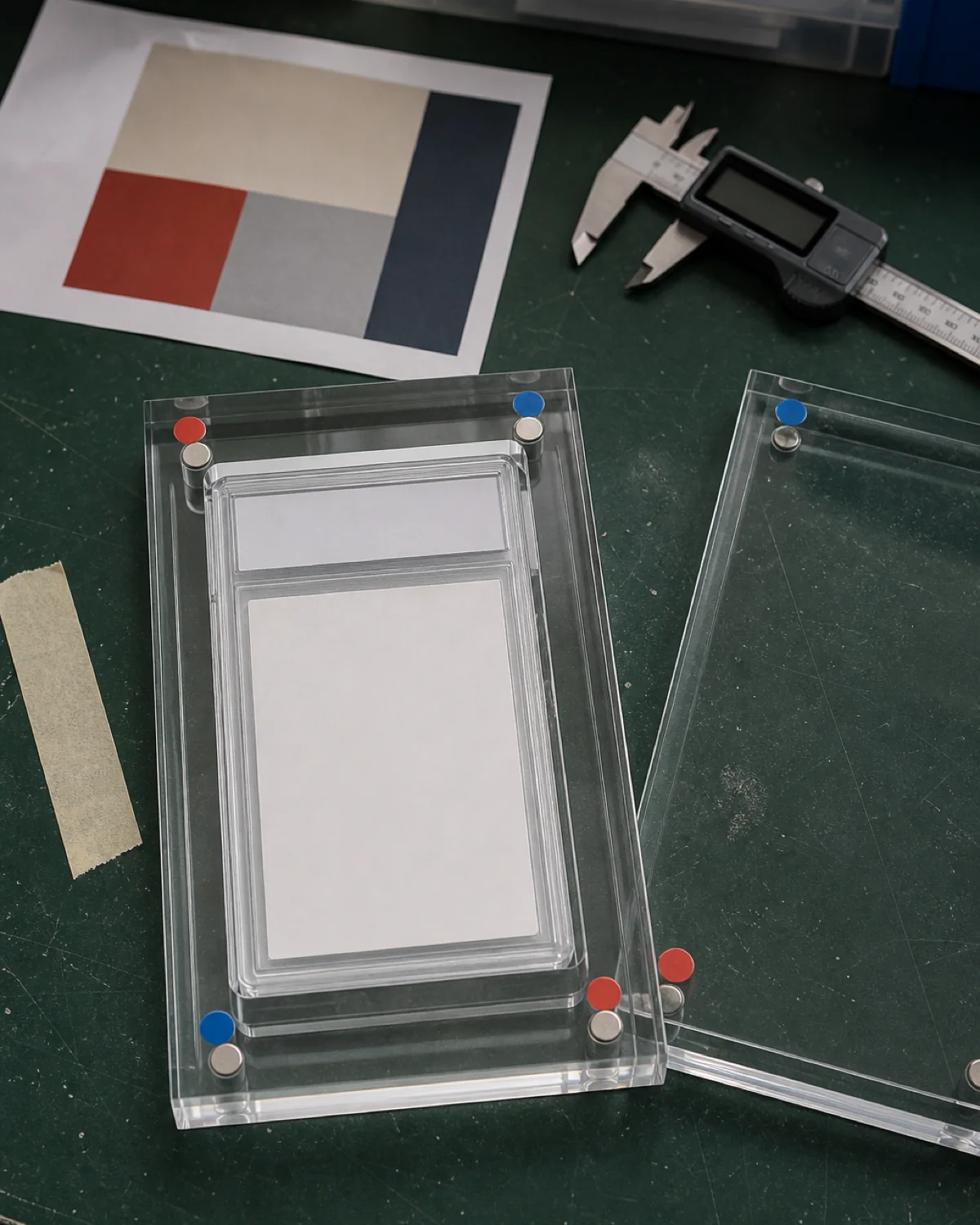
Magnet polarity, opening force, artwork, finish, and packout were approved on the paid sample before we released the 500-piece bulk run.
- order quantity
- 500
- case wall thickness
- 5+5 mm
Ordering a similar project
MOQ is 100 pieces per design. Paid samples normally take 3–5 days; sample fees are paid separately and never credited. Standard production takes 15–20 days after drawing, material, artwork, packing, and sample approval. Wetop responds to a complete brief within 24 hours.
Different-specification price reference: the acrylic cases hub publishes a compact 150 × 100 × 100 mm, 3 mm magnetic-lid case at 500 pieces from $6 per unit FOB Shenzhen. That general case is not a fitted graded-card slab case quote.
Key Takeaways
- We measured the buyer-supplied slab rather than relying on a brand or grading-format name.
- We approved cavity clearance, removal access, magnet polarity, and opening feel on the paid sample.
- We kept decorative artwork outside the card and grading-label viewing zones.
- We used a production first-off unit to verify the active drawing and sample before bulk release.
- We protected polished faces, corners, magnets, and the buyer product through packout.
The Challenge
A card retailer came to us for a clear case for a PSA-format slab, but “PSA size” did not release the product. The buyer had to approve the actual encapsulated card, label zone, corner geometry, permitted movement, magnet locations, opening method, printed branding, and individual packout.
The case had to give the slab visual presence and allow safe removal. A tight pocket can create abrasion or binding, while excessive clearance lets the card move inside the case.
Drawing and Sample Route
We worked from an actual buyer-supplied slab rather than a brand or grading-format name. The drawing showed outside dimensions, front and rear thickness, slab pocket, safe contact zones, finger or separation access, magnet pockets and polarity, artwork area, polished edges, and carton envelope.
The 5 mm plus 5 mm construction stayed open until the buyer approved weight, edge presence, opening feel, and cost. The physical sample used production-representative acrylic, magnets, print, and packing.
The buyer approved fit, movement, opening, magnet alignment, polarity, show surfaces, artwork, film removal, and packout. A geometry or artwork change would have received a new revision.
Production Control
Production MOQ is 100 pieces per design; this case was released at 500 pieces. Standard production is 15–20 days after approvals. First-off inspection verified slab fit, outside dimensions, pocket geometry, magnet position and polarity, artwork revision, edge finish, and individual packout.
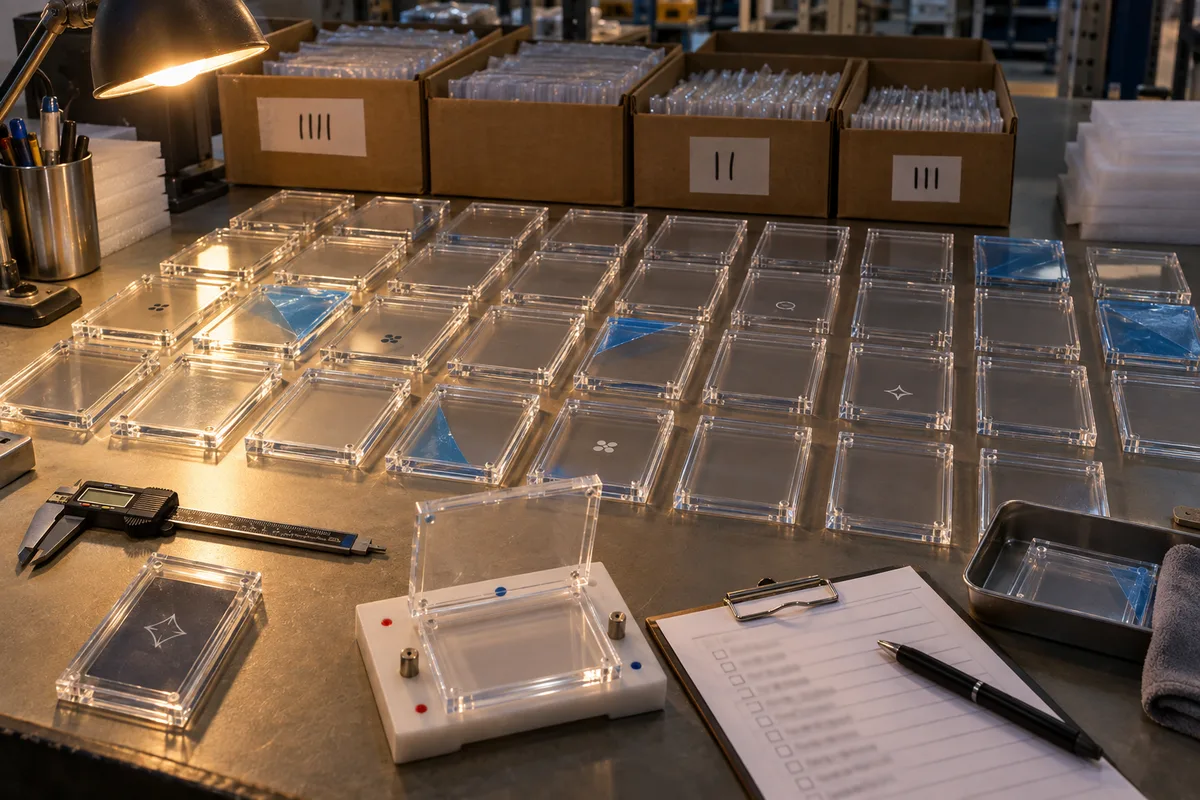
Every show face received cosmetic inspection. Magnet and fit checks used an approved fixture and the actual slab sample. Unit and carton labels connected the production lot to the active drawing and artwork.
Acceptance Checks
- The buyer-supplied PSA slab seated without forced insertion.
- Approved movement and visible margin remained consistent.
- Magnets aligned with correct polarity and the buyer-approved opening feel.
- UV artwork matched proof, location, and viewing side.
- Polished show edges met the signed boundary sample.
- Packing protected clear faces and kept magnets away from loose metal items.
Commercial Terms
The quote separated acrylic, machining, magnets, UV printing, proof and sample, inspection, individual presentation pack, master carton, and freight. An alternate thickness or box would have been returned as a separate revision rather than a silent substitution.
Related routes: graded card display cases and trading card retail displays.
Quote and Approval Sequence
A useful quote starts with a controlled brief rather than a family description. Send actual slab samples, maximum envelope, label viewing zone, case thickness, cavity clearance, removal method, magnet grade and orientation, opening feel, artwork, quantity, and packing. We can then return a drawing review, per-version quantity table, manufacturing notes, sampling route, packout assumptions, and the commercial fields that still need buyer approval.
The paid sample is the physical decision point. It should confirm slab insertion and removal, clearance, magnet seating and polarity, opening feel, corner and edge finish, artwork position, label visibility, and protection without pressure on the slab. Approval should identify the sample date or reference, active drawing revision, accepted deviations, and any buyer-controlled test conditions.
Production release follows only after the drawing, material, artwork, sample, quantity allocation, packing, price, and payment terms are approved in writing. A first-off inspection checks the production setup against that release. If the first-off exposes a mismatch, the affected operation is corrected before the lot continues.
Packout is part of the released product. The packout specification called for film or interleaf on polished surfaces, restrained case halves, magnet-safe handling, corner protection, SKU labels, and cartons sized to prevent dense cases from shifting. The written quote should distinguish included factory packing from buyer-side retail packing, labeling, consolidation, or freight services.
Project Outcome
This delivered project was built on Wetop's fabrication, printing, assembly, inspection, and export-packing capabilities.
The outcome was a release package that procurement could review: one active drawing, one approved sample reference, a version and quantity table, clear acceptance checks, a packout specification, and a written commercial offer. That package made supplier comparison more specific and reduced avoidable interpretation between sample and production.
For a similar project, compare the quote against the same released scope. A lower figure is not comparable if it excludes artwork setup, hardware, assembly, inspection, protective packing, or a material grade that the approved sample requires. Our graded-card display case procurement guide provides the next technical checklist, while card display cases shows the commercial product route.
Buyer Release Checklist
Before approving production, procurement should be able to point to one current file for every decision. The release folder should contain the signed drawing, approved artwork proof, material and finish selection, sample reference, quantity by physical design and artwork version, acceptance notes, packing specification, carton labels, destination, Incoterm, and requested shipment timing. Verbal approvals and image-only chat messages should be transferred into that controlled record.
The buyer should also mark responsibility boundaries. We control the acrylic fabrication, agreed printing or assembly, inspection, and factory packout shown on the quote. The buyer controls the supplied product model, final artwork content, destination requirements, local installation, end-use review, and any regulatory or third-party test criteria not expressly included in the written offer. Naming those boundaries early prevents a capability statement from being mistaken for a product certification or site approval.
When a change arrives after sample approval, identify whether it affects geometry, material, finish, hardware, artwork, packing, quantity allocation, or timing. We can price and schedule the changed scope after receiving the revised file. The earlier approval remains the reference for unchanged fields, but it does not authorize an unreviewed revision. This is also the point to update the first-off inspection sheet and carton labels before production continues.
Common Questions
Can production start from a photo or rough sketch?
A photo or sketch is enough for an initial feasibility discussion, but production needs a released drawing. We prepare the production drawing from your dimensions and references for approval; the design itself stays with you. Buyer-controlled interfaces still require dimensions, physical samples, or controlled models before the paid sample is released.
Does the 3–5 day sample timing include every approval?
No. The 3–5 days start after the sample scope, drawing, material, artwork, price, and payment are confirmed. Buyer review, courier transit, revised files, special material procurement, and repeat sampling are separate from the factory sample window.
Can the production order be split across versions or destinations?
Yes, when each physical design meets our applicable minimum quantity and the allocation is approved before release. The quote should list quantities by physical revision, artwork version, carton label, and destination. Small splits can add proofing, labeling, packing, and handling cost even when the total quantity is large.
Planning a similar custom acrylic program?
Send the drawing, quantity by version, product samples or models, artwork, packing requirement, destination, and target timing. We will return the open questions and a written manufacturing quote.
Response to a complete brief within 24 hours