
Delivered Project · Collector Displays
LEGO Speed Champions Display Case Program
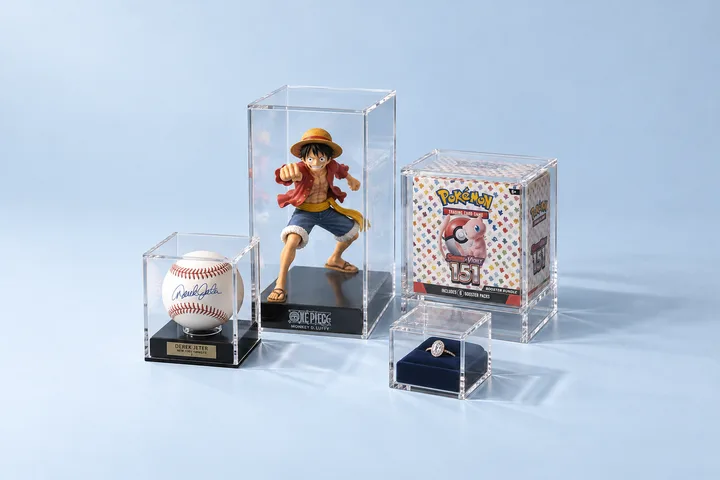
We delivered a model-specific acrylic display-case family for LEGO Speed Champions builds.
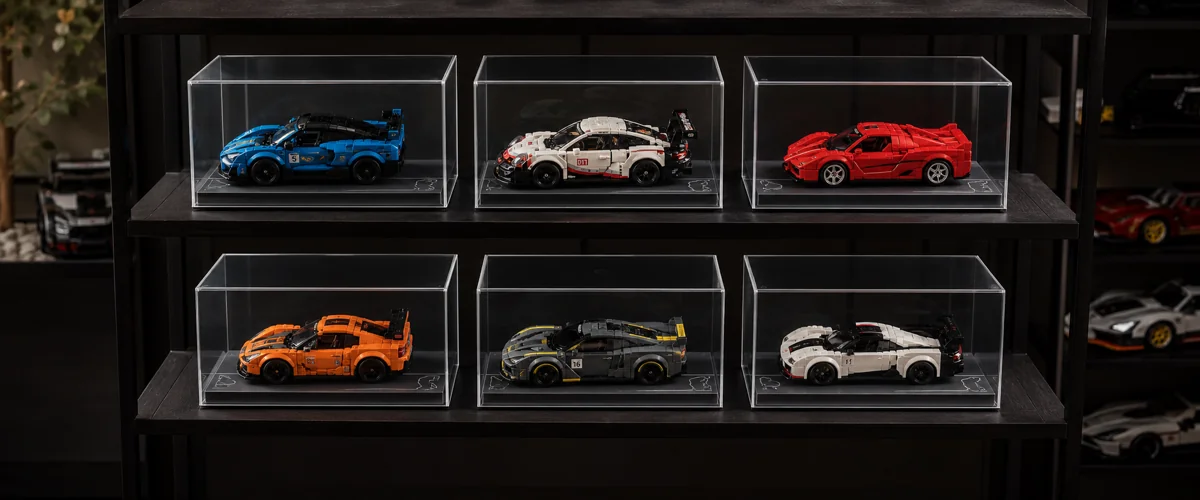
Each geometry started at 100 pieces and released only after the buyer approved the model envelope, drawing, closure, base, branding, and packing. Delivered: five collector case designs, each released from an assembled-model fit check, a controlled drawing and a production-grade sample.
Ordering a similar project
MOQ is 100 pieces per design. Paid samples normally take 3–5 days; sample fees are paid separately and never credited. Standard production takes 15–20 days after the model envelope, drawing, material, closure, artwork, packing, and sample are approved. Wetop responds to a complete brief within 24 hours.
Closest published price: this order was quoted per case design. The nearest public reference on the acrylic cases hub is a 150 × 100 × 100 mm, 3 mm clear case with a magnetic lid at 500 pieces, from $6 per unit FOB Shenzhen; a model-specific case with a branded base prices from its own drawing.
Key Takeaways
- A collector-product buyer ordered a five-design case family for five assembled Speed Champions builds; we drew each case from the physical build, not catalog dimensions.
- We fitted the closure or gasket to the buyer’s dust-control and access requirements, and the buyer approved its fit on the production sample.
- We approved material grade, sheet thickness, base support, branding, and packing for each case design before bulk.
- We archived the released drawing, sample record, artwork version, and packing file for controlled reorders.
The Brief
A collector-product buyer came to us with five assembled Speed Champions builds and wanted a matching five-design case family. Each model required its own controlled envelope and drawing because footprint, height, access, support, closure, artwork, and packing change with the build.
The buyer sent an assembled model or buyer-approved gauge for each design, the intended display orientation, access method, dust-control target, base support, artwork, quantity per design, packing, and destination.
- Model-specific fit: we released clearances against the physical build or approved gauge.
- Case access: the buyer approved the lid or removable panel, closure, and removal path on the sample.
- Five designs: each geometry ran as its own production release, even when the visual language was shared.
Our Approach
We locked fit, material, closure, base support, branding, and packing before quoting the full family. Shared styling did not make the five geometries interchangeable.
Named PMMA grade and drawing-specific thickness
Material grade and thickness followed the case span, joint, closure, access frequency, support, finish, and packing. The quote named the selected PMMA grade and thickness for each drawing. The buyer approved the complete construction on a physical sample.
Buyer-selected closure and optional gasket
The buyer chose where a gasket was worth adding. The drawing identified the material, channel, landing, compression target, closure, and replacement method where the buyer selected one. The sample approval recorded lid fit, access, and the buyer’s dust-check method.
Set-specific custom-fit and a branded base panel
We measured the maximum assembled envelope, including any figure, antenna, or removable element the buyer wanted displayed. The buyer approved the clearance, base support, orientation, logo placement, and artwork version. Each of the five builds got its own base height and clearance.
| Decision | Buyer brief | What we released | Release record |
|---|---|---|---|
| Acrylic thickness | Unspecified sheet | Named PMMA grade and drawing-specific thickness | Material record, joint, finish, sample, and packing test |
| Fit | Catalog envelope | Physical build or buyer-approved gauge | Approved clearances and access path on the drawing |
| Lid seal | Undefined closure | Buyer-selected lid, gasket, or removable panel | Hardware, landing, fit, access, and sample check |
| Branding | Uncontrolled logo reference | Buyer-approved artwork and placement | Artwork revision, print method, color reference, and position |
Spec Breakdown
Fit, closure, and base support controlled the model interface. The released drawing and production sample settled all three before bulk.
The dust-seal gasket cross-section
The diagram shows the gasket closure we used on this order. Lid thickness, gasket material, channel, compression, landing, base, and model clearance were set on each design's drawing. Where the buyer did not need a gasket, we approved a different closure after sample review.
The branded base mount
The base drawing recorded the support points, product restraint where required, material, thickness, print method, artwork position, and removal method. We quoted magnets, pins, recesses, or a plain support surface only after the buyer approved their interaction with the assembled build.
Set-specific footprint dimensions
We measured the assembled model in its approved display pose and recorded maximum width, depth, height, loose accessories, opening path, base support, and buyer-defined clearance.
Production and Variant QC
Production released only after every drawing, material, closure, artwork, sample, inspection method, and packing configuration was approved. The five-design family carried five first-off records, one for each design.
The release sequence was:
- Drawing and sample: we approved the model envelope, access, closure, base, finish, artwork, and packing for each design.
- First-off inspection: we checked the first production unit from each design against its drawing and physical reference.
- Production inspection: we recorded dimensions, joint and edge appearance, lid fit, closure, support, branding, and packing.
- SKU packing: we labeled the case design, artwork revision, quantity, accessories, and destination allocation.
The buyer approved the inspection sampling method and acceptance criteria before the run.
DTC Launch, Packing and Reorders
The buyer owned launch timing, fulfillment, review analysis, and customer support. Our manufacturing file controlled the approved case specification, production inspection, SKU labels, and packing release.
We approved the packing with the assembled-model case, base, closure, printed panel, and any loose accessory specified by the buyer. The packing sample check covered protective film, interleaving, lid restraint, corner support, carton orientation, SKU label, and removal sequence. Each packed design stayed identifiable without opening every carton, while the inspection record linked that pack to the released drawing and artwork revision.
We archived the released drawings, sample records, artwork versions and packing files for all five designs. For a reorder we reconfirm the model pose, accessory count, case geometry, material, closure, artwork, quantity, and destination; unchanged designs reuse their CNC files, and an updated build or added accessory sends that design back to clearance review and paid-sample approval.
If You're Planning Something Similar
Send the physical build or an approved gauge for every model; a new model is a new design with its own 100-piece MOQ and sample, even when the styling is shared. Clearances, base support and closure from one case do not carry over to a different build. The clear acrylic box versus lidded display case guide helps you choose the access format, and our custom acrylic display cases page shows the options.
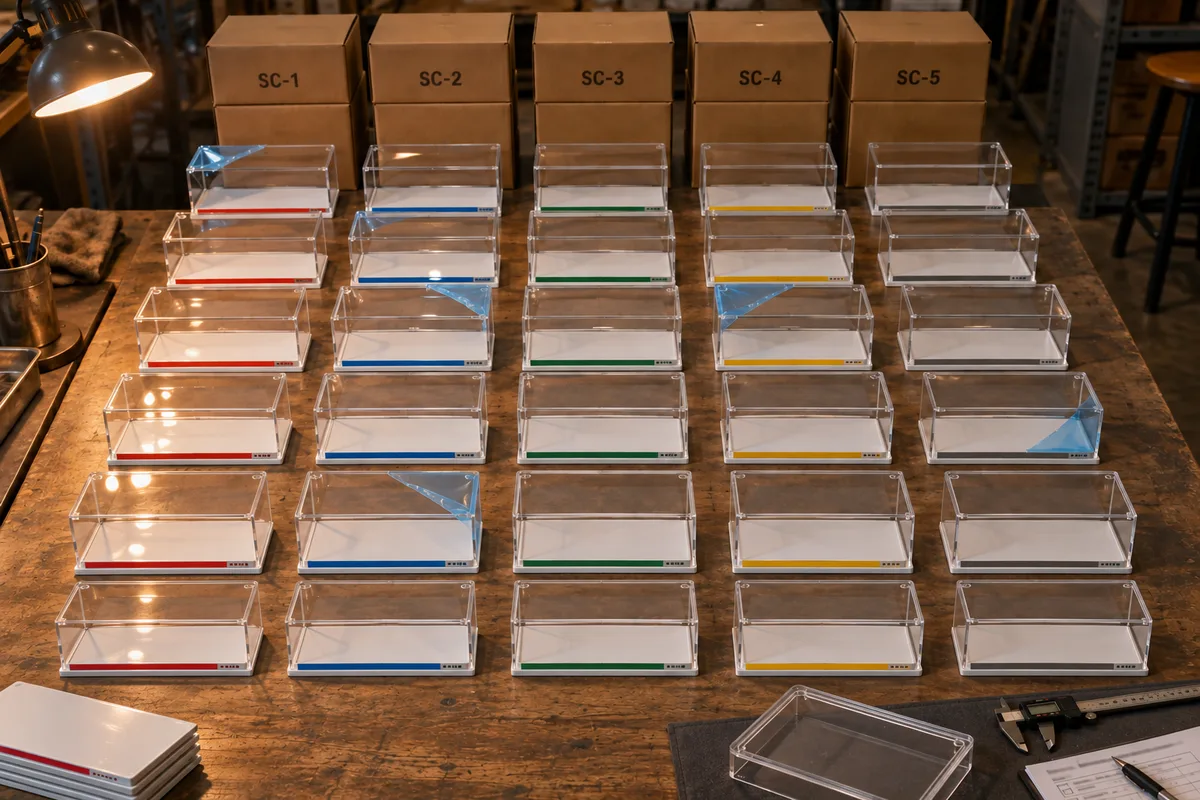
How we released it: every one of the five cases was released against the assembled model or buyer-approved gauge it had to fit.
Sourcing a custom-fit collector display case program?
Send the model list, assembled samples or gauges, orientation, quantities, access and closure requirements, base and artwork brief, packing, and destination. We will return a drawing review, the paid-sample route, and a quote.
Five model-specific case designs · custom fit checked against the physical build