Case Study · Giftware · United States
A Documented Photo Frame Repeat-Order Program
A US giftware and home-décor brand placed four acrylic photo-frame production orders across the 2024, 2025, and 2026 order years.
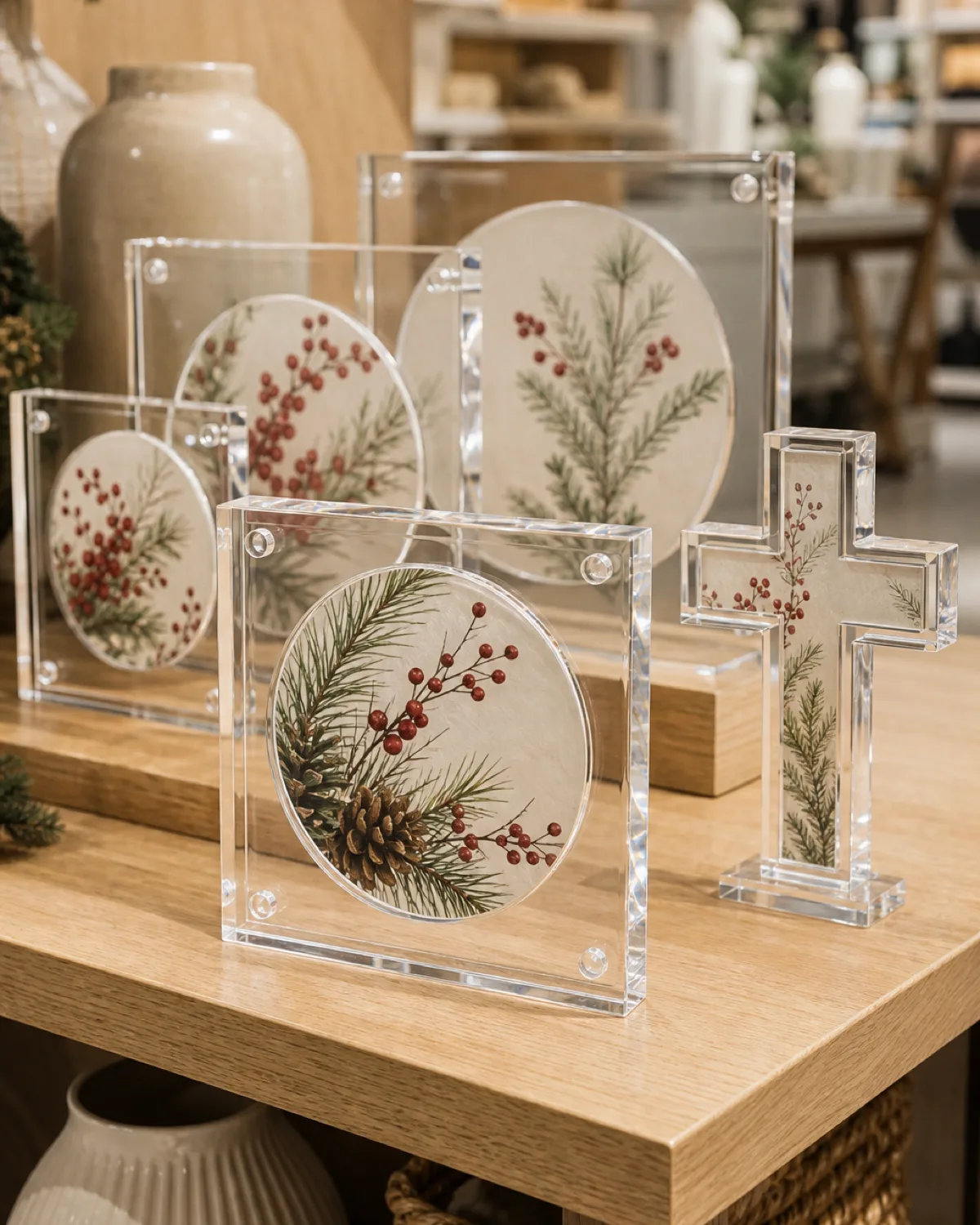
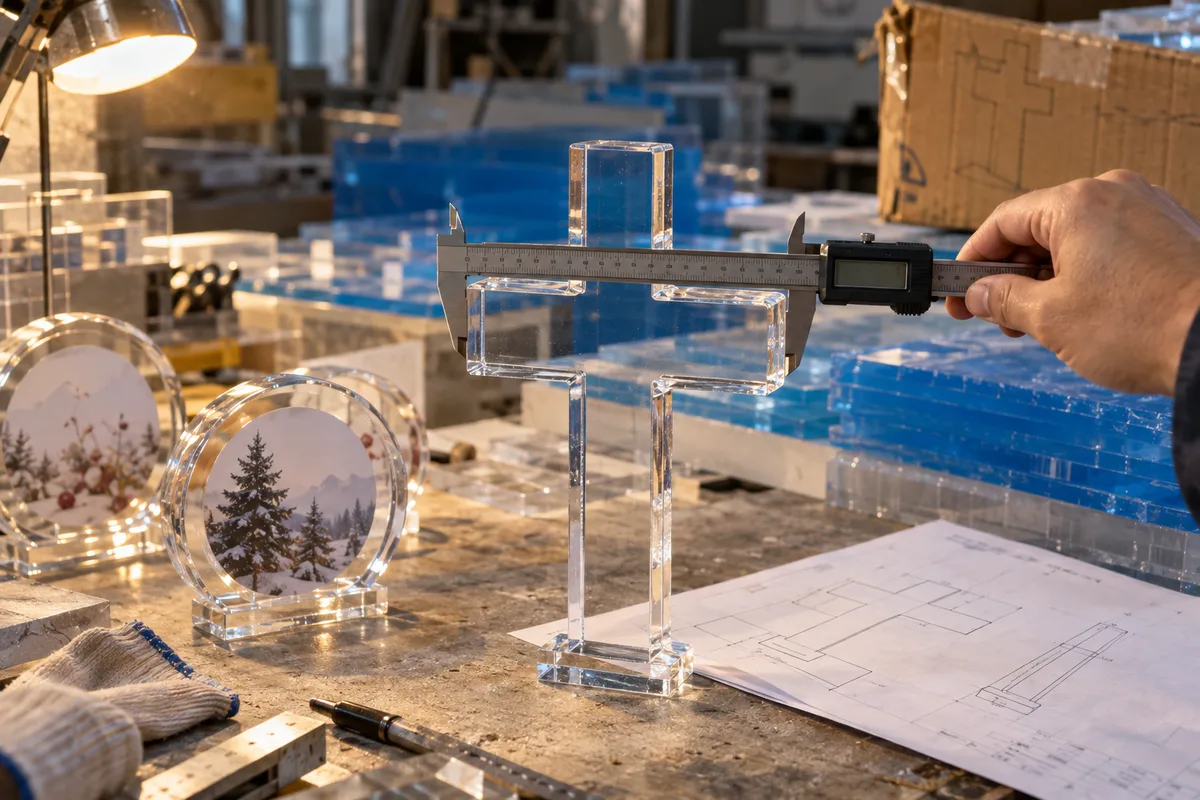
The record includes a 76 mm insert fit check before printing and a 105.3 × 152.2 × 30 mm dimension confirmation for a revised seasonal shelf piece.
- production runs to date
- 4
- consecutive order years
- 3
- printed insert, fit-checked first
- 76 mm
- artwork updates in the latest run
- 2
Ordering a similar project
MOQ is 100 pieces per design. Paid samples normally take 3–5 days; sample fees are paid separately and never credited. Standard production takes 15–20 days after size, insert, artwork, packing, and sample approval. Wetop responds to a complete brief within 24 hours.
Different-spec price reference: the acrylic frames hub lists a 5 × 7 inch, 3 mm clear, slot-in tabletop frame with angled stand at 500 pieces from $2–5 per unit FOB Shenzhen. It is not this program's price; format, dimensions, printing, labels, packing, quantity, and destination require a written quote.
Key Takeaways
- A US giftware brand placed four acrylic photo frame production orders between late summer 2024 and early summer 2026, spanning three consecutive calendar years.
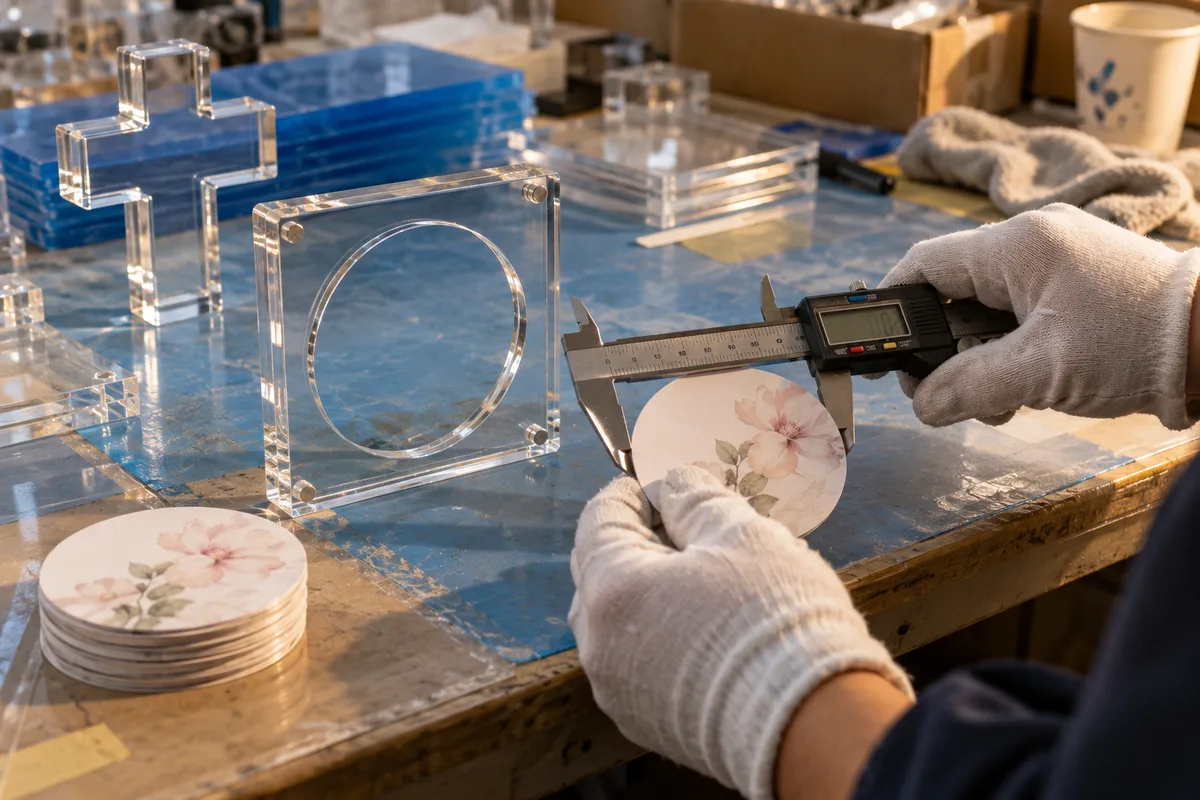
- Insert-paper printing is handled inside the program: before the round-opening keepsake frame’s artwork went to press, the 76 mm insert diameter was confirmed against the frame opening, so printed paper arrived already fitted to the product.
- When a fall 2025 reorder raised an insert question, the answer came from the program’s order file: a plain white insert had been used on the earlier runs.
- Seasonal SKU updates stay in the family: a holiday cross shelf sitter was re-drawn to match the height of the brand’s existing cross pieces, and production confirmed the revised 105.3 x 152.2 x 30 mm dimensions back before cutting.
- The latest run included two artwork updates, a holiday shelf sitter and a red-artwork frame variant, plus a base label on each cross piece.
The Challenge
A multi-year photo frame program controls the frame and the items around it: the printed paper insert, base label, retail packing, seasonal artwork, and retained product dimensions. The buyer should not have to reconstruct those fields on each reorder.
The buyer is a US giftware and home-décor brand selling keepsake frames and shaped shelf pieces through retail. Its seasonal artwork changes while the approved acrylic geometry and packing need to remain controlled. Holiday purchase orders also require enough time for production and freight before the retail date.
A repeat buyer needs a fabricator to preserve the approved frame geometry and artwork record across purchase orders. The documented program included updated artwork and a dimensional revision, so each new order still required a release check instead of an assumption that every detail remained identical.
Repeat orders create avoidable work when the supplier asks for approved files again or prints an insert without checking it against the frame opening. Retained order records give the production team a starting point, while changed artwork and dimensions still receive a new approval.
Our Approach
Nothing about this program required heroics. It required three habits, applied on every run for three years: treat the insert paper as part of the product, answer reorders from records instead of memory, and gate every seasonal change behind a dimension confirm-back. Each habit sounds obvious. Each one exists because skipping it has a specific, expensive failure mode.
The insert is part of the product
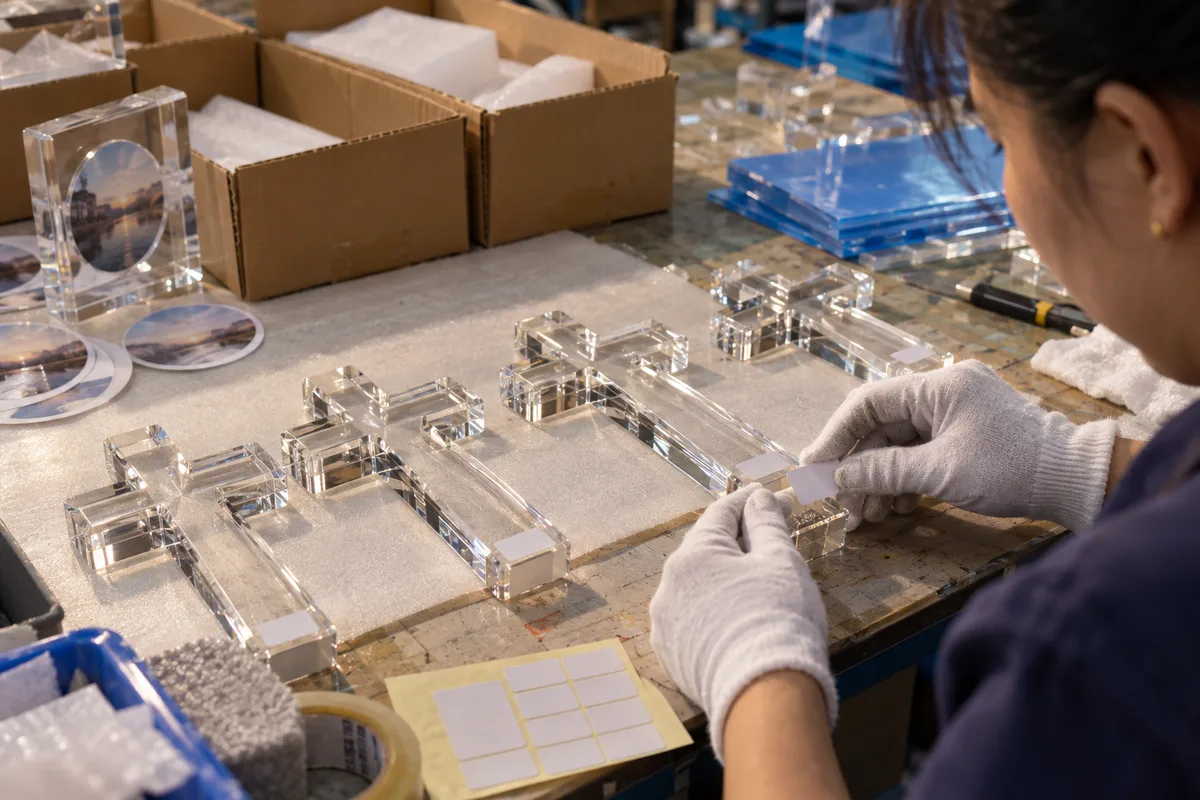
The paper insert is part of the retail product. One frame SKU in this program uses a plain white insert; the round-opening keepsake frame uses buyer-supplied printed artwork. Wetop treats print as a separate quote line and packs the approved insert with the frame.
The brand's insert file specified a 76 mm circle. Production confirmed that the insert fit the frame opening before printing and then used the file as supplied. This check prevents an approved artwork file from becoming a packing problem when its nominal size does not fit the physical frame.
Keeping the insert, label, and acrylic on one production schedule also reduces handoffs. The same release package controls the insert diameter, frame opening, label, and packout.
Reorders answered from records, not memory
The early fall 2025 reorder is useful because the retained record answered a specific insert question without relying on memory. The documented purchase-order history spans three order years, with the artwork and dimensional revision recorded for review.
Both prior purchase orders were on file. Production checked those records and confirmed that the SKU used a plain white paper insert. The retained record answered this specific question without asking the buyer to reconstruct the earlier packout.
Each SKU record should contain artwork, insert specification, dimensions, packing, and purchase-order history. The next order starts from those records and flags only changed fields. Our repeat-order tooling and specification guide explains the same file-control process.
Retained records reduce repeat questions, but they do not remove approval. A changed insert, artwork file, label, material, dimension, or packout remains visible on the current drawing and purchase order.
Seasonal updates without dimensional drift
The early-summer 2026 order added holiday artwork, a fresh keepsake-frame insert file, and a red-artwork frame variant. The shelf sitter also required a dimensional revision.
The revised shelf sitter had to match the height of the brand's existing cross pieces. Production returned the resulting 105.3 × 152.2 × 30 mm dimensions for confirmation before cutting. The confirmed drawing distinguishes this intentional change from dimensional drift.
The run also included a base label on each cross piece and the approved inserts packed with the frames. Those details belong on the packing specification because omitting them would create buyer-side rework.
Unchanged frame fields remained tied to their approved records while the revised fields received confirmation. Our custom acrylic photo frames page covers slot-and-insert and magnetic frame formats.
The Results
The order record shows four production runs: late summer 2024, spring 2025, early fall 2025, and early summer 2026.
The orders span three consecutive calendar years and include seasonal artwork changes. That cadence documents repeat purchasing; it does not establish an unstated sales result or buyer satisfaction score.
The retained correspondence records the insert fit check and shelf-piece dimension confirmation. These are traceable production decisions, unlike a reconstructed buyer testimonial.
Production record: four orders appear across three order years; the retained correspondence records the 76 mm insert fit check and the revised 105.3 × 152.2 × 30 mm shelf-piece dimensions.
What This Means for Your Project
If you manage a frames, giftware, or seasonal décor line, the transferable lesson is that an acrylic photo frame program is a coordination product, not a fabrication product. Any competent shop can cut and polish a frame. The program value sits in the unglamorous layer: who prints and fits the inserts, who holds the spec between runs, and who guards the family's dimensions while the artwork churns.
Ask who prints and fit-checks the insert, which records the factory retains for reorders, and how revised dimensions are read back before cutting. The quotation should name the insert, label, packing, material, dimensions, and current artwork revision.
Send the latest drawing, previous-order reference, current artwork, insert requirement, quantity, destination, and requested changes. Our production minimum is 100 pieces per design. The custom acrylic fabrication process shows how the sample and approval record move into production.
Running a frames or giftware program of your own?
Send us a drawing, prior artwork, or photos of the line you are sourcing. We will return a per-SKU quote, an insert-printing plan and a release record for the next purchase order.
Insert fit-checked against the frame opening before press · dimensions read back before cutting