
Delivered Project · Accessory Display
An Angled Accessory Board with Color-Matched Graphics
A buyer selling wiring accessories came to us for an angled acrylic display board to present its own products at retail.
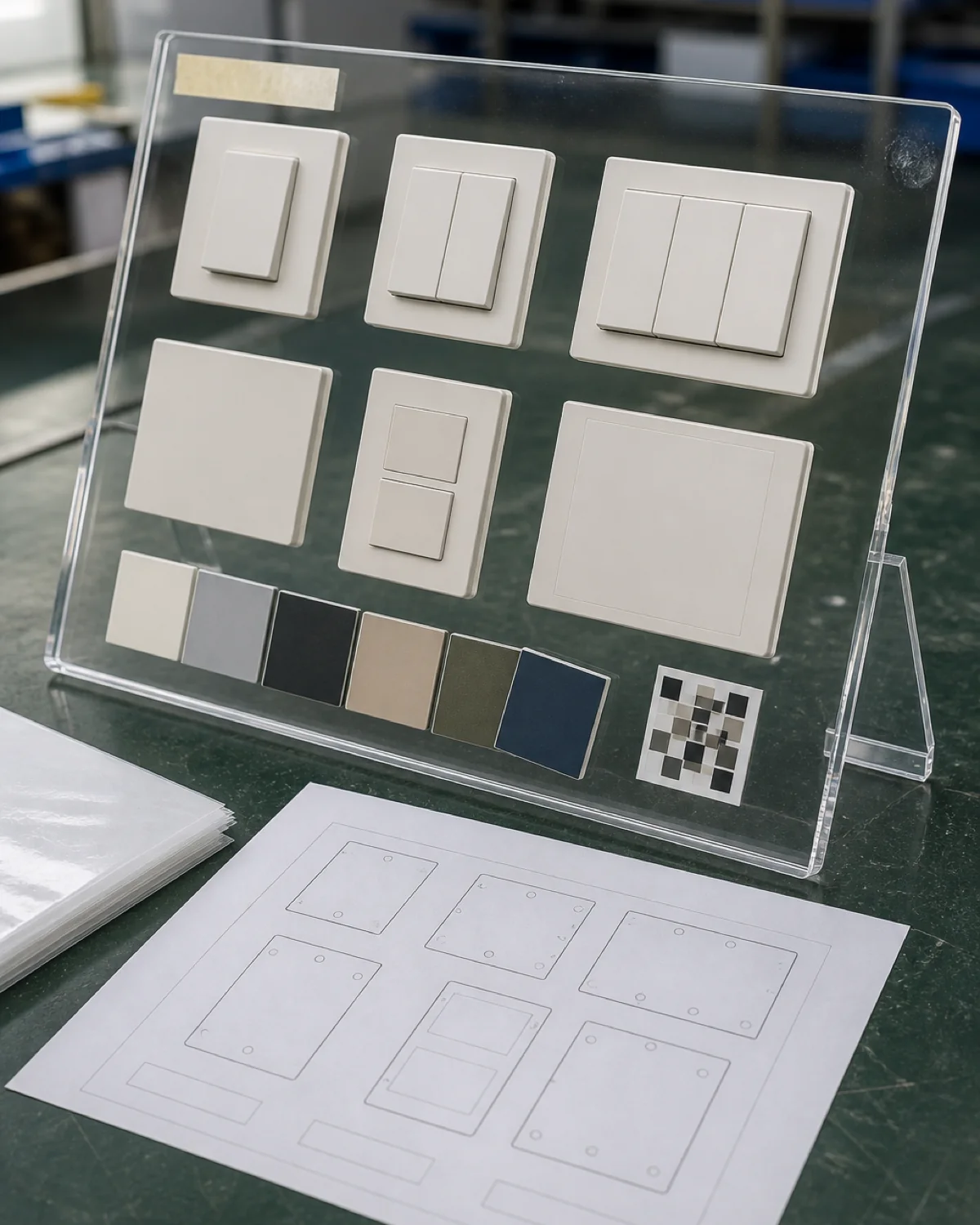
We made a non-electrical board that held the buyer-supplied accessories at a fixed viewing angle, stood stable on the counter, and carried color-matched brand graphics, labels and QR artwork.
Ordering a similar project
The minimum order is 100 pieces per design. Paid samples normally take 3–5 days; sample fees are paid separately and never credited. Standard production takes 15–20 days after drawing, material, artwork, packing, and sample approval. Wetop responds to a complete brief within 24 hours.
Different-specification price reference: the acrylic display manufacturer page publishes a two-tier countertop stand 250 × 180 × 220 mm, 5 mm clear, one-color UV logo: $28 each at 100 pcs, $16 at 500, $12 at 1,000 (FOB Shenzhen, published reference). That stand is a different specification and is not a quote for this board. The board angle, mounting interfaces, artwork, product load, packout, and quantity require a written quote.
Key Takeaways
- We separated the non-electrical acrylic fixture from buyer-controlled powered products and installation.
- We released the finished envelope, angle, support geometry, mounting points, and cable-clearance zones on the drawing.
- We approved color and white-ink construction on the named material and physical sample.
- We checked QR placement under buyer-defined devices, distance, lighting, and destination URL.
- We treated changed accessory geometry as a physical revision even when the brand artwork stayed shared.
The Buyer Need
A product marketing team needed an angled board that presents wiring accessories and carries a controlled brand color plus QR information. The fixture remains non-electrical and needs physical interfaces for buyer-supplied products and a layout clear enough for shoppers to understand the range.
The buyer first asked about a 50-piece market test; our minimum is 100 pieces per design, so the order moved forward at that quantity.
Drawing and Scope
We fabricated the non-electrical acrylic board, base or supports, printed graphics, and drawing-defined mounting holes or brackets. The buyer’s qualified team defined electrical products, wiring, powered demonstrations, safety, certification, and site installation.
The drawing controlled finished envelope, viewing angle, support geometry, center of mass, product mounting points, cable-clearance zones, artwork, QR safe area, show edges, and carton envelope. The actual accessories or controlled models verified fit.
Color and Artwork Approval
The buyer supplied a named color target, vector logo, product labels, and QR destination. A PDF proof approved content, scale, version, and placement. A paid physical sample approved color appearance on the named acrylic, white-ink construction, viewing side, product background, and scan position.
Sample fees are paid separately and never credited. We checked QR performance with buyer-nominated devices, distance, lighting, and the final destination URL; no universal scan guarantee is implied.
Production and QC
Standard production is 15–20 days after drawing, sample, artwork, and commercial approvals. First-off inspection verified angle, base footprint, stability, product interfaces, artwork revision, color target, QR placement, edge finish, and packout.
Every artwork version kept its own quantity and label. When the product family or mounting geometry changed, the affected board became a separate physical revision even when the brand artwork stayed shared.
Acceptance Criteria
- The board remained stable with the buyer-approved sample products installed.
- Product mounting interfaces matched the active drawing.
- Artwork, color, labels, and QR position matched the approved proof and sample.
- The QR check passed the buyer-defined device and viewing conditions.
- Polished edges and joints met the signed cosmetic boundary.
- Packing separated products, hardware, and show surfaces.
Quote and Approval Sequence
A useful quote starts with a controlled brief rather than a family description. Send finished envelope, viewing angle, base or support geometry, product samples, mounting points, center of mass, cable-clearance zones, artwork, color target, QR destination, quantity, and carton envelope. We then return a drawing review, per-version quantity table, manufacturing notes, sampling route, packout assumptions, and the commercial fields that still need buyer approval.
The paid sample was the physical decision point. On this order it confirmed stability with the buyer-approved product models, mounting fit, product access, color appearance, white ink, artwork revision, QR position, edge finish, and final packout. Approval identified the sample date or reference, active drawing revision, accepted deviations, and any buyer-controlled test conditions.
Production release followed only after the drawing, material, artwork, sample, quantity allocation, packing, price, and payment terms were approved in writing. A first-off inspection checked the production setup against that release. When the first-off exposed a mismatch, we corrected the affected operation before the lot continued.
Packout is part of the released product. The packout specification carried separation between product models, hardware, and polished acrylic, protected printed faces, board orientation, version labels, and carton restraint for the approved loaded weight. The written quote distinguished included factory packing from buyer-side retail packing, labeling, consolidation, or freight services.
Project Outcome
We built this delivered accessory board on our fabrication, printing, assembly, inspection, and export-packing capabilities.
The delivered outcome was a release package that procurement could review: one active drawing, one approved sample reference, a version and quantity table, clear acceptance checks, a packout specification, and a written commercial offer. That package made supplier comparison more specific and reduced avoidable interpretation between sample and production.
For a similar project, compare the quote against the same released scope. A lower figure is not comparable if it excludes artwork setup, hardware, assembly, inspection, protective packing, or a material grade that the approved sample requires. Our acrylic display branding methods provides the next technical checklist, while custom acrylic displays shows the commercial product route.
Buyer Release Checklist
Before approving production, procurement should be able to point to one current file for every decision. The release folder should contain the signed drawing, approved artwork proof, material and finish selection, sample reference, quantity by physical design and artwork version, acceptance notes, packing specification, carton labels, destination, Incoterm, and requested shipment timing. Verbal approvals and image-only chat messages should be transferred into that controlled record.
The buyer should also mark responsibility boundaries. Wetop controls the acrylic fabrication, agreed printing or assembly, inspection, and factory packout shown on the quote. The buyer controls the supplied product model, final artwork content, destination requirements, local installation, end-use review, and any regulatory or third-party test criteria not expressly included in the written offer. Naming those boundaries early prevents a capability statement from being mistaken for a product certification or site approval.
When a change arrives after sample approval, identify whether it affects geometry, material, finish, hardware, artwork, packing, quantity allocation, or timing. Wetop can price and schedule the changed scope after receiving the revised file. The earlier approval remains the reference for unchanged fields, but it does not authorize an unreviewed revision. This is also the point to update the first-off inspection sheet and carton labels before production continues.
Common Questions
Can production start from a photo or rough sketch?
A photo or sketch is enough for an initial feasibility discussion, but production needs a released drawing. Wetop prepares the production drawing from your dimensions and references for approval; the design itself stays with you. Buyer-controlled interfaces still require dimensions, physical samples, or controlled models before the paid sample is released.
Can the production order be split across versions or destinations?
Yes, when each physical design meets the minimum design quantity and the allocation is approved before release. The quote should list quantities by physical revision, artwork version, carton label, and destination. Small splits can add proofing, labeling, packing, and handling cost even when the total quantity is large.
Planning a similar custom acrylic program?
Send the drawing, quantity by version, product samples or models, artwork, packing requirement, destination, and target timing. We will return the open questions and a written manufacturing quote.
Wetop responds within 24 hours.