
Delivered Project · Display Cases
Modular Five-Sided Cubes with Fulfillment Packout
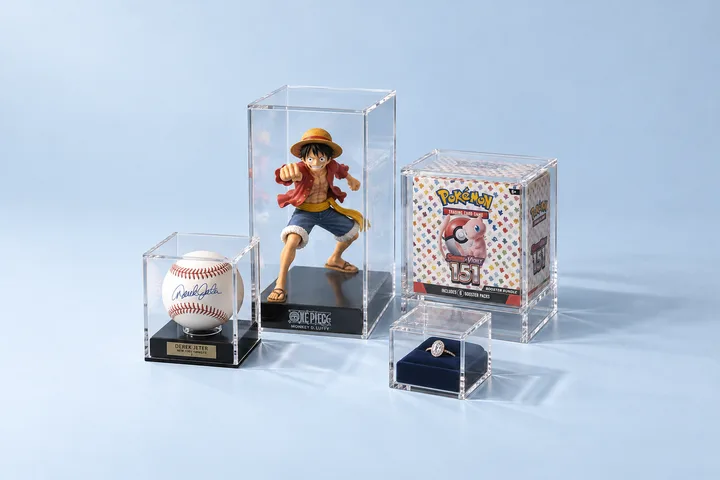
A retail display buyer needed open-bottom clear acrylic cubes in three sizes to cover and present its products, packed for its fulfillment team to store and ship undamaged.
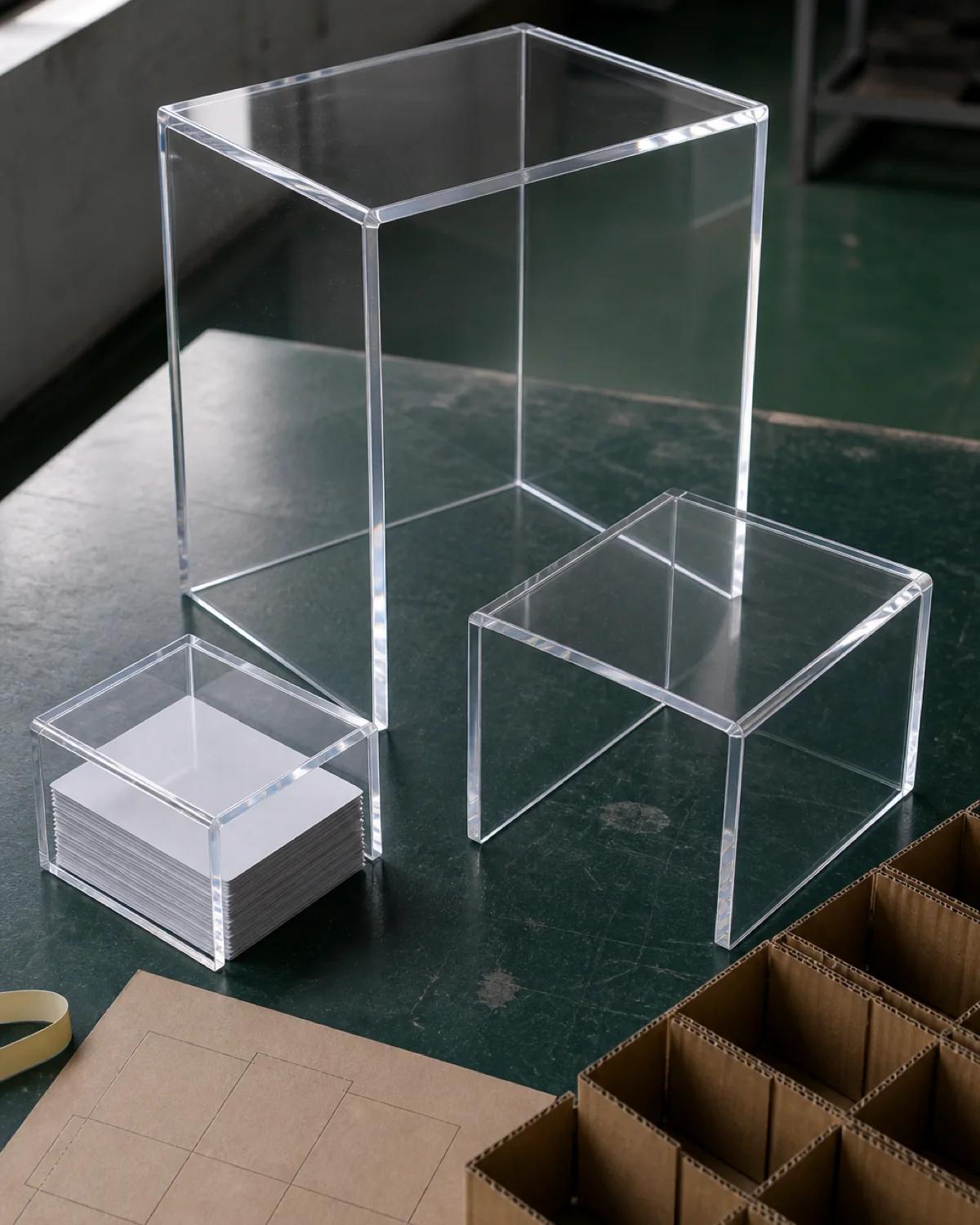
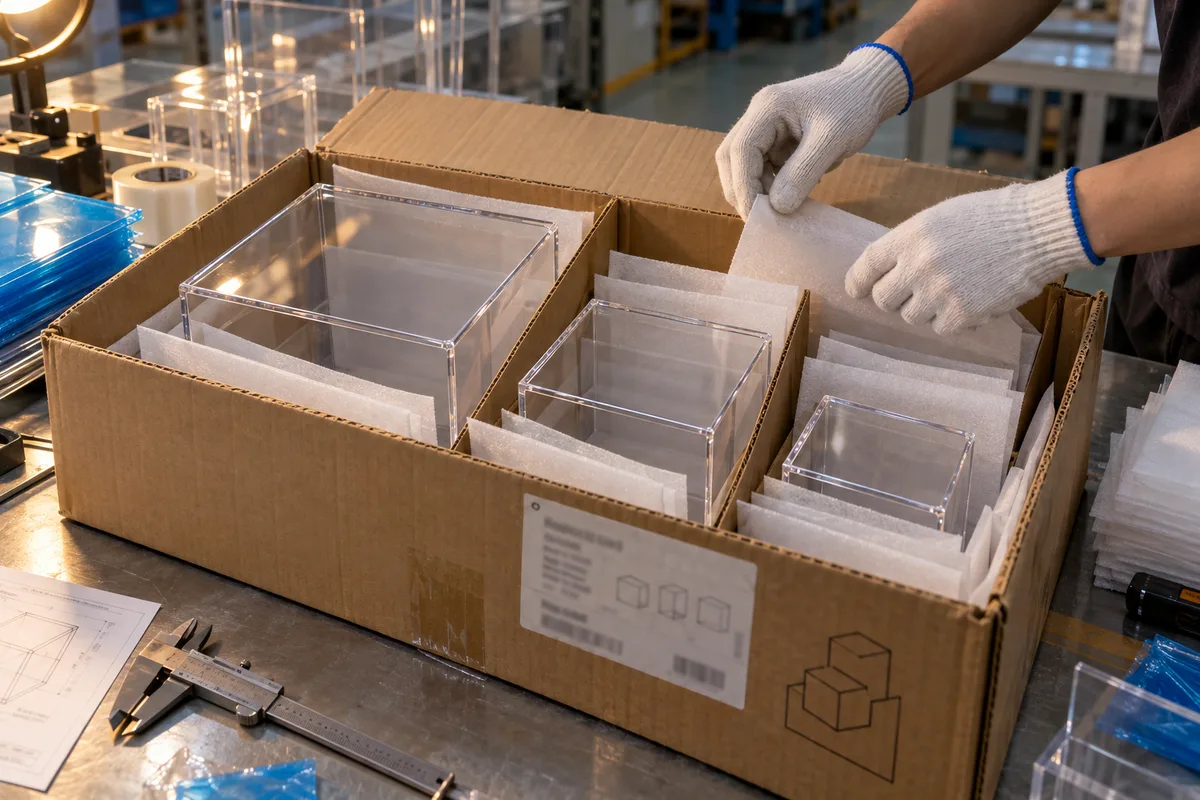
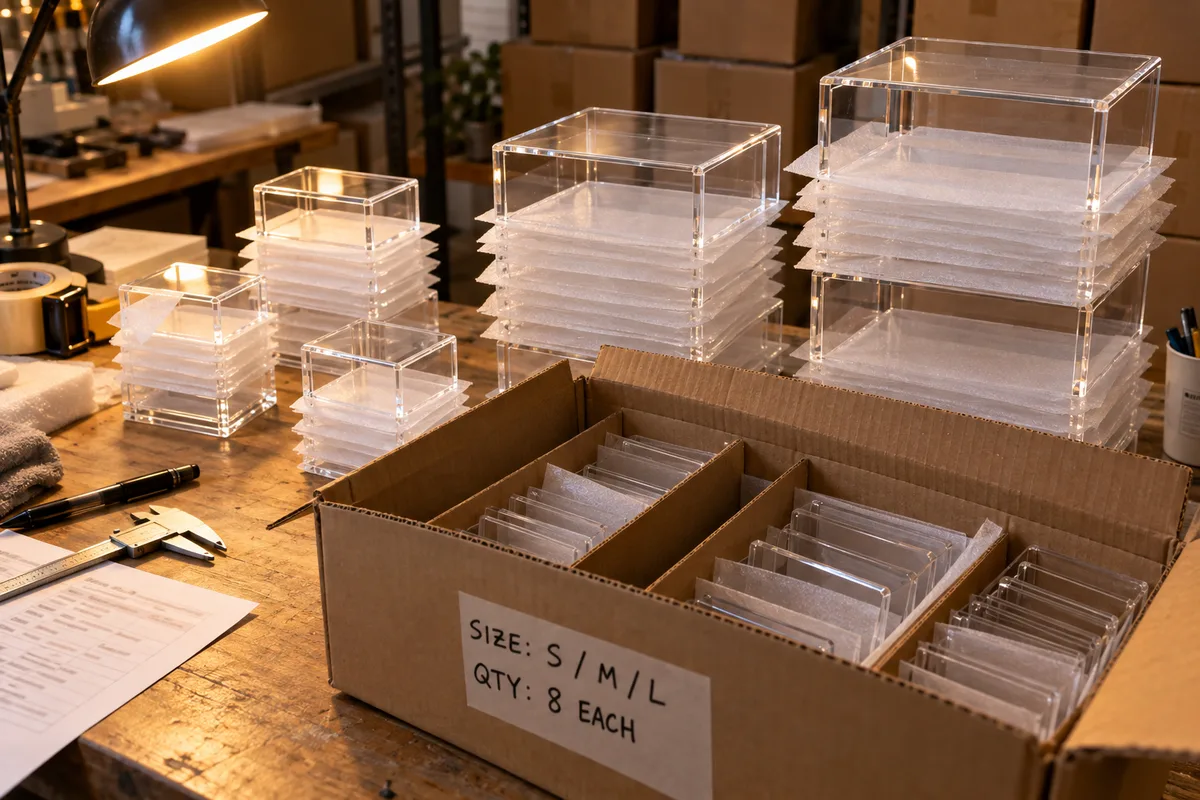
We made one drawing per size, approved the bonded corners and the packed carton on a paid sample, and shipped the cubes nested, interleaved and labeled by size.
- cube sizes
- 3
- bonded faces
- 5
- production run
- 15–20 days
Ordering a similar project
MOQ is 100 pieces per design. Paid samples take 3–5 days; sample fees are paid separately and never credited. Standard production takes 15–20 days after drawing, material, artwork, packing and sample approval. Wetop responds to a complete brief within 24 hours.
Closest published price: these cubes were quoted per size from their own drawings. The nearest public reference on the acrylic cases hub is a compact 150 × 100 × 100 mm, 3 mm magnetic-lid case at 500 pieces from $6 per unit FOB Shenzhen.
Key Takeaways
- A retail display buyer ordered clear five-sided acrylic cubes in three sizes that had to fit its products, look like one family and ship without scuffing.
- We released each size as its own drawing, with a shared material and corner standard, and checked fit and finish on each size's own paid sample.
- We fixed outside and inside dimensions first, then tested nesting and chose protected nesting over individual boxes and a divided master carton.
- The buyer approved fit, bonded corners and the packed carton on a paid sample; production ran 15–20 days with first-off and cosmetic inspection of every show surface.
- Interleaves, dividers, labels and carton orientation shipped as part of the product specification, with carton labels matched to the SKU matrix.
The Program Need
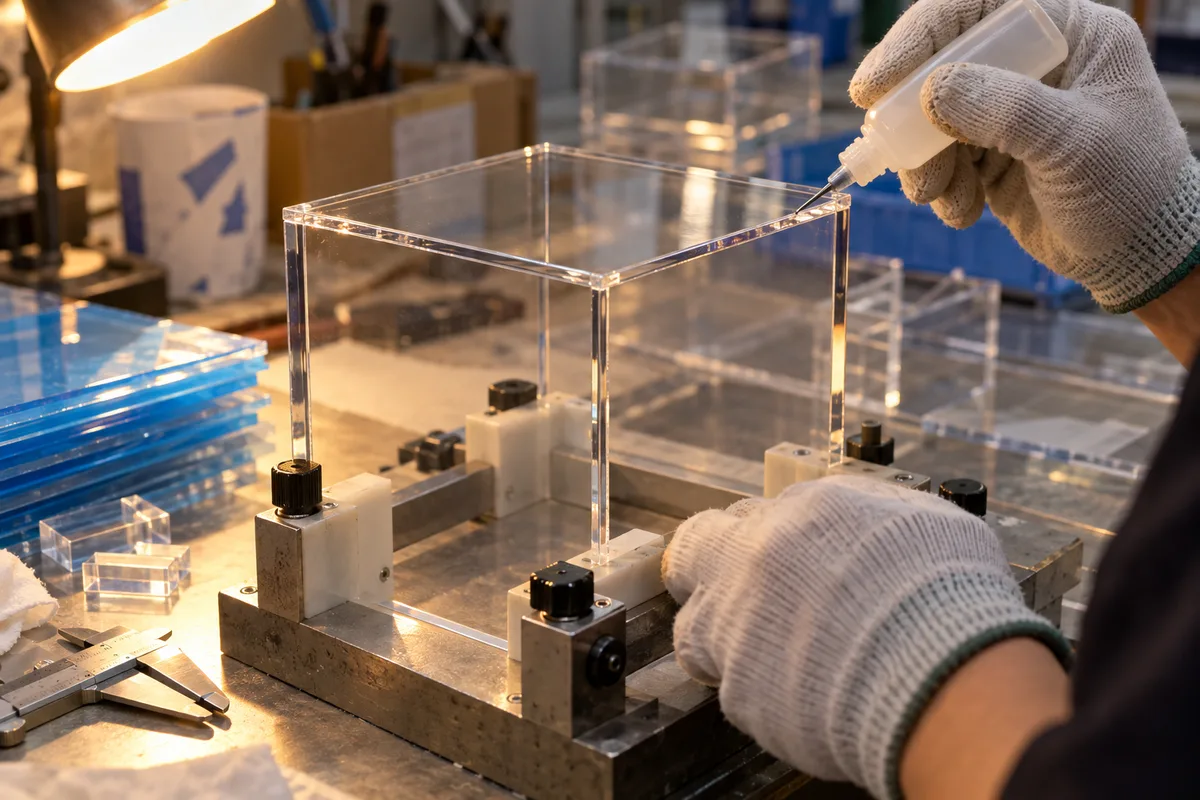
The buyer came to us for three clear cube sizes that shared one look. Five bonded panels meant visible seams and a finished envelope that had to fit each product. Assembled cubes are also mostly air, so they take a lot of carton space for their weight.
We worked out the cube and the fulfillment packout together with the buyer, because carton volume, surface contact in nesting and size identification all added to landed cost on top of the factory unit price.
Product Architecture
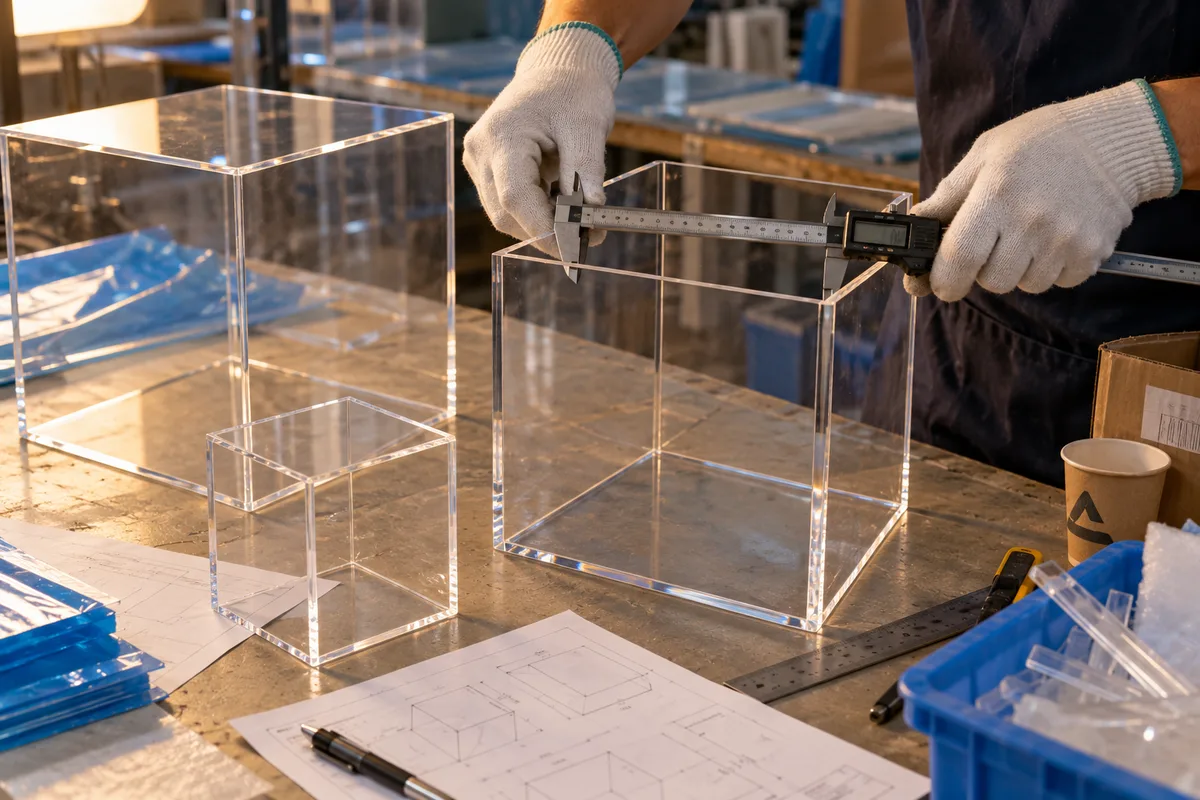
We released one drawing per cube size. Each showed finished outside and inside dimensions, material and thickness, open face, corner construction, edge finish, permitted rocking, protective film and the clearance over the buyer's product.
The buyer gave us the maximum product envelope for each SKU, and we checked the paid samples over the actual products. The sizes shared material and construction, and each kept its own drawing and inspection record. Our quote listed quantity by size, each at the 100-piece minimum per design.
Packaging Engineering
We compared three packout routes: individually boxed assembled cubes, protected nesting, and a shared master carton with rigid dividers. For each we sent carton dimensions, units per carton, gross weight and a pallet estimate, and the buyer weighed factory packing cost against dimensional freight, fulfillment handling, storage and damage risk.
Individual boxes cost a little more but cut fulfillment labor and surface risk; nesting cut volume but needed more care at unpacking. We went with nesting because the geometry allowed safe separation and clean film, bags and interleaves kept polished surfaces apart. Carton labels showed cube size, revision, quantity, opening orientation and destination allocation. The basic five-sided design needed no hardware, so there were no loose parts to track.
Sample and QC
The paid sample, billed separately and not credited to production, was reviewed for product fit, finished envelope, squareness, corner seams, edge appearance, rocking, film removal, nesting contact and carton movement in the fully packed sequence.
We released production after the drawings, material, sample, quantity by size, packing, price and payment terms were approved in writing. First-off inspection compared each size with its active drawing. During the run we checked critical dimensions and visible seams, and every show surface got a cosmetic review before film and packing. The lot met these acceptance checks:
- Every cube fit its product in the display orientation the buyer set.
- Finished outside dimensions and open-face geometry matched the drawing.
- Bonded seams met the approved appearance boundary.
- The cube stood without rocking on the approved surface.
- Nesting and dividers did not abrade visible faces.
- Carton labels and size allocation matched the SKU matrix.
Project Outcome
We delivered the three sizes against one active drawing each, one approved sample reference, a quantity table by size, written acceptance checks and a packout specification. The cubes shipped nested, interleaved and labeled by size for the buyer's fulfillment team.
If You're Planning Something Similar
Send finished outside and inside dimensions for every size, thickness, opening direction, the corner appearance you expect, whether you want nesting, carton count, label logic and destination. Ask for landed cost by packout route, not only the cube price. You can split an order across sizes or destinations when each design meets our per-design minimum, though small splits add labeling and packing cost. See custom acrylic display cases and the display-case supplier checklist.
Need display cubes in several sizes?
Send the drawing, quantity by version, product samples or models, artwork, packing requirement, destination and timing. We will return the open questions and a written manufacturing quote.
Response to a complete brief within 24 hours