Delivered project · Collector Displays
LEGO Technic Acrylic Display Case
A specialty retailer of collector displays came to us for non-electrical acrylic cases for tall LEGO Technic models, ordered from 100 pieces per design.
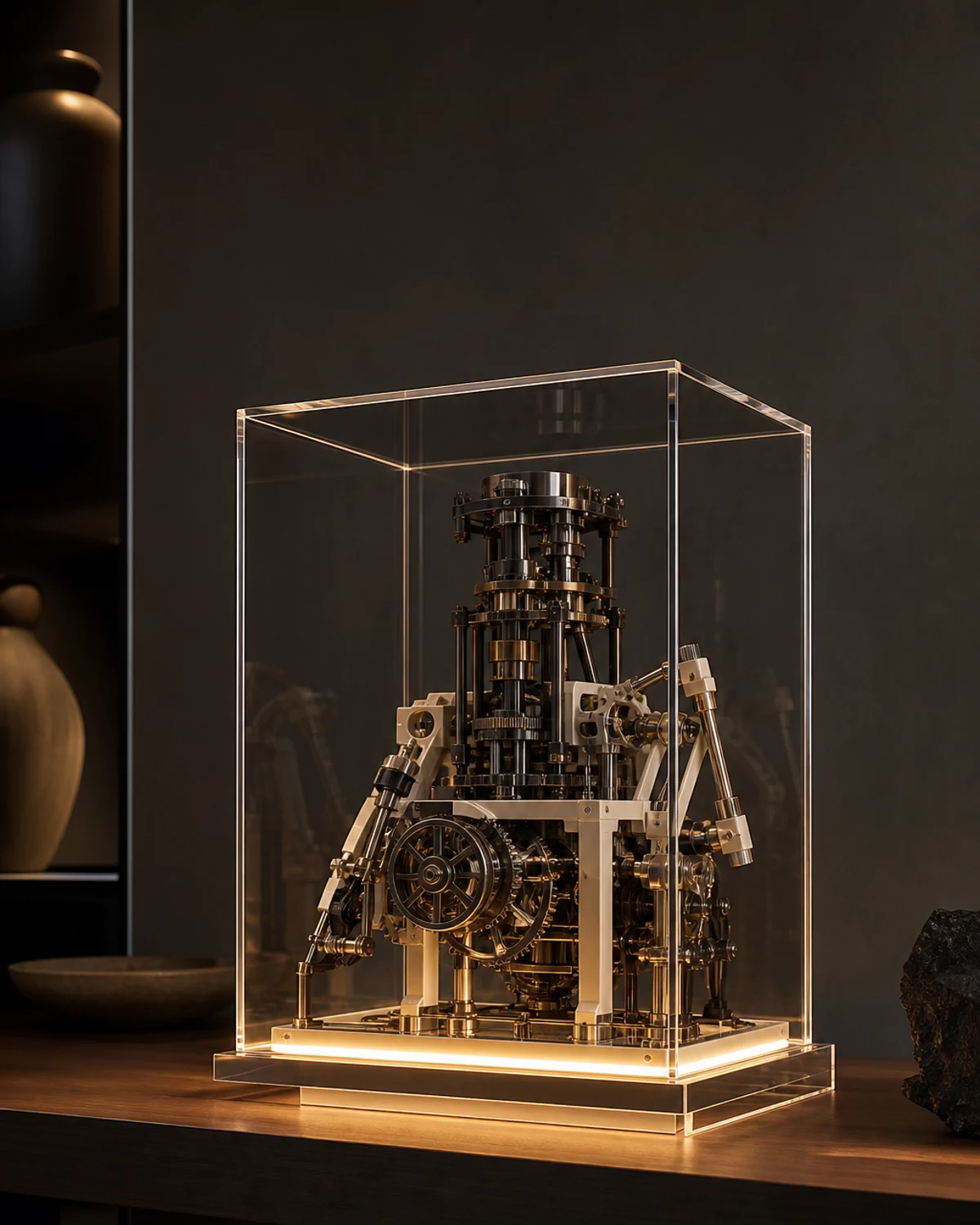
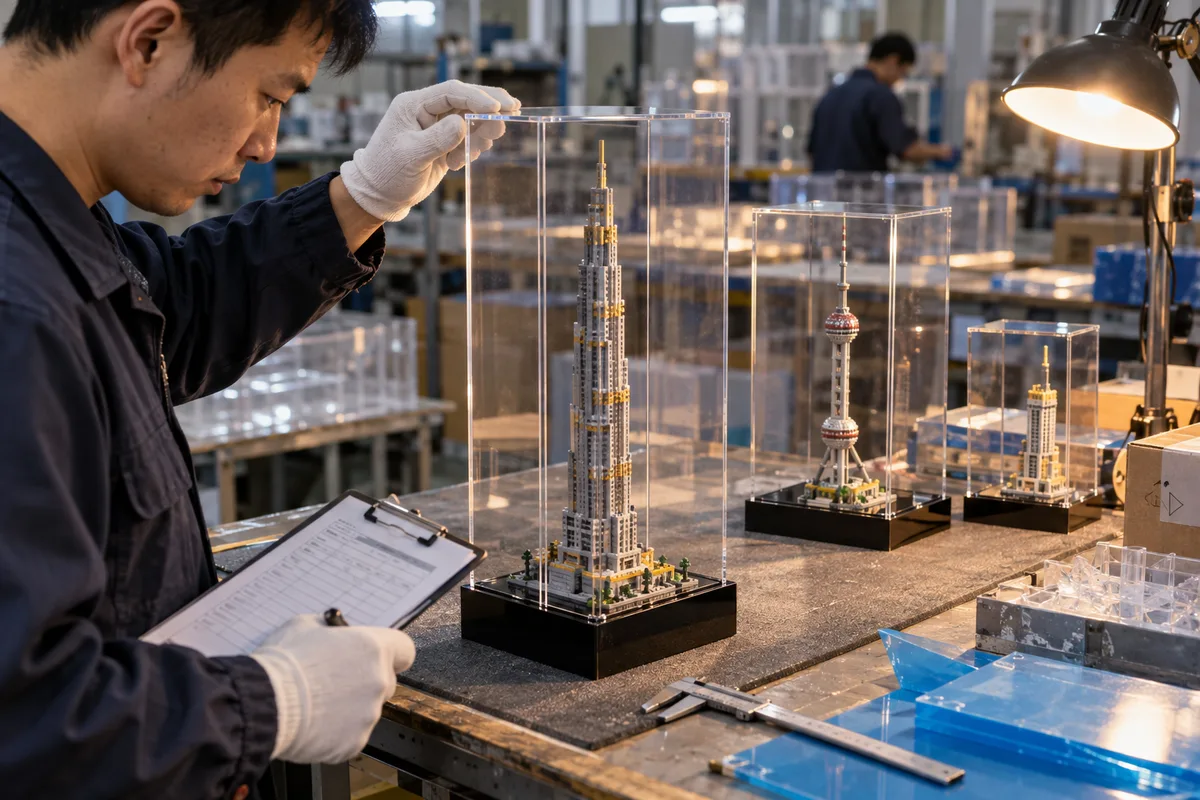
We measured the assembled models, set support points, base, closure and packing on a drawing, and released each design on a signed physical sample. This run was unlit. Delivered: model-specific acrylic enclosures released by drawing and physical sample. LEGO and Technic identify intended fit only; Wetop is an independent acrylic manufacturer and is not affiliated with the brand.
Ordering a similar project
The minimum order is 100 pieces per design. Paid samples normally take 3–5 days; sample fees are paid separately and never credited. Standard production takes 15–20 days after the drawing, sample, finish, inspection method, and packing are approved. Wetop responds to a complete brief within 24 hours.
Closest published price: this order was quoted per design from the drawings. The nearest public reference is a 150 × 100 × 100 mm magnetic-lid case in 3 mm clear acrylic at 500 pieces, listed from $6 per unit FOB Shenzhen on the acrylic cases hub. A tall model enclosure prices above that small case; the model envelope, material, base, closure, finish, packing, quantity and destination set the final figure.
Key Takeaways
- A specialty retailer needed acrylic display cases for tall LEGO Technic models; we delivered non-electrical enclosures released by drawing and physical sample.
- The retailer supplied the exact assembled-model envelope, mass, center of mass, removable parts, plinth interface, clearance, opening direction and safety requirement, and we drew each enclosure from those inputs.
- We released each design on a drawing and a signed physical sample, checked with the actual model for fit, stability, closure, appearance and packing.
- The model sizes shared materials and one inspection form; each design kept its own drawing, sample, label and revision. We supplied no LEDs, wiring, power adapters, controls or electrical integration.
The Challenge
The retailer’s models were tall mechanical builds. Their visible envelope, mass, support points, moving elements and center of mass were not symmetrical. Each case had to clear the fully assembled model, load from the intended direction, stand stable on the retailer’s plinth or shelf, and protect projecting parts in handling. Catalog dimensions started the conversation; we built from measured models and approved drawings.
The brief recorded the exact model configuration, removable parts, overall envelope, mass, center of mass, orientation, plinth interface, opening direction, access frequency, viewing faces, finish, destination and carton limits. The retailer also told us whether each case rested on furniture, was mechanically retained or sat inside another display.
The order was non-electrical. We fabricated the acrylic enclosures and the drawing-defined non-electrical base parts. We did not supply LEDs, wiring, drivers, power adapters, controls, electrical integration, installation or electrical certification.
Our Approach
Measuring the assembled model and its support interface
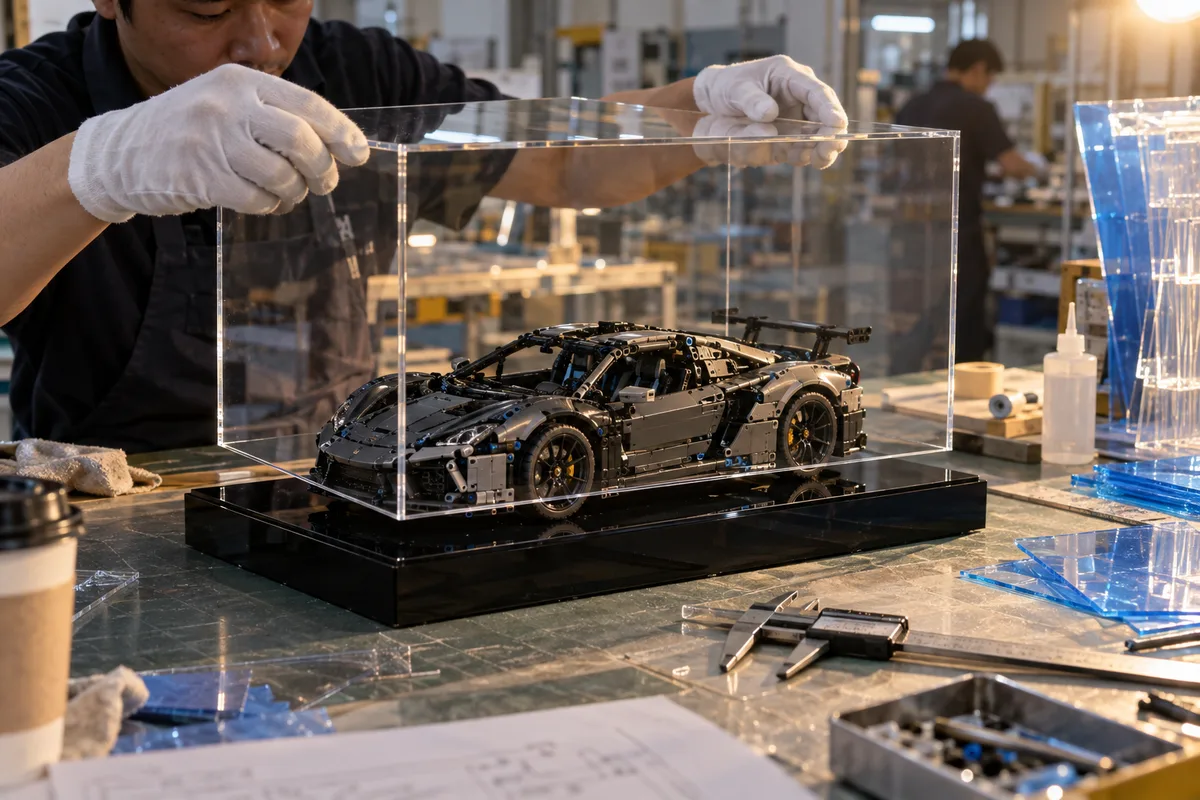
The retailer sent production models or controlled measurement records. We mapped the visible envelope and every point that could touch the base, then set clearance feature by feature: a fixed body got a different margin from a rotating wheel, articulated boom, removable panel, antenna or door. The drawing named the exact configuration that had to fit, so a later model variation could not be mistaken for a fabrication defect.
Stability defined by a named test
We set base geometry and sheet thickness from the enclosure span, model mass, center of mass, support points, display surface and permitted movement, not from height alone. Before sampling, the retailer and we agreed the test: the actual model, a documented surrogate or a specified load, with the orientation, duration, safety margin and pass result written down.
Access, closure and visible finish approved together
The opening style changed both the look and the handling, so we reviewed hand clearance, opening path, part interference, edge finish, joint appearance, base contact and model loading on one sample. We did not describe the enclosure as hermetic or dustproof; dust reduction came from the approved closure details.
Enclosure and model packed separately
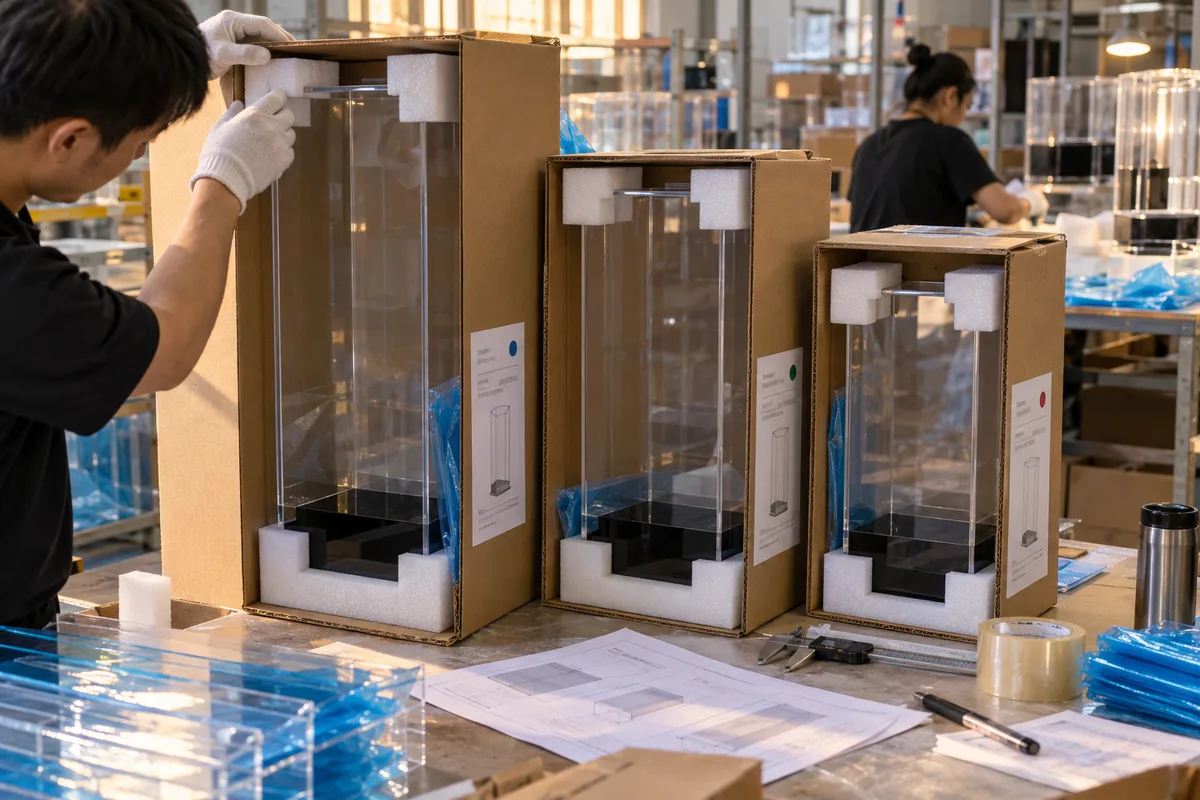
We packed each case empty, with film or tissue on the approved surfaces, corner protection, fitted cushioning and a carton the retailer approved. The physical packing sample and its test record controlled release.
The Results
Release started with an approved drawing and a separately paid physical sample. The drawing recorded the model reference, measured envelope, internal clearances, support points, base interface, opening direction, material, visible faces, edge finish, joint standard, inspection method and packing. The retailer signed the sample only after checking it with the model and the display surface.
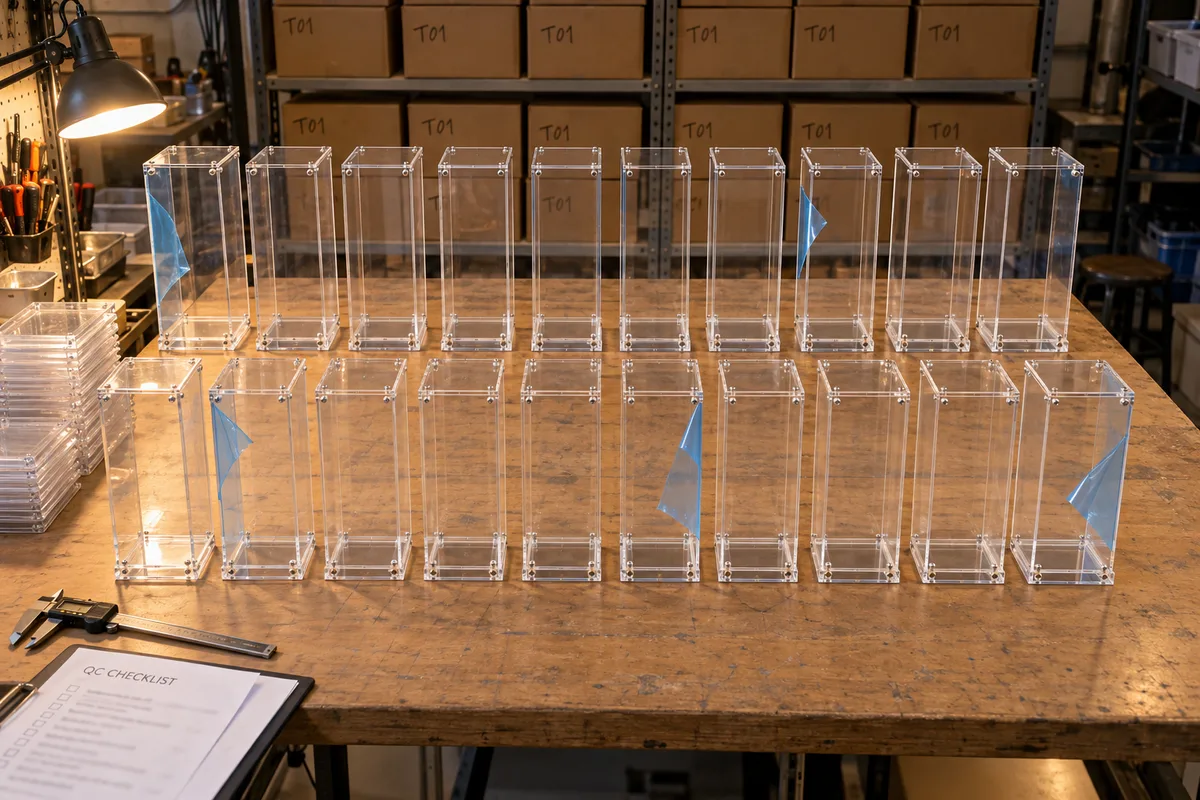
Production took 15–20 days after all approvals. Inspection compared each case with the drawing and the approved sample: named overall dimensions, base flatness or permitted movement, opening function, magnets or fasteners, visible surfaces, edges, joints and packing parts. Sampling frequency and the functional load test were written into the order.
The model sizes shared materials and one inspection form. We quoted shared tooling only after geometry review, and each design kept its own drawing, sample, label, packing reference and revision, so similar-looking cases were not mixed in production or fulfillment.
Release rule on this order: we approved each enclosure around the exact assembled model, support interface, access path and physical sample, never from catalog dimensions alone.
If You're Planning Something Similar
Decide how the model loads, how often the case opens, whether moving parts must stay operable, which faces are visible and whether store staff can lift the cover safely. A related model can reuse inspection headings, carton marks and the material family, but not another model’s dimensions, base, clearance or stability result, because orientation, attachments, tires or plinths change the envelope and center of mass. Lighting stays outside our scope: we check buyer-provided interface dimensions for fabrication and do not provide or integrate the electrical system. How model names appear on packaging and listings is the buyer’s legal call; we do not represent a brand partnership.
For a quote, send the exact model reference, assembled dimensions, mass, center of mass if known, moving parts, orientation, plinth details, access method, quantity by design, finish, destination and packing limits. Our quote lists tooling where needed, the sample fee, packing, freight terms and exclusions. See custom acrylic cases and the acrylic sheet thickness guide.
Need a case built around a Technic or mechanical model?
Send the exact assembled-model envelope, mass, support points, plinth interface, access method, quantity by design, finish, and destination. We will review the acrylic enclosure and return a written scope.
Paid sample in 3–5 days, separately paid and never credited · Quote response within 24 hours