
Delivered Project · Food Presentation
Tiramisu Acrylic Display Box Program
A dessert-display buyer ordered lidded acrylic tiramisu display boxes.
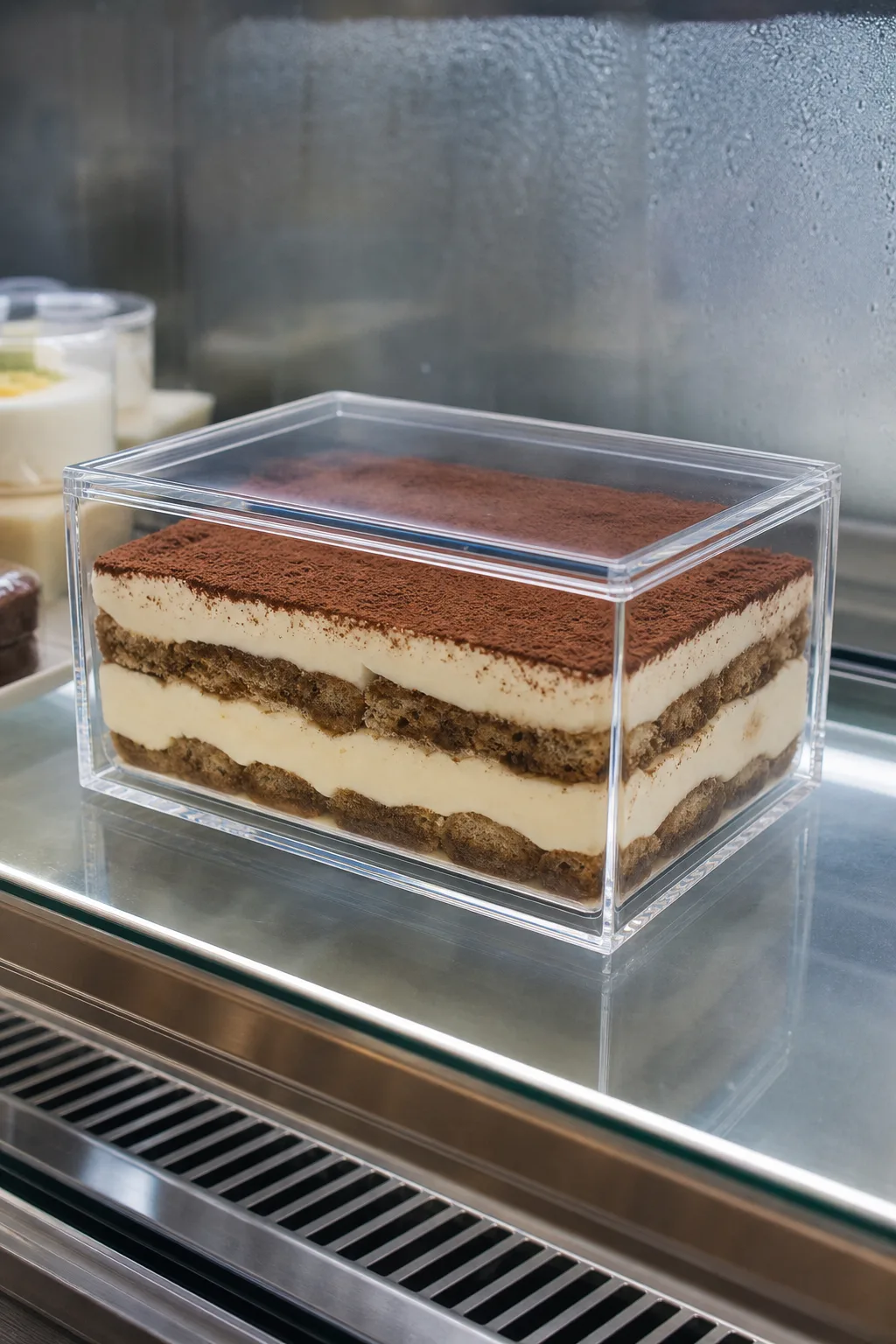
We built them to the buyer's drawing from a named PMMA sheet, passed through the sheet supplier's records, and proved lid fit, handling, stacking and packing on a paid sample before production. The buyer and its local authority approved the finished box for their market.
Ordering a similar project
MOQ is 100 pieces per design. Paid samples normally take 3–5 days; sample fees are paid separately and never credited. Standard production takes 15–20 days after drawing, named material, sample, inspection, cleaning, and packing approval. Wetop responds to a complete brief within 24 hours.
Different-specification price reference: the acrylic boxes hub lists a 200 × 150 × 100 mm frosted gift box in 3 mm acrylic at 300 pieces from $10–20 per unit FOB Shenzhen. That gift box is not a tiramisu display box and is not a quote for this project. Actual dimensions, named sheet, joints, lid, finish, cleaning, packing, quantity, and destination determine the written quotation.
Key Takeaways
- A dessert-display buyer ordered lidded clear acrylic tiramisu display boxes, built to its drawing from a named PMMA sheet.
- We passed the sheet supplier's declarations and test reports through unchanged and recorded the joints, finish, cleaning and inspection used on the boxes.
- The paid sample went through the buyer's own temperature, loading and cleaning cycle before we released production.
- Lid fit, stacking and packing were approved on the physical sample, and production matched that sample.
- The buyer and its local authority signed off the material and the finished box for their market.
The Challenge
A dessert-display buyer has to separate material records, fabrication records and finished-article approval. The named PMMA grade's sheet supplier published declarations and test reports for stated conditions. Wetop passed those records through without changing their scope and described the sheet, joints, finishes, cleaning and inspection used for the project. Neither step makes the finished box universally suitable for food contact or approved for every market.
The buyer and the relevant local authority decided whether the named material and finished article suited the intended food, contact type, temperature, duration, cleaning process, handling and jurisdiction. Beyond documentation, two physical questions shaped the sample we built:
- What temperature and handling cycle applied? The buyer supplied the operating range, loading sequence, dwell time, access frequency and acceptable lid feel, and we recreated that cycle in sample testing.
- How would the boxes be transported and stored? The buyer defined whether units travelled assembled, nested, separated or stacked, plus carton limits and the required packing test.
Our Approach
We started with the buyer's drawing, intended contents, direct or indirect contact description, named sheet requirement, operating temperatures, cleaning procedure, quantity, destination, and approval owner. We then identified which supplier records were available and which fabrication facts we could record. This division of responsibility is covered in more depth in ourfood-grade acrylic box guide for dessert display.
The documentation chain: three layers, correctly attributed
Layer one was the named material. Wetop passed through the sheet supplier's declaration, test report and technical data without rewriting the tested conditions or claiming they covered the fabricated box. The quotation identified the grade and document revision for the order, and we confirmed availability and scope before the buyer relied on a document for its approval process.
Layer two was the project-specific fabrication statement. It identified cutting, joints, adhesives, polishing, print and coating locations, cleaning steps and traceability actually used. It did not substitute for migration testing or authority approval. Layer three was the buyer-approved operating and cleaning procedure, developed from the named sheet supplier's instructions and the buyer's sanitation requirements.
The drawing marked intended contact and non-contact zones, finishes, joint locations and branding. Minimizing unnecessary treatments in a contact zone keeps review simpler, and the buyer and local authority still approve the final design and actual use.
Lid clearance under the buyer's temperature cycle
Lid fit depended on the named sheet, box geometry, fabrication tolerance, temperature difference, contents, handling and time. We did not assign a universal clearance from a generic thermal coefficient. The buyer defined the actual cycle and acceptable fit, and the drawing recorded the sample geometry we tested.
We evaluated the physical sample with the actual lid and base, the intended contents, the relevant temperatures, repeated opening and the buyer's cleaning cycle. The buyer recorded what counted as acceptable seating, lift force, movement and appearance. Any revision returned to the drawing before bulk release.
Stacking for transport
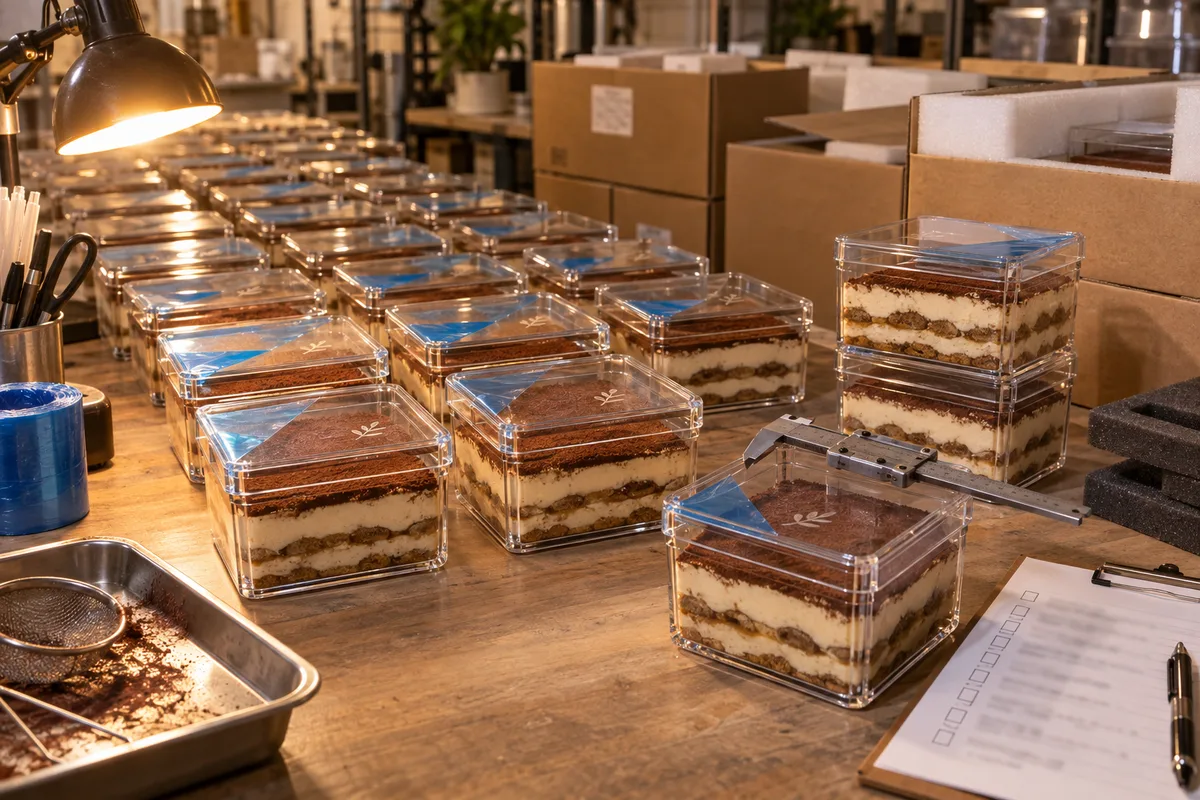
We designed stackability from the approved box geometry and packing configuration. The sample packing test identified contact points, visible-surface protection, lid restraint, carton orientation and permitted movement before we released the production cartons. No universal feature or carton count was assumed.
| Spec | Buyer input | Sample release record |
|---|---|---|
| Footprint | Drawing-controlled size and capacity | Measured box and lid reference |
| Material | Named sheet, grade, color, and thickness | Supplier record and approved physical sample |
| Rim clearance (lid to base) | Operating range and acceptable lid feel | Test cycle, geometry, and observed result |
| Stacking shoulder | Storage and transport configuration | Approved contact points and packing test |
| Packing | Carton limits, destination, and handling | Approved wrap, insert, orientation, and label |
The Results
The outcome was a controlled approval pack. It linked the released drawing, named sheet and supplier-document revision, approved sample, fabrication statement, inspection record, buyer-approved cleaning procedure, packing reference and order revision.
Inspection checked only the features defined by the drawing and order: overall dimensions, lid function, joints, visible surfaces, finish locations, named material traceability, packing components and labels. The buyer retained approval responsibility for intended contact conditions and market requirements. A new size, sheet, joint, finish, cleaner, temperature cycle or intended food use triggers review and may require a separate sample or additional evidence.
Buyer decision summary: Approve the named sheet, fabricated article, cleaning method, contact conditions, and physical sample for the actual market before bulk release.
What This Means for Your Project
Do not start with a blanket question such as "is acrylic food safe?" Start with the actual food or packaged product, direct or indirect contact, temperature, duration, cleaning and sanitation procedure, jurisdiction, named sheet requirement, and approval authority. Then ask which documents come from the sheet supplier and which facts the fabricator can state about its own work.
For a useful quote, send the drawing or required internal envelope, lid and access concept, contents, intended contact zones, operating range, cleaning procedure, packing configuration, quantity per design, destination, and documentation checklist. Wetop will identify missing inputs, available named-sheet records, sample tests, and exclusions. The buyer and relevant local authority make the final suitability decision.
Common Questions
What food-contact paperwork can an acrylic fabricator actually supply?
Wetop can pass through the named sheet supplier's available declarations and test reports without changing their scope, and can provide a project-specific fabrication statement describing the material, joints, finishes, and cleaning steps used. These records do not make the finished box universally food-safe or approved for every market. The buyer and relevant local authority must decide whether the named material, fabricated article, cleaning procedure, and intended contact conditions meet the applicable requirements.
How do you clean acrylic dessert boxes without damaging them?
Follow the named sheet supplier's cleaning instructions and the buyer-approved operating procedure. Warm water, mild detergent, and a soft cloth are common starting points for PMMA, but cleaner compatibility, concentration, temperature, contact time, rinsing, and sanitation requirements must be checked for the actual sheet and use. Approve the procedure on a physical sample before rollout.
Do acrylic lids bind or rattle in a refrigerated display cabinet?
Either condition is possible when lid geometry is not tested under the intended temperatures and handling cycle. Wetop does not assign a universal clearance from this page. The buyer defines the operating range and acceptable feel, then the drawing and physical sample are checked with the actual box, lid, contents, and temperature sequence before bulk release.
Sourcing display boxes that touch food?
Send the intended contents and contact conditions, drawing, named sheet requirement, temperature range, cleaning procedure, packing reference, quantity per design, destination, and approval checklist. We will return a documentation boundary, sample scope, and written quotation.