Hotel Vanity Tray Programs: Sizes, Counts, Logos
A tray program is room-count math, not tray shopping. Here's how 150 rooms becomes 350 trays, which sizes actually fit a vanity counter, and what survives housekeeping.
Need this made?Acrylic perfume and vanity trays →
Key Takeaways
- Order quantity = rooms × placement points per room + 10-15% spares, rounded up to a clean production quantity. A 150-room hotel with vanity and minibar trays needs about 350 trays, not 150.
- Two sizes cover most guest rooms: a 200 × 150 mm bathroom vanity tray and a 300 × 200 mm minibar or welcome tray, both in 3-5 mm acrylic with a 15-25 mm rim.
- Housekeeping chemistry decides tray life: PMMA tolerates diluted disinfectant wipe-downs, but ammonia glass cleaners and concentrated solvents craze the surface — the care card belongs in the housekeeping SOP, not the packaging.
- Put the logo on the second surface (printed underside) or laser-etch it: top-surface print sits directly under bottles and daily wiping and wears first.
- MOQ is 100 pieces per design with samples in 3-5 days and production in 15-20 days — and cutting programs stay on file, so a property opened this year reorders identical trays next year.
On this page
- What a hotel vanity tray program actually covers
- Converting room count into an order quantity
- Sizes that fit real vanity and minibar counters
- Anti-slip builds and housekeeping-proof cleaning
- Logo placement and brand color
- Where hotel vanity tray programs go wrong
- Structuring the program from 50 to 500 rooms
What a hotel vanity tray program actually covers
Most briefs I see say something like “we need 200 trays for our hotel.” A hotel vanity tray program is the full set of guest-room trays a property standardizes on — bathroom amenity trays, minibar trays, welcome trays — ordered as one specification so every room reads identical, often as part of a wider hotel signage and hospitality displays program. What almost none of those briefs arrive with are the three numbers that actually price the job: rooms, placement points per room, and spare rate.
That one-specification part is the whole reason to run it as a program rather than buying trays ad hoc. A guest doesn’t consciously register the tray under the toiletries, but a floor supervisor doing 30 rooms a day registers immediately when floor 3 has square black trays and floor 5 has round white ones. Procurement feels it too: one spec means one reorder line, one care instruction in the housekeeping SOP, and one sample to approve instead of five.
I coordinate these programs for hotel groups, vacation-rental operators, and the FF&E purchasing firms that buy on their behalf, and the questions are always the same four: how many, what size, will it survive housekeeping, and can it carry the brand. Whether the brief calls it a vanity tray, an amenity tray, or a welcome tray, those four questions don’t change — only the placement does. This guide answers each in order, with the math and the specs we actually use to quote.
Converting room count into an order quantity
The conversion is placement points × rooms + spares. Count where a tray physically sits in one room — bathroom vanity, minibar counter, welcome desk — multiply by room count, then add a 10-15% spare pool for breakage, loss, and rotation during deep cleans. Round the result up to a clean production quantity.
The spare pool is the line hotels forget and then regret. Trays leave rooms — they migrate to storage carts, crack when a bottle drops on a corner, or walk out with a departing long-stay guest — and a program with zero spares means the first loss puts a mismatched room into inventory. Plan 10% spares as your floor for a standard hotel; if you run a vacation-rental portfolio, take it to 15%, because your units are dispersed and a replacement can’t be borrowed from the room next door.
Here is the math applied to four common property sizes, assuming the two most common placement points (bathroom vanity + minibar) for mid-size properties and three for full-service:
| Property | Placement points per room | Installed qty | Spares (~10%) | Suggested order |
|---|---|---|---|---|
| 50-room boutique | 1 (vanity only) | 50 | 5-8 | 60 |
| 150-room select-service | 2 (vanity + minibar) | 300 | 30-45 | 350 |
| 300-room full-service | 2 (vanity + minibar) | 600 | 60-90 | 700 |
| 500-room convention hotel | 3 (vanity + minibar + welcome) | 1,500 | 150-225 | 1,700 |
Two notes on reading the table. First, our production MOQ is 100 pieces per design. A 50-room property therefore needs two trays per room, a multi-property rollout, or a larger spare pool to reach the production minimum for one design. Second, “per design” matters: a 200 × 150 mm vanity tray and a 300 × 200 mm minibar tray are two designs, and each needs its own 100-piece quantity.
Sizes that fit real vanity and minibar counters
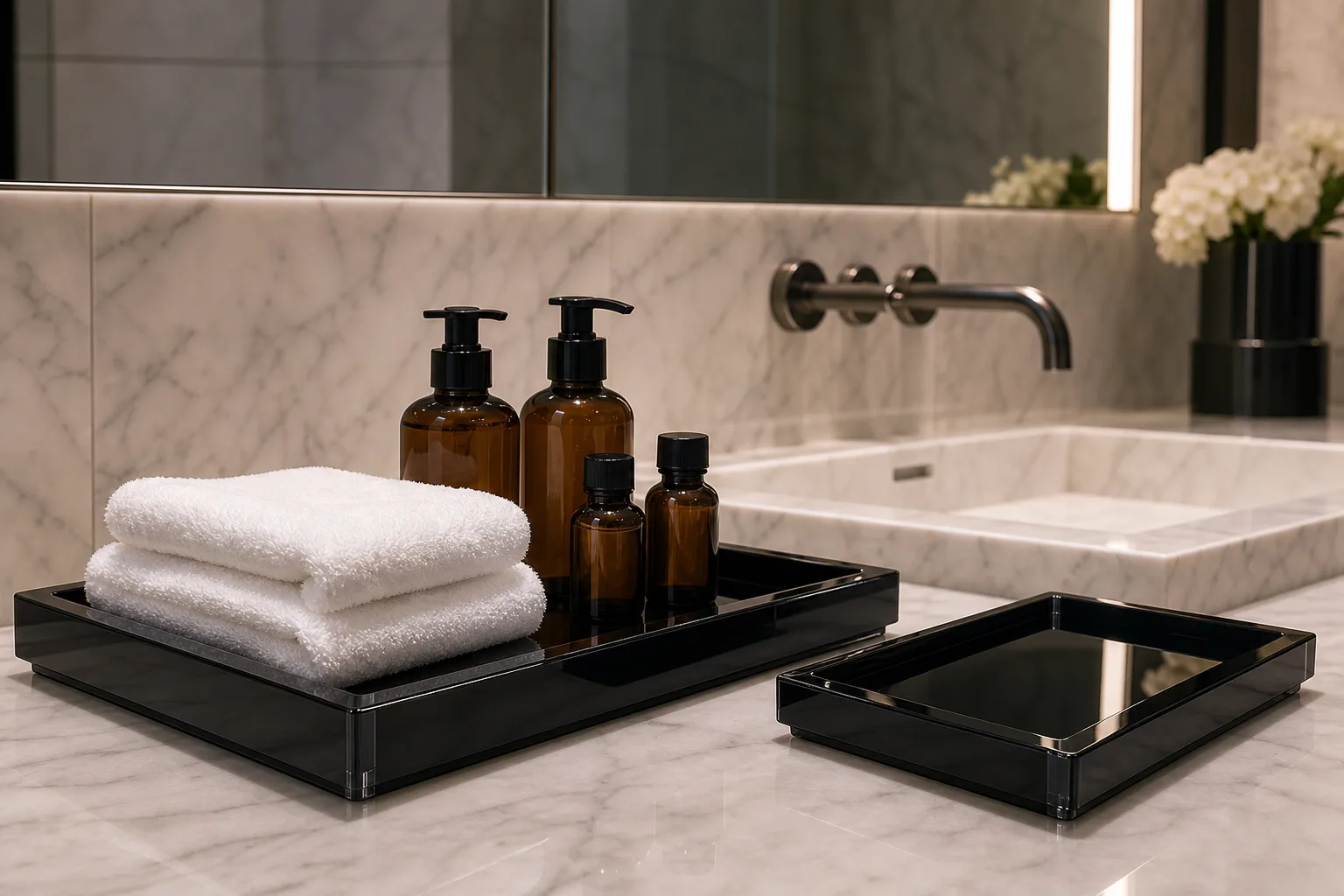
Two sizes cover most guest rooms: a 200 × 150 mm tray for the bathroom vanity and a 300 × 200 mm tray for the minibar or welcome station. Both run 3-5 mm acrylic with a 15-25 mm rim. Measure the actual counter before locking either — the tray must leave working space around the basin, not fill the surface.
The bathroom vanity is the tighter constraint. Between the basin, the faucet sweep, and the wall, the usable amenity zone on a typical hotel vanity is a corner or a strip along the backsplash — which is why 200 × 150 mm is the workhorse hotel vanity tray size, holding two amenity bottles, a soap, and a folded cloth without crowding. Larger double-vanity bathrooms take 250 × 180 mm. If your rooms have stone counters, spec rubber or silicone feet: they protect the stone from abrasion and stop the tray skating when a guest bumps it with a wet hand.
| Tray | Typical size | Rim height | Thickness | What it holds |
|---|---|---|---|---|
| Bathroom vanity tray | 200 × 150 mm | 15-20 mm | 3 mm | Amenity bottles, soap, cloth |
| Large vanity tray | 250 × 180 mm | 15-20 mm | 3-4 mm | Full amenity set, double vanity |
| Minibar tray | 300 × 200 mm | 20-25 mm | 4-5 mm | Glasses, kettle pods, snacks |
| Welcome / desk tray | 350 × 250 mm | 20-25 mm | 5 mm | Welcome amenity, fruit, card |
The rim height numbers are functional, not decorative. A 15-25 mm rim contains a tipped bottle’s spill and keeps contents inside the tray when housekeeping carries it to restock — but taller walls start reading as a caddy and make small bathroom counters feel boxed in. On minibar and welcome trays, where glassware and fruit ride along, we step thickness up to 4-5 mm so the tray carries weight without flex. For the wider family of formats beyond guest rooms — room service tray and bar fleets included — the custom acrylic trays hub covers the full range, and the acrylic vanity trays page shows the guest-bath formats specifically.
Anti-slip builds and housekeeping-proof cleaning
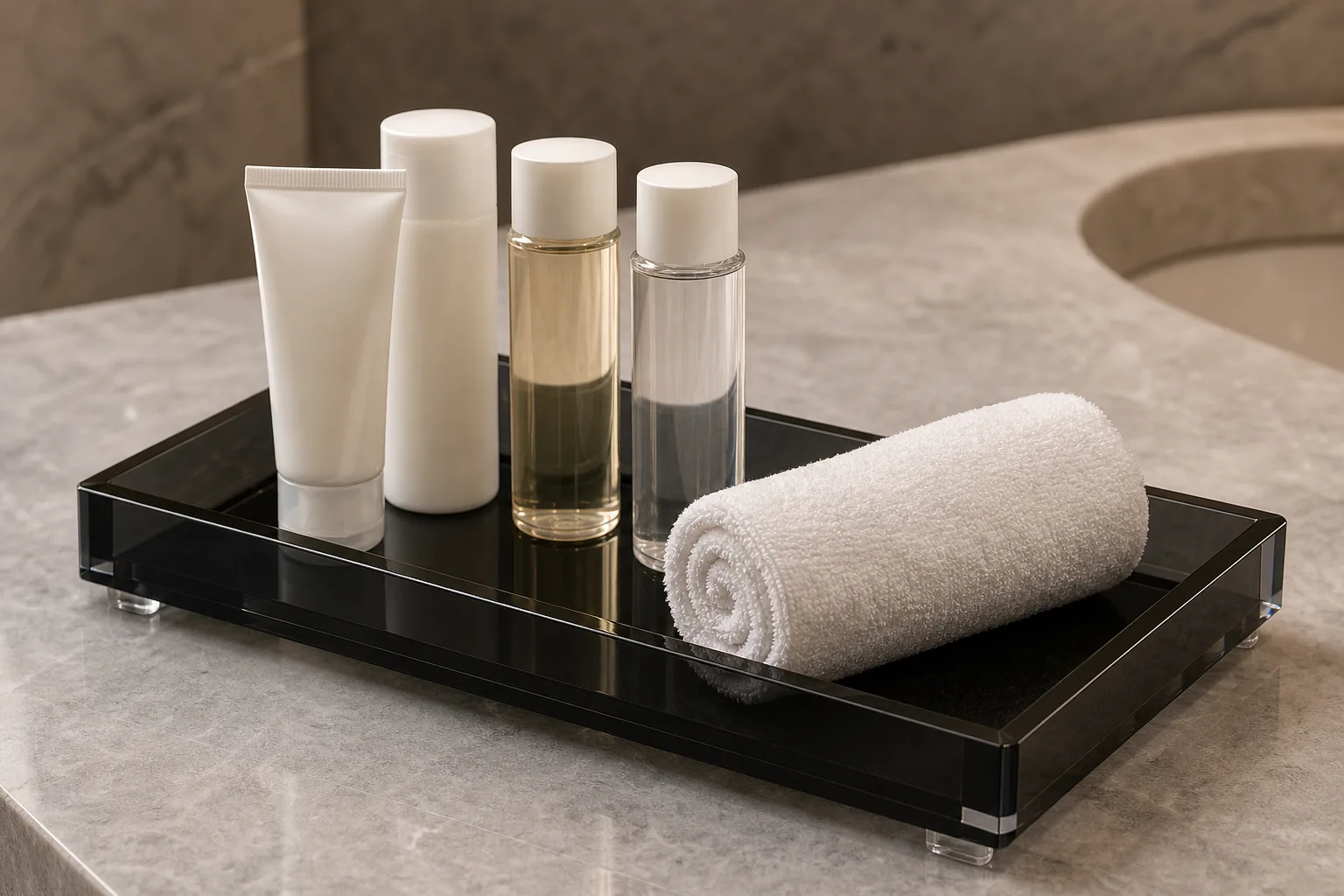
An acrylic tray survives hotel service if two specs are set at order time: an anti-slip build (feet or lining) and a cleaning rule housekeeping can actually follow. The rule is short — diluted disinfectant or mild detergent, soft cloth, no ammonia glass cleaners, no concentrated solvent sprays, no dish machines.
The chemistry deserves one honest paragraph, because trays fail here more than anywhere else. Cast acrylic (PMMA) is not attacked by alcohol alone,1 so the alcohol- and quat-based disinfectant wipe-downs that became standard housekeeping practice under the industry’s post-2020 cleaning protocols2 are workable in normal dilution. What ends a tray early is repeated exposure to ammonia-based glass cleaners and concentrated solvents, which craze the surface — a web of fine cracks that turns glossy acrylic cloudy — and the crazing concentrates at glued seams and drilled corners where internal stress lives. The practical fix costs nothing: one line in the housekeeping SOP naming the approved cleaner, exactly the way the SOP already names chemicals for stone and mirrors.
Heat is the second exclusion. Commercial dish-machine sanitizing rinses run close to acrylic’s softening range, so amenity and vanity trays get wiped in place or hand-washed — never routed through the stewarding dish pit with the room-service china. If your property also runs trays through food-and-beverage service, that’s a different duty cycle with its own spec; our bar and hospitality tray program guide covers washdown-heavy service in depth.
Anti-slip costs less to build in than to retrofit. Four options, in ascending order of cost: clear silicone bumper feet (the default — invisible, protects stone), rubber feet, a felt underside pad (for wood furniture surfaces), and a lined tray floor (leatherette or felt insert that stops bottles sliding inside the tray). For guest bathrooms we default to silicone feet plus a bare glossy floor, because a lined floor traps water in a wet-room environment; lined floors belong on dry-area welcome and desk trays. Where a welcome tray carries unwrapped fruit or pastries, note that acrylic resins are cleared for repeated food-contact use under FDA 21 CFR 177.1010,3 so the material itself is not the constraint — cleanability is, and a flat, rim-cornered tray with no lining wipes cleanest.
Logo placement and brand color
Branding a hotel vanity tray comes down to two decisions: where the mark sits and how color is applied. The durable answers are second-surface UV print (artwork printed on the underside, visible through the acrylic, sealed from wear) or laser etching (a permanent frosted mark cut into the surface). Brand color comes from tinted acrylic stock or printed color.
Placement is a wear question. The tray floor’s top surface lives under bottles, keys, and a daily wipe-down — ink printed there is the first thing to scuff. Printing the same artwork on the underside of a clear tray floor puts 3 mm of solid acrylic between the logo and the world: the mark reads crisp through the material and housekeeping can scrub the top surface indefinitely. That is the same second-surface logic used across bottom-printed acrylic trays, and it’s what I quote by default for logo-on-floor briefs. Laser etching is the alternative when the brand wants texture instead of color — a frosted-white monogram on a corner or rim that can’t peel, fade, or wash off, ever. How etching stacks up against the other branding routes lives in our acrylic tray logo options guide.
Color needs one expectation set early. Black and white acrylic are stock materials and add nothing to lead time. A specific brand color — say a hotel group’s signature green — is either matched from the closest stock tint, printed as second-surface color, or custom-tinted as a dedicated material run; custom Pantone tinting carries a one-time $200-300 matching fee per color and suits larger programs, while printed color hits brand targets at any quantity. When I walk a first-time buyer through this choice, the deciding factor is usually the reorder plan: a 500-room flagship standardizing for years justifies the custom tint; a 60-tray boutique order takes printed color or stock black and looks every bit as intentional. The hotel amenity-tray project treated physical color, branding, cleaner compatibility, sample approval, inspection, and property-set packing as buyer-controlled inputs.
Where hotel vanity tray programs go wrong
Four mistakes account for most tray-program regrets: ordering exact room count with no spares, skipping the counter measurement, printing the logo on the top surface, and treating each reorder as a new purchase. Every one of them is avoidable at the specification stage, and none of them costs extra to avoid.
The first two are procurement-side. Exact-count orders read as efficient on a PO and then fail the first week a corner chips — covered above, so plan the spare pool. Skipping measurement is subtler: a purchasing office orders a hotel vanity tray from a catalog photo, and the tray that looked proportionate in the render swallows a compact European-style vanity or slides around a generous double counter. The fix is one email from the property: the length and depth of the free counter zone at each placement point. When a group can’t measure every property, we size to the tightest room type in the portfolio and let the larger rooms breathe.
The second two are specification-side. Top-surface printing is the expensive lesson — the artwork sits under bottles and a daily wipe, and by month six the most-handled trays on the highest-occupancy floors look older than the rest, which is exactly the inconsistency a program exists to prevent. Second-surface print or laser etching costs the same to set up and removes the failure mode entirely. And treating reorders as new purchases — re-quoting, re-sampling, re-approving — throws away the program’s compounding benefit; your approved spec, cutting programs, and print files are already on file, so a reorder should be one line: same spec, new quantity.
There’s also a quiet fifth mistake: buying guest-room trays and food-service trays as one spec. A guest room tray program lives a wipe-down life; a room service tray or bar tray lives a carry-and-wash life with different rim, thickness, and surface requirements. Spec them as separate designs and let each do its own job — the guest-bath and dresser formats sit on our acrylic vanity trays page, and the acrylic serving trays line covers the room service and banquet side.
Structuring the program from 50 to 500 rooms
The program structure that works at every scale is the same three steps: approve one physical sample per design, order installed quantity plus spares, and keep the spec on file for reorders. MOQ is 100 pieces per design, samples ship in 3-5 days, production runs 15-20 days, and terms are a 30% deposit with the balance before shipment.
For a single boutique property, quote each design and quantity against its own approved specification. For a group rolling across properties, phase the work: approve the flagship-property sample, then release later purchase orders against the retained drawing while reviewing every changed field. Cutting files can remain on record, but a new material, dimension, logo, finish, or packing plan still needs approval. The artist tray brand repeat-order record documents another 1,000 4 × 4 inch engraved trays and a request to reduce the engraving size, a clear example of a repeat order that intentionally changed one visible field.
What I need to quote a program is one message: room count, placement points per room, tray sizes if you know them (or counter measurements if you don’t), logo file, and destination. We respond within 24 hours, samples arrive in 3-5 days, and every tray in the production run passes 100% inspection in our ISO 9001-certified factory before it ships — FOB Shenzhen by default, with DDP available for properties that want a landed price. Send us your room count and logo and we’ll come back with the program math done.
Footnotes
-
Polymethylmethacrylate (PMMA, Acrylic) properties and applications — AZoM — material overview documenting that PMMA is not attacked by alcohol alone, the property behind the guidance that standard diluted disinfectant wipe-downs are workable on acrylic trays while concentrated solvents are not. ↩
-
AHLA Safe Stay — American Hotel & Lodging Association — the US lodging industry’s enhanced cleaning guidelines, the protocols that standardized frequent disinfectant wipe-downs of guest-room surfaces and made cleaning chemistry a spec-level question for in-room items like trays. ↩
-
21 CFR 177.1010 — Acrylic and modified acrylic plastics, semirigid and rigid — eCFR — the FDA regulation permitting acrylic resins in repeated food-contact articles, relevant where welcome trays carry unwrapped fruit or pastries. ↩
Frequently Asked Questions
How many vanity trays does a hotel need per room?
Count placement points, not rooms. Most programs run one tray on the bathroom vanity and one at the minibar or welcome station — two per room — plus a spare pool of 10-15% for breakage, loss, and deep-clean rotation. A 150-room property at two placements plus spares lands around 350 trays.
What size should a hotel vanity tray be?
Measure the counter first. A 200 × 150 mm tray fits the amenity corner of most bathroom vanities without crowding the basin; 250 × 180 mm suits larger double-vanity baths; minibar and welcome trays run 300 × 200 mm and up. Keep rims at 15-25 mm and material at 3-5 mm so the tray reads substantial but lifts with one hand.
Can housekeeping clean acrylic trays with standard disinfectants?
Yes, with two exclusions written into the SOP: no ammonia-based glass cleaners and no concentrated solvent sprays, both of which craze acrylic over repeated cycles. Diluted quaternary disinfectants and mild detergent with a soft cloth are fine for daily service, and trays should stay out of commercial dish machines.
Can hotel trays carry our logo and brand color?
Yes. UV printing on the tray underside (second-surface) seals full-color logos under the acrylic where wiping can't reach; laser etching cuts a permanent frosted mark with nothing to wear off. Brand color comes from tinted acrylic stock or printed color. MOQ is 100 pieces per design, so even a boutique property can run branded trays.
What is the minimum order for a custom hotel tray program?
100 pieces per design. Samples ship in 3-5 days, production runs 15-20 days, and terms are a 30% deposit with the balance before shipment, FOB Shenzhen. Your approved files and cutting programs stay on file, so replacement orders years later match the original run without re-sampling or new setup.
Explore Custom Acrylic Products
Browse product categories to compare formats, materials, and customization options before choosing the closest fit for your project.