Delivered Project · Art & Lifestyle · United States
The 1,000-Piece Tray Reorder with a Smaller Engraving
A US artist-led brand returned for another 1,000 acrylic trays and asked Wetop to reduce the engraving size from the previous order.
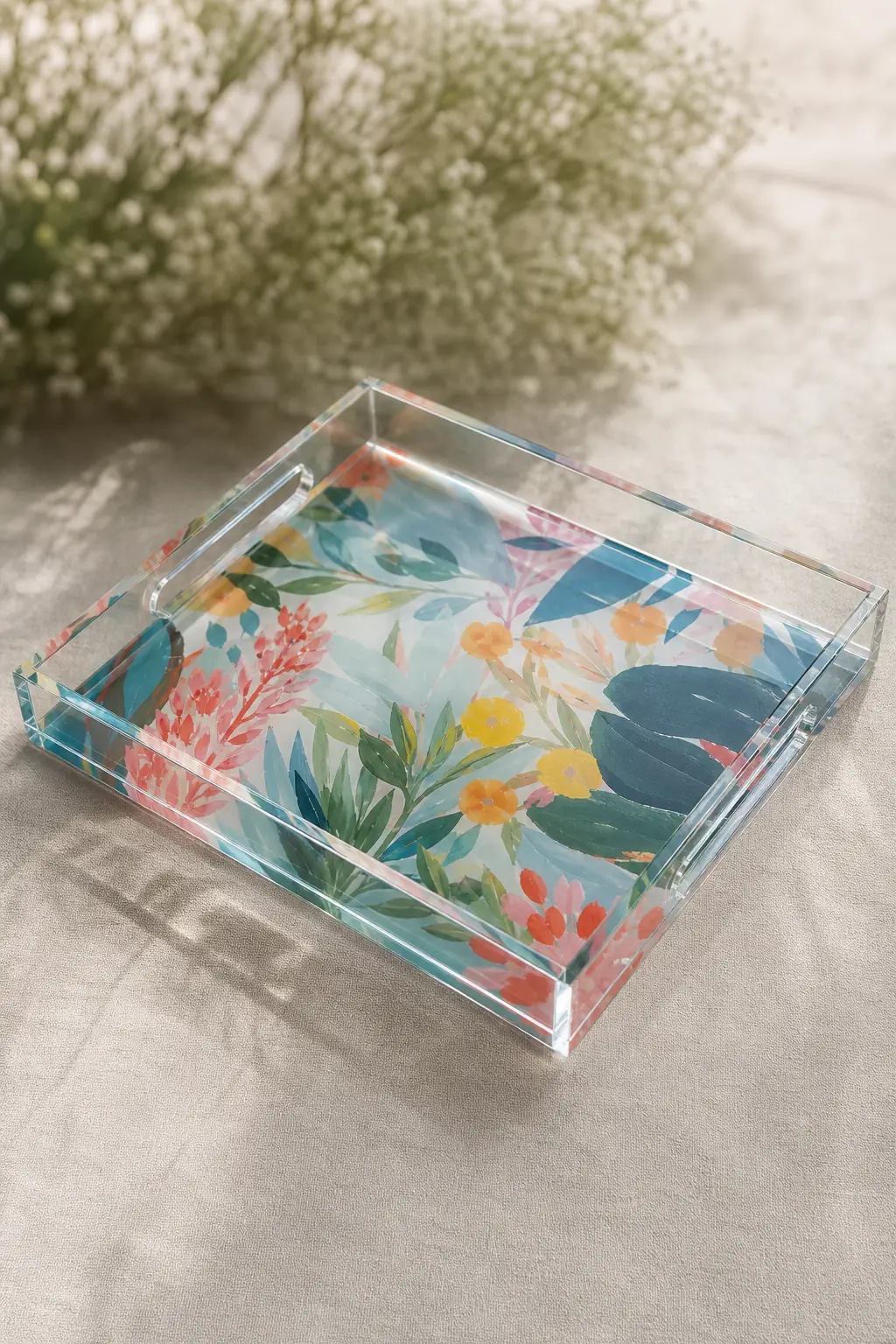
The repeat quantity and requested revision are documented buyer instructions; this page does not infer unrecorded run counts, color results, or turnaround gains. Project profile: Delivered 4 × 4 inch acrylic tray program · 1,000-piece repeat order · engraving-size revision.
- Project record · trays in documented reorder
- 1,000
- Project record · approved tray format
- 4 × 4 in
- Project record · engraving size
- Revised
- Project record · buyer-requested order
- Repeat
Ordering a similar project
MOQ is 100 pieces per design. Paid samples normally take 3–5 days; sample fees are paid separately and never credited. Standard production takes 15–20 days after size, material, engraving artwork, packing, and sample approval. Wetop responds to a complete brief within 24 hours.
Different-spec price reference: the acrylic vanity trays page lists a 10 × 7 inch, 3 mm clear vanity tray without handles, diamond-polished, at $5 per unit at 500 pieces FOB Shenzhen. That is not the price of this 4 × 4 inch engraved project; engraving, size, thickness, packing, quantity, and destination require a written quote.
Key Takeaways
- The buyer requested another 1,000 trays, which documents the repeat production order we ran.
- The buyer also requested a smaller engraving than the previous order, so we approved the revision instead of reusing the old artwork scale.
- We ran the reorder from a controlled drawing, engraving proof, material specification, packing specification, and written release.
The Challenge
The buyer's repeat-order instruction was concise: “I would like to order another 1,000 trays and decrease the engraving size from last time.” It states the repeat quantity and the requested change without an invented testimonial or performance result.
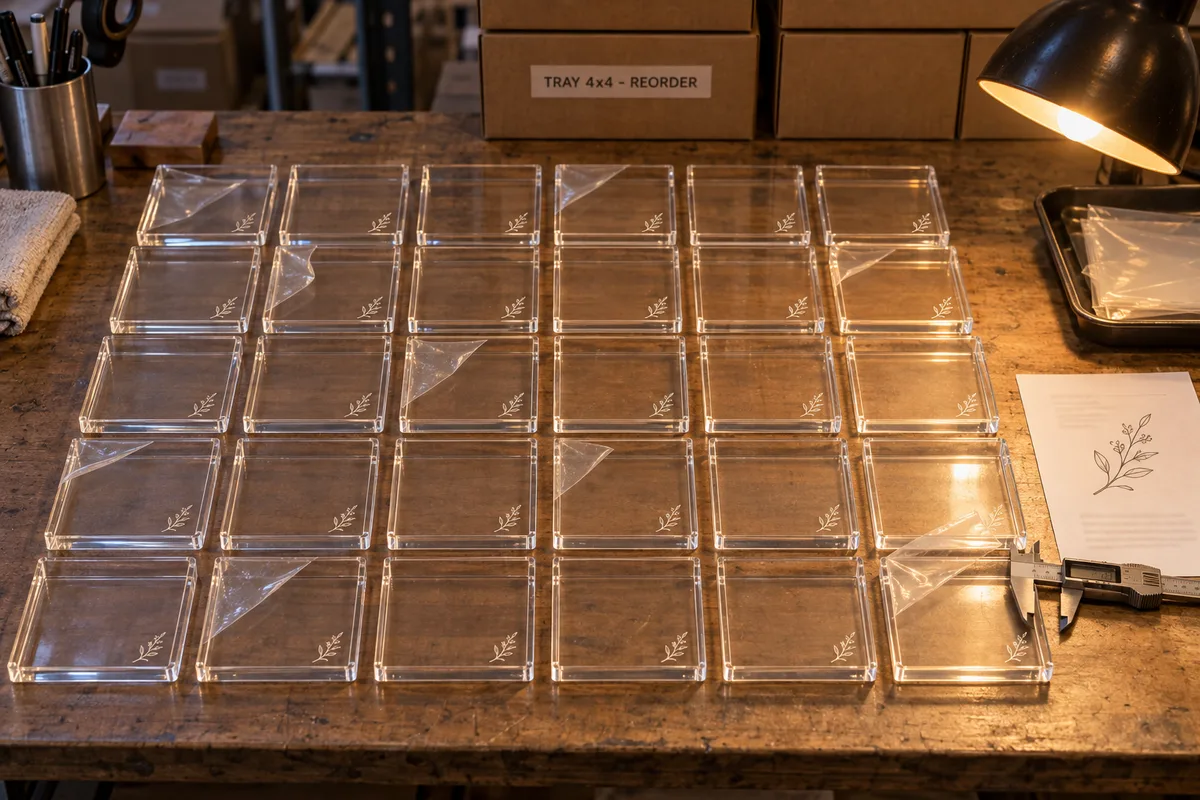
We did not copy the previous file unchanged. The buyer wanted the same 4 × 4 inch product with a smaller engraving, so we put the new artwork scale on a revised proof and tied it to the order record.
On repeat work, retained geometry can reduce setup questions, but a changed engraving is a new approval input. We kept the previous drawing and artwork reference on file, marked the requested revision, and released production only after the buyer approved the updated proof.
Because the buyer changed only the engraving size, we kept the acrylic grade, finished dimensions, edge treatment, and packing visible and unchanged on the quote and proof. Leaving every unchanged field on the record let both teams compare the new release with the previous order.
Our Approach
We ran the documented reorder on three controls: we retained the approved 4 × 4 inch geometry, revised the engraving at the buyer's request, and kept the revision visible in the drawing and proof.
Retained geometry; revised only the approved artwork field
The prior order gave the project a known product format. The new instruction changed the engraving size, not every feature of the tray. We marked the unchanged dimensions on the revised drawing and isolated the artwork scale, position, and orientation for the buyer's approval.
| Approval item | Repeat-order treatment | Buyer check | Release record |
|---|---|---|---|
| Tray geometry | Retain the approved 4 × 4 inch format unless the PO states a change | Finished size and edge profile | Revised production drawing |
| Engraving | Reduce the size as requested; do not reuse the old scale | Size, position, orientation, and legibility | Buyer-approved artwork proof |
| Packing | Confirm whether the previous packout remains approved | Protection, labels, and carton quantity | PO and packing specification |
The buyer's short instruction was enough to start the revision, not enough to release production. We confirmed the current artwork file, the target engraving dimensions, the placement, and the quantity on one marked proof.
Checked the changed engraving on a physical sample
A smaller engraving can change line weight and legibility. We made a paid sample so the buyer had a physical approval point before the 1,000-piece repeat went to production. Where the prior construction stayed unchanged and the buyer accepted a proof-only release, we stated that scope in writing.
The proof showed the engraving's finished width and height, distance from the tray edges, orientation, and the artwork revision date. Very fine lines, small counters, and tight spacing can close up differently by process, so we confirmed that the supplied artwork could be produced at the requested scale before issuing the final proof.
Keep the repeat order tied to its records
We kept the approved drawing, engraving proof, material, packing, and purchase order as one release package. That record is what lets a later order distinguish an intentional artwork revision from accidental drift. Our custom serving tray specification guide lists the inputs needed for a new tray brief.
Inspection followed the released revision. The check was not “looks like last time”; it was the approved tray size, material and finish, engraving scale and position, edge condition, quantity labels, and packout named on the order.
Production Controls and Delivered Outcome
The buyer's documented instruction confirms a repeat order for another 1,000 trays and a smaller engraving than the previous order. It does not establish four runs, an 800-piece cadence, color-match performance, or a shortened lead time.
We could not treat the reorder as an automatic file re-pull. The buyer changed one visible feature, so the production record preserved what stayed the same and made the requested engraving revision explicit.
The buyer's request is the commercial result this page can safely report: another 1,000 trays were ordered, and the buyer specified a change based on the previous production. It does not prove a sales outcome, a defect rate, a faster turnaround, or unchanged appearance across an undocumented number of runs.
Line extension, mid-2026: the same brand paid for printed color-match samples of a second SKU — a larger square tray with gold handles — as the approval step before that format was released into the line, so the new tray went through the same proof-and-sample gate as the reorder. The color-approval sequence follows our Pantone color matching guide.
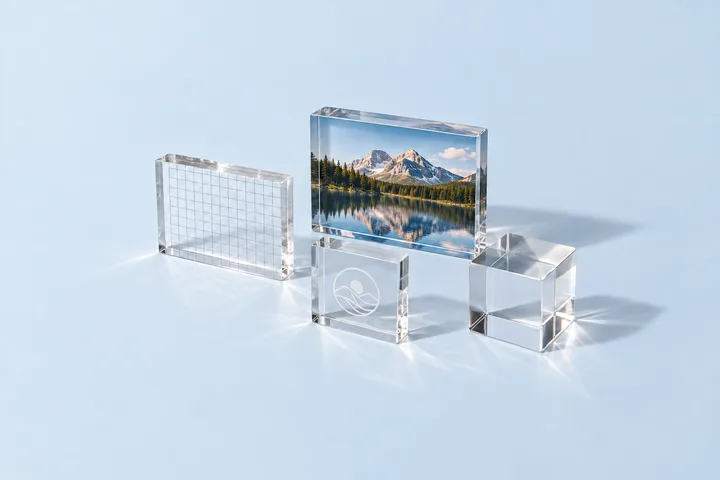
The hero is an illustrative, unbranded engraving-revision visual; the documented delivered evidence is the buyer's quoted repeat-order instruction.
“I would like to order another 1,000 trays and decrease the engraving size from last time.”
What This Means for Your Project
For a repeat engraved tray, send the previous order reference, current quantity, finished tray size, and revised engraving file. Mark every requested change instead of asking the factory to infer it.
Approve the engraving scale and position on a proof. Use a physical sample when the revision, material, or finish needs hands-on review. The production quote should then name the approved revision, packing, quantity, and shipping term.
For procurement comparison, ask each supplier to quote the same drawing, engraving file, material, quantity, packing, and Incoterm. A lower unit number against a different engraving method or a looser packout is not a like-for-like quote. Keep sample charges visible as separate line items when you compare quotes.
Before approving the reorder, compare the revised proof with both the current artwork file and the previous-order reference. Confirm that the requested smaller engraving remains readable at normal viewing distance and that the mark does not move into an edge radius, handle cutout, or packing-contact area. Record the signed proof revision on the purchase order so receiving teams can distinguish an approved change from a production error.
Reordering an engraved acrylic tray?
Send the previous order reference, revised engraving file, tray size, quantity, and destination. We will identify the changed fields and return a written quote within 24 hours.
Paid sample in 3–5 days · Sample fees paid separately and never credited · Production in 15–20 days · 100 pieces per design minimum