Delivered Project · Luxury & Retail
Bespoke Printed Acrylic Tray Program
A luxury fragrance house came to us for custom acrylic trays with its artwork built into the piece.
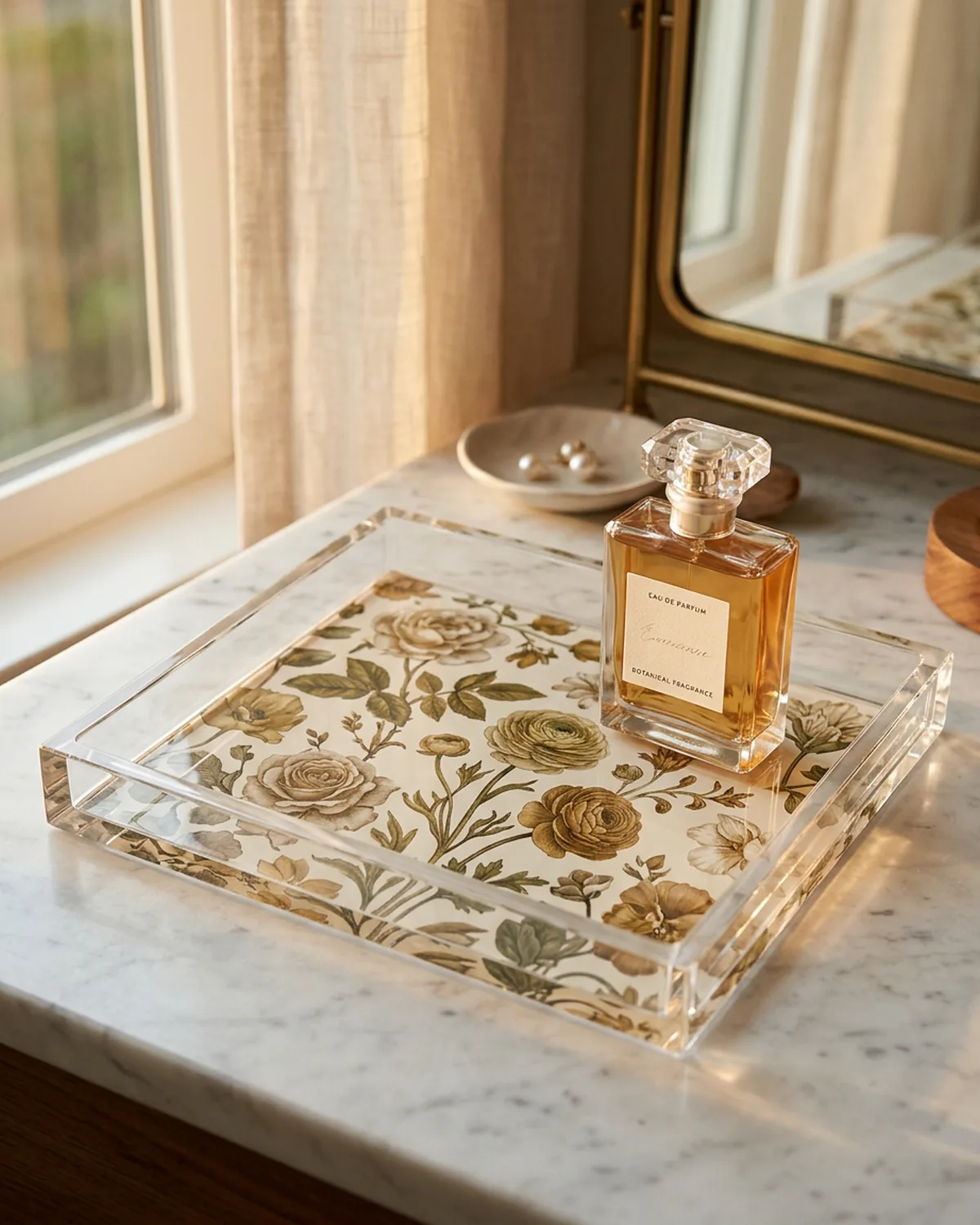
We made them from 5 mm clear cast acrylic with the artwork UV-printed on the reverse side, a 3 mm diamond-polished bevel and press-fit silicone feet, approved on a paid printed sample before production.
- clear cast tray body
- 5 mm
- diamond-polished bevel
- 3 mm
- print lift on silicone feet
- 1.5 mm
Ordering a similar project
MOQ is 100 pieces per design. Paid samples take 3–5 days; sample fees are paid separately and never credited. Standard production takes 15–20 days after the drawing, artwork, material, color sample, finish, inspection, and packing are approved. We reply to a complete brief within 24 hours.
Closest published price: the acrylic vanity trays page lists a 10 × 7 inch, 3 mm clear vanity tray without handles, diamond-polished, at $5 per unit at 500 pieces FOB Shenzhen. This order was thicker and printed, so it was priced from its own geometry, sheet grade, artwork, print coverage, color control, finish, feet, packing, quantity and destination.
Key Takeaways
- A luxury fragrance house asked us for acrylic trays with its own artwork built in; it supplied the source artwork and a Pantone color reference.
- We made each tray from one 5 mm clear cast piece with the artwork UV-printed on the underside, so the acrylic above works as a protective lens.
- The brand approved color, registration, white backing, edge finish and feet on a physical printed sample before production.
- We finished the edges with a 3 mm hand diamond-polished micro-bevel and fitted press-fit silicone feet that lift the print 1.5 mm off the counter.
The Challenge
The fragrance house wanted a tray where the artwork was part of the acrylic, not a sticker on top. It sent us the intended use, tray dimensions, sheet grade, source artwork, a Pantone color reference, print location, cleaning method, feet, quantity by design, packing and destination.
A screen preview could not show how the color would read through clear acrylic. We made the physical printed sample the reference for registration, color, finish, edges and cleaning.
Our Approach
We worked from one signed drawing and one approved printed sample for each design. The production file linked geometry, material, artwork revision, print process, color reference, finish, feet, inspection method and packing, and we put the artwork revision on the proof so the brand could trace the approved version.
Reverse-side artwork for this brief
We UV-printed the artwork on the underside of the 5 mm clear cast body, with a white backing behind it. The acrylic above the print protects it from handling and cleaning. The brand approved the visual direction, opacity, white backing, cleaning method and viewed color on the physical sample.
Color controlled against a signed sample
The brand supplied a Pantone reference. Clear acrylic, white backing, ink sequence and viewing light all change how a printed color looks, so the brand approved color on the actual material and print build. We recorded the agreed viewing condition, tolerance and inspection frequency in the control plan for this order, and we inspected against that signed sample.
Buyer-approved edge profile
Tray geometry, handling, look and chip risk set the edge. We cut a 3 mm micro-bevel and diamond-polished it by hand, as shown on the signed drawing.
Feet and counter contact
We pressed silicone feet into blind holes with no adhesive pads. They lift the printed underside 1.5 mm off the counter so the artwork does not rub. The brand approved the foot material, attachment, height, location, cleaning method and contact-surface check on the sample.
The Results
We delivered the printed trays to the fragrance house on the approved construction: 5 mm clear cast body, reverse-side artwork checked against the signed color sample, 3 mm polished bevel and silicone feet.
We released production only after the signed sample, artwork revision, drawing, inspection criteria, packing and written quotation were complete. Inspection covered dimensions, edge finish, print registration, visible marks, color comparison, foot placement and packing, and the packing trial used the approved tray, protective layers, inner carton and orientation.
If You're Planning Something Similar
Send native artwork with fonts outlined and images embedded, a marked print area, color references, tray dimensions, material, finish, feet, cleaning method, quantity by design and destination. We print your supplied files; each artwork or tray shape counts as a separate design for the 100-piece MOQ. Approve color on the production-material sample under your own lighting, because a Pantone number on paper will not look the same behind clear acrylic. For a reorder we start from the signed sample and revision record, and a new color, illustration, outline, foot or packing may need another proof or sample. See custom acrylic trays and the acrylic tray branding guide.
Want your artwork built into an acrylic tray?
Send the tray drawing, source artwork, color reference, print location, finish, feet, cleaning method, quantity by design, packing, and destination. We will return a DFM review and written quotation.
Paid sample in 3–5 days · Sample fees paid separately and never credited · Production 15–20 days