Delivered Project · Boutique Hotels
Hotel Amenity Tray Program for Multi-Property Programs
A multi-property hotel group asked us to replace its mismatched guest-room trays with one controlled family.
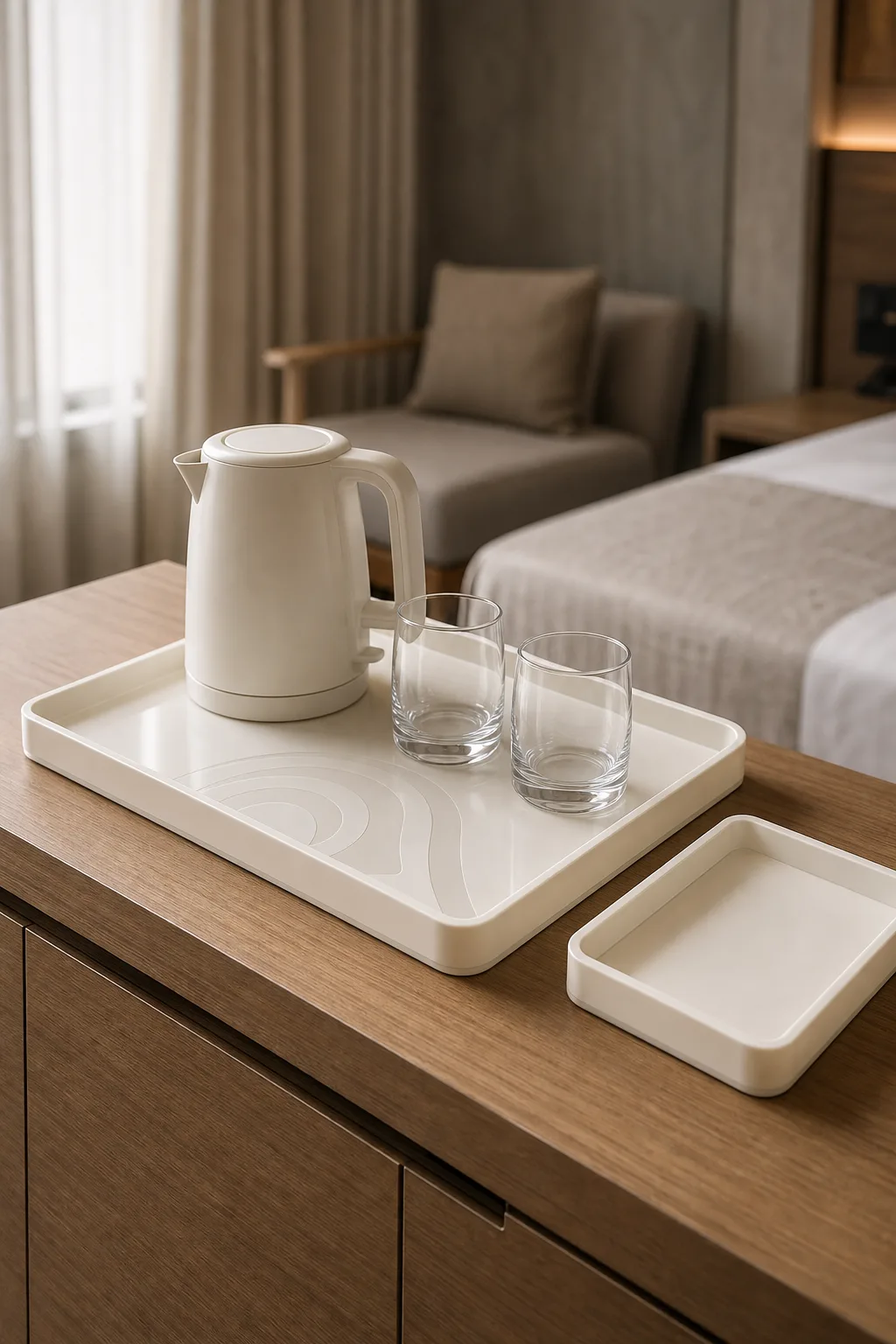
We delivered two white acrylic designs, a 400 × 300 mm bar tray and a 250 × 150 mm vanity tray, with a laser-etched logo, annealed for housekeeping chemicals and packed by property. Delivered: one bar-tray design and one vanity-tray design, each at 100 pieces or more, released on approved drawings and physical samples.
- tray designs
- 2
- bar tray size
- 400×300mm
- vanity tray size
- 250×150mm
Ordering a similar project
MOQ is 100 pieces per design. Paid samples take 3–5 days, are paid separately, and are never credited to production. Standard production takes 15–20 days after approvals, and Wetop responds to a complete brief within 24 hours.
Closest published price: this order was quoted per design. The nearest public reference on the acrylic trays hub is a 10 × 7 inch small clear vanity tray in 3 mm acrylic, from $3–6 per unit FOB Shenzhen at 500 pieces. The hotel trays added size, white sheet, rim construction, etched branding, annealing, inspection and property packing, and were priced line by line.
Key Takeaways
- A multi-property hotel group had mismatched room trays and no fixed color or branding reference. We delivered one white acrylic family in two designs: a 400 × 300 mm bar tray and a 250 × 150 mm vanity tray, each at 100 pieces or more.
- The hotel approved a laser-etched logo on the named sheet with its own housekeeping cleaner, contact time and wipe material.
- We annealed the trays after machining and bonding, because the sheet maker's guidance, our fabrication route and the named cleaner called for stress relief.
- The hotel picked its white from physical swatches viewed against the real room finishes, then approved paid production-intent samples, and the order shipped packed by property.
The Challenge
The hotel group came to us with inconsistent room trays, different console and vanity footprints across its properties, and no controlled reference for color or branding. It wanted one documented tray family that fitted its products and room surfaces, with each design, property allocation and artwork revision kept clear.
The hard constraints were operational. The buyer named the housekeeping cleaner, temperature, wipe method, products placed on the trays, handling pattern and the documents its market required. We reviewed the sheet, finish, logo method and fabricated sample together, and we made no blanket chemical-resistance or service-life claim.
Our Approach
We built two designs in one material and color family: a 400 × 300 mm console or bar tray and a 250 × 150 mm vanity tray. Thickness, rim construction and corner radii came from the hotel's products, room surfaces and approved drawings. We settled three decisions before quoting: the logo method, the stress-relief step and how the hotel would approve color.
Logo approved with the named cleaning method
We compared three logo methods on the named sheet. Screen and UV printing carry brand color on the surface; laser etching cuts a frosted mark into the acrylic itself. The hotel chose the laser-etched logo, tested it with its cleaner, contact time and wipe material, and recorded the accepted appearance on the sample.
| Logo method | Where the mark lives | What we checked on the sample |
|---|---|---|
| Silk-screen print | Ink layer on the surface | Adhesion, color and edge wear with the named cleaner |
| UV print | Cured ink layer on the surface | Color, adhesion and surface condition |
| Laser etch | Cut into the acrylic itself | Frosted appearance and cleaning result (chosen) |
Annealing and cleaner compatibility
Incompatible cleaners can cause crazing, especially around machined and bonded areas. The sheet maker's guidance, our fabrication route and the hotel's cleaner put annealing on the traveler after machining and bonding. The buyer approved the named sheet and the finished sample. We did not claim the trays were alcohol-, quaternary-ammonium- or dishwasher-safe.
Three whites, one guest room
Stock white acrylic comes in different tones and finishes. We sent physical swatches of three whites, and the hotel reviewed them against the actual vanity and console materials under room lighting. It picked the sheet and finish, and then we made the paid production-intent samples. Those approved samples became the appearance reference for bulk inspection. The hotel checked them with its real products and cleaner: usable area, rocking, rim and joint condition, hand clearance, logo position, color, wipe result, protective film and pack-out.
The Results
We released a package: two approved drawings, named material and color, approved branding and cleaner, physical samples, inspection criteria, property allocation, spare quantity, carton labels and a packing standard.
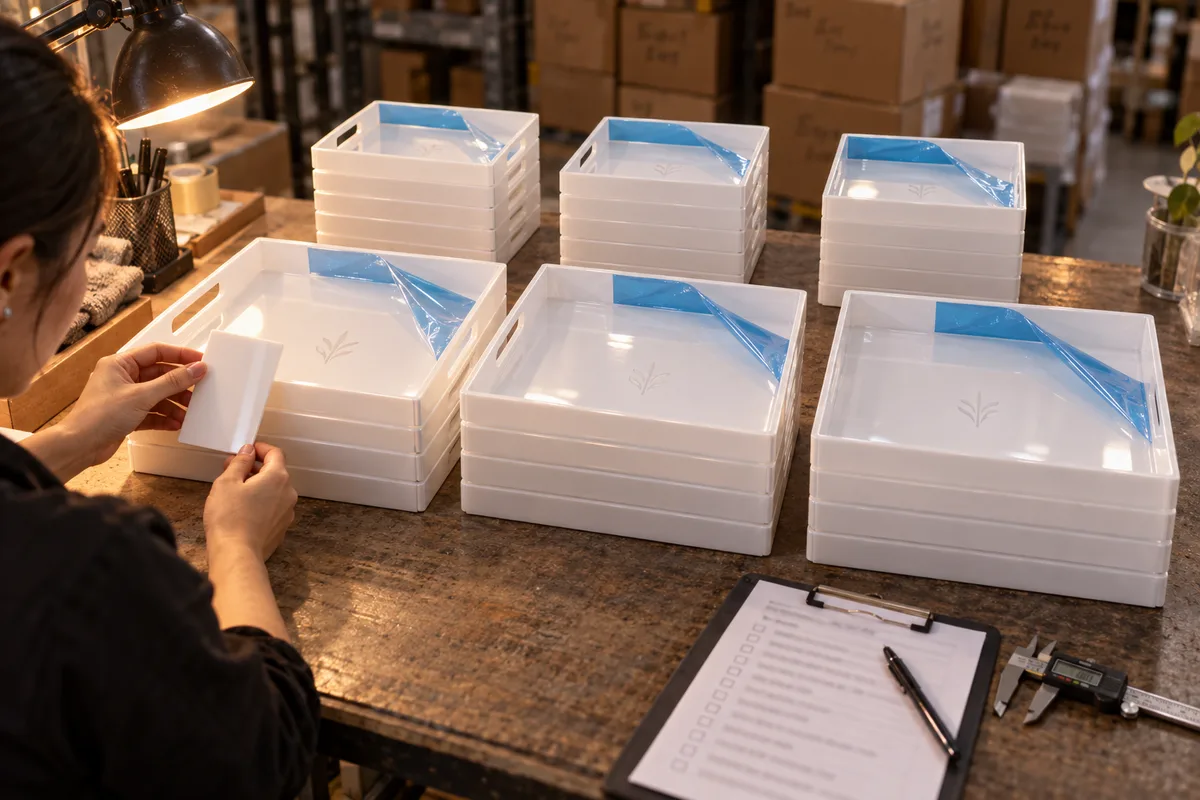
We packed property sets from the hotel's allocation file. Carton labels named the property, tray design, quantity, artwork revision and spare designation, so each receiving team could check its allocation without relying on a product photo or an informal packing note. The hotel set the spare quantity from its own handling and replacement policy.
What was approved: physical color, the etched logo, the named cleaner, product fit, property allocation and packing, all on the production-intent sample before bulk release.
If You're Planning Something Similar
For a hotel group, serviced-apartment brand or rental portfolio, treat cleaner compatibility, branding, product fit, color and packing as one sample decision, and review swatches at each property's finish before you approve one common color. A useful inquiry lists what sits on each tray (kettle, cups, bottles, sachets, liner, bottle diameters, pump travel) with the usable console and vanity area, plus property, room count, quantity split, logo file, color, destination and carton-label format.
Reorders start from the released drawing, named sheet, color reference and approved sample, at 100 pieces per design, and you reconfirm quantity, cleaner, destination and packing. Thehotel amenity and vanity tray program guide covers sizes, spares and reorder cadence; formats are on our custom acrylic trays and custom acrylic vanity trays pages.
Need matching trays across your properties?
Send your room count, sizes and a photo of the finishes the trays sit on. We reply within 24 hours with a spec, a swatch plan and a quote that includes spares.
Two tray sizes, one white, etched logo, packed and labeled by property