

Delivered Project · Packaging · D2C Launch
Custom Acrylic Packaging Insert for a Premium D2C Launch
A premium D2C brand launching a new product needed an acrylic insert to hold the product and its accessory inside a presentation box.
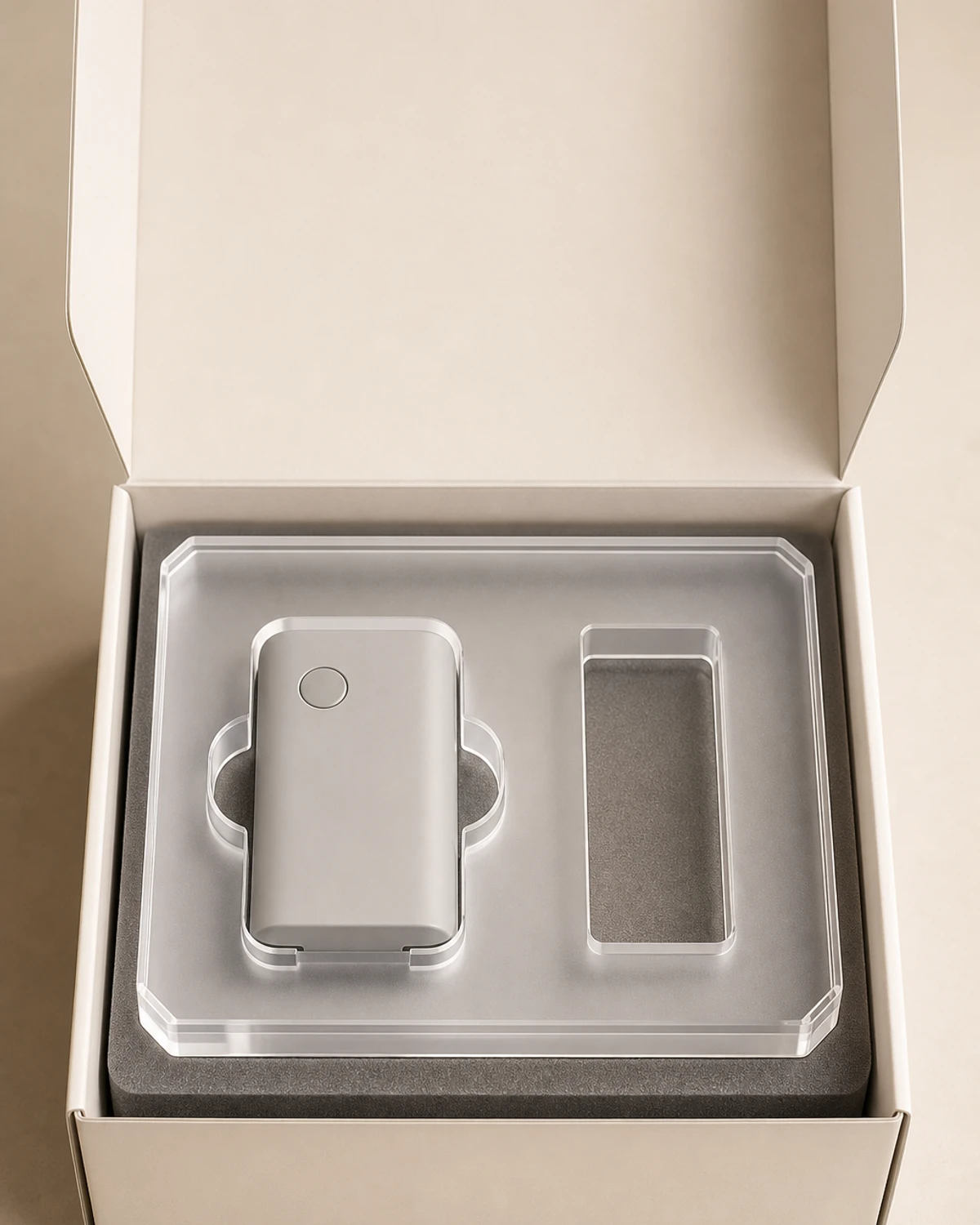
We made a clear acrylic insert with two product-shaped cutouts over a dark foam support layer. Fit, finish, foam color and removal access were approved together on a physical sample, and the drop-test criteria for the final packout were agreed before production. Delivered: clear acrylic packaging inserts with product and accessory cutouts, a foam restraint layer and a packing specification built around the buyer's presentation box.
Ordering a similar project
MOQ is 100 pieces per design. Paid samples normally take 3–5 days; sample fees are paid separately and never credited. Standard production takes 15–20 days after product fit, material, finish, restraint, packing, test scope, and sample approval. Wetop responds to a complete brief within 24 hours.
Closest published price: the acrylic boxes hub lists a 200 × 150 × 100 mm, 3 mm frosted gift box with magnetic lid, velvet insert and UV branding at 300 pieces from $10–20 per unit FOB Shenzhen. A stand-alone insert is priced on its own geometry, material, restraint, packing and quantity.
Key Takeaways
- A premium D2C brand needed an acrylic insert for a product launch. We delivered a clear insert with product and accessory cutouts over a dark foam support layer, sized to its presentation box.
- We cut the cavities from the buyer's product reference, then approved fit, finish, foam color and removal access together on the physical sample.
- We chose the acrylic grade and thickness from the insert size, unsupported spans and product weight, and confirmed rigidity on the sample.
- Before production we agreed the drop-test method and pass criteria for the final product-and-package assembly with the buyer.
The Brief
The buyer was a premium D2C brand preparing a product launch. The insert had to seat the product and an accessory inside a presentation box, protect cosmetic surfaces, let the customer lift the product out without forcing it, and keep the packout controlled through shipping.
We worked from the buyer's product reference, not an isolated silhouette. A physical reference shows what a silhouette hides: ports, buttons, protective films and high-gloss faces that need clearance or non-marking contact.
Our Approach
Thickness from the product and span
We proposed the grade and thickness after reviewing the finished insert size, unsupported spans, product weight, cutout geometry, finish and packout, rather than defaulting to 4 mm. The approved sample confirmed rigidity and removal access.
Finish approved with the product in hand
Clear, frosted, tinted, gloss and textured surfaces behave differently under handling and photography. The buyer reviewed the finish with the actual product and outer box on the sample instead of relying on a blanket fingerprint claim.
Foam restraint and removal access
The dark foam layer under the acrylic held the product and accessory in place. Restraint and removal pull against each other: a tighter cavity holds better in transit but makes unboxing harder, and more clearance eases removal but lets the product move. We set that balance on the sample, with the buyer's product and presentation goals in hand.
Production and Packing
The drawing recorded the finished insert dimensions, product cavities, clearances, material and finish, restraint, removal features, branding, stack height and fit to the outer box. The sample checked the actual product against that drawing.
We agreed the drop-test method and pass criteria for the final product-and-package assembly with the buyer before production. We do not claim a certification or test result without that agreed record.
After approval we ran production and inspected against the signed drawing, sample, finish standard and packing specification. The packing specification set protective film, interleaving, orientation, quantity per inner carton, outer-carton restraint, labels and destination marks.
The Results
The buyer released production once product fit, removal access, finish, stack height, surface protection and the packout's drop-test criteria were settled on the sample. The inserts shipped against the packing specification that went with the purchase order.
Project notes: We had the buyer approve finish, product fit and foam color together, because their customers would meet them as one unboxing.
If You're Planning Something Similar
Send the actual sale unit if it differs from the CAD model, plus the outer-box drawing, finish, quantity, destination and any test requirement. If you need ISTA 3A or another distribution test, name the final product-and-package assembly, sample count, procedure and pass criteria in the RFQ. A changed product profile is a separate design with its own cavity drawing and sample.
The cast versus extruded acrylic guide, the tray bottom insert guide and the clear, frosted and colored acrylic guide cover the material and finish choices. Our custom acrylic trays page shows insert and tray options.
Scoping a custom acrylic insert program for a product launch?
Send the product drawing or physical reference, outer-package dimensions, quantity, finish, restraint, destination, and test requirement. We will return a defined sample plan and written quote within 24 hours.
Sample fees paid separately and never credited · FOB Shenzhen