



Delivered project · Specialty Retail · Streetwear
Mirror-Finish Acrylic Sneaker Pillar
We delivered a mirror-finish sneaker pillar for a streetwear boutique, built around the actual shoe envelope, store sightline, base footprint and shelf layout.
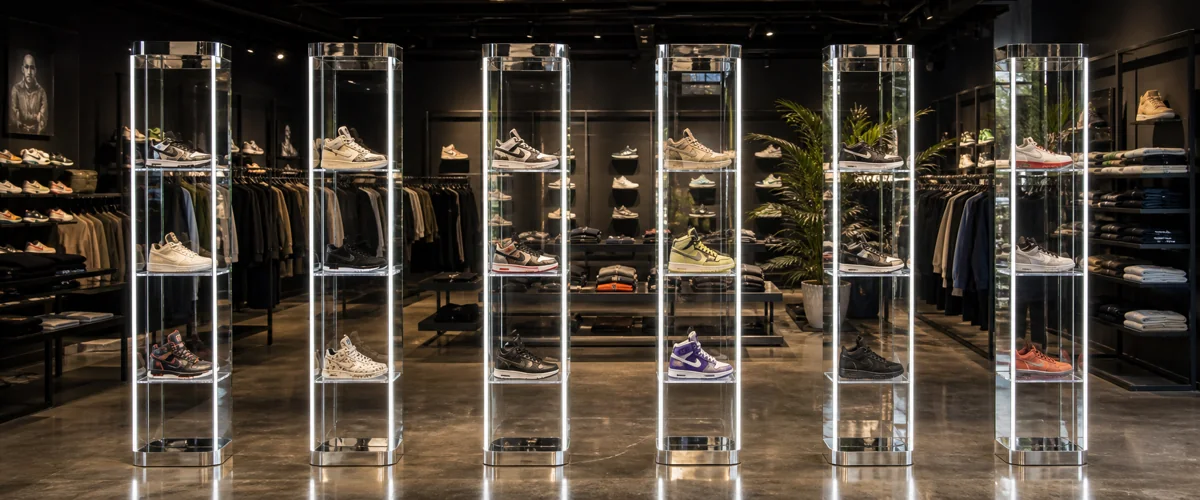
It was also built around the surface sample, cleaning method and packing brief.
MOQ is 100 pieces per design. Paid samples normally take 3–5 days; sample fees are paid separately and never credited. Standard production takes 15–20 days after the drawing, material, surface sample, inspection plan and packing are approved. Wetop responds to a complete brief within 24 hours.
Different-specification price reference: the acrylic display manufacturer page publishes a two-tier countertop stand 250 × 180 × 220 mm, 5 mm clear, one-color UV logo: $28 each at 100 pcs, $16 at 500, $12 at 1,000 (FOB Shenzhen, published reference). That stand is a different specification and is not a mirror-finish sneaker pillar quote; final pricing depends on the released geometry, material, finish, artwork, protection and packing.
Key Takeaways
- We treated mirror finish as a sample-controlled visual specification: the approved physical sample, named sheet, viewing light and cleaning method defined acceptance.
- The buyer supplied the shoe envelope, viewing height, shelf count, base footprint, load case and store constraints before we released the pillar drawing.
- We supplied the non-electrical fabricated acrylic fixture. Powered lighting, wiring, certification and site installation stayed outside this project.
- Our production inspection recorded surface appearance, edge finish, shelf fit, base stability, artwork, protective film and packing against the approved drawing and sample.
- A repeat run reuses the released file only when the buyer confirms that geometry, material, finish, artwork, packing and destination requirements are unchanged.
The Brief
The boutique came to us with the merchandise and the site, not a supplier's standard size. It provided the largest shoe envelope, intended viewing height, number of display levels, available floor footprint, customer access rule, base fixing condition, artwork, cleaning method and destination list, plus photographs and a store plan so we could read sightlines, nearby fixtures and collision risks.
The word “mirror” needed definition before we quoted. The buyer meant a reflective acrylic face with a branded base treatment rather than a mirrored base, a reflective rear panel or a complete reflective shell; those choices create different visual, fabrication, protection and packing requirements. The released drawing named each reflective face, each exposed edge and every surface that had to remain protected until final placement.
This page documents the multi-level freestanding pillar we built with buyer-selected mirror faces and branded base treatment. It does not prescribe a universal shelf count, material thickness, height or load; those values followed the actual shoe, access behavior, base support and approved sample. Wetop's scope was the non-electrical fabricated acrylic fixture; powered lighting, wiring, certification and site installation stayed outside this scope.
What We Recommended
We put two layout options on the same store plan, a single-pair pedestal and a multi-level pillar, so the buyer could compare viewing distance, merchandise density, staff access, customer reach and base footprint before choosing. The buyer selected the multi-level pillar, which kept the decision tied to the retail program instead of treating a taller fixture as automatically better.
For the mirror surface, the buyer approved the named sheet and a production-representative sample under the store's intended lighting. The review covered reflection quality, visible distortion, edge appearance, color of any backing layer, artwork position and the effect of protective film. A screen rendering could not establish those acceptance points.
The base and shelf system followed the approved layout. The freestanding design used a buyer-defined stability test based on the actual fixture, merchandise, access direction and site condition. Any wall fixing or floor anchoring required by the site rules was shown on the drawing and handled by the buyer's qualified installer.
Spec Breakdown
We separated the pillar into controlled zones so the drawing, sample and inspection record shared one language. The shoe-display floating-effect guide covers the adjacent shelf, standoff and spacing decisions; this project added the reflective surface, base and multi-level packing controls.
Base selected around the real site condition
The buyer defined the available footprint, finished floor, cleaning clearance, kick exposure and permitted fixing method. We returned a base drawing that identified the support structure, acrylic cover, artwork, access panels and contact surfaces. The sample review checked level, visible seams, finish and stability under the buyer-approved test method. We built no hidden cable channel because electrical integration stayed outside our scope.
Shelf geometry released from the shoe envelope
We drew each shelf position around the buyer's largest approved shoe and the physical product sample. The buyer confirmed toe and heel clearance, viewing angle, removal path, shelf spacing and customer reach. The drawing named the joint and mechanical support method, and the physical sample confirmed deflection, visible bond lines, edge finish and the way the product sat before bulk production.
Mirror faces approved as a visual system
Material grade, reflective face, backing color, exposed edges, branding and protective film sat on one finish schedule. Because the fixture stood near powered lighting supplied by others, the buyer approved the surface under that light during sample review. Wetop supplied no LED light box, wiring or electrical certification as part of this project.
The completed release file included the dimensioned drawing, material schedule, finish sample, artwork revision, product envelope, stability test, inspection points, protective-film rule and packing diagram. That file became the shared reference for production and any unchanged repeat run.
Production and Mirror QC
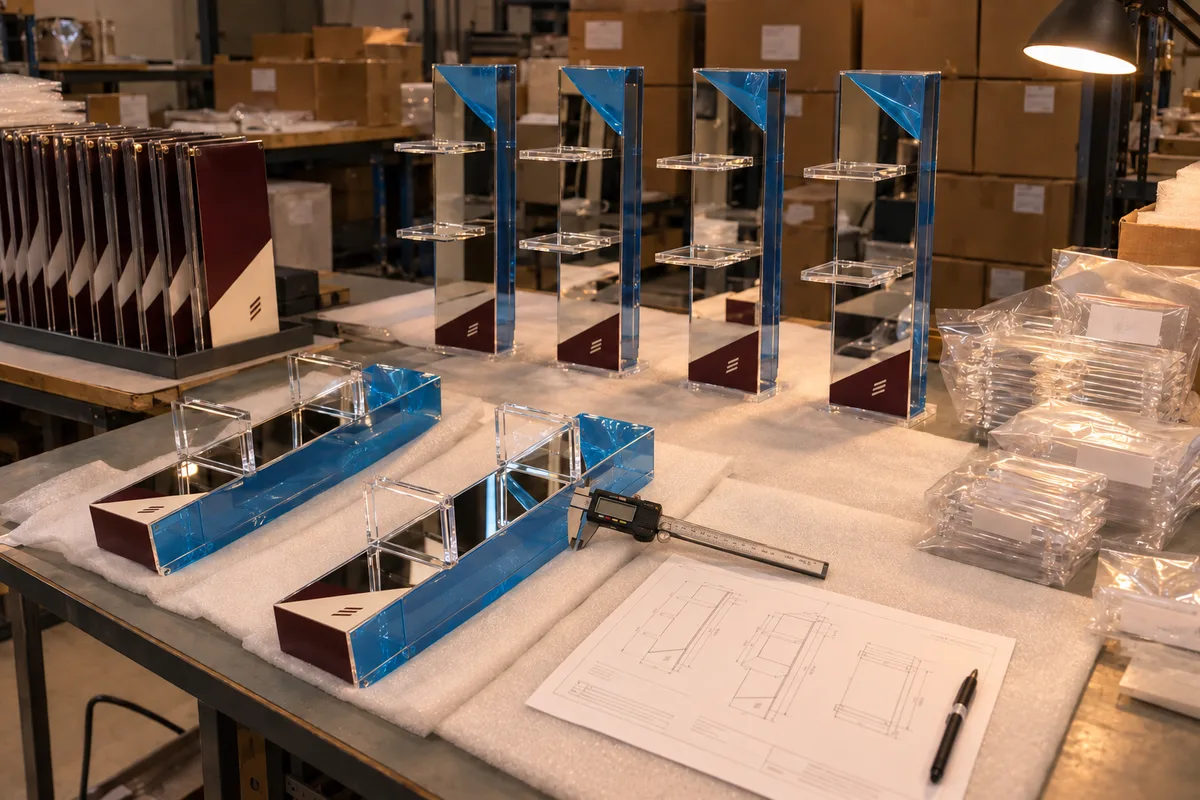
We kept the reflective faces protected through cutting, fabrication, inspection and packing. The inspection plan identified which surfaces were viewed under buyer-approved lighting, the viewing distance, the allowable appearance criteria and the handling method. Those were project inputs, not universal mirror-quality thresholds.
First-off inspection checked overall geometry, shelf position, base level, joints, visible edges, finish, artwork and protective film against the approved drawing and sample. Production inspection repeated the buyer-approved sampling method and recorded any rework before packing. When a finish batch changed, the buyer decided whether a new swatch or sample approval was required.
Packing kept reflective panels, shelves, bases and hardware from rubbing against one another. The released packing diagram named protective film, sleeves, foam contact zones, cartons, accessories and assembly instructions. Destination labels distinguished each design and store allocation without relying on workers to infer contents from carton size.
Install and Field Review
Before we released production, the buyer defined who received, assembled, fixed and signed off each unit, including site responsibilities, local requirements and any installer qualifications.
Where the retailer measured commercial impact, it set its own baseline, test stores, comparison window and metrics before deployment. Product interaction, sell-through and revenue can be affected by merchandise, stock, staff behavior, promotion and location. We supplied the approved fixture and its manufacturing records, not a guaranteed retail result.
The receiving record checked carton identity, protective film, visible damage, component count, assembly fit and fixture stability. Any discrepancy referenced the design, revision, carton and photographs so the buyer and factory could separate production, packing, freight and site-handling issues.
Approve the shoe envelope, store sightline, base condition, shelf layout and mirror sample before bulk. Keep sales outcomes outside the manufacturing claim.
Lessons and Revision Control
The first lesson is to define “mirror finish” in a way that can be inspected. Name the sheet, reflective face, backing, lighting, viewing method and approved sample. A generic request for a premium reflection is not a production acceptance standard.
The second lesson is to separate format approval from finish approval. A pillar can pass its appearance review and still fail the buyer's shelf-access or stability test. A finish sample can also pass while the full-size geometry needs revision. Keeping those gates distinct makes corrective decisions traceable.
For future artwork or merchandise changes, compare the new brief with the released file. Unchanged geometry and material may support a repeat quote, but a new shoe envelope, shelf count, base condition, finish, artwork, packing method or destination requirement can reopen drawing and sample approval. The quote should state which files and setup items are reused.
Planning a sneaker display acrylic rollout?
Send the approved footprint, pillar height, shoe positions, mirror reference and packing constraints. We will review the brief and respond within 24 hours.
Paid sample in 3–5 days, separately paid and never credited · Production in 15–20 days after approval · MOQ 100 pieces per design