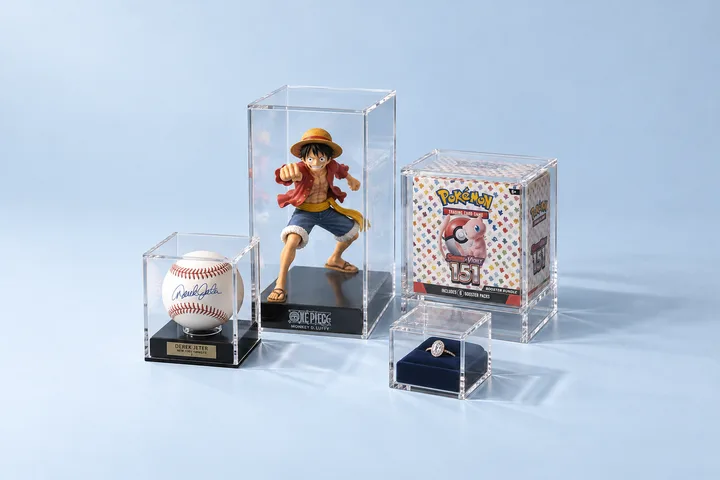
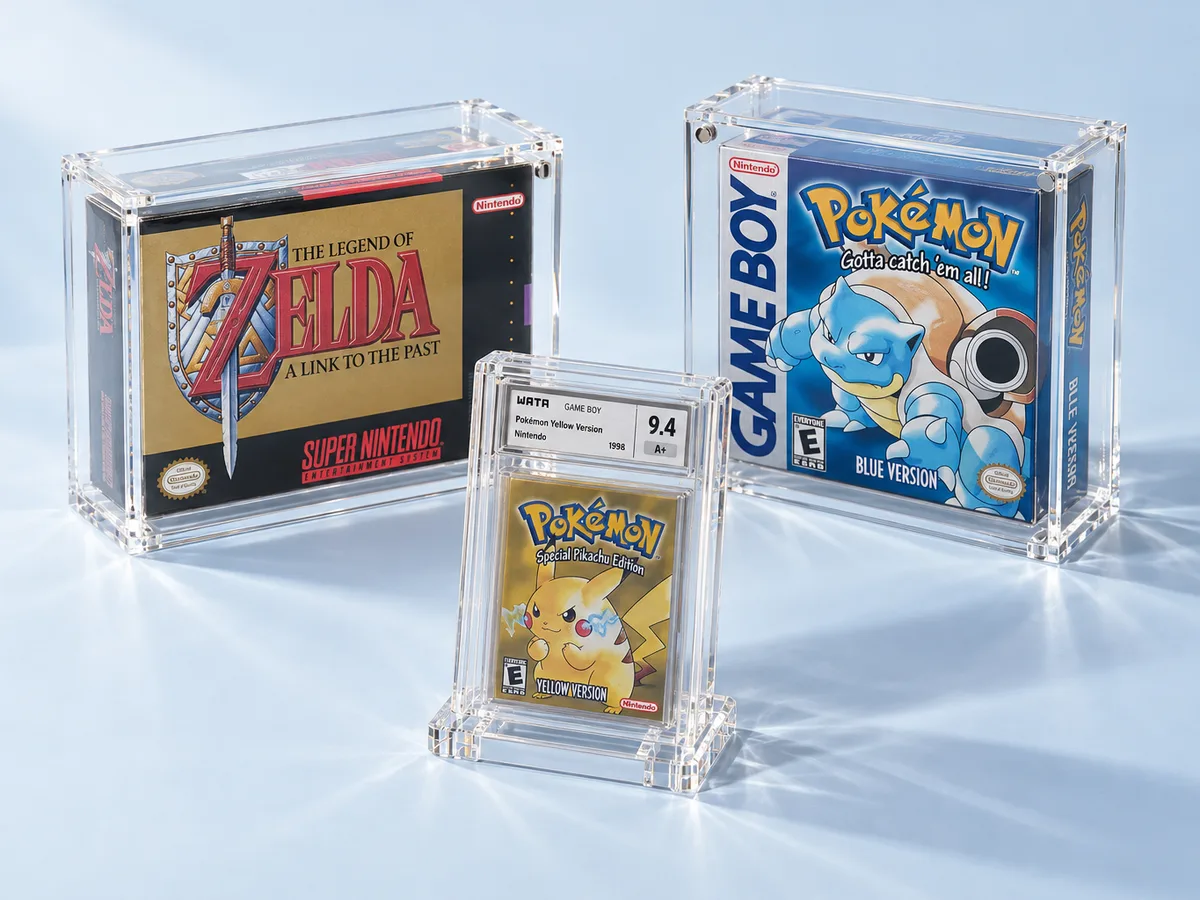
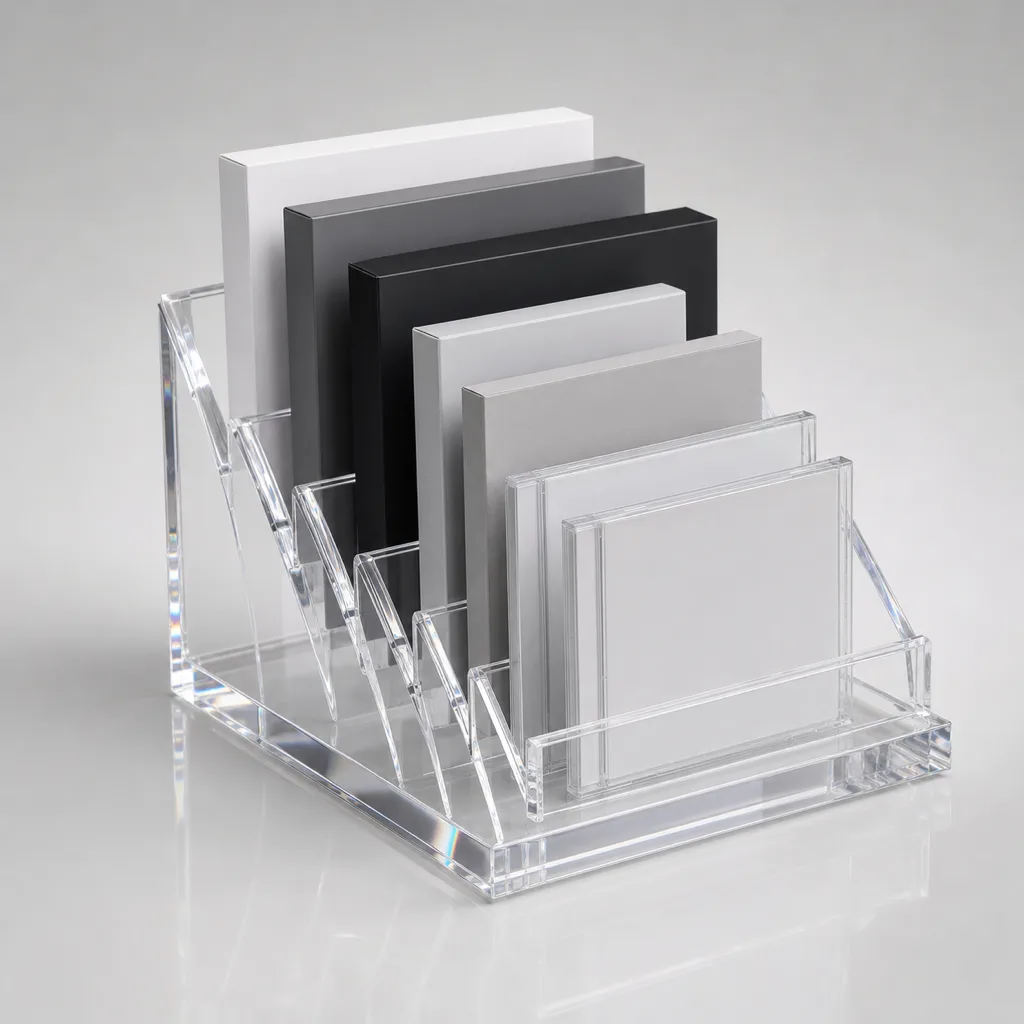
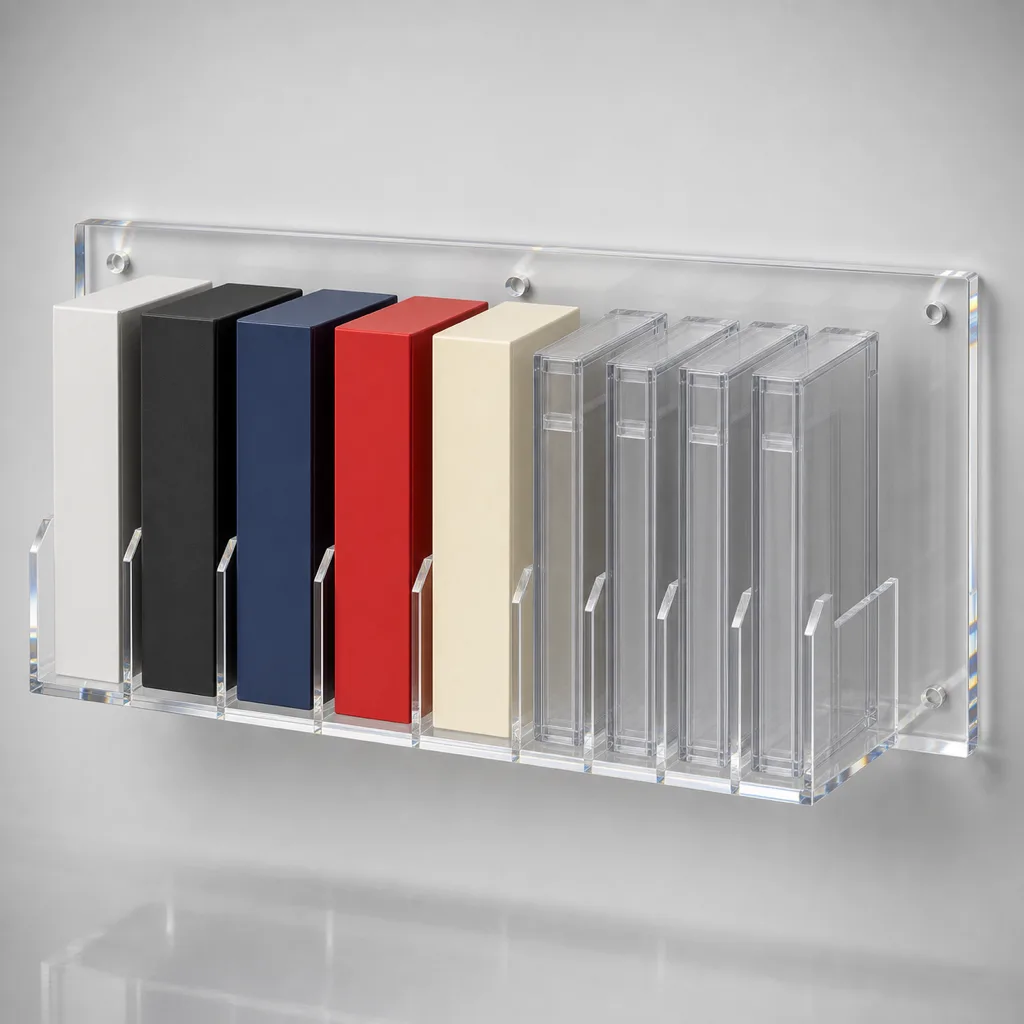
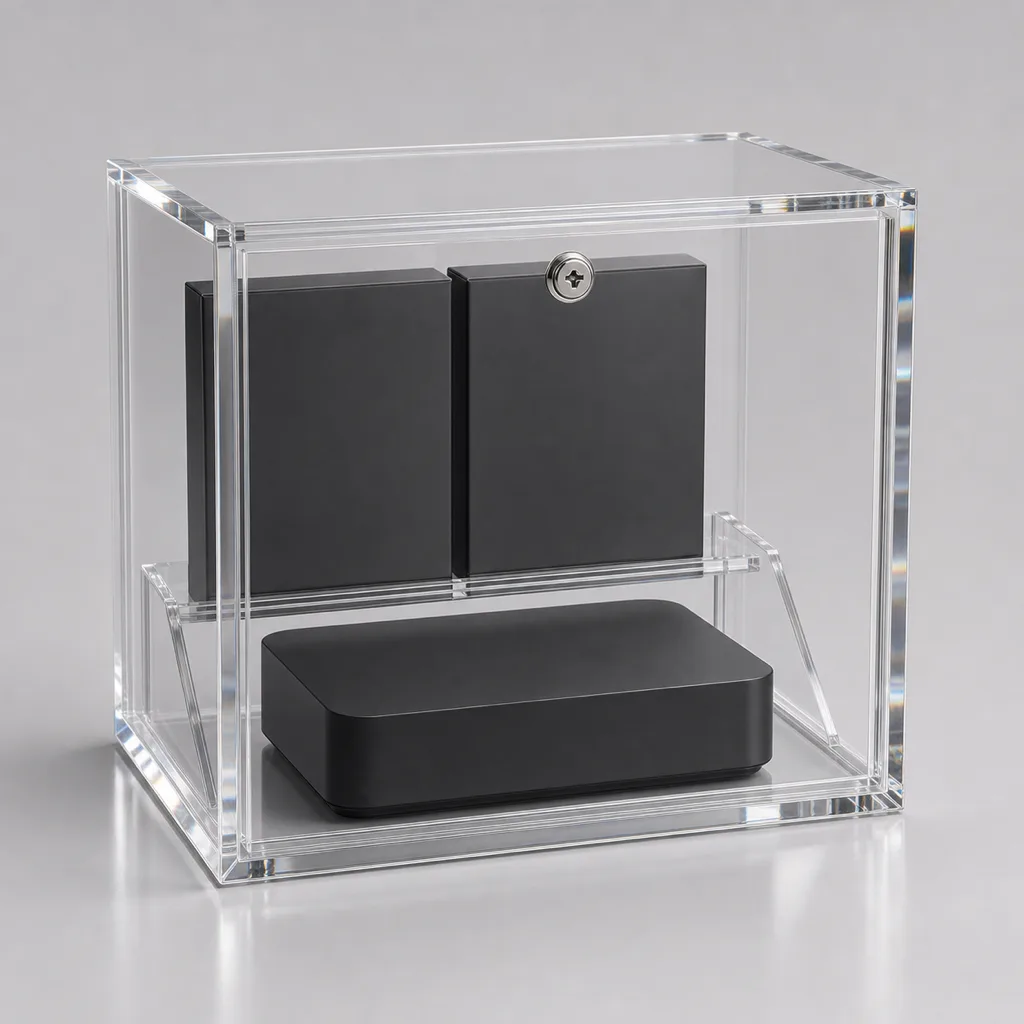
Studio lineup of clear acrylic video game display cases — a sealed graded-game case, a retro cartridge block, and a wall-mount game panel, each holding boxed and graded games

Video Game Display Cases

Sealed & graded games (WATA/VGA), consoles, and retro cartridges — built to your exact profile. Not off-the-shelf.

A video game display case is a clear acrylic holder built to the exact dimensions of a sealed or graded game, a console, or a retro cartridge — so the piece sits snug, the box art stays fully visible, and the game is protected from dust and handling. Wetop Acrylic manufactures these custom game cases as sealed and graded-game shells, console enclosures, cartridge blocks, disc and CIB displays, wall-mount game walls, and lockable counter cases. WATA and VGA graded holder profiles, NES to PS5 box sizes, retro cartridge systems, UV-filtering acrylic, felt-lined bases, magnetic, lift-off, or sliding covers, and laser-engraved or UV-printed branding. MOQ 50 pieces.

ISO 9001 Certified UV-Stabilized Option Cut to Your Game Profile Samples in 3–5 Days

Find Your Game Case Format

A video game display case comes in six core formats: a sealed and graded-game case for WATA/VGA graded and pristine sealed games, console display cases for current-gen and retro hardware, cartridge display blocks for retro carts, disc and CIB displays for disc-era and complete-in-box games, wall-mount game walls for a gallery wall, and lockable counter cases for high-value sealed games and consoles on an open counter. Every format is cut to your exact profile — graded holder, box size, cartridge system, or console model — with UV-filtering acrylic available on all of them.

What Is a Video Game Display Case?

A video game display case is a clear acrylic enclosure cut to the exact dimensions of a sealed or graded game, a console, or a retro cartridge — so the piece sits snug enough that it can't rattle or fall, keeps its box art fully visible, and is shielded from dust and handling. WATA and VGA are the two main video-game grading services, and their sealed-game holders differ by console and grader, so a custom case is sized to one profile rather than a generic "fits most" holder that leaves the game loose.

Sealed Games, Consoles & Cartridges — Dimensions Reference

A video game display case has to be cut for a specific profile, because graded holders, boxed games, cartridges, and consoles all differ in size. WATA and VGA graded shells add roughly 10-15mm over the game box and vary by console; modern game boxes run about 15mm deep; retro NES and SNES boxes are taller and deeper; cartridges differ by system; and a console needs a full enclosure, not a slot. The table below is our working reference for slot sizing — we confirm exact dimensions against your actual piece during sample production.

Dimensions are approximate, widely-published industry figures for current graded holders, boxes, cartridges, and consoles as of 2026. Sizes shift with console generations and variant issues — send us one piece and we measure it directly before cutting.

Item Approx. Size Case Slot (with ~1mm clearance) Notes
WATA / VGA graded sealed game shell adds ~10-15mm over the box holder OD + ~1mm Size varies by console and grader — two main graded services
PS5 / modern game box ~170 × 135 × 15mm ~16mm slot × +1mm L/W Standard modern game-case footprint
NES boxed game ~133 × 184 × 22mm ~23mm slot × +1mm L/W Tall retro box — 3mm acrylic is fine
SNES boxed game ~135 × 191 × 27mm ~28mm slot × +1mm L/W Deeper than NES — confirm at sampling
Retro cartridge (NES / SNES / N64 / GB) NES ~120×133×18 · SNES ~84×134×20 · N64 ~78×115×20 · GB ~57×65×8mm cartridge + ~1mm each side Cut a profile-specific slot per system
DVD / Blu-Ray / CIB game case ~135 × 170 × 14mm ~15mm slot × +1mm L/W Disc-era and complete-in-box sets
Console (modern) ~390 × 104 × 260mm full enclosure, not a slot The one format that needs an enclosure — heavy, wide base, 5-8mm acrylic

Approximate values for standard graded holders, boxes, cartridges, and consoles. Oversized and variant holders differ. Confirmed during sample production before bulk.

Why One Case Can't Universally Fit All Games

Cross-section comparing a graded sealed game, a boxed retro game, and a retro cartridge seated in acrylic display-case recesses. Side and top cross-section showing a graded sealed game in a rigid holder seated snug in an acrylic slot with about 1mm clearance, next to a boxed retro game whose taller, deeper footprint will not seat perfectly in the graded-holder-sized slot, and a retro cartridge seated in a narrow recess sized to its outer profile. The conclusion shown is that each video game display case must be cut for one profile — a graded holder, a specific box size, or a specific cartridge system. Game-to-slot fit: graded holder vs boxed game vs cartridge Each case is cut for one profile — a few millimeters is the whole reason. Graded game in graded-holder slot graded shell (box + ~10-15mm) slot = holder OD (≈1 mm clearance) Seats snug — box art photographs straight. Boxed retro game → graded slot: off-profile slot sized for graded holder SNES box ~135×191×27mm — deeper & taller Different footprint — won't seat flush. Cartridge in profile-cut slot slot = cartridge + ~1mm each side NES · SNES · N64 · GB each differ One slot profile per cartridge system. Graded shell adds ~10-15mm over the box · SNES box ≈ 135×191×27mm · NES cart ≈ 120×133×18mm — widely-published figures, confirmed per piece at sampling.
One case, one profile. The few-millimeter (and few-centimeter) difference between a graded holder, a boxed retro game, and each cartridge system is why a "fits everything" game case doesn't exist — we cut the recess to the piece you actually display.

Material, UV Protection & Finishing

A video game display case is built from cast acrylic — UV-filtering or standard clear — in 3mm for cartridge blocks and single boxed games and 5–8mm for console enclosures, wall-mount panels, and lockable cases that carry weight. Edges are diamond- or flame-polished to a glass-clear finish, recesses can be felt- or velvet-lined, and the cover can be magnetic, lift-off, or sliding. The right combination depends on the game or console value, the display environment, and how often the piece is handled. For a sealed game near a window, UV-filtering is the one spec that protects the box art.

UV & Box-Art Fade — What Actually Matters

Lead with this, because it's the whole game: for a sealed or graded game, the value is the pristine box art and the intact shrink-wrap. UV light is what fades printed box art and yellows plastic over time — put a four-figure sealed game under a storefront window in standard clear acrylic and you're slowly cooking the thing that carries its value. Standard clear acrylic transmits roughly 55% of UV; UV-stabilized cast PMMA blocks about 90-98% while staying optically clear. Wetop sources from both Mitsubishi Shinkolite (premium tier, ≥98% block) and certified domestic Chinese cast UV-grade (≥90% block, cost-optimized) — assigned per project against your spec, all sheets carrying the supplier's published certifications. UV-filtering adds about 15-25% to material cost — low-cost insurance against fading a game you can't replace.

Thickness Guidance

3mm acrylic is fine for cartridge blocks and single boxed games — stable, clear, cost-efficient at volume. Step up to 5-8mm for console enclosures, wall-mount game panels, and lockable cases that carry weight, where panel rigidity matters. A console is heavy; drop a modern console into a thin-walled enclosure and it flexes. Heavier gauge keeps the enclosure square and the base stable. We confirm the right gauge during sample approval against your format and the weight it holds.

Edge Finishing

Cut edges are diamond-polished (machined optically flat — the premium standard for display) or flame-polished (heat-glossed — a clean, cost-effective finish). Either way the edge reads as glass, not as a frosted saw cut, with a crisp chamfer that catches the light. For console enclosures and lockable cases we offer 45° mitered corners that hide the joint line entirely.

Felt-Lined Bases & Covers

The recess a game, cartridge, or console sits in can be lined with charcoal or navy felt or velvet — it cushions the piece, kills any micro-rattle, and frames the box art against a matte backdrop that makes it pop. Covers come three ways: magnetic (flush N52 magnets, no visible hardware), lift-off (simplest, sits in a shallow alignment groove), or sliding (a panel running in a milled side track, dust-tight when closed).

Macro detail of the felt-lined base of a clear acrylic video game display case — a boxed game seated in a dark velvet-lined recess with glossy acrylic walls and a chamfered edge
A felt- or velvet-lined recess cushions the game or console, kills micro-rattle in transit, and frames the box art against a matte backdrop — paired here with diamond-polished, chamfered acrylic walls.

Branding

Game Case Formats — In Detail

The six video game display case formats map to how the games get displayed: one sealed or graded game with the box art forward (sealed/graded case), a console on a stand or in an enclosure (console case), retro carts lined up (cartridge block), disc and complete-in-box games in a row (disc/CIB display), a game gallery on the wall (wall-mount game wall), and high-value sealed games and consoles that need to lock (lockable case). All are cut to your profile; all can be UV-filtering; all can be branded.

Side cross-section of an angled sealed-game acrylic display shell on a stand. Side-profile cross-section of a clear acrylic sealed-game display stand: a solid cast-PMMA base block resting on a counter, with a milled channel cut into the top of the block that grips one graded sealed game at roughly a 12-degree backward lean so the box art stays visible. A thin felt or velvet liner on the channel floor cushions the game's bottom edge and stops micro-rattle, and the front bottom edge of the base is finished with a 45-degree chamfer. The channel width is cut to one profile — the graded holder or box thickness plus about 1 millimetre of clearance. Sealed-game stand — side cross-section Channel cut to one profile · felt liner does the cushioning · front edge chamfered. cast-acrylic base block 3mm gauge for single boxed games 45° chamfered front edge reads as glass, not a saw cut felt / velvet liner cushions the game edge · kills micro-rattle milled channel cut to one profile — width = holder thickness + ~1mm graded shell / boxed game ≈12° backward lean game tips back — box art stays visible
An angled sealed-game stand in cross-section: the channel is cut to one holder profile, a felt liner cushions the bottom edge, the game leans back about 12° so the box art stays visible, and the front edge is chamfered to a glass-clear finish. The cartridge-block, disc/CIB, wall-mount, and lockable formats below build on the same channel-and-liner principle — consoles use a full enclosure instead of a channel.

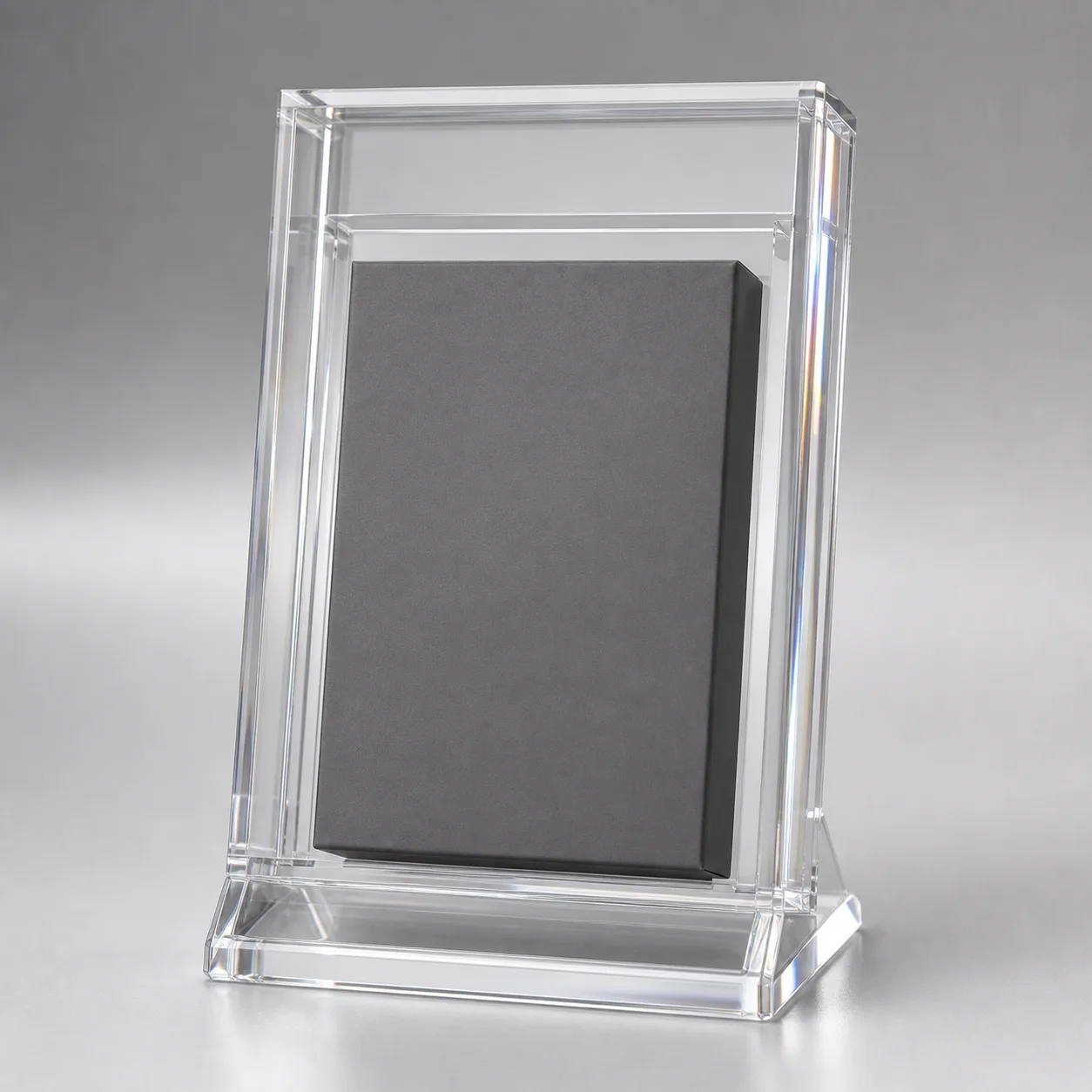
Sealed & Graded Game Case

A clear acrylic shell built to the exact profile of a WATA or VGA graded sealed game, or a pristine sealed boxed game — so the box art stays fully visible and the shrink-wrap stays protected from dust and handling. UV-filtering strongly recommended, because the box art is the value. Magnetic lid optional.

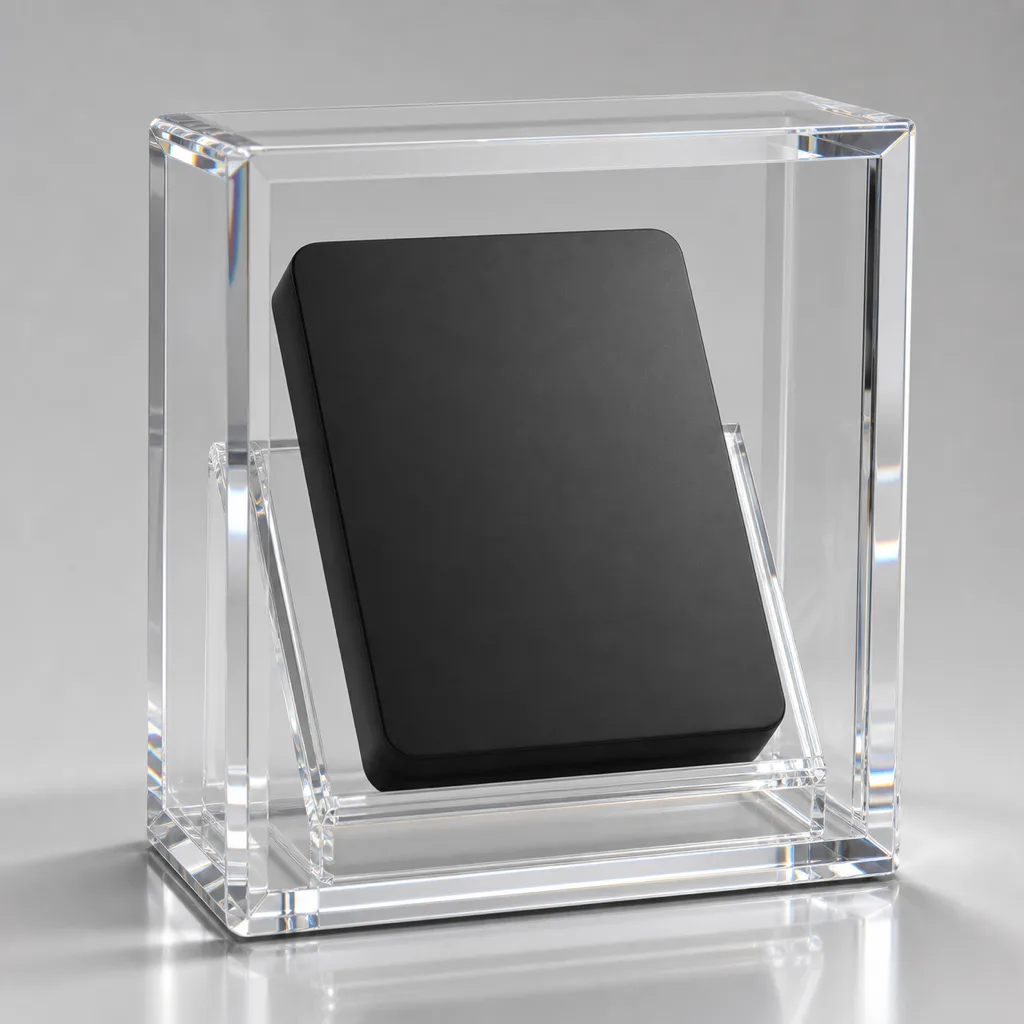
Console Display Case

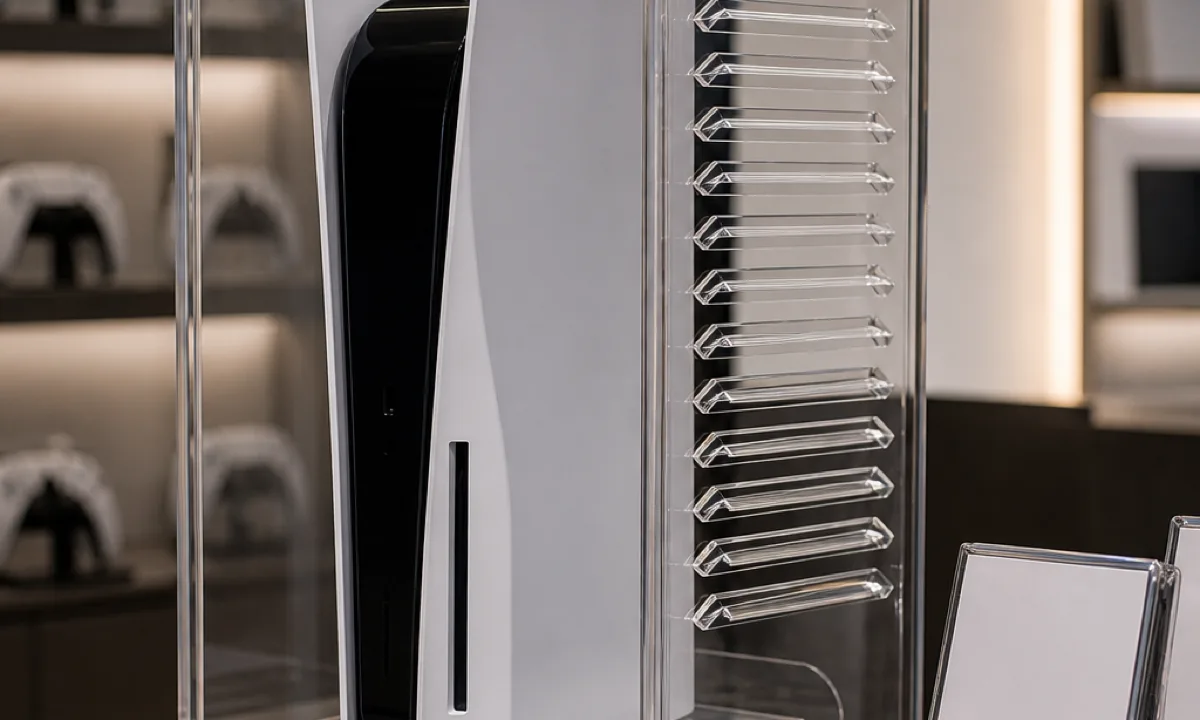
An enclosure or angled stand sized to a console — current-gen or retro. Consoles are the one format that needs a full enclosure rather than a slot, and they're heavy, so we use 5-8mm acrylic and a wide, stable base. Lift-off or sliding cover for dust protection; a lockable version is available for high-value hardware.

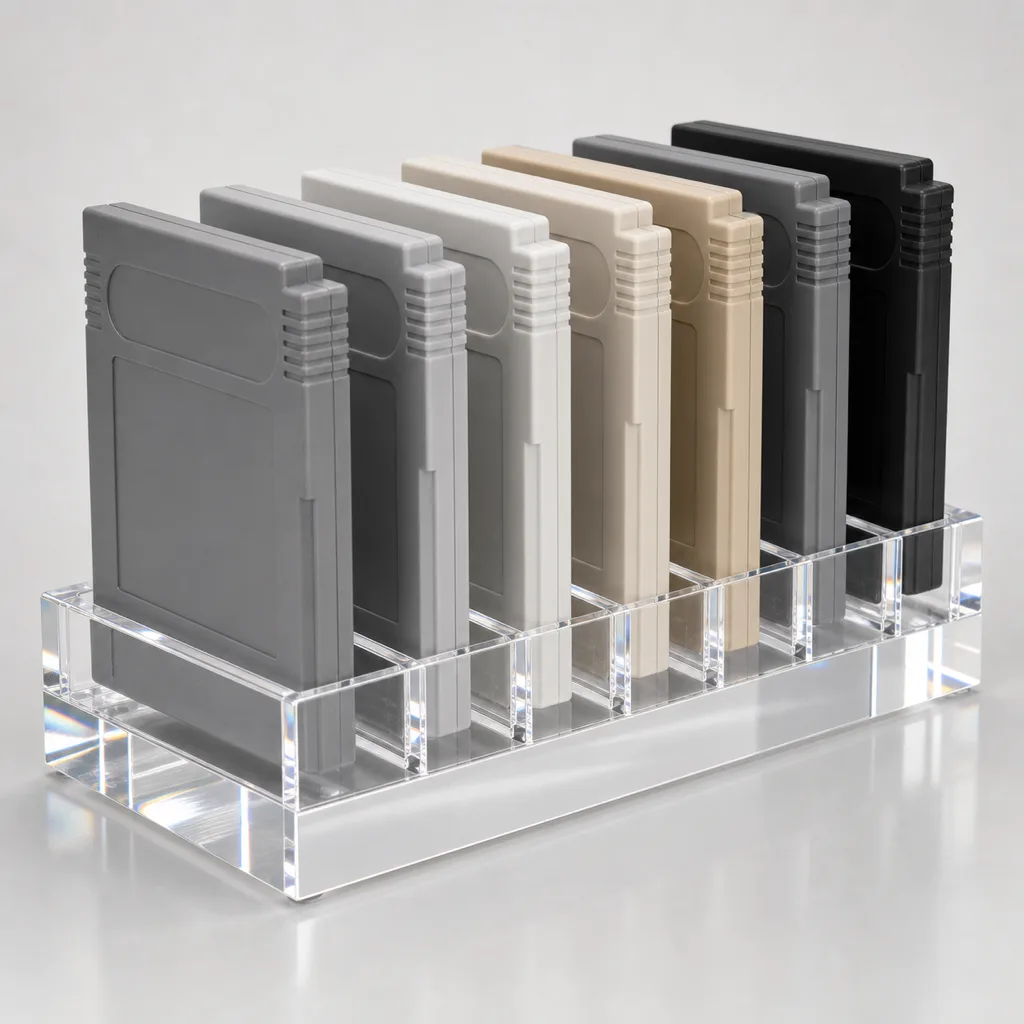
Cartridge Display Block

Multi-slot blocks for retro cartridges — NES, SNES, N64, Game Boy — with each slot precision-cut to one system's profile so the cartridges sit level and don't shift. 3mm acrylic is standard. Felt-lined recess optional; mixed systems supported side by side in one block.

Disc & CIB Game Display

Upright slots for disc-based games (DVD/Blu-Ray cases) and complete-in-box (CIB) sets — clean rows for a shop counter or a shelf. Each slot cut to the case profile so games sit flush and swap out one-handed. Felt-lined recess and UV-filtering optional.

Wall-Mount Game Wall

Vertical-slot panels that turn wall space into a game gallery — concealed standoff or keyhole mounting, individual slots so a boxed or graded game can be swapped without unmounting the panel. UV-filtering recommended for storefront-window placement, where box-art fade is the risk.

Lockable Game & Console Case

An enclosed acrylic case with an internal tier for several games or a console and a flush cam or barrel lock — for high-value sealed/graded games and consoles on an open counter where the case has to deter a grab. 5-8mm acrylic for rigidity under weight.

Need cases for graded trading cards — PSA, BGS, or SGC slabs — too? See our graded card display cases — we quote game and card formats together on one order.

Who Buys These Cases From Us

Wetop manufactures video game display cases for B2B buyers — game retailers and retro shops, graded and sealed-game sellers (WATA/VGA), console and hardware dealers, auction houses presenting consignment lots, and protection and accessory brands putting their own logo on the case. Collector clubs organizing a 50+ group buy are quotable too. MOQ is 50 pieces per design. Branded engraving, UV-printed logos, and custom retail packaging are available on any format.

Game Retailers & Retro Shops

Sell display cases alongside the games and hardware they stock, and use them to merchandise a piece at the counter. Volume runs 200-5,000 units. UV-filtering, felt base, and laser-engraved shop branding are standard requests.

Collectors (via Group Buys)

Our MOQ is 50 pieces, a B2B minimum, so a single case for one personal game isn't something we run. A collector club or forum organizing a 50+ group buy of identical cases, though, is something we can quote.

Graded & Sealed-Game Sellers (WATA/VGA)

Present WATA and VGA graded sealed games in shells cut to the graded holder profile, with UV-stabilized acrylic to protect the box art that carries the value. Mixed profiles side by side, laser-engraved branding, custom retail boxes — all produced in the same run.

Console & Hardware Dealers

Display current-gen and retro consoles in enclosures sized to the hardware — heavier-gauge acrylic for the weight, felt-lined bases to protect the finish, and lockable formats for high-value hardware on an open counter.

Auction Houses & Game-Convention Exhibitors

Present consignment lots and feature games in a clean, swappable display — wall-mount game walls and multi-slot blocks that set up fast at a convention booth and read well in catalog photography.

Protection & Accessory Brands (OEM)

Order them under their own brand — their logo, their packaging, their slot spec — to round out a game-protection product line. We build to the brand's drawings; the brand owns the design.

Send Us Your Idea

Game & Console Cases We've Built

Representative game case projects — formats, specs, and lead times from our Shenzhen factory.

Retro Cartridge Display Block (6-slot) — custom video game acrylic display case project

Retro Cartridge Display Block (6-slot)

500 units · 3mm clear acrylic · 6-slot SNES/N64 block · Felt-lined recess · Diamond polished

US game retailer · Delivered in 14 days

Console Stand + Boxed Game Display — custom video game acrylic display case project

Console Stand + Boxed Game Display

1,000 units · 6mm acrylic · Angled console stand · Boxed-game slot · Laser-engraved shop logo

Retro game shop, US · Delivered in 16 days

Wall-Mount Graded-Game Gallery (WATA/VGA) — custom video game acrylic display case project

Wall-Mount Graded-Game Gallery (WATA/VGA)

300 units · 5mm UV-filtering acrylic · Vertical graded-holder slots · Concealed standoff mounts

Sealed-game seller, US · Delivered in 18 days

Lockable Console & Game Counter Case — custom video game acrylic display case project

Lockable Console & Game Counter Case

200 units · 6mm acrylic · Cam lock · Internal tier · Mixed console + sealed games · Custom retail boxes

Console dealer, US · Delivered in 20 days

We sent Wetop one WATA graded game and one loose SNES cartridge and asked for a block that holds both side by side. The sample fit cleanly the first time, and three reorders later the slot tolerance hasn't drifted a hair.

— Retro Game Shop Owner, US

Have a similar game or console case project?

Send Us Your Idea

What Game Case Buyers Say

We needed a counter block that held graded and loose SNES cartridges in the same run — different slot widths side by side. Wetop built it so both seat without rattling. The tolerance is tight enough that the cartridge doesn't shift but loose enough to slide in one-handed.

— Retro Game Shop Owner, US West Coast, 150-unit run

Our consoles kept getting knocked around on the old shelf. Wetop cut angled enclosures sized to our hardware with a felt-lined base, and now the counter display stays put. The heavier acrylic holds a full console without any flex.

— Console Dealer, US Midwest, 300-unit run

We ordered UV-stabilized shells for WATA sealed games on permanent display near a storefront window. Wetop sourced Shinkolite-class material for the run, and we verified the UV block against our own spec before approving. Clarity is excellent and the box art reads beautifully.

— Sealed-Game Seller, US East Coast, 100-unit run

We sell branded game stands with our shop logo laser-engraved on the base. The engraving is crisp and consistent across 500 units, no variation in depth or positioning. Our customers treat them as part of the display, not just packaging.

— Game Collector, Canada, 500-unit run

What Affects the Price?

Video game display case pricing depends on five factors: slot count and case format, acrylic thickness, UV-filtering acrylic, finishing and branding, and order quantity. A 3mm clear cartridge block costs a fraction of a 6mm UV-filtering console enclosure with felt-lined base, mitered corners, and a laser-engraved logo. We quote the variables, never a flat price — and we present the cost breakdown so you can choose what to spec up.

Slot Count & Format

A single sealed-game case is the entry point. Multi-slot cartridge blocks, wall-mount panels, console enclosures, and lockable cases use more material and more machining — the more slots and the more complex the case, the higher the unit cost.

Acrylic Thickness

3mm is the budget gauge for cartridge blocks and single boxed games. 5-8mm is standard for console enclosures, wall panels, and lockable cases — heavier material, higher cost, but necessary for the weight of a console.

UV-Filtering Acrylic

Adds about 15-25% over standard clear, and blocks 90%+ of UV. For sealed and graded games displayed near windows or bright lighting, the UV premium protects the box art that carries the value. Available on any format.

Finishing & Branding

Felt-lined slots, 45° mitered corners, magnetic lids, locks, laser engraving, UV-printed logos, and custom retail boxes each add per-unit cost — and each adds resale or merchandising value.

Order Quantity

Unit cost drops significantly above 200 pieces. Most game case buyers order 200-5,000 units per design — the band where per-unit setup and tooling cost spreads thin.

For general display case pricing factors, see the Acrylic Cases hub page.

Send Us Your Idea we respond within 24 hours

How to Order

From your first message to delivered game cases — 3 steps.

1

Send Your Game Spec

Tell us the format (sealed/graded case, console enclosure, cartridge block, disc/CIB display, wall-mount, lockable), the graded holder profile (WATA/VGA), the console model, or the cartridge system, quantity, and preferences — UV-filtering acrylic, felt base, lid type, branding. Or mail us one sealed game, console, or cartridge and we measure it directly.

We respond within 24 hours
2

Approve a Sample

We cut a production sample and test the fit against the actual sealed game, console, or cartridge. What you approve is what we produce — same acrylic, same slot tolerance, same finish. Sample cost is credited to your first order.

Sample ready in 3–5 days
3

Receive Your Order

Every case passes 100% inspection against your approved sample. Retail packaging (if ordered) ships with the cases. FOB Shenzhen; CIF and DDP available.

Production in 15–20 days

Frequently Asked Questions

Can one case fit both WATA and VGA graded games?

Not the same slot every time. WATA and VGA both encapsulate a sealed game in a rigid graded holder, but the two differ by a few millimeters, and the holder size also changes with the console — a graded NES game and a graded PS5 game are very different footprints. A slot cut to grip one profile grips a different one loosely, so we build each case to one holder profile, confirmed against a sample before bulk. If you display more than one, we cut profile-specific slots side by side in one multi-slot block, or run separate single-profile designs on one purchase order. MOQ is 50 pieces per design.

Do these cases protect box art from fading and yellowing?

This is where the value sits, so let's be honest about it. For a sealed or graded game, the whole value is the pristine box art and the intact shrink-wrap — and UV light is what fades printed box art and yellows plastic over time. A clear acrylic case adds dust protection, physical protection against knocks and handling, and security. What it does NOT add on its own is fade protection, unless you order UV-stabilized acrylic. Standard clear acrylic transmits roughly 55% of UV; our UV-stabilized cast PMMA blocks about 90-98% while staying optically clear. Wetop sources from both Mitsubishi Shinkolite (premium tier) and certified domestic Chinese cast UV-grade, assigned per project against your spec. UV-filtering acrylic adds about 15-25% to material cost — low-cost insurance against fading a four-figure sealed game.

What's the minimum order, and who do you work with?

Our MOQ is 50 pieces per design. That's a B2B minimum — we work with game retailers and retro shops, graded and sealed-game sellers, console and hardware dealers, auction houses and game-convention exhibitors, and protection and accessory brands putting their own logo on the case. Orders typically run 50-5,000 units per design. A collector group organizing a 50+ buy of identical cases is quotable too. Mixed designs across one purchase order are fine, as long as each unique slot configuration hits 50 pieces.

What acrylic thickness do you recommend for a game or console case?

For cartridge blocks and single boxed games, 3mm acrylic is plenty — stable, clear, cost-efficient at volume. Step up to 5-8mm for console enclosures, wall-mount game panels, and lockable cases that carry weight, where panel rigidity matters. A console is heavy — a modern console dropped into a thin-walled enclosure will flex it — so consoles get the heavier gauge and a wide, stable base. We confirm the right thickness during sample approval against your format and the weight of what it holds.

Can you match my sealed game, console, or cartridge if I send one, and brand the case?

Yes to both. Mail us one graded sealed game, one console, or one retro cartridge, and we measure it directly, cut a sample slot or enclosure, and test the fit before production. For branding, we laser-engrave logos and shop names into the acrylic for a clean frosted-white mark, or UV-print full-color logos on a panel or base. Custom printed retail packaging is also available, produced alongside the cases in the same order and shipment.

Can you do consoles, sealed games, and cartridges in one production run?

Yes. Many buyers order console enclosures, sealed-game cases, and cartridge blocks on one purchase order, one production run, one shipment. Tell us the console models, the graded holder profiles (WATA/VGA), and the cartridge types you need — NES, SNES, N64, Game Boy — and we quote the whole set together. MOQ is 50 pieces per format.

Have a Game or Console Case Design? Let's Quote It.

Send us the format, the graded holder profile (WATA/VGA), the console model, or the cartridge system, plus quantity and preferences — UV-filtering acrylic, felt base, lid type, branding. Or mail us one sealed game, console, or cartridge and we measure it directly. We respond within 24 hours with a detailed quote. No commitment required. Sample before you commit to production.