Delivered Project · Gift Boxes · Boutique D2C
Custom Acrylic Gift Box Program
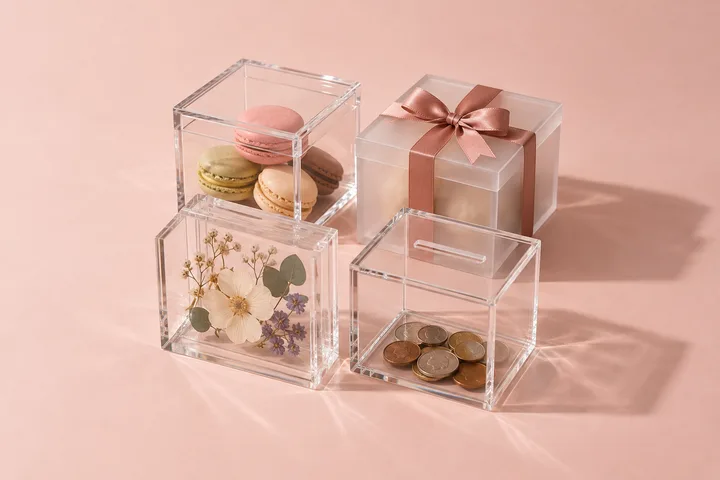
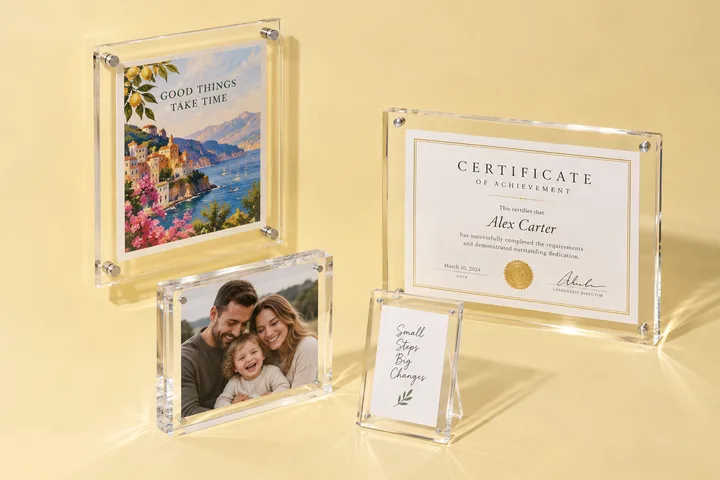
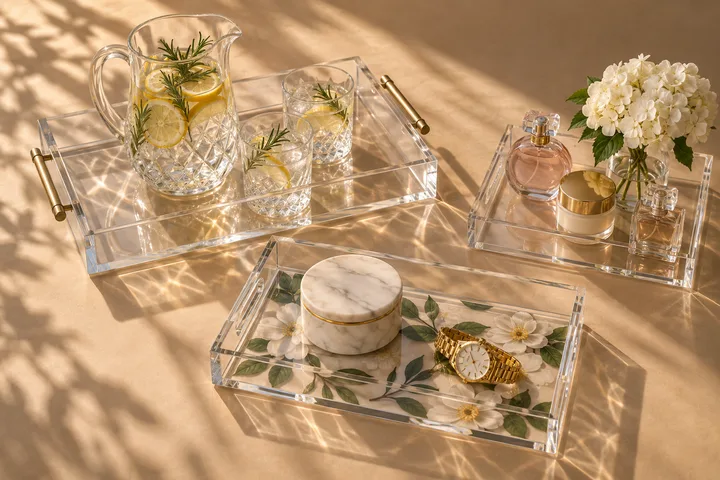
A boutique direct-to-consumer gift brand needed several acrylic box formats that read as one family, with magnetic lids, inserts, ribbon paths and brand printing.
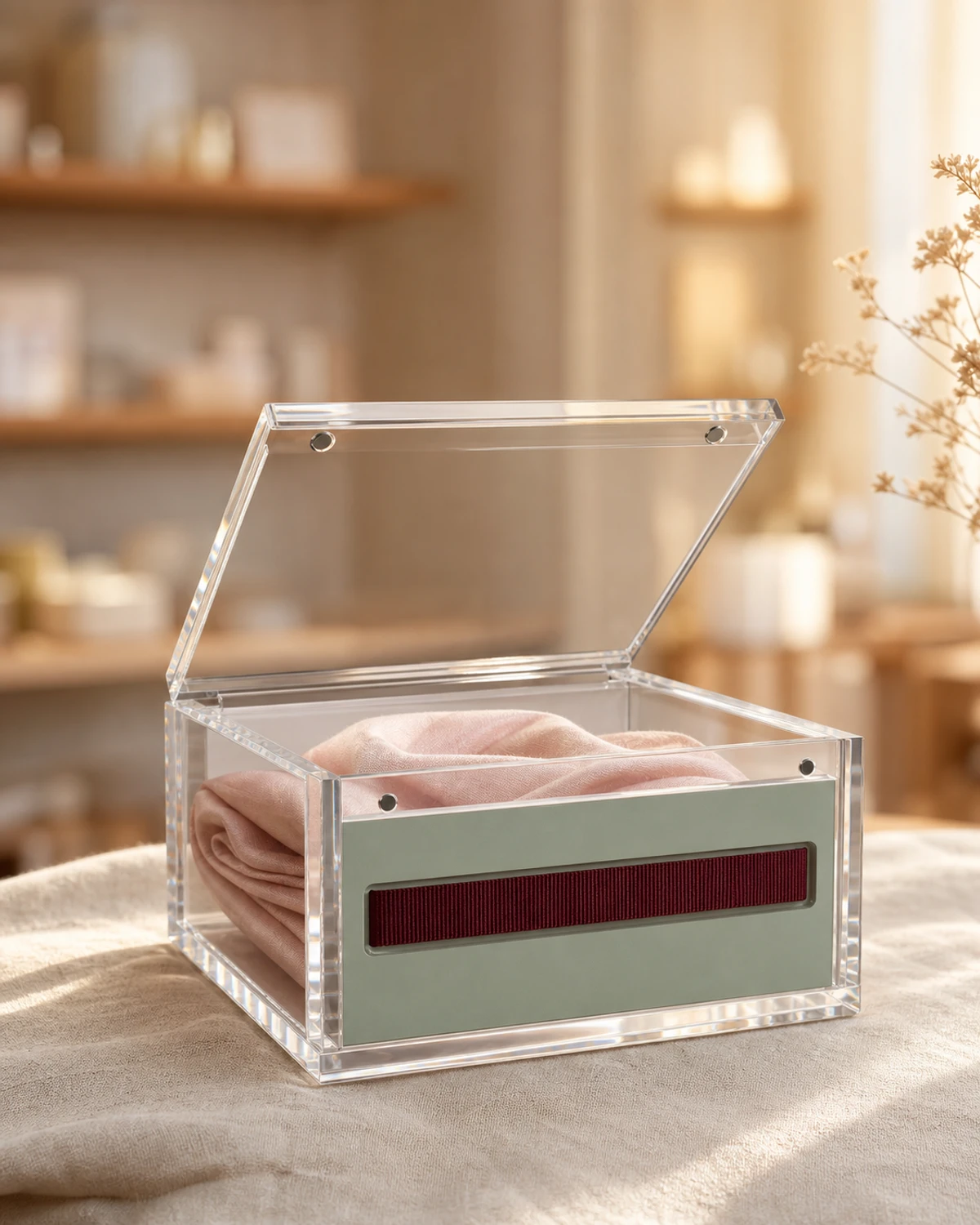
Delivered: a multi-format gift-box family made to released drawings, physical samples, artwork versions and packing records. We approved each format on a paid sample and released it to production.
Ordering a similar project
MOQ is 100 pieces per design. Paid samples normally take 3–5 days; sample fees are paid separately and never credited. Standard production takes 15–20 days after the drawing, material, artwork, insert, closure, packing, and sample are approved. Wetop responds to a complete brief within 24 hours.
Closest published price: this order was quoted per design. The nearest public reference on the acrylic boxes hub is a 200 × 150 × 100 mm, 3 mm frosted gift box with a magnetic lid, velvet insert and UV-printed branding at 300 pieces, from $10–20 per unit FOB Shenzhen.
Key Takeaways
- A boutique D2C gift brand asked us for several acrylic box formats in one look; we approved thickness, opening, magnet placement, insert and ribbon path on one production-built sample per design.
- We set magnetic pull and lid alignment per box size, and the buyer approved the opening feel by hand.
- We approved each brand color on the actual PMMA and print process under a named viewing light before bulk.
- Every size or structure ran as its own design with its own released drawing and golden sample.
- We kept the released drawing, artwork version, golden sample and packing layout for each design for the brand's reorders.
The Brief
A boutique direct-to-consumer gift brand came to us for several acrylic box formats that had to look like one family: shared material, finish and brand printing, with magnetic lids, inserts and ribbon paths. Each size and structure still needed its own released drawing, because lid geometry, insert fit, ribbon path, print area and protective packing change with every design.
The buyer sent the product envelope, box dimensions, the opening experience they wanted, a material and finish reference, the artwork version, insert, ribbon, cleaning method, quantity by design, packing and destination.
- Closure: we approved magnet type, placement, lid alignment, opening force and the transit check on the same sample.
- Brand color: we approved the PMMA, print process, color reference and viewing light before bulk.
- Insert and ribbon: we recorded their geometry, materials, removal method and contact points on the drawing.
What We Decided
We approved box construction, closure, decoration and packing as one package on a production-built sample, so the buyer saw everything that changes the opening experience before production. A visual mockup would not have shown lid function, insert retention, ribbon clearance, edge finish, print adhesion or shipping protection.
PMMA grade and thickness per design
We compared candidate thicknesses on physical samples against each design’s span, joints, lid, insert, appearance and freight. The quote named the PMMA grade and thickness for every design.
Magnet and opening force approved by hand
We set magnet type, pocket geometry, retention method, lid alignment and opening force for each box size. The buyer approved the opening feel and the packing test on the sample, and production inspection checked against that sample and drawing.
Ribbon path chosen per construction
For each box we chose between a machined channel, a bonded guide or an insert-held ribbon after reviewing the geometry, then proved clearance, edge treatment, retention and joint strength on the sample and recorded the approved method.
Production and Inspection
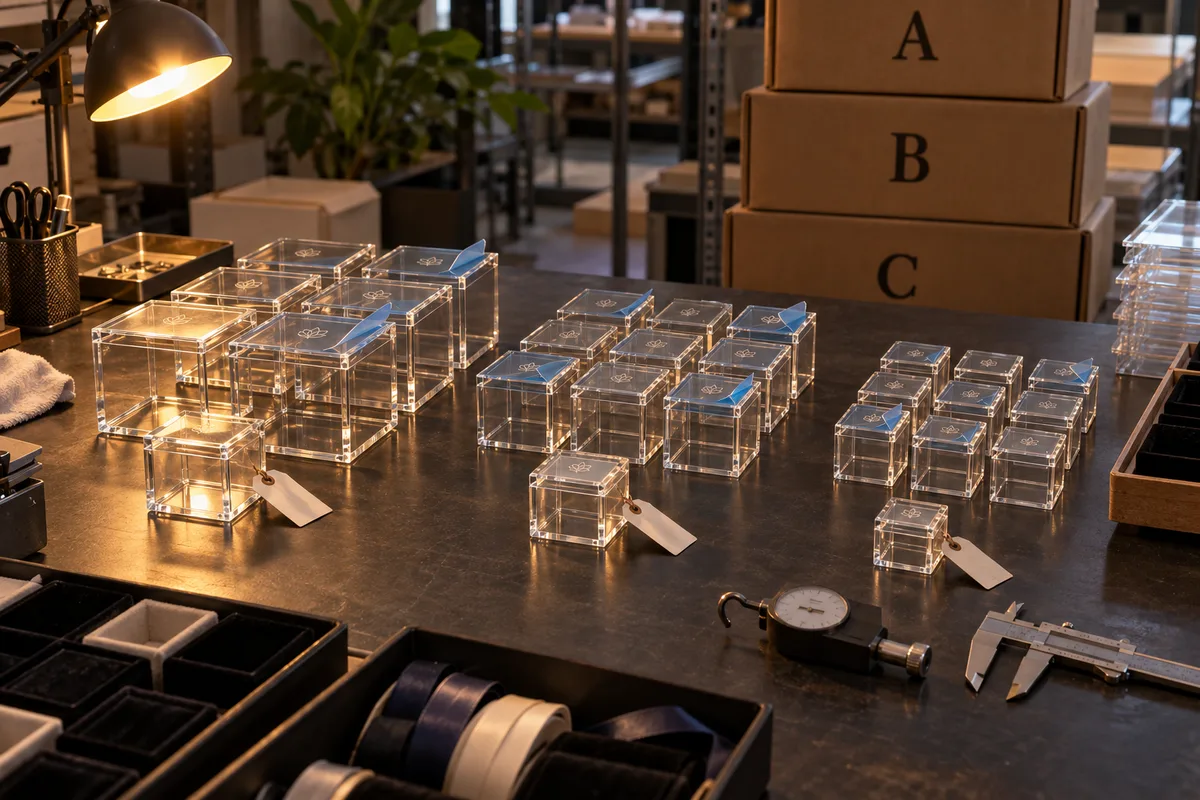
Before ordering material we built a variant matrix. Each design had its own external size, internal envelope, lid and base revision, insert file, ribbon route, artwork, quantity, destination and carton mark. That mattered: a lid that closes cleanly on a shallow box can bind or lift on a taller one when magnet position, wall span or insert height changes.
The buyer supplied the color reference and viewing conditions. We approved print on the actual substrate, recorded the artwork version and accepted sample, and used that sample as the production color reference.
We tested each insert and ribbon with the buyer’s actual product. We checked that the item came out without scraping the acrylic, that the ribbon stayed reachable after transit, and that the insert held when the packed box was turned through its shipping positions. Those results set clearance, retention, protective film, interleaving and inner-carton support.
Inspection followed a checklist per design: critical dimensions against the drawing, lid and insert function against the approved sample, artwork position against the signed proof, visible faces under the agreed light, and packed count against the carton layout.
We kept one labeled golden sample per design with its closure, insert, ribbon, print, finish and packing references. The buyer’s receiving team used it to identify each variant, and it is the starting point for the brand’s next order.
Repeat Orders
For the brand’s repeat orders we reuse the released drawings, approved samples, artwork, closure specification, insert files and packing layout once the buyer confirms nothing has changed. A new color, size, material, insert or closure goes back to sample approval, and each reorder quote reconfirms quantity, material, packing, destination and payment terms.
Release rule on this order: we approved closure, ribbon fit, print color, insert retention, and transit protection on the same production-grade sample.
If You're Planning Something Similar
Send the box and product dimensions, quantity per design, material or appearance reference, closure, insert, ribbon, artwork, packing and destination. Plan on one drawing and one sample check per size, since shared branding does not make structures interchangeable. The UV-printing guide covers artwork and color inputs, and custom acrylic cases shows the product range.
Need a family of custom acrylic gift boxes?
Send the design list, dimensions, quantities, material reference, closure, insert, ribbon, artwork, packing, and destination. We will return a drawing review, sample scope and written quote.
Paid samples in 3–5 days, separately paid and never credited · Production 15–20 days · MOQ 100 pieces per design