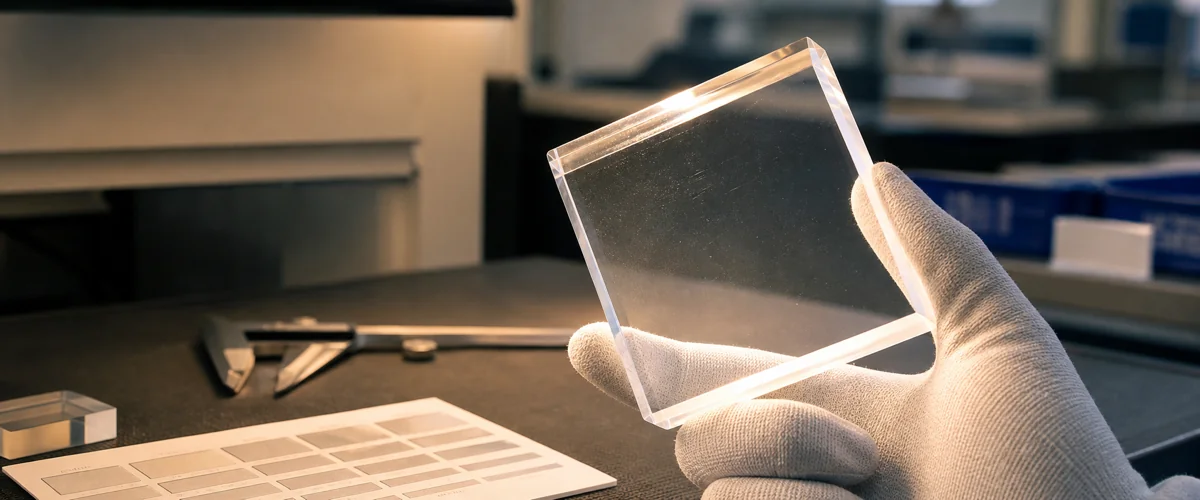
Acrylic Awards Under $20: Bulk Trophy Math for HR Programs
An under-$20 recognition award is not about cheaping out — it's about volume math, customization scope, and locking pricing before procurement deadlines move.
Written by our engineers, QC team, and account managers — not by SEO contractors. The questions buyers actually ask, answered from the factory side: material decisions, MOQ tradeoffs, finishing choices, and what actually changes a quote.
Core guides every buyer sourcing custom acrylic should read first.
Most return disputes come from buyers and suppliers reading different rulebooks. Here is the rulebook we publish before you place an order — what counts as a defect, what we replace, what we refund, and how long every step takes.
ManufacturingMost B2B buyers think they're choosing a supplier. What they're actually choosing is a combination of six fabrication techniques — and the wrong combination is what blows up the quote.
ManufacturingBuyers ask me what is acrylic fabrication every week, and the wrong definition costs real money. Here's what it actually is, and when you need a fabricator instead of a stock parts catalog.
ManufacturingOne IPA-70% wipe will craze a flame-polished acrylic edge inside 72 hours. The correct cleaning protocol depends more on how the acrylic was finished than on what's in the spray bottle — and most cleaning damage we trace back at our factory comes from a wrong-finish + wrong-cleaner combination, not staff carelessness.
IndustryMost cosmetic brands choose their display fixture for how it looks in a mockup. The ones who sell more choose it for what it does to the shopper at the counter — and those two decisions don't always point to the same display.

An under-$20 recognition award is not about cheaping out — it's about volume math, customization scope, and locking pricing before procurement deadlines move.
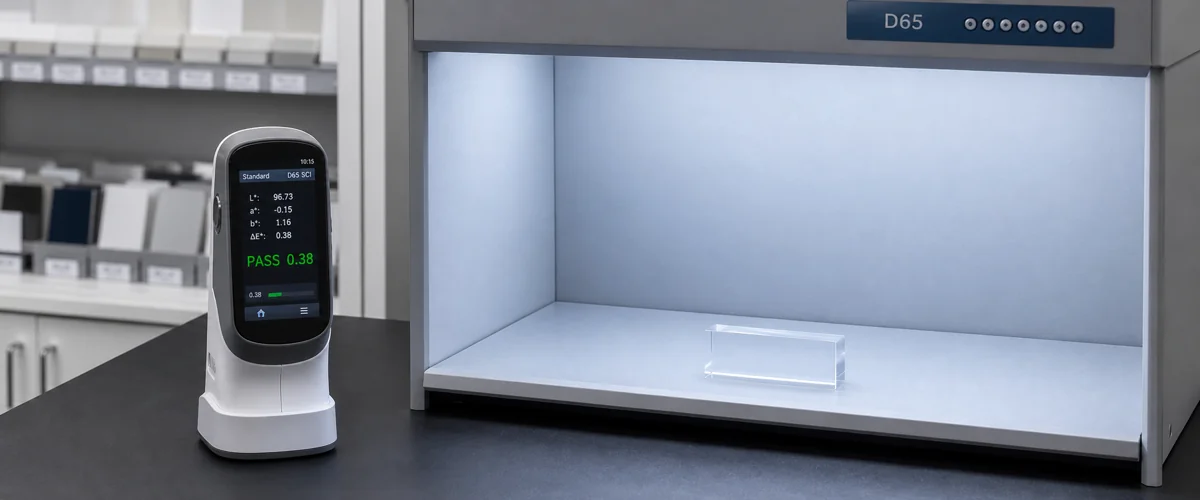
Color approved on the swatch and color shipped from the cast room are not the same thing. Here's the spectrophotometer-based protocol we run before tooling is cut, and the delta-E thresholds we hold to.
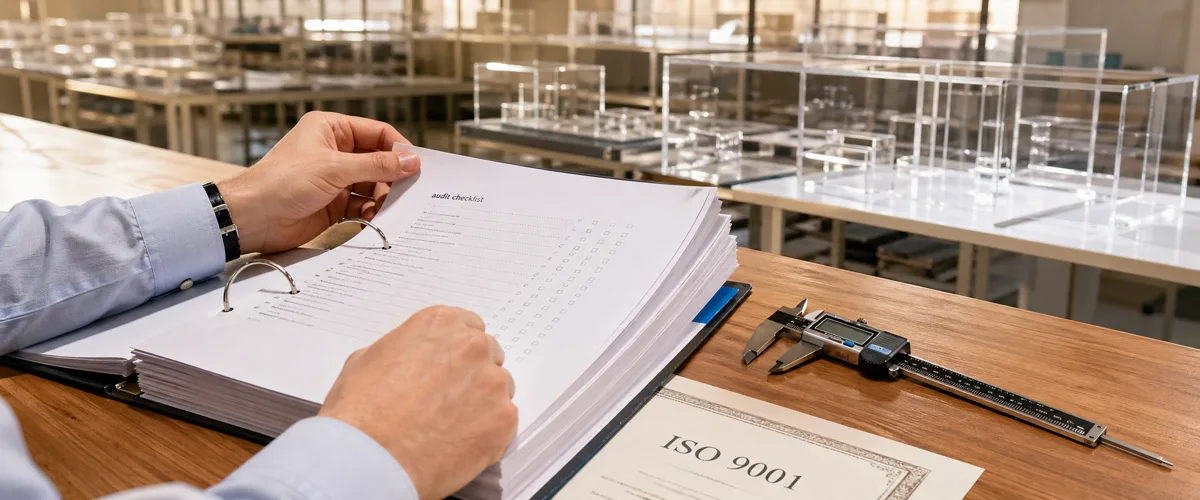
Anyone can show you a certificate. Few suppliers can show you the four numbers that actually predict whether your acrylic display will arrive on spec, on time, and in volume — here's what to ask for, and what every honest answer looks like.
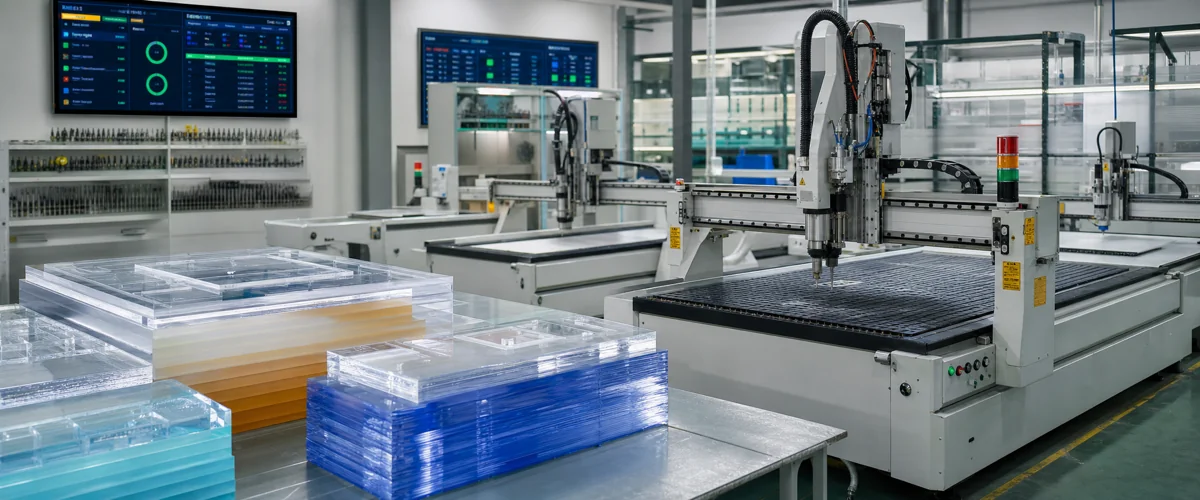
Across the 40+ third-party audits we've passed, the fastest disqualifier isn't a missing certificate — it's a fabricator hesitating on four capacity numbers any operations manager already tracks daily. Here's the disclosure sheet to ask for, and the answers that separate production partners from project shops.
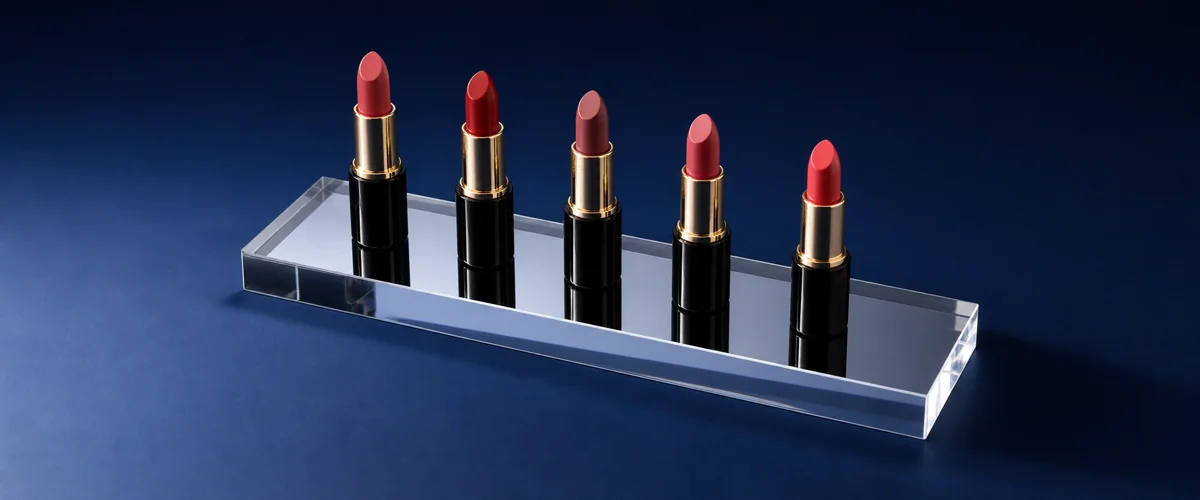
Cosmetics buyers ask for mirror because it sells lipstick. They don't ask which mirror-finish formulation survives nine months of cotton wipes — that's the bench data we collect on every refit program.
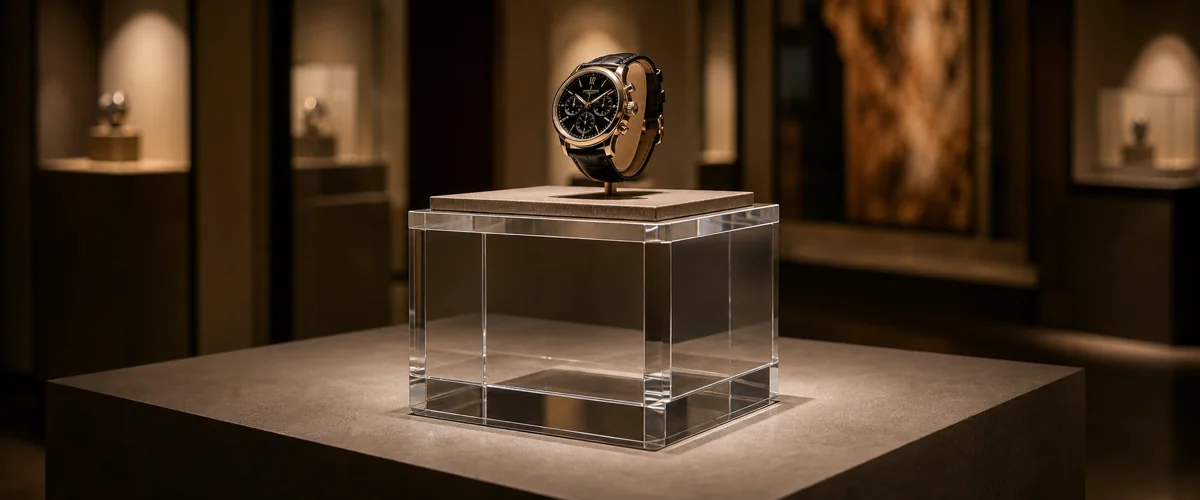
Generic pedestal listings tell you the height and footprint. They almost never tell you the load they're rated for, the bond chemistry holding the seams, or the deflection at 150 lbs — which is exactly the data that decides whether the pedestal survives a year on the floor.
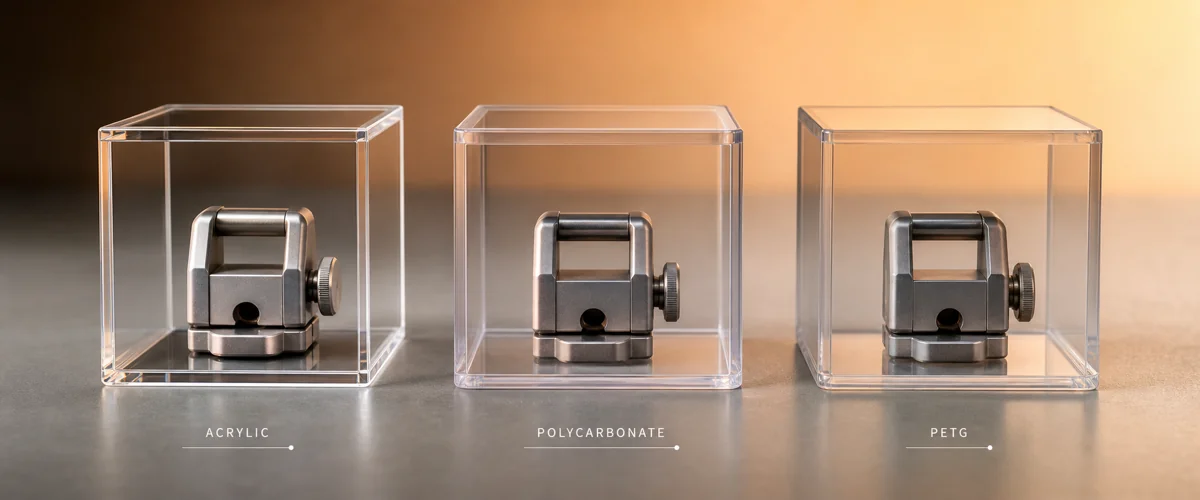
Three clear boxes, same dimensions, very different stories: here's the drop, scratch, UV, and cost data from our test rig — and which material wins each round.
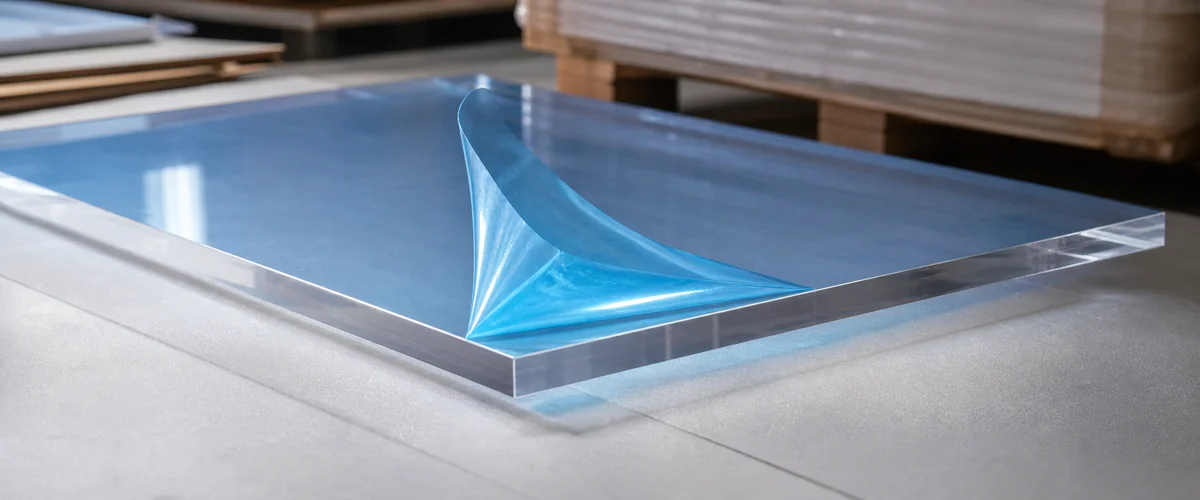
The cheapest acrylic protective film on the QC bench rarely stays cheap on the retail floor — when residue, temperature drift, and rushed peel-offs all stack up, the film line item becomes the most expensive part of the program.
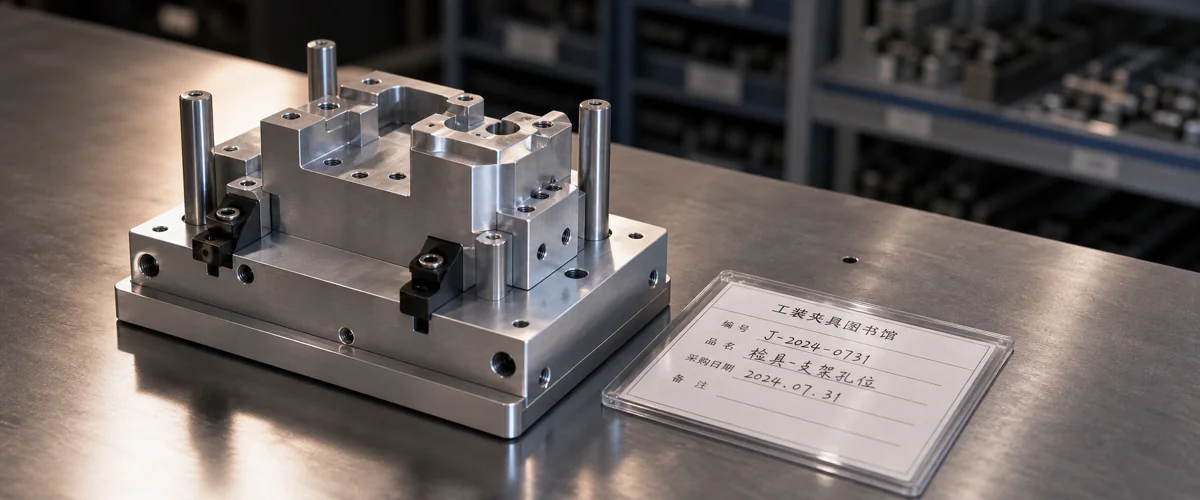
Across 25 repeat-buyer projects I coordinated from 2022 through 2025, the median repeat-order lead time was 19 working days against 28 on first orders — that's 32% saved without skipping a single QC step. The savings come from one decision your supplier makes on day one of your first PO.

Most acrylic shelf failures aren't manufacturing defects — they're spec mistakes made before the PO. Here's the load math, bracket logic, and SKU-density framework we hand every retail merchandiser before they sign off on fixtures.
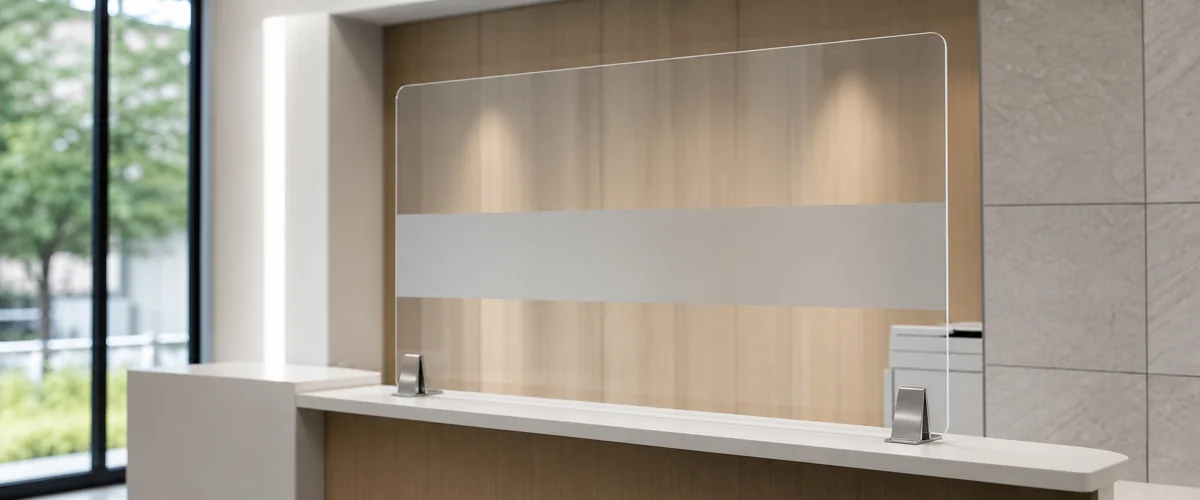
Most acrylic sneeze guards on the market in 2026 are still spec'd from 2020 panic orders — too thin, with the wrong edge finish, mounted with brackets that flex on every wipe-down. Here's what 200+ healthcare and restaurant installs taught us about the specs that actually hold up.
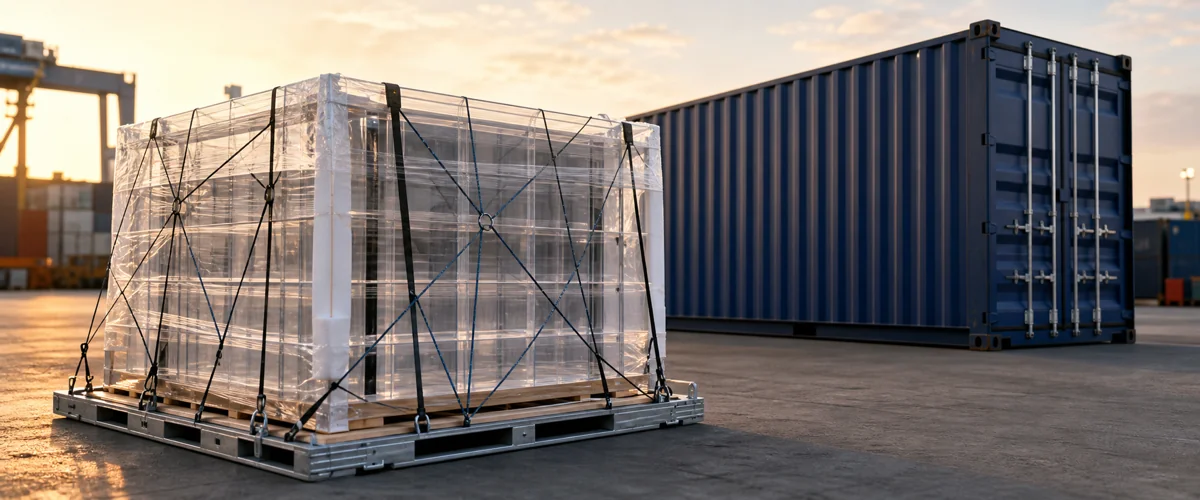
Sending the whole order by air freight acrylic burns cash; sending it all by ocean misses your launch. The middle path — air-first split shipment — is the move I run on roughly half of our $20k+ B2B orders.

On every 3D letter sign job that ships from our floor, the same question lands first: cast or extruded? Here are the cut-edge, color-shift, and bend-radius numbers we measured running both side-by-side.
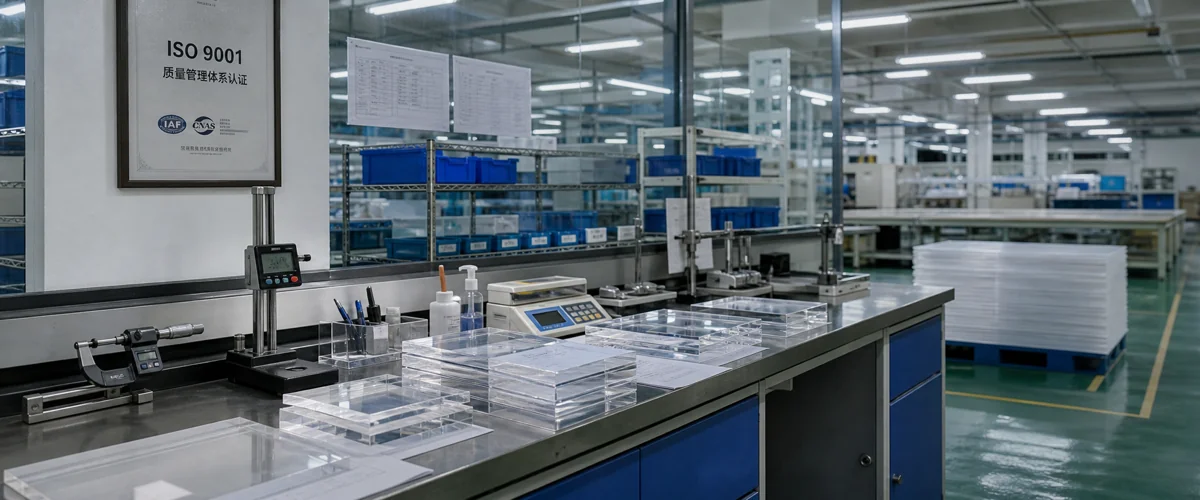
China-based acrylic suppliers face a double-audit gauntlet most US/EU factories never see. Here's what each auditor actually checks, where ISO 9001 quietly fails, and the 12 prep steps that turn audit day into a paperwork formality.
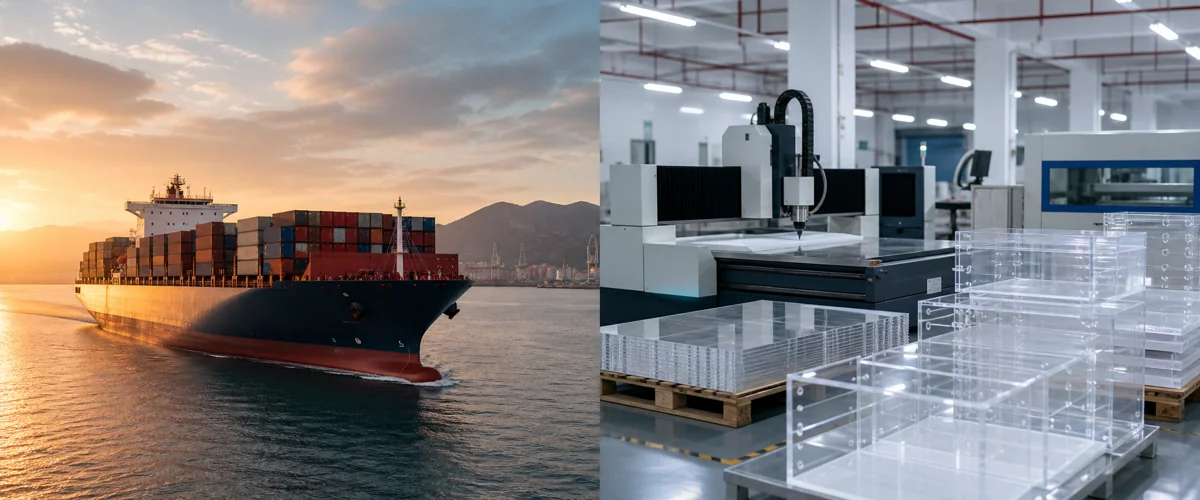
Most buyers comparing offshore vs domestic acrylic supply pick on price alone — and skip five other tradeoffs that quietly decide whether the project lands on time and on spec.
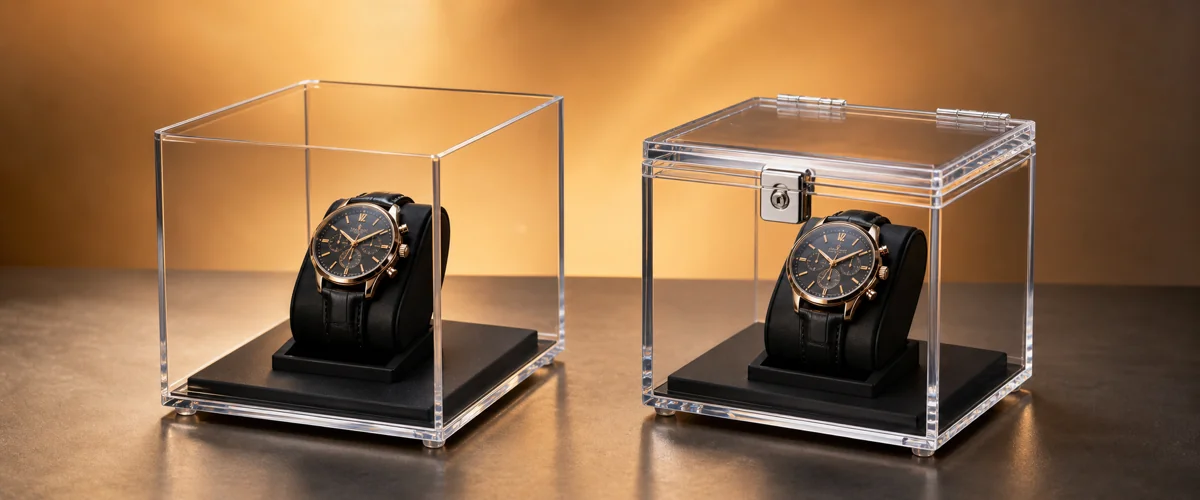
Most buyers walk into our intake calls asking for an 'acrylic box' when every signal in the conversation says they want a lidded case. Here's the spec language that bridges the gap before the RFQ is locked.
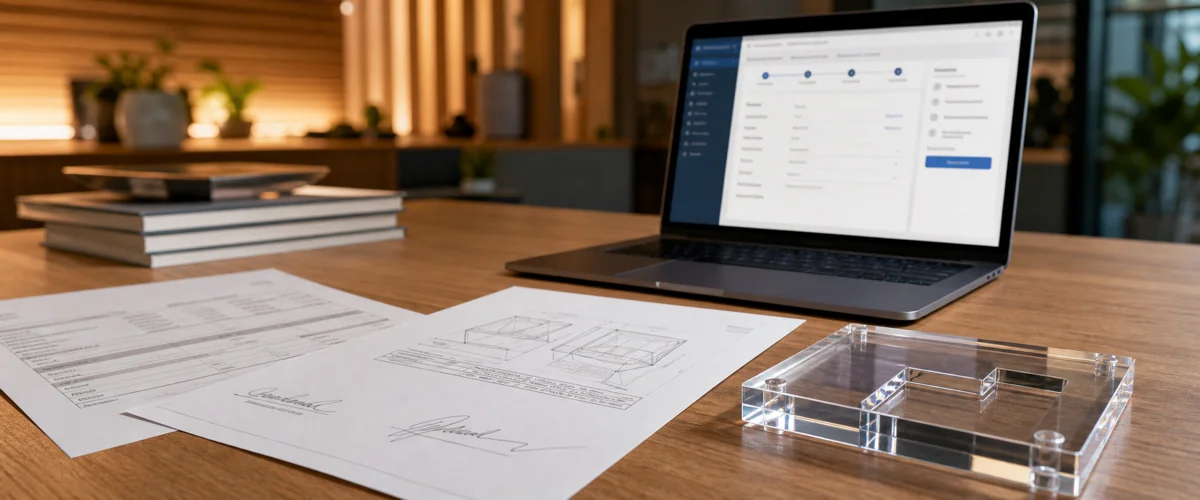
Payment terms aren't a take-it-or-leave-it line on a quote — they're a risk-allocation decision. Here's how I structure terms across 500+ B2B acrylic projects, and what every tier signals about the supplier on the other side.
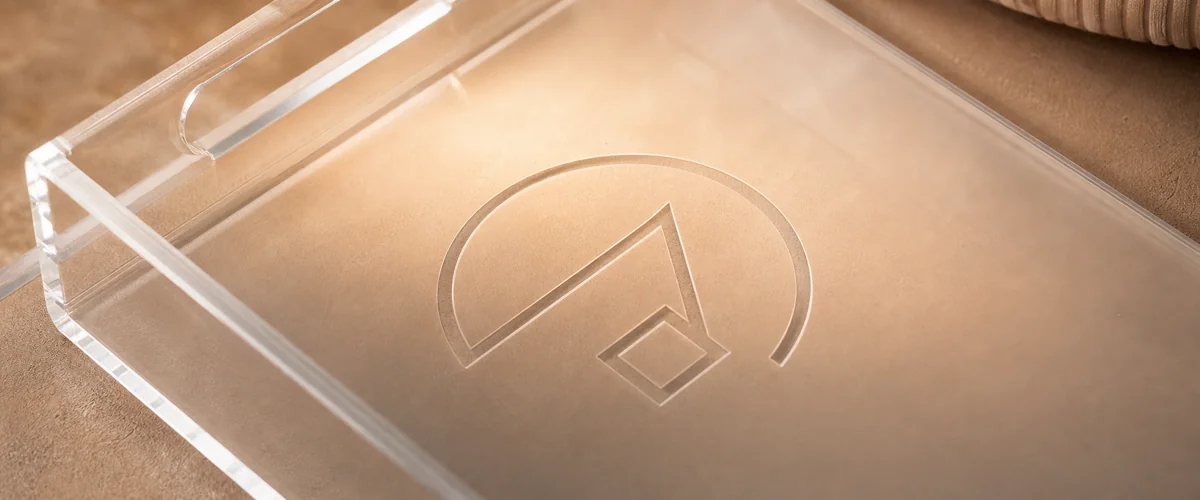
Most brand buyers spec an etched acrylic logo with one line on the RFQ — 'logo etched on tray.' That single line hides four engineering choices. Here are the numbers we use on the production floor so you can spec the first sample right.
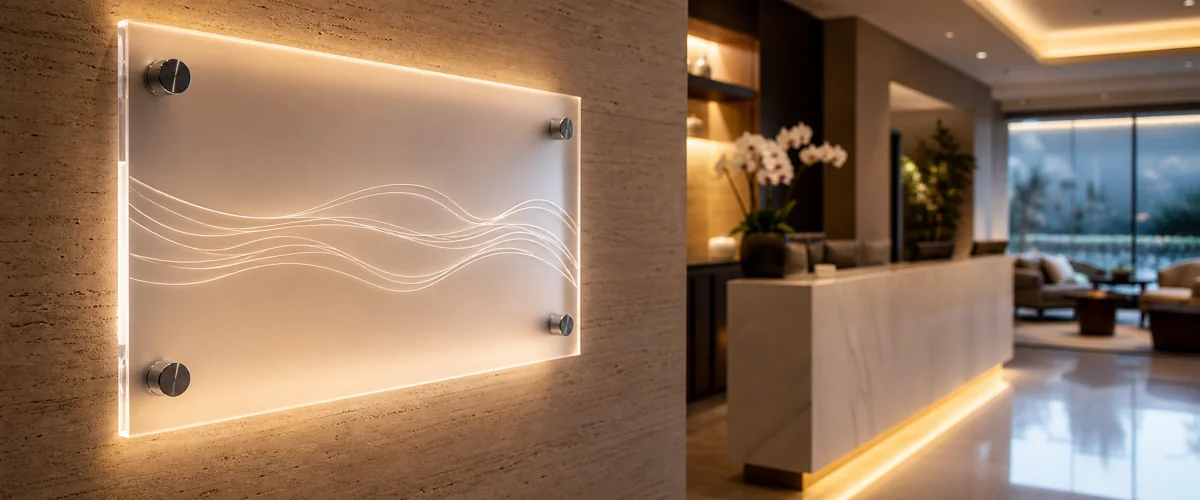
Most spa and boutique-hotel buyers default to sandblasted glass for the etched, calming look — and pay 3× the unit cost plus 4× the freight. Frosted acrylic, specified correctly, lands the same finish at a fraction of the landed cost.
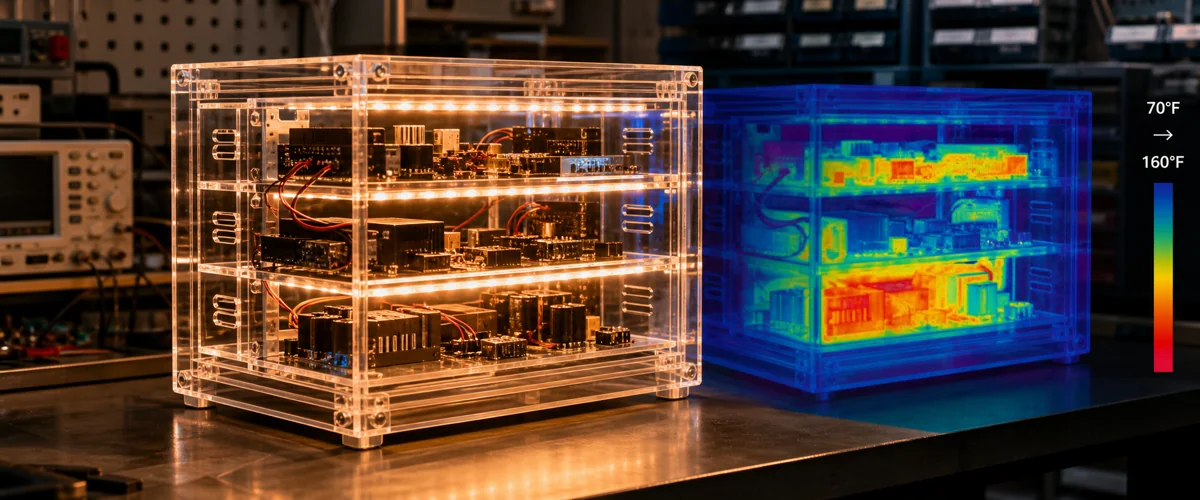
Plexiglass is heat-tolerant up to a real, measurable ceiling — and most LED-cabinet failures I see come from buyers who assumed the ceiling was higher than it is. Here is where the line actually sits.
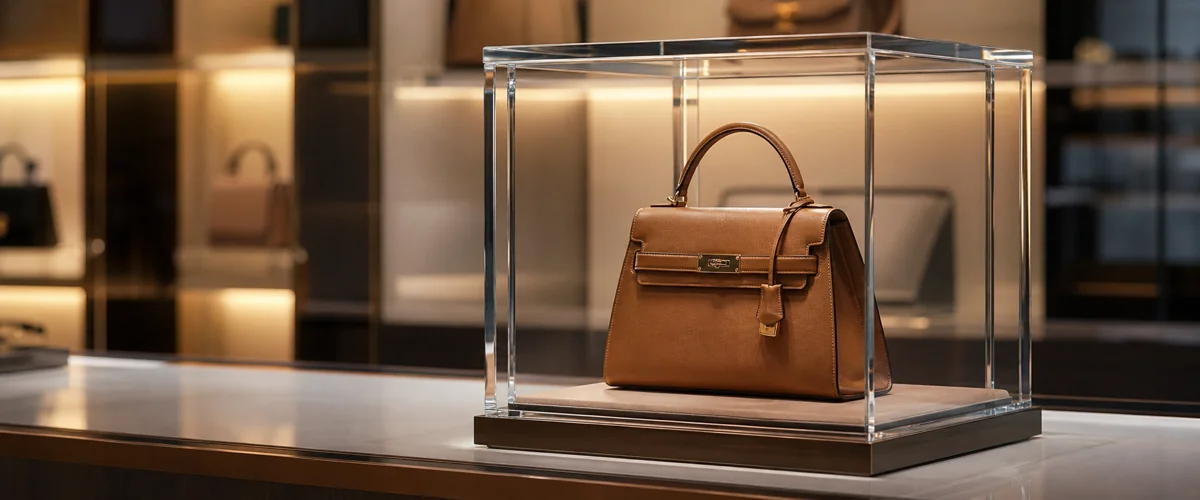
Buyers walk into our quote calls speccing 'Lucite' as if it's a chemistry, not a brand. We don't push back — we explain when the trademark actually buys you something, and when generic cast PMMA delivers identical performance at half the price.
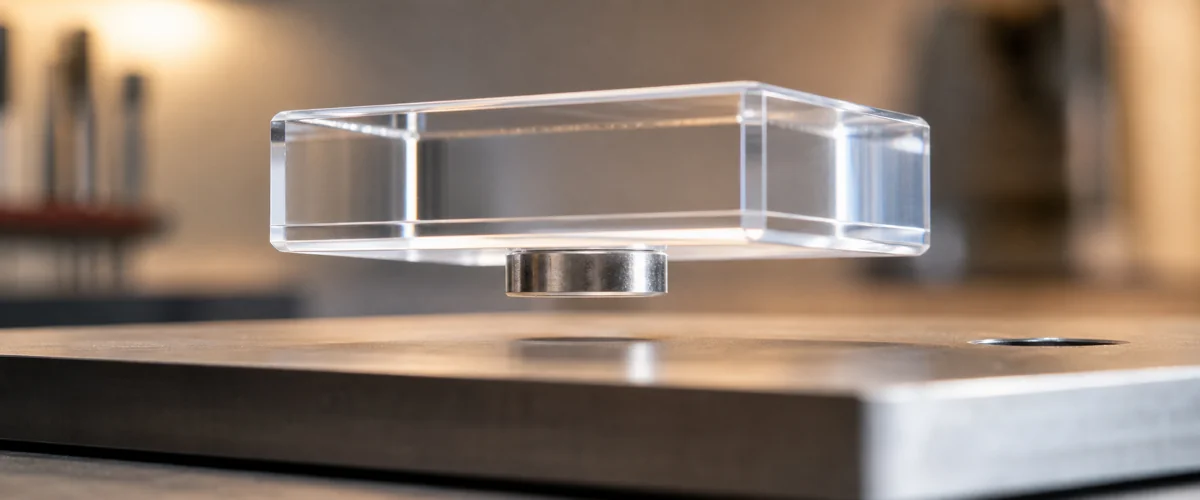
Picking the right magnet for an acrylic display is rarely about the magnet alone — it's about how thick the substrate is, how the magnet sits in the part, and what counter-magnet faces it. We pull-tested 30 combinations on the bench so you don't have to.
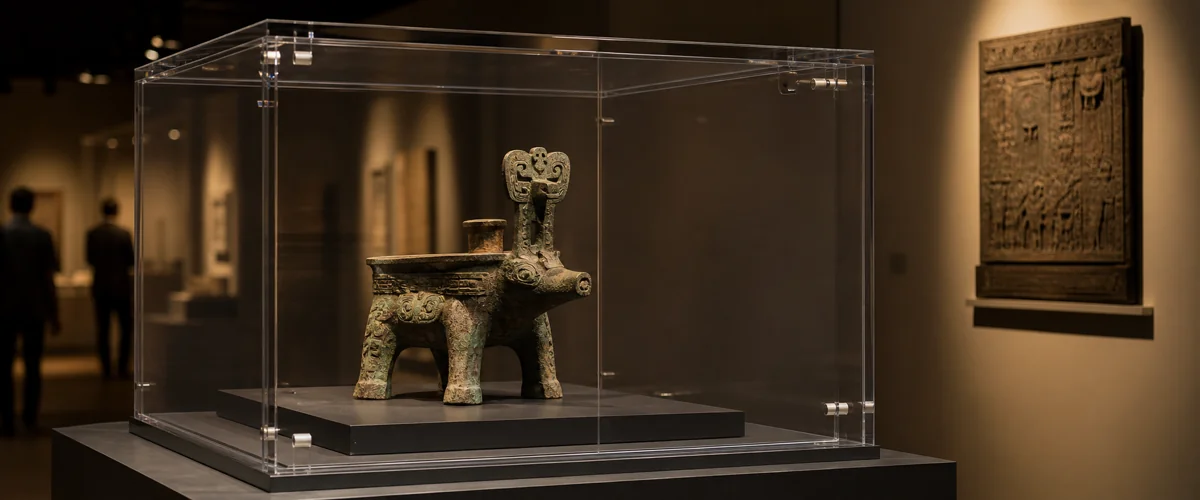
A museum-grade case isn't a marketing label — it's a stack of measurable specs. Here's the spec language curators should write into their RFQ before any quote.
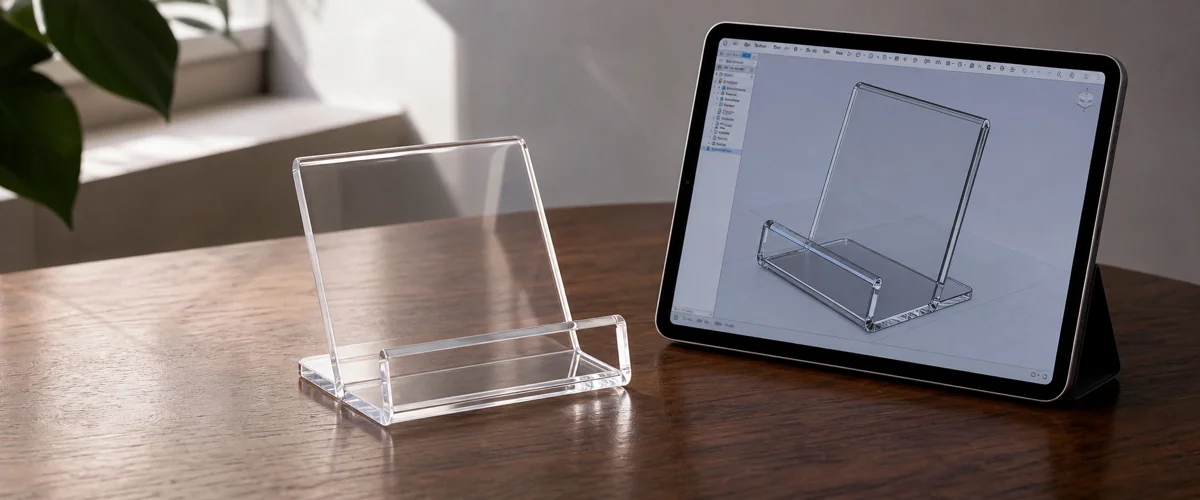
A 3D render approves the look. A physical acrylic sample approves the part — and our 12-project rework dataset shows what gets missed when buyers skip that step.
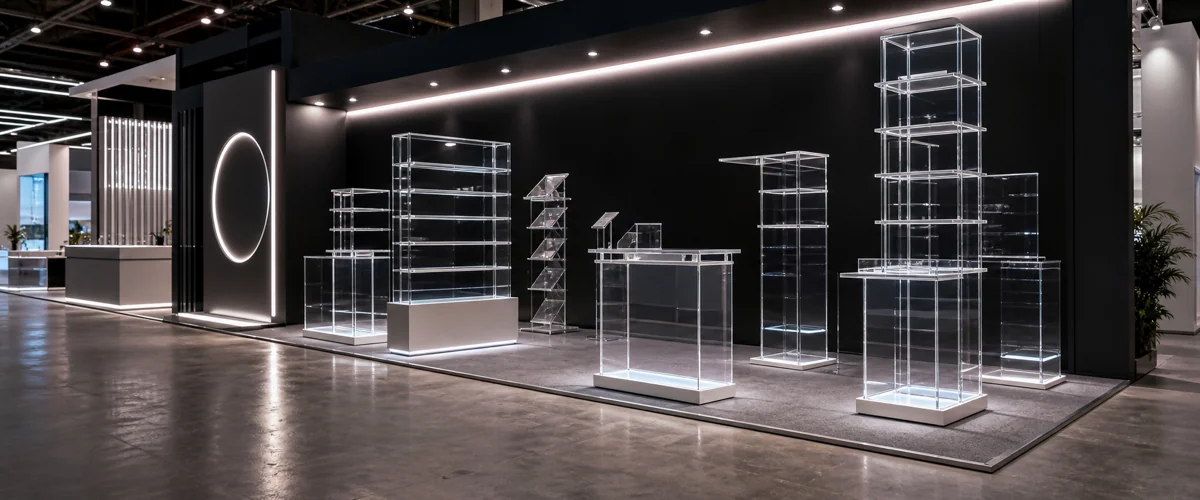
When the show date is fixed, the acrylic tray production timeline is not negotiable — every day you lose on approvals, tooling, or freight is a day you can't get back.

Most metallic acrylic suppliers fail Pantone register at high volumes — here is how the dispersion, batch QC, and lamination choices actually shake out on a real custom order.

Most VM teams pick a riser by tier count alone. The brands that out-convert at the counter pick by eye-line geometry, SKU density per square foot, and the load math at the top tier — three numbers no generic riser spec sheet covers.
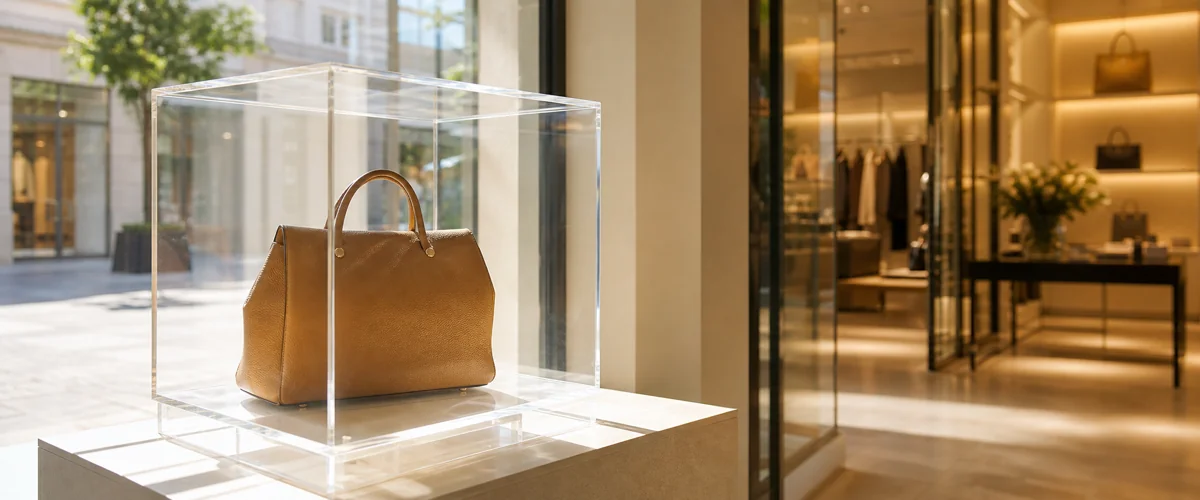
Standard PMMA in a south-facing window yellows visibly inside 6 months. Here is the UV-grade spec, the 12-month test data, and the cost premium that actually buys fade resistance.

A wood base under a clear acrylic upper reads as premium because two materials, two finishes, and two manufacturing processes are converging into a single piece. The joinery is what holds — or fails — that promise.
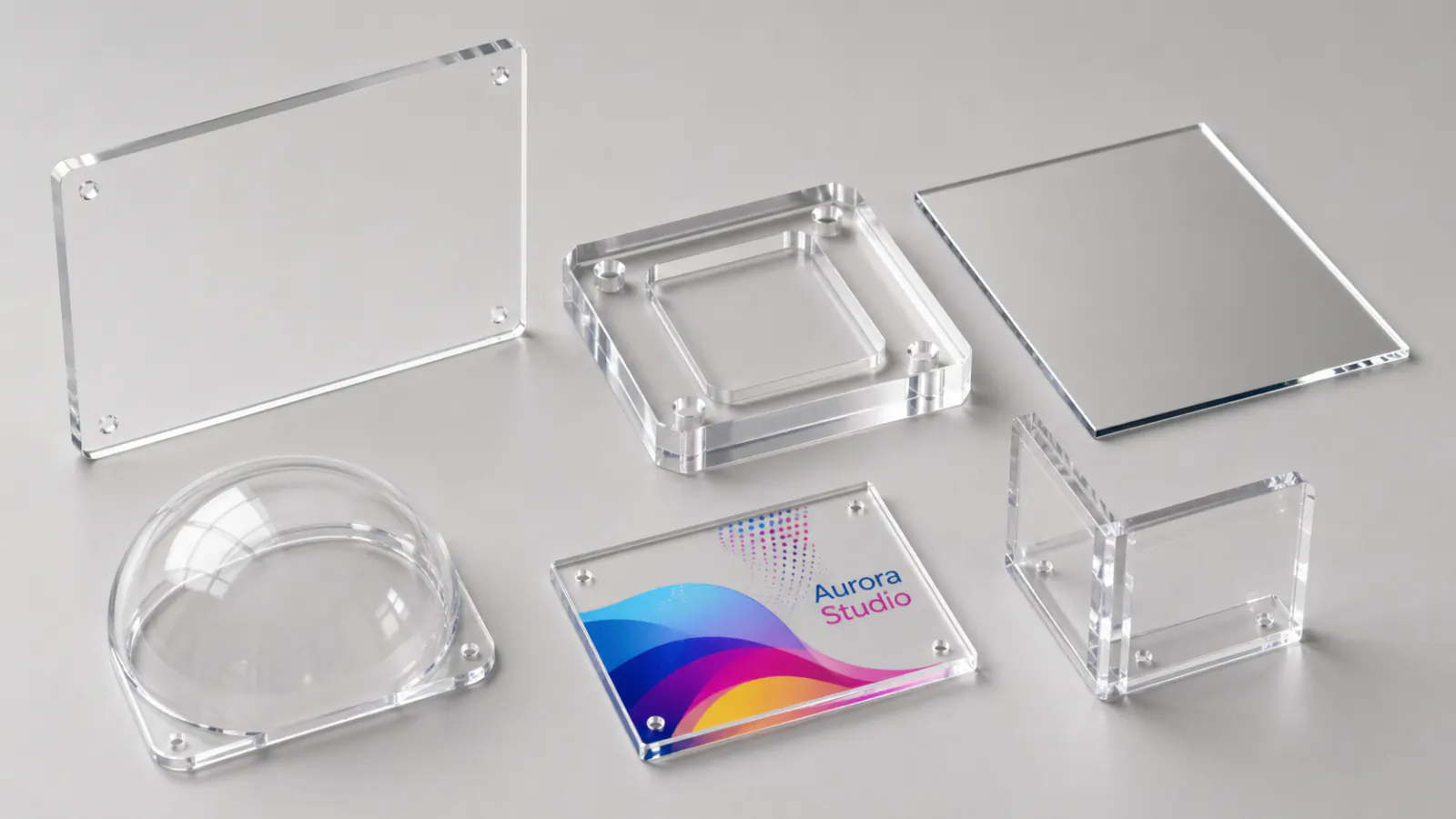
Most B2B buyers think they're choosing a supplier. What they're actually choosing is a combination of six fabrication techniques — and the wrong combination is what blows up the quote.
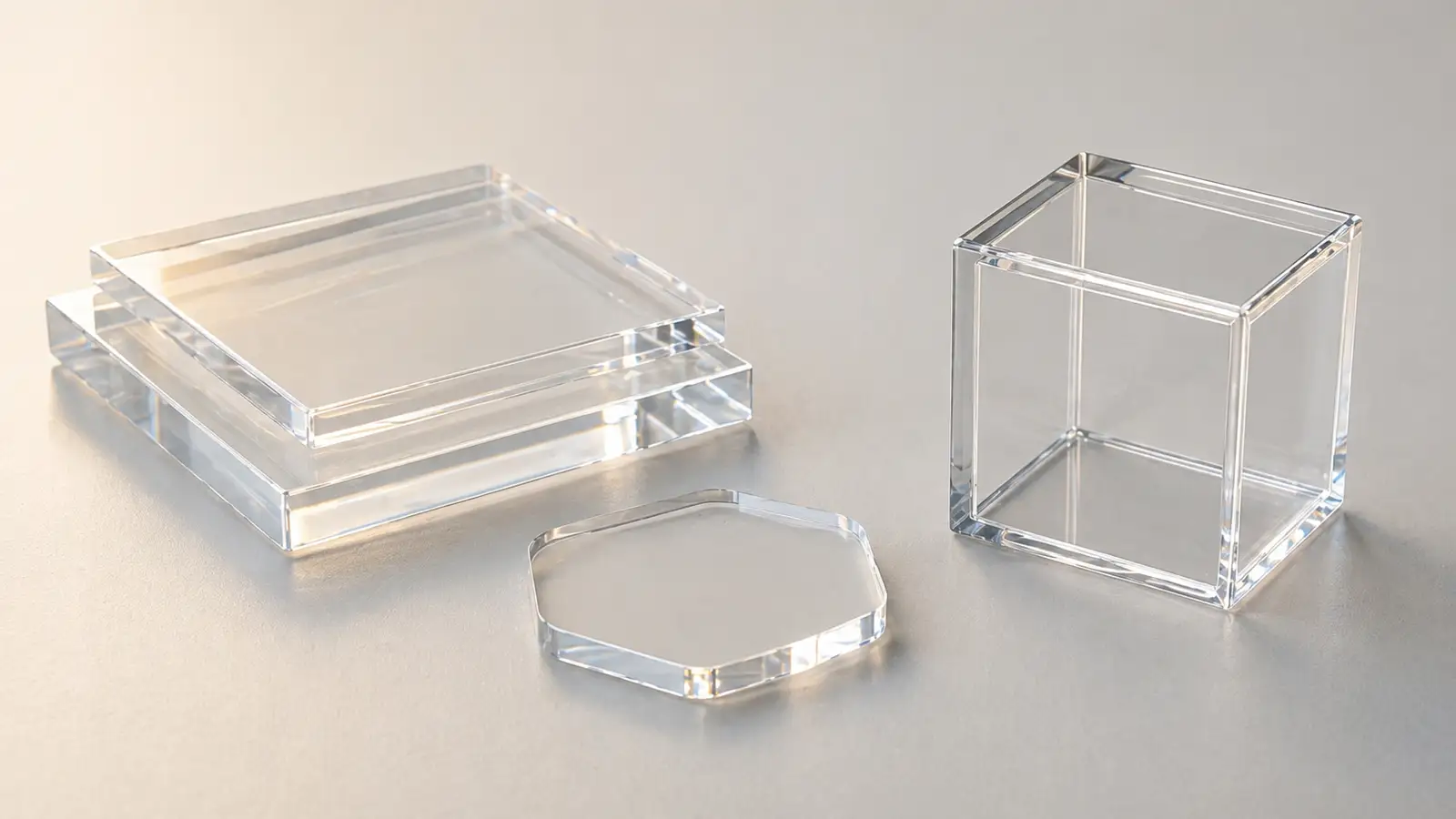
Buyers ask me what is acrylic fabrication every week, and the wrong definition costs real money. Here's what it actually is, and when you need a fabricator instead of a stock parts catalog.
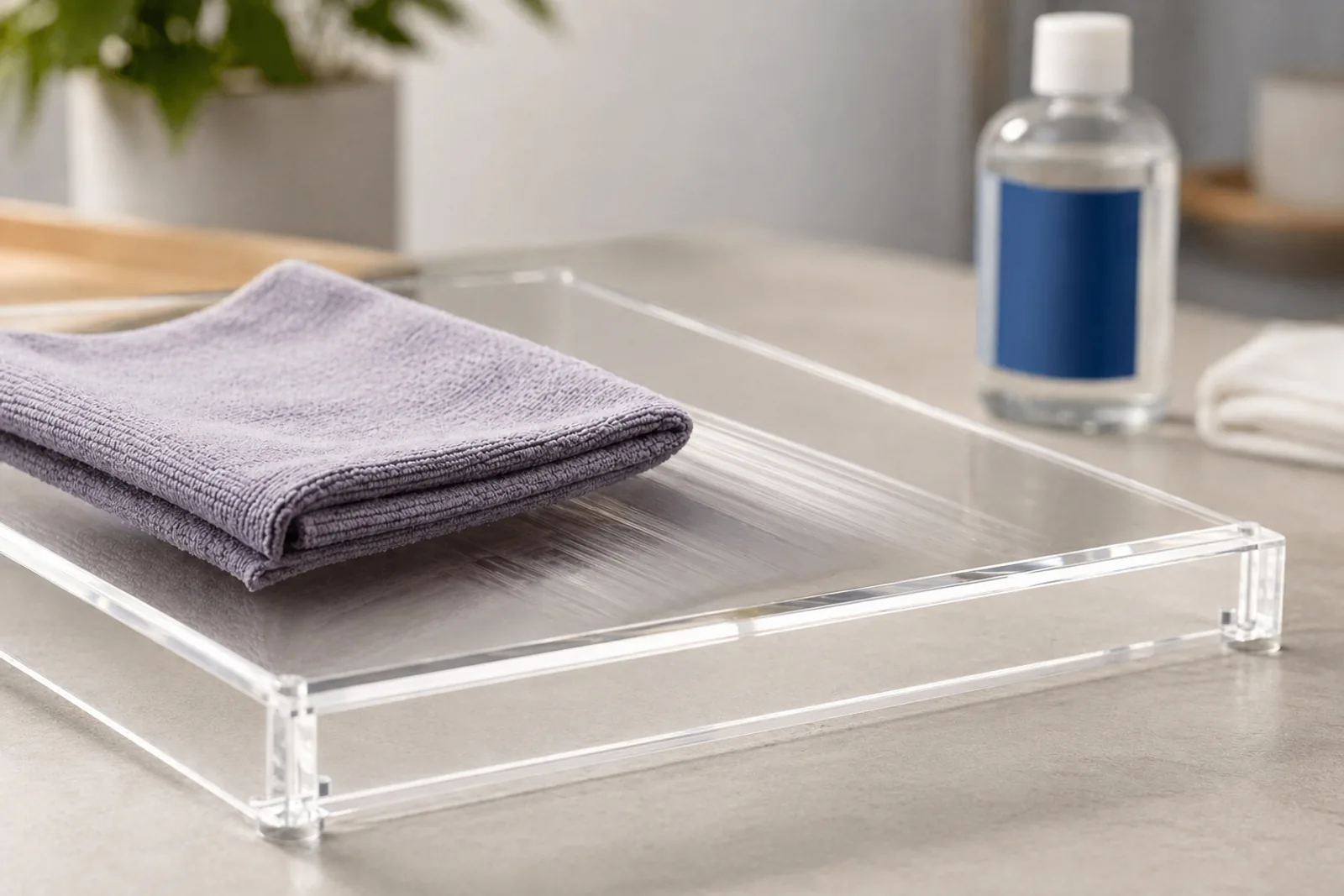
One IPA-70% wipe will craze a flame-polished acrylic edge inside 72 hours. The correct cleaning protocol depends more on how the acrylic was finished than on what's in the spray bottle — and most cleaning damage we trace back at our factory comes from a wrong-finish + wrong-cleaner combination, not staff carelessness.
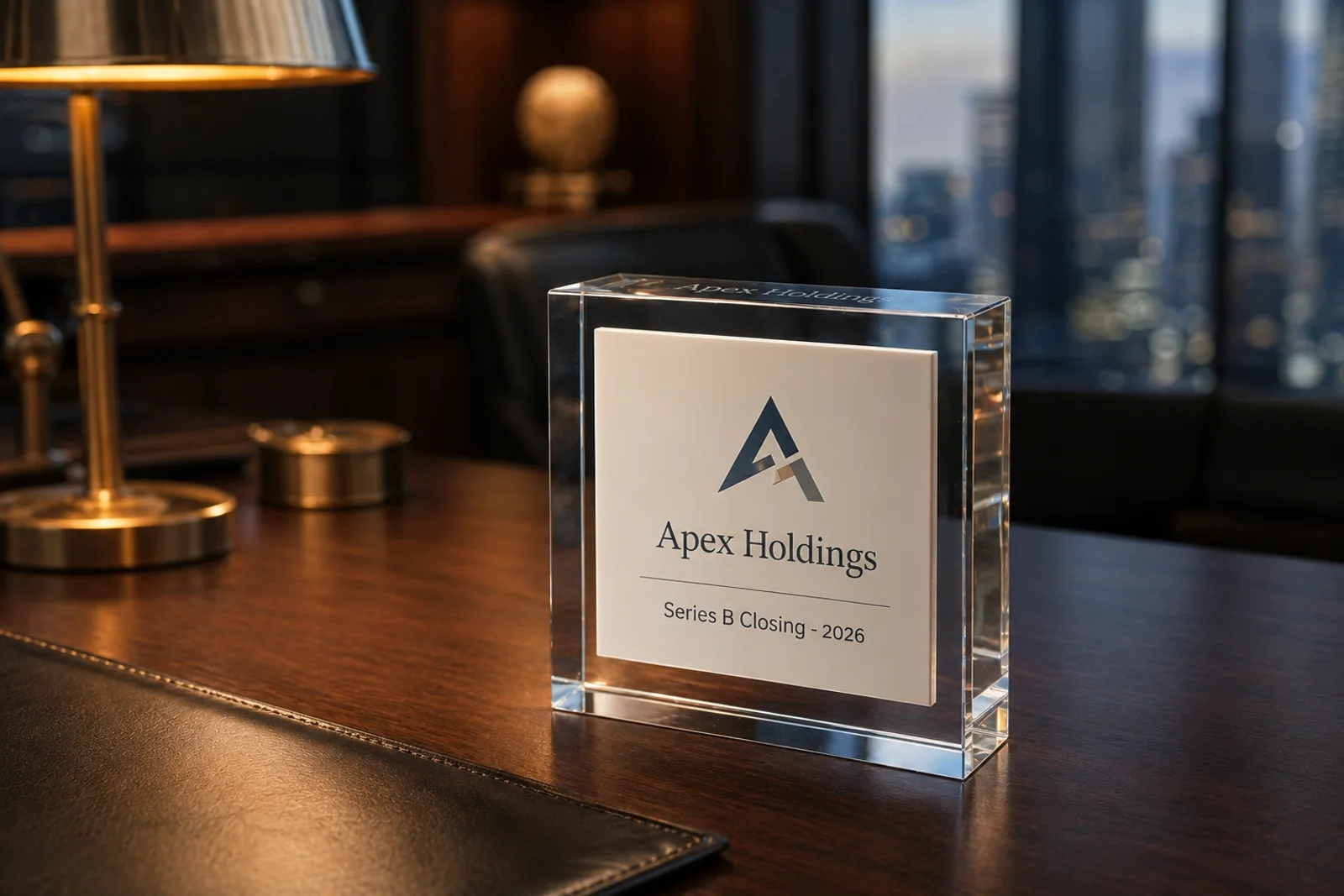
A lucite embedment is the physical receipt for a deal. Bubbles in the cure, a shifted tombstone, a yellow tint at year two — and that receipt becomes a souvenir of what went wrong on the fabrication side, not the deal.
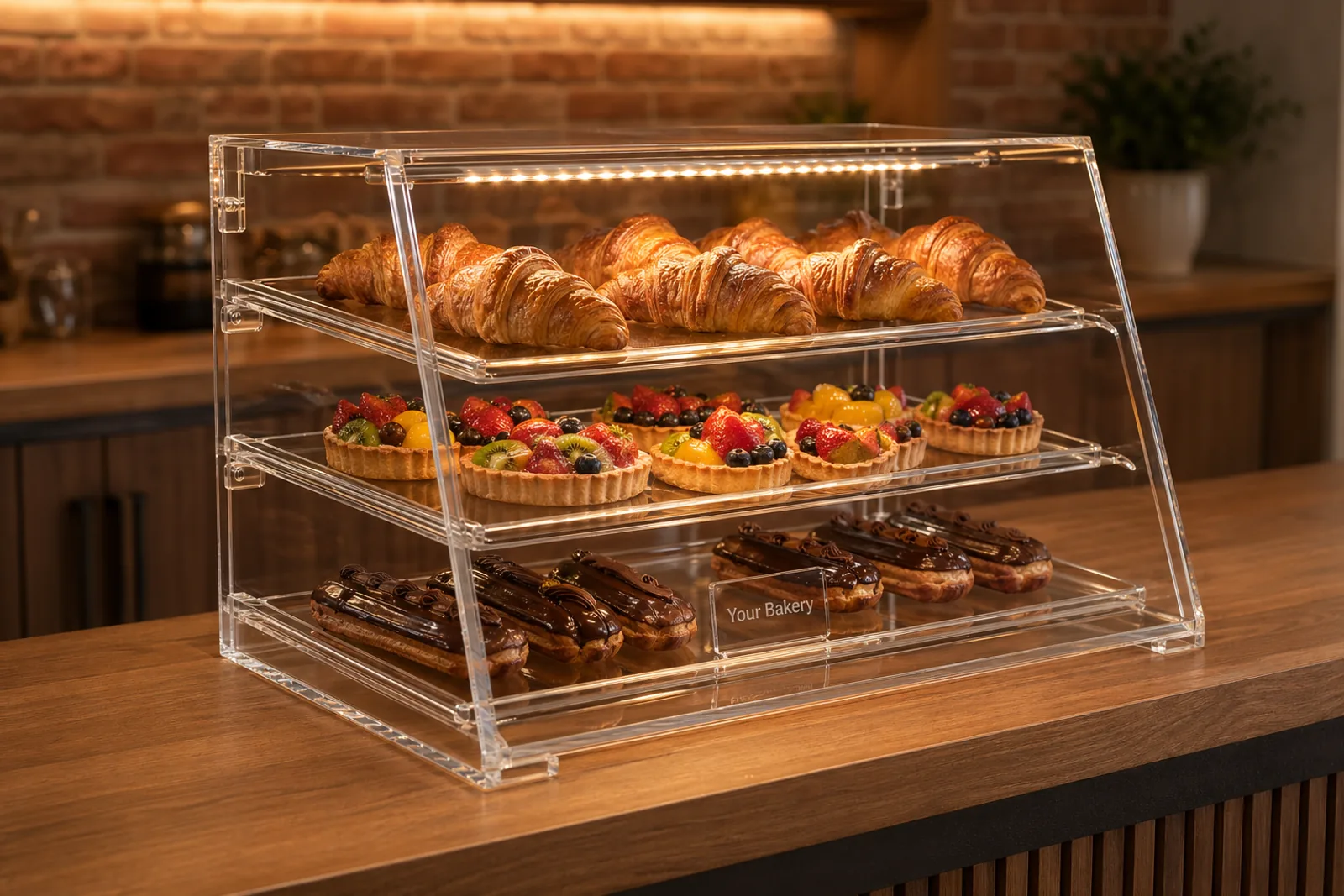
Most pastry display case buyers spec dimensions and forget geometry — NSF/ANSI 2 sneeze-guard compliance and FDA 21 CFR food-contact docs are what separate a shippable case from a health-code callback.
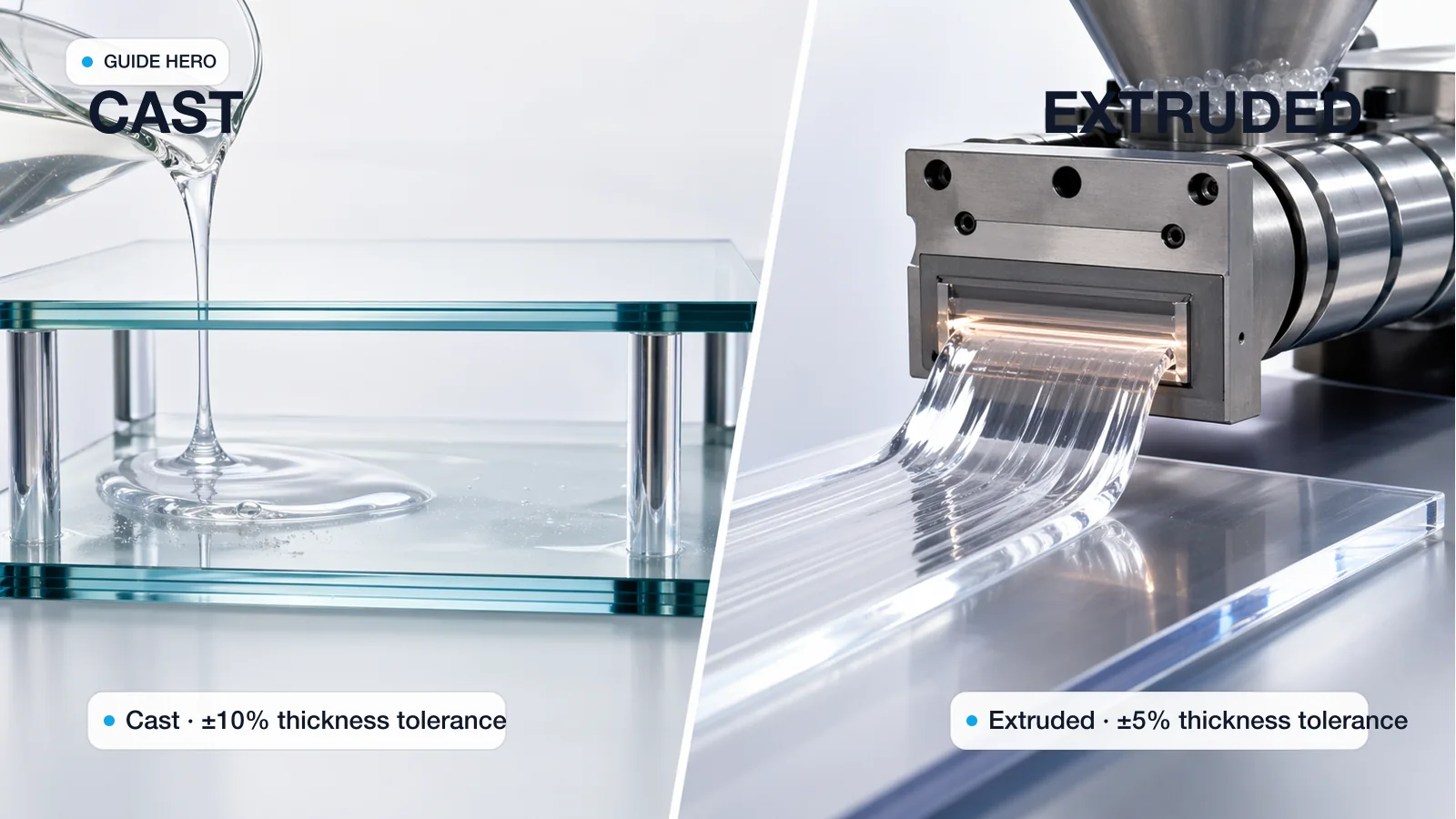
Most buyers pay cast acrylic prices and get extruded quality — or pay for cast when extruded would have been fine. Here's how to tell which one your project actually needs.
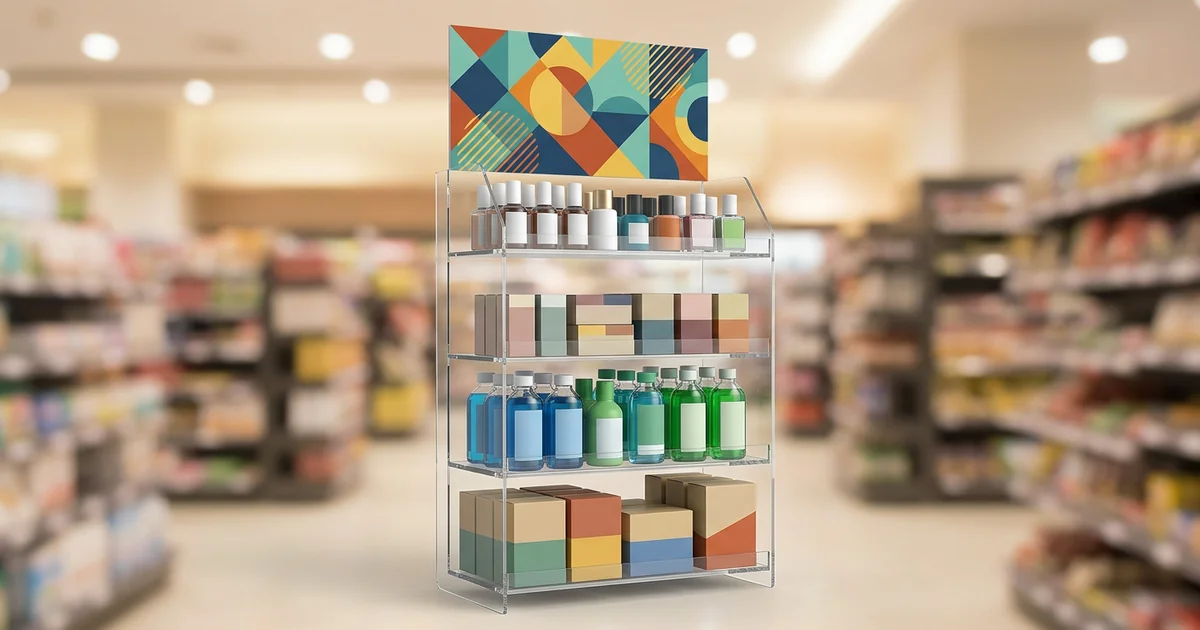
A $12 endcap display and a $120 endcap display can look identical in a photo — here's what actually drives cost, visibility, and shelf-life on the retail floor.
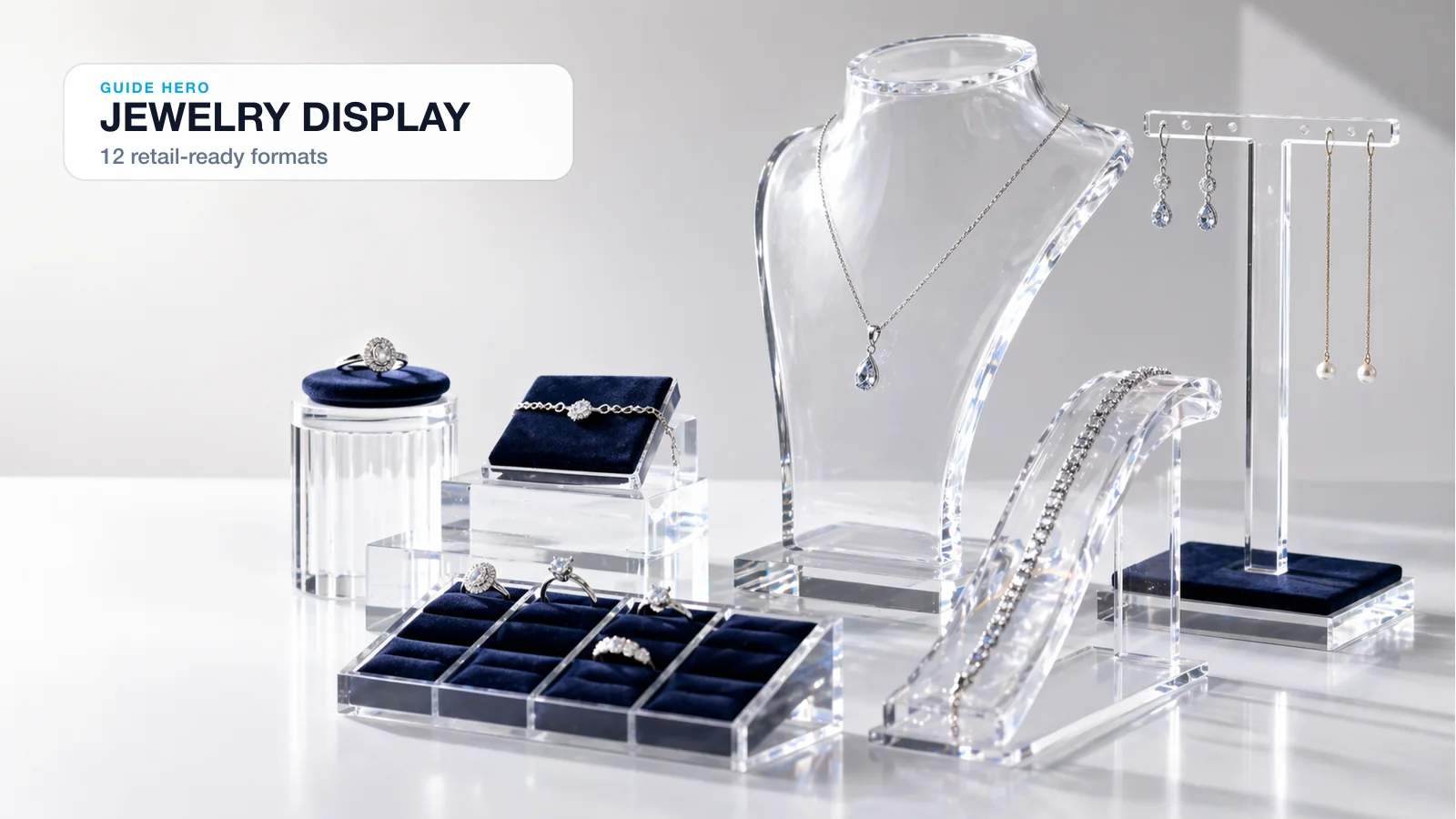
A jewelry case isn't furniture — it's the most expensive real estate in the store. Here's how to merchandise it so the right piece sells in 30 seconds, not 30 minutes.
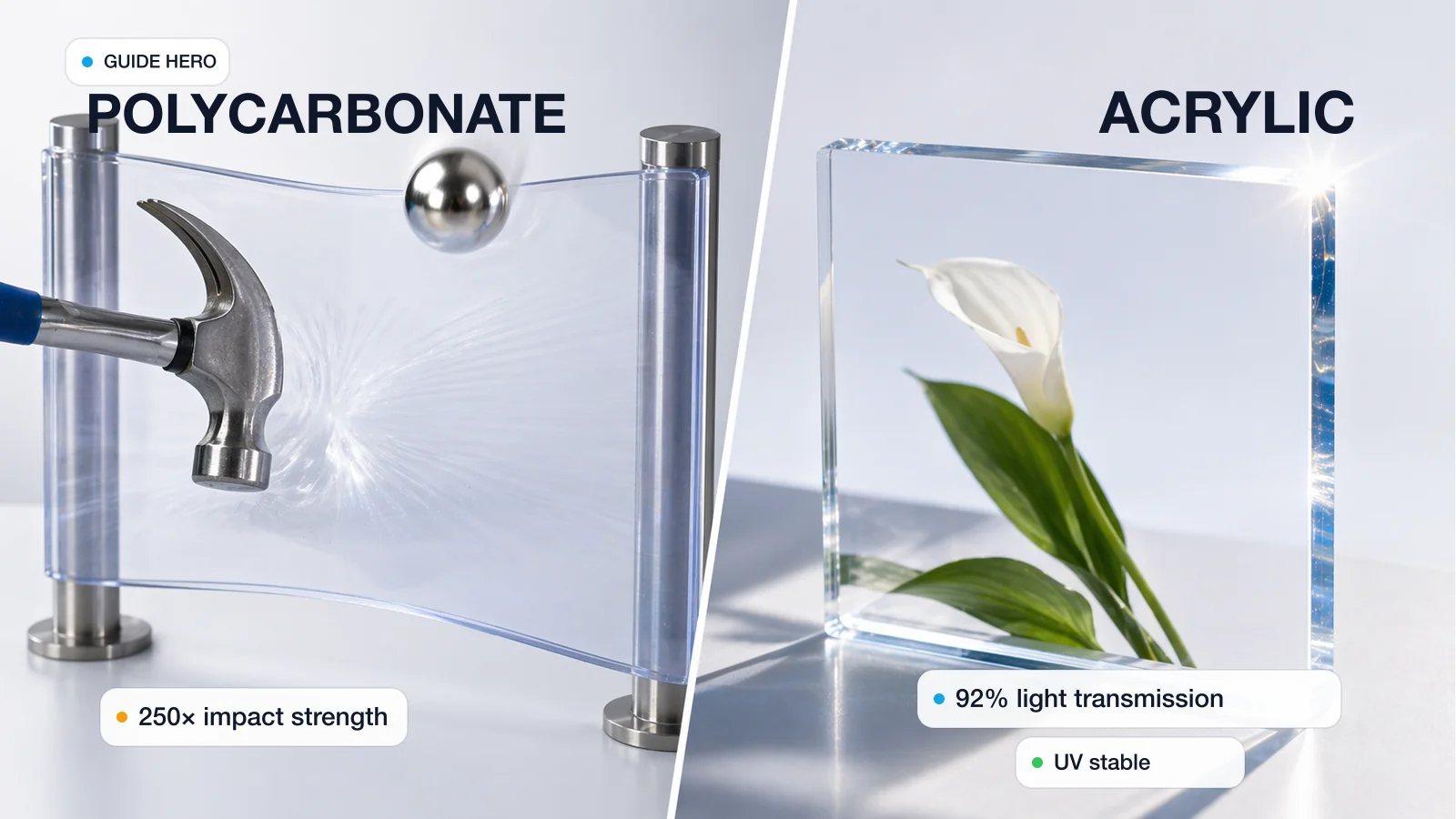
The short answer: if someone can hit it, use polycarbonate; for everything else, acrylic is usually the correct spec — and here's how I decide on the factory floor.
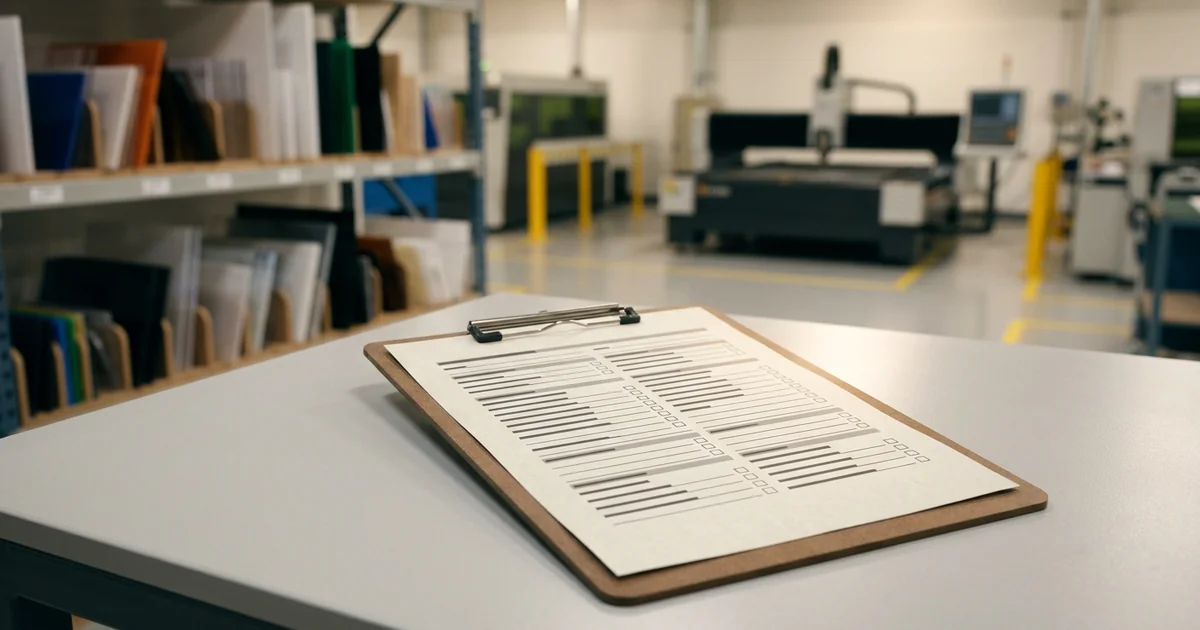
An audit that only checks paperwork is theater. A real supplier audit answers one question — will this factory ship what they promised, on the date they promised, at the quality they quoted.
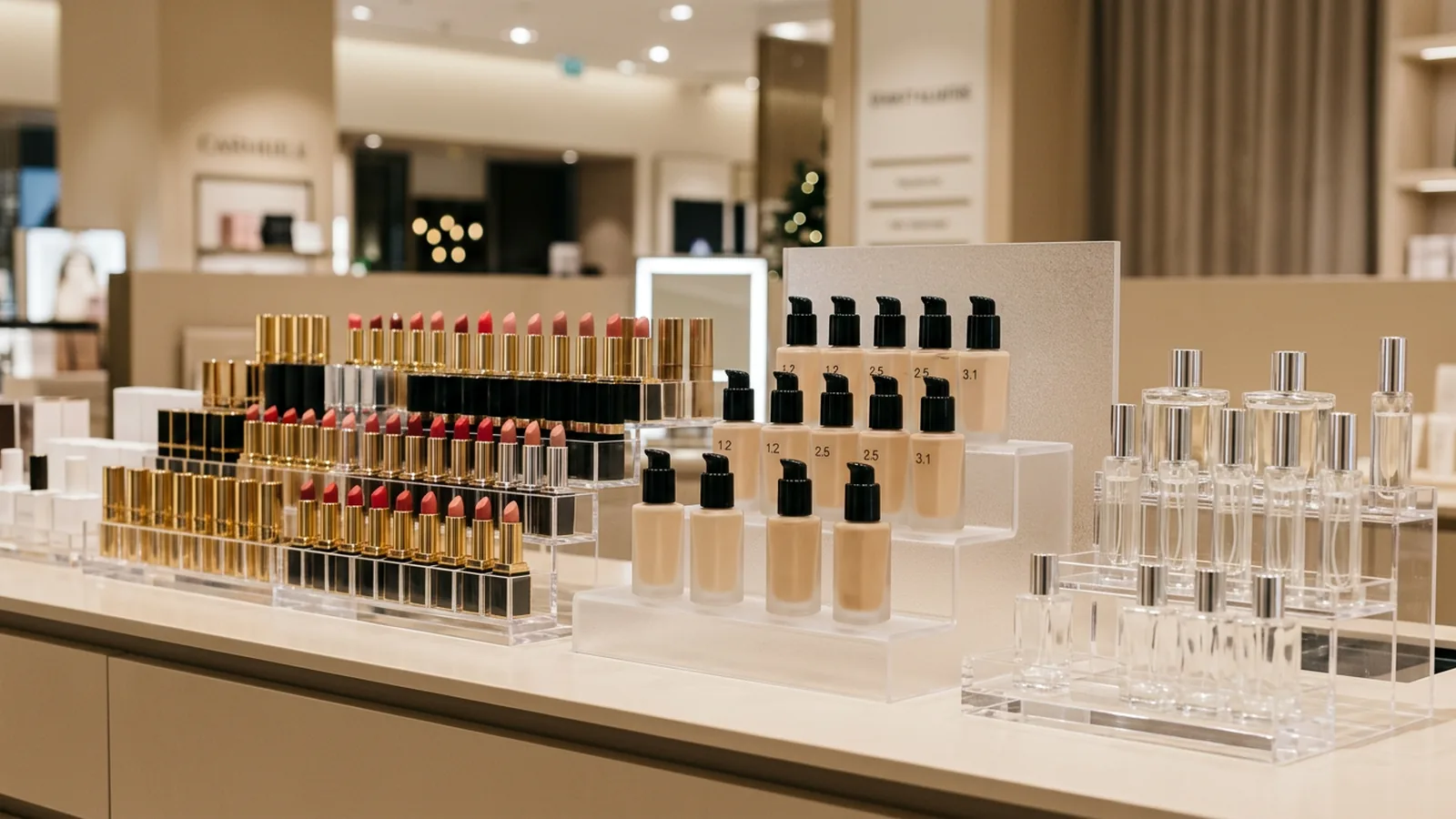
Most cosmetic brands choose their display fixture for how it looks in a mockup. The ones who sell more choose it for what it does to the shopper at the counter — and those two decisions don't always point to the same display.
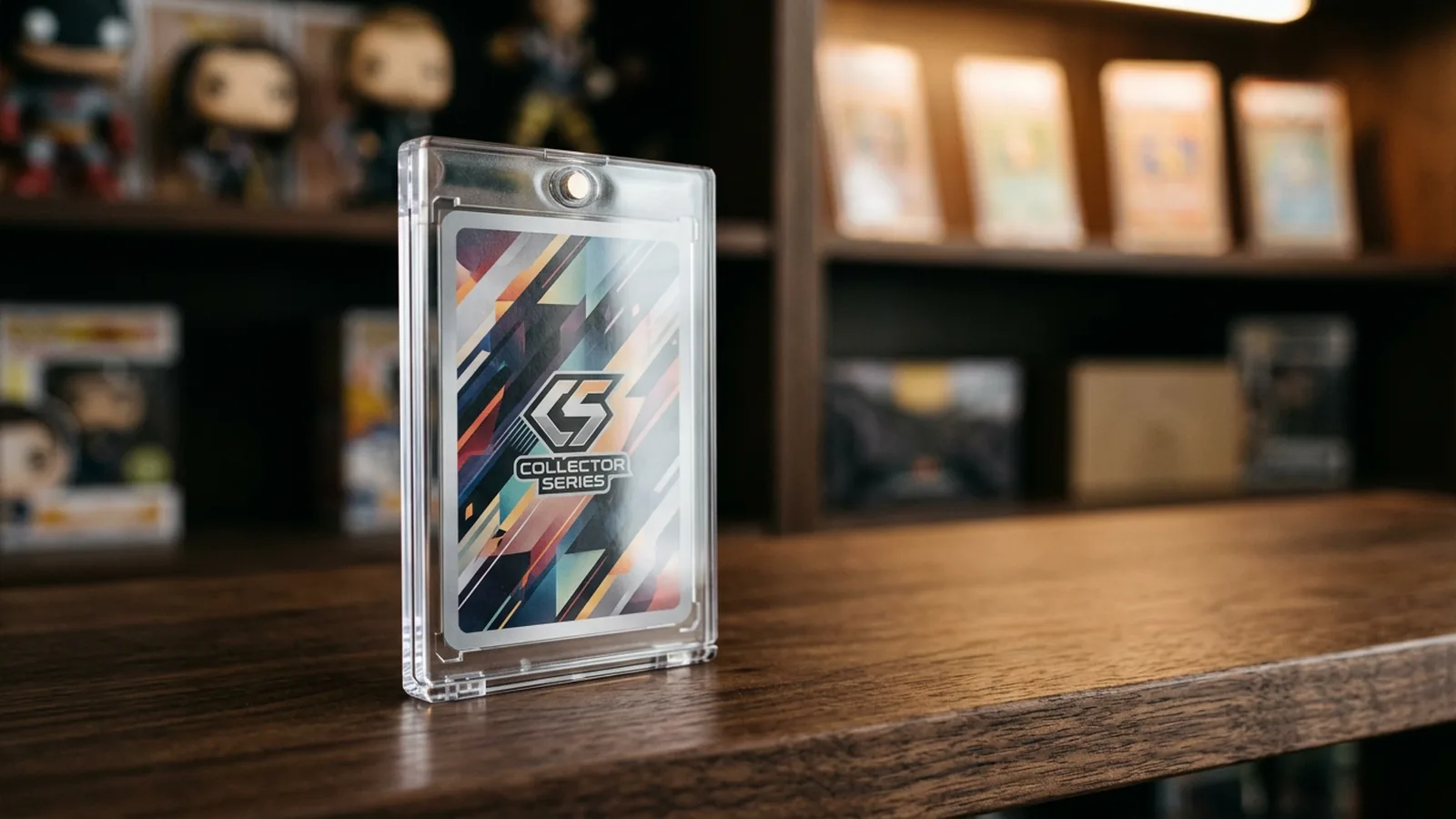
Most display mistakes I see aren't about quality — they're about choosing the wrong display type for what you're actually protecting.
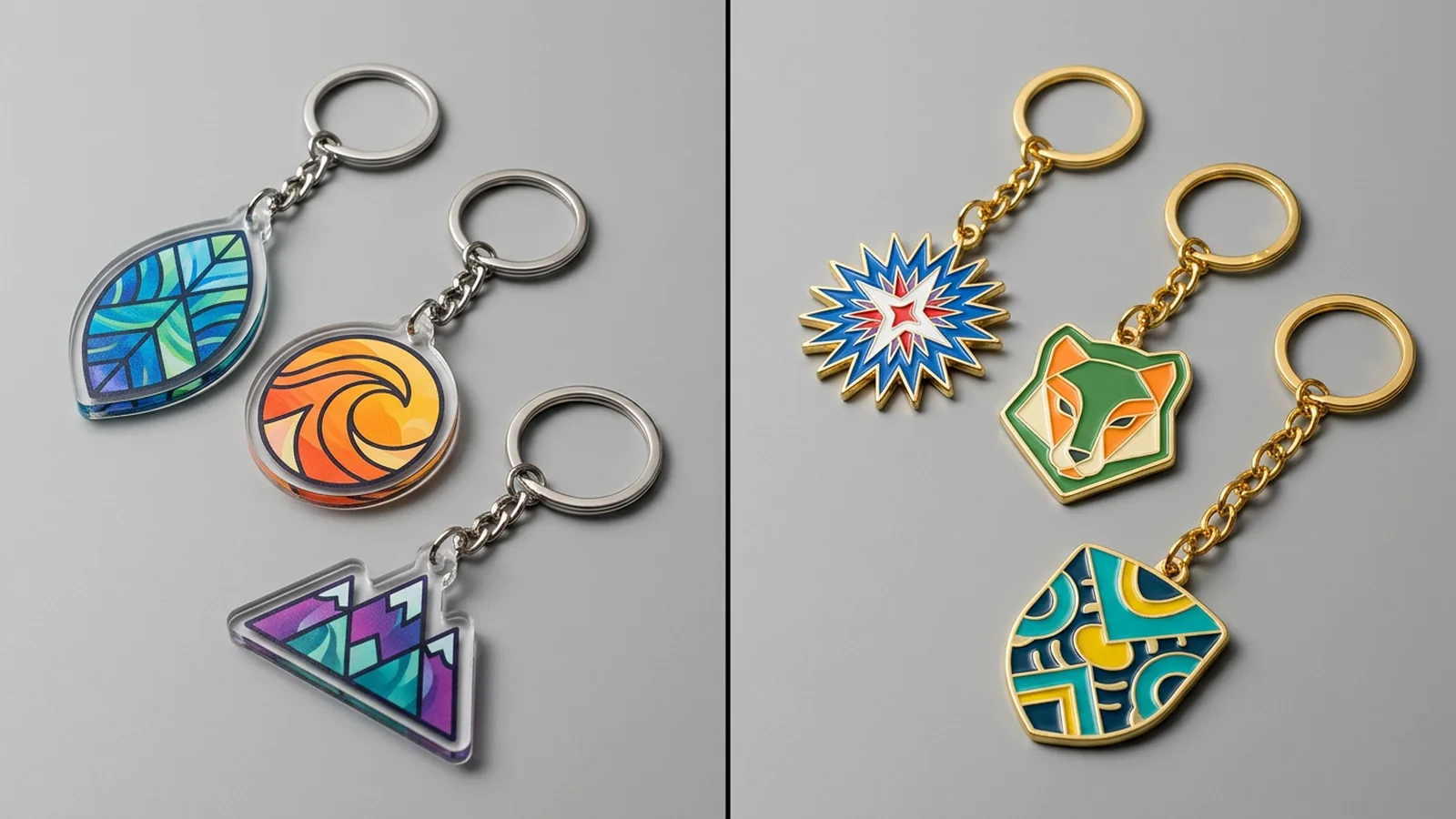
Acrylic or enamel keychain — the answer changes depending on your order size, timeline, and budget, and getting it wrong in either direction is an expensive mistake.
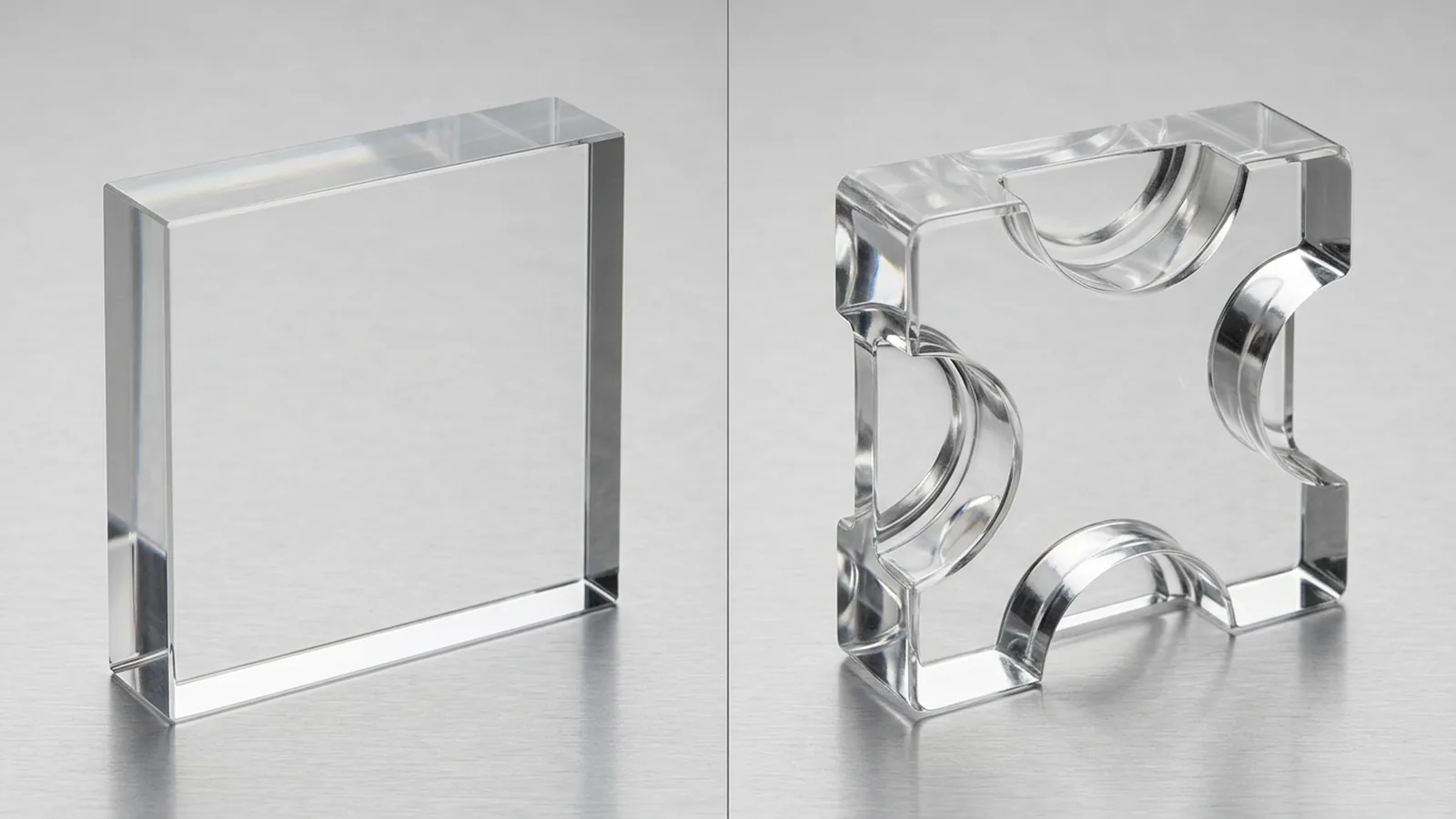
The wrong polishing spec on a display case order doesn't show up until the edges start to haze — here's how to get it right before you quote.
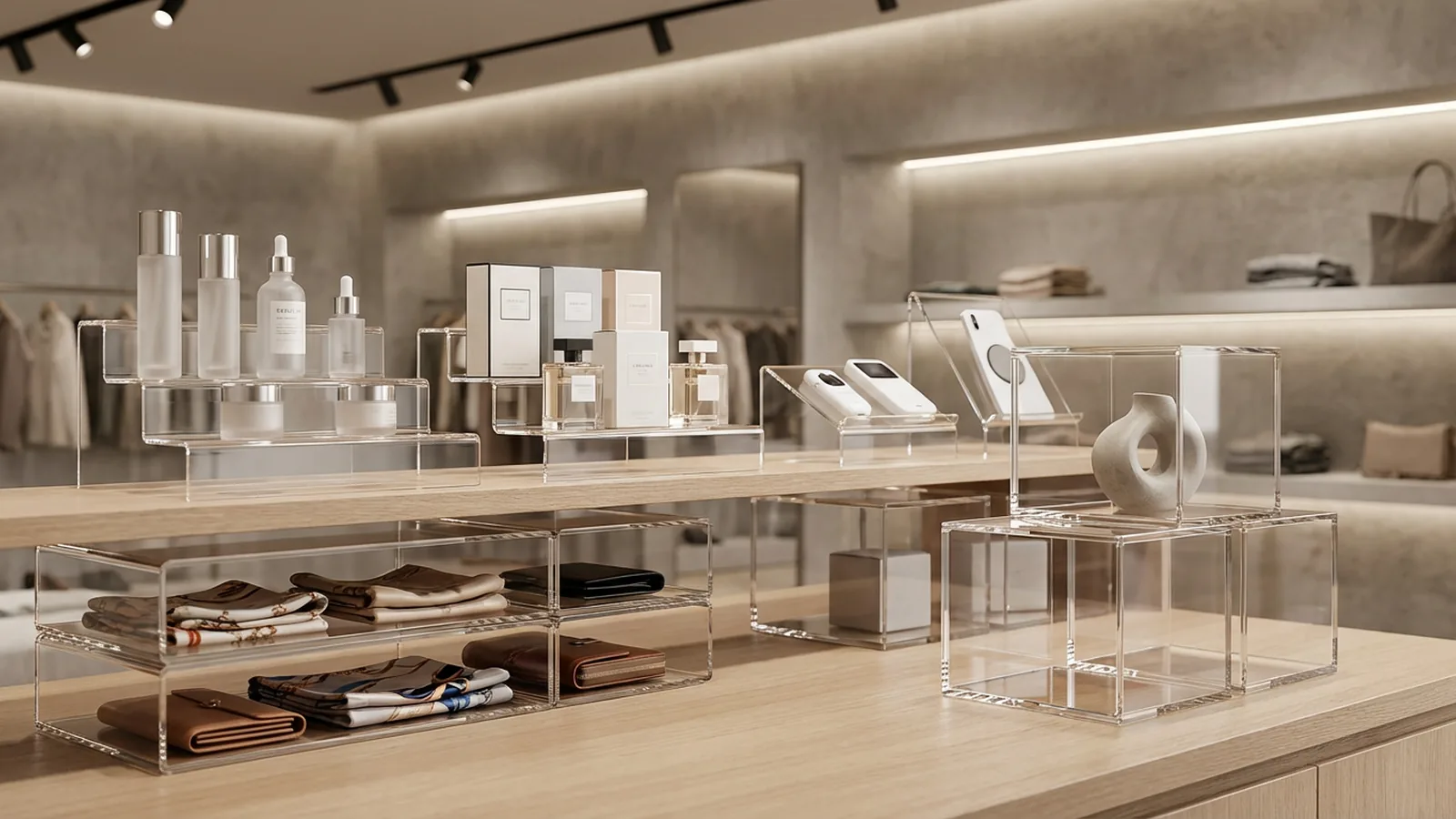
Most retail display guides show you what looks good. This one shows you what it takes to manufacture — and what each concept actually costs to produce at scale.
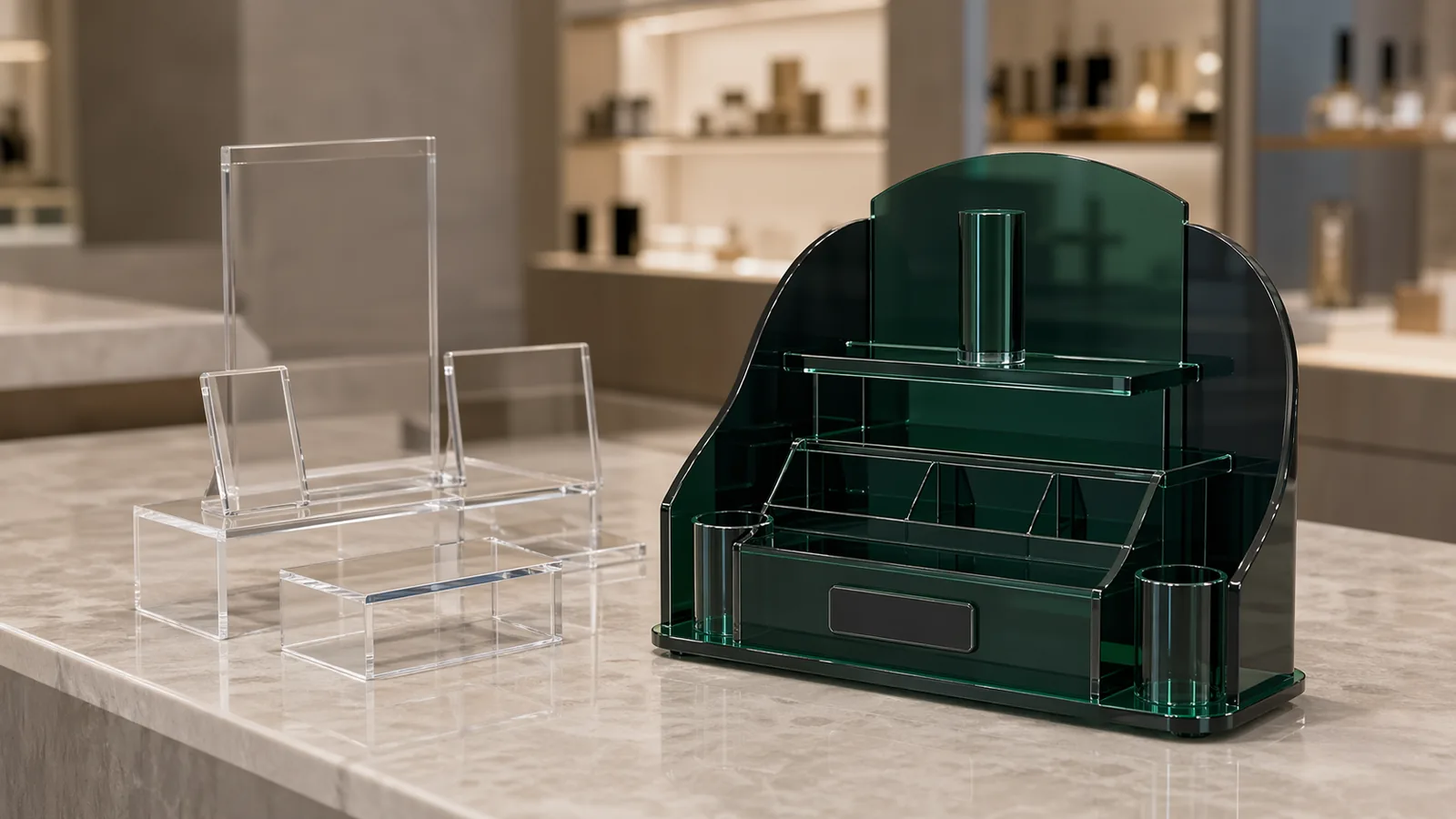
Choosing between custom and stock acrylic displays is a cost and timeline decision — and the wrong call in either direction wastes real money.
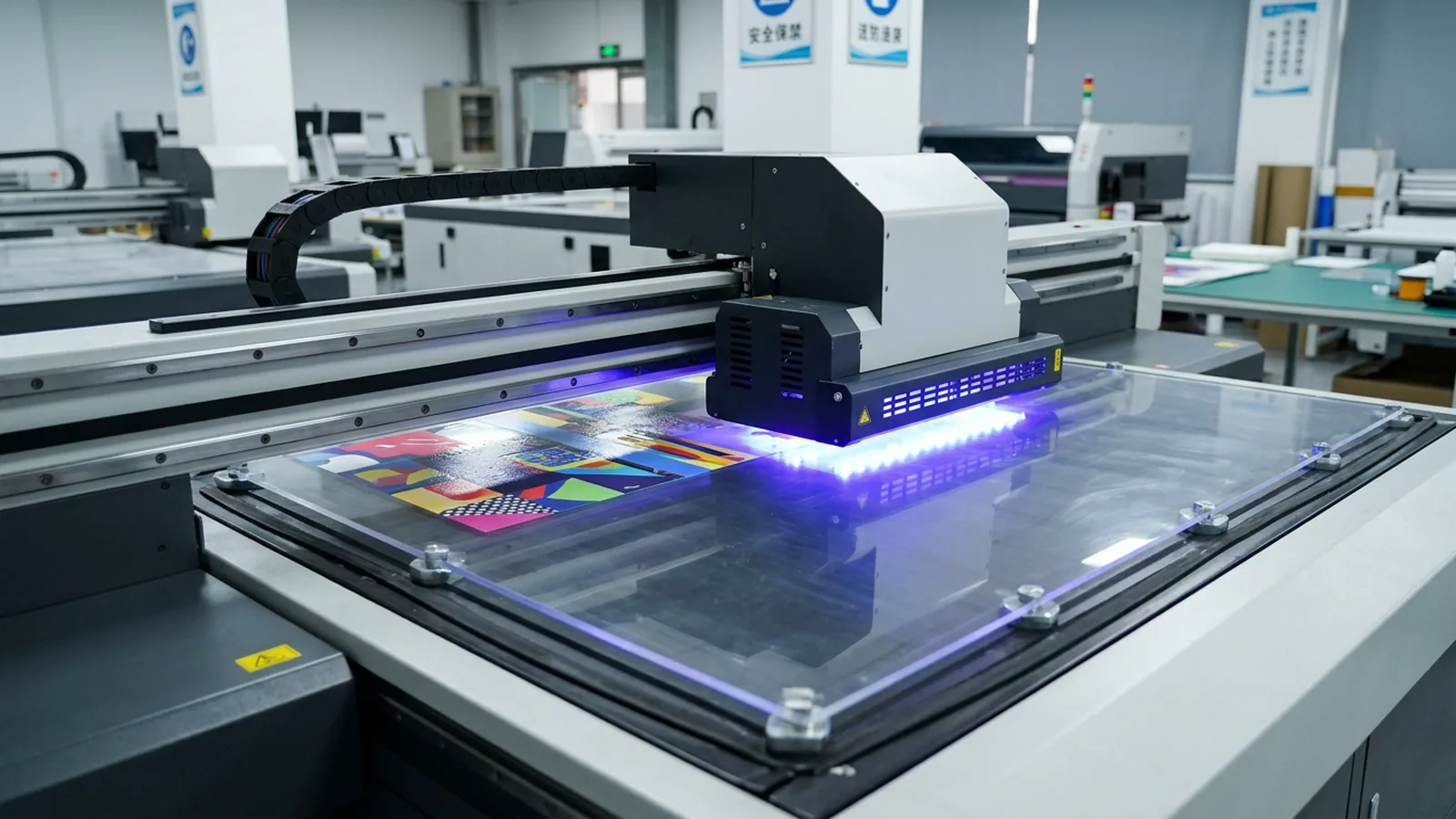
The ink looks perfect at sample approval. Whether it stays that way at six months is a different question.
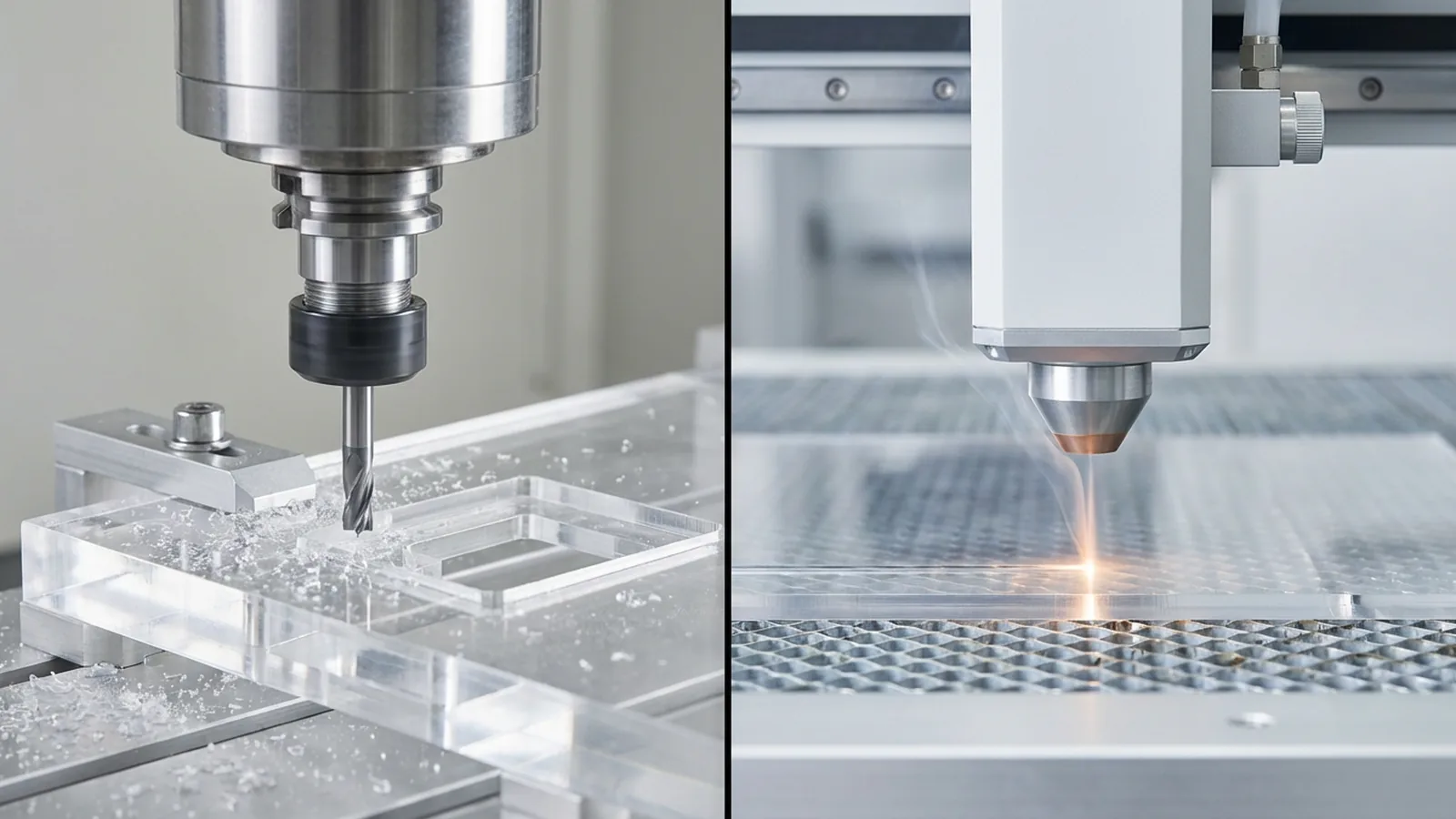
Choosing the wrong cutting method costs real money — a laser can't hold tolerance on thick blocks, and CNC is overkill for thin sheet work.
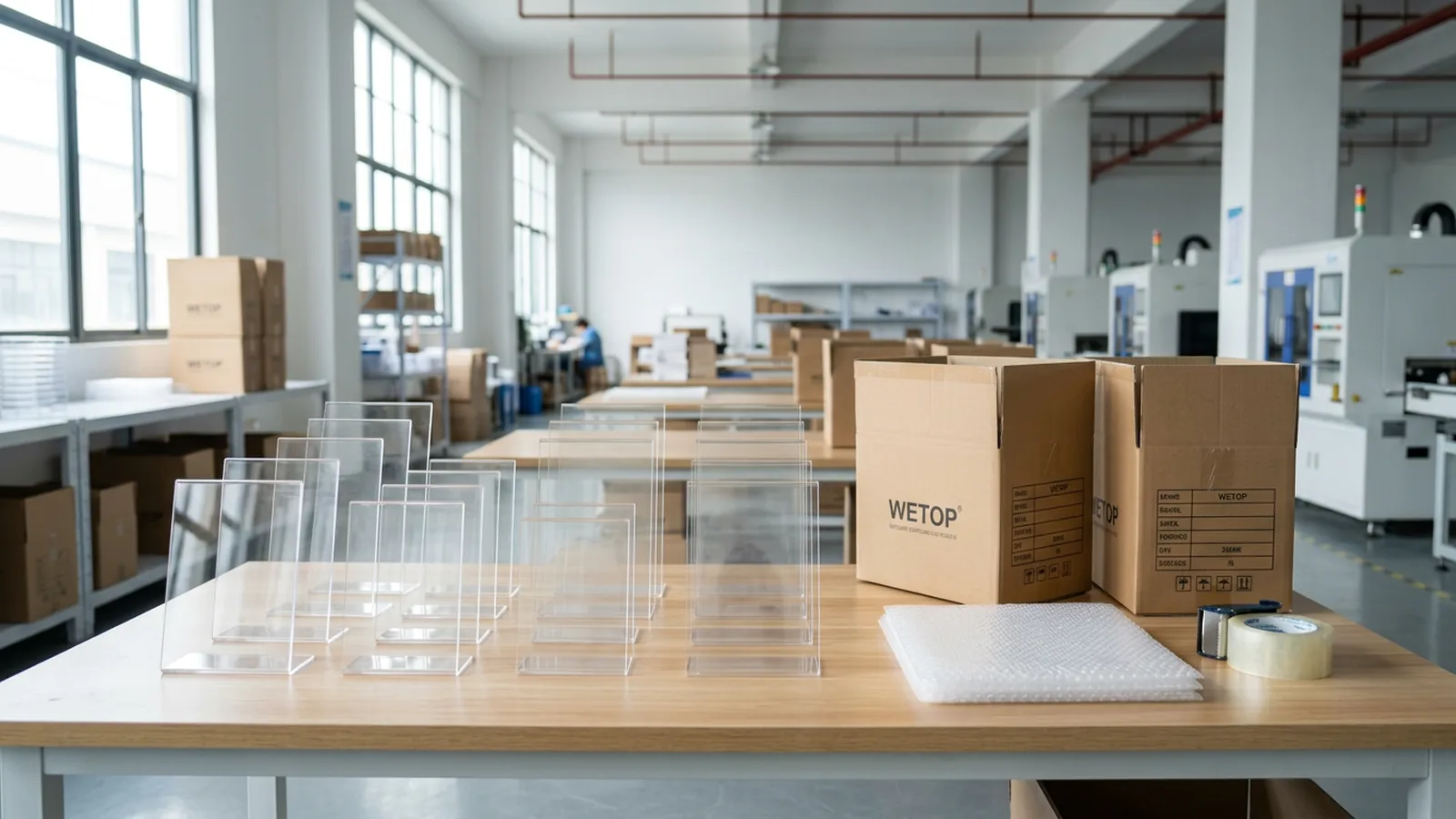
Most acrylic factories require 500+ pieces per order. Wetop's 50-piece MOQ lets you pilot, test, and scale without overcommitting.
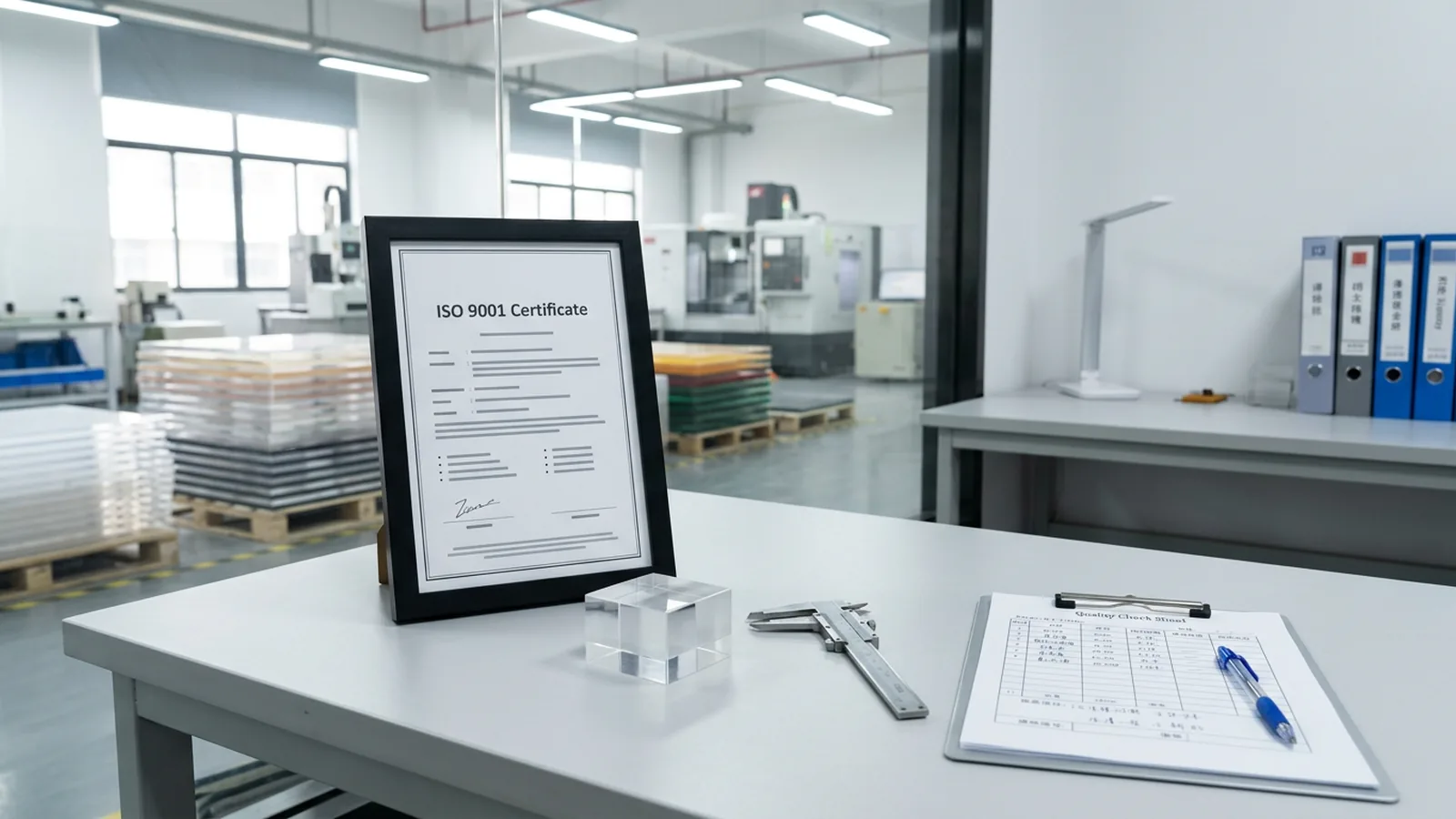
ISO 9001 tells you a factory runs disciplined processes — but not whether the acrylic in your hands will pass your spec. Here's what to verify before you commit.
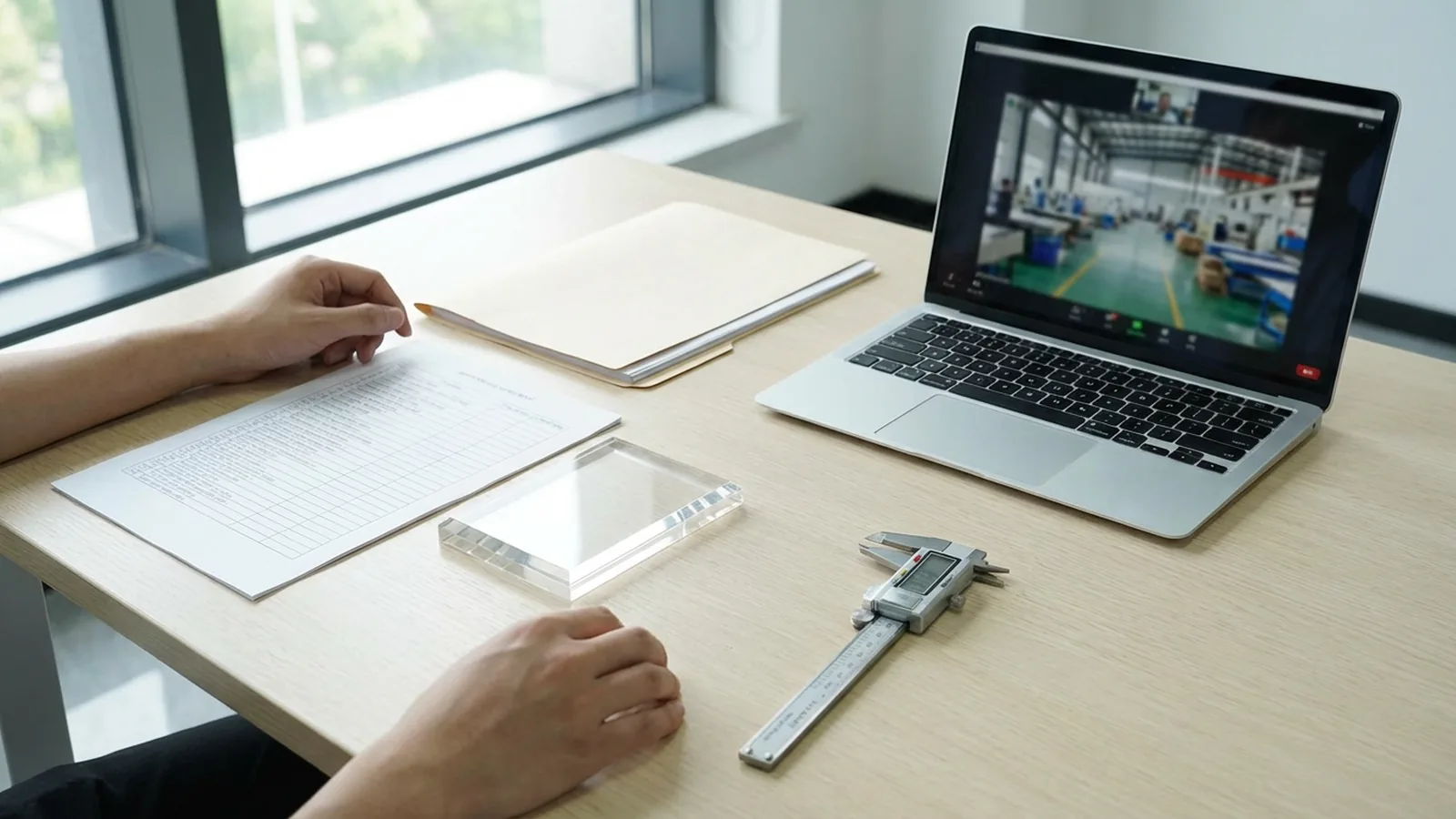
The wrong acrylic supplier costs you more than money — a failed production run means missed launch dates, unhappy buyers, and a project you have to rebuild from scratch.
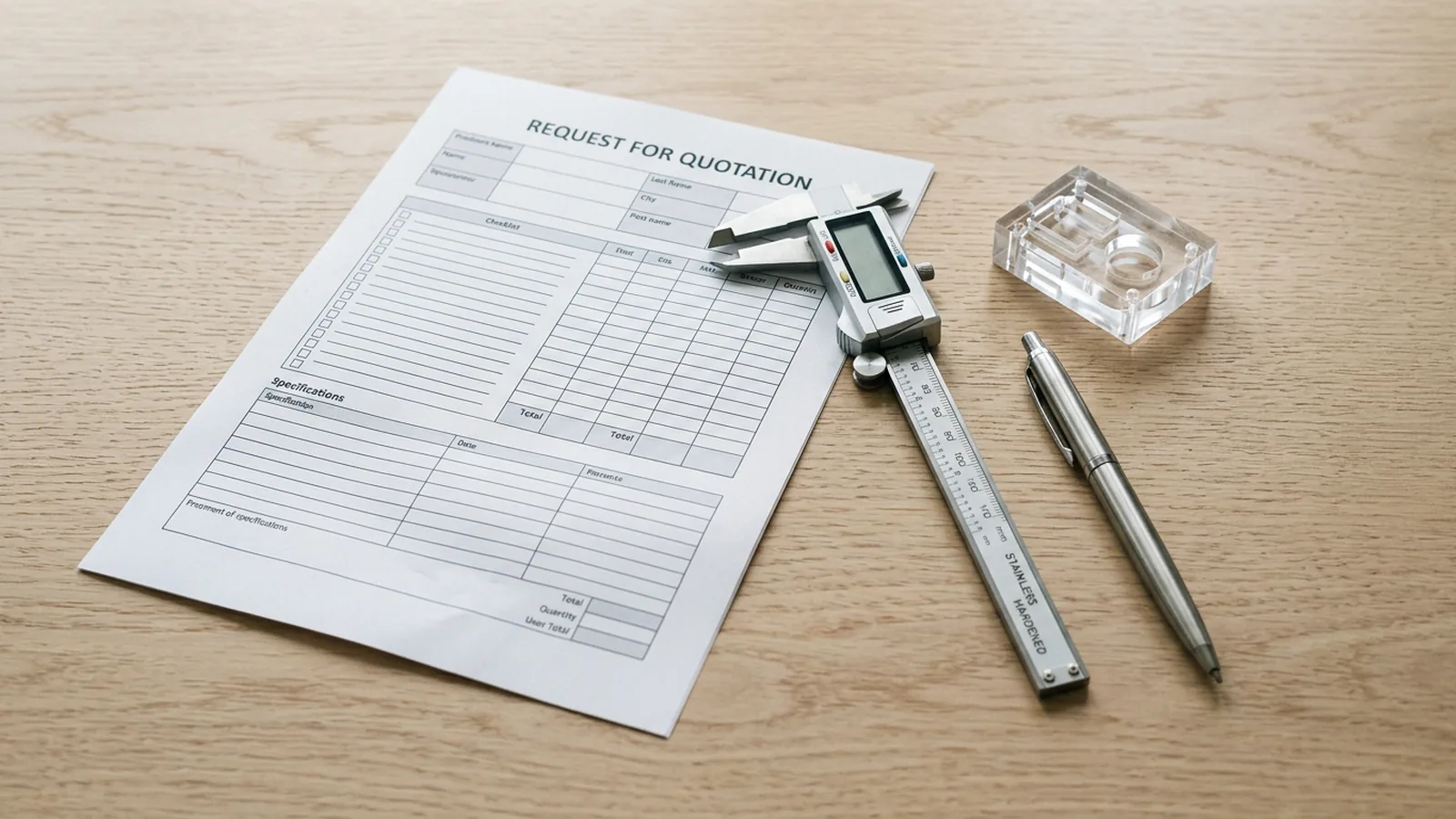
A complete custom acrylic quote request gets you an accurate number in hours — a vague one starts a back-and-forth that can take days and still produce a price you can't use.
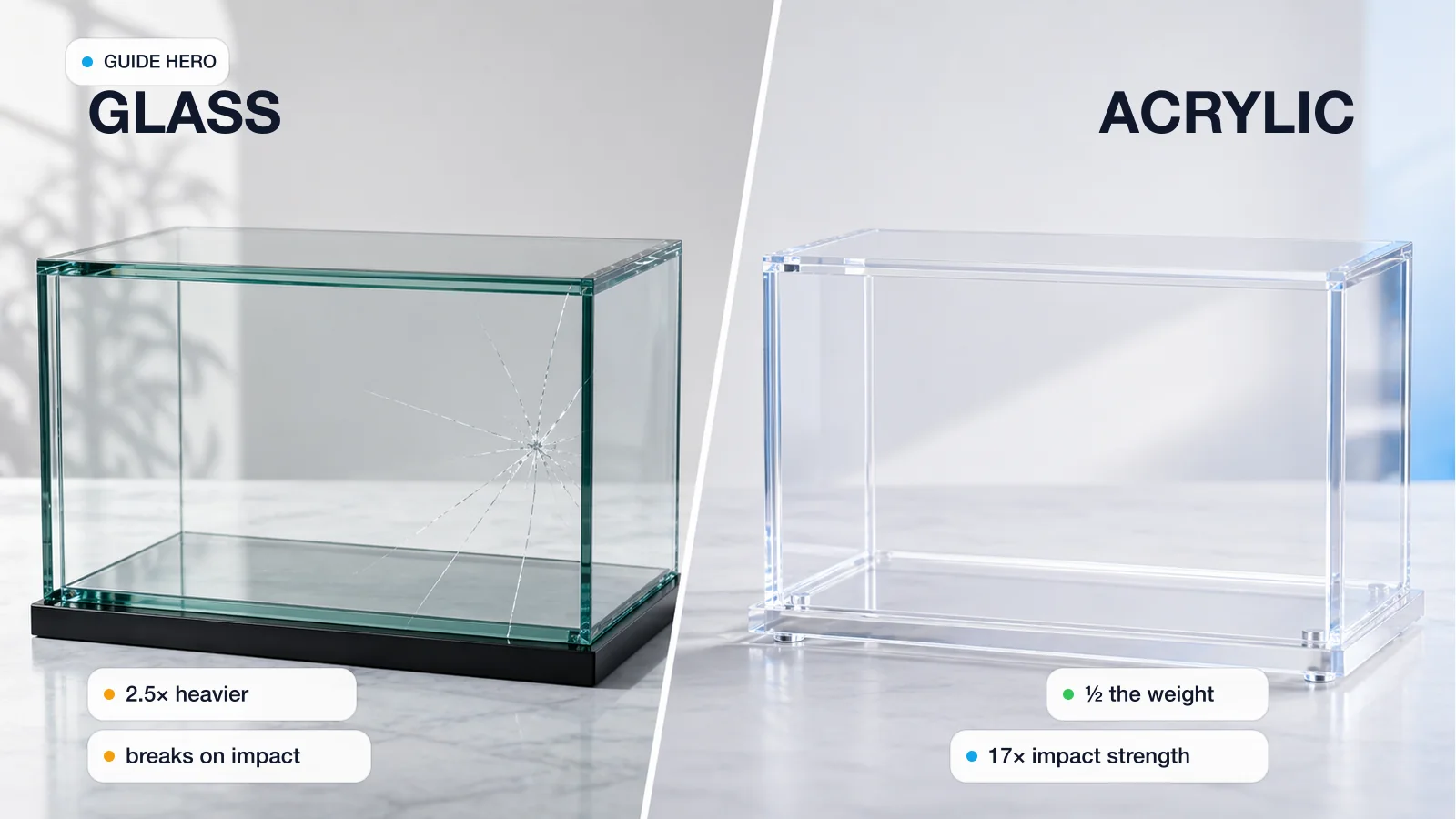
Choosing between acrylic and glass for your display isn't about which material is better — it's about which tradeoffs your project can actually live with.
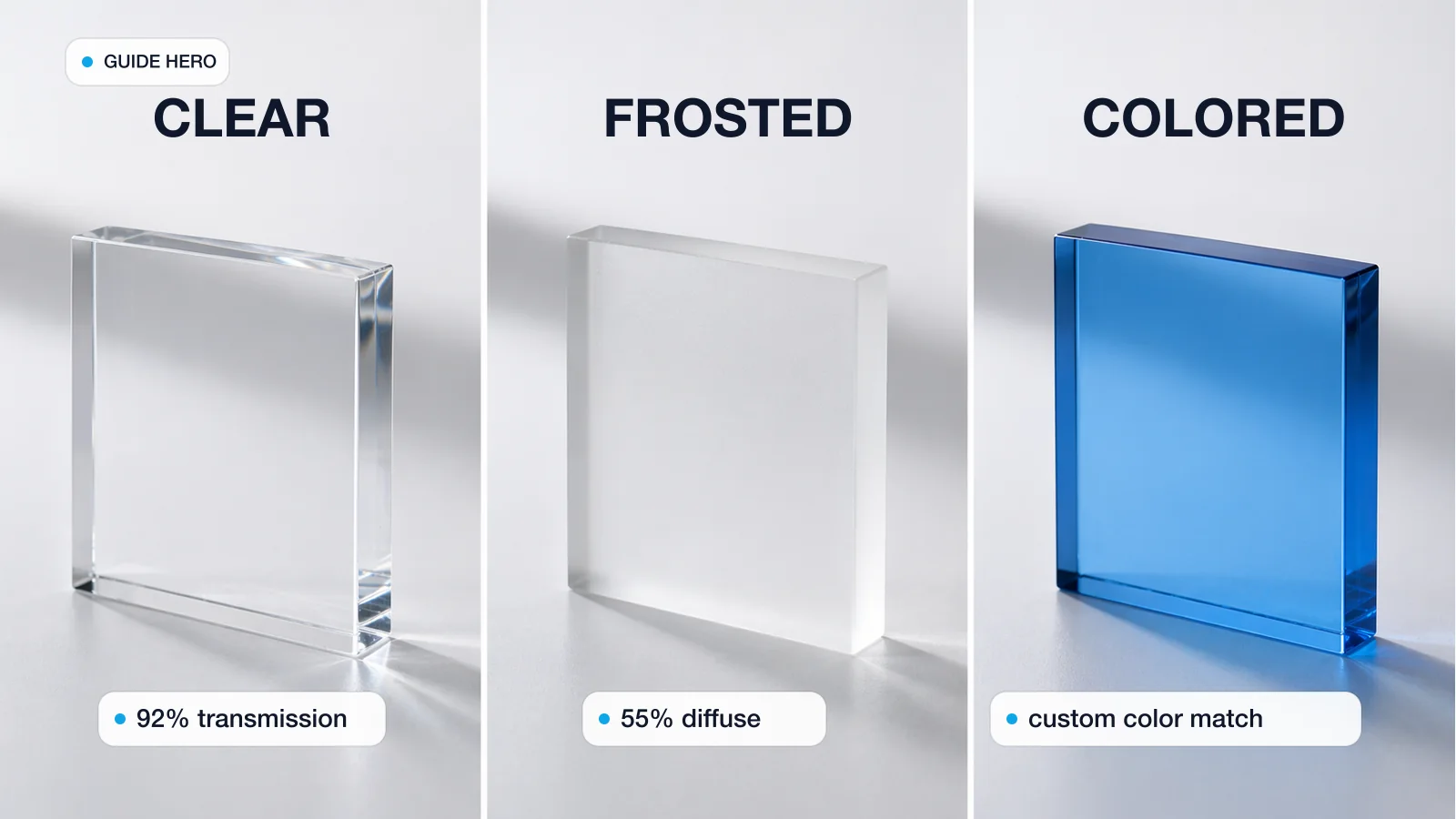
Specifying the wrong acrylic finish is a quiet, expensive mistake — most buyers only discover it after production, when the display doesn't read the way they expected on the shelf.
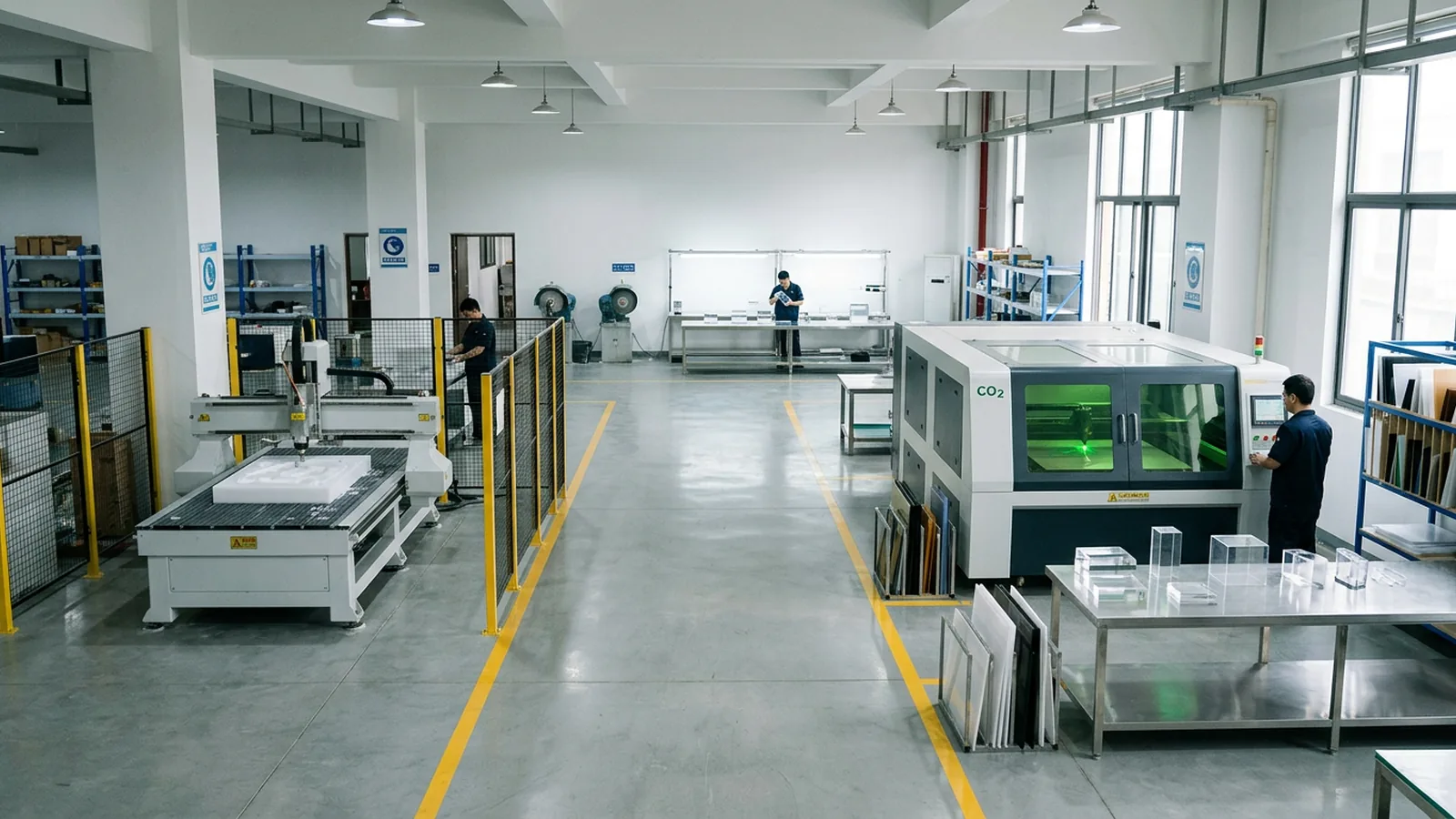
Most buyers treat acrylic as a commodity and underestimate what it takes to go from a PDF drawing to a finished product that survives international freight — here is every stage, explained.
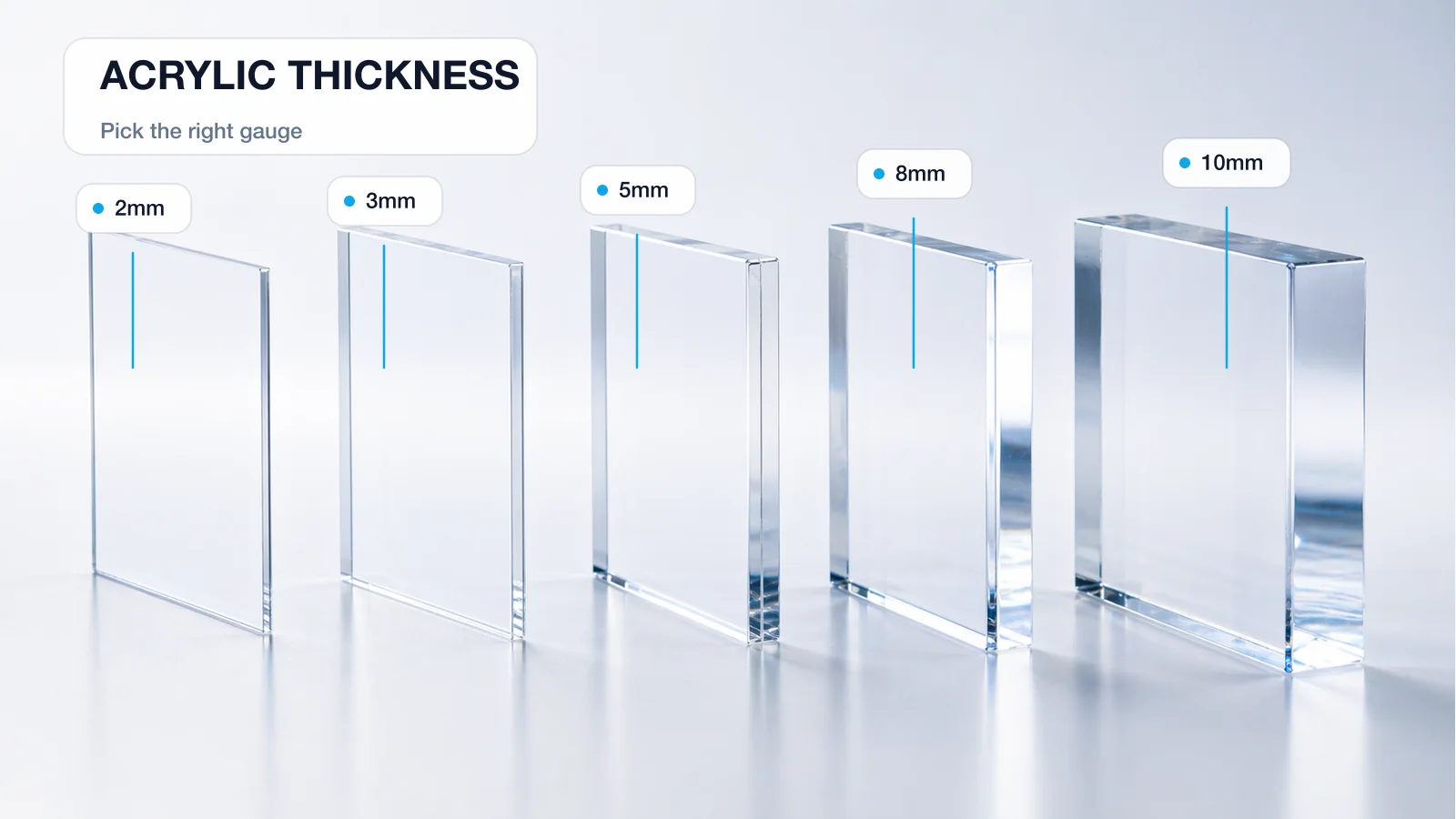
Picking the wrong acrylic thickness is the most common spec mistake I see on new B2B inquiries — too thin and the part sags or cracks, too thick and you pay 2-3x more for fabrication you didn't need.
No guides match your search. Try a broader query or reset the filter.
Skip the reading — ask the people who wrote it. 18+ years on the factory floor means we've already debugged the question you're about to send. We respond within 24 hours.