---
title: "Coin Display Ideas for Slabs, Capsules & Bullion"
description: "Coin display ideas for graded slabs, capsules, raw coins, and bullion bars — how to pick single stands, multi-slot blocks, wall galleries, or lockable cases."
category: "Buyer Guide"
author: "Amy Liu"
authorCredential: "Client Account Manager at Wetop Acrylic — coordinating B2B orders from first inquiry through delivery since 2020, 500+ custom projects handled"
datePublished: 2026-07-10
dateModified: 2026-07-10
primaryKeyword: "coin display ideas"
url: https://wetopacrylic.com/guide/coin-display-ideas/
---
## What coin display ideas actually come down to {#match-to-collection}
Every coin display idea comes down to two questions: what you own and how it should sit. A graded slab, a capsuled coin, a raw coin, and a bullion bar each need a different holder — and a single stand, a multi-slot block, a wall gallery, or a lockable case each fit a different display goal. Pick the wrong pair and the coin rattles, fades, or reads as an afterthought on the counter.
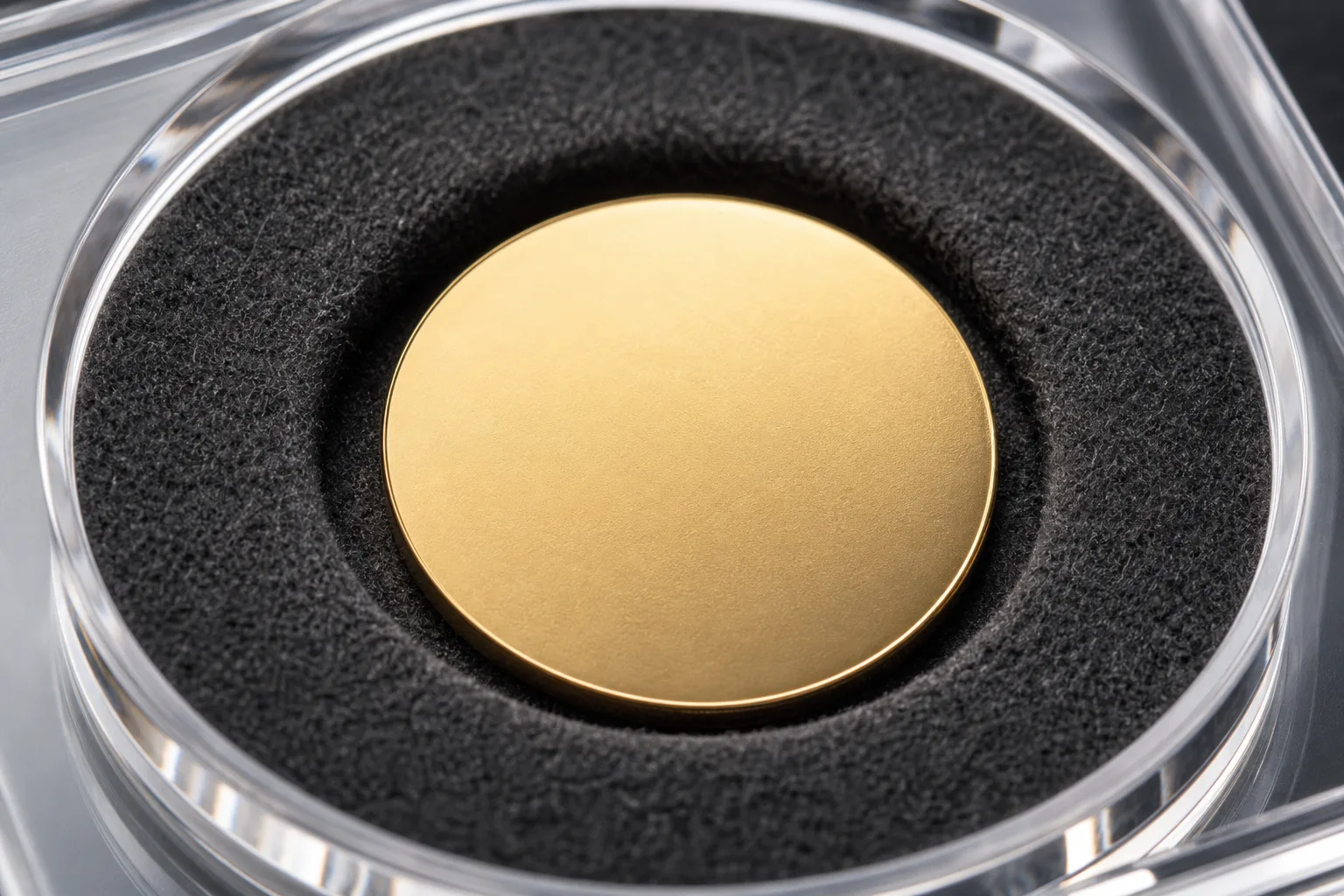
A coin display is a clear holder — almost always cast acrylic — cut to the exact size of a graded slab, a coin capsule, or a bullion bar, so the piece sits fully visible and protected from dust and handling. That "cut to the exact size" part is the whole game. A generic "fits most" holder leaves a graded slab loose enough to shift, and a loose coin photographs crooked and reads as an afterthought to a buyer at your counter.
The coin-display question shows up in two very different flavors, and telling them apart is the first thing we sort out on any inquiry. A dealer asks how to merchandise inventory they're selling; a collector asks how to show off pieces they're keeping. The formats overlap, but the priorities don't — a dealer wants branding and volume pricing, a collector wants the tightest fit and the best light. This guide walks both paths, format by format, coin type by coin type.
---
## Be honest about what an acrylic case protects {#what-acrylic-protects}
A clear acrylic case is not an airtight archival seal. Tarnish and toning resistance come from the coin's own capsule or graded holder plus low-humidity storage. What the acrylic case adds is real, but it's a different job: protection from dust and handling, security on an open counter, and — in UV-stabilized grade — protection from light.
This matters because coin value is fragile in ways a display case can't fix. Graded coins from services like NGC are sealed inside a tamper-evident holder at grading; that holder, not the display around it, is what isolates the coin from the air.[^ngc] A raw coin's toning and a certification label's ink both keep changing if the environment lets them — the enemies are humidity, handling oils, and ultraviolet light. So the honest framing for any coin display idea is: the holder and the storage environment defend the metal, and the acrylic case defends everything else.
Where acrylic earns its place is light and physical protection. Standard clear cast acrylic (PMMA) is optically excellent — it transmits about 92% of visible light — but it only blocks roughly half of incoming UV on its own.[^pmma] UV-stabilized cast acrylic changes that: it blocks about 90-98% of UV while staying just as clear, which protects the color of a toned coin and the ink of a certification label displayed near a window or under bright store lighting. That upgrade adds about 15-25% to material cost. When I quote a coin case, I say this plainly, because a buyer who thinks the plastic box stops tarnish will blame the wrong thing when a raw coin tones in a humid safe.
The three layers of coin protection. The coin's own capsule or graded holder is the anti-tarnish seal; low-humidity storage is the long-term defense; the acrylic case protects against dust, handling, theft, and light. Buying a case to "stop tarnish" is buying the wrong layer.
---
## Five display formats, and the coin each one suits {#five-formats}
There are five coin display formats worth knowing, and each maps to a different combination of coin type, quantity, and setting. A single stand shows one piece; a multi-slot block lines up a set; a wall rack turns a collection into a gallery; a lockable case guards value on an open counter; and a bar display carries the weight of bullion. The table below is the quick decision grid.
The right pick is rarely just aesthetic. A dealer merchandising 1oz silver rounds at a coin show wants a multi-slot block that sets up fast and photographs clean. A collector with a registry-grade date run wants each slab gripped tight and leaning back so the coin face reads under gallery light. A bullion desk moving kilo bars needs gauge that won't bow. Read the table by your coin and setting, not by the picture.
| Format | Best for | Typical acrylic | Locks? | Where it lives |
|--------|----------|:---:|:---:|----------------|
| Single-coin / slab stand | One graded slab or capsule | 3mm | Optional lid | Counter, desk, listing photos |
| Multi-slot coin block | A set — date run, type set, registry run | 3-8mm | No | Shelf, dealer counter |
| Wall-mount rack / gallery | A collection on display | 5mm | No | Wall, storefront window |
| Lockable counter case | High-value graded coins + bullion | 5-8mm | Yes | Open retail counter |
| Bullion bar display | 1oz through 1kg bars | 5-8mm | Optional | Dealer counter, vault |
| Capsule / Air-Tite block | Capsuled coins and rounds | 3mm | Optional lid | Counter, shelf |
Most of the coin buyers I work with end up ordering two or three of these formats on one purchase order — stands for feature pieces, a block for sets, a lockable case for the high-value metal — and we quote the whole set together. The formats share the same channel-and-liner engineering, so combining them doesn't complicate a run. You can see all six built out on our [coin display cases](/products/acrylic-cases/coin-display-cases/) page.
---
## Graded slabs: cut the case to one profile {#graded-slabs}
For graded coins, the single most important display decision is which slab profile the case is cut for. NGC and PCGS both seal coins in rigid holders, but the two footprints differ by a few millimeters — an NGC slab runs about 82 x 58 x 8mm, a PCGS slab about 85 x 56 x 8.5mm. A slot cut to grip one grips the other imperfectly, so a coin display case is sized to one profile, not "most."
That few-millimeter gap is the reason a "fits everything" graded-coin case doesn't really exist. Cut a slot loose enough to swallow both and the slab shifts, tips, and rattles in transit; cut it to one profile and it seats snug. I've had maybe a dozen dealers ask me whether a single case can hold both NGC and PCGS, and the answer that actually works is not one universal slot — it's two profile-specific slots side by side in the same multi-slot block, each cut to its own holder. Mixed sets get displayed together; each coin just sits in its own correctly-sized recess.
The display idea itself follows the collection. A single graded key-date coin goes on an angled single stand that leans the slab back about 12 degrees so the face stays visible under counter light. A date run or a registry set goes in a multi-slot block — the American Numismatic Association's own collecting guidance frames collections by type and by set, and a block that lines up a full set at a uniform angle is how you display exactly that.[^ana] A larger graded collection on permanent display goes on a wall-mount rack. The engineering problem is identical to graded trading cards — if you also handle PSA, BGS, or SGC card slabs, our [graded card display cases](/products/acrylic-cases/graded-card-display-cases/) solve the same slot-to-profile fit for cards, and we quote coin and card formats together. For a real slab-display build, see how we produced a multi-slab counter display in our [triple PSA slab display case study](/case-studies/triple-psa-slab-display-graded-card-retailer/).
---
## Capsuled and raw coins {#capsules-raw}
Capsuled coins seat in a round recess sized to the capsule's outer diameter, not in a square slab slot. Air-Tite and similar capsules come in standard diameters — 40mm for 1oz silver rounds and American Silver Eagles, plus 39mm, 32mm, and 27mm are the common ones — so a capsule block is a panel of circular recesses cut to those diameters. A 40mm recess leaves a 32mm capsule swimming, so each recess is sized to the capsule it holds.
Raw coins — ungraded, uncapsuled — are the trickiest to display honestly, and this is where the material-protection reality bites hardest. A raw coin has no holder isolating it from the air, so the display case genuinely cannot protect it from tarnish; only a low-humidity environment and minimal handling can. For raw coins that a buyer wants on display, I steer them toward capsuling the coin first, then seating the capsule in an acrylic block. The capsule does the sealing, the block does the presenting. Dropping a bare raw coin into an open acrylic recess looks fine on day one and tones unevenly by month six.
Felt or velvet lining is worth specifying for both capsuled and raw coins. A dark navy or charcoal liner in the recess cushions the piece, kills any micro-rattle, and frames the coin against a matte backdrop that makes the surfaces pop under light. For capsuled bullion rounds a dealer is selling, the lined recess is also what makes a $40 silver round feel like a $40 purchase instead of loose change in a plastic tray.
---
## Bullion bars: heavier metal, heavier gauge {#bullion}
Bullion bars change the display math because they carry real weight, and weight is what dictates acrylic thickness. A 1oz bar is small and light — around 24 x 41 x 3mm — and sits happily in a 3mm acrylic channel. A 10oz bar and especially a 1kg bar (roughly 48 x 85 x 30mm) will flex a thin channel and bow a thin panel, so bullion displays step up to 5-8mm acrylic with a wide rest base.
The format for bullion is almost always an angled channel slot — a milled groove that holds the bar tilted forward so the face and hallmark read, with a rest step at the bottom that carries the load. Rows of these channels turn a dealer counter or a vault shelf into a clean bar display. The failure mode I see on cheaper bullion displays is a channel cut into acrylic too thin for the bar: the slot spreads under the weight, the bar leans, and the whole row goes crooked. Heavier gauge and a broad base keep the display flat and the slots square. A felt-lined channel also matters more for bullion than for slabbed coins, because a bare bar sliding into a bare acrylic groove can pick up fine scuffs on a proof or a collectible-finish bar.
High-value bullion on an open counter is the clearest case for a lockable format. An enclosed acrylic case with an internal angled tier and a flush cam or barrel lock lets a customer see the metal while the case deters a grab. When a bullion desk asks me for one display idea that covers a mixed inventory — 1oz rounds, 10oz bars, a kilo showpiece — the answer is usually one lockable counter case with profile-matched channels inside, quoted alongside open bar racks for the volume metal.
---
## UV, felt, and the finishing that protects value {#uv-finishing}
Finishing is where a coin display idea either protects value or just holds the coin. The three choices that matter most are UV-stabilized acrylic, felt or velvet lining, and edge finish. UV-stabilized cast acrylic blocks about 90-98% of ultraviolet light versus roughly 55% transmitted by standard clear sheet — the difference that protects a toned coin's color and a certification label's ink from fading near a window or under bright retail lighting. For the transmission-spectrum detail behind those numbers — and why "99% UV protection" is a marketing claim, not a spec — see our [UV protection acrylic spec guide](/guide/uv-filtering-acrylic-trading-cards/).
Whether UV grade is worth the roughly 15-25% material premium depends on where the coin lives. A coin in a drawer or a dark safe sees almost no UV, and standard clear cast acrylic is more than enough. A coin in a storefront window, on a lit retail wall, or on a desk near daylight is exactly where UV-stabilized grade earns its cost — because the color that carries a toned coin's premium is precisely what UV fades first. For a graded slab, the label ink and any toning on the coin are both at risk, and once a certification label fades it can't be restored without resubmitting. I recommend UV grade for anything on sustained display and standard clear for stored inventory, and I say so on the quote rather than defaulting everyone to the upsell.
Edge finish is the detail that separates a display piece from a plastic box. Cut acrylic edges are diamond-polished (machined optically flat, the premium standard) or flame-polished (heat-glossed, a clean and cost-effective finish) so the edge reads as glass, not a frosted saw cut. For enclosed and lockable cases, 45-degree mitered corners hide the joint line entirely. None of these change what the case protects — but they change whether a buyer at your counter treats the display as part of the coin's value or as throwaway packaging.
A felt-lined recess does two jobs: it cushions the coin against micro-rattle and frames it against a matte backdrop. The felt is the cushion — the coin's own capsule or graded holder is still what seals it.
---
## From display idea to a real order {#ordering}
Turning a coin display idea into a real order starts with one message: the format, the coin profile, the quantity, and your finishing preferences. [Send us your coin spec](/contact/) and tell us whether it's a single stand, a multi-slot block, a bar display, a wall rack, a lockable case, or a capsule block; give the slab profile (NGC or PCGS), the capsule diameter, or the bar size; and note UV grade, felt lining, lid type, and branding. We respond within 24 hours.
When a first-time buyer mails me a single slab, capsule, or bar to measure, that's usually the smoothest path — we measure the actual piece, cut a sample slot, and test the fit before any bulk production runs, so what you approve is exactly what ships. Our MOQ is 50 pieces per design, which is a B2B minimum that fits coin dealers, small numismatic shops, mints, auction houses, and collector-club group buys — not only large-volume buyers. Samples ship in 3-5 days; production runs 15-20 days; the default shipping term is FOB Shenzhen, with CIF and DDP available. Every case passes 100% inspection against your approved sample in our ISO 9001-certified factory.
Branding rides along in the same run. Laser engraving cuts a permanent frosted-white shop name or mint issue title into the acrylic; UV printing puts full-color logos on a panel or base; custom printed retail boxes ship with the cases for dealers reselling coins inside the display. To spec a run — or to send a slab, capsule, or bar for us to measure — start on our [coin display cases](/products/acrylic-cases/coin-display-cases/) page, and see the full range of formats and finishing on the [acrylic display cases](/products/acrylic-cases/) hub.
[^pmma]: [Polymethylmethacrylate (PMMA / Acrylic) material properties — MakeItFrom](https://www.makeitfrom.com/material-properties/Polymethylmethacrylate-PMMA-Acrylic) — documents PMMA's optical transparency (about 92% visible-light transmission), the property that makes cast acrylic the standard clear material for coin display cases.
[^ngc]: [The NGC Coin Certification and Grading Process — Numismatic Guaranty Company](https://www.ngccoin.com/coin-grading/grading-process/) — describes how graded coins are sealed inside a tamper-evident NGC holder during encapsulation, confirming that the holder, not the display case, provides the coin's protective seal.
[^ana]: [Collecting 101 — American Numismatic Association](https://www.money.org/collect/) — the ANA's introduction to coin collecting explains collecting by type and by set, the collection structures that multi-slot coin display blocks are built to present.