---
title: "Does Acrylic Yellow? UV & Care for Framed Photos"
description: "Does acrylic yellow over time? Cast vs extruded, UV-filtering frame grades, fade protection, and how to clean a plexiglass picture frame without crazing it."
category: "Buyer Guide"
author: "Deniz Chen"
authorCredential: "QC Manager at Wetop Acrylic — leading 4-stage quality inspection since 2016, 1,000+ custom orders inspected piece-by-piece before ship"
datePublished: 2026-07-09
dateModified: 2026-07-09
primaryKeyword: "does acrylic yellow"
url: https://wetopacrylic.com/guide/acrylic-frame-uv-yellowing-care-guide/
---
## Does acrylic yellow? The honest answer for framed photos {#does-acrylic-yellow}
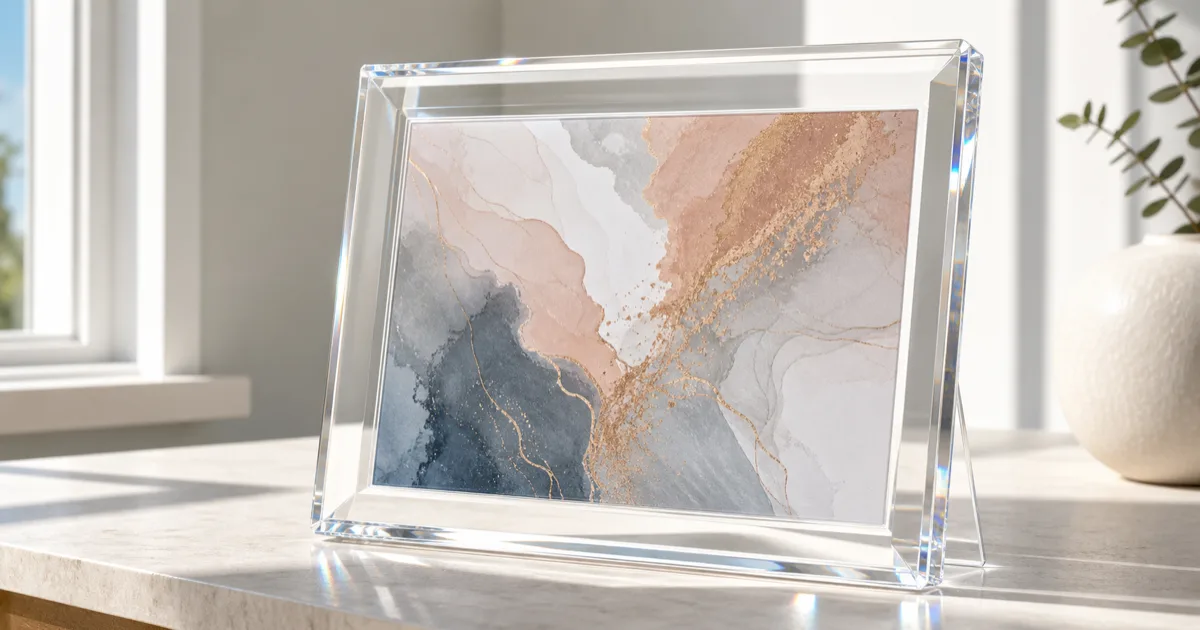
Quality cast acrylic does not visibly yellow in normal indoor picture-frame use. The yellowing reputation acrylic carries was earned by cheap extruded sheet and older stabilizer-free material, not the cast PMMA a real frame program orders. Modern cast acrylic carries UV absorbers and is rated for outstanding weathering resistance[^azom-pmma].
That is the verdict. The rest of this guide is the reasoning a buyer needs before specifying glazing for a [custom acrylic frame](/products/acrylic-frames/) program: what actually causes yellowing, when the photo behind the glazing needs UV protection even though the acrylic itself doesn't, and how to clean a plexiglass picture frame without turning it cloudy. In 10+ years of quality audits I've watched buyers worry about the wrong failure mode. I see them fixate on yellowing, which quality cast material resists, and overlook cleaning damage, which the wrong spray bottle inflicts in a month. This guide sorts the real risks from the inherited myths.
One scope note. This is the yellowing, UV-fade, and care guide for framed photos and art specifically. If you're weighing glazing materials against each other, our [acrylic vs glass picture frame guide](/guide/acrylic-vs-glass-picture-frame/) owns the head-to-head on weight, breakage, and cost; if you need general cleaning protocol across displays and cases, our [how to clean acrylic displays guide](/guide/how-to-clean-acrylic-displays/) covers finish-by-finish cleaner selection. This page answers one question set: does acrylic yellow, does acrylic fade, and how do you care for the frame.
---
## Why acrylic got its yellowing reputation — cast vs extruded {#cast-vs-extruded}
The yellowing myth traces to two things buyers rarely order today: cheap extruded sheet and decades-old material with no UV stabilizer. Cast acrylic, the grade a quality frame is built from, is a different product. It holds clarity longer, resists heat better, and machines to a cleaner edge. Confirming the quote says cast is the single most useful thing a buyer can do.
Here is the mechanism. Acrylic (PMMA) comes in two forms. Cast acrylic is polymerized between glass plates in a batch, which gives it higher molecular weight, superior optical clarity, and a heat-deflection temperature in the mid-90s°C[^azom-pmma][^makeitfrom-pmma]. Extruded acrylic is pushed through rollers in a continuous process: cheaper, more dimensionally uniform, but lower molecular weight, softer, and more prone to the clouding and edge issues that fed acrylic's bad name. When someone tells you "acrylic yellows," they are almost always describing extruded sheet, old signage-grade material, or a stabilizer-free product from before modern UV additive packages became standard.
Modern cast acrylic is stabilized against exactly this. Materials references rate PMMA for "outstanding weathering and resistance to UV radiation"[^azom-pmma], and quality UV-resistant cast grades are specified for years of outdoor service with minimal yellowing — a far harsher environment than any indoor wall. Our incoming-material inspection checks the sheet certificate against the order spec before a single panel is cut, precisely because the cast-versus-extruded distinction is where the yellowing risk actually lives, not in the aging process itself.
---
## Does acrylic fade? Separating the frame from the photo {#does-acrylic-fade}
The acrylic itself resists fading far better than whatever sits behind it. Fading is a content problem, not a glazing problem. The pigment in a photo or print breaks down under cumulative light exposure long before a quality acrylic panel shows any change. So the real question is never "does acrylic fade" but "does this glazing protect the thing I'm framing."
Light is the primary enemy of displayed images. The Library of Congress puts "limit light exposure" at the top of its preservation guidance for photographs, because cumulative light causes the fading and discoloration that ends a print's display life[^loc-photo]. Ultraviolet is the most aggressive slice of that spectrum. This is where glazing choice matters: standard clear acrylic already reduces UV transmission relative to plain glass, and UV-filtering grades take it much further. The panel outlives the photo; the point of UV-filtering glazing is to make the photo last longer too.
That reframes the buying decision. You are not protecting the acrylic. You are deciding how much protection the content behind it deserves. A drugstore reprint on a hallway wall does not need archival glazing. An original watercolor, a signed limited print, or a founder's-portrait certificate in a bright lobby does. The next two sections cover which grade answers which case.
---
## Standard clear acrylic — clarity and everyday UV behavior {#standard-clear-acrylic}
For most framed content, standard clear cast acrylic is enough. It transmits up to 92% of visible light — optically indistinguishable from framing glass in front of a print[^plexiglas-transmission] — and it already outperforms plain glass on UV behavior without any specialty grade. For everyday reprints, posters, and photos on shaded interior walls, standard clear glazing does the job.
The clarity number matters because buyers sometimes assume UV protection costs visible brightness. It does not. Clear cast PMMA and clear framing glass both land near 92% visible-light transmission, so switching to acrylic glazing loses nothing a viewer can see. Where the two materials separate on the display wall is UV: acrylic's polymer structure absorbs more ultraviolet than a plain glass panel does, which is why standard acrylic glazing already gives displayed content a head start on fade resistance before any UV-filtering additive enters the spec.
A vocabulary note, because buyers arrive with three names for one material. A plexiglass picture frame, a perspex frame, and an acrylic frame are all PMMA — Plexiglas and Perspex are historical trade names that became generic. Whatever the quote calls it, confirm two things: that it is cast (not extruded) and, if fade protection matters, whether it is standard clear or a UV-filtering grade. Those two spec lines decide almost everything about how the frame ages.
---
## UV-filtering acrylic grades — when the content earns it {#uv-filtering-grades}
UV-filtering acrylic is the archival-glazing answer for fade-sensitive content. Grades built for framing and conservation, such as ACRYLITE OP-3 (Gallery class), are classified as blocking about 95% of UV light in the 200–390 nm range while keeping around 92% visible-light transmission[^acrylite-op3]. The UV protection is built into the sheet, not a surface coating, so it does not wear off and either face can point at the artwork.
This is the grade to spec when the content is irreplaceable or fade-prone: original art, limited-edition prints, historical photographs, and certificates that must stay legible for decades — especially in bright rooms with daylight or halogen and fluorescent lighting, which also emit UV. The 200–390 nm band the filtering targets is precisely the wavelength range that breaks the chemical bonds in color pigment, so blocking the bulk of it directly extends how long displayed content holds its color[^acrylite-op3]. It is worth being precise here: no glazing stops fading entirely, because visible light contributes too. UV-filtering glazing removes the most aggressive driver, not all of them.
Because UV-filtering sheet costs more than standard clear, I treat it as a per-order spec rather than a default. The gallery programs we supply are the clearest case for it: the [colored floating frames we built for art galleries](/case-studies/colored-acrylic-floating-frames-art-galleries/) hang valuable, fade-sensitive art in daylit public rooms, exactly the environment UV-filtering glazing is built for. When a program specs UV-filtering glazing, we attach the grade's datasheet to the quote so the buyer can see the actual absorption figures against the wavelengths that matter for their content. If a supplier claims "UV protection" without naming a grade or showing a datasheet, that claim is unverifiable — the same way "polished edges" without an edge-finish spec is unverifiable. Ask for the grade name and the number.
Standard clear cast acrylic holds its water-clear tone under daylight. The yellowing buyers fear belongs to extruded and stabilizer-free sheet, not the cast glazing a frame program specs.
---
## How to clean a plexiglass picture frame — the real damage risk {#how-to-clean}
The fastest way to ruin an acrylic frame is the glass cleaner sitting under most sinks. To clean a plexiglass picture frame safely: use a clean microfiber cloth with mild soapy lukewarm water, wipe in one direction, then finish with a dry microfiber. Never use ammonia glass cleaner (Windex), isopropyl alcohol, or acetone. All three craze PMMA into permanent hairline cracks.
Crazing is the failure mode buyers underestimate, because it looks like the acrylic "aged" when it was actually chemically attacked. Ammonia and alcohol create a network of fine surface cracks that scatter light and turn the panel cloudy — an effect that reads as clouding or yellowing but is really solvent damage, and it cannot be reversed. Dry paper towels are the other common mistake: they drag settled grit across the soft PMMA surface and leave fine scratches. On acrylic, cleaning technique matters more than any specialty product. Get the cleaner and the cloth right and the frame stays clear for its full service life.
The safe method, step by step:
1. Blow or lift loose dust off first, so you're not grinding it into the surface.
2. Dampen a clean microfiber cloth with lukewarm water and a drop of mild dish soap — never a paper towel, never dry.
3. Wipe in one direction with light pressure. Do not scrub in circles.
4. Rinse the cloth, wipe once more with plain water to lift the soap film.
5. Finish with a separate dry microfiber. For programs that want a polish and anti-static layer, a dedicated acrylic cleaner (Novus #1, Brillianize) is the only "specialty" product acrylic ever needs.
We print a safe-cleaner card for reseller programs so the instruction reaches the end customer, not just the buyer. The frame that arrives water-clear stays that way only if whoever dusts it a year later knows to skip the Windex.
---
## Anti-scratch care — film, edges, and light restoration {#anti-scratch-care}
Acrylic is softer than glass, so scratch management is part of frame care from the factory floor onward. The exposure is real but manageable with three habits: keep the protective film on until display, respect the edges, and clean by the method above. A frame handled this way shows no more surface wear than a glass one in a low-touch wall position.
Start at the factory. Every panel leaves our line with protective film applied, and for reseller programs we recommend it stays on until the end customer unwraps the frame, so the panel arrives untouched no matter how many hands the carton passes through. When my inspection team opens a finished order for final QC, film integrity is part of the pass criteria — a scuffed panel under intact film is a reject. The second habit is edge respect: a diamond-polished edge resists the chip-and-snag damage that starts most visible frame wear, which is why edge finish gets checked before faces on my line.
The third piece is what to do when a scratch happens anyway, because acrylic offers something glass cannot. A shallow scratch polishes out. A light surface scratch responds to a plastic polish (Novus #2 or equivalent) worked in with a soft microfiber; a deeper mark may need progressive micro-mesh sanding before polishing. A scratched glass panel is a replacement order. A lightly scratched acrylic panel is often a two-minute buff, which quietly makes acrylic the lower-lifecycle-cost glazing even though it starts softer.
---
## Which glazing for which framed content — a quick decision {#decision-matrix}
No single glazing wins for every frame, so match the spec to what's behind it. The dividing line is simple: how replaceable and how fade-sensitive is the content, and how bright is the room it hangs in. Find your content type below and the glazing recommendation follows from the failure mode that costs you most.
| Framed content | Room / light | Recommended glazing |
|---|---|---|
| Everyday reprints, posters, promo photos | Shaded interior wall | Standard clear cast acrylic |
| Family / portrait photos, general retail | Normal interior lighting | Standard clear cast acrylic |
| Limited-edition or signed prints | Any lit display area | UV-filtering acrylic (OP-3 / Gallery) |
| Original art, watercolors, pigment prints | Bright / daylit room | UV-filtering acrylic (OP-3 / Gallery) |
| Historical / archival photographs | Any display | UV-filtering acrylic (OP-3 / Gallery) |
| Certificates, awards, documents kept for decades | Office / lobby, often bright | UV-filtering acrylic (OP-3 / Gallery) |
Two rules cut across the whole table. First, whatever the row, spec cast acrylic — the yellowing risk lives in extruded and stabilizer-free sheet, not in the cast material any of these programs should use. Second, the care instruction is identical for every row: microfiber and mild soapy water, never ammonia or alcohol. The glazing grade decides how the content ages; the cleaning method decides how the frame ages. Getting both right is the whole job.
For programs that also need to plan the install and mounting weight, our [how to hang acrylic frame guide](/guide/how-to-hang-acrylic-frame/) covers the hardware side once the glazing is chosen.
---
## How we spec and inspect frame glazing {#how-we-spec}
Our frame glazing spec rests on two checks a buyer can ask any supplier to prove. First, the sheet must be cast acrylic, verified against the material certificate at incoming inspection before cutting. Second, if the order calls for UV-filtering glazing, the grade is named in the quote and its datasheet is attached, so the UV-blocking figure is a documented number rather than a marketing phrase.
Everything in this guide comes from published material data and preservation guidance, not from any internal Wetop test lab — we run per-order sample and inspection checks, not a weathering program, so every durability and UV figure here is sourced to third-party references. The PMMA density and heat-deflection values come from independent materials databases; the 92% visible-light transmission figure comes from manufacturer light-transmission data; the ~95% UV-blocking classification comes from the UV-filtering grade's own product documentation; and the light-limits-fading guidance comes from the Library of Congress. Where a number couldn't be confirmed against a source that actually displays it, we kept the claim directional rather than inventing precision.
That sourcing discipline is the same one my inspection line runs on: a spec is only real if it's written down and checkable. When a buyer sends a frame program, we return a glazing recommendation with the grade named, the care card included, and the edge-finish acceptance criteria written into the quote. [Send us the content type and quantity](/contact/?source=acrylic-frame-uv-yellowing-care-guide) and we'll come back within 24 hours with the glazing grade matched to what you're framing.
[^azom-pmma]: [Polymethyl Methacrylate (PMMA) properties — AZoM](https://www.azom.com/article.aspx?ArticleID=788) — materials reference stating PMMA's "outstanding weathering and resistance to UV radiation" and a heat-deflection temperature around 95°C, supporting the cast-acrylic weathering and cast-vs-extruded claims in this guide.
[^loc-photo]: [Care, Handling, and Storage of Photographs — Library of Congress](https://www.loc.gov/preservation/care/photo.html) — national preservation guidance placing "limit light exposure" at the top of display recommendations, supporting the point that fading is driven by cumulative light on the content, not by the acrylic.
[^plexiglas-transmission]: [Light transmission — PLEXIGLAS (Röhm)](https://www.plexiglas.de/en/service/product-info/light-transmission) — manufacturer data showing clear PMMA transmits up to 92 percent of visible light, the clarity figure used for standard clear acrylic glazing in this guide.
[^acrylite-op3]: [ACRYLITE Gallery UV Filtering (OP-3) — ultimate UV light protection](https://www.acrylite.co/applications/acrylite-r-gallery-uv-filtering-op3-ultimate-uv-light-protection) — product documentation stating UV-filtering acrylic is classified as blocking about 95 percent of UV in the 200-390 nm band while breaking down the color-molecule bonds that cause fading, supporting the UV-filtering-grade recommendation for fade-sensitive framed content.
[^makeitfrom-pmma]: [PMMA (acrylic) density and thermal data — MakeItFrom](https://www.makeitfrom.com/material-properties/Polymethylmethacrylate-PMMA-Acrylic) — independent materials database showing PMMA density ~1.2 g/cm³, glass-transition temperature 110°C, and heat-deflection temperature 96°C, the material-property anchors referenced in the cast-acrylic sections.
---